Feeds:
Posts
Comments

Archive for the ‘Photography’ Category

[poems by Galway Kinnell, Yusef Komunyakaa, Robert Frost]

April 22, 2031 – Rover Shēn zhī (Deep Knowing) prepares to analyze its 50 meter drill core sample from the Martian south polar ice cap. Strata of grit, water ice, mineral dust – wise Rover’s AI chooses to begin by studying a faintly pigmented layer at 17.5 meters. Very promising.

Yes, there is life on Mars.

And this is what the Rover does not discover – a single species of microorganism spending its long cold days and nights in solitary, independent, utterly lonely metabolic isolation.

Instead Shēn zhī’s electron microscopy, nuclear magnetic resonance, and biochemical probes reveal several varieties of cell structures not unlike Archaea from deep ocean sites on Earth, a dozen species that mirror bacteria isolated from Antarctic cores, crystalline nucleotides indistinguishable from viruses, even twisted proteins – prions. All of these merrily feed and feed upon each other in homeostatic bliss, coevolved for a billion years: an ecological community.

.     .     .     .     .     .     .

an offering from Sharon Sharp . . .

Daybreak

On the tidal mud, just before sunset,
dozens of starfishes
were creeping. It was
as though the mud were a sky
and enormous, imperfect stars
moved across it as slowly
as the actual stars cross heaven.
All at once they stopped,
and as if they had simply
increased their receptivity
to gravity they sank down
into the mud; they faded down
into it and lay still; and by the time
pink of sunset broke across them
they were as invisible
as the true stars at daybreak.

“Daybreak” by Galway Kinnell (1927-2014), from The Forgotten Language: Contemporary Poets and Nature, ed. Christopher Merrill, Peregrine Smith Books, Salt Lake City, UT, 1991
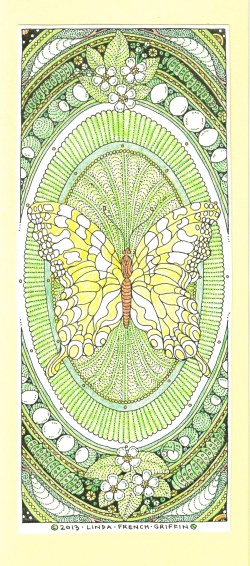
.     .     .     .     .     .     .

Life is community. Even you, homeostatically blissful Human, are a community of bacteria, protists, tiny ectoparasites in every pore, even Archaea in your gut. I feed my Archaea a cup of Greek yoghurt every morning and they are so serenely blissful. If you could count all the cells that comprise the unitary psychosocially distinct and identifiable YOU, less than half of them would be human cells. You and I couldn’t begin to live and remain healthy without those wonderful gut bacteria. How much more so mycorrhizal fungi and diatoms. Life is beautiful.

Earth Day is about the web of all life on planet Earth; no single organism remains completely solitary, independent, or isolated. If, through our actions or inactions, we create an Earth that makes it impossible for a certain species to survive, then our own species is that much impoverished and our own survival that much diminished. If, by our attention, understanding, and reverence, we permit the web to grow, extend, deepen, thrive, then our own species thrives. And thriving is defined only partially by strength, health, and numbers; for a human being to truly thrive also involves participating in the epiphany of connection to all living things. Community is life.

.     .     .     .     .     .     .

Crossing a City Highway

The city at 3 a.m. is an ungodly mask
the approaching day hides behind
& from, the coyote nosing forth,
the muscles of something ahead,

& a fiery blaze of eighteen-wheelers
zoom out of the curved night trees,
along the rim of absolute chance.
A question hangs in the oily air.

She knows he will follow her scent
left in the poisoned grass & buzz
of chainsaws, if he can unweave
a circle of traps around the subdivision.

For a breathy moment, she stops
on the world’s edge, & then quick as that
masters the stars & again slips the noose
& darts straight between sedans & SUVs.

Don’t try to hide from her kind of blues
or the dead nomads who walked trails
now paved by wanderlust, an epoch
somewhere between tamed & wild.

If it were Monday instead of Sunday
the outcome may be different,
but she’s now in Central Park
searching for a Seneca village

among painted stones & shrubs,
where she’s never been, & lucky
she hasn’t forgotten how to jig
& kill her way home.

“Crossing a City Highway” by Yusef Komunyakaa, Poetry, January, 2016

.     .     .     .     .     .     .

The Oven Bird

There is a singer everyone has heard,
Loud, a mid-summer and a mid-wood bird,
Who makes the solid tree trunks sound again.
He says that leaves are old and that for flowers
Mid-summer is to spring as one to ten.
He says the early petal-fall is past
When pear and cherry bloom went down in showers
On sunny days a moment overcast;
And comes that other fall we name the fall.
He says the highway dust is over all.
The bird would cease and be as other birds
But that he knows in singing not to sing.
The question that he frames in all but words
Is what to make of a diminished thing.

“The Oven Bird” by Robert Frost (1874-1963)

.     .     .     .     .     .     .

[Bad news for Shēn zhī: an unanticipated feature of Martian metabolism is that the cells require elements from Groups 8, 9, 10 of the Periodic Table for electron transport during energy transfer – they “eat” iron, cobalt, nickel, and rhodium. Within a few weeks many of the Rover’s critical microconnectors begin to fail. EarthLink in Ningbo goes dark. Bits of Shēn zhī drop to the Martian substrate. The Rover ultimately pinpoints the cause and transmits a warning: “Do Not Come Here.”

Unfortunately its message is garbled and received by other Martian Rovers as, “Come Here!” Within fifteen years they have all arrived at the southern plateau and become fodder for the Martian ecological community.

Which thrives.]

.     .     .     .     .     .     .
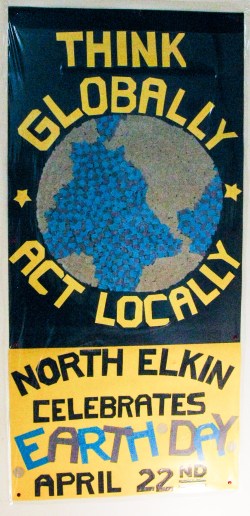
.     .     .     .     .     .     .
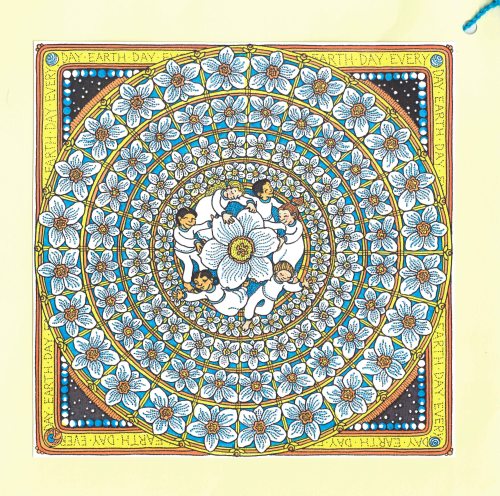
 

[original artwork by Linda French Griffin (c) 2021]

Read Full Post »

[including a poem by Rebecca Lindenberg]

I am still not sure what Will was thinking but he was very distant that evening. It was the last night of our backpacking trip through the Smokies. I knew he lived for wilderness – maybe he was simply ruing how long it would be until he’d have another chance to return to these mountains. Maybe he was doubting his chosen vocation, family doctor, the hectic office where we’d be working together again day after tomorrow. Maybe . . . maybe each of us longs to hang onto those few moments when we really feel we belong in the universe. And then they slip away.

We’d planned this trip together, just the two of us, for months. Now we were cooking our last supper. We had distanced ourselves from Mt. Collins shelter and the other hikers with their butane stoves that roared like jet liners. Will had fashioned a little alcohol stove out of a 7-Up can. Our noodles and dried vegetables simmered in silence.

When we’d finished eating and Will picked up the “stove,” his funk hit bottom. Our heat had fried a pygmy salamander (Desmognathus wrighti). Will lifted its weightless form and we grieved. We didn’t have much of anything more to say to each other that night.

In the morning we headed south on the AT to where our car waited at Clingman’s Dome. Bleached dead Frazer Fir flanked the trail with their mute accusations but the sun was cool and jeweled the dew on ridgeline grasses. About a mile from trail’s end, Will stopped and pointed. Perched on a stem sunning itself – Jordan’s Red-cheeked salamander, Plethodon jordani. Endemic to the Smokies, endangered, icon of biodiversity, preservation, and evolutionary variety. Was it waiting here to condemn us or to offer absolution?

Or to invite us to keep traveling until we discover where we belong?

.     .     .     .     .     .     .

It feels terrible to feel terrible // and so we let ourselves / start to forget.

There are plenty of pygmy salamanders but let me not forget that one. I haven’t heard a whip-poor-will in five years; let me not forget. I can choose to love this or that or the other . . . or you – let me not forget to hold tight to the choices that will hold you and me together.

We celebrate Earth Day with the other inhabitants of our single habitable planet on April 22, but how we venerate earth day depends on the choices we make every day.

They’re not wonders, but signs // and therefore can be read.


[#Beginning of Shooting Data Section]<br /> Nikon CoolPix2500<br /> 0000/00/00 00:00:00<br /> JPEG (8-bit) Normal<br /> Image Size: 1600 x 1200<br /> Color<br /> ConverterLens: None<br /> Focal Length: 16.8mm<br /> Exposure Mode: Programmed Auto<br /> Metering Mode: Multi-Pattern<br /> 1/59.9 sec - f/8<br /> Exposure Comp.: 0 EV<br /> Sensitivity: Auto<br /> White Balance: Auto<br /> AF Mode: AF-S<br /> Tone Comp: Auto<br /> Flash Sync Mode: Front Curtain<br /> Electric Zoom Ratio: 1.00<br /> Saturation comp: 0<br /> Sharpening: Auto<br /> Noise Reduction: OFF<br /> [#End of Shooting Data Section]

.     .     .     .     .     .     .

A Brief History of the Future Apocalypse

Worlds just keep on ending and
ending, ask anybody who survived

an earthquake in an ancient city
its people can’t afford to bolt

to the bedrock, or lived to testify
about the tyrant who used his city’s roofs

like planks to walk people off,
his country’s rivers like alligator pits

he could lever open and drop a whole
angry nation into. Ask anyone

who was watched their own ribs emerge
as hunger pulls them like a tide,

who watched bloody-sheet-wrapped
bodies from the epidemic burn,

or fled any of the wars to come.
The year I was eleven, I felt

the ground go airplane turbulent
beneath me. Its curt shuddering

brought down a bridge and a highway
I’d been under just the day before.

And I was not afraid, but should have been
the first time love fell in me like snow.

How could I know it would inter us
both, so much volcanic ash –

how could I not? The world must
end and I think it will keep ending

so long as we keep failing to heed
the simple prophecies of fact –

hot-mouthed coal-breathing machines
fog our crystal ball, war is a trapdoor

sprung open in the earth that a whole
generation falls through, love ends,

if no one errs, in death. When
my love died, I remember thinking

this happens to people every day,
just – today, it’s our world

crashing like an unmanned plane
into the jungle of all I’ve ever

had to feel, or imagine knowing.
It feels terrible to feel terrible

and so we let ourselves
start to forget. That must be it.

Why else would we let the drawbridge
down for a new army, water

the Horseman of Famine’s red steed
with the last bucket from the well

or worse – give up then. A heart
sorrow-whipped and cowering

will still nose its ribcage to be petted.
Will still have an urge for heroics.

And anyway, when has fear of grief
actually kept anyone from harm.

Some hope rustles in my leaves
again. It blows through, they eddy

the floor of me, unsettling
all I tried to learn to settle for.

Would I be wiser to keep
a past sacrament folded in my lap

or would I be more wise to shake
the gathered poppies from my apron,

brush off soft crimson petals
of memory and be un-haunted –

I don’t know. So I choose you and we
will have to live this to learn what happens.

And though it’s tempting to mistake
for wonders the surge of dappled

white-tailed does vaulting through
suburban sliding glass doors,

they are not. Not vanishing bees
blown out like so many thousands

of tiny candle-flames, neither
the glinting throngs of small black birds

suddenly spiraling out of the sky,
the earth almost not even dimpling

with the soft thuds of feathered weight.
Nor the great wet sacks of whale

allowing the tide to deposit them alive
on a strand, nor even the sudden

translucent bloom of jellyfishes.
They’re not wonders, but signs

and therefore can be read. I didn’t
always know that apocalypse

meant not the end of the world but
the universe disclosing its knowledge

as the sea is meant to give up its dead,
the big reveal, when the veil blows back

like so many cobwebs amid the ruins
and all the meaning of all the evidence

will shine in us to finally see –
And there you’ll be and I’ll know you

not by the moon in your voice but the song
rung in my animal self. For I feel you,

my sure-handed one, with something
sacreder than instinct but just as fanged.

Then unfold me the way you know
I want so I can watch the stars

blink back on over the garden as we grapple
in the dimming black like little, little gods.

Rebecca Lindenberg

from Best American Poetry 2019; Major Jackson, editor, David Lehman, series editor; Scribner Poetry 2019
first appeared in Southern Indiana Review; reprinted by permission from Rebecca Lindenberg

More by Rebecca . . . https://www.poetryfoundation.org/poets/rebecca-lindenberg

.     .     .     .     .     .     .

Rebecca Lindenberg teaches in the MFA program at Queens University, Charlotte, and is an Assistant Professor at the University of Cincinnati where she is also Poetry Editor of the Cincinnati Review. She holds a Ph.D. in Literature and Creative Writing from the University of Utah. She is the author of Love, an Index (McSweeney’s 2012) and The Logan Notebooks (The Center for Literary Publishing at Colorado State 2014), winner of the 2015 Utah Book Award.

.     .     .     .     .     .     .

[#Beginning of Shooting Data Section]<br /> Nikon CoolPix2500<br /> 0000/00/00 00:00:00<br /> JPEG (8-bit) Normal<br /> Image Size: 1600 x 1200<br /> Color<br /> ConverterLens: None<br /> Focal Length: 11.8mm<br /> Exposure Mode: Programmed Auto<br /> Metering Mode: Multi-Pattern<br /> 1/30 sec - f/4<br /> Exposure Comp.: 0 EV<br /> Sensitivity: Auto<br /> White Balance: Auto<br /> AF Mode: AF-S<br /> Tone Comp: Auto<br /> Flash Sync Mode: Front Curtain<br /> Electric Zoom Ratio: 1.00<br /> Saturation comp: 0<br /> Sharpening: Auto<br /> Noise Reduction: OFF<br /> [#End of Shooting Data Section]

.     .     .     .     .     .     .

[Behind the scenes karma: I received Best American Poetry 2019 as a gift last Christmas (Oh Santa, you are so good at taking hints!) but I hadn’t read it until this week. I was hoping to discover something that would evoke April as Earth Month anticipating Earth Day, resigned to forgoing my usual focus on Carolina writers. Rebecca Lindenberg’s poem leapt from the page; it is the best of the Best, the Best American Poem of 2019 in my opinion. It wasn’t until after I had asked her permission to use it that I discovered Rebecca’s connection to Queens University and probably to many of the other writers who have appeared in this space. Karmic connection comes through.  – B ]

Read Full Post »

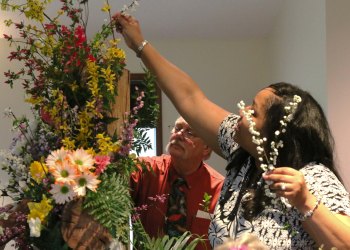
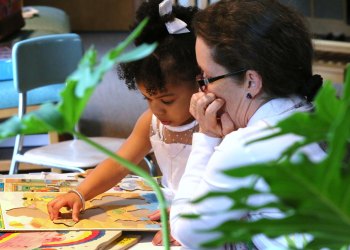
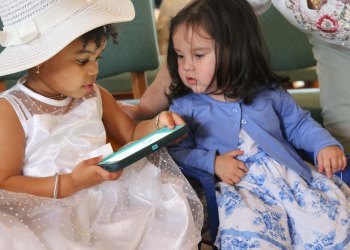
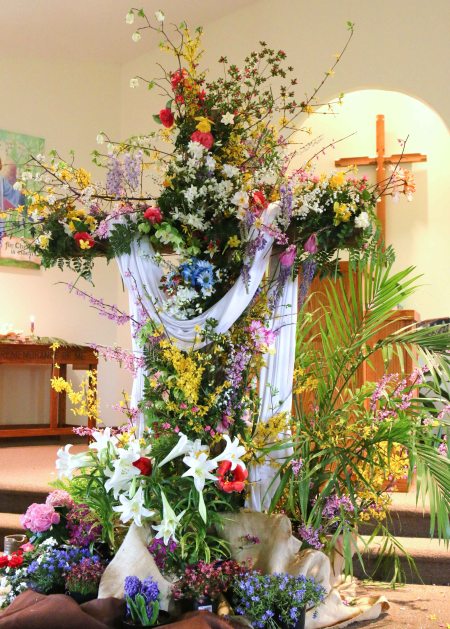
For Easter, remembering Easters past and those we shared them with . . .

Homeless Jesus

He lies there, on a metal bench, feet bare,
the nail holes boring into the very marrow
of our souls. This is not the angry prophet
who threw the money changers from the icy
temple. Oh no, this is Jesus, after what we
did to him. Yes, not they, but we. He is not
sleeping there because some sculptor thought
it smart for his art. God no! He is sleeping there
because we put him there, every day, every
hour, every second.

Look at the size of the holes. A child
was frightened by those holes, someone tells me.
Good. Let the child go home. Let the parents
tell the child what we did to him, what
we still do to him.
++++++++++++++++ And you, who read
these words, stop your cars, get out, go sit
with him and talk. Bend down and look
into that sleeping face beneath the hood.
Pour water through his parched lips, bandage
his naked feet. Cover the holes we have made.
Do it now, do it now, do it now, and perhaps
on Easter morning early you’ll drive by and see
the bench is bare, the empty cloak crumpled
on the ground.

Meanwhile, in a different town on a back street
in a cardboard box, another homeless Jesus waits.


Anthony S. Abbott
from Dark Side of North, Press 53, Winston-Salem, NC © 2021 the Estate of Anthony S. Abbott

.     .     .     .     .     .     .


“A new command I give you: Love one another. As I have loved you, so you must love one another.”

John 13:34 (NIV)


Remembering . . .

Rick Flanery    (1945-2019)
Edwin “Skip” Ball    (1944-2020
Cora Burley    (1923-2020)
Charles McKenzie    (1931-2020)
Charlotte Case    (1923-2020)
Charles Hair    (1934-2021)

.     .     .     .     .     .     .


.     .     .     .     .     .     .

Read Full Post »

« Newer Posts - Older Posts »