Feeds:
Posts
Comments

Archive for the ‘Photography’ Category

[an essayette by poet Ross Gay and a poem by Bill Griffin]

Joy is Such a Human Madness: The Duff Between Us

Or, like this: in healthy forests, which we might imagine to exist mostly above ground, and be wrong in our imagining, given as the bulk of the tree, the roots, are reaching through the earth below, there exists a constant communication between those roots and mycelium, where often the ill or weak or stressed are supported by the strong and surplused.

By which I mean a tree over there needs nitrogen, and a nearby tree has extra, so the hyphae (so close to hyphen, the handshake of the punctuation world), the fungal ambulances, ferry it over. Constantly. This tree to that. That to this. And that in a tablespoon of rich fungal duff (a delight: the phrase fungal duff, meaning a healthy forest soil, swirling with the living the dead make) are miles and miles of hyphae, handshakes, who get a little sugar for their work. The pronoun who turned the mushrooms into people, yes it did. Evolved the people into mushrooms.

Because in trying to articulate what, perhaps, joy is, it has occurred to me that among other things–the trees and the mushrooms have shown me this–joy is the mostly invisible, the underground union between us, you and me, which is, among other things, the great fact of our life and the lives of everyone and thing we love going away. If we sink a spoon into that fact, into the duff between us, we will find it teeming. It will look like all the books ever written. It will look like all the nerves in a body. We might call it sorrow, but we might call it a union, one that, once we notice it, once we bring it into the light, might become flower and food. Might be joy.

from The Book of Delights, Ross Gay, Algonquin books of Chapel Hill, © 2019

.     .     .     .     .     .     .

My daughter Margaret gave me this book by Ross Gay for my birthday in 2020 and it’s been waiting patiently with its companions on the to-be-read-someday shelf until this month. I flipped it open and read a couple of the daily musings on delight (a page or two, observations and reflections that Ross decided half-way through the project to call essayettes). They are like a Whitman’s Sampler – once you’ve opened the box you know you’re going to eat every one.

So I’ve left the book beside the couch and picked it up when random minutes offered themselves unfilled. It’s hard to read just one or two, though – coffee has cooled and soup has threatened to boil over.

This particular entry, though, stopped me in my tracks. I read it over and over. Not only because it followed the amazing interview with Merlin Sheldrake I had just discovered in the May issue of The Sun, all about mycorrhizal networks and sentient fungi and the meaning of life and everything, but because of the way Ross Gay interweaves joy and sorrow and delight and death. Maybe he is right, as many of his essayettes seem to suggest – if we face the one thing we all share in common, which is death, and even God forbid talk about it, maybe we can discover that it is possible to step past the fear into a space that reveals joy – delight – every day.

Which is to say: Hey, life is suffering – along the way let’s you and I share a little delight.

.     .     .     .     .     .     .
 

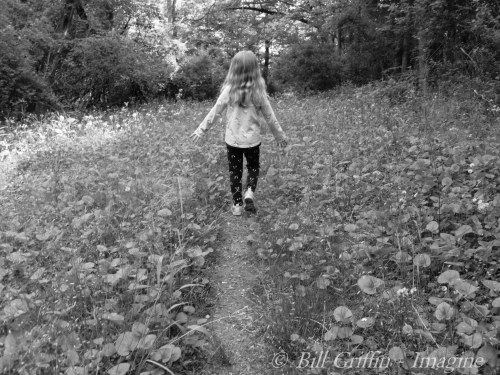
Rule #1 No Hurting

I tell you this while you whack me
with your little plastic hammer: what I mean
is no hurting other people, not that you
could really damage me
with those little boy hands I love
but sometimes it does sting. Maybe I’m worried
about your buddies at playschool: hitting
begets automatic time out. Or do I mean
your Mom and Dad: see their tears
when you fall? When you are bruised?
And pain you can’t see: someday
you are bound to bruise their hearts.

How we do hurt each other, and how
could it be otherwise, two souls
all entangled while we stumble,
lash out, grab for help, and I
won’t tell you now but I know this:
you will hurt me too, although I
will have handed you the knife
of loving you and hoping
life won’t leave its scars.
But this is what Rule #1 doesn’t mean:
No hurting inside. I’m sorry, Grandson,
no platitudes about for your own good
you will suffer because you too
are human and our world makes no
distinction. Just remember Rule #2:
I will cry with you.

Bill Griffin

from Tar River Poetry, Vol. 55, Nr. 2; Spring, 2015

.     .     .     .     .     .     .

Additional links for Ross Gay:

Review of The Book of Delights

Books

The On Being Project


.     .     .     .     .     .     .

Read Full Post »

[with 3 poems by Jenny Bates]

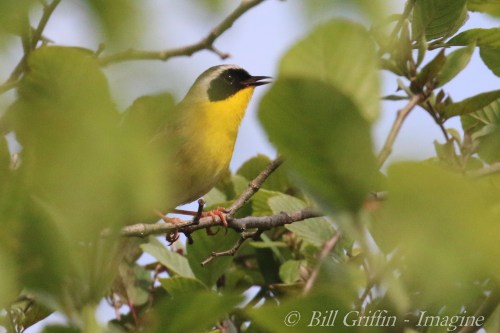
Yellowthroats sing from three compass points. Who triangulates whom? One sings, flits, sings and a farther one answers, flits, answers. I stand motionless in the mud beside the lake’s lazy inflow. I want a bright bird to fly from his thicket and show himself to me.

As I stare into the leaves, still no success with my x-ray vision, something moves beside me. Down low. A muskrat six feet away is swimming upstream utterly unconcerned. I turn only my head. It reaches up the bank for a tasty green, swims some more, jeweldrops of water on its whiskers. It stops to scratch its nose. It swims on.

I look up and a yellowthroat is watching me.

.     .     .     .     .     .     .

Triangulate: to discern your true position within the vital features that surround you.

After a couple of weeks with Jenny Bates’s books I learned not to read her poems to ferret out their meaning but to read to enter the poetry. Stare at the Pleiades in the night sky and they slip away from you; look slant and the Seven Sisters reach to you from the darkness. Let a line of Jenny’s verse slip into your awareness with eyes half closed, fortuitous inadvertency.

An intimate acquaintance / that leaves nothing but / earth.

I learned not to read Jenny like a field guide but like I read the breeze greeting sweat on my back when the trail stretches uphill, like I read the sun’s flagrant liason with blackberry blossoms.

Bent twig alphabet, language mist-twist
revises with no sequels, no chapters that leave-off.

I learned to read Jenny not like a genealogy of contracts and progeny but exactly like a genealogy of creatures and connections and the family of the one.

The bee does not claim originality as it takes
something from every flower.

.     .     .     .     .     .     .

3 poems by Jenny Bates

.     .     .     .     .     .     .

Merlot and Thyme
++++ with a Hummingbird Chaser

I uncork old resting places, no maps needed.
Just strange-tongued travelers of
++++ bird, wine and spice.
I sip Merlot, write in cloud-light
++++ missing mother’s voice
Conversations become riddles, coaxing the truth
out of her children, eventually.
Thyme and tarragon fill the clear jar
in front of me: I smell her there
++++ in herbal comfort.
No still dark corners to hide in her memory,
she emptied her children like clearing a table
set by despair, without lingering.
With an edge that never dropped off.

Hummingbirds have no brink to pass to their young.
Wisps of winding birds tousle leaves, jiggle air under
++++ diving, dancing, levitating.
Homing devices, trade routes birthed into them.
Swift and common lessons to grow by. Shade brings
++++ less frantic maneuvers.

I wear pink and grey – the first colors I liked
++++ as a child.
My grandparents farmhouse in Northern Michigan
was grey with pale pink shutters.
Dove colors for a delicate landing grandmother
would say. I hear mom in the background talking to
bees, kittens, mule, land. For a city girl, she could
ambush nature, then heal its wounds.
++++ No time was distant then.


.     .     .     .     .     .     .

Engagement Rings

Morning insect yoga.
Grasshopper extends himself
in heat-stretching air.
Jumps into space, disappears.
No fossil fuels, no footprint.
Fly stuck to a metal merry-go-round,
a centrifuge so man can stick to
ceilings in his quest for flight.
Prometheus moth wings dismantled,
grounded, still-payment for
bringing man fire.

I walk earthling steps, marker-less,
circling your grave.
Mob of ants scurry in loops,
larvae in pincers turn you from
solid to liquid to solid again.
Jealous in my exile,
++++ lucky ants get to spend time with you
you continue in unending generosity.

The angel tree had sung a copperhead
right out of his skin.
I bring it, fresh and warm to my
neighbor who sculpts it into
suspended twists.
Hung it through a metal ring
at the studio door.
Bow Tie markings coiled to dry,
venom empty, benign husk.

Heat draws new flycatcher parents
to drink from your round water bowl
filled each day to the brim.
Parched squirrel’s half cry bubbles out,
scampers then hangs in shade relief.
Skinks run full speed in swirling chase
across the deck.
++++ don’t come out of the nest too soon . . .
++++ ++++ don’t fall . . .
the newly hatched chick yawns,
bellyful of ground up ants.


.     .     .     .     .     .     .

How to Spell Sorrow

It’s beautiful, your words,
but I’ve read better in the eyes of my dog.

In spider webs and spider spaces.
When hummingbirds leave, you feel it –
empty air without fashion.

You put more sweet water out anyway,
wait for Buddhas and fools.

You wonder about ellipsis of Truth
wrapped in coyote calls.

You watch a groundhog prostrate like a saint
on the gravel drive – surrender play or
cooling his belly on the stones.

you see a murder of crows line their toes
straight and tight along the split rail fence.

Gripping the wood like text on your arms
becoming the word on your hand.

You curl your fingers into your palm
twist and spell – Sorrow.

.     .     .     .     .     .     .

“Merlot and Thyme,” “Engagement Rings,” “How to Spell Sorrow” by Jenny Bates from her book Slip, Hermit Feathers Press, September, 2020

Jenny lives in the North Carolina foothills and is an animal whisperer and helping hand at Plum Granny Farm, an organic local farm in Stokes County, North Carolina.

.     .     .     .     .     .     .

Header Artwork © Linda French Griffin

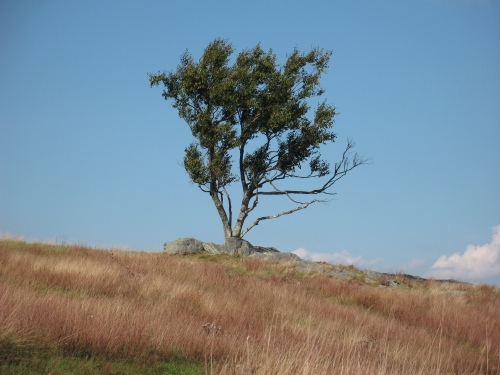
2016-10-17a Doughton Park Tree

Read Full Post »

[with 3 poems by Denise Levertov]

. . . Who can utter the poignance of all that is constantly threatened . . .

Toward the end of March Amelia and I explored the vernal pool near Dutchman Creek and discovered frog eggs with hundreds of newly hatched tadpoles. We visited a couple more times to watch them grow (no legs yet!). Week before last I was walking along the creek on my own and decided to check their progress.

I edged through the muck and grass, taller now, leaned over the little pool, and counted all the tadpoles. There were exactly zero. None. Well, I did scare off a few big second-year tads, but all of the little black wigglers were gone.

I stared a long time. Plenty of water. A little algae, weeds and water plants. Maybe they were all hiding under leaves. I leaned all the way down. What is that in the water there, arc of a cylinder covered with hieroglyphics, almost stepped on it? I poked with my stick and a 3-foot long Northern Water Snake shot sinusoidal through the water then veered back towards me and disappeared into a hole, I guess, because I never could spot it again.

Hungry snake, OK, gotta eat, but did you have to finish off every one? Isn’t there some sort of ecological balance that guarantees next year’s balmy spring evenings on the porch listening to peepers, tree frogs, and the long mellifluous trill of the American toad? I guess the older, bigger tads were experienced, too wily to be caught, better at hiding themselves in the silt, so maybe a few will indeed live to sing. I don’t think I’ll be telling Amelia about the snake any time soon, though.

.     .     .     .     .     .     .

This afternoon I walk down to the creek to see what’s become of the pool after a two-week dry spell. One year it dried up altogether. Still plenty of muck; grass and weeds even higher. The pool has shrunk but as I thread my way closer there are two big plops and a swirl of silt slowly settling. And there they are: brand new, a couple of hundred little black tadpole wigglers, freshly hatched.

More life, says Nature. More, please.

.     .     .     .     .     .     .

Three poems by Denise Levertov

bring the planet / into the haven it is to be known

.     .     .     .     .     .     .

Web

+++++Intricate and untraceable
+++++weaving and interweaving,
+++++dark strand with light:

+++++designed, beyond
+++++all spiderly contrivance,
+++++to link, not to entrap:

elation, grief, joy, contrition, entwined:
shaking, changing,
++++++++++forever
+++++++++++++++forming,
++++++++++++++++++++transforming:

all praise,
+++++all praise to the
+++++++++++++++great web.

– Denise Levertov

.     .     .     .     .     .     .

In California: Morning, Evening, Late January

Pale, the enkindled,
light
advancing,
emblazoning
summits of palm and pine,

the dew
lingering,
scripture of
scintillas.

Soon the roar
of mowers
cropping the already short
grass of lawns,

men with long-nozzled
cylinders of pesticide
poking at weeds,
at moss in cracks of cement,

and louder roar
of helicopters off to spray
vineyards where braceros try
to hold their breath,

and in the distance, bulldozers, excavators,
babel of destructive construction.

Banded by deep
oakshadow, airy
shadow of eucalyptus,

miner’s lettuce,
tender, untasted,
and other grass, unmown,
luxuriant,
no green more brilliant.

Fragile paradise.

. . . .

At day’s end the whole sky,
vast unstinting, flooded with transparent
mauve,
tint of wisteria,
cloudless
over the malls, the industrial parks.

the homes with the lights going on,
the homeless arranging their bundles.

. . . .

Who can utter
the poignance of all that is constantly
threatened, invaded, expended

and constantly
nevertheless
persists in beauty,

tranquil as this young moon
just risen and slowly
drinking light
from the vanished sun.

Who can utter
the praise of such generosity
or the shame?

– Denise Levertov

.     .     .     .     .     .     .

Tragic Error

The earth is the Lord’s, we gabbled,
and the fullness thereof
while we looted and pillaged, claiming indemnity:
the fullness thereof
given over to us, to our use
while we preened ourselves, sure of our power,
wilful or ignorant, through the centuries

Miswritten, misread, that charge:
subdue was the false, the misplaced word in the story.
Surely we were to have been
earth’s mind, mirror, reflective source.
Surely our task
was to have been
to love the earth,
to dress and keep it like Eden’s garden.

That wold have been our dominion:
to be those cells of earth’s body that could
perceive and imagine, could bring the planet
into the haven it is to be known,
(as the eye blesses the hand, perceiving
its form and the work it can do).

– Denise Levertov

all selections are from The Life Around Us, selected poems on nature, by Denise Levertov, New Directions Books, 1997

.     .     .     .     .     .     .

Denise Levertov (1923-1997) was a naturalized American poet born in England. Her first book of poetry was published shortly after World War II; she moved to the U.S. in 1948 and became influenced by the Black Mountain Poets and William Carlos Williams such that her writing ultimately came to express a uniquely American voice with a world vision. Her poems are often strongly ecological and political. She writes in the forward to The Life Around Us: As I have quite frequently found myself obliged to skip back and forth from book to book when reading to audiences composed of people whose work and vocation was in ecology, conservation, and restoration, it was suggested that I put together a selection of thematically relevant poems, which would be useful not only to the many earth-science people who, I have found, do love poetry, but also to the general public.

Poetry Foundation
Academy of American Poets
Works by Denise Levertov
Chronology of Denise Levertov’s life

.     .     .     .     .     .     .

Header Artwork © Linda French Griffin

Doughton Park Tree -- 5/1/2021

Read Full Post »

« Newer Posts - Older Posts »