
.
[including Carbon Canyon by David Duchovny]
.
We cannot know how good for us
the bad times were.
. . . . . . . . . . . . . . . . . . . . – High Five in the Sky –
.
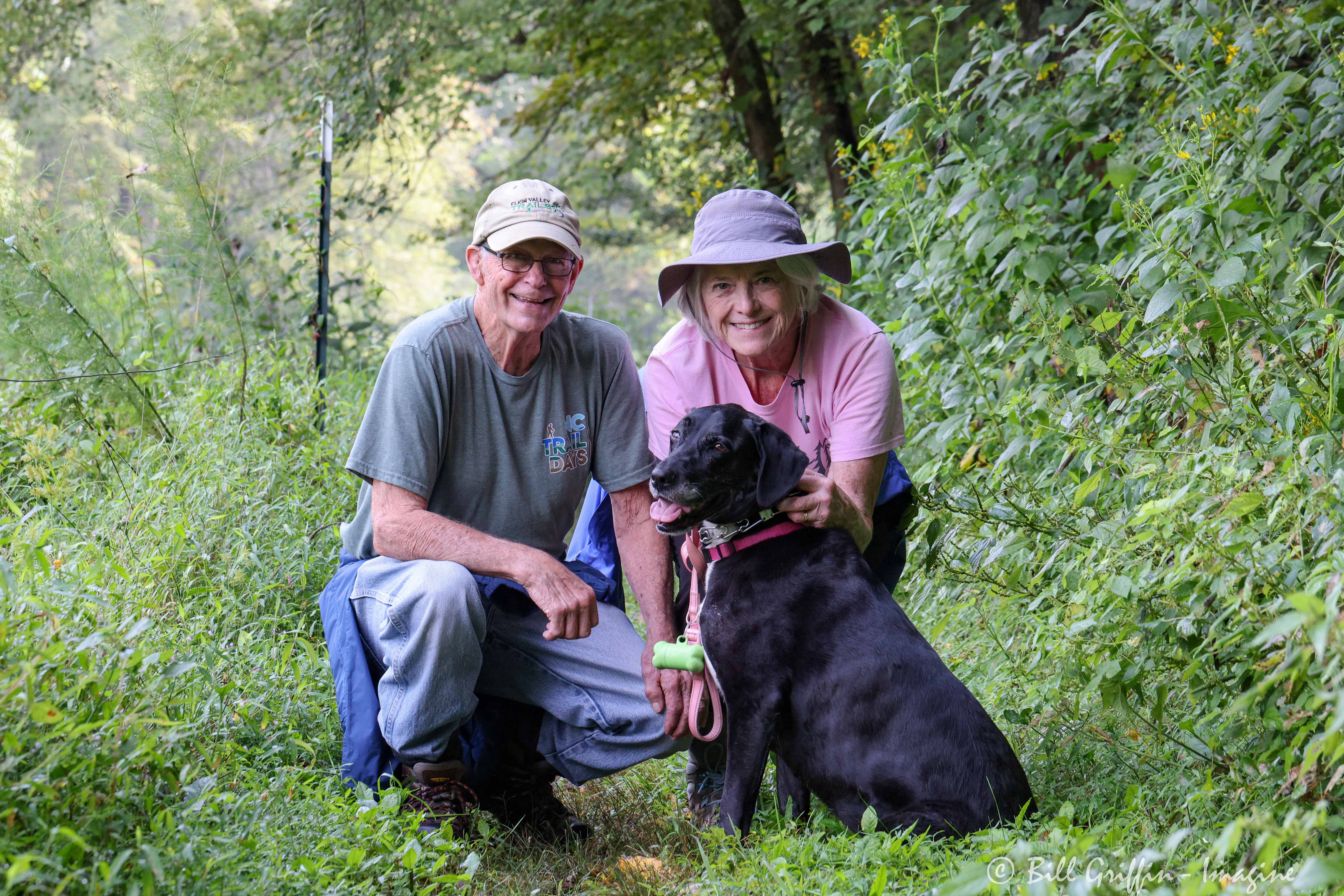
Bill and I decide to take a walk together this autumn afternoon. The year is 2020. Does visceral memory plunge you into context? When did he and I last see each other, if only above the nasal hem of an N-95? But today we will be together outdoors, the light breeze adequate to disperse particulates as we pick our way along the steep trail down to Dutchman Creek below our homes. Near neighbors, nearly always separate in our daily meanderings. Today reconnecting. Today again confessing to each other that we are connected somewhere deep in our guts, spleen & pancreas, since that first day in 1979 when Bill introduced himself to me as my Senior Resident and I stepped onto the wards at Durham County General as an Intern.
.
That first night we stumbled on the brink of fucking up completely. One patient we had stabilized and put to bed crashed at 3 AM while we were looking elsewhere. We were able to bring her back and at 0600 coffee before rounds with the Attending we listed to each other all the things we’d just learned. Still learning now, forty-one years later, Bill on the bench I’ve planted on my hill and me on a rock six feet distant. We confess completely fucking up again, this time our friendship when we split ten years after that very first connection. Time is not calligraphy, an artful line advancing with curlicues that mark each pleasant memory. Time is a patchwork of craters where the bombs went off. Time may soften a few scars, allow fireweed and fleabane to bloom amidst the desecration, but be careful you don’t stumble at the lip of former chaos.
.
Or do stumble. Look up for once from always looking down. Pull up your sleeve and share the bruises. I’m talking to you, one Bill to another Bill. I am grateful to have you as my friend.
.

.
❦ ❦ ❦
.
Carbon Canyon
.
We lived in Carbon Canyon the, before the fire,
unpack that given irony – were there no
carbon copies, we so unique and blessed?
.
There was a time when I walked
with my three-year-old daughter
(I think three . . .).
Anyway, I know we were walking the deep decline
of Carbon Canyon
on one of those short, mommyless jaunts . . .
And we came upon
the recently car-crushed carcass
of a gray field mouse, part three-dimensional
as in life,
part flattened as in a drawing,
the weight of the car
having made its lower half unreal, a cartoon.
The drive long gone,
unaware of their handiwork, guiltless.
.
A tiny trickle of blood from its slightly opened
mouth, a last profound unheard utterance,
so perfectly dramatic and telling
as if to seem placed by a movie crew
hiding in the bushes perhaps.
.
And my daughter (two, three, four?)
about to spy it on the ground, and I, a daddy,
with knowledge spilling out of my pockets,
life lessons, sense a teaching moment for the disquisition
on mortality that very parent believes
every three-year-old needs –
(see, it all ends, best laid plans and all that,
life’s unfair; carpe diem, little one;
Latin for . . . heaven; there but for the grace of god –)
in these moments, I realize I am nothing but a recording
of my own parents’ voices – their greatest hits,
my soul their phonograph . . .
.
Fade in: a father slows his daughter, allowing
the chance to happen upon a dead mouse,
it/death knowledge. Consequence. Mortality.
But it is only now, as we kneel,
that I notice the vibrant cha-cha line of ants
dancing in and out of the ruined creature
in all their anarchic discipline,
carrying to and fro unseeable bits of meat
and nutrient mouse ooze.
.
And my breath catches
because suddenly this lesson is for Daddy,
and it is Daddy who cannot face too much death,
the death after death, my death
in this mouse’s mouth, my daughter’s death.
I’ve not quite stomach enough
to face the pieces of us all carried off into oblivion,
eaten till we are unrecognizable, digested,
shit. Roadkill.
.
Dizzying, I say, “Oh, let’s go sweetheart . . .”
.
But it’s too late – my daughter,
two or three or four, has seen
leans down farther, her blue eyes
in inch or two from the ground, and says,
“Daddy, look the ants, there’s so many of them.”
“Yes, I see. Maybe we should let the mouse sleep, let her
sleep.”
.
I take her hand to lead her, though I don’t know where.
I know I am blind and unprepared,
a child leading a child,
and the little one stops and smiles,
and points back to the carnage –
.
“No, the ants, Daddy, the ants – look how much they love
her.”
.
David Duchovny
from About Time, Akashic Books, Brooklyn NY; © 2025
.
❦ ❦ ❦
.
This morning, 6 Sept. 2025, I pick Bill up at his door for another walk. Before we get in the car he hands me a gift, a book, a book of poetry. Poetry, admit it, has been the gravity that brought Bill and me back to earth after we had orbited so far apart. Years of smoldering enmity smoke out when a friend made us sit down together in the sam room to read poetry, to write it, to share it with each other. Something as tenuous as spider silk can still contain the angry wasp – we did indeed think we were still intent on stinging each other until we discovered we weren’t. One line leads to another. Today Bill reaches out to give me David Duchovny’s book after he himself has read it, most pages heiroglyphed with his own lightly pencilled checkmarks and squiggled connectors. Which I will pay more attention to than the words themselves.
.
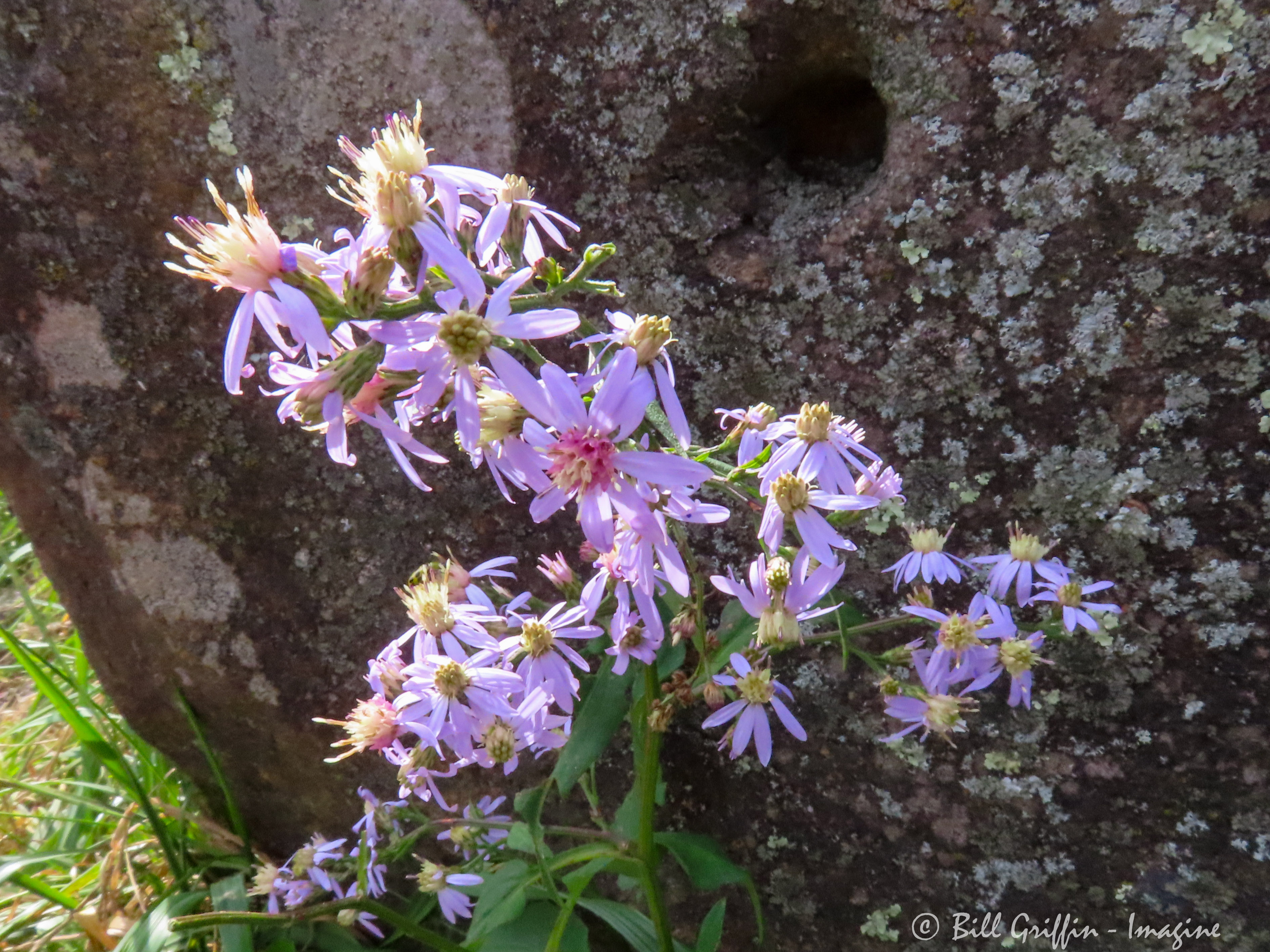
Time, I tell myself, is a crap teacher. I’m always ever looking backwards at the time I’ve mangled and wasted, misunderstood and misspent. If time is so instructive, why can’t I look forward and craft a hunk of time into the shape I hope it shall become? Now time has brought Bill himself across a health threshold from which there is, this time, no returning. We talk about it as we reach our trailhead; we live within its reality as we walk the trail. We reach our limit, turn around, walk back towards the car, and time keeps on arrowing in its singleminded direction. Here we stand in the mess and glory of autumn blooming. Some flowers, dying and dry, want their seeds to hitch a sticky ride on our pants; some pods pop as we brush by; some buds are just this day erupting. Time is not a thread. Time is a thousand threads, a billion-billion threads and all tangled and intertwined like this patch of hog peanut within the thicket of goldenrod. You can’t pick it apart but here and there you can find the flowers. Wherever our threads have crossed and re-crossed, Bill, I will keep learning to be grateful.
.
❦ ❦ ❦
.
David Duchovny is an actor, director, singer-songwriter, podcaster. About Time, his first full length poetry collection, follows four published novels and is available HERE.
.
❦ ❦ ❦
.

.
.







 V E R S E and I M A G E
[…] About/Submit […]