Feeds:
Posts
Comments

Archive for the ‘family’ Category

 . 
[including Carbon Canyon by David Duchovny]
 . 
We cannot know how good for us
the bad times were. 
. . . . . . . . . . . . . . . . . . . .High Five in the Sky
 . 
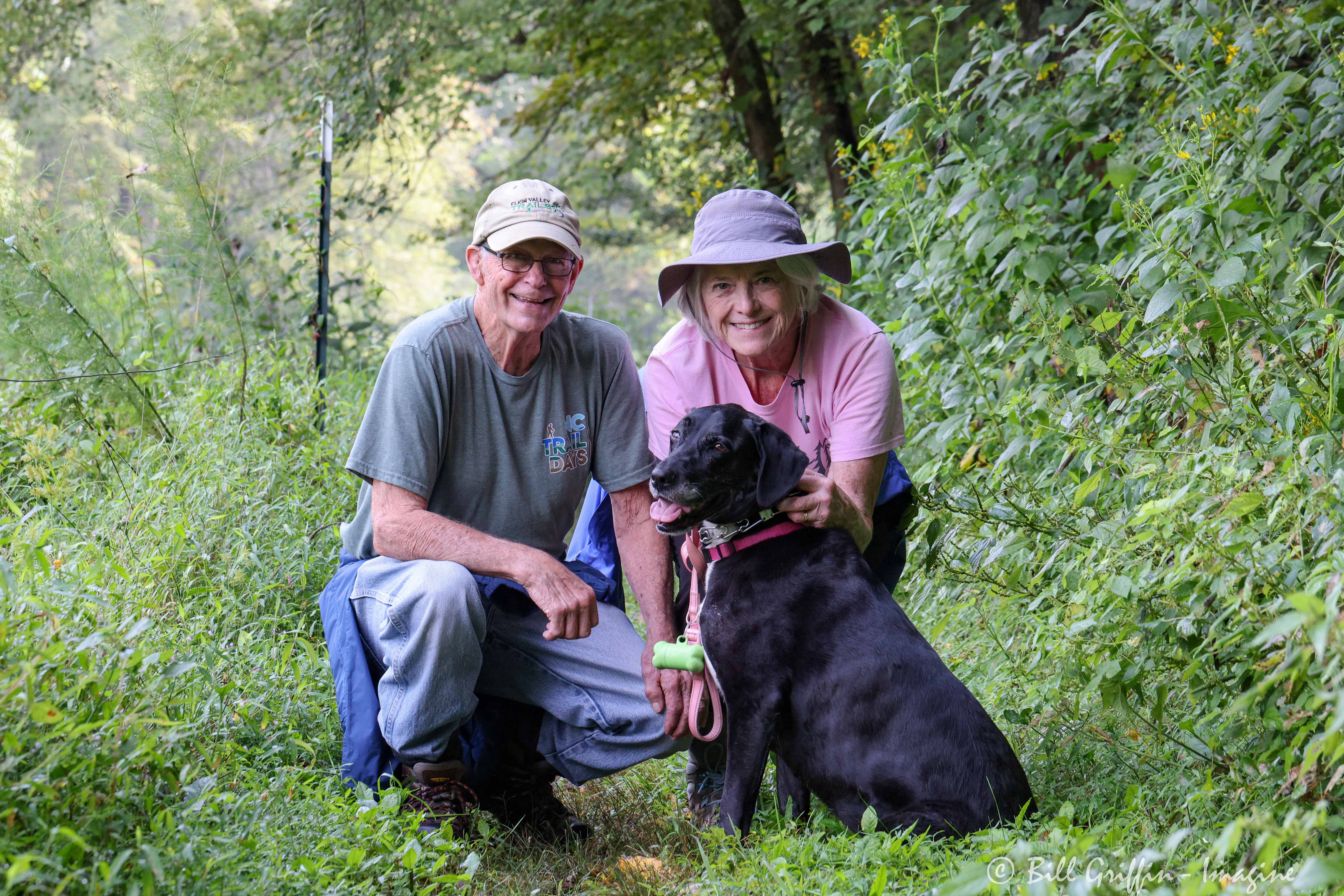
Bill and I decide to take a walk together this autumn afternoon. The year is 2020. Does visceral memory plunge you into context? When did he and I last see each other, if only above the nasal hem of an N-95? But today we will be together outdoors, the light breeze adequate to disperse particulates as we pick our way along the steep trail down to Dutchman Creek below our homes. Near neighbors, nearly always separate in our daily meanderings. Today reconnecting. Today again confessing to each other that we are connected somewhere deep in our guts, spleen & pancreas, since that first day in 1979 when Bill introduced himself to me as my Senior Resident and I stepped onto the wards at Durham County General as an Intern.
 . 
That first night we stumbled on the brink of fucking up completely. One patient we had stabilized and put to bed crashed at 3 AM while we were looking elsewhere. We were able to bring her back and at 0600 coffee before rounds with the Attending we listed to each other all the things we’d just learned. Still learning now, forty-one years later, Bill on the bench I’ve planted on my hill and me on a rock six feet distant. We confess completely fucking up again, this time our friendship when we split ten years after that very first connection. Time is not calligraphy, an artful line advancing with curlicues that mark each pleasant memory. Time is a patchwork of craters where the bombs went off. Time may soften a few scars, allow fireweed and fleabane to bloom amidst the desecration, but be careful you don’t stumble at the lip of former chaos.
 . 
Or do stumble. Look up for once from always looking down. Pull up your sleeve and share the bruises. I’m talking to you, one Bill to another Bill. I am grateful to have you as my friend.
 . 
 . 
❦ ❦ ❦
 . 
Carbon Canyon
 . 
We lived in Carbon Canyon the, before the fire,
unpack that given irony – were there no
carbon copies, we so unique and blessed?
 . 
There was a time when I walked
with my three-year-old daughter
(I think three . . .).
Anyway, I know we were walking the deep decline
of Carbon Canyon
on one of those short, mommyless jaunts . . .
And we came upon
the recently car-crushed carcass
of a gray field mouse, part three-dimensional
as in life,
part flattened as in a drawing,
the weight of the car
having made its lower half unreal, a cartoon.
The drive long gone,
unaware of their handiwork, guiltless.
 . 
A tiny trickle of blood from its slightly opened
mouth, a last profound unheard utterance,
so perfectly dramatic and telling
as if to seem placed by a movie crew
hiding in the bushes perhaps.
 . 
And my daughter (two, three, four?)
about to spy it on the ground, and I, a daddy,
with knowledge spilling out of my pockets,
life lessons, sense a teaching moment for the disquisition
on mortality that very parent believes
every three-year-old needs –
(see, it all ends, best laid plans and all that,
life’s unfair; carpe diem, little one;
Latin for . . . heaven; there but for the grace of god –)
in these moments, I realize I am nothing but a recording
of my own parents’ voices – their greatest hits,
my soul their phonograph . . .
 . 
Fade in: a father slows his daughter, allowing
the chance to happen upon a dead mouse,
it/death knowledge. Consequence. Mortality.
But it is only now, as we kneel,
that I notice the vibrant cha-cha line of ants
dancing in and out of the ruined creature
in all their anarchic discipline,
carrying to and fro unseeable bits of meat
and nutrient mouse ooze.
 . 
And my breath catches
because suddenly this lesson is for Daddy,
and it is Daddy who cannot face too much death,
the death after death, my death
in this mouse’s mouth, my daughter’s death.
I’ve not quite stomach enough
to face the pieces of us all carried off into oblivion,
eaten till we are unrecognizable, digested,
shit. Roadkill.
 . 
Dizzying, I say, “Oh, let’s go sweetheart . . .”
 . 
But it’s too late – my daughter,
two or three or four, has seen
leans down farther, her blue eyes
in inch or two from the ground, and says,
“Daddy, look the ants, there’s so many of them.”
“Yes, I see. Maybe we should let the mouse sleep, let her
sleep.”
 . 
I take her hand to lead her, though I don’t know where.
I know I am blind and unprepared,
a child leading a child,
and the little one stops and smiles,
and points back to the carnage –
 . 
“No, the ants, Daddy, the ants – look how much they love
her.”
 . 
David Duchovny
from About Time, Akashic Books, Brooklyn NY; © 2025
 . 
❦ ❦ ❦
 . 
This morning, 6 Sept. 2025, I pick Bill up at his door for another walk. Before we get in the car he hands me a gift, a book, a book of poetry. Poetry, admit it, has been the gravity that brought Bill and me back to earth after we had orbited so far apart. Years of smoldering enmity smoke out when a friend made us sit down together in the sam room to read poetry, to write it, to share it with each other. Something as tenuous as spider silk can still contain the angry wasp – we did indeed think we were still intent on stinging each other until we discovered we weren’t. One line leads to another. Today Bill reaches out to give me David Duchovny’s book after he himself has read it, most pages heiroglyphed with his own lightly pencilled checkmarks and squiggled connectors. Which I will pay more attention to than the words themselves.
 . 
Time, I tell myself, is a crap teacher. I’m always ever looking backwards at the time I’ve mangled and wasted, misunderstood and misspent. If time is so instructive, why can’t I look forward and craft a hunk of time into the shape I hope it shall become? Now time has brought Bill himself across a health threshold from which there is, this time, no returning. We talk about it as we reach our trailhead; we live within its reality as we walk the trail. We reach our limit, turn around, walk back towards the car, and time keeps on arrowing in its singleminded direction. Here we stand in the mess and glory of autumn blooming. Some flowers, dying and dry, want their seeds to hitch a sticky ride on our pants; some pods pop as we brush by; some buds are just this day erupting. Time is not a thread. Time is a thousand threads, a billion-billion threads and all tangled and intertwined like this patch of hog peanut within the thicket of goldenrod. You can’t pick it apart but here and there you can find the flowers. Wherever our threads have crossed and re-crossed, Bill, I will keep learning to be grateful.
 . 
❦ ❦ ❦
 . 
David Duchovny is an actor, director, singer-songwriter, podcaster. About Time, his first full length poetry collection, follows four published novels and is available HERE.
 . 
❦ ❦ ❦
 . 
 . 
 . 

Read Full Post »

 . 
[for my mother]
 . 
Liminal
crepuscular
 . 
You take my hand and lead
me from the porch, leavings
of sticky watermelon rind,
half-eaten hotdogs, out into
the yard where the older kids
whoop in the descent
of darkness almost too deep
to see through; at its edge
grownups in folding chairs,
the orange winks of their cigarettes
like lightning bugs.
 . 
Too dark. You feel me hanging back
but here around the corner
real fireflies guide us, cool green,
silent. You catch one
in your hands, Like this . . .
when I was a girl, laughing
in the twilight; you pinch off
its tiny ember and smear
the glowing on your eyelids
so that when you close your eyes
its faint gaze assures
that you still see me.
 . 
And the truly wondrous thing,
besides this moment together while
the luminescence fades
and I am able too to laugh,
is that once you were a girl.
 . 
❦❦❦
 . 
All stories are true. The story’s facts may get a bit smudged & skewed, a bit shuffled & stretched, a bit jiggled & juxtaposed & conflated, but the story’s truth is undiminished. Good stories know their truth. The best stories know your truth. You discover it in their pages. Perhaps it was always in you, smudged & skewed – now you are following its trail into the open.
 . 
A poem has its own particular way of telling its story. Planed down until you can see the grain. That burl is a metaphor for the winter storm when something cracked. The curly maple echoes laughter you can still hear tinkling faint from the past. Storms and laughing are metaphors for what you’re facing this morning when you roll out of bed. The poem rolls you out of bed. It won’t feed you lying down.
 . 
And in a poem the story lives on its own fine edge. It balances the limn between nothing and everything. Wait here, breathing slowly, at the transition between dusk and night. Or between darkness and dawn. The poem’s story may seem at ease but in the silence beside the swift river you can hear the rush, the flow, the movement. The poem taps the shoulder of awareness – look ahead, look back, live right now in all those moments that coalesce to make a life. Your story is unfolding, and don’t you know it’s true?
 . 
 . 
❦❦❦
 . 
Liminal
riparian
 . 
Let’s tube the Brandywine: you
are brilliant, my kids so fractious,
lucky to keep them for an hour
in the same room with Grandmommy
much less engaged.
All the lazy afternoon
watched over by staid sycamores
of summer, the splashing,
the dunking, and through smooth
passages you get them talking
about yesterday’s museum, Howard Pyle
and the Wyeths, art, its stories,
how if we can only imagine
something strongly enough
we may make it so.
 . 
Imagine: all things flow,
the benevolent stream, its clarity
every possibility of color
and everything it collects,
benediction of damp
on our bodies, water and salt,
half-adrift in the dailyness
of life and where
might this meandering take us?
 . 
At the takeout toweling off
you touch my shoulder, point:
a tree swallow’s looping masterwork
has knit together river, forest, sky,
metallic blue . . . brilliant.
 . 
❦❦❦
 . 
A story about Mom: when I was five we lived in a little house on Marion Road in Memphis. Mom had made a special cake for my birthday surprise, German chocolate with thick gooey coconut and pecan frosting. She hid it in the little closet pantry until after supper, but when she brought it out for five candles, she wept. It was covered with ants. Don’t you think my brother and I were able to pick off the little crawlies and eat it anyway? And every year at birthday time we piped up, “Mom, make us another Ant Cake!” It was years before she could laugh.
 . 
Another one: Mom and Dad moved away from the South before I was born, but her friends in Michigan or Ohio or Delaware could still detect the remnants of her North Carolina accent. I believe they always thought her a bit prim. When I was fifty I happened to visit Mom in Wilmington DE around Halloween. She said, “Let’s go trick-or-treating!” I figured we’d just walk down the block and say Hi to the neighbors, but she came out of the bedroom wearing a cape and hunchback, an old wig pulled all the way down over her face, and stark staring eyes painted on her cheeks. A wooly booger. None of the neighbors knew who the hell she was and they flinched visibly when she cackled.
 . 
Last story?: Mom was the czarina of crosswords, and she could finish the entire Jumble in the morning paper while I was still juggling the first word. The last few months of her life, at ninety-six, she would sit on the couch after breakfast and I would bring in the paper, sit down beside her, and hand her a pen. Sometimes, I admit, I had to offer her hints (assuming I myself could figure out the words). But at times she would put pen to paper, hesitate just a moment, and fill in the blocks with faint, spidery letters. Just right, Mom. Just right.
 . 
 . 
❦❦❦
 . 
Liminal
nonagenarian
 . 
Every Sunday after church I knock
at your kitchen door then forge on through
to the living room before you can struggle
from your favorite chair, milky tea
half-finished, The Times crossword
and a few spaces you’ve saved me,
78 down, wings, four letters, and today
I’ve brought my grand-daughter,
 . 
your great-. We’ve taken to calling her
Sister like your brother and all
the cousins called you,
and while she cuddles your old doll
almost ninety itself and explains
to it the universe of her three years
you settle your pad across your lap,
charcoal on your fingers, capture
the purity of her which is the closest
we will ever come to defining love,
the three of us a grand alignment
 . 
of planets in some untrammeled
system, and although the scratch scratch
on paper binds me to this moment
I see you luminescent, intangible,
the halo of fine white hair that limns
your face, your wings, alae,
strong enough to lift us all.
 . 
Bill Griffin
first appeared in Grey Sparrow Journal  –  Issue 32, Summer 2018
 . 
❦❦❦
 . 
 . 
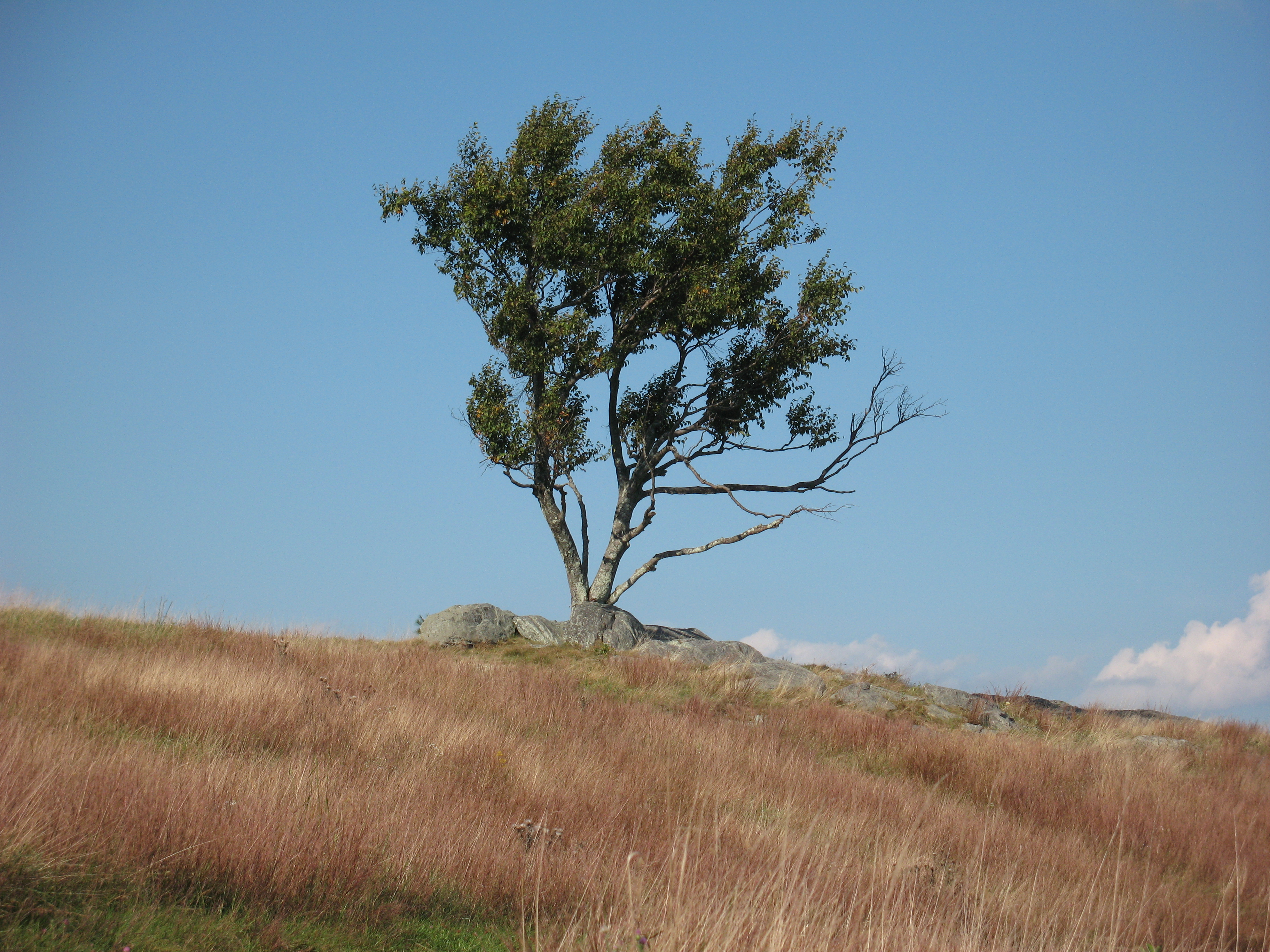
2020-06-11a Doughton Park Tree

Read Full Post »

 . 
[with 3 poems by Beth Copeland]
 . 
Fog
 . 
Morning fog erases the mountain and trees.
No, not an erasure but unseen.
 . 
Not an erasure but unseen.
The mountain, the laurel still green.
 . 
Unlike the mountain and laurel still green,
the dearly departed lie beneath white sheets.
 . 
The deer depart beneath white sheets
of fog, stepping into a forgotten dream
 . 
of fog slipping into a forgotten dream
the ghost mountain dreams.
 . 
The ghost mountain dreams.
Crows fly to pines on mascara wings.
 . 
Crows fly to pines on mascara wings,
mourning. Fog erases the mountain, the trees.
 . 
Beth Copeland
from I Ask the Mountain to Heal My Heart, Redhawk Publications, The Catawba Valley Community College Press, Hickory NC; © 2025
 . 
❦ ❦ ❦
 . 
It’s a big web, here in the corner of our screened porch, but I’m not ready yet to broom it down. The spider is a jointed dried kernel in its center; when I blow, she doesn’t twitch. I don’t see an egg pouch or spiderlings. The strands are not an orb but a diffuse tangle, a chaos of delicate angles and tensions — a miniature of filaments revealed by the background microwave radiation that weave the structure of our entire universe. And what are they made of, those filaments? These I can see before me are nanometer reworkings of hemolymph from mosquitoes denied the opportunity to bite me. Most visible when dusted with pollen. A mess. But I and my broom are not ready yet to offend, to say farewell to the tribe of spiders.
 . 
Last week we visited Blue Whales with our grandson, turning eight. The North Carolina Museum of Natural Sciences in Raleigh is hosting this exhibit of the largest creatures that have ever lived on our planet – the mystery of their migrations, language, culture; the vital interconnections between their diet of krill, their massive enriching orange poop, and the entire deep ocean ecology. Linda and I stood in silence before the model of a blue whale brain and a model of our own. The whale’s is twice as large and twice as complex, convoluted with its twisting gyri and deep sulci. Surely such an abundance of neurons and synapses must create thoughts as complex as our own. Or more so. And yet blue whales struggle to survive as a species in a world degraded by human beings. I am thinking of that brain and I am not ready yet to say farewell to the tribe of whales.
 . 
Chapel Hill cartoonist Keith Knight draws a weekly panel titled (th)ink. Today’s is a portrait of and quotation by James Baldwin (1924-1987): “To be a Negro in this country & to be relatively conscious is to be in a rage almost all the time.” Human being who is relatively conscious, choose your own rage focal point du jour – human beings caged like animals in a Florida concentration camp; children intentionally starved to advance a particular political agenda; boosting fossil fuels burned to appease a few billionaires; an ocean filled with plastic nanoparticles and deafening human vibrations where blue whales may soon be extinct? Some days I feel like I am not ready to go on living. Some days I am more than ready to say goodbye to the tribe of humans. In a few years I will depart as an inhabitant of planet Earth. Some years after that the last memory of my having been an inhabitant will finally depart as well. On that day, will any whales still remain to swim the depths? Will any love between humans remain, or any love for other creatures? I am not ready yet to answer.
 . 
 . 
❦ ❦ ❦
 . 
October Valentine
 . 
A heart-shaped leaf spied in the weeds on my walk
down the hill to the mailbox. I didn’t see a redbud tree
 . 
on the roadside, so it must have lifted on the wind
and dropped – a gift! – near my feet. Is it a message
 . 
from someone I love – my sweet mother in a halo of light,
my father singing the names of trees in his strong baritone?
 . 
Or is it from someone I’ve never seen and may never meet?
 . 
As I hike up the hill, I tuck the leaf in my pocket, rubbing it
with my thumb – as if I could read it – skin to skin – by osmosis.
 . 
Halfway home, I stop to study it. Cerise with splotches of green,
dark spots, a wormhole bored like a bullet wound, a battered
 . 
heart, like yours, like mine, but maybe its scars make it more
beautiful than before. My friends, there’s still so much
 . 
love in this world even when you’re alone.
 . 
Beth Copeland
from I Ask the Mountain to Heal My Heart, Redhawk Publications, The Catawba Valley Community College Press, Hickory NC; © 2025
 . 
❦ ❦ ❦
 . 
Is it strange for me to be toying with despair while reading a book of healing and love like Beth Copeland’s I Ask the Mountain to Heal My Heart? Actually, if you’re not toying with despair you are the strange one. Give grudging thanks, though. Thank the stars and the mysterious hemlocks and the dark fecund earth that in a world full of rage and despair there are poems like Beth Copeland’s. These poems know the feeling of being lost in endless night. These poems have been battered, they have fallen, they have doubted plenty of times whether there is any wholeness or healing available to them, but these poems stand up to testify, My friends, there’s still so much love in this world even when you’re alone.
 . 
Often I tell myself it is ridiculous to imagine that any sort of inner peace is possible. I have my share of personal regrets and ongoing grief, and even though I’m tempted to look around and envy those people who don’t, when I’m really honest I admit that no one escapes whipping. But peace can’t be a wall built around my sadness – walls keep more things in than out. Despair is inevitable. How foolish is it, then, and how strange, to spend a few hours with a book of words arranged in lines on paper and discover the tightness in my throat is easing? The mountain has rested in one place for 480 million; today its peak is less than a third of its height when it was first thrust up in the big crunch. Does it reflect on loss and diminishment, or does it find peace in the weight of its daily being? Am I inflamed and scarred by the revelations of Beth Copeland’s battles and pain, or am I grateful for her gratitude and strengthened by her strength?
 . 
The tribe of human beings seems determined to destroy itself. The tribe of human beings seems determined to link arms and hearts in love. Perhaps discovering a moment of beauty is not a cowardly attempt to escape dire reality – perhaps it is the only thing capable of healing us.
 . 
 . 
Explore REDHAWK Publications, including Beth Copeland’s I Ask the Mountain to Heal My Heart and Shibori Blue: Thirty-Six Views of the Peak HERE.
 . 
Sample poems from Shibori Blue at Verse & Image HERE.
 . 
More information about the North Carolina Museum of Nature Sciences HERE.
Dive into the K Chronicles with Keith Knight HERE.
 . 
 . 
❦ ❦ ❦
 . 
My Daughter Paints a Mountain
 . 
She wasn’t thinking as her brush swept
across canvas in wave-length strokes,
 . 
channeling a crest she’d never seen,
while I was still in the Sandhills
 . 
where there aren’t any hills, just fields
of cotton, soybeans, and cedar stumps
 . 
in swamp water, sleeping on an air mattress
in a small apartment with prints and paintings
propped against walls instead of hung,
newly separated, newly sober, living
 . 
between the husband and home I’d left
and a haven I hadn’t found yet.
 . 
*****
 . 
As I drove up a steep road to see a house
in the Blue Ridge, a large buck leapt
 . 
in front of the car to welcome me,
and I knew I’d found my new home.
 . 
I didn’t know the mountain seen at the top
of the hill was the mountain she’d painted
 . 
months before, and she didn’t know I’d move
to that house with a view of the mountain
 . 
she’d painted as if in a dream or fugue.
How could her mountain – purple, lavender,
 . 
pink, and forest green swirled to a peak
with white streak of snow against a blue sky –
 . 
mirror the one framed in my window?
Was it coincidence or synchronicity
 . 
that the mountain in her mind’s
eye was more map than metaphor?
 . 
It was a message from the universe:
You’re home. Open the door.
 . 
Beth Copeland
from I Ask the Mountain to Heal My Heart, Redhawk Publications, The Catawba Valley Community College Press, Hickory NC; © 2025
 . 
 . 
❦ ❦ ❦
 . 
Doughton Park Tree 2020-11-22
 . 
❦ ❦ ❦
 . 

Read Full Post »

« Newer Posts - Older Posts »