Feeds:
Posts
Comments

Archive for the ‘family’ Category

[with 3 poems by Joseph Mills]

Nothing makes sense. Even so we tell stories hoping to make sense, to create a little sense.

My brother just called from the beach to tell me my mother has had some sort of spell this morning. Maybe a seizure. Wee, pellucid, bone china and silver lace, she is smiling now and saying, “I feel just fine.” The doctor in me asks questions. The son I am worries but then pauses to touch myself on the shoulder and remind: “Her family surrounds her. She is 94 and smiling. She is fine.”

How can we make sense of all this? What should we do?

The evening before they left I sat beside Mom while everyone else made supper and packed. She’d been standing in the middle of the living room for several minutes – feeling that she should be contributing to the activity in the kitchen? – when I convinced her to join me on the couch. For a week she hadn’t been feeling well but a fruitless ER stay, a visit with her beloved family doctor, lab tests, an ECG, none had put a finger on the malady.

I asked Mom if she really felt well enough to ride five hours in the car. I didn’t have to guess how much she wanted to spend two weeks with my brother’s family, their once a year trip east from Montana. She smiled, said she was fine, then started to list all the spots they’d go out to eat during their visit. At least one restaurant there is older than me and the host recalls my name from when I was four. She couldn’t remember the names of several of the places but she could tell me just how to find them and what she’d most likely order.

Mom watched my niece bring glasses to the table and pour the wine. She leaned against me, my arm around her shoulder, and said, “I’m fine. I can’t wait!”

Nothing makes sense and for a moment it doesn’t at all need to.

the answers may be
in the trees, but the questions
are not what you think
+++++++++++from Wind Dancing by Joseph Mills

Joseph Mills tells stories. Wonderful wide-ranging stories, in each of which one of the characters is dance. The poems of Bodies in Motion (Press 53, 2022) take me to cities I’ve never visited; to foreign countries; to high school gyms, wild parties, intimate moments. Even more so they take me into relationships and conflicts and epiphanies I’ve never experienced but which I recognize, instantly familiar. The poems, the stories – do they hold the answers, do they make sense of life? Perhaps, probably not, but they do invite me into communion with the family of all humans – in joy and celebration we shall share our questions.

❦ ❦ ❦

At the Arts Conservatory

Music comes from practice rooms
a piano sonata, a cello being bowed,
scales on a clarinet.

Dancers slide out of studios
bend at the drinking fountain,
go to the bathrooms, check phones.

The hall smells of sweat,
detergent, the latex paint
institutions use on cinder block.

I’m here to talk about poetry,
but for now, I fold against a wall
in a way that eases my back,
and thumb through messages.

In a hospice room in Brittany,
my father-in-law is dying of cancer.
The doctor says when the pain comes
that will be a signal. The signal.

Through a doorway
I can see bandaged ankles,
knee braces, thigh wraps.
Dancers balance and jump
on calloused, scarred feet.

They are young and beautiful
and already know a great deal
about pain. The musicians do too,
talking with familiarity
about repetitive stress injuries.

And they too may know
someone who is dying
at this very moment,
perhaps nearby,
perhaps far away.

I turn off my phone,
and step into a studio,
crossing the threshold
that clears away concerns
at least temporarily.
This is what art making is,

a momentary amnesia,
a pausing, and perhaps
that’s all it is because
the signal will come
for those we love,
and nothing we do,
will stop it or change it.

The students regard me,
curious as to why I am there
and what I will ask of them.
A moment ago, I thought I knew.
but suddenly I consider telling them
how I used to bring my daughter
to the school to watch dances
and afterwards she would play
choreographer, each time ending
stretched out on the floor
with her eyes closed, and I consider
telling them how my father-in-law
lives in Finisterre, which means
the end of the earth, a name
and phrase I’ve always loved.
From his window, he can see

the sea, the edge of everything.
And I consider telling them
in the hallway I remembered
when my grandfather built a seawall.
A man, more comfortable with tools
than children, he kept grumbling
for us to get out of the way, then,
once he had shaped the cement
he lined us up to write our names in it.

The students watch and wait,
and I find myself saying something
neither in my notes or my memory.
I’m going to start by reading some poems,
and I want you to see if you can tell
which ones are by people still alive
and which by those long since dead.

Some students look worried,
some lean forward.

Joseph Mills
+++ from Bodies in Motion, Press 53, Winston-Salem NC, © 2022; first appeared in Sky Island Journal

❦ ❦ ❦

Physics

We may not have understood the laws of motion,
but we exemplified them. Inertia kept us from moving
onto the dance floor, but once we started we wanted
to keep going and grumbled when the band stopped.
We spent each night colliding with and recoiling from
one another. Forget the falling apple. Isaac Newton
would have looked at our rumpled sweat-stained shirts,
wayward hair, our staggering orbits, and said, Eureka!
Or perhaps he simply would have shook his head
as he drank and jotted formulas and vectors on napkins,
notes he would crumple after closing time as we all stood
on the sidewalk in the dark, a cluster of wandering bodies.

Joseph Mills
+++ from Bodies in Motion, Press 53, Winston-Salem NC, © 2022; first appeared in Change Seven Magazine


❦ ❦ ❦

Gratitude

After a dance,
thank your partner

no matter how good
either of you are.

Thank them to acknowledge
how unnecessary it is
such dancing

and so how much more
a gift

Thank them
for giving you
a part of their life.

Thank them
for allowing you
to give a part of yours.

Joseph Mills
+++ from Bodies in Motion, Press 53, Winston-Salem NC, © 2022; first appeared in The Power of Goodness

❦ ❦ ❦

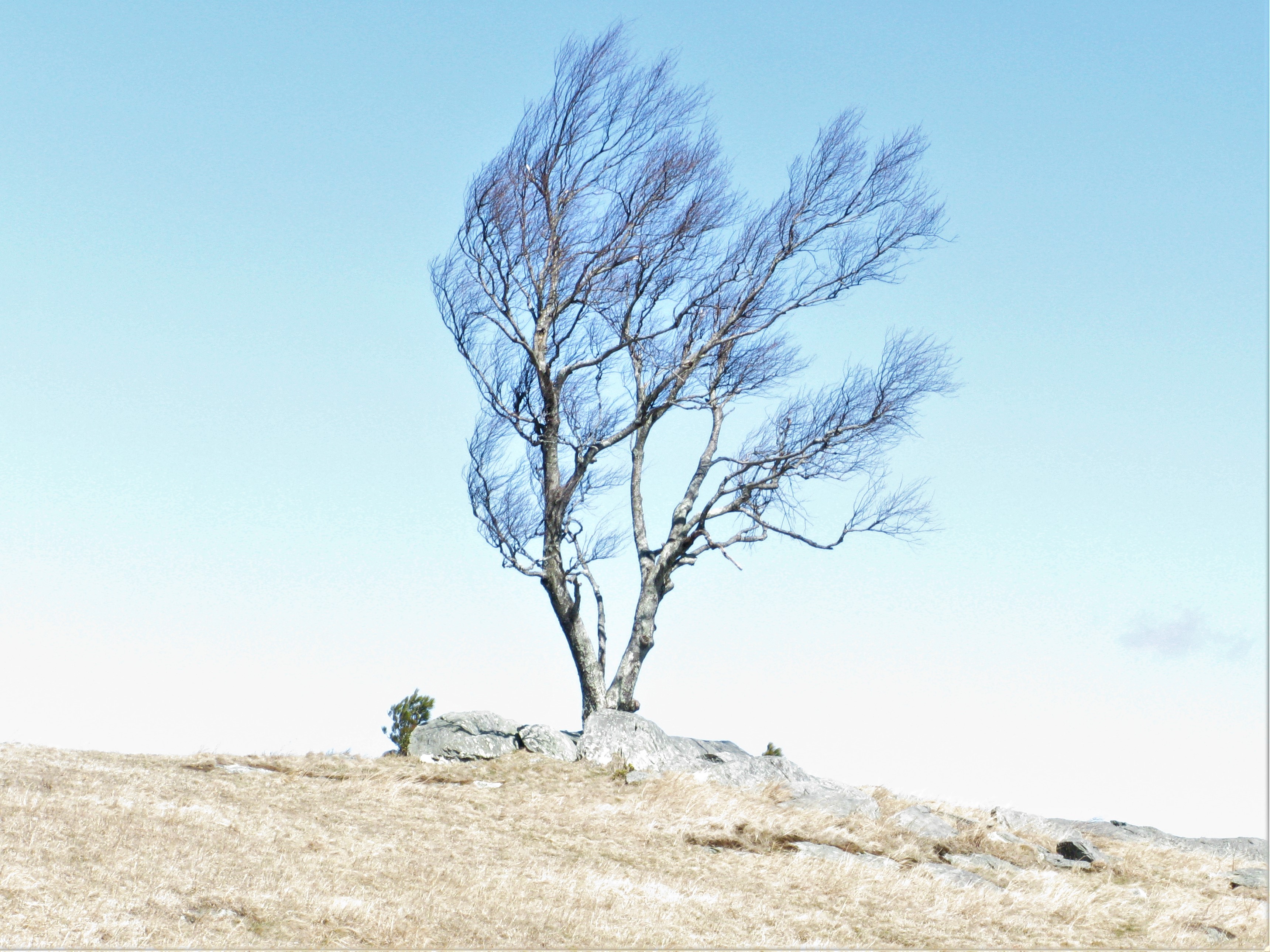
Doughton Park Tree 4/30/2022

Read Full Post »

[with 3 poems by Joanne Durham]

As my years advance does the bowl of my life become deeper, wider, more capacious? Joanne Durham’s new book of poetry from Evening Street Press has me reflecting, and not least because of its title. Events, experiences, memories fill the bowl; when I return to the bowl and drink I discover that the more I refresh myself the more the bowl fills itself. And me. Never emptied, always replenished. As Joanne reminds us with this opening quotation by Naomi Shihab Nye: Maybe if we re-invent whatever our lives give us we find poems . . . .

Certainly. If you are a poet the bowl of memory will give you a poem. If you’re an artist, a painting. If a novelist, a houseful of spicy characters, no doubt. Writers intentionally revisit the milestones and landmarks of the past like a traveler trying to find their way back home after a long absence. Or like a possum in the compost heap convinced there are tasty bits concealed there.

But if I am simply jotting down recollections for the purpose of crafting a few lines, I am missing the deeper power of this image: to drink from a wider bowl. Not a cup, narrow and designed for only one person; a bowl, a communal vessel, something we all may dip into. Something that perhaps actually requires more than one for it to be lifted and poured. Not necessarily to say that advancing years invariably bring wider perspective and wisdom. If only that were true.

The converse, though, certainly is true – one does not need six or seven decades to open oneself to the wider world of human feeling. The wider bowl is the horizon that embraces not only my own recalled experiences but invites me to drink understanding and compassion for the experiences of others as well. When I drink from a wider bowl, I value and treasure the lives of those I don’t even know. Poetry knows how to do that. Poetry invites, includes, embraces – three gestures the world will always need.

❦ ❦ ❦

Learning

What happens to the sun at night?
I ask the four-year-olds,
cross-legged on the carpet,
Marcos confidently explains,
It goes to New Jersey.
April, whose Mom has read her books
about everything
helpfully chirps,
The earth tilts and you
can’t see it anymore.
Darnell with raised arm churning the air
counters, The sun breaks up
Into little pieces and fills the sky
with stars. It the morning
they come back together
and make another sun.

Science and poetry
poised on the edge of cosmic battle,
until my smiling voice
intervenes, celebrates
how children’s minds tilt
on their own axes.
You are creators of stories,
to explain the world.
You carry on
an ancient tradition.

On my way home, I ponder
if we could learn
to live this way:
Each in the darkness
illuminating
one small stretch of sky,
and then together making
a brilliant, focused energy,
from all we’ve seen,
from all we’ve learned.

Joanne Durham

❦ ❦ ❦

To Drink from a Wider Bowl, Joanne Durham, Evening Street Press © 2022, Sacramento CA; winner of the 2021 Sinclair Poetry Prize.

Joanne has divided her book into seven sections to create a chronology, from recollections and tales of her grandparents, to the heritage of her parents, to today’s experiences with her own grandchildren. The themes that recur are love for family and also wider love for community and for the earth.

Perhaps Joanne’s seven sections are deliberate: if I hold a memory of my great-grandmother and my great-grandchildren have memories of me, we create a span that connects seven generations. And if our families, communities, and nations consider in all our deliberations the impact we will have down to the seventh generation, perhaps we could truly discover solutions to the world’s poverty, ignorance, disease, and injustice. Perhaps we would learn this through drinking from the widest bowl.

[Seventh Generation Ethics is recognized as an essential part of the ethos of the Iroquois Nations and that of other indigenous peoples.]

❦ ❦ ❦

Repair

The dishwasher repairman
politely speaks
with a deep Nigerian accent

reading us fine print
on the receipt: accept treatment
or pay anyway for the visit

his body rigid to absorb
the anticipated blow
of our irritation

before we leave him, disgusted,
to do the job
he’ll get a fraction

of the charge for.
Then my husband
offers him a beet

lush purple half-moons
of some alien
landscape

freshly boiled, peeled, sliced.
Ever had one?
I never cooked them before.

the gesture doesn’t
sweep the counter clean,
but it leaves

an even surface
for three people
to laugh, talk, and eat.

Joanne Durham

❦ ❦ ❦

Maps

Every home
needs a map of the world.
Hang it by the entrance.
Bless it as you might
a cross or a mezuzah
when you come and go.
Trace your finger across continents
not your own.
Say names of countries whose sounds
tickle your throat and move your lips
differently from your own language.
Be curious about who lives there,
sharing seas and stars.
Hope to meet them,
fellow earth-dwellers,
all calling this planet
home.

Joanne Durham
[ a recitation of this poem ]

❦ ❦ ❦

IMG_1822, mountain

❦ ❦ ❦

IMG_0768, tree

Read Full Post »

[poetry by Liz Garton Scanlon, Alice Walker,
John Hoppenthaler, Catherine Carter, David Poston]

All the World

Rock, stone, pebble, sand
Body, shoulder, arm, hand
A moat to dig, a shell to keep
All the world is wide and deep

Hive, bee, wings, hum
Husk, cob, corn, yum!
Tomato blossom, fruit so red
All the world’s a garden bed

Tree, trunk, branch, crown
Climbing up and sitting down
Morning sun becomes noon-blue
All the world is old and new

Road, street, track, path
Ship, boat, wooden raft
Nest, bird, feather, fly
All the world has got its sky

Slip, trip, stumble, fall
Tip the bucket, spill it all
Better luck another day
All the world goes round this way

Table, bowl, cup, spoon
Hungry tummy, supper’s soon
Butter, flour, big black pot
All the world is cold and hot

Spreading shadows, setting sun
Crickets, curtains, day is done
A fire takes away the chill
All the world can hold quite still

Nanas, papas, cousins, kin
Piano, harp, and violin
Babies passed from neck to knee
All the world is you and me

Everything you hear, smell, see
All the world is everything
Everything is you and me
Hope and peace and love and trust
All the world is all of us

written by Liz Garton Scanlon
illustrated by Marla Frazee
All the World, Little Simon, an imprint of Simon & Schuster, New York NY, © 2009

❦ ❦ ❦

I love this children’s book by Elizabeth Scanlon – the whirl and dance of the poetry, the absolutely beguiling illustrations by Marla Frazee. It is elemental and compelling, it is joyous and inclusive. It is all of us.

But I had to think long about whether to lead us to Earth Day with this poem. Is it Ecopoetry? Is it a little too much centered on one particular species? How do we celebrate the earth? How do we revere the one blue dot in the universe upon which we can live and thrive?

All the world is all of us. Dogwoods still blooming, warblers arriving, golden ragwort masquerading as weeds, rockfish spawning in Roanoke River, hellbender ugly as sin. Dandelions in the lawn, princess tree crowding out the basswood, wisteria strangling another neglected back lot. Celebrate us all – even while hacking the invaders – but don’t leave out the most aggressive, invasive, threatening species of all. You guessed it – you and me.

One might argue that there are far more pressing needs in our one world than environmentalism. Reminds me of a t-shirt my friend Evan brought me back from a trip to Yellowstone: along with illustrations of various animal scat and the label “Endangered Feces” is the tagline, No Species, No Feces. Which makes the other side of this argument: “No Environment, No World Problems.”

Poverty, politics of hate, racism, homophobia, nationalism, war – how can we make a place in our hearts to worry about our environment when these and so many other worries take priority? Perhaps these things are as intrinsic to our nature as the jillion seeds of princess tree and the invincible roots of wisteria. Are they?

Here’s my thesis – begin reading All the World to every kid at age 2 and by the time they can read it for themselves they may have planted a seed of love within their hearts. They might love themselves no matter what they look like. They might accept a whirling dance of neighbors as their kin. They might have room in their hearts to care about weeds and warblers and ugly giant salamanders.

Think so? Do you think that if we are going to preserve all the world as a place for all to thrive we are going to have to address the aggression, invasiveness, and threat within each one of us? For all the world is all of us . . .

❦ ❦ ❦

We Have a Beautiful Mother

We have a beautiful
mother
Her hills
are buffaloes
Her buffaloes
hills.

We have a beautiful
mother
Her oceans
are wombs
Her wombs
oceans.

We have a beautiful
mother
Her teeth
the white stones
at the edge
of the water
the summer
grasses
her plentiful
hair.

We have a beautiful
mother
Her green lap
immense
Her brown embrace
eternal
Her blue body
everything we know.

Alice Walker

Selected by Becky French (my sister), who writes: I especially like this poem by Alice Walker from her book of meditations titled We Are the Ones We Have Been Waiting For. The prose that follows the poem in the book is quite poetic as well: The earth mother, who stands behind the Human Mother, can be known by lying on her breast. She can be known by swimming in her oceans, or even by looking at them. She can be known by eating her collard greens and carrots. Savoring her fruits, walking through her wheat fields. She is everywhere, our Mother Earth; … (p. 129).

❦ ❦ ❦

The Whale Gospel

Whales have run aground off Cape Cod again.
What if God created them for us as metaphor?

How like us they are, beached and prostrate,
sand shifting under them with every wave

from heaven. Bloated and murder to move,
they slowly rot in the blurry sunshine, victims

of distress we can’t fathom. All we can think
to say is beware the giant squid, the seaquake,

beware sickness in your leaders. Beware the dark-
eyed shark, sonar’s ping and Japan’s traditional hunger.

The rusty bows of ghost ships
++++++++++++++++++ are singing through the water.

John Hoppenthaler
online in “Two Meditations on Ecology

❦ ❦ ❦

Lactobacilli

Invisible and everywhere,
on your hands,
on your shoes,
in your nose, lining
your ells of bowel,
we lay down scraps
of chromosomes
and pick them up
like screwdrivers
or cards, if half the cards
are wild as sauerkraut-
e. coli, listeria,
seaweed, straight flush.

Nor are you you,
some single entity
cruising the lonely black
star-seas like a whale:
you are a ship, a host,
the poker table.
We are crew
and players and spirit,
your spirit, the one many-
bodied soul you can know
for sure. Genius loci.
Spirits of place.
Full house.

Catherine Carter
Southern Humanities Review, Spring 2020

❦ ❦ ❦

The Garden Takes over Itself

the world is sacred++++ it cannot be improved
snow is shadow++++ ice is light
we breathe++++ and wildness comes in
bit by bit++++ the garden takes over itself

snow is shadow++++ ice is light
the moon not only full++++ but beautiful
bit by bit++++ the garden takes over itself
after we leave it++++ we dream of falling

the moon not only full++++ but beautiful
descending and ascending++++ all our lives
after we leave it++++ we dream of falling
the space within us++++ is not our own

ascending and descending++++ all our lives
the world is sacred++++ it cannot be improved
the space within us++++ is not our own
we breathe++++ and wildness comes in

David E. Poston
from Iodine Poetry Journal XVII (2016): 105.
Reprinted as POETRY IN PLAIN SIGHT poster. NC Poetry Society, 2021.

“the world is sacred…” from Lao Tzu, quoted by Jack Turner interviewed by Leath Tonino (The Sun Aug. 2014)
“we breathe…” also from Jack Turner
“snow is shadow…” is Barbara Sjoholm in The Palace of the Snow Queen
“the moon not only full…” is from Aldous Huxley’s Meditation on the Moon
“…the garden takes over itself” is from Sandra Cisneros, in The House on Mango Street

❦ ❦ ❦

Early in April I asked readers to share a favorite poem that celebrates the interdependence and interconnection of all life on earth. I am including their offerings in three posts before, on, and after Earth Day, April 22. Thank you to those who responded, and thanks to all of you who read this page and share in the celebration.
❦ Bill Griffin ❦

Read Full Post »

« Newer Posts - Older Posts »