Feeds:
Posts
Comments

Archive for the ‘family’ Category

 . 
[with 3 poems by Jane Shlensky]
 . 
Balance
 . 
Each morning Granny hobbles to the spring
uphill two miles with buckets in her hands
through woods now thick with frost, limbs cleared of leaves.
And over rocks almost atop a hill
behind her house, she sees the water gush,
and, slow with age, she stoops to clear away
the leaves and sticks that clot the pulses’ rush,
and, cracked cup in her hand, she dips into
“sweet water” as she calls it, gathered wild
as honey in abandoned rees, and pours
the nectar into metal milking pails
to carry down the mountain, arms held far
from hips and sides, all tense – as pugilists
might hold their arms, quite low with hands in fists.
But her fists grip the metal handle’s cut
into her palms, as water weighs her down
and down the well-worn path toward her house.
I offer her a new artesian well,
but she just laughs at me and shakes her head.
I ask if I may carry home the spring
for her, but she denies she wants the help
and says it gives her reason for a walk
among the trees on any given day
and carrying two buckets makes her sure
of foot and balanced in a world that’s not.
 . 
Jane Shlensky
from Barefoot on Gravel, Finishing Line Press, Georgetown, KY; © 2016
 . 
❦ ❦ ❦
 . 
I hate my anger more than I hate vomiting. The dead sick inevitability as it rises, how it makes my hands go cold and clenches my jaw. Disorienting, paralyzing rational thought. I am not going to let that anger out.
 . 
People tell you it’s best if you do. You have to let go of your anger. Maybe they’re right, because while it’s rising I don’t even see it coming, I don’t know to call it anger, I have no warning or defense that might prevent the stupid things I will do or the hurtful things I will say. I am afraid of the anger so I run from it before it can get me. Running, stumbling, I usually fall. Anger blasts me off balance.
 . 
Linda and I are sitting in the car. We had thought to take a walk in the gardens but now I’ve picked a fight with her, I can’t even recall about what. Linda has never let me get away with anything – I say this with honest, grudging admiration – and she says something now that jars me: “So is this what it’s going to be, then?” She is seeing something I can’t see. I admit it. I’m so confused, I tell her. And so she pushes me to relive the last couple of hours, ticking over the balance sheet – frustration at last night’s botched meeting, undercurrent of worried anticipation for tomorrow, niggling mis-steps and course changes this morning that had me snapping at a friend, patience evaporating to hot steam. Little angers mounting, not let out.
 . 
At last she wants to give me some justification. “Anyone would feel that way.” Not this time. True or not, I’m not buying that line. I’ve used it a hundred times to tamp down the anger, cover it and hide it. I don’t actually gain much insight into all this until much later, but there is one best way to regain some balance. To let anger’s own entropy cool it down to nothing. Sitting in the car next to Linda, I open up and own it. I said and did things that hurt people; I am responsible. I am sorry. I’m not happy with myself or the situation, but at least the two of us are finding enough balance to begin our walk after all.
 . 
 . 
It hurts to walk barefoot on gravel. When I first met Linda, she and her sisters went barefoot all summer long. It was nothing for them to walk a mile or two on those tar-and-gravel Ohio roads or through the woods over dry twigs and sweetgum balls. I tried to keep up, limping like an old codger and next day lame. But I kept walking on sore feet because I wanted to keep up. I wanted to be near them.
 . 
Jane Shlensky’s poems will not make you limp although they can be sharp and pointed. They will make you want to come along and keep up. Jane loves her characters, which she has drawn from generations of rural memories and red clay. She grew up in Yadkin County, NC, just across the muddy river from me, and she sees those farmers and grandmothers and wives more clearly than they ever saw themselves, perhaps. I don’t sense Jane imploring us to return to those old times and old ways. Instead, she shines her light on the truth of what brought her up and made her. What we carry in our pockets may change, but what we carry in our hearts does not. Read Barefoot on Gravel and find a moment of balance in a world that is so often not.
 . 
 . 
❦ ❦ ❦
 . 
Ain’t No Sunshine
 . 
“Oh, Lord,” she says, mixing the batter
for pancakes, the sausages sizzling,
the coffee perking in her mama’s pot
that’s so worn it’s barely metal.
She keeps it for the comforting perk,
fragrant life bubbling up, making promises.
 . 
But he’s in his wing chair, hunkered
over his guitar, his face blank as rain,
his strum, hum, strum him,
accompanying his slow moan.
His voice is like buttered rum, oiled
and warm as fever, just enough gravel
in his bass notes to scratch at her heart.
 . 
“Oh, Lord, that man,” she says to no one,
but her Lord hears everything in her heart.
She knows this as sure as she knows
the spit of oil before she tips the batter in,
as sure as she knows the hiss and blister,
bubble browning in the cakes.
 . 
He is having one of his blue days –
won’t fight the sadness, just leans on
that old guitar, curls in on himself
like a dog that hopes to lick the pain away.
He’s finding a sound to help him stand,
a trembling chord to lift a mighty weight.
 . 
He’s singing his own song and she knows it,
her heart clutching at his words, wishing
she could mother is sorrow away, feed
his hopes. She needs him, even if
they struggle every day. She turns to Jesus
kneeling on the wall and whispers,
“Dear Lord, that man there . . . we best
but some blueberries in these cakes.”
 . 
Jane Shlensky
from Barefoot on Gravel, Finishing Line Press, Georgetown, KY; © 2016
 . 
 . 
❦ ❦ ❦
 . 
One Better
 . 
While we puzzled over the perfect
birthday gift for our father,
he packed up his fishing gear and
a few clothes and bid us farewell.
 . 
Jane Shlensky
from Barefoot on Gravel, Finishing Line Press, Georgetown, KY; © 2016
 . 
❦ ❦ ❦
 . 
 . 
❦ ❦ ❦
 . 
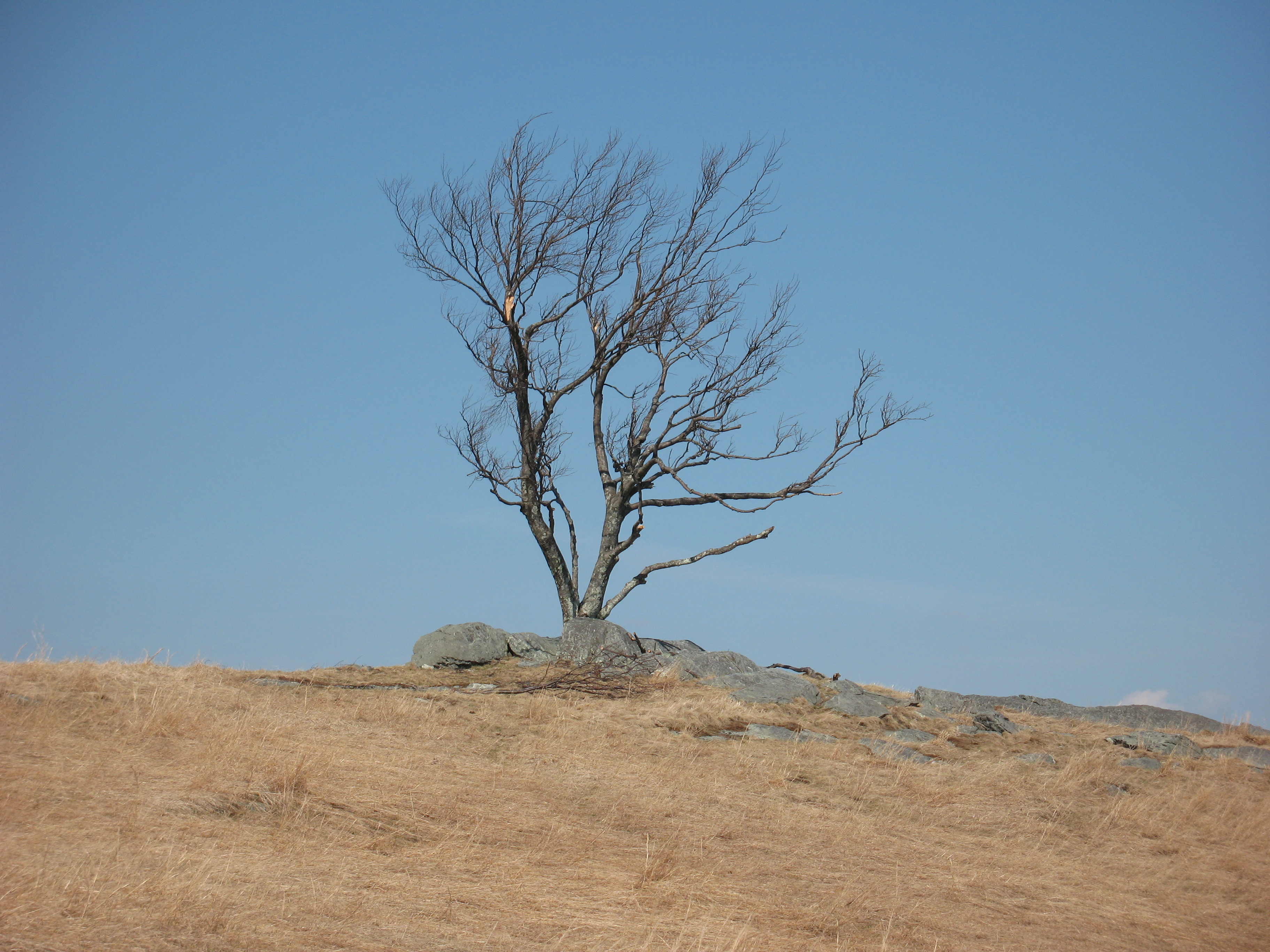
 . Doughton Park Tree 2020-11-22

Read Full Post »

 . 
[with 3 poems by Jan LaPerle]
 . 
Cupboard
 . 
One day I decide I’ll do something
good for people,
but I forget, then I nap.
My daughter wants to make
lemon cake so we do that.
I stand on the stool
and begin this great hunt
for poppy seeds.
Hours pass, and I’m on my tiptoes.
I stop searching for a minute to listen
to the wind. The branches snapping.
My daughter ran off agin to her swing,
her swing tied to the branch
of the tree she climbs,
the tree run through with electric wires
in the yard she flies her kite in.
She flies it high as the cell tower.
Her dragon kite breathing fire.
Her dragon kite headed in a nosedive
straight into those electric lines.
I can’t do anything about anything.
I’m trapped in the cupboard
forgetting what I’m searching for.
I dust the spice tops; they go on forever.
My hair too tight in its bobby pins.
Here as good as any place to pray.
 . 
Jan LaPerle
from Maybe the Land Sings Back, Galileo Press, Aiken, SC. © 2022
 . 
❦ ❦ ❦
 . 
The dark and the light are neck and neck again. When dark creeps in the light just doesn’t seem to have much of a chance. This is a close as we come to living dangerously – taking a walk in the woods on an afternoon that promises thunderstorms. Today Linda and I are at Friendship Trail, part of the Mountains-to-Sea Trail east of town. Such a lovely name – almost no one walks here but when we do cross paths the others always smile. Perhaps they’re filled with the same thoughts as the two of us: cool shade, gentle slopes, chuckling creek. Green welcome.
 . 
Only a lumpy heap of black sky to the north, that’s all we could see from the parking lot. For the moment sun slants through the pines and tuliptrees. Cicadas sing. Into our third mile, though, shadows begin to deepen and the leaves get nervous. We can still see blinks of blue straight up through the branches but dark is moving in, shouldering it all aside. A stick drops from height to land at my feet. Will a widow-maker be next?
 . 
What gives dark its edge? Why its power to blot out a cheery afternoon and replace it with foreboding? Dark needn’t even knock yet I open the door to it.
 . 
Dark 4 AM’s are worst although understandable: the hour when the soul’s earthly tether / gently uncoils its smoky grasp / as tenuous as breath.* If I awaken at such an hour I immediately implore myself, “Don’t think, don’t think of . . . ,” but so swiftly the dark lines up its charges, some sharp as yesterday, some rank with decades, some uncertain ever to arrive at all but all too easily imagined. Dark loves the quiet unprotected moment.
 . 
But why, then, into light and airy freedom of mind is dark also able to intrude? I discover myself on a rural highway, green tunnel and morning dew, but instead of anticipating certain joy around the next bend I am reliving random moments of my own stupidity or, worse, recreating injuries and insults in some delusion that this heaps coals upon the heads of my enemies. Not Buddha but someone apparently equally enlightened said that to hold a grudge is to drink poison while imagining it will kill your foes. Here I am fueling the dark with anti-matter I’ve brought to the bonfire myself. This negativity, what could be more precisely the opposite of experiencing life in the moment? I open dark’s door myself.
 . 
Take a deep breath. Give my heart a good airing. No blame, no shame, just look straight up through the branches and accept what you see. Gray now, but not black. Threatening gusts have settled back to cooling breeze; just a few cold drops on my neck and no more. Here is the edge of the woods, the field, our car up ahead. Linda and I say, as we tend to, “Well, we carried our umbrellas and that’s what kept it from raining on us.” For a stretch it seemed neck and neck, but even so this hour has been full of green welcome. If at this moment we were instead dripping, shoes aslosh, about to shiver, we could still likely bring ourselves to say, even as we are about to now, “That was a wonderful walk.”
 . 
 . 
The dark and the light are neck and neck again. So they seem to be in every poem by Jan LaPerle. Maybe the Land Sings Back is not a book of platitudes and happy endings. In fact, this is the anti-platitude book. But neither do these lines ever surrender to unremitting darkness. Despair dances with hope even if they are both stepping on each other’s feet. Gray sadness cracks and a thin bright line of joy refracts into color down the wall. These poems accept the small daily trials we might think inconsequential as well as the towering existential anxieties we have to admit if we are alive in this century. These poems offer us the chance to share all of these and in doing so they invite us to become more human.
 . 
Many of these poems are constructed as a series of observations. No, not observations, not apart from the experience but within the experience: these poems are a series of lived moments. Our image of the writer – her age and circumstance, her partner and parent relationships, what she fears and what she loves – is not constructed from what we are told or shown but from sharing the experiences as she does. She struggles to find meaning. So do we. She is surprised that a small act can dispel loneliness or that a small memory can carry a huge weight of joy. We experience surprise at the very moment she does. I have been blown through this collection by a wind of anticipation and revelation and promise. At the end I am simply convinced that, even though neck and neck, the dark doesn’t have much of a chance.

 . . 

 . 
Maybe the Land Sings Back, Jan LaPerle, Galileo Press, Aiken, SC. © 2022. Jan LaPerle lives in Kentucky with her husband and daughter, and is a master sergeant in the U.S. Army at Fort Knox. Galileo Press was founded in 1979 by Julia Wendell and Jack Stephens, now lives in Aiken, South Carolina, and also publishes the journal Free State Review.
 . 
[* from Circadian (Welcome Morning) by Bill Griffin, published 2005 in Bay Leaves by the Poetry Council of North Carolina and collected in Crossing the River, Main Street Rag Publishing, Charlotte, NC. © 2017)]
 . 
 . 
❦ ❦ ❦
 . 
Dear Tuth Fary
 . 
This is the beginning of my
daughter’s letter, and in it folds
a tiny tooth, small as the foot of the mouse
we caught this morning in a trap
that looks like a hallway to heaven.
The light at the end illuminating a dollop
of peanut butter, heaven enough
for the mouse who was still alive,
still zipping its stringy tail back and forth
across the hardwood. My daughter
and I went outside to set it free, left the tea
warm on the counter, the teabag
with one of those little paper sayings,
The earth laughs in flowers, but there’s no laughing here,
just ice creeping across everything, making us feel
even more zippered-in, my daughter
on the threshold right before the cry.
She could go either way, and this is always
up to me to maneuver. So I make up some life
for this mouse to get back to, some little car,
tiny house, little teacup tinier than a mouse tooth.
Isn’t it all so cute? Isn’t it great, how I can
hold the world in the light like this?
I cannot talk to her about why the mouse
went in there, the temptation, peanut butter
and loneliness, the pinhole of light in all the darkness,
like when she woke in the middle of the night
and came to my door to say, so sweetly, Hi mama,
which I snuffed out quickly with all my middle-aged
darkness. Midnight breath its own nightmare.
In the morning, I go to my coffee, my office
in the attic where I belong, and the squirrels
scrabble across the shingles and we laugh a little,
we being me and the comic part of me that
pops her head through the skylight to talk
to the critters above and below, and I can hear
it all from there. The inconsequential-ness
of my life is a cinch on my heart. The sweetness, too,
of my little girl growing in the most beautiful person
I have ever seen. That’s enough.
The dark and the light are neck and neck again.
I am freezing from my heart up.
I am right here, rooting from the window.
 . 
Jan LaPerle
from Maybe the Land Sings Back, Galileo Press, Aiken, SC. © 2022
 . 
❦ ❦ ❦
 . 
Big Quiet Things
 . 
Forever we remember her
on our way to the coast,
in the back seat, quiet
for a million miles,
watching movies with
headphones on and
then, as if a word were
a thing, as if quiet
were an ocean,
and out of it: CRAB!
And years now later,
my husband can say it
or I can say it,
and we are warmed together
even when all around us,
sinking us, pulling us under,
a riptide. And it feels
impossible. And there’s
nothing to hold onto.
Silence for a million miles.
Then out of it
a word, and then more where
that one came from,
all washing up, and the sun
warm, the sand
here with us,
waiting with us.
 . 
Jan LaPerle
from Maybe the Land Sings Back, Galileo Press, Aiken, SC. © 2022
 . 
 . 
❦ ❦ ❦
 . 
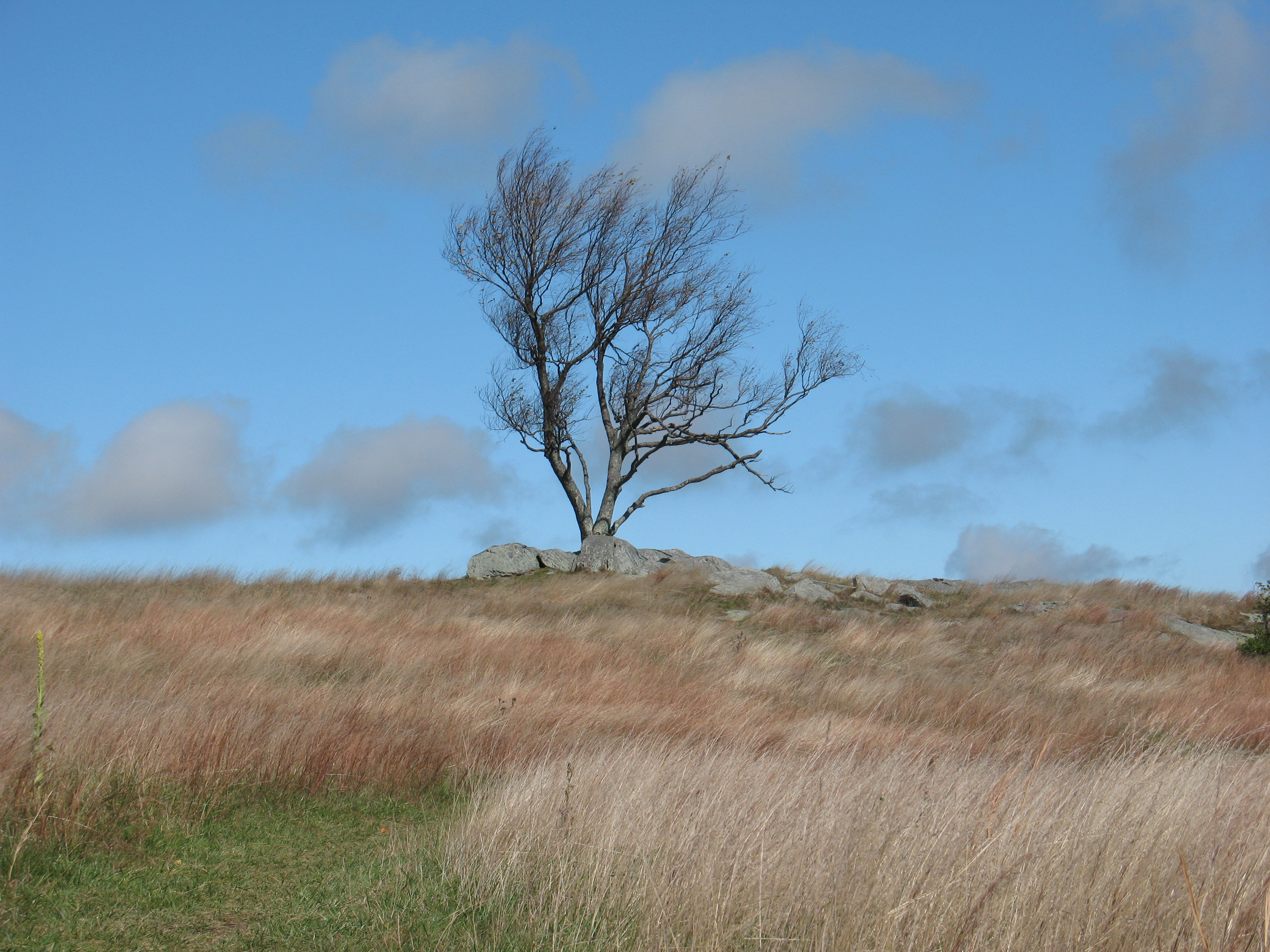
2016-10-17a Doughton Park Tree

Read Full Post »

 . 
[2023 chapbook by Bill Griffin]
 . 
We Never Give Up Hoping
 . 
Morning frozen hard. Pour
++++ boiling water
into the birdbath;
++++ they will come
to drink when I have gone.
 . 
++++ God of holy ice, holy
++++ ++++ steam,
++++ give my children
++++ ++++ water
++++ that all my hoping
++++ ++++ can’t.
 . 
Sound of wings, splash
++++ diminishing;
find the world again
++++ iced over.
Fill the kettle. Holy water.
 . 
Bill Griffin
from How We All Fly, The Orchard Street Press. Gates Mills, OH, © 2023
originally published in Quiet Diamonds
 . 
❦ ❦ ❦
 . 
Join me in celebrating the release this month of my newest chapbook, How We All Fly, from The Orchard Street Press.
 . 
Poet Patricia Hooper describes the collection: “Through close observations of the physical world, these clear, direct poems yield insights into the corresponding life of the spirit.” And Rebecca Baggett says this: “Throughout these poems, but particularly toward the collection’s end, How We All Fly leads the reader up and onward, infusing even inevitable losses with tenderness, trust, and hope.”
 . 
Patricia Hooper is author of Wild Persistence, University of Tampa Press.
Rebecca Baggett’s most recent book is The Woman Who Lives Without Money, Regal House Publishing.
 . 
❦ ❦ ❦
 . 
 . 
❦ ❦ ❦
 . 
Thank you for your support, both of the writing you discover here and of the literary arts!
 . 
You may purchase a copy of How We All Fly directly from me by mailing a check for $15 (postage included) to this address:
++++++ 131 Bon Aire Rd.
++++++ Elkin, NC 28621
Please make your check payable to Bill Griffin.
 . 
If you would prefer to pay via PayPal, please contact me for transaction details at: comments@griffinpoetry.com
 . 
❦ ❦ ❦
 . 

Read Full Post »

« Newer Posts - Older Posts »