Archive for the ‘Ecopoetry’ Category
Chunky Hummer
Posted in ecology, Ecopoetry, Imagery, tagged Alchemy, Bill Griffin, Ecopoetry, imagery, nature, nature photography, nature poetry, poetry, Rae Spencer, Southern writing on October 11, 2024| 7 Comments »
.
[with 3 poems by Rae Spencer]
.
Innate
.
what does a hummingbird know
in its world of nectar and need
.
nightly forced to torpor
by the constant urge to feed
through staggering migration
.
are its dreams equally desperate?
.
does it wake hungry
ill-tempered with beauty
cramped with desire
.
suddenly alert to the nature of sugar
aware that satisfaction can only ever be
.
illusory
.
and what does the hummingbird sense
as it sips the flower’s allure
.
does it know of delicate meanings
pitched fever-tight
into its tiny world of furtive speed
.
dare I surmise anything?
.
maybe nectar is only a meal
sugar an ache that will pass
beauty an accident of form
.
and nothing means more than a wing
clasped into the air and released
.
effortless
.
Rae Spencer
from Alchemy, Kelsay Books, American Fork, UT; © 2024
.
❦ ❦ ❦
.
Hovering to sip sugar water, flicking your tongue into the red plastic flower, then dive bombed by a lance-tipped green blur – this is daily life for a hummingbird in the Eastern US. We only have the one species here, ruby-throated, and they do not play well with others. When it comes to a choice feeder there is no sharing, unlike the scene in the Western US where a cloud of a dozen birds, four or five different species, will jointly keep a feeder sincerely humming.
.
These last two weeks of September we have been visited hourly by the chunkiest hummingbird I have ever seen. The sleeker slimmer birds will chase her away but then she’s right back. (She-birds only; all the males have left for Central America by the end of August and these more svelte visitors and chasers have likely already burned fat as they’re migrating through from farther north). I realize hummingbirds have to bulk up each autumn, entering a period of hyperphagia before migration similar to black bears before hibernation, but this bird is a real hunk. She is going to have no problem making the 800 km flight from Florida to Yucatan, a natural miracle for such a tiny creature who, even at twice her normal body weight, still weighs only 6 grams – about the weight of a postcard, or of the well-sharpened pencil you’ll use to write a note to Guatemala to let them know to expect this ruby-throat in a couple of weeks.
.
❦
Audubon NC suggests continuing to fill hummingbird feeders until the second week in October. Abundant sugar will not deter the birds from setting out on their southward journey; their migration is triggered by light, or actually its absence, the diminishing length of day. All creatures live by their own internal clock. For some the clock’s ticks are soil temperature, snowmelt, the movement of water through earth; for others alarms are set by earth’s rotation and the stretch of sunlight and shadow.
.
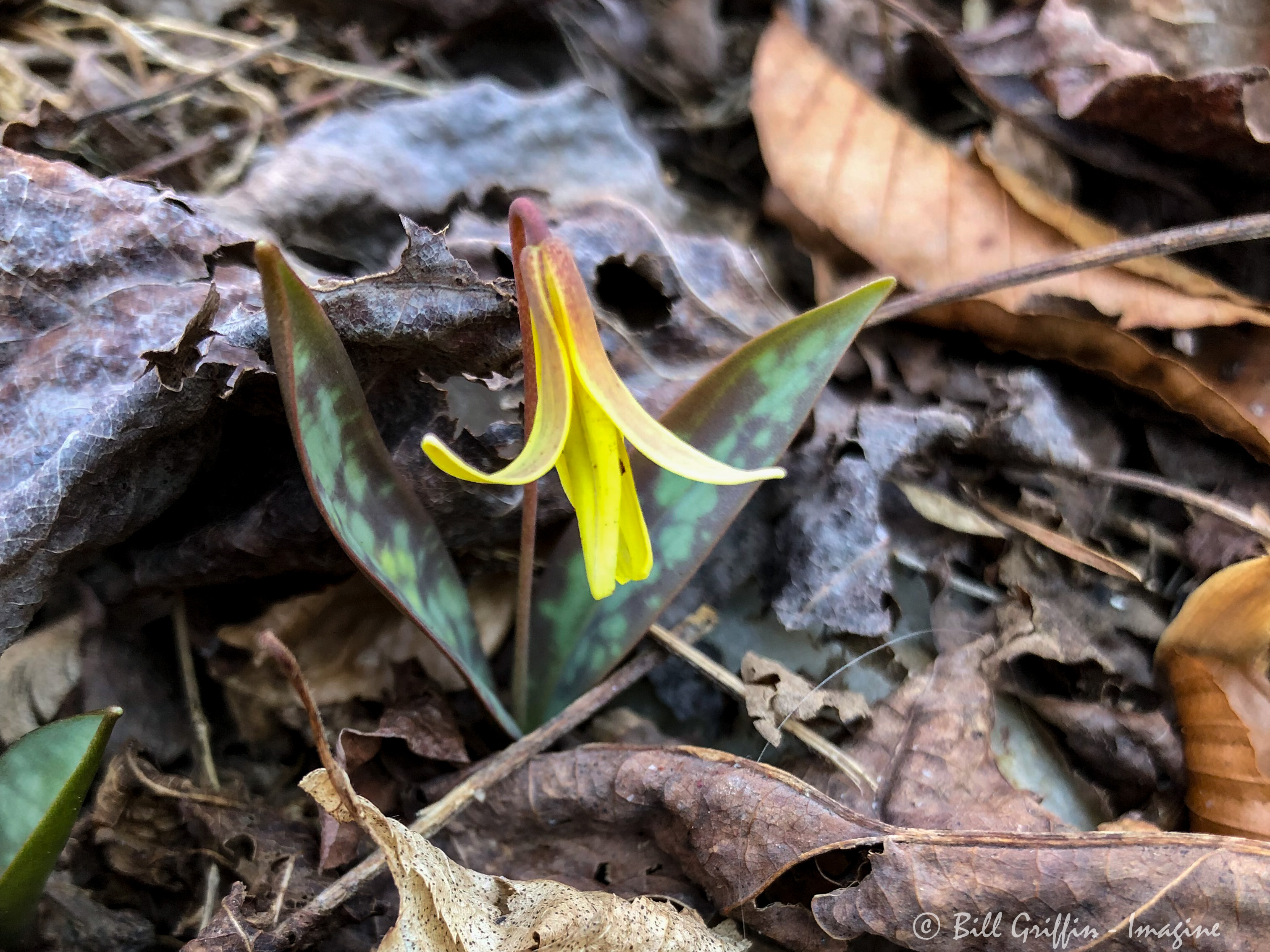
And no creature lives in isolation. What if come clocks tick out of rhythm with the others? In the Western US, when broad-tailed hummingbirds arrive from their wintering grounds they depend on spring-blooming glacier lilies for nectar to replenish their exhausted energy. By 2012, however, biologists noted that the lilies were beginning to open seventeen days earlier than they had several decades prior. Some would already be withered before the hummingbirds even arrived. By 2050 the birds may completely miss the span of lily bloom.
.
Phenological mismatch is the term for this consequence of global climate change. What if migrating flycatchers miss their fly hatch? What if flowers bloom to no pollinators? Some species seem to benefit from early spring – marmots have a longer season to chow down and birth more marmettes. Some species can adapt to new timings but many can’t, especially as climate clocks accelerate their vagaries and variations. We can’t yet know all the consequences, but we know our children and grandchildren are experiencing a different world from the world in which we grew up.
.
.
❦ ❦ ❦
.
Belyaev’s Foxes
.
When most only wanted their fur
Belyaev wanted their genes
.
He selected those he could touch
The ones who ate from his hand
.
Exerting curious pressure
On his wild silver stock
.
Closed in outdoor cages
To bear Belyaev’s chosen litters
.
Where is the gene for submission
For loyalty and bonding?
.
Somewhere, it seems
Connected to curly tails
.
White stars on the face
Flopped ears and blunt snouts
.
Wags and whines and barks
Which compete for favors
.
Other than food
So Belyaev’s foxes tamed the men
.
With prolonged puppyhood
And after thirty generations
.
Heeled happily across their yard
In through the open front door
.
Rae Spencer
from Alchemy, Kelsay Books, American Fork, UT; © 2024
.
❦ ❦ ❦
.
Embryology, cosmology, evolution . . . double helices, insect wings, quarks . . . mystery, contemplation, enlightenment: the poems of Alchemy wend their way through an expanding universe of discovery. There is scarcely a field of science or philosophy that Rae Spencer does not embrace in this collection, using language both precise and technical as well as elevated and elevating. This slim coverlet of atmosphere that supports us, this beneficent congregation of creatures within such mild extremes of warmth and moisture and light, how can one walking through such a place not be inspired?
.
And once inspired, what enters us to feed our hearts, what strikes a tonal chord within our minds What shall we believe in? What shall we hope for? Nothing is beneath our noticing; nothing is unworthy of praise. Perhaps the best way to receive Rae Spencer’s expansive embrace embodied in her universalistic collection is as, in the poet’s own words, a patchwork philosophy of wonder (Agnost).
.
❦
.
Rae Spencer is a veterinarian and lives in Virginia, USA. Alchemy is available at Kelsay Books.
.
.
❦ ❦ ❦
.
Means of Dispersal
When I view all beings not as special creations, but as the lineal descendants of some few beings which lived long before the first bed of the Silurian system was deposited, they seem to me to become ennobled.
++++++++++++++++++ – Charles Darwin in The Origin of Species
.
He spent pages contemplating seeds
How some survived in seawater
Others in the crops of owls
In the feces of locusts
In the stomachs of fish
Frozen in icebergs
Dried in a clump of mud
Between the toes of a partridge
.
“In the course of two months,
I picked up in my garden 12 kinds of seeds,
out of the excrement of small birds, and these
seemed perfect…”
.
How long in the garden?
Hovering over phials of curiosity
Some rank with the rot of failure
Others yielding green secrets
To the man who struggled to ask
Is there another explanation?
And in the end answered himself
With seed, with barnacles and pigeons
.
“…from so simple a beginning
endless forms most beautiful and most
wonderful have been, and are being,
evolved.”
.
So Darwin concluded
Without the benefit of Mendel’s peas
Or Watson, Crick, and Franklin’s helices
Without diffusion gels
Sequencers and microchips
Argument is as simple as a garden
Heavy and sweet with fruit
Ripe with answers
.
Rae Spencer
from Alchemy, Kelsay Books, American Fork, UT; © 2024
.
❦ ❦ ❦
.
.
.
Anticipate
Posted in Ecopoetry, poetry, tagged Bill Griffin, Katherine Soniat, Kathrine Cays, Kenneth Chamlee, Michael Hettich, nature photography, NC Arboretum, NC Poetry Society, NC Poets, poetry, Southern writing on September 27, 2024| 10 Comments »
.
[with poems by Michael Hettich, Kenneth Chamlee, Katherine Soniat]
.
First View – Chicago Lakes
.
Sleet needles past my fastened collar
as we rise into the house of rain.
Mr. Byers of the Mountain News
has horsed us up this flyspeck path
with avowals of Alpine views but
now is silent. I think he has missed
the spur trail. My blood is gelid,
fingers numb beyond recovery.
Clouds tickle and drip and when we crest
this timbered ridge I will ask that-Oh!
Sublime cirque! The Alps surpassed again!
Stay the mules-I must-I need my paints,
stool. Fifteen minutes, please you; see how
the near lake mirrors the breaking storm
with light fine as milkweed fluff, that one
pearled peak soft as the edge of heaven!
.
Kenneth Chamlee
from The Best Material for the Artist in the World; Albert Bierstadt, a Biography in Poems, Stephen F. Austin University Press, Nacogdoches TX; © 2023. Finalist for the 2024 Brockman-Campbell Award for the best book of poetry published by a North Carolina writer.
.
❦ ❦ ❦
.
First Nature, Once Removed
.
Is childhood different from any body of (loose) clothing or rising water? Make
of it what you will. +++ I did. +++ +++ Some are grounded by target practice
.
but return with leaks known as homesickness for life. +++ +++ Wobbly
flotilla of cargo I was . . . no water-wings to inflate. Imagine those wings
.
I did not have +++ but suspected were present +++ when it was calm enough
to reflect and pull faces into focus. +++ +++ Wishing is like sadness at sea.
.
Say, you are on a beach with waves – the circular myth of family collapsing.
I had this part-time job of being a daughter apart – job that paid in tips
.
for those with damp inward pauses. +++ +++ Deep water girl
who keeps washing up anywhere. +++ +++ +++ Everywhere.
.
I was a surprise to those gathered in bed. +++ How I rose to float in
on a man and woman dancing in bed. +++ +++ Or were they clouds?
.
I could not keep them straight +++ +++ (though they were trying
hard to act happy) +++ like knives flying simultaneously as birds
.
at twilight.
.
Katherine Soniat
from Fates: Starfish Washup, Etruscan Press, Wilkes University, Wilkes-Barre PA; © 2023. Finalist for the 2024 Brockman-Campbell Award for the best book of poetry published by a North Carolina writer.
.
.
❦ ❦ ❦
.
The Parents
.
One morning, my wife and I followed our eight-year-old
daughter along a crowded beach
just far enough behind her that she wasn’t aware
we followed, as she walked with her energetic stride,
swinging her arms as though she were singing.
.
We marveled at her independence, at her
fearlessness; we compared her to other
children we knew, who would never have ventured
so far with such self-confidence.
.
We were congratulating ourselves on our excellent parenting
skills, laughing proudly at her spirit,
wondering where she was going with such
lively determination, when she stopped
.
and turned to look back: she was crying, with such
deep heaves she could hardly, breathe, desperately
lost. She’d been frantically looking for us
and the place we’d left our towels–she feared
we’d forgotten her, gone home without her.
.
What could we say, kneeling beside her
in the bright sun–we’d been right there
the whole time, behind her, laughing affectionately
at the way she walked, as she walked
.
the wrong direction to find us, at the way
she looked from behind as she searched for us,
as she howled in such terror
we thought she was singing?
.
Michael Hettich
from The Halo of Bees: New & Selected Poems, 1990-2022, Press 53, Winston-Salem NC; © 2023. Winner of the 2024 Brockman-Campbell Award for the best book of poetry published by a North Carolina writer.
.
.
❦ ❦ ❦
.
Which is better, to expect beauty and encounter exactly that, or to arrive without expectation or anticipation and be surprised by joy? Which is worse, to open the window on a forecast of sun and discover drizzle, or to walk around every day under a cloud with no awareness of a sun above? Which is worse, to tool around for years just one county removed from your anger, or to cross the line and smack into it head on? Which is better, fond memories of the past or even fonder memories of the future?
.
Each of today’s three poems appears in books selected by Eric Pankey, this year’s judge of the Brockman-Campbell Award of the North Carolina Poetry Society: winner Michael Hettich for The Halo of Bees and finalists Kenneth Chamlee, The Best Material for the Artist in the World, and Katherine Soniat, Starfish Washup. What if everything we can sense and see turns into something wholly unexpected? Don’t the most beautiful creatures sometime pack the deadliest stings? What if even time itself slips us up, the solid past dissolving into mist and mud, this moment twisting inside out like a Moebius strip? What if a poem doesn’t begin or flow or lead us where we anticipated, and what if it doesn’t end as we hoped?
.
❦
.
Emerging from COVID’s virtual meetingspaces two years ago, the NC Poetry Society made a studied decision to emerge as well from its long tradition of meeting four times each year in Southern Pines at Weymouth Center for the Arts & Humanities. Last September’s meeting convened at the North Carolina Museum of Art in Raleigh. Each September meeting serves to showcase readings by contest winners: the Brockman-Campbell Book Award (NCPS); the Lena Shull Poetry Manuscript Award (NCPS); the Randall Jarrell Poetry Competition (NC Writers Network); the Susan Laughter Meyers Poetry Fellowship (NCPS and co-sponsor Weymouth Center for the Arts and Humanities); and the Jackie Shelton Green Performance Poetry Prize (NCPS in partnership with NC Literary Review and East Carolina University).
.
This September 14 NCPS gathered at the North Carolina Arboretum outside Asheville. As if award winning readings in such a beautiful venue were not enough, the afternoon program connected the gardens, mountains, and wild spaces into a workshop by Kathrine Cays, “Writing the Natural World.” Kathrine offered many prompts and led a guided meditation to coax us to listen to the voices of earth and sky around us, and to the voice within us that reaches to connect with nature. (See last week’s poem by Mary Oliver, Sleeping in the Forest, which Kathrine read to open her workshop.) How can I sense the communities and individuals that create my world? What do flower, tree, bird, beetle want to say to each other, and to me? How can I discover my true place on earth and return gratitude and reverence in a way that sustains me, and sustains the earth?
.
.
.
.
.
❦ ❦ ❦
.
2024 Contest Winners
.
Brockman-Campbell Award: given annually to the best book of poetry published by a North Carolina poet during the past year
Winner: Michael Hettich, The Halo of Bees
Finalist: Kenneth Chamlee, The Best Material for the Artist in the World
Finalist: Katherine Soniat, Starfish Washup
.
Lena Shull Award: honors the best manuscript of unpublished poetry written by a native or resident of North Carolina
Winner: Doug Sutton-Ramspeck, Smoke Memories
Honorable Mention: Maura High, Field as Auditorium
Honorable Mention: Becky Nichole James, Little Draughts and Hurricanes
.
Susan Laughter Meyers Fellowship: in honor of the life and work of Susan Laughter Meyers; co-sponsor Weymouth Center for the Arts and Humanities
Winner: John Amen
Honorable Mention: Maria Martin, Terri McCord, Claudine R. Moreau, Erica Takacs
.
Jaki Shelton Green Performance Poetry Prize: honors the best performance poem by a writer who fits the NCLR definition of a North Carolina writer; co-sponsor North Carolina Literary Review / East Carolina University
1st Place: Edward Mabrey
2nd Place: Jess Kennedy
3rd Place: Marcial “CL” Harper
Honorable Mention: Alessandra Nysether-Santos, Regina YC Garcia, Brenda Bailey
.
Randall Jarrell Poetry Competition: one poem by any writer who is a legal resident of North Carolina or a member of the North Carolina Writers’ Network; sponsored by NCWN
Winner: Lee Stockdale
Honorable Mention: Jackson Benton, Mary Alice Dixon
More information about all North Carolina Poetry Society contests HERE
.
❦ ❦ ❦
.
.
.
Speak Tree
Posted in Ecopoetry, Imagery, tagged Bill Griffin, ecology, Ecopoetry, imagery, Maura High, nature, nature photography, nature poetry, NC Arboretum, NC Poets, poetry on September 20, 2024| 7 Comments »
.
I think of soul as anything’s ultimate meaning which is held within. Soul is the blueprint inside of every created thing telling it what it is and what it can become. When we meet anything at that level, we will respect, protect, and love it.
While calling ourselves intelligent, we’ve lost touch with the natural world. As a result, we’ve lost touch with our own souls. I believe we can’t access our full intelligence and wisdom without some real connection to nature.
The Soul of Nature, Fr. Richard Rohr, OFM
.
[with poems by Ted Kooser, Maura High, Mary Oliver]
.
❦ ❦ ❦
.
Turkey Vultures
.
Circling above us, their wing-tips fanned
like fingers, it is as if they are smoothing
.
one of those tissue-paper sewing patterns
over the thin blue fabric of the air,
.
touching the heavens with leisurely pleasure,
just a word or two called back and forth,
.
taking all the time in the world, even though
the sun is low and red in the west, and they
.
have fallen behind with the making of shrouds.
.
Ted Kooser
from Delights and Shadows, Copper Canyon Press; © 2004
.
❦ ❦ ❦
.
You’ve seen those vultures, haven’t you, up there in the summer sky? You know you have – soaring in great circles, effortless, never a single flap. How their wings cant upwards, how they tip one wingtip down to begin a spiral, how they splay their primaries to feel the updraft, like fingers reaching to gather it in, or like the blades of great shears ready to snip the endless blue. Shepherds of the dead, preparing our funeral shrouds.
.
Is this a Nature poem? A Human Nature poem? A Death poem?
.
However you may want to label it, I can’t imagine Ted Kooser writing this poem without spending hours outdoors, on one of his many daily walks, looking up, paying attention to those turkey vultures. Just paying attention until he sees the poetry of their existence.
.
Paying attention. Observing. Noticing. That’s the first task. If I were to remind you of all four tasks of the naturalist, would you sit up straight and exclaim, “Hey, but aren’t those the very things that poets do?” Here they are according to my reckoning, the four tasks of the naturalist:
++Pay Attention+–+Ask Questions+–+Make Connections+–+Share
.
Naturalists embrace the Earth and everything that fills the Earth in the hope of bringing their companion human beings to join that same embrace. And don’t poets as well, through their noticing and questioning, also hope to connect their fellow beings within our shared existence?
.
.
❦ ❦ ❦
.
We Woods
+++Dry-mesic oak-hickory forest on a ridge along the north bank
+++of Bolin Creek, central Orange County, North Carolina
.
Yes be a color—nos & maybes,
++++ like drab.
Shrug, like slough-off,
peel, mould & mildew,
winterkill,
.
sometimes we surprise ourself
++++ & sprout.
.
Tell ourself, this stem this leaf, vine,
++++ oak, spindle, sucker, upstart hickory—
.
spring! we lagging over the redbud
(pink the redbud
++++ & green leaf-leaf
.
dogwood), &
.
troublemaker
honeysuckle: they pull-us-down vines
++++ pale, rampant.
.
++++ Yes, we someplaces sick, crack, split,
stump & burl, rootballs what
.
gave up hanging in, dragged themself out & fell
++++ ++++ ++++ ++++ up.
We woods, anyways: our down-
++++ ++++ leaf & needlefall,
seedhoard, twiggery, sprig windfall,
.
they good, the earth approve,
.
let us rootway through dirt & stone.
.
Maura High
from the forthcoming manuscript Field as Auditorium
.
.
❦ ❦ ❦
.
If I speak in the tongues of men and of angels, but have not love, I am only a resounding gong or a clanging cymbal. [1 Corinthians 13:1]
.
Who will speak in the voice of those whose language is yellow leaves rattling and releasing each fall? Whose sleepy muttering is the squeak of limb upon limb in a winter breeze? Whose whispered promise of love is sweet sap rising in columns every spring? Who, and how, to speak tree?
.
My first weeks as an exchange student are still shrouded in fog. I did not hear another person speaking English except for one hour each weekday, English class for the German students in the high school I attended. Gradually, steadily, however, I steeped in vocabulary and grammar – by Christmas I was fully connecting with my host parents and siblings and had become part of the family. Steeping ourselves in the foreign languages that surround us – Maura High instructs us in this by translating the voices of trees into poetry. Ecopoetry.
.
One aspect that sets Ecopoetry apart from Nature Poetry, of which it is a distinct subset, is the willingness to listen to and learn languages other than human. Ecopoetry makes audible the voices we might otherwise ignore and walk right past. Ecology is the science of living things in community, whether a subalpine spruce fir community on Kuwohi in the Smokies (formerly Clingman’s Dome) or the community of bacteria, viruses, parasites, and fungi living in your colon. Ecopoetry as well is focused on community, connections, interdependencies.
.
In the grand spectrum of diversity of life on this planet, Homo sapiens is a single thin line. For Ecopoetry, the human is not necessarily the locus of all significance and importance. We rampant humans might even be the bad guys. We are woven into the communal whole, our skills and our gifts, our consumption and our neglect, for good and ill, and the continuing strength of our threads depends on the warp and weft of every other living thing, not to mention geology and hydrology and meteorology and . . . well, have I quit preaching and gone to meddling?
.
May poetry lift voices that have the power bring us all together as one.
.
❦ ❦ ❦
.
Sleeping in the Forest
.
I thought the earth
remembered me, she
took me back so tenderly, arranging
her dark skirts, her pockets
full of lichens and seeds. I slept
as never before, a stone
on the riverbed, nothing
between me and the white fire of the stars
but my thoughts, and they floated
light as moths among the branches
of the perfect trees. All night
I heard the small kingdoms breathing
around me, the insects, and the birds
who do their work in the darkness. All night
I rose and fell, as if in water, grappling
with a luminous doom. By morning
I had vanished at least a dozen times
into something better.
.
Mary Oliver
collected in Devotions: The Selected Poems of Mary Oliver, Penguin Press; © 2017 by NW Orchard LLC
.
.
❦ ❦ ❦
.
In the end we will conserve only what we love. We love only what we understand. We will understand only what we are taught.
Baba Dioum, Senegalese environmentalist
.
❦
.
If you would like to explore this subject further, try The ECOPOETRY Anthology
Ann Fisher-Wirth, Laura-Gray Street, editors; Trinity University Press, Austin TX; © 2013, 2020
.
❦ ❦ ❦
.
.
.
.


Thank you, Mary Alice. The side benefit of cleaning off one's desk occasionally. ---B