Feeds:
Posts
Comments

Archive for the ‘Ecopoetry’ Category

 , 
[with 2 poems by Catherine Carter]
 , 
Earth says
 , 
I am your mother as the horse
is mother to the louse, endlessly
intricate interlocking systems
which the blissfully sucking louse
cannot imagine and never must,
which it sums up
in some louse-sign for God
a quiver of hairs of the thorax,
a shimmer of inarticulate
gratitude for satiation and for
preservation of self, self, self.
I am sick of it, mother
with eight billion toddlers
not counting my beautiful beetles,
a horse plagued with lice, and yet.
I am your mother as you are mother
to the mosquito which hovers
over your arm as you write,
mote of thirsty gold quivering
with desperation to the boom
of great rivers in blue tunnels
and pipes just below the soft leather
scrim of skin, endless life
you’ll never miss and won’t let her have,
enough for a thousand generations.
If she tries to drink you will want
to swat her flat, and she must try,
for her unborn young, for her life. And maybe
eventually, weary of swatting,
worn down by importunity,
unwilling compassion, fear
of the insect apocalypse blossoming
all around you like the mushroom
cloud, you will incline your head. Fall
still. Let her drink her fill
and float away, a dandelion spore
on the summer air, in the hot flash
of May morning light.
 , 
Catherine W. Carter
from By Stone and Needle, Louisiana State University Press, Baton Rouge LA; © 2025; winner of the L. E. Phillabaum Poetry Award for 2025
 , 
 , 
❦ ❦ ❦
 , 
Imagine a straight line. It’s Geometry’s simplest one-dimensional structure. It’s the shortest distance from here to there. It’s a diagram of my life on earth. Maybe my life seems bumpy and ridden with twists but no, it starts at my beginning, forges straight through, and ends at my ending. My timeline. Beyond that it becomes someone else’s line, “me” in their memories.
 , 
It’s no accident that we all use the word timeline. (Instead of timepolygon or timecube?) Time’s line, even though it wields only one dimension, is all the vessel I have to contain my life. In fact, there is one single point on that line that holds the entirety of my awareness. I’ll label that point now. Every part of the line to the left is the extent of what has already been now and is now no more. Label it past. Everything to the right consists of nows yet to come. As I write this, several nows have just slipped by me.
 , 
How many? How many nows have I filled up (wasted?) with staring across the room wondering what to write next? Do next? Think next? Be? I shudder to even attempt an answer to that, because in exactly the same way Geometry tells us that the line is continuous, no gaps, an infinity between each point, time is also a continuum. No missing pieces. No quanta. I could fit an infinity of nows between any two nows I choose.
 , 
That adds up to a helluva lot of timeline spent worrying about my son. An infinity imagining the conversations we could have had that would have set us right, the conversations we could have tomorrow that would correct our course, revising those conversations, projecting out to the right the results of our conversations or absences thereof. Not to mention replaying out to the left the segments of line I’ll label regret.
 , 
Until now. I return home late and my son is waiting up. He tells me he’s come to a turning point. We hug. How many nows does that fill? How many is infinity? Hey Time, just for a moment, please stop now.
 , 
 , 
❦ ❦ ❦
 , 
When you know a witch’s true name
 , 
she has to do what you ask. If she tries
to refuse, her name lets you tighten the wire
on marrow-fears she’s spent forever
trying to hide, secret shames which sicken
her so she’d almost rather strangle than share:
the reason she wraps herself in that caul
of hexes, chainsaws, shielding spells.
This makes witches cautious.
Except something in them, in us
all, wants to hear someone say
our names with recognition, no matter
what comes after. Curled round
our glint of treasure, our shimmer
of power, we’re gongs hung
to tremble to our one true name
or one true question, the one we’ve awaited
forever, whose answer is our whole lives,
the one almost no one is interested
enough to ask. It’s why I’d come
if you summoned me up, despite.
If you knew the right question,
I would tell you anything.
 , 
Catherine W. Carter
from By Stone and Needle, Louisiana State University Press, Baton Rouge LA; © 2025; winner of the L. E. Phillabaum Poetry Award for 2025
 , 
 , 
❦ ❦ ❦
 , 
I’m just / what comes next when everything touches everything.
 , 
Is By Stone and Needle a book of charms and spells? Are its lines sigils and hexes that, in the hands of the seeker, reveal arcane wisdom? Is it the words of Myth and Magic, Nature and Earth that we have feared to hear and at the same time longed for?
 , 
Catherine Carter’s language is afraid of nothing. It breaks down every door. It wrenches meaning from syllables that never before dared to be said so close together. Earth, though I tremble to admit it, I guess I’ve suspected you may well be tempted to swat us like a mosquito (although I’ve always known you love your beetles). And Love, I do believe you are out there hoping to strike the gong of our true names. I am still traveling the journey of these pages. By stone and needle I trust I will find my way. And at the end find myself.
 , 
 , 
Catherine Carter’s By Stone and Needle is available from LSU PRESS. 
These poems are dense, delicious, scary, enlightening. I will feature two more poems from the collection at next weeks posting (October 17, 2025).
 , 
 , 
❦ ❦ ❦
 , 
The concepts of the line as unbroken continuum, the inseparable connection we make between that line and the set of all real numbers it compasses, and our human perception of time as an unbroken line are developed in a small book my wife Linda studied in college fifty years ago and which we discovered cleaning out bookcases this month:
Number – The Language of Science, Tobias Dantzig, Fourth Edition, Revised and Augmented. Doubleday Anchor Edition © 1956.
One cover blurb states, “This is beyond doubt the most interesting book on the evolution of mathematics which has ever fallen into my hands.” Albert Einstein
 , 
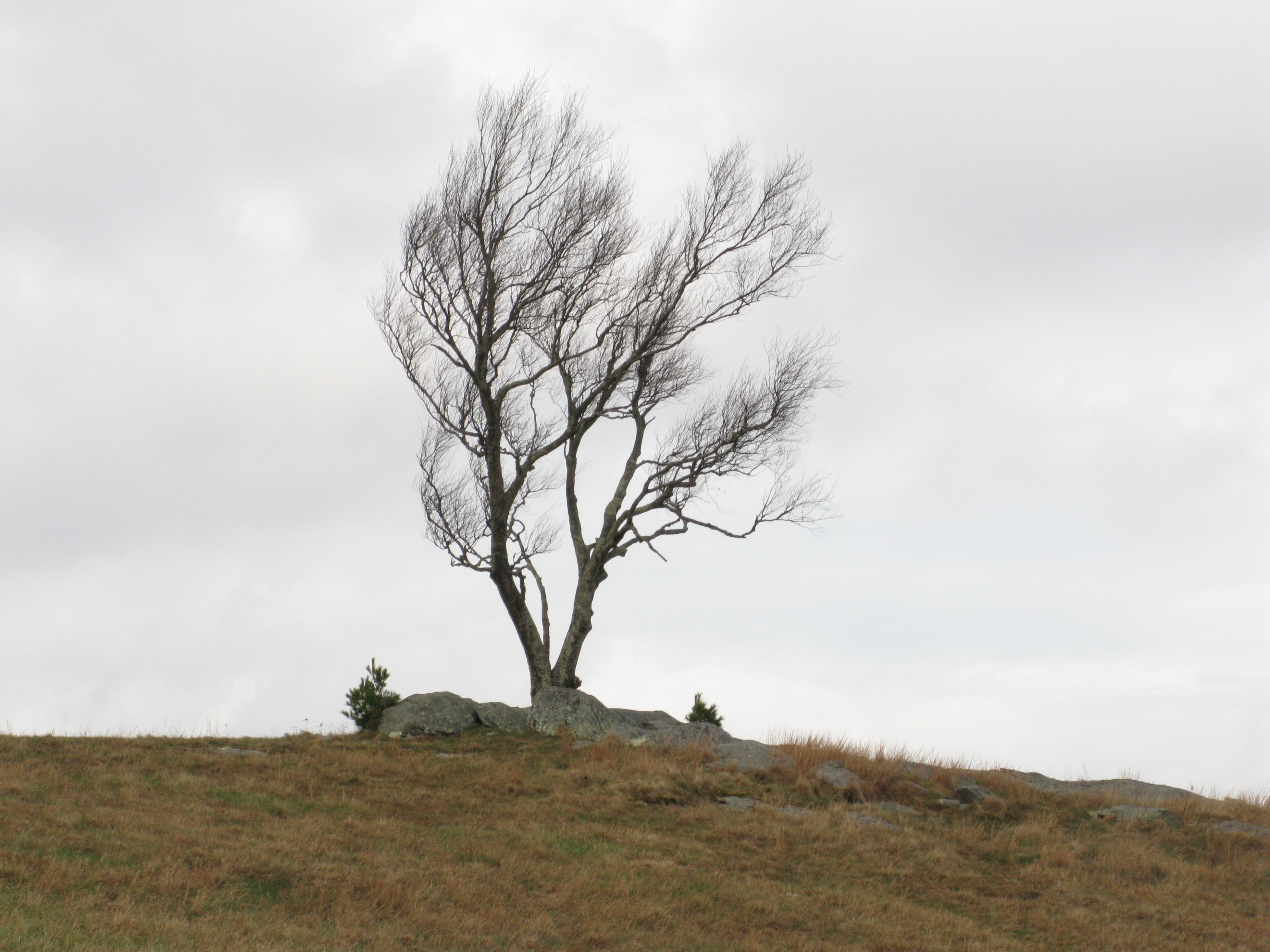
2016-10-17a Doughton Park Tree
 , 

Read Full Post »

Great Spangled Fritillary on Common Milkweed

 . 
A human being is a part of the whole called by us universe, a part limited in time and space. He experiences himself, his thoughts and feelings as something separated from the rest, a kind of optical delusion of his consciousness. This delusion is a kind of prison for us, restricting us to our personal desires and to affection for a few persons nearest to us. Our task must be to free ourselves from this prison by widening our circle of compassion to embrace all living creatures  and the whole of nature in its beauty.
Albert Einstein.
 . 
 . 
All these years, how have I overlooked this humble herb growing up through the pavement? Tough narrow leaves, bottle brush of tiny flowers climbing its central spike, an entire array of bottle brushes – Virginia Pepperweed. It’s in the Mustard family, Brassicaceae, so I can already imagine its spicy taste as I pinch off a leaf and raise it to my . . . but wait! Now I’m recalling the Fourth Question you must ask yourself when you forage in the wild: “Do dogs poop here?”
 . 
In a few minutes I’ll explain Questions One, Two, and Three to my hikers that are now gathering in the field beside the nature trail. Thus we’ll begin our first ever Ethnobotany hike as part of NC Trail Days in Elkin. I’ve titled the event, “Some Feed Us, Some Heal Us, Some Kill Us.” Doesn’t our culture of plants teach us exactly that? Or have we become so far removed from nature that we’ve forgotten how everything around us affects us, and how we affect everything around us? Culture is the wisdom and traditions we pass along from generation to generation; Ethnobotany studies cultural relationships to plants. These hikers have signed up to satisfy their curiosity and learn something new, but I expect we will all learn from each other. I’m sure someone’s granny once picked creasy greens in the Spring or stirred up a mess of poke salet.
 . 

Southern Chervil, Carrot/Parsnip family

 . 
❦ ❦ ❦
 . 
I go to Nature to be soothed and healed, and to have my senses put in tune once more.
John Burroughs
 . 
Everyone needs beauty as well as bread, places to play in and pray in where Nature may heal and cheer and give strength to body and soul alike.
John Muir
 . 
 . 
The Elkin & Allegheny Nature Trail, a part of the Mountains-to-Sea Trail, just three miles or so if you include all its side loops and detours, has become my textbook. I’ve walked here several times a week, all seasons and all weathers, until I know where to find the single Fairy Wand and the four Adam-&-Eve orchids. When the first Hepatica blooms and when the last Trout Lily has dropped its petals and set seed. And yet this trail is always new. Last week a just-fledged Pileated Woodpecker poked its head out of the hole we’d been watching for a month. This week American Hornbeam displays its little chandeliers of seeds, glistening with afternoon rain. There is always something to discover, something to become part of.
 . 
This little three mile trail has also become my refuge. Maybe I start down the trail with a dark cloud around my head and my breathing sounds like thunder, maybe there is only cold encircling my heart. Maybe the dark and the cold have not fully dissipated by the time I return to my car, but nevertheless some small seed of hopefulness always finds a way to take root. I recently encountered this saying: “Each one of us carries a sack of rocks. You don’t know how heavy your neighbor’s sack is. You’ve just got to carry your own rocks.” There is always a way to put one foot in front of the other. Slow or fast, heavy or light, grunting or singing, there is a way to walk on down the trail.
 . 

Hairy Skullcap, Mint family

 . 
❦ ❦ ❦
 . 
How important is a constant intercourse with nature and the contemplation of natural phenomena to the preservation of moral and intellectual health!
Henry David Thoreau, from his Journal, May 6, 1851
 . 
The healing potential of flowering plants is an integral part of the deep bond that exists between humans and nature. That flowers have the ability to heal us, not only physically but also emotionally and spiritually, is something that has been recognized and utilized as far back as we know.
Anne McIntyre, from Flower Power
 . 
 . 
Last week granddaughter Amelia and I played Scavenger Hunt. We took turns drawing little pictures of things in the yard and having the other one find them. My Dandelion and Holly she spotted right off. The Pill Bug she recognized but took longer to find. Just a half hour outdoors on a muggy day, but it erased a good fraction of my load of dread and loathing. She and I connected with each other in those connections with nature. As Einstein suggested, our task is to somehow discover that we are not separate from the universe, to widen our circle of compassion. As people come together on my little nature hikes, fifteen or twenty crouching in fields and woods eight or ten times a year, do we accomplish that? Do we connect?
 . 
The First Question you must ask yourself before you pick a leaf or a flower is, “Am I 100% certain of my identification?” You wouldn’t want to brew up a tea of Pukeweed (Lobelia inflata). Wild Carrot is closely related and looks quite similar to the most toxic plant in North America, Poison Hemlock (Conium maculatum), both of them introduced from Europe and prevalent in our area. On the other hand, if I can recognize every member of the Rose family, Rosaceae, from apple to quince to almond, I can be pretty confident they are all edible.
 . 
The Second Question is, “If I pick this, how will that affect the local ecology?” I tell folks they wouldn’t want to eat the last wild huckleberry if a hungry bear was standing beside them, but the full complexity of the web of life is impossible to grasp. Pollinators and larval hosts, things that creep beneath the leaf litter and fly down from the Red Oak’s crown, how does each feed and heal the next? My friend April supplemented her meager nutrition while she through-hiked the Appalachian trail by chewing greenbrier, cooking up pots of stinging nettle, cracking hickory nuts. She had a personal rule – never dig up a Cucumber Root if it was busy making a flower or a berry. It’s hard to imagine now, but a hundred years ago Galax was almost extirpated from the southern mountains as people gathered it to ship north for Christmas decorations. May we widen our circle of compassion to discover we, too, are part of these woods, these fields.
 . 
And the Third Question is really just a subset of the Second: “If I pick this plant, how will it affect the experience of those who come after me?” Aren’t most major world philosophies and religions based on some paraphrase of this? The Golden Rule; the Second Commandment. It would seem obvious that in the shared space of a public park you wouldn’t dig up the flowers. Is it possible for us large-brained primates to widen our consciousness until we can image the entire earth as shared space?
 . 
So let’s take a walk in the woods. Let’s imagine how our grandparents would have experienced and related to the life here. Let’s learn from these plants about other cultures, the Cherokee, the European pioneers. Let’s discover our own connections, to the diversity around us and to each other. Let’s be fed, and let’s be healed. Let us be part of the universe.
 . 

Smooth Solomon’s Seal, Asparagus family

 . 
❦ ❦ ❦
 . 
The Christic
 . 
I am looking at a tree, but I see such astounding beauty and
graciousness, the tree must be You, O God,
I look at the wild weeds playing across the fields, and their
wild joyful freedom speaks to me of You, O God.
Yesterday, I saw a child crying alone on a busy corner, and
the tears were real, and I thought, you must be crying, O God.
God, you are the mystery within every leaf and grain of sand,
in every face, young and old, you are the light and beauty
of every person.
You are Love itself.
Will we ever learn our true meaning, our true identity?
Will we ever really know that we humans are created for
love?
For it is love alone that moves the sun and stars
and everything in between.
 . 
We are trying too hard to find You, but You are already here,
We are seeking life without You, but You are already within,
Our heads are in the sand, our eyes are blinded by darkness,
our minds are disoriented in our desperate search
for meaning.
Because you are not what we think You are:
You are mystery.
You are here and You are not,
You are me and You are not,
You are now and You are not,
You are what we will become.
You are the in-between mystery
The infinite potential of infinite love,
And it is not yet clear what You shall be,
For we shall become something new together.
 . 
Ilia Delio, OSF
from The Not-Yet God: Carl Jung, Teilhard de Chardin, and the Relational Whole. Orbis Books, Maryknoll, NY. © 2023
 . 

Black Cohosh, Buttercup family

 . 
❦ ❦ ❦
 . 
If you’re passing through Surry County, North Carolina, visit our trails! Elkin Valley Trails Association builds and maintains Section 6 of the Mountains-to-Sea Trail as well as many connecting trails in the area. The Over Mountain Victory Trail (Revolutionary War era) and Yadkin River Trail both pass through Elkin.
 . 
EVTA also plans many trail activities and work days throughout the year, plus we partner with Explore Elkin to present NC Trail Days for four days at the beginning of June every year.
 . 
And if you would like a copy of the handout I prepared for “Some Feed Us, Some Heal Us, Some Kill Us,” click HERE. This is a small subset of the 250+ plant species we’ve discovered on the E&A Nature Trail. Walk the trail and help us add more!
 . 
Finally, you may notice that the title of our ethnobotany hike bears a resemblance to the title of the wonderful book by Hal Herzog, Some We Love, Some We Hate, Some We Eat, which I suppose you might call Ethnozoology. Dr. Herzog is a psychology professor at Western Carolina University in Cullowhee, NC and a world leader in the field of anthrozoology. Thanks, Hal, for continuing inspiration!
 . 
And, for teaching me about sacks of rocks, warm thanks to Pat Riviere-Seel.
 . 

Woodland Hydrangea & Bumble Bee

 . 
❦ ❦ ❦
 . 

Black-snakeroot (Sanicle), Carrot/Parsnip Family

 
 . 
IMG_0877
 . 

Virginia Pepperweed, Mustard family

Read Full Post »

 . 
[with 3 poems by Kathryn Kirkpatrick]
 . 
Turbulence
 . 
Of the stomach lifting. Of the weightless
where I was and am again variety.
 . 
Sway and crack, our craft. Slalom
the wind. So much carbon in the currents.
 . 
Of the climate kind. Of the jerk and twack.
Of the hurtling toward. Shake right out
 . 
of our human. As if we might not
settle back into these bodies,
 . 
but land instead in someone else.
Yet the hare far below isn’t empty
 . 
to receive us. Neither is the horse.
They have their own embodied plans.
 . 
We will have to settle beside ourselves
Blurred boundaries and all. Bump,
 . 
rattle, and creak. Our enlightened selves
grasp cokes, play solitaire, read, sleep,
 . 
going on as if what’s happening isn’t.
With more than prayers
 . 
holding us up, we are nonetheless
tossed in the vastness.
 . 
Kathryn Kirkpatrick
from Creature, Jacar Press, Durham NC; © 2025.
 . 
❦ ❦ ❦
 . 
ah spring spring 
how great is spring! 
and so on 
Bashō (1644-1694)
 . 
Basho has perfectly snared my mood this morning. I am reading Spring haiku at SeasonWords.com: Ah, Winter vanquished!, Ah, new life!, blah, blah, blah. I am not feeling newly lively these days, especially not as the sun so gaily rises. By day I seem to be the rock between two storms, my father and my son, but by 4 AM I have eroded to sand and the bed is far too gritty for sleep. Now this haiku blog offers a prompt for the season and encourages sharing? Here are my Spring lines:
 . 
what to say
when everyone’s “spring, spring” –
toads trilling
 . 
In her book Haiku and Senryu: A Simple Guide for All, Charlotte Digregorio states, Wherever one lives, one experiences changing seasons. The haiku’s brief flash illuminates one specific moment. We read the terse lines and might recognize where we are, but certainly, and more critically, we do know precisely when we are. Perhaps we have never shared the haiku’s circumscribed space, but we do share the time of pollen, the humidity, crisp crackling leaves, the shivers. A moment’s experience broadens into a communal truth.
 . 
In that sense, haiku becomes less an instruction in encountering nature and more an invitation to shared humanity. Besides the experience of changing seasons, the thing we all share is the experience of suffering. A moment’s observation may stand in as a piercing metaphor: Spring’s anticipation, Summer’s lassitude, Autumn’s anxiety, Winter’s dread. And perhaps pricked by that dart of connection upon reading a haiku, we might also share one more thing – joy.
 . 
Just to be fair, I imagine my Spring haiku is not really an indictment of inane people chattering around me. On a dark night after rain, the lonesome trill of an American toad rising from down in the woods is a peace offering. My son and I stood on the deck last night and heard it together. Yes, it was very dark. This morning, light has returned. Again. Oh my. The season rolls on.
 . 
 . 
In 1685, the Japanese astronomer Shibukawa Shunkai adapted the 24 Solar Terms of the Chinese calendar for Japan and created 72 seasons. As we learn at SeasonWords.com, these 72 seasons “offer a poetic journey through the Japanese year in which the land awakens and blooms with life and activity before returning to slumber.” Mark, the site’s curator and naturalist, shares lessons from nature corresponding to the seasons; haiku both ancient and modern that complement the lesson; and craft tips / kigo with a prompt and an invitation. Readers share their haiku and receive commentary.
 . 
Visit https://seasonwords.com/ and subscribe to receive periodic postings in your mailbox!
 . 
 . 
❦ ❦ ❦
 . 
The Ridge
 . 
1.
One day I found the outline of a deer
in the snow. She’d slept on the old logging road
above our home, curled against the cold.
 . 
Her imprint on a trail I’d walked for
twenty years was intricate and vulnerable
as I now feel since strangers bought this land.
 . 
their cameras
nailed to the trunks of trees
Christ
 . 
2.
At first I waved. New to the neighborhood,
the seemed shy. Hovering at the side
of the road with their harnessed dogs, they walked
 . 
harnessed too, shoulders hunched, eyes averted.
About their money I didn’t then know, or
Appalachian families letting go of land.
 . 
orange flags
festoon the property lines
orioles in snow
 . 
3.
What we had of commons among
hill people here is gone, our hollow hollowed
out, our waves, our lifted heads, our calls across
 . 
casual borders fretted now by registered
mail. “Not authorized.” “Legal action.” They’ve
no bonds to sunder because they’ve no bonds made.
 . 
camera 1
my shetland sheepdog framed
first day of spring
 . 
4.
Surveyed for surveillance, the ridge. But I
can love what I don’t own. I miss the oaks,
their wide-girthed stillness. I miss the mountain’s
 . 
spine. Across family lands and state lines,
through Cherokee and Appalachian time,
the mountains stay. The mountains stay. They stay.
 . 
a taloned sun sets
the red-tailed hawk
needs no human hand
 . 
Kathryn Kirkpatrick
from Creature, Jacar Press, Durham NC; © 2025.
 . 
❦ ❦ ❦
 . 
Creatures – so we are. We seek what all creatures seek, but especially we seek the closeness of other creatures. Kathryn Kirkpatrick is visited by crows and grieves for house wrens dying and for cows separated from their calves. She reveals her creature’s struggle and confusion as she loses her mother. She is not afraid to say that she hesitates to speak of death because every creature must face death but fears to do so. She reveals moments and connections and we readers look about us to discover her light is casting our own shadow. And in the closing section of Creature, Kathryn Kirkpatrick has written the finest collection of dog poems I’ve read in twenty years.
 . 
Creature by Kathryn Kirkpatrick at Jacar Press: HERE.
 . 
 . 
❦ ❦ ❦
 . 
On Finding Monarch Caterpillars in September
 . 
And whatever love a parent
feels stealing bread for a starving
child, I have it as I dig by
the flimsy light of my bargain
headlamp, having driven miles for the last
of the chain-store milkweed, which will
feed these ravenous young in their striped
skins, who are no metaphor, who stand for
themselves only, though in my ecological
worry, my long-range fright, I am surely
standing for something as I shovel in the dark.
 . 
Kathryn Kirkpatrick
from Creature, Jacar Press, Durham NC; © 2025.
 . 
In their multi-generational migration pattern, the endangered monarch butterfly bears its fourth generation in September and October. Rather than dying after two to six weeks as the earlier generations do, this generation migrates to warmer climates like California and Mexico, living six to eight months before starting the process again. – K.K.
 . 
 . 
❦ ❦ ❦
 . 
 . 

Read Full Post »

« Newer Posts - Older Posts »