Feeds:
Posts
Comments

Archive for March, 2022


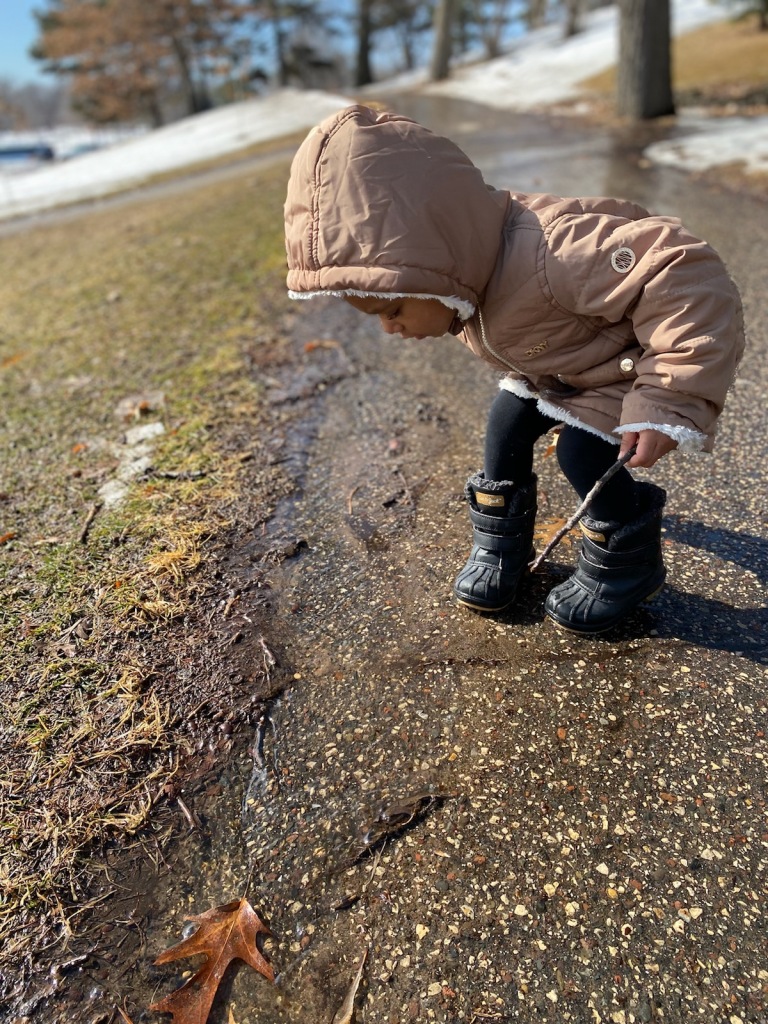
My Niece Ka’liyah Studies Ecology

.     .     .     .     .     .     .


EARTH DAY 2022 is April 22. Send me a poem you love!

THEME: COMMUNITY & CONNECTIONS

German biologist Ernst Haekel coined the term ecology in 1866, derived from Greek oikos for household. Haekel had studied Darwin’s The Origin of Species since it was published in 1859; from his study of sea creatures, Haekel was convinced that the way to understand their development was to examine them in the context of their surroundings: their connections and interactions with every creature around them, with every feature of their environment.

Ecology is the branch of biology which studies the relationships between living organisms and their environment. Their community, their connections. From the level of individual all the way up to the entire biosphere, our connections entwine and enfold every one of us with each other.

Send me a favorite ecology poem by your favorite poet about
COMMUNITY AND CONNECTIONS!

Choose a poem that has spoken to you deeply. If you wish, state briefly why you’ve chosen the particular poem and what it means to you.

For the weeks before and after EARTH DAY, April 22, I will try to post several ecopoems daily. If I receive a large number of offerings I may not be able to post them all, so I am really looking for poetry that expands our awareness of how all living things are interdependent. Where is the beauty and wonder in those connections? What happens if we live in denial of our interrelatedness?

To summarize:

One poem per person, please.
Previously published poems only!
Any author, living or dead, including but not limited to you!

Email to: Comments@GriffinPoetry.com

Thanks! I can’t wait to see what you love!

Bill

.     .     .     .     .     .     .

[NOTE: I only post previously published poems on GriffinPoetry.com. If you choose to send a poem you yourself have written, please include its publication info. For poems written by other authors also include where you read it, and it would be wonderful if you could send me a link if it appears online.]

HTTPS://WWW.EARTHDAY.ORG/


IMG_0877

Read Full Post »

[with poetry by Alana Dagenhart]

Here, take some with you. You’re not likely to leave my Dad’s presence without hearing these words. It could be a little plastic tub of leftovers from the meal I just brought him and Mom; maybe cookies or a chocolate; a couple of apples – he says he and Mom can’t eat them all. You’ll definitely be carrying the stack of New Yorkers and Sunday funnies he’s been saving. Just try leaving empty handed after visiting my Dad, just try.

Here, take some. How many years before I realized he always has and always will say this? How long have I been trying to analyze why he does? Does anyone ever really understand their father (or their son, for that matter)?

Here, take. It can be too easy to overlook Dad’s deep, even urgent, desire to give. He may seem stubborn and commandeering (just like me, although I prefer “assertive”). He takes charge of every conversation (probably because he literally can’t hear anyone talking but himself; maybe he thinks he’s just filling an awkward lull). Admit it, he acts like a Dad – so let me cut him some slack and open my eyes to the source of his generous essence.

Dad grew up during the Depression in the rural South – just imagine. World War II paid for him to go to Duke. He worked for the same huge company from the time I was four until he retired; he always seemed to be traveling and working at home nights & weekends. Because of Dad’s promotions we moved three times in two years while I was in Junior High (origin of my many quirks, no doubt), but then he declined promotions so my little sister didn’t have to move midway through High School.

Dad saw to it that I graduated from university and med school with no more debt than I could manage. When Linda and I got married and our old boat of a car couldn’t bear the load, Dad towed a trailer from Ohio to North Carolina to meet us after our honeymoon. All these years I can’t recall him spending money on himself, except maybe golf clubs every few decades, but Dad will keep shelling out whatever it takes to maintain the old beach house so all his grandkids can go on enjoying it after he and Mom are gone.

Don’t you want some more? Oh yeah, that’s the other thing Dad says. I hope he can hear me when I reply, “Thanks, Dad, it’s been plenty.”


.     .     .     .     .     .     .

All the Silver Space

Fire pops and burns blue, Sunday morning
October in the Blue Ridge Mountains.
Hiss and hum, the constant roaring –
wood is changing,
solid to light,
before my eyes
like you, Dad
muscle to sacks of dry ice.
We both know.

I walk the mountain top trail
yearning for afternoon heat,
your sun in my bones

Sunset: the inside of a buttercup
empty at the horizon.
The sky fades like a tie-dyed tee-shirt,
from canary to lizard
gravel to irises to ocean.
The underbellies of clouds
are streaked in cotton candy.

Moon again, full and daring
around pine and rock.
Your blue eyes
not saying what we know
to be true. Back

cover first.
I knew to look,
bottom corner,
last page of the book,
your handwriting
small and faint.
You didn’t even want to leave a mark.

Alana Dagenhart

.     .     .     .     .     .     .

Alana Dagenhart’s Yellow Leaves is not a narrative time line, it is a lyrical collage of visions and visitations interwoven with the relentless thread of her father’s death. We enter her dreams, intrusive but illuminating; we get to know ancestors imagined and remembered; we are invited to share Alana’s days most mundane and most profound. The thread of family tangles and unspools, knots and releases, and what could be dark, somber, a burden too heavy, becomes another bright morning, all the colors of revelation, a yellow leaf whirled and unsettled finally discovering its place of rest.

All today’s poems are from Yellow Leaves, Alana Dagenhart, Redhawk Publications, Hickory, NC. © 2022

.     .     .     .     .     .     .

Yellow Then, Will Fly to Every Eave

The blackest bruise
of our human trauma may
not heal completely through.
Some lingering yellow stays.

But Nature’s first green is gold,
her hardest hue to hold,
and what was yellow once and bold
fades in time in form and folds.

Blue will tend the sky of day,
and black will stay the night,
but yellow always leaves again
when sun is out of sight.

Death’s second self, made up of all
the dark the Earth contains,
snuffs bright yellow out, till
none but veiled despair remains.

Then violence bangs
& cuts us to our knees,
blooded-violet searing pain,
rooted between burning trees,

Coral dies, and chestnuts’ blight,
and green is gone –
all gone to dust and yellow leaves.

Unless a poet writing through the night,
will pen an echo fluttering of light
and yellow the, will fly to every eave
and someone late will read from time-tinged leaves

a verse or tow that speaks to them alone
a shelter of thatched pages, like a home.

Alana Dagenhart

Nature’s first green . . . from Robert Frost’s Nothing Gold Can Stay; Death’s second self from Shakespeare Sonnet 73.

.     .     .     .     .     .     .

What Yellow Light

illuminates the fields of the dead?
What fevered hue burns hot
on the faces of our beloved?

What lime? What straw?

What platinum beam cast triangles
on the oak board floors
of the room they wait
beyond this spectrum?

The Yellow Submarine blaring loud
COMCRUDESLANT command
where sailor scrub-shine metal
and Navy top brass smile big teeth
behind sunglasses?

The neon yellow of the pick-up truck
where my brother and I rode
our backs against the cab
in October, Boone, the Blue Ridge
with our legs under a patchwork quilt?

Th old gold of historic hallways
restored in the color of statesmen?

The palest lemonade sides
of papa’s house, squash in the filed
a buckwheat horse?

The sure blonde of my towheaded little brother?

What frequency has that light?

Is it far from here?

Alana Dagenhart

.     .     .     .     .     .     .

.     .     .     .     .     .     .

POSTSCRIPT: Dad at age 95 says some scary stuff, too. The most anxiety provoking = I have complete confidence in my ability to drive. The ability part is scary enough but the confidence is terrifying.

.     .     .     .     .     .     .

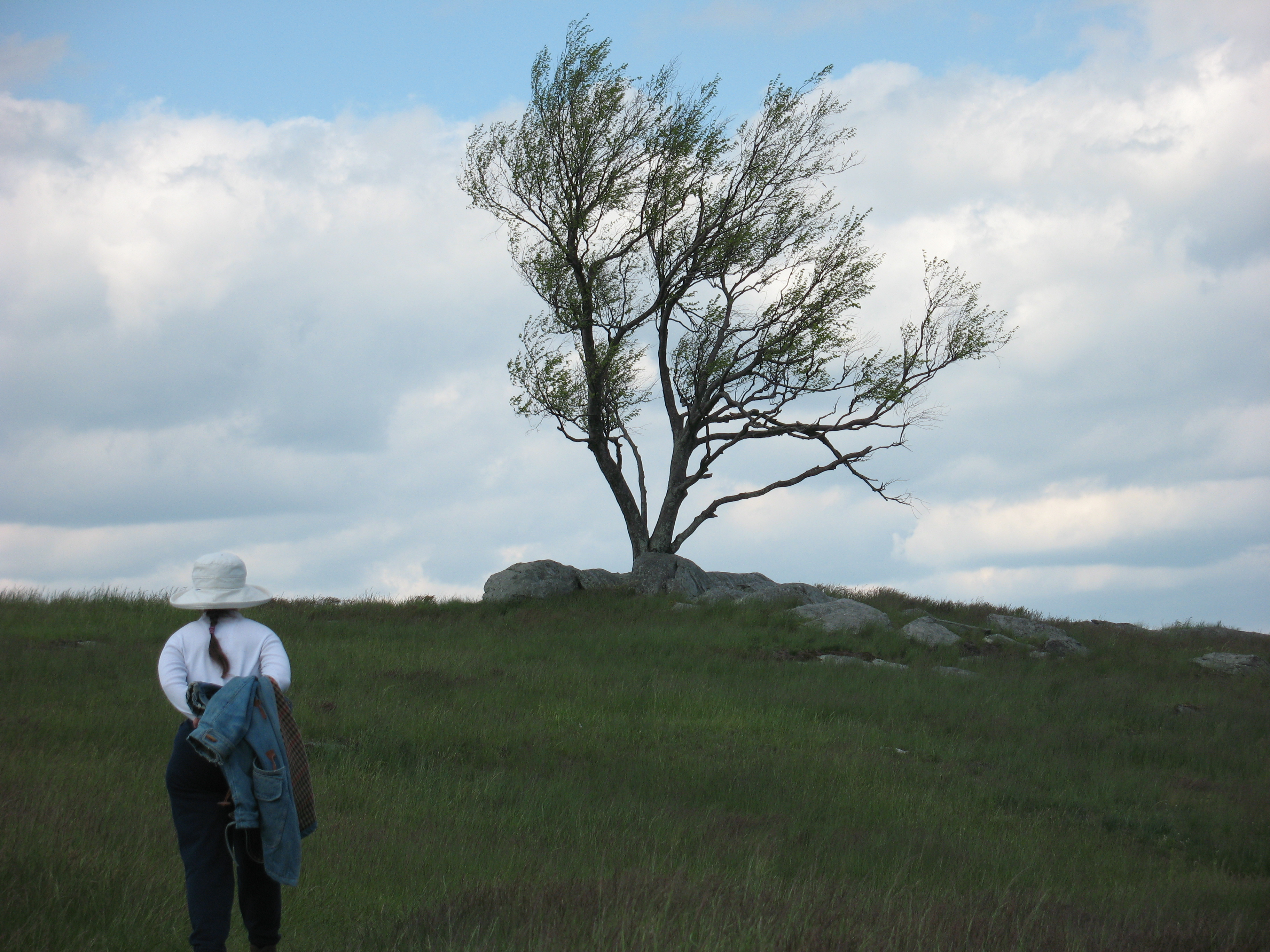
2016-10-17a Doughton Park Tree


Read Full Post »

[poems by James Dickey, William Carlos Williams, Robert Frost]

Last Friday I got to play a new game with my grandson Bert, one he made up with his Dad – This Animal. We had walked a mile or so on the Crabtree Creek Greenway in Raleigh and it was time to head home. Along the waterway there were plenty of enticements: red-headed woodpecker at the tip of a snag; big splashes chunking clinkers into the stream; Spring Beauties (why does Pappy kneel down and look at every flower?); tiny slug rescued from squishing.

Now we’ve turned into the neighborhoods to walk on home. Sidewalks. Lawns. Much less exciting. Soon I hear a little voice pipe up, “Let’s play This Animal!”

I get first crack. “I’m an animal that sleeps during the day . . .” “No, Pappy! You have to say This Animal!” Oh yeah, got it. Four-year olds are sticklers for protocol. “This animal sleeps during the day hanging upside down then flies around at night catching insects.”

“A bat!”

Bert knows his animals. In his presence you’d better not mistake a Blue Whale for a Sperm Whale. Or even a Crocodile for an Alligator. Now it’s his turn: “This Animal has ten legs, a stinger, AND claws!” (Hint: In his pocket Bert is clasping the plastic scorpion he’s been playing with all afternoon.)

What a kid! One of these days we’ll kick the game up a notch to This Bird. He can already name most of them that come to the feeder. And I can foresee the day when Bert has me totally stumped as we play This Lichen.

.     .     .     .     .     .     .
.     .     .     .     .     .     .

The Heaven of Animals

Here they are. The soft eyes open.
If they have lived in a wood
It is a wood.
If they have lived on plains
It is grass rolling
Under their feet forever.

Having no souls, they have come,
Anyway, beyond their knowing.
Their instincts wholly bloom
And they rise.
The soft eyes open.

To match them, the landscape flowers,
Outdoing, desperately
Outdoing what is required:
The richest wood,
The deepest field.

For some of these,
It could not be the place
It is, without blood.
These hunt, as they have done,
But with claws and teeth grown perfect,

More deadly than they can believe.
They stalk more silently,
And crouch on the limbs of trees,
And their descent
Upon the bright backs of their prey

May take years
In a sovereign floating of joy.
And those that are hunted
Know this as their life,
Their reward: to walk

Under such trees in full knowledge
Of what is in glory above them,
And to feel no fear,
But acceptance, compliance.
Fulfilling themselves without pain

At the cycle’s center,
They tremble, they walk
Under the tree,
They fall, they are torn,
They rise, they walk again.

James Dickey (1923-1997)
from The Whole Motion: Collected Poems 1945-1992. Copyright © 1992 by James Dickey.


.     .     .     .     .     .     .


All three of today’s poems are collected in The Ecopoetry Anthology; Edited by Ann Fisher-Wirth and Laura-Gray Street, © 2013, Trinity University Press, San Antonio, Texas.

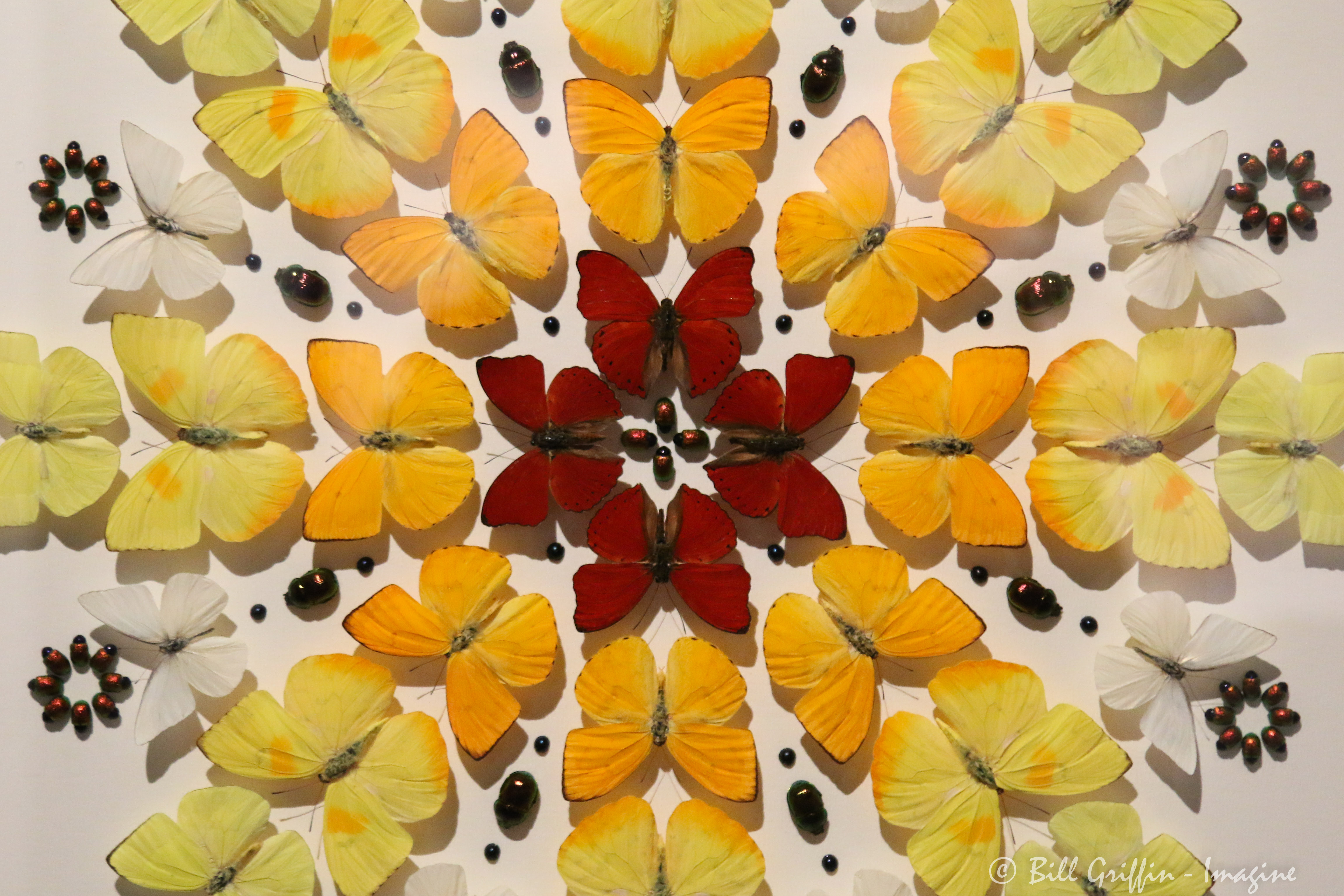
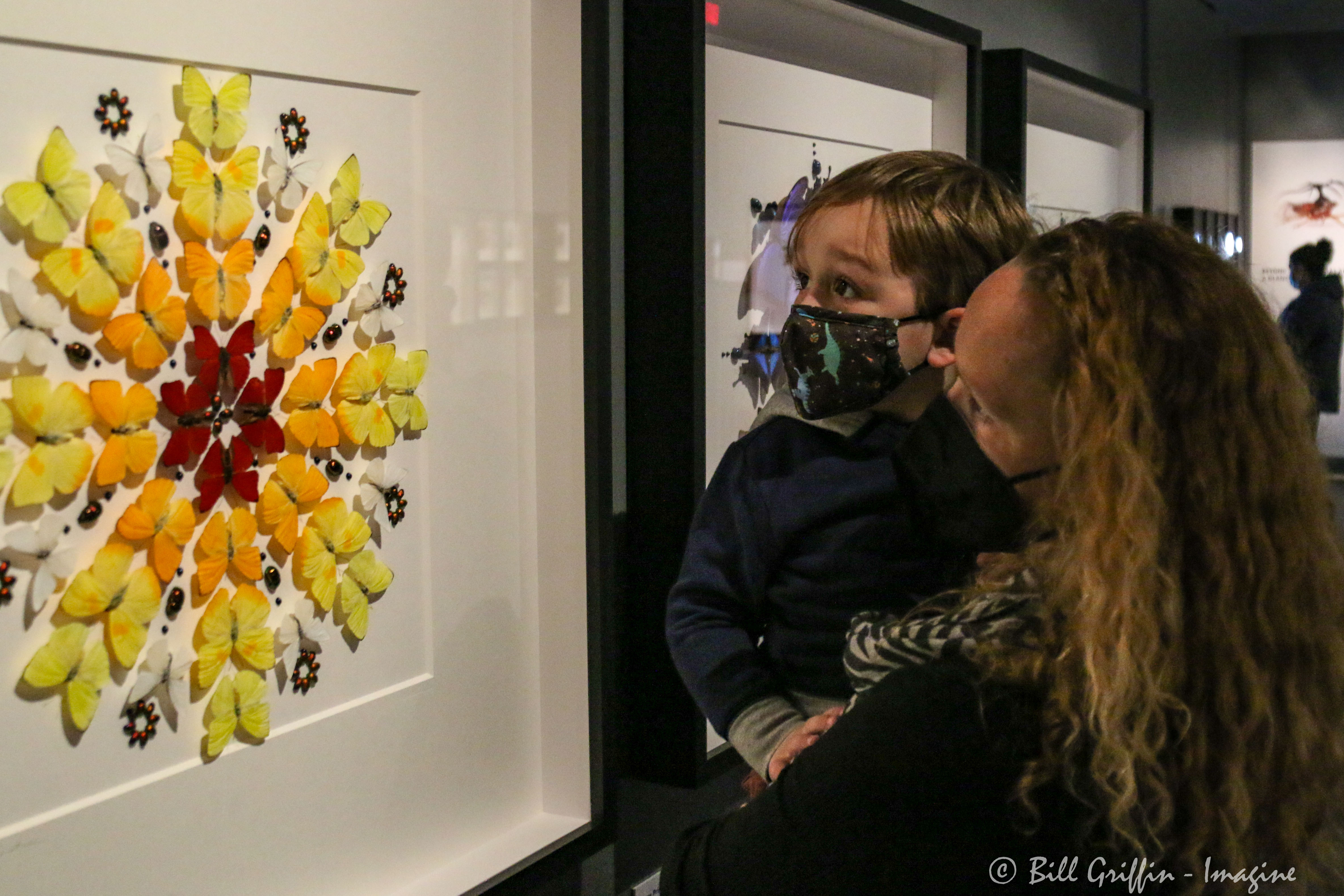
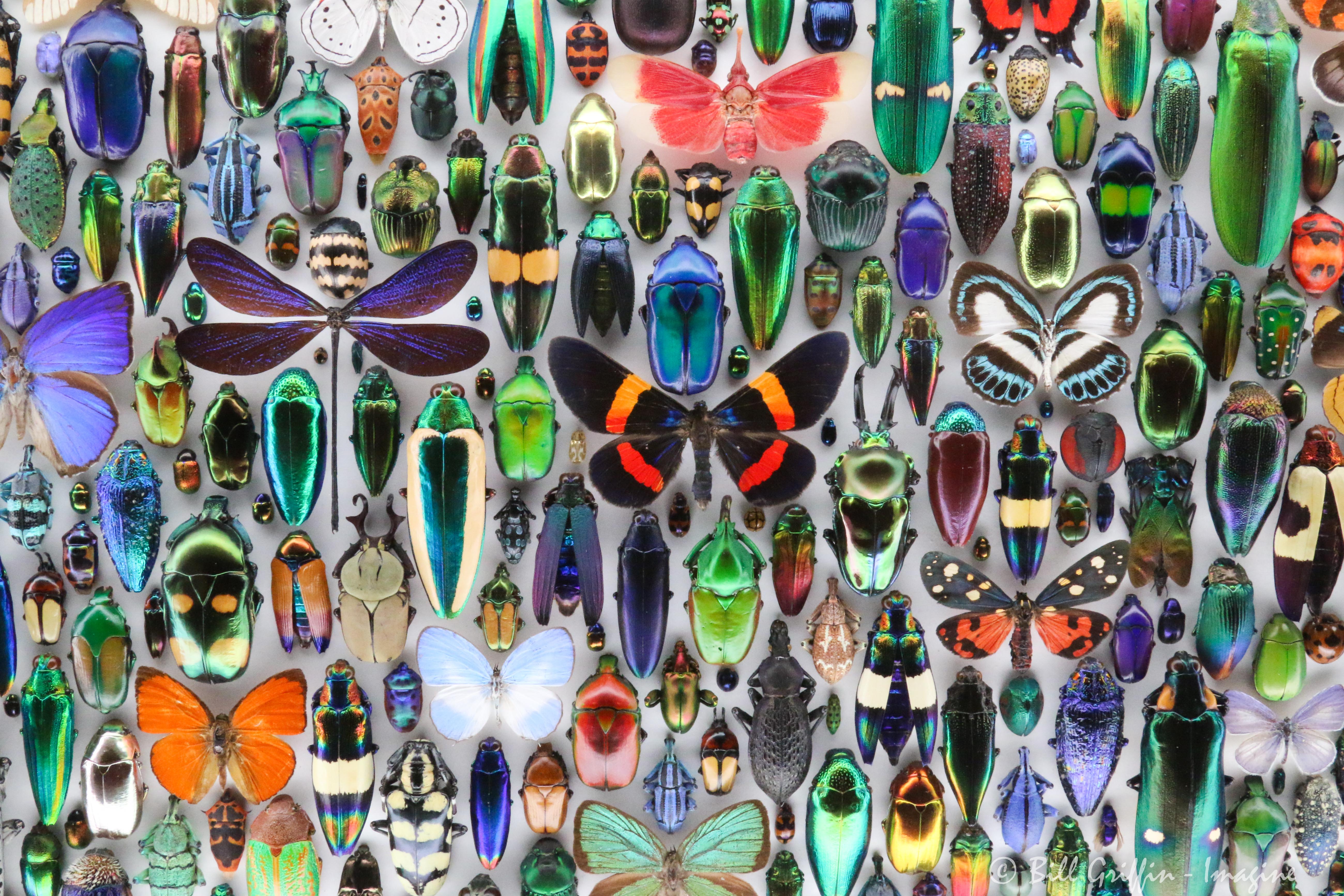
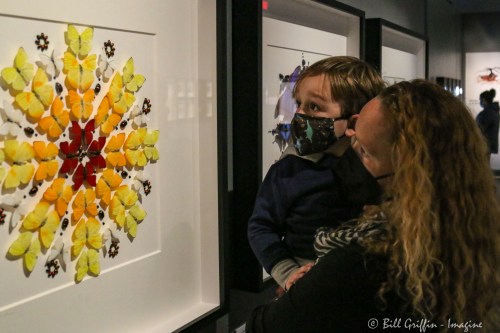
Today’s photographs are from the exhibit at the North Carolina Museum of Natural Sciences Exquisite Creatures by Christopher Marley. These amazing works are created by Marley from preserved specimens from around the world (and no vertebrates were killed in creating his art). The Museum describes this as a dialogue with art, nature and science, and Marley states his intention to allow each of us to tap into our innate biophilia, our love of life and living things.

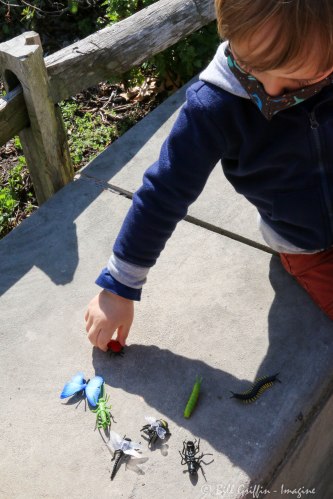
Oh yes, and the little plastic insects came from the Museum gift shop. We all had to stop and play with them as soon as we left the building.

[The last day of the exhibit in North Carolina is March 20, 2022. It is appearing simultaneously in Idaho; check for future exhibits at Christopher Marley’s site.]
.     .     .     .     .     .     .


Spring and All

By the road to the contagious hospital
under the surge of the blue
mottled clouds driven from the
northeast-a cold wind. Beyond, the
waste of broad, muddy fields
brown with dried weeds, standing and fallen

patches of standing water
the scattering of tall trees

All along the road the reddish
purplish, forked, upstanding, twiggy
stuff of bushes and small trees
with dead, brown leaves under them
leafless vines—

Lifeless in appearance, sluggish
dazed spring approaches—

They enter the new world naked,
cold, uncertain of all
save that they enter. All about them
the cold, familiar wind—

Now the grass, tomorrow
the stiff curl of wildcarrot leaf
One by one objects are defined—
It quickens: clarity, outline of leaf

But now the stark dignity of
entrance—Still, the profound change
has come upon them: rooted, they
grip down and begin to awaken

William Carlos Williams (1883-1963)
from Spring and All, first published in 1923 by Robert McAlmon’s Contact Publishing Co.

.     .     .     .     .     .     .


The Need of Being Versed in Country Things

The house had gone to bring again
To the midnight sky a sunset glow.
Now the chimney was all of the house that stood,
Like a pistil after the petals go.

The barn opposed across the way,
That would have joined the house in flame
Had it been the will of the wind, was left
To bear forsaken the place’s name.

No more it opened with all one end
For teams that came by the stony road
To drum on the floor with scurrying hoofs
And brush the mow with the summer load.

The birds that came to it through the air
At broken windows flew out and in,
Their murmur more like the sigh we sigh
From too much dwelling on what has been.

Yet for them the lilac renewed its leaf,
And the aged elm, though touched with fire;
And the dry pump flung up an awkward arm;
And the fence post carried a strand of wire.

For them there was really nothing sad.
But though they rejoiced in the nest they kept,
One had to be versed in country things
Not to believe the phoebes wept.

Robert Frost (1874-1963)
first published in 1923 in Frost’s New Hampshire poetry collection; public domain.

.     .     .     .     .     .     .


.     .     .     .     .     .     .


.     .     .     .     .     .     .
 

IMG_1827

Read Full Post »

Older Posts »