Feeds:
Posts
Comments

Posts Tagged ‘Southern Appalachians’

[poems by Bill Griffin, John Morgan, Anne McCrary Sullivan]

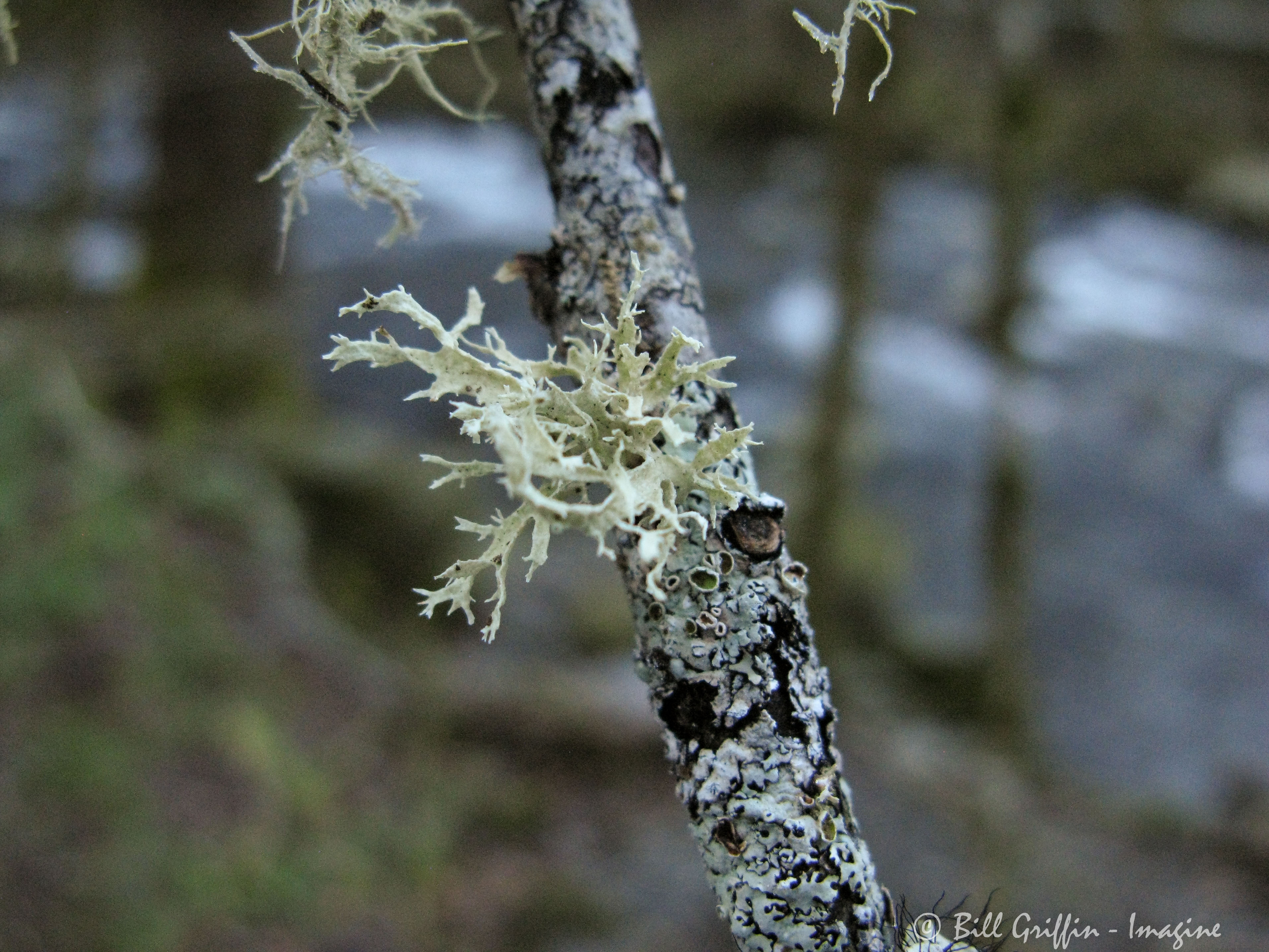
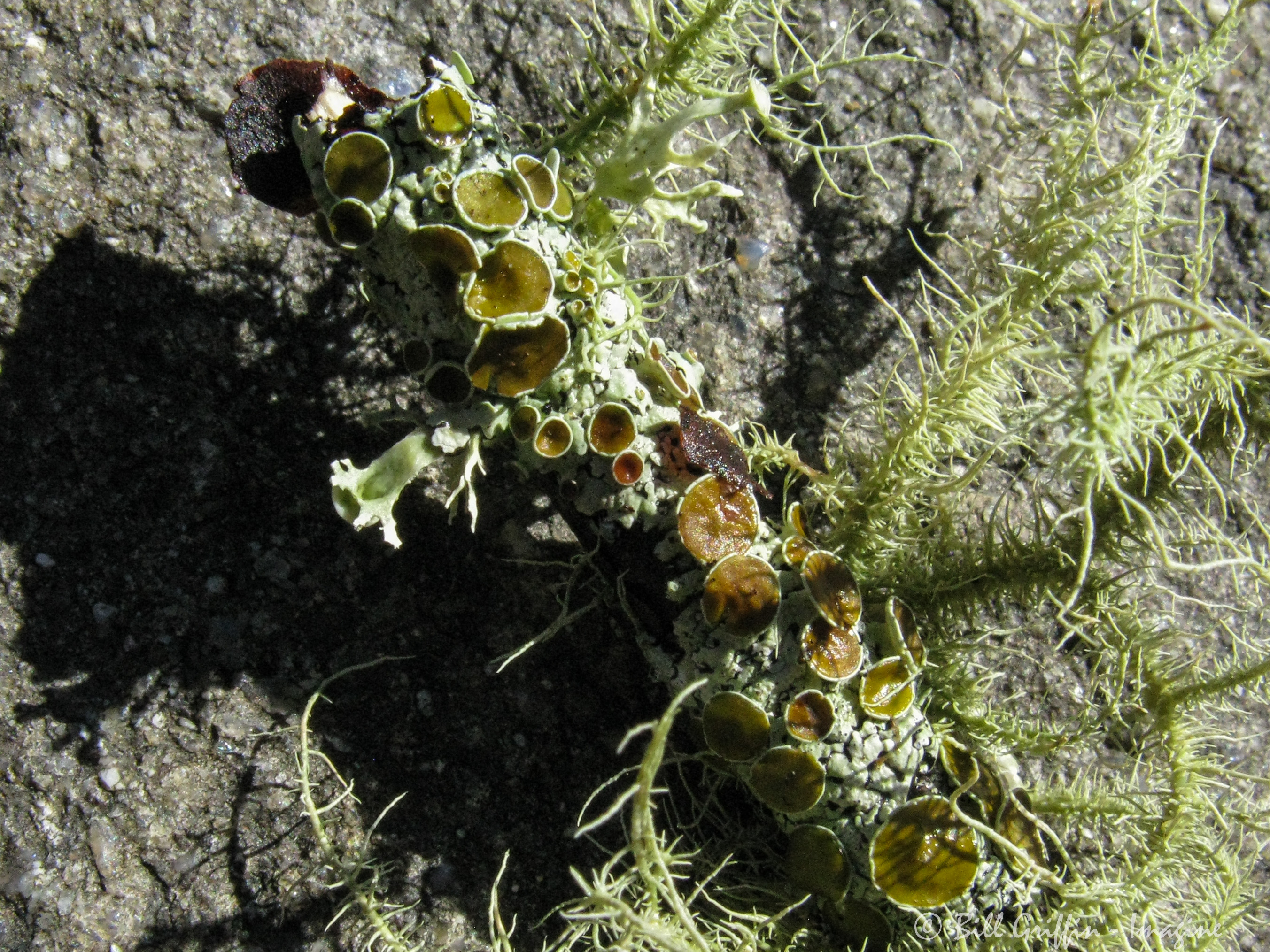
Always something new. Trees I’ve passed a dozen times, these stones, did they always look like this? Oh sure, no doubt those gray-green blotches scattered here & there just so sparked some cryptic synapse of recognition: lichen. But slow down, kneel, look close and learn, understand a fragment of what is happening here and has been happening for too long to grasp. Always something new to discover.

How do they do it? Fungal hyphae, infinitely winding threads coil to embrace their chosen algae, held in their arms like waifs. Separate them, fungus and plant, separate kingdoms, and the textbook shows their single forms: flask of gray goo, flask of green. Let them mingle, though, and they create miniature cityscapes, ramparts, pastorales wilder than the dreams of Seuss.

But that fungal/algal friendship – it’s not all long-stemmed roses and dark chocolate. In school I learned lichen = symbiosis, mutual give and take, but there’s evidence of some darker biochemical power-brokerage at play. Fungus need’s sugar from algae’s photosynthesis to live (or some fungi hook up with cyanobacteria). Algae get a scaffold for stability, a moist enclave, protection from the sun. But fungus tweaks its algae to make them spill more sugar, and no algal cell is ever free to leave. Vaguely sinister.

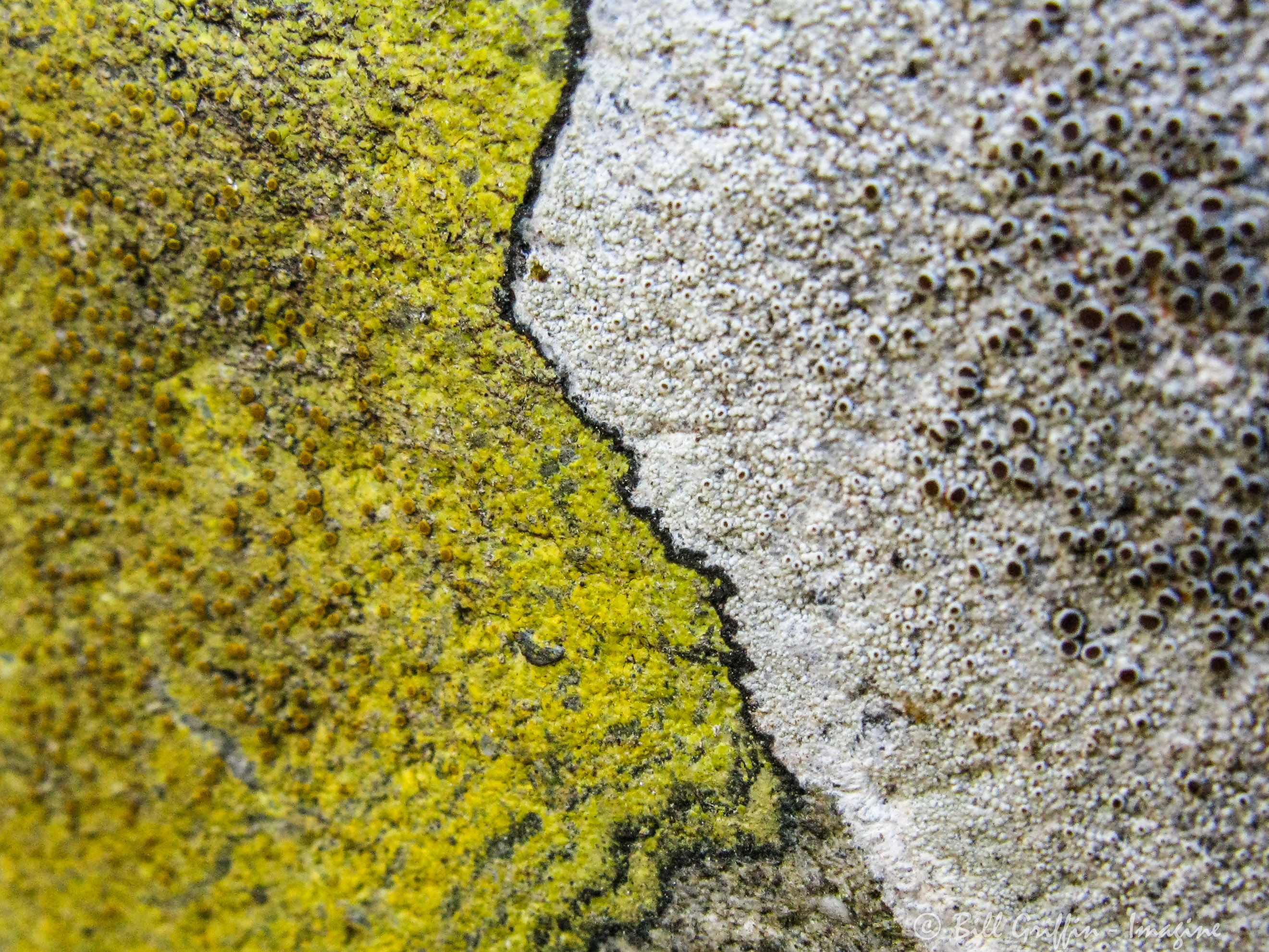
Still the two together create a world neither could create alone. How old is it, that 7 cm patch of speckled gray on the rock face half way up Lumber Ridge, staking its stark black divide between the creeping yellow patch adjacent? How long have they been growing there? Ten years? A hundred? Nine hundred species of lichens in the Smokies (at least!) making infinitesimal advances, making spores or little baby lichen granules for the next boulder over, the next bare patch of bark – stable, solid partnerships of mycobiont/photobiont as old as stone. As everlasting and as changeable, evolving, as this gradually eroding ridge.

I will never walk this way again without wondering. Actually, I’ll never walk anywhere without lichen – between the boards on my porch, on every tree (look close!), even thriving on that old junker someone’s hauling west on US 421. I can’t help it now, noticing their different forms and colors. Their sweet pocked apothecia. Their spreading. Lichens, steadfast, pursue their wonderfully odd and ancient lifestyle and I am becoming something new.

.     .     .     .     .    .     .
.     .     .     .     .    .     .

Becoming Something New
+++ Lichens are a lifestyle.
+++ Dr. James Lendemer, NY Botanical Garden

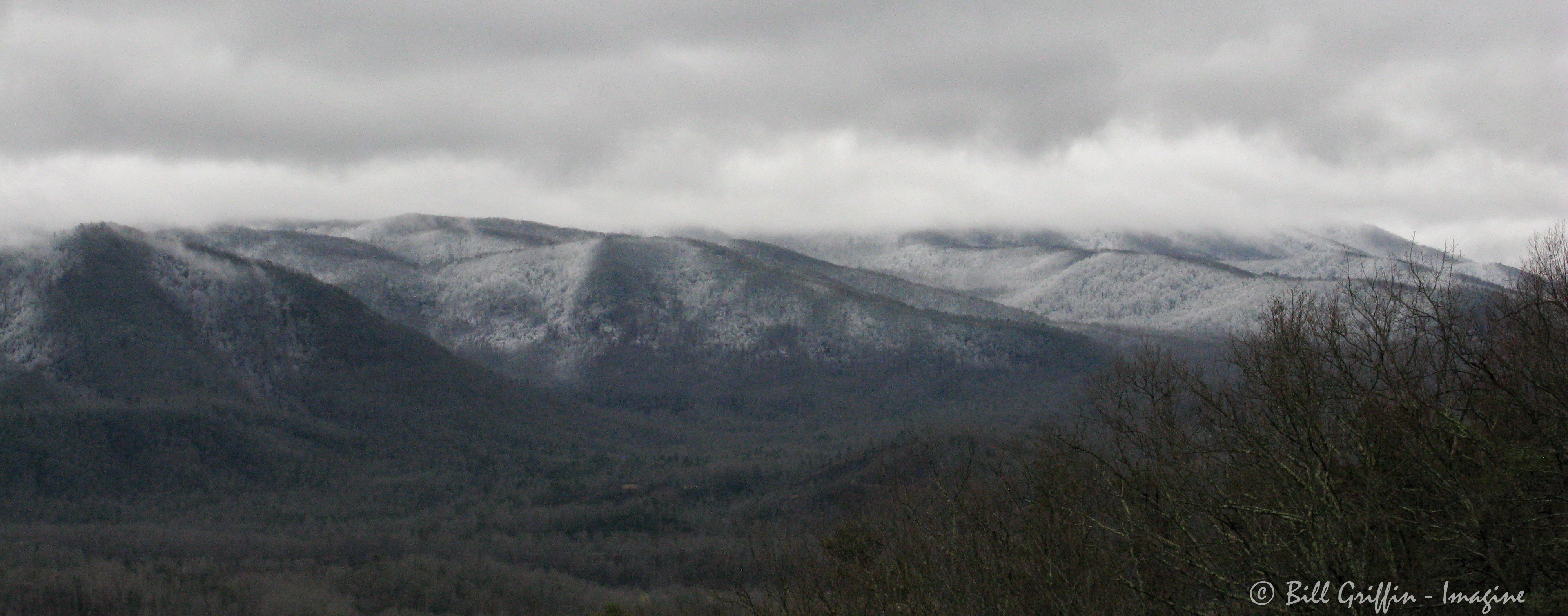
Mountains stretch themselves beneath
the undifferentiated open,

overhead unblinking: ridgeback, rock face,
cove & holler to the sky

look like Chigger Thicket, Princess Shingles
cradled in arms of ageless folded earth

upholding hornbeam, hemlock, oak
yet closer each bole the shepherd

of its own beloved
flocks, foliose & fruticose,

spire cleft & spore sac all sustained
upon the nod of small green globes,

embrace of interlacing hyphae.

From two as far removed as earth and sky
comes something new.

Perhaps we shouldn’t name it love, this dance
so intimate, maybe just the way

life gets things done, gets through
with welcome damp, a speck of sun

for sustenance, enfolding arms
to lean into each other, but consider this:

can any two who persevere
in all this ancient making kingdom

ever take more than they give?

Bill Griffin – for John DiDiego and the Likin’ Lichens course of the Southern Appalachian Naturalist Certification Program, Great Smokies Institute at Tremont

Chigger Thicket – Usnea stigosa
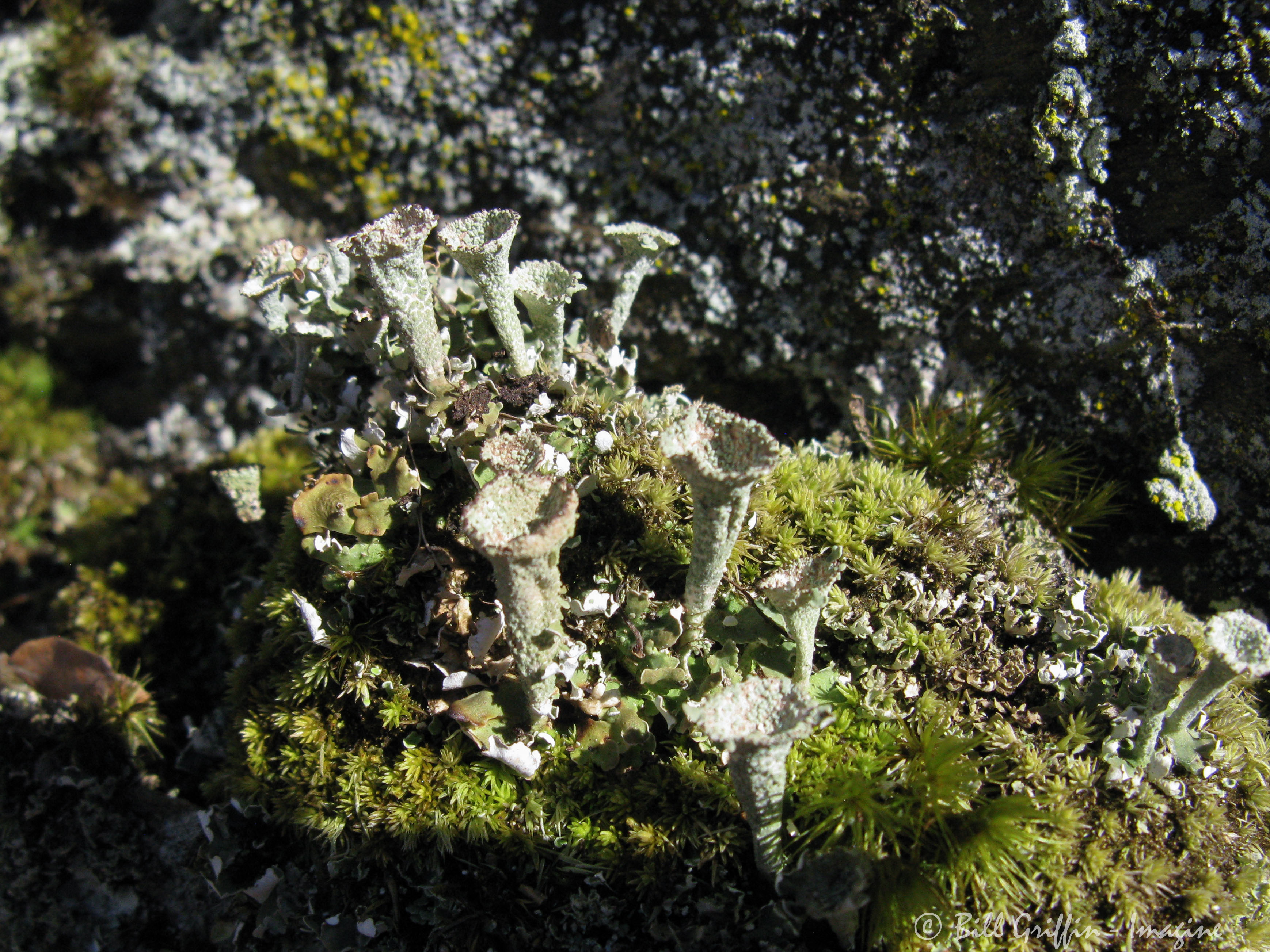
Princes Shingles – Cladonia strepsilis
+++ Thanks to Dr. James Lendemer for the common names of lichen
+++ and for opening the door to worlds unseen . . .

.     .     .     .     .    .     .
 

.     .     .     .     .    .     .

Poetry and the National Park Service

Sometimes a poem takes me to a new place of heart and spirit, like walking through a national park takes me to a new place of earthforms and creatures. These are experiences of curiosity, wonder, awe, renewal – in the encounter I become something new.

The National Park Service is all about poetry. The National Historic Site Longfellow House – Washington’s Headquarters includes many resources from Romantic nature poetry to Emerson and transcendentalism. Other links at NPS.gov range from Mary Oliver and Ed Roberson to Kathy Jetñil-Kijiner and Arther Sze. Over the years many writers have served as poets-in-residence in various parks; poems they wrote during these times are featured online and I’m sharing two today. The Park Service recognizes the importance of poetry at the interface between human person and nature, as is in this online statement:

Unlike most Romantic nature poetry, which primarily focused on the sentimental beauty of nature, many modern nature poems examine ecological disasters or human’s role in the environment’s decline. Through poetry, these “eco-poets” explore this ever-evolving relationship between human and nature. Some poems bring awareness to ecological crises or challenge readers to reflect on their own relationship with nature. Still, some are odes of gratitude to nature or elegies for the changing environment, and others are a call to action.

National Park Service nature poetry resources
Poems by Poets-in-Residence at National Parks
Henry Wadsworth Longfellow nature poetry at NPS.GOV

.     .     .     .     .    .     .
.     .     .     .     .    .     .

Vision

Followed a fox toward Polychrome Pass.
Red smudged
with black along its lean rib-cage,

it rubs its muzzle on a former meal,
ignores the
impatient poet on its tail.

Then nearing the overlook, sun shearing
through low clouds
transmutes the view to glitter. Everything’s

golden, scintillant. I feel like a seedpod wafted
into space and
check my shaky hands on the steering wheel.

As the road crests over its top, boundaries
dissolve. Beside that
sheer intractable edge, I greet my radiant center,

discharge all my terms. How easy it seems
to channel between
worlds, my old self dying into a new,

with nothing firm to hold me here
but love. And that’s
what nature has it in its power to do.

John Morgan
from his poetry collection entitled The Hungers of the World: Poems from a Residency, written after a stay at Denali National Park in June, 2009.

Of his time in the park John writes, “Being in residence means, in a sense, being at home, and having the wonderful Murie Cabin to live in made me feel a part of the wilderness whenever I stepped outside. Over the course of ten days the boundary between myself and the natural world grew very thin. These intimations culminated, toward the end of my stay, with the experience recounted in the poem Vision.”
.     .     .     .     .    .     .

At Season’s End, Singing to The Alligator

I was prepared to arrive at the slough and for the first time
find no gators there, but there was one swimming steadily
away from the boardwalk. I watched.

I began to sing to him (I don’t know why), hum rather.
He slowed down. A coincidence probably. I kept humming.
He stopped, turned sideways, looked at me.

I came then as close to holding my breath
as one can while humming.

He began to submerge (felt safer that way, I suppose)
but did not submerge completely. I hummed.

Slowly, he swam toward me
stopped directly beneath me
hung in the water the way they do
legs dangling, listening.
(Be skeptical if you will.
I know that gator was listening.)

We stayed that way a long time,
I leaning over the rail humming,
he looking up at me, attentive—
until he folded his legs to his body,
waved that muscled tail and left me

alone, dizzy with inexplicable joy.

Anne McCrary Sullivan
from Ecology II: Throat Song from the Everglades, a book of poems inspired by her residency at Everglades National Park.

Of her art Anne writes, “Poetry is a way of seeing. It requires heightened attention to detail and a sensitivity to pattern and relationship. It looks simultaneously at inner and outer worlds, locates connections, and ultimately presents a meaning-charged kernel of experience.”

{Sounds to me like naturalist methods and poetry involve parallel attitudes and aptitudes. – Bill}

.     .     .     .     .    .     .

.     .     .     .     .    .     .

2017-03-06a Doughton Park Tree

Read Full Post »

[with 4 poems by Jane Mead]

What is Leafy yet has no Leaves?

On our way home Mike and I pull over at Newfound Gap but not for the Appalachian vistas: it’s our last stop to hunt lichens before we leave the Smokies. And maybe an opportunity to spread some lichen joy.

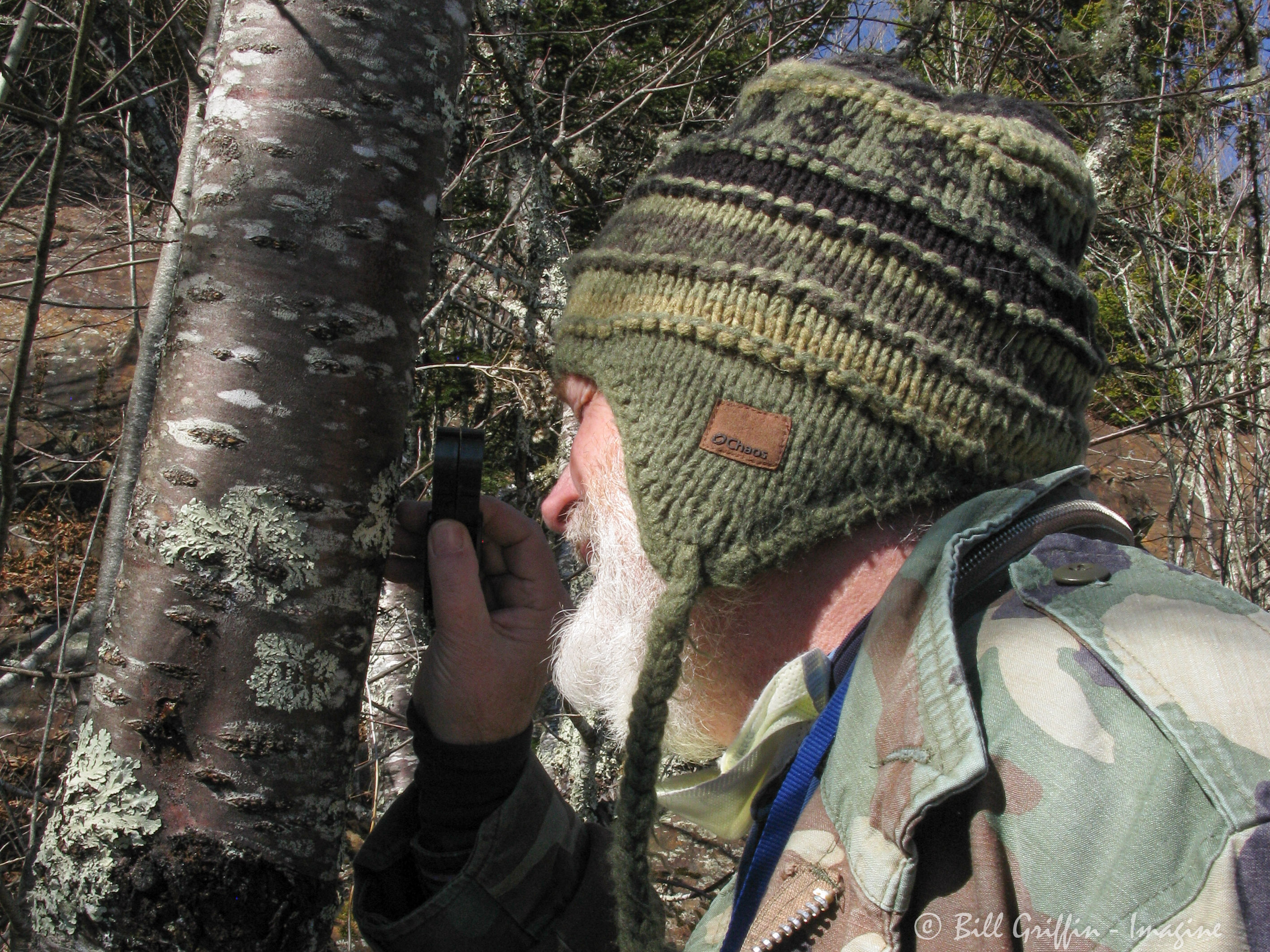
No need to hunt – stop moving long enough and a lichen will find you. Two old guys squinting through magnifying glasses at rocks and bark, though, and it also isn’t long before a passing family asks, “What gives?” “Looking at all the lichens,” Mike answers. “What’s a lichen?” Jackpot! Mike begins to tell their story . . . “a whole little world of fungus and algae” . . . while I wander on.

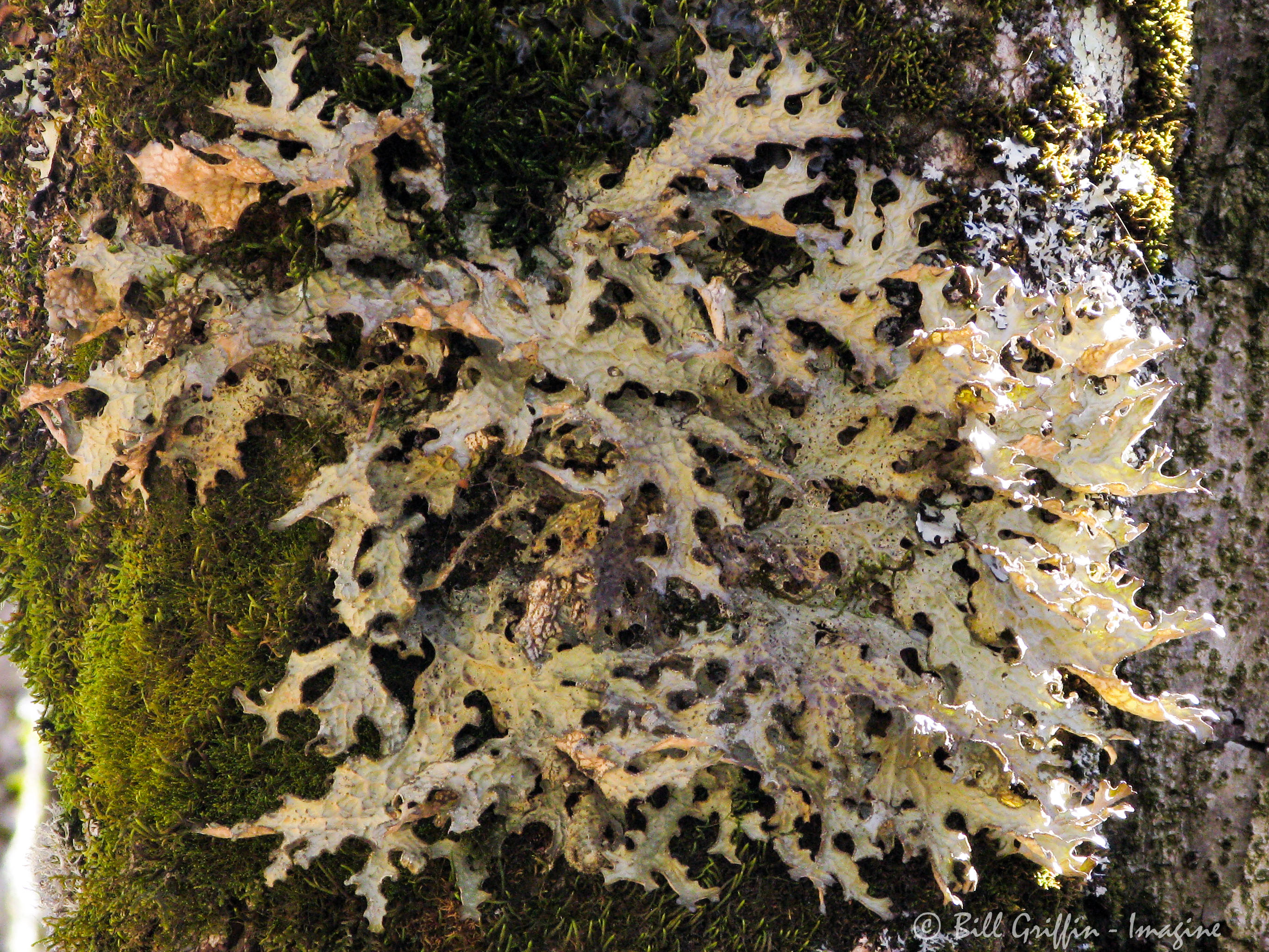
Now a couple asks me why I’ve raised my camera toward this one tree among the millions. Spreading from its bark are crooked fingers, hands of crones, veined, flattened, beseeching. “That’s lichen?” says the woman when I tell her. “I thought it looked like wind had plastered leaves against the trunk.” Exactly, that’s just how it looks. But it has no leaves!

Lobaria pulmonaria: Lungwort, you need a new name. Not even remotely kin to spiderworts, toothworts, liverworts, you are no wort at all – though your presence is atmosphere’s benediction. Draw deeply, my lungs! Exhale wonder! What shall we call you, Leafy without Leaves? Troll’s Greeting? Across the Aisle? Or maybe simply Lichen Welcome.

.     .     .     .     .     .     .

.     .     .     .     .     .     .
Three Candles
And a Bowerbird

I do not know why
the three candles must sit
before this oval mirror,

but they must. –
I do not know much
about beauty, though

its consequences
are clearly great – even
to the animals:

to the bowerbird
who steals what is blue,
decorates, paints

his house; to the peacock
who loves the otherwise
useless tail of the peacock –

the tail we love.
The feathers we steal.
Perhaps even to the sunflowers

turning in their Fibonacci
spirals the consequences
are great, or to the mathematical

dunes with ripples
in the equation of all things
windswept. Perhaps

mostly, then, to the wind.
Perhaps mostly to the bowerbird.
I cannot say.

But I light the candles: there is
joy in it. And in the mirror
also, there is joy.

Jane Mead (1958-2019)

.     .     .     .     .     .     .

These poems by Jane Mead appear in To the Wren: Collected & New Poems (Alice James Books, Farmington ME, © 2019). The book spans three decades of Mead’s life: running her family’s vineyards in Napa Valley; the death of her mother; her own cancer which ultimately took her life. All through her poetry there is a fierce seeking for identity – But always it’s either I or world. / World or I.  Relentlessly she seeks justice for the earth, for creatures, for the self. Poet Gerald Stern writes, “Jane Mead’s mission is to rescue—to search and rescue; and the mind, above all, does the work…. Her poems are a beautiful search for liberation and rebirth.” Nature is not something we write about; nature is what we are.

[Above poem excerpt by Jane Mead is from In Need of a World.
Three bright yellow lichens of the Smokies found at Newfound Gap:
= Xanthomendoza weberi
= Caloplaca falvovirescens, “Colonel Mustard”
= Caloplaca flavocitrina, “Continental Firecrackers”
++++  – – Species identification revised 2/28/2022 after review by Dr. Lendemer]

.     .     .     .     .     .     .

The Argument Against Us

The line of a man’s neck, bent
over welding, torchlight breaking
shadows on his face, hands cracked
into a parched map of fields he has woken –
the gods wanted us.

Think of their patient preparation:
the creature who left the rocking waves behind,
crawling up on some beach, the sun
suddenly becoming clear. Small thing
abandoning water for air, crooked body
not quite fit for either world, but the one
that finally made it. Think of all the others.

Much later, spine uncurls, jaw pulls back, brow-bone
recedes, and as day breaks over the dry plain
a rebellious boy takes an upright step
where primitive birds are shrieking above him.

He did it for nothing. He did it
against all odds. Bone of wrist, twist
of tooth, angel of atoms – an infinity
of courage sorted into fact
against the shining backdrop of the world.

The line of one man’s neck, bent –
torchlight breaking shadows on his face.

There was a creature who left the waves behind
and a naked child on a windy plain:
when the atom rips out into our only world
and we’re carried away on a wave of hot wind
I will love them no less: they are just how much
the gods wanted us.

Jane Mead (1958-2019)

.     .     .     .     .     .     .

The Geese

slicing this frozen sky know
where they are going –
and want to get there.

Their call, both strange
and familiar, calls
to the strange and familiar

heart, and the landscape
become the landscape
of being, which becomes

the bright silos and snowy
fields over which the nuanced
and muscular geese are calling.

Jane Mead (1958-2019)

.     .     .     .     .     .     .

To the Wren, No Difference
No Difference to the Jay

I came a long
way to believe
in the blue jay

and I did not cheat
anyone. I
came a long way –

through complexities
of bird-sound and calendar
to believe in nothing

before I believed
in the jay.

Jane Mead (1958-2019)

.     .     .     .     .     .     .

.     .     .     .     .     .     .

When Mike Barnett and I stopped at Newfound Gap (on US 441 smack in the middle of Great Smoky Mountains National Park) we were returning from the weekend lichens course at Tremont, part of the Southern Appalachian Naturalist Certification Program. We bow down in gratitude to John DiDiego, Education Director at Great Smoky Mountains Institute at Tremont, for convincing Dr. James Lendemer to teach this course. Dr. Lendemer is chief lichenologist at New York Botanical Gardens and literally wrote the book: Field Guide to the Lichens of Great Smoky Mountains National Park (which weighs 1.48 kg, not so much a “field guide” as an entire encyclopedia!).

Dr. Lendemer in his book names L. pulmonaria “Crown Jewel of America” – it is the biggest baddest lichen of them all. Thank you, James – we love lichens! Thank you GSMIT and SANCP and GSMNP. And thanks to all you little fungal hyphae, algal photobionts, cyanobacteria – you look mah-velous.

Resources:

More by and about Jane Mead at Poetry Foundation.

Field Guide to the Lichens of Great Smoky Mountains National Park, Erin A. Tripp and James C. Lendemer, University of Tennessee Press, Knoxville, © 2020.

Great Smoky Mountains Institute at Tremont, Southern Appalachian Naturalist Certification Program.

.     .     .     .     .     .     .

2019-02-09 Doughton Park Tree

Read Full Post »


[poems by Joyce Compton Brown and Billy]

Happy Birthday to Me!

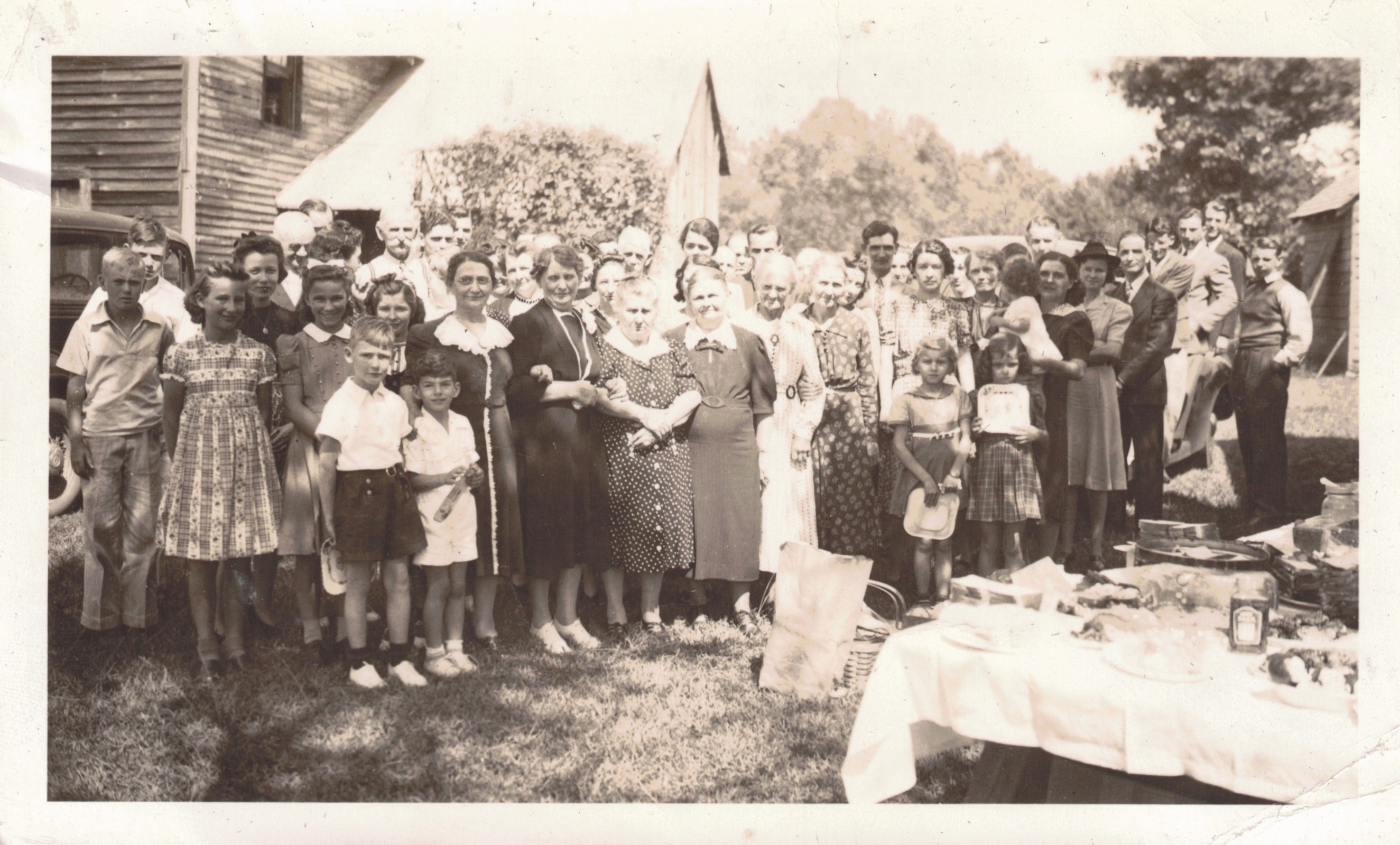
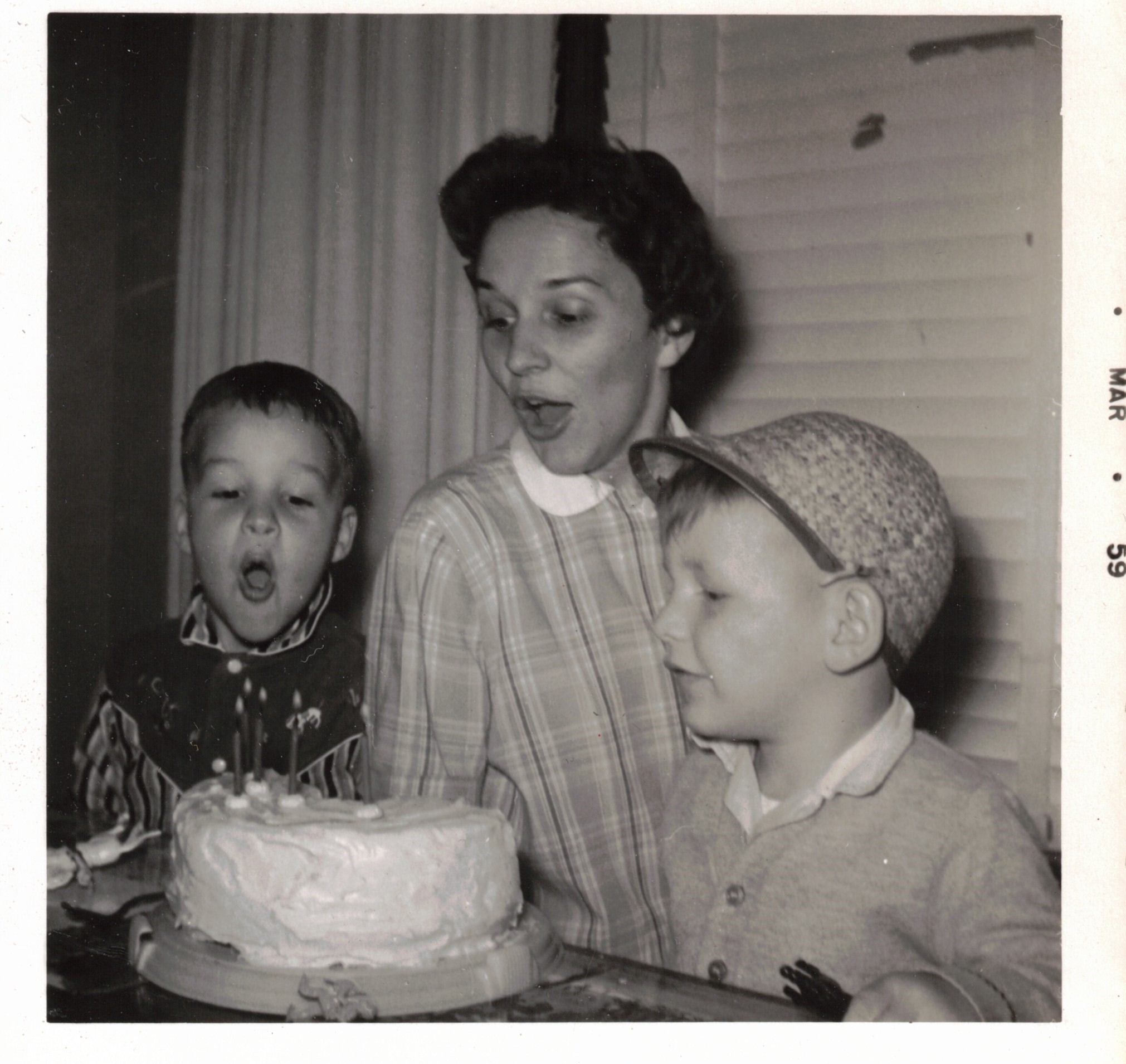
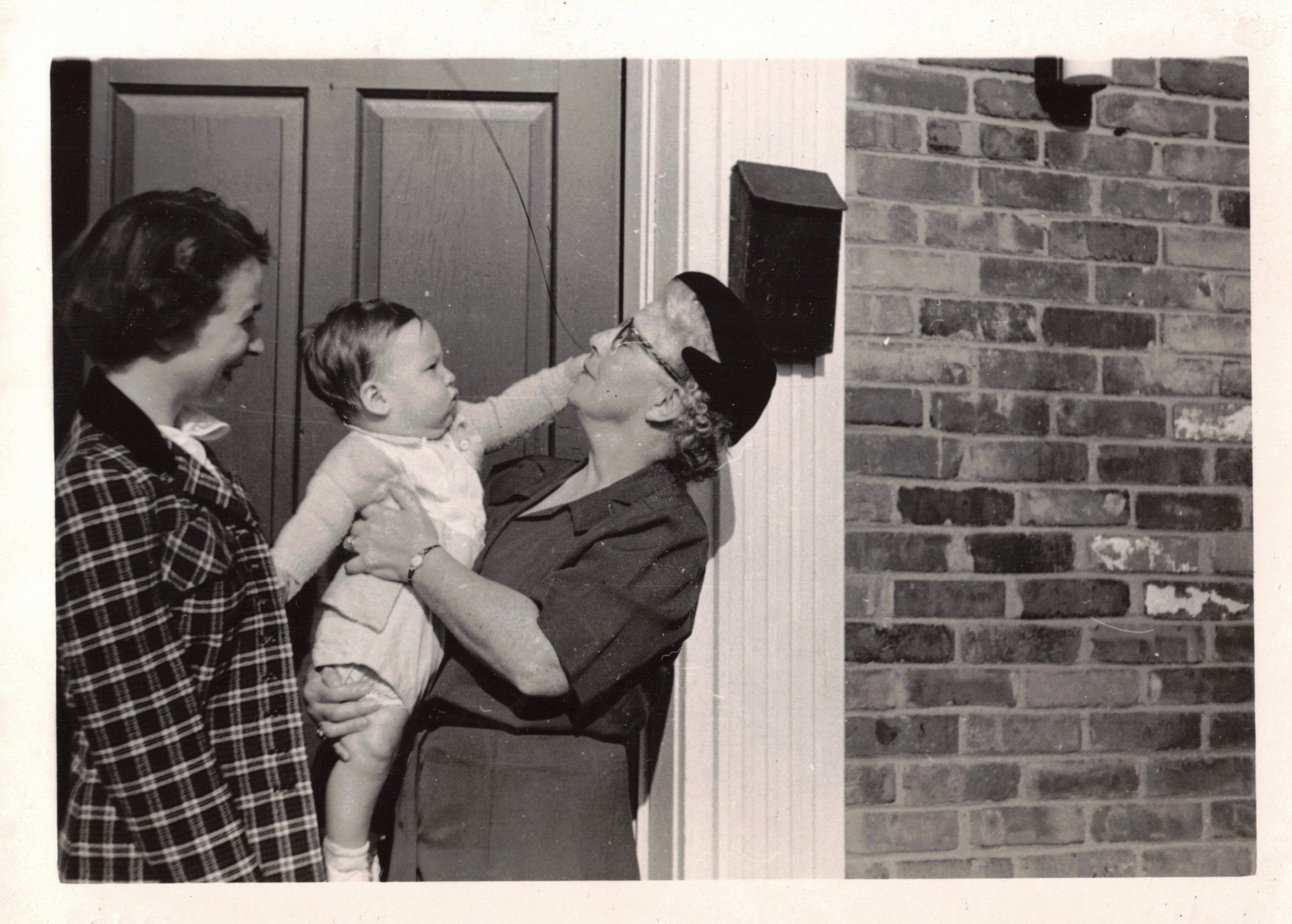
Yep, February 11, this is my day. Sixty-nine years ago my Mom was probably feeling the Niagara rumble from her birthing bed on the umpteenth floor of St. Mary’s. On the American side of the Falls, if you were wondering. Name already picked out – Eugene Wilson the Third – but already in use by Dad and Granddaddy so nickname picked out as well – Billy.

In a few years Mom and Dad moved back down south – Memphis, this time – then over the next ten years to Delaware, Michigan, finally Ohio, but never back to their home state of North Carolina. “Here’s to the land of the Long-Leaf Pine, a summer land where the sun doth shine.” Linda and I moved to NC a week after our wedding – to Durham, Duke Med – and held a place for them here. Just in case.

It’s a good thing. Ten years ago Mom and Dad at last resettled near us, Winston-Salem, where Mom grew up and went to Reynold’s High. They’re right across the street from historic Old Salem. I visited yesterday (secretly hoping there might be cake and candles – Birthday Party #1-of-many). Today I’m expecting Margaret and Bert (4) from Raleigh. Maybe tomorrow Saul (13) and Amelia (6) from across just around the corner. Maybe more cake?

So what do I actually want for my birthday? In Russia I’d have a pie with my name in the crust; in China a longevity noodle that fills the entire bowl (with scallions & bok choy); Hungarians would pull my earlobes (69 times); Jamaicans would dust me with flour.

All those sound awesome, but no, don’t bring presents. I have a walk in the woods with Linda planned. I have Grandkids to wear me out and make me laugh. We have the Blue Ridge with its arms spread to hold us here, not saying much, not needing to. Trees and mountains, family, homeplace – happy birthday to me!

.     .     .     .     .     .     .

.     .     .     .     .     .     .

Looking Across

the fog shuffles
++++ within
++++ ++ the folded mountain

whispers
++++ old stories
++++ ++ of before we were

Joyce Compton Brown
++++ from Standing on the Outcrop, Redhawk Publications, © 2021

.     .     .     .     .     .     .

I’ve heard Joyce Compton Brown read her poetry at many a gathering and my admiration still grows and grows. There is a treasure of different voices in this collection from Redhawk, Standing on the Outcrop, but they all have in common their deeply felt truth, authentic as hunger and earth. These are rural voices, Southern voices, mountain voices, mostly from the first half of the twentieth century; they are telling urgent stories in danger of being lost if Joyce does not hear them and reveal them to us. Places, history, personal struggle, hard-won triumph — these are Joyce Brown’s specialties and she here treats them well.


.     .     .     .     .     .     .

Mattie, 1955

Before our families came
++++ there wasn’t much.
They say there were some old forts,
++++ and arrowheads
the men turned up
++++ in the plowing.
We mad collections,
++++ sent them to school
++++ ++++ for the kids to show.

They say these pastures
++++ were good hunting grounds,
And I don’t wonder,
++++ look at this land, these two mountains –
Linville, with its craggy top, Honeycutt
++++ folding on up toward the highlands,
this river, the clearest water.
++++ Any living thing would be drawn
++++ ++++ to this valley.

they say the Catawba and Cherokee fought
++++ over it till we came.
Then they fought us.
++++ It was perfect for these farms.
You can still see,
++++ those big old white houses
from before the land got too divided
++++ and people had to find work.

They say it had a name,
++++ Conasaga, an Indian word
for beautiful valley.
++++ That may just be talk.
But we use the name
++++ for our cookbook, and the kids use it
for their school yearbooks.
++++ They like the way it sounds.

Joyce Compton Brown
++++ from Standing on the Outcrop, Redhawk Publications, © 2021


.     .     .     .     .     .     .

Stroke

Afterwards he was free
to speak a new language,
come back to tell them all.

They strained to understand
to interpret his assertions
to feel his newfound power.

He told them how
he’d hated factory saws
the whine of lathe and blade

Told them how
the smoldering glow
held by tight-closed lips

kept him from
trying to tell
what they didn’t

want to hear.
How he’d loved
his fingers shuffling

guitar strings
that flatpick style
speaking its own sad voice

milking the cow
in his own sweet barn
before everybody else was up

They couldn’t see
the fiery tongue
above his head.

They couldn’t feel
the pyretic fury
in his mind.

But now he was
at center, felt the
glow from lips of fire,

felt the heat
in seething brain,
felt the gift

of flaming tongue,
watched them all
leaning inward.

Joyce Compton Brown
++++ from Standing on the Outcrop, Redhawk Publications, © 2021


.     .     .     .     .     .     .


.     .     .     .     .     .     .

I’ll close my Birth Day post with a poem I wrote almost 20 years ago. Oldest son, first grandson, I was always the good boy. Never got into trouble (or at least never got caught). High school class pres. Early admissions, graduations with honors. Married my high school honey and we’re still best buds.

(Although when we were college Juniors and told my parents we wanted to get married, my Mom said, “Oh thank goodness, I’m so glad you didn’t decide to run off and live in a commune!” I guess maybe my hair was a little on the long side that year.)

Being the eternal good boy might become a burden – especially when one knows full well that one is not nearly as good as everyone makes out. (But anyway I prefer, Linda too, the silence of a forest to the company of people – no dang commune for this good boy.)

.     .     .     .     .     .     .

Good Boy Turns 50
++++ “I ain’t no physicist, but I knows what matters.” – Popeye

How did he earn this golden sobriquet
first christened by Nana for the merest trait
of being born the first grandchild, the grinning gay
toddler who could do no wrong? And wait,
how did he keep it all through the sixties when
pick up your toys and set the table gave way
to a ponytail and poems by Ho Chi Minh
(though there was no doubt he’d still bring home the A)?
Forever the glass-half-full sort of guy,
in marriage, too, he hefts vows more abundant
than Old Fred’s prescription, “Don’t leave and don’t die” –
the grace of wanting to want what she may want.
++++ So let’s give him what he needs in the next fifty
++++ if he ever discovers what that might be.

Bill Griffin
++++ first appeared in Pinesong, annual anthology of the NC Poetry Society;
++++ ++++ first place in the “formal poetry” category, 2004
++++ collected in Crossing the River, Main Street Rag Publishing, © 2017


.     .     .     .     .     .     .

.     .     .     .     .     .     .

Read Full Post »

« Newer Posts - Older Posts »