Feeds:
Posts
Comments

Posts Tagged ‘Robert Frost’

 . 
Poems for the Earth: Kenneth Rexroth, Denise Levertov, Robert Frost
 . 
Lute Music
 . 
The earth will be going on a long time
Before it finally freezes;
Men will be on it; they will take names,
Give their deeds reasons.
We will be here only
As chemical constituents –
A small franchise indeed.
Right now we have lives,
Corpuscles, ambitions, caresses,
Like everybody had once –
All the bright neige d’antan people,
“Blithe Helen, white Iope, and the rest,”
All the uneasy remembered dead.
 . 
Here at the year’s end, at the feast
Of birth, let us bring to each other
The gifts brought once west through deserts –
The precious metal of our mingled hair,
The frankincense of enraptured arms and legs,
The myrrh of desperate invincible kisses –
Let us celebrate the daily
Recurrent nativity of love,
The endless epiphany of our fluent selves,
While the earth rolls away under us
Into unknown snows and summers,
Into untraveled spaces of the stars.
 . 
Kenneth Rexroth
 . 
❦ ❦ ❦
 . 
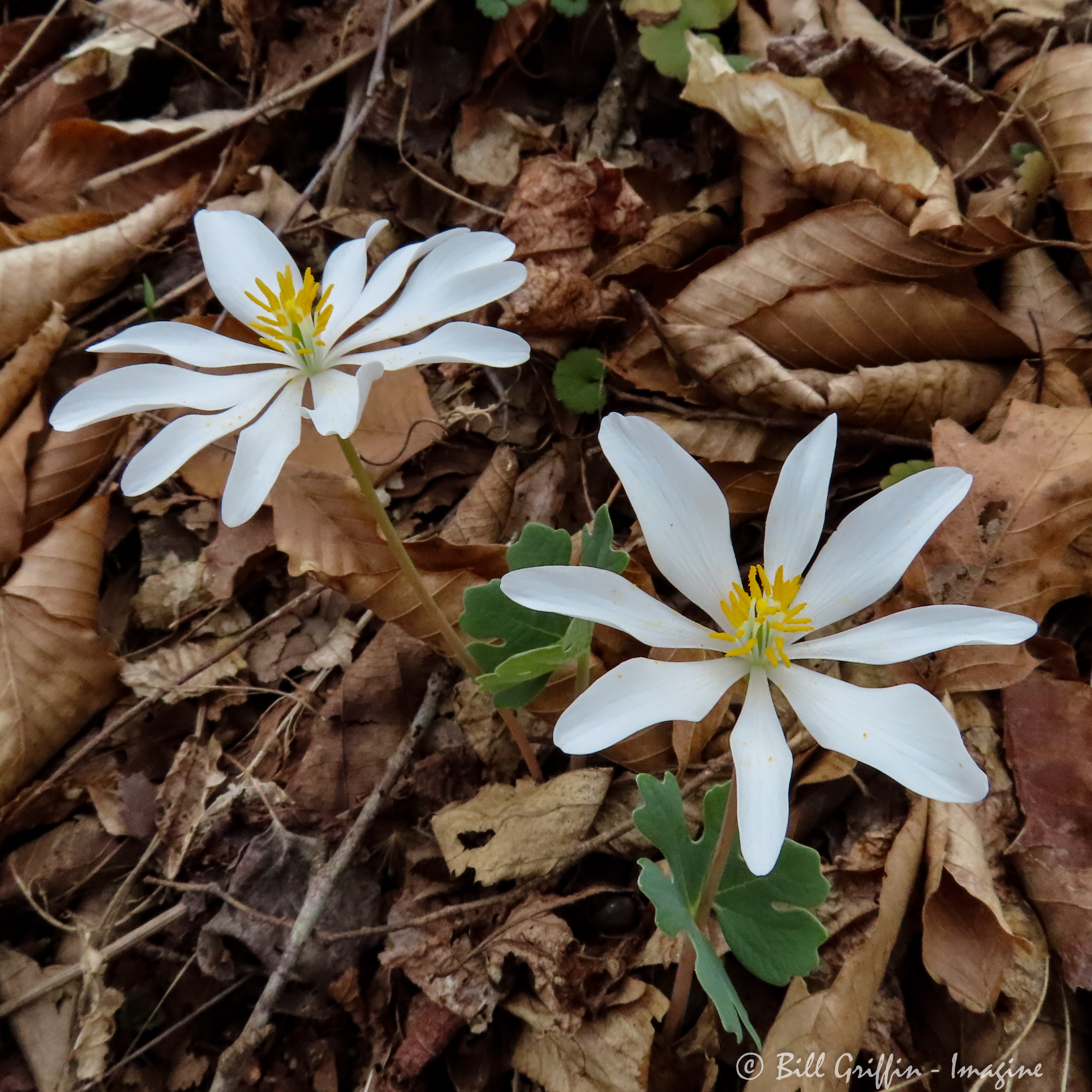
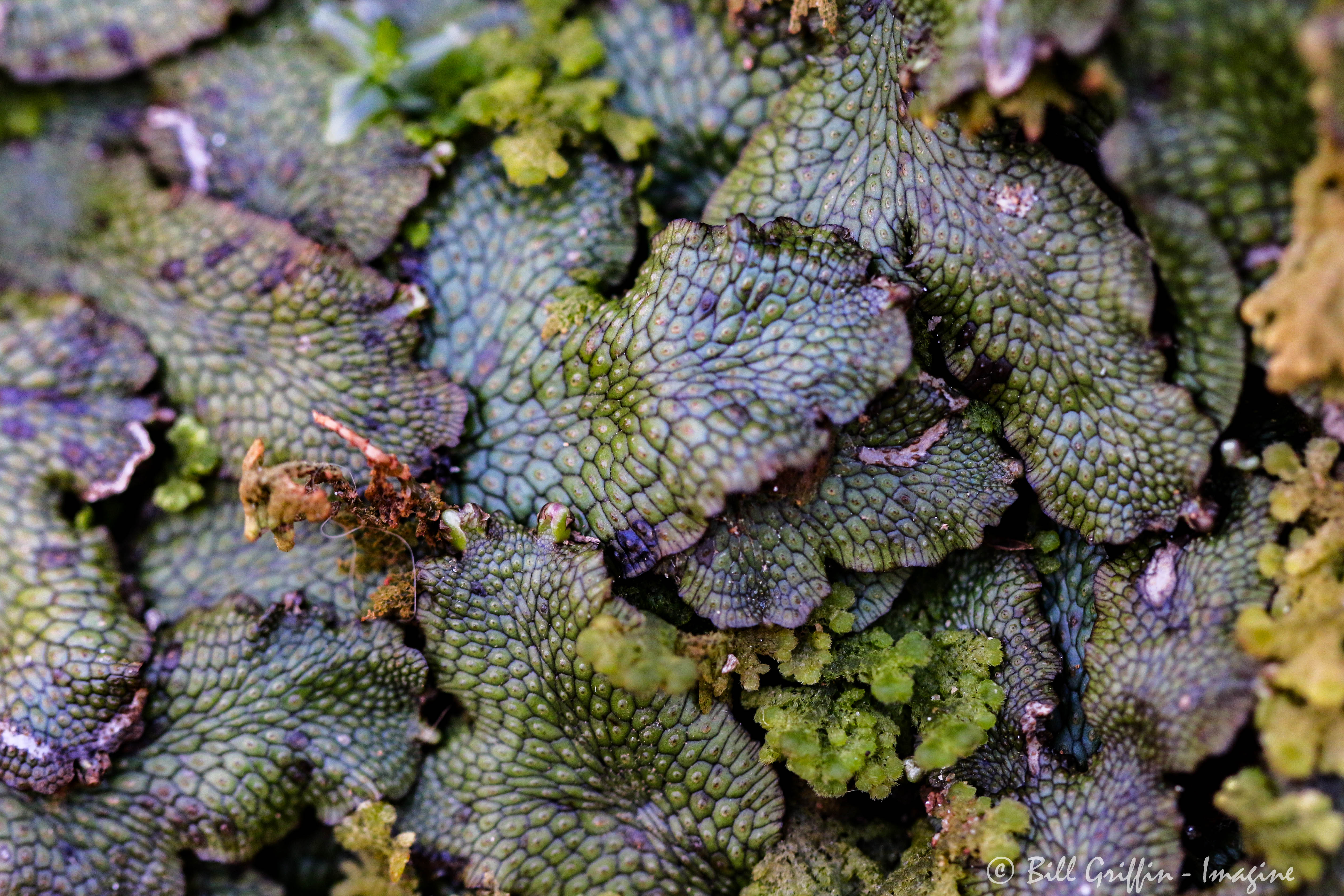
Is it really so strange that the close observation of life, noticing its many particulars and how desperate it is to spread and mingle and weave itself among the web of all other lives no matter how disparate and also individually desperate, strange that the observation and celebration of this planet solely and most fortuitously devoted to conjuring life should also ferment within the observer a noticing and rumination about death? Beside the stream the liverworts unclasp their primitive green. Rockspray nourishes them for a moment then continues its endless work of washing the ashes of earth to the sea. Between right now and when my own ashes will join them is less than a blink for the water, the rock, the bryophytes. Two or three blinks would be more than enough to embrace the span of my entire species on this middle-aged planet. A small franchise indeed.
 . 
In our current society the virtues have lost most of their value to inflation (inflation of ego primarily), and of all virtues humility seems valued least. Another winter is apparently ended but it is hard to shake the chill of despite that has settled and will not permit dispelling. For the few years left of my personal franchise among the living, where is the warmth? Right here, though, is my favorite seat on the back porch. Its cushion retains the signature of my backside. Ten feet away my favorite among all trees remains undiscouraged, staid Beech perhaps a quarter century my elder. Its scars and knots only enhance its beauty. At its crown the long slender leafbuds already unfurl to prepare the deep shade so welcome come May. And that smooth, grey skin – the filamentous liverworts readily accept its unselfish invitation to reside. As a representative of a large-brained apex species, could I humble myself before such an insignificant creature as a liverwort? Could I be half so generous as the Beech? Perhaps it is warm enough after all – life is poised to spread and mingle. Let’s go out front into the sun and plant some seeds.
 . 
 . 
❦ ❦ ❦
 . 
The Past III
 . 
You try to keep the present
 ==== uppermost in your mind, counting its blessings
 ====  ==== (which today are many) because
although you are not without hope for the world, crazy
 ==== as that seems to your gloomier friends and often
 ====  ==== to yourself, yet your own hopes
have shrunk, options are less abundant. Ages ago
 ==== you enjoyed thinking of names
 ====  ==== for a daughter; later you still entertained,
at least as hypothesis, the notion
 ==== of a not impossible love, requited passion;
 ====  ==== or resolved modestly to learn
some craft, various languages.
 ==== And all those sparks of future
 ====  ==== winked out behind you, forgettable. So –
the present. It’s blessings
 ==== many today:
 ====  ==== the fresh, ornate
blossoms of the simplest trees a sudden
 ==== irregular pattern everywhere, audacious white,
 ====  ==== flamingo pink in a haze of early warmth.
But perversely it’s not
 ==== what you crave. You want
 ====  ==== the past. Oh, not your own,
no reliving of anything – no, what you hanker after
 ==== is a compost,
 ====  ==== a forest floor, thick, saturate,
fathoms deep, palimpsestuous, its surface a mosaic
 ==== of infinitely fragile, lacy, tenacious
 ====  ==== skeleton leaves. When you put your ear
to that odorous ground you can catch the unmusical, undefeated
 ==== belling note, as of a wounded stag escaped triumphant,
 ====  ==== of lives long gone.
 . 
Denise Levertov
 . 
 . 
❦ ❦ ❦
 . 
POETRY FOR EARTH DAY 2025
 . 
Our ability to perceive quality in nature begins, as in art, with the pretty. 
It expands through successive stages of the beautiful to values 
as yet uncaptured by language.
Aldo Leopold
 . 
Is it only serendipity that Earth Day and National Poetry Month are celebrated together each year in April? Our need for the Earth, our love for the Earth, are beyond language, yet poetry must continue to yearn to express that love.
 . 
Do you have a favorite poem that enlarges the boundaries of community? That notices the often overlooked? That celebrates all life on earth as one family together? We invite you to share! The deadline is April 10. See full guidelines at this link:
 . 
 . 
 . 
These poems by Kenneth Rexroth, Denise Levertov, and Robert Frost are collected in The Ecopoetry Anthology, edited by Ann Fisher-Wirth and Laura-Gray Street; © Trinity University Press, San Antonio TX, 2020
 . 
 . 
Liverworts are ancient non-vascular plants, some 9,000 different species inhabiting every continent except Antarctica and almost every habitat and niche. They have been grouped with mosses and hornworts in the division Bryophyta, although some taxonomists split them into their own division, Marchantiophyta. One particular species, Frullania eboracensis, the New York Scalewort, is particularly noticeable on smooth barked trees such as beech, maple, and holly.
 . 
 . 
❦ ❦ ❦
 . 
The Most of It
 . 
He thought he kept the universe alone;
For all the voice in answer he could wake
Was but the mocking echo of his own
From some tree-hidden cliff across the lake.
Some morning from the boulder-broken beach
He would cry out on life, that what it wants
Is not its own love back in copy speech,
But counter-love, original response.
And nothing ever came of what he cried
Unless it was the embodiment that crashed
In the cliff’s talus on the other side,
And then in that far-distant water splashed,
But after a time allowed for it to swim,
Instead of proving human when it neared
And someone else additional to him,
As a great buck it powerfully appeared,
Pushing the crumpled water up ahead,
And landed pouring like a waterfall,
And stumbled through the rocks with horny tread,
And forced the underbrush – and that was all.
 . 
Robert Frost
 . 
❦ ❦ ❦
 . 
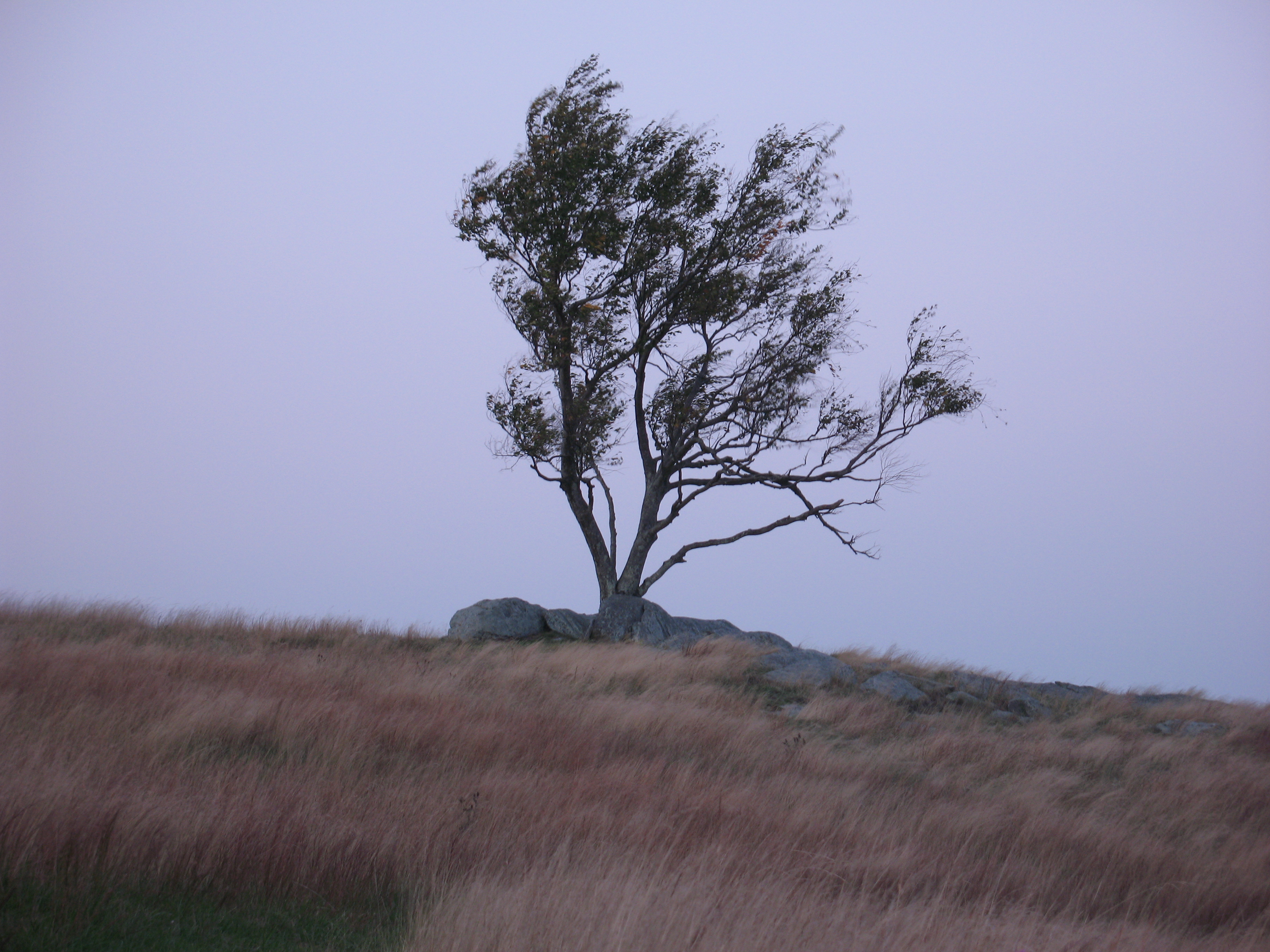
Doughton Park Tree 2019-02-09
 . 

Read Full Post »

[poems by James Dickey, William Carlos Williams, Robert Frost]

Last Friday I got to play a new game with my grandson Bert, one he made up with his Dad – This Animal. We had walked a mile or so on the Crabtree Creek Greenway in Raleigh and it was time to head home. Along the waterway there were plenty of enticements: red-headed woodpecker at the tip of a snag; big splashes chunking clinkers into the stream; Spring Beauties (why does Pappy kneel down and look at every flower?); tiny slug rescued from squishing.

Now we’ve turned into the neighborhoods to walk on home. Sidewalks. Lawns. Much less exciting. Soon I hear a little voice pipe up, “Let’s play This Animal!”

I get first crack. “I’m an animal that sleeps during the day . . .” “No, Pappy! You have to say This Animal!” Oh yeah, got it. Four-year olds are sticklers for protocol. “This animal sleeps during the day hanging upside down then flies around at night catching insects.”

“A bat!”

Bert knows his animals. In his presence you’d better not mistake a Blue Whale for a Sperm Whale. Or even a Crocodile for an Alligator. Now it’s his turn: “This Animal has ten legs, a stinger, AND claws!” (Hint: In his pocket Bert is clasping the plastic scorpion he’s been playing with all afternoon.)

What a kid! One of these days we’ll kick the game up a notch to This Bird. He can already name most of them that come to the feeder. And I can foresee the day when Bert has me totally stumped as we play This Lichen.

.     .     .     .     .     .     .

.     .     .     .     .     .     .

The Heaven of Animals

Here they are. The soft eyes open.
If they have lived in a wood
It is a wood.
If they have lived on plains
It is grass rolling
Under their feet forever.

Having no souls, they have come,
Anyway, beyond their knowing.
Their instincts wholly bloom
And they rise.
The soft eyes open.

To match them, the landscape flowers,
Outdoing, desperately
Outdoing what is required:
The richest wood,
The deepest field.

For some of these,
It could not be the place
It is, without blood.
These hunt, as they have done,
But with claws and teeth grown perfect,

More deadly than they can believe.
They stalk more silently,
And crouch on the limbs of trees,
And their descent
Upon the bright backs of their prey

May take years
In a sovereign floating of joy.
And those that are hunted
Know this as their life,
Their reward: to walk

Under such trees in full knowledge
Of what is in glory above them,
And to feel no fear,
But acceptance, compliance.
Fulfilling themselves without pain

At the cycle’s center,
They tremble, they walk
Under the tree,
They fall, they are torn,
They rise, they walk again.

James Dickey (1923-1997)
from The Whole Motion: Collected Poems 1945-1992. Copyright © 1992 by James Dickey.


.     .     .     .     .     .     .


All three of today’s poems are collected in The Ecopoetry Anthology; Edited by Ann Fisher-Wirth and Laura-Gray Street, © 2013, Trinity University Press, San Antonio, Texas.

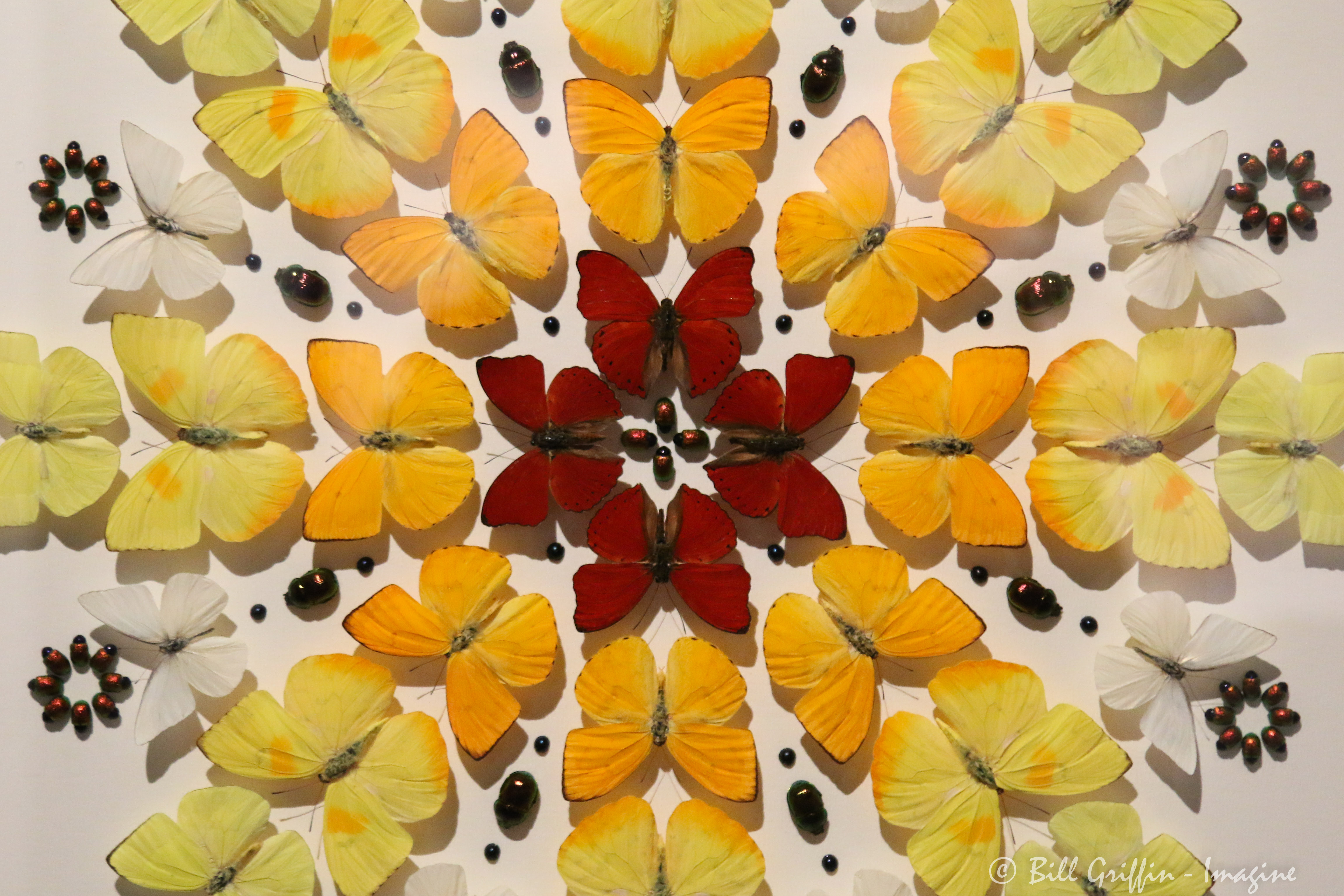
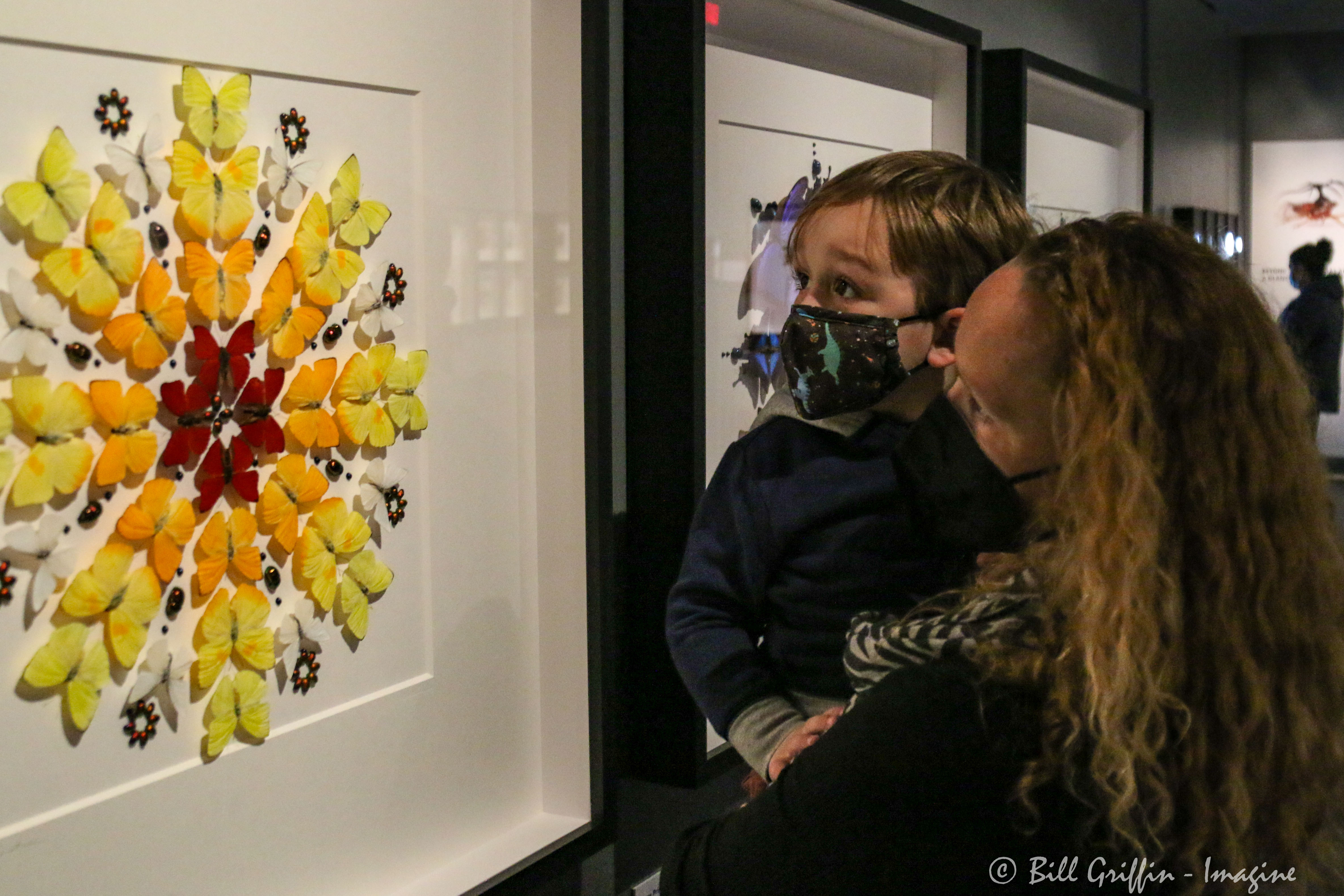
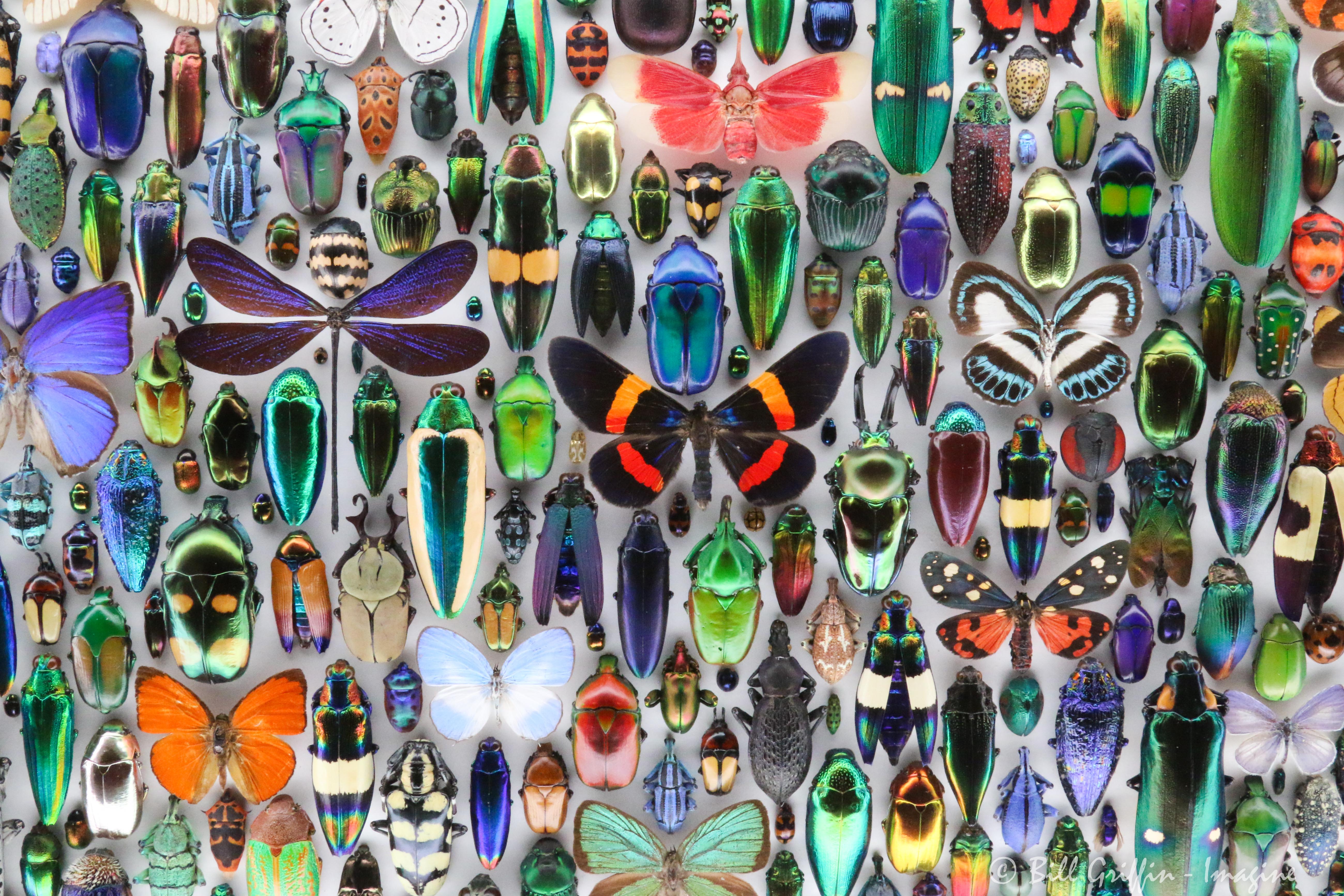
Today’s photographs are from the exhibit at the North Carolina Museum of Natural Sciences Exquisite Creatures by Christopher Marley. These amazing works are created by Marley from preserved specimens from around the world (and no vertebrates were killed in creating his art). The Museum describes this as a dialogue with art, nature and science, and Marley states his intention to allow each of us to tap into our innate biophilia, our love of life and living things.

Oh yes, and the little plastic insects came from the Museum gift shop. We all had to stop and play with them as soon as we left the building.

[The last day of the exhibit in North Carolina is March 20, 2022. It is appearing simultaneously in Idaho; check for future exhibits at Christopher Marley’s site.]

.     .     .     .     .     .     .


Spring and All

By the road to the contagious hospital
under the surge of the blue
mottled clouds driven from the
northeast-a cold wind. Beyond, the
waste of broad, muddy fields
brown with dried weeds, standing and fallen

patches of standing water
the scattering of tall trees

All along the road the reddish
purplish, forked, upstanding, twiggy
stuff of bushes and small trees
with dead, brown leaves under them
leafless vines—

Lifeless in appearance, sluggish
dazed spring approaches—

They enter the new world naked,
cold, uncertain of all
save that they enter. All about them
the cold, familiar wind—

Now the grass, tomorrow
the stiff curl of wildcarrot leaf
One by one objects are defined—
It quickens: clarity, outline of leaf

But now the stark dignity of
entrance—Still, the profound change
has come upon them: rooted, they
grip down and begin to awaken

William Carlos Williams (1883-1963)
from Spring and All, first published in 1923 by Robert McAlmon’s Contact Publishing Co.

.     .     .     .     .     .     .


The Need of Being Versed in Country Things

The house had gone to bring again
To the midnight sky a sunset glow.
Now the chimney was all of the house that stood,
Like a pistil after the petals go.

The barn opposed across the way,
That would have joined the house in flame
Had it been the will of the wind, was left
To bear forsaken the place’s name.

No more it opened with all one end
For teams that came by the stony road
To drum on the floor with scurrying hoofs
And brush the mow with the summer load.

The birds that came to it through the air
At broken windows flew out and in,
Their murmur more like the sigh we sigh
From too much dwelling on what has been.

Yet for them the lilac renewed its leaf,
And the aged elm, though touched with fire;
And the dry pump flung up an awkward arm;
And the fence post carried a strand of wire.

For them there was really nothing sad.
But though they rejoiced in the nest they kept,
One had to be versed in country things
Not to believe the phoebes wept.

Robert Frost (1874-1963)
first published in 1923 in Frost’s New Hampshire poetry collection; public domain.

.     .     .     .     .     .     .


.     .     .     .     .     .     .


.     .     .     .     .     .     .


IMG_1827

Read Full Post »

[poems by Galway Kinnell, Yusef Komunyakaa, Robert Frost]

April 22, 2031 – Rover Shēn zhī (Deep Knowing) prepares to analyze its 50 meter drill core sample from the Martian south polar ice cap. Strata of grit, water ice, mineral dust – wise Rover’s AI chooses to begin by studying a faintly pigmented layer at 17.5 meters. Very promising.

Yes, there is life on Mars.

And this is what the Rover does not discover – a single species of microorganism spending its long cold days and nights in solitary, independent, utterly lonely metabolic isolation.

Instead Shēn zhī’s electron microscopy, nuclear magnetic resonance, and biochemical probes reveal several varieties of cell structures not unlike Archaea from deep ocean sites on Earth, a dozen species that mirror bacteria isolated from Antarctic cores, crystalline nucleotides indistinguishable from viruses, even twisted proteins – prions. All of these merrily feed and feed upon each other in homeostatic bliss, coevolved for a billion years: an ecological community.

.     .     .     .     .     .     .

an offering from Sharon Sharp . . .

Daybreak

On the tidal mud, just before sunset,
dozens of starfishes
were creeping. It was
as though the mud were a sky
and enormous, imperfect stars
moved across it as slowly
as the actual stars cross heaven.
All at once they stopped,
and as if they had simply
increased their receptivity
to gravity they sank down
into the mud; they faded down
into it and lay still; and by the time
pink of sunset broke across them
they were as invisible
as the true stars at daybreak.

“Daybreak” by Galway Kinnell (1927-2014), from The Forgotten Language: Contemporary Poets and Nature, ed. Christopher Merrill, Peregrine Smith Books, Salt Lake City, UT, 1991

.     .     .     .     .     .     .

Life is community. Even you, homeostatically blissful Human, are a community of bacteria, protists, tiny ectoparasites in every pore, even Archaea in your gut. I feed my Archaea a cup of Greek yoghurt every morning and they are so serenely blissful. If you could count all the cells that comprise the unitary psychosocially distinct and identifiable YOU, less than half of them would be human cells. You and I couldn’t begin to live and remain healthy without those wonderful gut bacteria. How much more so mycorrhizal fungi and diatoms. Life is beautiful.

Earth Day is about the web of all life on planet Earth; no single organism remains completely solitary, independent, or isolated. If, through our actions or inactions, we create an Earth that makes it impossible for a certain species to survive, then our own species is that much impoverished and our own survival that much diminished. If, by our attention, understanding, and reverence, we permit the web to grow, extend, deepen, thrive, then our own species thrives. And thriving is defined only partially by strength, health, and numbers; for a human being to truly thrive also involves participating in the epiphany of connection to all living things. Community is life.

.     .     .     .     .     .     .

Crossing a City Highway

The city at 3 a.m. is an ungodly mask
the approaching day hides behind
& from, the coyote nosing forth,
the muscles of something ahead,

& a fiery blaze of eighteen-wheelers
zoom out of the curved night trees,
along the rim of absolute chance.
A question hangs in the oily air.

She knows he will follow her scent
left in the poisoned grass & buzz
of chainsaws, if he can unweave
a circle of traps around the subdivision.

For a breathy moment, she stops
on the world’s edge, & then quick as that
masters the stars & again slips the noose
& darts straight between sedans & SUVs.

Don’t try to hide from her kind of blues
or the dead nomads who walked trails
now paved by wanderlust, an epoch
somewhere between tamed & wild.

If it were Monday instead of Sunday
the outcome may be different,
but she’s now in Central Park
searching for a Seneca village

among painted stones & shrubs,
where she’s never been, & lucky
she hasn’t forgotten how to jig
& kill her way home.

“Crossing a City Highway” by Yusef Komunyakaa, Poetry, January, 2016

.     .     .     .     .     .     .

The Oven Bird

There is a singer everyone has heard,
Loud, a mid-summer and a mid-wood bird,
Who makes the solid tree trunks sound again.
He says that leaves are old and that for flowers
Mid-summer is to spring as one to ten.
He says the early petal-fall is past
When pear and cherry bloom went down in showers
On sunny days a moment overcast;
And comes that other fall we name the fall.
He says the highway dust is over all.
The bird would cease and be as other birds
But that he knows in singing not to sing.
The question that he frames in all but words
Is what to make of a diminished thing.

“The Oven Bird” by Robert Frost (1874-1963)

.     .     .     .     .     .     .

[Bad news for Shēn zhī: an unanticipated feature of Martian metabolism is that the cells require elements from Groups 8, 9, 10 of the Periodic Table for electron transport during energy transfer – they “eat” iron, cobalt, nickel, and rhodium. Within a few weeks many of the Rover’s critical microconnectors begin to fail. EarthLink in Ningbo goes dark. Bits of Shēn zhī drop to the Martian substrate. The Rover ultimately pinpoints the cause and transmits a warning: “Do Not Come Here.”

Unfortunately its message is garbled and received by other Martian Rovers as, “Come Here!” Within fifteen years they have all arrived at the southern plateau and become fodder for the Martian ecological community.

Which thrives.]

.     .     .     .     .     .     .

.     .     .     .     .     .     .


[original artwork by Linda French Griffin (c) 2021]

Read Full Post »

Older Posts »