Feeds:
Posts
Comments

Posts Tagged ‘poetry’


[with 3 poems by Robinson Jeffers]

Linda is preparing to read Thy Friend, Obadiah to Amelia, age 6. A young Quaker lad in colonial Nantucket is befriended by a seagull, which is not entirely to his liking. Linda shows Amelia the cover and explains that the story happened a long, long time ago.

“Even before cell phones?” Amelia asks.

“Oh yes, and look at the picture. See the horse and cart? This was even before cars.”

Amelia grows grave and pensive. “Did they have candy?”

–    –    –

A six-year old lives within essentials. Even though candy is not a daily treat it must exist. Get into the car after kindergarten and immediately pull Tammy from the bottom of the bookbag, indispensable diminutive fox companion from infancy. And laughing. A joke, a gift, a tickle, a sudden surprise are all occasions for the essential vitamin of laughter.

Sometimes I’m not sure I remember what are essentials (except cheese, yes, must have cheese). It doesn’t help when Siri informs me my screentime increased 59% last week, nor is it helpful to argue with Siri that the preceding week was artificially low because his battery had funked out on me. Step away from the electronics, Sir. When Linda and I have taken a break from worldly worries and return from a long walk in the woods, we usually hear ourselves saying, “Hoo boy, we needed that.” Something essential about such an interlude.

Essential things. Clues abound. For Christmas I gave my sister and her partner a book of poetry I often return to myself. I had mentioned my recurring anxiety dreams and last week Mary Ellen asked how I was coping (nice to have a sister who’s a psychologist). I blurted, “When I read my copy of that book I gave you it helps.”

Essential? Poetry? When I can’t be walking in the woods I can be in the wild with Robinson Jeffers.

.     .     .     .     .     .     .

Return

A little too abstract, a little too wise,
It is time for us to kiss the earth again,
It is time to let the leaves rain from the skies,
Let the rich life run to the roots again.
I will go to the lovely Sur Rivers
And dip my arms in them up to the shoulders.
I will find my accounting where the alder leaf quivers
In the ocean wind over the river boulders.
I will touch things and things and no more thoughts,
That breed like mouthless May-flies darkening the sky,
The insect clouds that blind our passionate hawks
So that they cannot strike, hardly can fly.
Things are the hawk’s food and noble is the mountain, Oh noble
Pico Blanco, steep sea-wave of marble.

Robinson Jeffers (1887-1961)

things and things and no more thoughts . . .

.     .     .     .     .     .     .

Rock and Hawk

Here is a symbol in which
Many high tragic thoughts
Watch their own eyes.

This gray rock, standing tall
On the headland, where the seawind
Lets no tree grow,

Earthquake-proved, and signatured
By ages of storms: on its peak
A falcon has perched.

I think, here is your emblem
To hang in the future sky;
Not the cross, not the hive,

But this; bright power, dark peace;
Fierce consciousness joined with final
Disinterestedness;

Life with calm death; the falcon’s
Realist eyes and act
Married to the massive

Mysticism of stone,
Which failure cannot cast down
Nor success make proud.

Robinson Jeffers (1887-1961)

.     .     .     .     .     .     .

Credo

My friend from Asia has powers and magic, he plucks a blue leaf from
+++ the young blue-gum
And gazing upon it, gathering and quieting
The God in his mind, creates an ocean more real than the ocean, the salt,
+++ the actual
Appalling presence, the power of the waters.
He believes that nothing is real except as we make it. I humbler have found
+++ in my blood
Bred west of Caucasus a harder mysticism.
Multitude stands in my mind but I think that the ocean in the bone vault is
+++ only
The bone vault’s ocean: out there is the ocean’s;
The water is the water, the cliff is the rock, come shocks and flashes of
+++ reality. The mind
Passes, the eye closes, the spirit is a passage;
The beauty of things was born before eyes and sufficient to itself; the
+++ heartbreaking beauty
Will remain when there is no heart to break for it.

Robinson Jeffers (1887-1961)

.     .     .     .     .     .     .
These three poems are collected in The Wild God of the World, An Anthology of Robinson Jeffers, Selected, with an introduction, by Albert Gelpi, Stanford University Press, 2003

Thy Friend, Obadiah,written and illustrated by Brinton Turkle, Puffin Books; a Caldecott Honor Book in 1970

And the Christmas present I gave Mary Ellen and Wendy is The Poetry of Impermanence, Mindfulness, and Joy, edited by John Brehm, Wisdom Publications, 2017

Additional references: Return; Rock and Hawk; Robinson Jeffers at The Poetry Foundation.

.     .     .     .     .     .     .

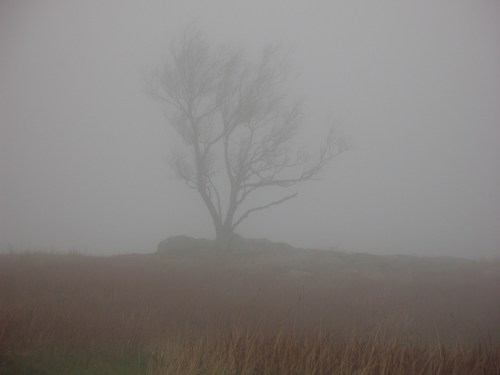
2016-10-17a Doughton Park Tree

Read Full Post »

I believe this globed earth not all by chance and fortune brings forth her broods, but feels and chooses

[with a longer poem by Robinson Jeffers]

The winter-gray trunks reveal their true nature. Stick-straight tuliptree, angled encroaching oak, perfected symmetry of beech, funky slipped-disc hickory – now in the rarified morning after frost, all mysticism stripped from the breath rising up Dutchman Creek, the trees allow us to know their inmost inclinations, their gestures and attitudes freeze-tag obvious: Fill this space. Drink the light. Every drop.

Summer is the mystery, all bluster and concealment. Signature leafshapes swallowed in jostling overflow of green – in winter we discover how they do it. Branches ramified ever finer, each species has invented its own geometry, each distinct inscrutable math of its evolving. Here they crouch and rise and stand and lean behind our house, here they create this little patch of forest just like all other patches and utterly unlike any but itself.

These trees aren’t old. Maybe seventy years since last the loggers passed. Perhaps that white oak is a hundred. One big silverbell beside the water has had time to cast her progeny up the ridge, seven generations. The early prodigies succumb to shade – dogwood, hornbeam. Not many pines remain, mostly a few holy snags favored by woodpeckers.

This winter we first realized a respectable Liriodendron had fallen last summer, twenty-inch diameter and a hundred feet from the house but we never heard the crash, parallel to power lines so we never lost light. She rests beside a sister that lay down before we bought this place forty years ago. The old tree is almost returned to earth; the newly fallen still clings to a few black leaves. Up the hill, in full sun, another sister is at least double their size, heaving our driveway, flaunting her strange orange-yellow flowers a hundred feet high, prodigal with her seedlings.

I am old. Seventy soon. God speaks that tuliptree’s name in the space it fills, in jadegreen leaves and roots that smell of musk and camphor. How difficult is it for me to imagine my name also on God’s lips, imagine some webline of my self will extend its existence onward when the frame that supports it collapses, when the blood, the electricity cease to flow? Dutchman Creek will still complain after heavy rain. The twigs will twist to find their places. Light will fill a new day and expect to be drunk. Every drop.

.     .     .     .     .     .     .

now all’s empty, a bone bubble, a blown-out eggshell


De Rerum Virtute
[The Virtue of Things]
++++ Robinson Jeffers (1887-1962)

++++ I
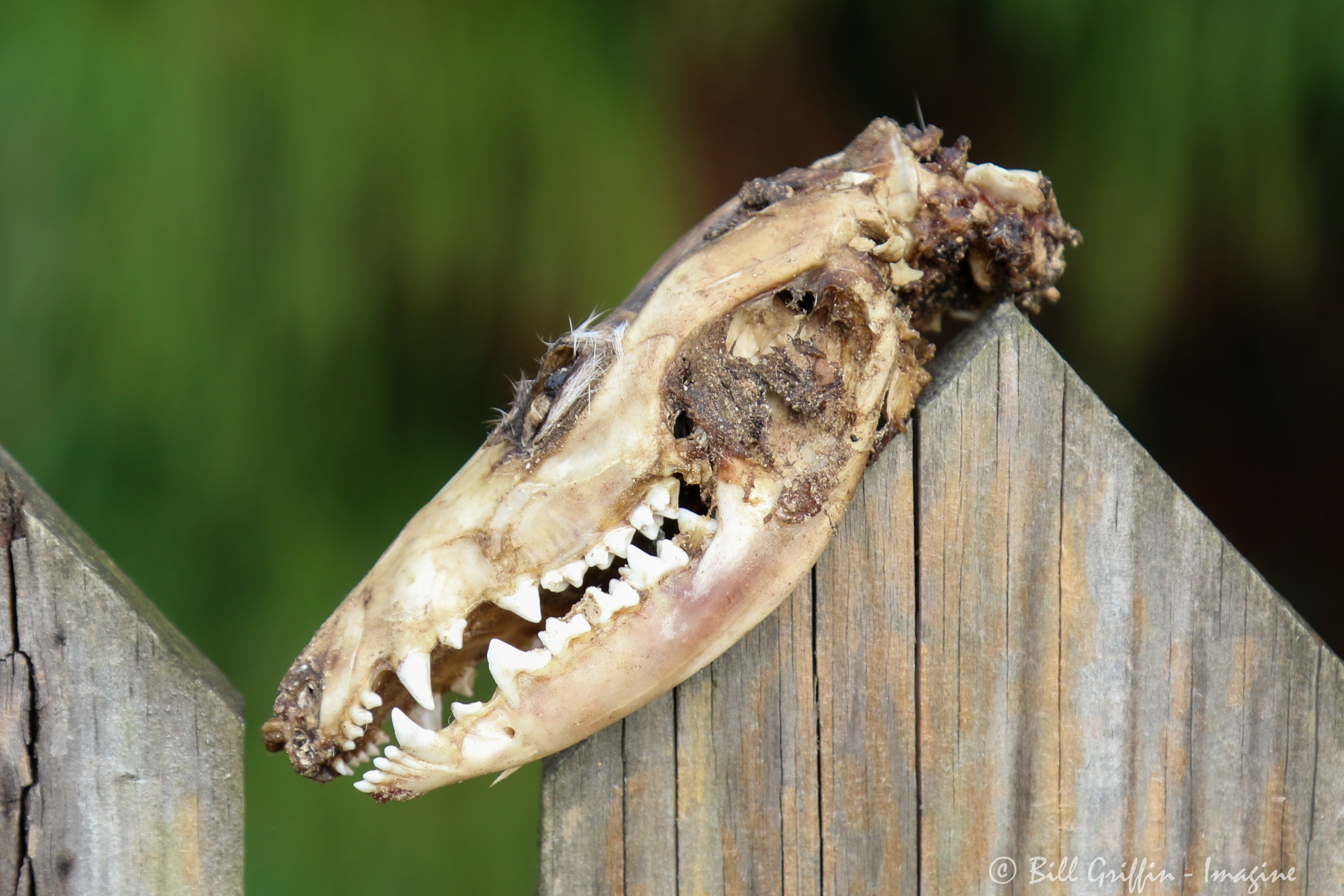
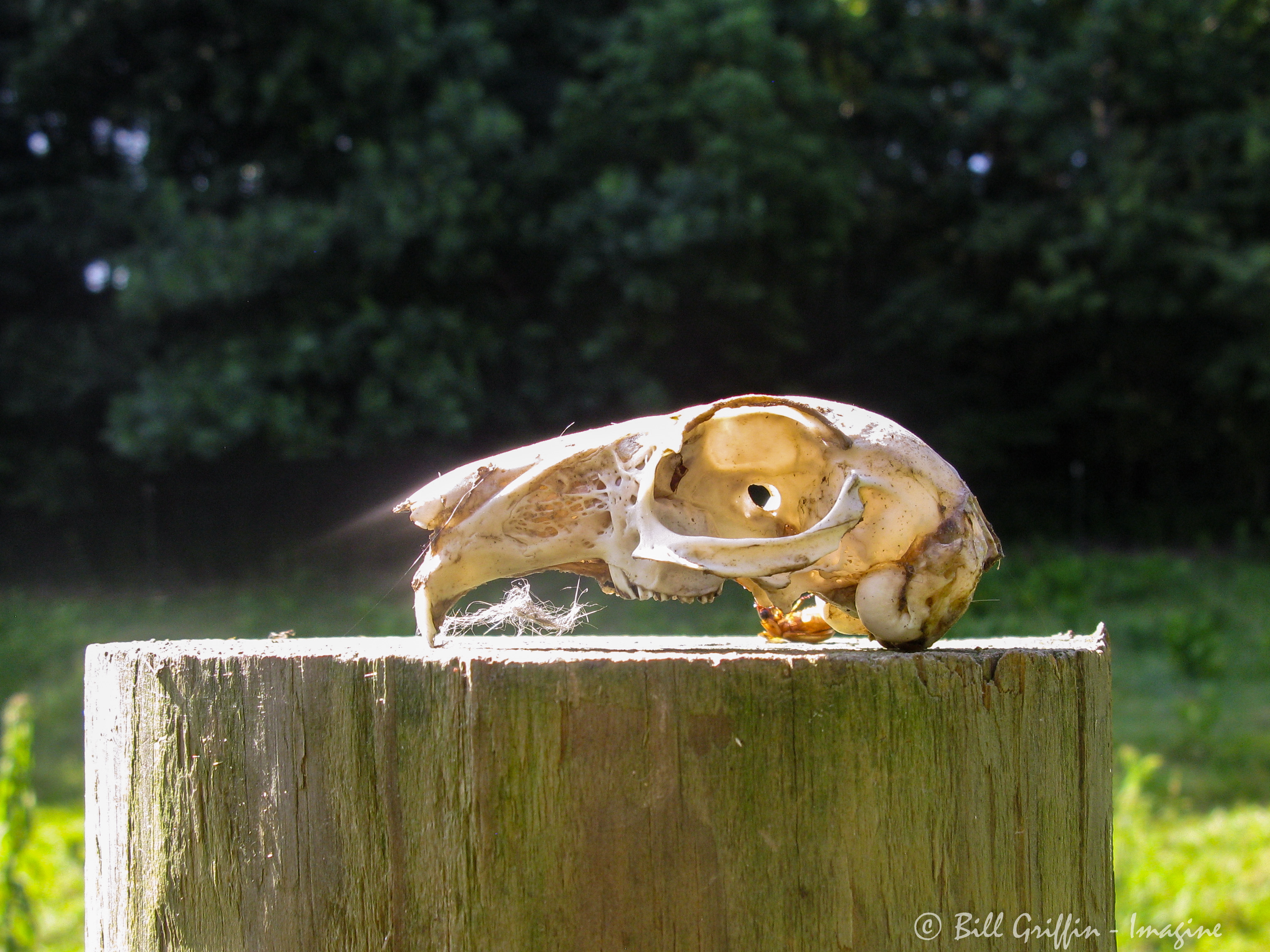
Here is the skull of a man: a man’s thoughts and emotions
Have moved under the thin bone vault like clouds
Under the blue one: love and desire and pain,
Thunderclouds of wrath and white gales of fear
Have hung inside here: and sometimes the curious desire of knowing
Values and purpose and the causes of things
Has coasted like a little observer air-plane over the images
That filled this mind: it never discovered much,
And now all’s empty, a bone bubble, a blown-out eggshell.

I believe the first living cell had echoes of the future in it

++++ II
That’s what it’s like: for the egg too has a mind,
Doing what our able chemists will never do,
Building the body of a hatchling, choosing among the proteins:
These for the young wing-muscles, these for the great
Crystalline eyes, these for the flighty nerves and brain:
Choosing and forming: a limited but superhuman intelligence,
Prophetic of the future and aware of the past:
The hawk’s egg will make a hawk, and the serpent’s
A gliding serpent: but each with a little difference
From its ancestors—and slowly, if it works, the race
Forms a new race: that also is a part of the plan
Within the egg. I believe the first living cell
Had echoes of the future in it, and felt
Direction and the great animals, the deep green forest
And whale’s-track sea; I believe this globed earth
Not all by chance and fortune brings forth her broods,
But feels and chooses. And the Galaxy, the firewheel
On which we are pinned, the whirlwind of stars in which our sun is one dust-grain, one electron, this giant atom of the universe
Is not blind force, but fulfils its life and intends its courses. “All things are full of God.
Winter and summer, day and night, war and peace are God.”

the sun will be strangled among his dead satellites, remembering magnificence

++++ III
Thus the thing stands; the labor and the games go on—
What for? What for? —Am I a God that I should know?
Men live in peace and happiness; men live in horror
And die howling. Do you think the blithe sun
Is ignorant that black waste and beggarly blindness trail him like hounds,
And will have him at last? He will be strangled
Among his dead satellites, remembering magnificence.

I believe that man too is beautiful

++++ IV
I stand on the cliff at Sovranes creek-mouth.
Westward beyond the raging water and the bent shoulder of the world
The bitter futile war in Korea proceeds, like an idiot
Prophesying. It is too hot in mind
For anyone, except God perhaps, to see beauty in it. Indeed it is hard to see beauty
In any of the acts of man: but that means the acts of a sick microbe
On a satellite of a dust-grain twirled in a whirlwind
In the world of stars ….
Something perhaps may come of him; in any event
He can’t last long. —Well: I am short of patience
Since my wife died … and this era of spite and hate-filled half-worlds
Gets to the bone. I believe that man too is beautiful,
But it is hard to see, and wrapped up in falsehoods. Michael Angelo and the Greek sculptors—
How they flattered the race! Homer and Shakespeare—
How they flattered the race!

the beauty of things means virtue and value in them

++++ V
One light is left us: the beauty of things, not men;
The immense beauty of the world, not the human world.
Look—and without imagination, desire nor dream—directly
At the mountains and sea. Are they not beautiful?
These plunging promontories and flame-shaped peaks
Stopping the sombre stupendous glory, the storm-fed ocean? Look at the Lobos Rocks off the shore,
With foam flying at their flanks, and the long sea-lions
Couching on them. Look at the gulls on the cliff wind,
And the soaring hawk under the cloud-stream—
But in the sage-brush desert, all one sun-stricken
Color of dust, or in the reeking tropical rain-forest,
Or in the intolerant north and high thrones of ice—is the earth not beautiful?
Nor the great skies over the earth?
The beauty of things means virtue and value in them.
It is in the beholder’s eye, not the world? Certainly.
It is the human mind’s translation of the transhuman
Intrinsic glory. It means that the world is sound,
Whatever the sick microbe does. But he too is part of it.

De Rerum Virtute
by Robinson Jeffers (1887-1962)

collected in The Wild God of the World, An Anthology of Robinson Jeffers, Selected, with an introduction, by Albert Gelpi, Stanford University Press, 2003

.     .     .     .     .     .     .

it means that the world is sound

.     .     .     .     .     .     .

I
now all’s empty, a bone bubble, a blown-out eggshell

II
I believe this globed earth not all by chance and fortune brings forth her broods, but feels and chooses

I believe the first living cell had echoes of the future in it

III
the sun will be strangled among his dead satellites, remembering magnificence

IV
I believe that man too is beautiful

V
the beauty of things means virtue and value in them

Robinson Jeffers, the Poetry Foundation

.     .     .     .     .     .     .

IMG_6432

Read Full Post »

[New Year’s Eve, poems by Mary Oliver and Jane Mead]

“Are spirits’ lives so short?” asked Scrooge.
“My life upon this globe is very brief,” replied the Ghost. “It ends to-night.”

The worm Ouroboros eats its tail, every day renewed, ever renewing. Cycles unending. The Neuse River snakes to New Bern, clouds lift inland, each little feeder stream is filled. Rain, ice, lichen eat the stone, phosphate creeps its migration through generations: rock to soil, leaf to masticator, herbivore to predator and all decomposing back to soil. I breathe out what the tree breathes in and breathes out for me to breathe. And the cycle we mark today: the dying Year gives birth to the New.

So many cycles. One enormous round. Every thing connected, interconnected, and we sense ourselves as spokes of the wheel or sometimes the never-ceasing motion of its rim that grinds along the path that is our life. As daylight diminishes it grows harder to hold onto our imagining of that wheel, its endless turning, that path it pursues still stretching on beyond the horizon. Harder to hold onto hope that the path’s end is indeterminate and out of sight.

Yes, it grows harder in these years of death’s overwhelming harvest to push aside imagining our own death. Too many deaths, COVID and otherwise, to pay attention; too many deaths to ignore a single one. In a few minutes I’ll set this page aside when my son arrives. He’ll leave Amelia here while the rest of the family attends their next-door neighbor’s funeral. A sudden death – our friend M was not old or ill. A shock to the fragile wall we build around our own mortality. Linda and I find ourselves tallying all the deaths that have touched us this month. The man who fixes our cars. A friend’s best friend. Names and faces more than we ever expect, doesn’t it seem? Death hunches at our shoulder, sometimes intrusive, sometimes silently lingering, sometimes perched like a moth that’s invisible until it flies into our face.

Tonight at midnight we will celebrate the Newborn Year but perhaps with even more enthusiasm we’ll celebrate a moment’s permission to ignore its haggard, dissipated forebear. The Old Year dies in winter darkness; death, the ultimate consuming dark. But notice – twelve days enfold the span of solstice to new year’s morning. The Ghost of Christmas Present senescent and dying yet retains some presence within us. Twelve days already lengthening, light seeping in even before the old year succumbs. Perhaps endings and beginnings are false markings along the ever-flowing course. Perhaps encircled by death it is possible, vital even, to engage with life. Perhaps death itself is not darkness but enfolding light.

.     .     .     .     .     .     .

.     .     .     .     .     .     .

White Owl Flies Into and Out of the Field

Coming down out of the freezing sky
with its depths of light,
like an angel, or a Buddha with wings,
it was beautiful, and accurate,
striking the snow and whatever was there
with a force that left the imprint
of the tips of its wings — five feet apart —
and the grabbing thrust of its feet,
and the indentation of what had been running
through the white valleys of the snow —
and then it rose, gracefully,
and flew back to the frozen marshes
to lurk there, like a little lighthouse,
in the blue shadows —
so I thought:
maybe death isn’t darkness, after all,
but so much light wrapping itself around us —

as soft as feathers —
that we are instantly weary of looking, and looking,
and shut our eyes, not without amazement,
and let ourselves be carried,
as through the translucence of mica,
to the river that is without the least dapple or shadow,
that is nothing but light — scalding, aortal light —
in which we are washed and washed
out of our bones.

Mary Oliver  — 1935-2019
this poem first appeared in The New Yorker, January 2, 1989


.     .     .     .     .     .     .

I Wonder if I Will Miss the Moss

I wonder if I will miss the moss
after I fly off as much as I miss it now
just thinking about leaving.

There were stones of many colors.
There were sticks holding both
lichen and moss.
There were red gates with old
hand-forged hardware.
There were fields of dry grass
smelling of first rain
then of new mud. There was mud,
and there was the walking,
all the beautiful walking,
and it alone filled me –
the smells, the scratchy grass heads.
All the sleeping under bushes,
once waking to vultures above, peering down
with their bent heads they way they do,
caricatures of interest and curiosity.
Once too a lizard.
Once too a kangaroo rat.
Once too a rat.
They did not say I belonged to them,
but I did.

Whenever the experiment on and of
my life begins to draw to a close
I’ll go back to the place that held me
and be held. It’s O.K. I think
I did what I could. I think
I sang some, I think I held my hand out.

Jane Mead — 1958-2019
this poem first appeared in The New Yorker, September 20, 2021

.     .     .     .     .     .     .

Mary Oliver was a guide to the intersection between human life and the natural world; her voice affirms the expression of person in nature in person and affirms that no voice can fully express that oneness. Jane Mead, who for years was Poet-in-Residence at Wake Forest University in Winston-Salem, NC, expected poetry to move people to preserve the earth; at the end of her life she was a guide to the landscape and ecology of dying.

.     .     .     .     .     .     .


Doughton Park Tree 2021-10-23

Read Full Post »

« Newer Posts - Older Posts »