Feeds:
Posts
Comments

Posts Tagged ‘poetry’

[with selections from Ordering the Storm]

Reading a good book of poems is like traveling unknown terrain at night, glimpsing in each lightning bolt a swatch of vastness.Philip Brady

A good book of poetry is a book of poems. This statement is not a tautology. A good book of poetry comprises a book of poems that are selected, ordered, arranged, and presented in a way that illuminates the vastness.

This statement is also not an equation exhibiting the commutative property: a book of poetry that is a book of good poems is not necessarily a good book, or not as good is it could be if the poems are not selected and ordered in a such way as to make them greater than their whole. The mystery, then, is how to order the storm.

It is a mystery that will not be dispelled but may be entered and engaged. An overstuffed folder accumulating pages of script for years, a hundred computer files with their changeable names and endless revisions, how to gather and sort and create a collection? How to turn them all into a book that not only a friend or an editor but also the unknown lover of poetry would want to read? Would enjoy? Would come away from having glimpsed a swatch or two of vastness? Those are the questions posed by a book residing on my desk for the past year, Ordering the Storm: How to Put Together a Book of Poems, edited by Susan Grimm.

❦ ❦ ❦

Once or twice I have become so addled while trying to pull together a manuscript of poems that I’ve spread all my poems around me in a circle. The first step is in finding a poem beautiful enough to make a beginning. Then the next poem seems to flow naturally from the choice of that poem. Together, a group of poems begins to tell a story. . . . The poem that belongs no place often has no place in the book. Once in a while I’ll try to cram something in, but it’s awkward, and seldom works out well. Sooner or later that tooth will have to come out. You sacrifice individual poems for the sake of the book as a whole . . . . All of this can turn the making of a book into an unpleasant process, painful, like therapy. – Liz Rosenberg

❦ ❦ ❦

As an African-American, published by Black Sparrow Press for over thirty years, I was outside the teensy Black literary mainstream. I was effectively alone in the Southwestern United States. To the good, this made man an instant authority on “thangs Black.” But there was no Maxwell Perkins in my future. I could “do” whatever I wanted. To the bad, I was undereducated and tended to dismiss even sound advice if vaguely perceived as racist, and did not always know what I wanted, at first. Worse, I was not clear on what my options were when arranging poems or stories into a dynamic order that would complement, enhance or further illuminate them.

Developing poetically required that I get a grasp on my initial sense of an ordered universe, which then seemed multi-leveled a the source: from within (I needed things highly organized in play and work environments); from fairly strict, vigilant and punitive parents; and, from an intense love of reading, calculated to escape the emotional and intellectual damage of the school system in which I was trapped. . . .

. . . What kind of response to I want the reader to have when they’ve finished my book, given all possible demographics? Ideally, I hope my reader will be revitalized by the end of the process, gratified, or profoundly moved. I want my reader to perhaps feel the need to linger and savor, or to simply sit with me for a thoughtful length of silence. I want to have touched them, across space and time. I want them to taste my youth and enjoy my sassiness. I want them to be excited by my concerns and ideas. I want them to bemoan my losses and, my trials. I want them to sample all life as it has defined me. I want them to have moved through my flesh. – Wanda Coleman

❦ ❦ ❦

I wonder whether a whole book of poems might not have affinities with a ceremony, a kind of service which would have many of the qualities of a public event to which people come in hopes of some kind of nourishment for their minds and spirits. The explicit language might be “secular” or “sacred” – I’m in favor of keeping the overt God-talk to a minimum and throwing the clichès out completely, though I’ve not always kept either principle – but I like the notion. I also like the idea of ending with some intimation of hope, some glimpse of shelter and safety in this dangerous world. My most recent book Deerflies (WordTech Editions, 2004) ended with such a poem:

Small Night Song from Oneonta

It’s good that the world has more beauty
than it needs. It’s good to walk into
the smooth Catskill night and discover

that the night has no edges, no sympathy,
no grievance against me, that any place I step
will hold me firm, not like a lover,

not like a child. It’s good to be a child,
and then for years to be something else,
and then something else. It’s a hard world

but the rain is persistent, the deer
are quiet and discreet, and for ages now
the trees have known how to dream their way up.

A man with a pack on his shoulder
saunters down the path below me, knowing
the lights he sees ahead are burning for him.

– Jeff Gundy

❦ ❦ ❦

❦ ❦ ❦

Ordering the Storm includes an introduction by Susan Grimm and eleven essays by poets such as the writers sampled above as well as Beckian Fritz Goldberg, Carolyne Wright, and Maggie Anderson. Each explores their own experiences and insights in creating order from the chaos of individual poems. The book is published by Cleveland State University Poetry Center (© 2006, Cleveland OH) with the support of the Ohio Arts Council.

I read and re-read this book while collating my own short collection of 30+ poems, How We All Fly, which will appear sometime in 2023 from The Orchard Street Press (Gates Mills, OH, editor Jack Kristofco). I can’t say Ordering the Storm provided me with an algebraic equation along the lines of a + b + c . . . for sequencing my poems, but it did fill my head with images and insistent questions. Perhaps a reader of the collection will one day let me know whether they glimpse any swatches of vastness.

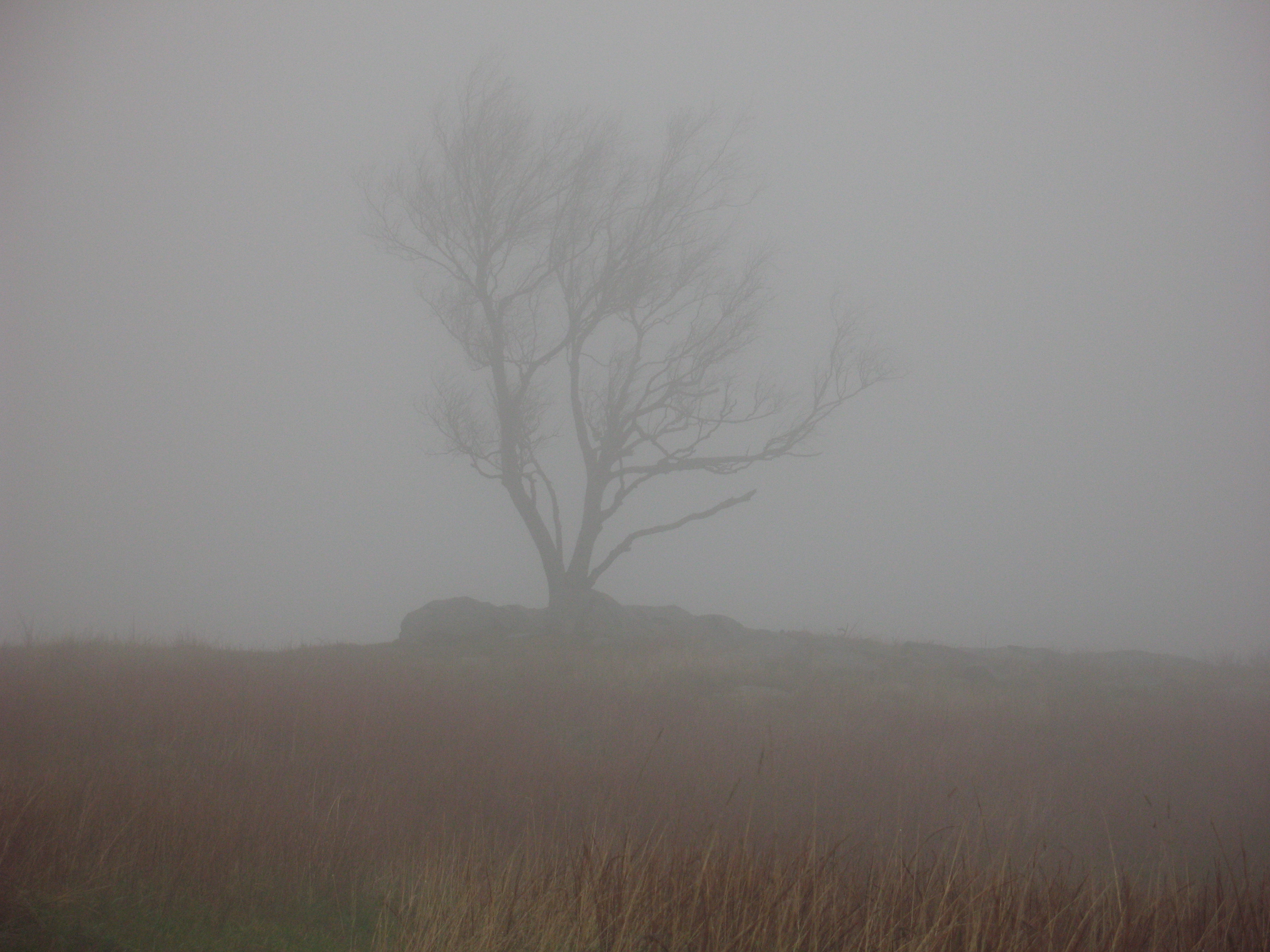
IMG_0768, tree

Read Full Post »

[with 3 poems by Rebecca Baggett]

How many grooves are there in a 12-inch 33 ⅓ rpm long-play record? The seven-year old doesn’t think us a bit odd when we fish out the big black discs and set them spinning: Burl Ives, Disney Princess theme songs, John Denver and the Muppets. She sings along with Miss Piggy, “Five Go-old Rings!” Would she have hopped off the couch last night and boogied with us to The James Gang cranked to the max on Funk 48?

We still have a landline at our house and until recently a rotary dial phone in the basement. I just read that only this year is Chuckie Cheese phasing out software updates shipped on 3.5 inch disks – which the article called “floppies” (remember? 5 ¼ inch, 360 kb, don’t toss them into a drawer with any magnets). Physical artifacts may be relegated to the landfill, but words remain our tools even if we’ve never knapped a flint. Dial it for me. The car won’t crank. Meet me at half-past (fractional arc of an analog circle?).

Last week I checked in at radiology for an x-ray. The young woman entered all my identifiers and when she got to my email address, she remarked, “Gee, AOL, I haven’t heard that one in a while.” Darlin’, that just means I’ve been jacked into the internet since before you were born. Juggling floppies. Writing DOS batch files before breakfast. And I’ll bet you don’t even know how many grooves.

Just one. That’s all it takes to be real groovy.

❦ ❦ ❦

Before the Stories Begin

Before the stories begin, the mothers die,
setting their daughters adrift, little coracles
bobbing rudderless, at the mercy of river currents
and ocean tides. Abandoned in forests so thick
no light touches their ferny floors, imprisoned
in crumbling towers guarded by rampant brambles,
banished to the dank depths of castle kitchens.

But here is the alternate reading:
Before the stories can begin, the mothers must die,
setting their daughters free – released from cautioning
fingers and pursed lips, from disapproving quirks
of a brow, from warnings weighted with echoes of warnings,
the line of foremothers frowning down the generations.

The daughters find themselves oddly light,
abruptly free to renounce titles and abandon kingdoms
for life on the high seas, to fall in love with a man-beast
deep in the forest, a stable boy, a fairy godmother.
To seclude themselves in towers full of groaning
bookshelves, to spend their days squinting
at the twisting calligraphy of ancient manuscripts,
to aim telescopes toward the night skies,
to rename all the stars.

Rebecca Baggett
from The Woman Who Lives Without Money, Regal House Publishing, Raleigh, NC, © 2022

❦ ❦ ❦

Words are artifacts by which we might glimpse the world. Words are not the world; words do not contain the world nor create the world; words are simply pebbles someone has painted, incised, knapped and dropped along the path. But Oh, how words may guide us along that path!

Rebecca Baggett is an inherent and inveterate sesquipedalian, as she confesses in the poem by that title in her book, The Woman Who Lives Without Money: a lover of complicated ‘foot-and-a-half long’ words. And yet the words she uses to craft these mysterious, marvelous, poignant, sad, hilarious poems are seemingly simple words. Everyone knows these words, these comfortable and familiar words. How Rebecca has painted, incised, and knapped these words, though! How she has lined them up and breathed into them meaning they had only dreamed of. How wonderful is the world she reveals in this ethereal and at once solid collection of words, such telling artifacts, these powerful words.

The Woman Who Lives Without Money (Regal House Publishing, 2022) is the winner of the 2020 Terry J. Cox Poetry Award. Rebecca has also published four chapbooks, including God Puts on the Body of a Deer, winner of the 2010 Main Street Rag Chapbook Contest. She was born in coastal North Carolina and his lived her adult life in Athens, Georgia.

❦ ❦ ❦

Weeping Willow

The willow missed
the children, their chatter –
like squirrels, but more various
and musical – missed
the sparrow-light bodies pressed
against her, the secrets
they whispered, how thy clung
to her branches with their small
hands, the way their legs twined
around her.

++++++++++ Nothing inhabited her
like that, nothing loved
so fiercely or so foolishly.
They believed they would be
hers forever,
++++++++++ did not understand,
at all, necessity, compulsion,

letting go

Rebecca Baggett
from The Woman Who Lives Without Money, Regal House Publishing, Raleigh, NC, © 2022

❦ ❦ ❦

Chestnut

I touched a chestnut sapling
in the Georgia mountains.

My friend writes of the great trees
and their vanishing,

but I have seen a young chestnut,
tender and green, rising from its ashes.

I, too, write of loss and grief,
the hollow they carve

in the chest,
but that hollow may shelter

some new thing,
a life I could not

have imagined or wished,
a life I would never

have chosen. I have seen
the chestnut rising,

luminous,
from its own bones,

from the ash of its first life.

Rebecca Baggett
from The Woman Who Lives Without Money, Regal House Publishing, Raleigh, NC, © 2022

❦ ❦ ❦

❦ ❦ ❦

Doughton Park Tree 4/30/2022

Read Full Post »

[with 3 poems by Maria Rouphail]

A stroll down the beach at dusk – I was sixteen and she was almost. Would you call it our first date? I think we held hands. I know we didn’t kiss. Fifty-four years later the beach is still there, although not the pier we walked beneath, things the earth makes, less so human desires. This afternoon she is upstairs writing a letter and I have just cleaned up after lunch. Where have we been and where are we going? Well, in an hour we’ll take a walk beside the river.

Oh Wise One, long-married, specialist in domestic bliss and expert in the cultivation of love, impart your secrets! Are you kidding me? I’ve spent all morning making a list and it is exactly two items long: (ONE) Never Imagine You Know; and, (TWO) Never Quit Working to Find Out. Number One becomes apparent every time I assume or jump to a conclusion or utter as comfort some empty platitude (or, cardinal sin, just wasn’t paying attention). Number Two is the quick corollary as Number One’s immediate aftermath and the sooner engaged the better – not Working to Find Out usually invites conflagration.

Which is probably why love is such a necessary obsession of poetry. Infatuation is the hot minute of attraction; love is the cool hour of reflection. Poetry may germinate unseen underground as the temperature rises, but its sprout becomes visible when the creature is leaned back in chair, pen hovering listless over paper, the image of affection growing into clarity within the cool, reflective mind. And as I reflect further, I perceive that the seeds of most of my own love poems involve messing up with Number One and Two, above, only to be rescued and reconciled by the big sighs and small gods of forbearance and forgiveness.

Even now I imagine her at her desk, pen and paper, that elegant typographer’s script, those meticulous phrases – oh yes, I want to love her and I do.

❦ ❦ ❦

Annunciation
++++ (after Lynn Emmanuel)
+++++++ for Robert

He wants to be born.
So first he enters the dream of the woman
a doctor has told will never conceive.

He lets himself in through the gate
of her sleeping brain
during a hard snow
in late November.

He give himself eyes and hair like hers,
wraps himself in thick fleece, his fingers curving
over the hem, like a paws of a burrowing mammal.

She wakes with the dream of him still clinging,
I’ve birthed a back-eyed baby boy, I’ve carried him
up the aisle of the church to the baptismal font.

She goes to the window where slantwise
snow erases the houses across the street.
Only a curbside lamp on its iron stalk breaks through,
++++ a yellow clot in the boreal blur.

After she has laid aside the dream or forgotten it,
he enters her body sometime in January.
His arrival ignites engines and fires up turbines

with power unknown to her, making her whole
being a construction zone for the laying of foundations,
the framing of the many rooms of his evolving body.

In April, cornerstone and beam well set and level,
he shows her his brain and spine, a string of perfect lights
blinking the in the midnight sky of the sonogram.

The doctor is speechless. But the woman
rehearses the names of her beloved living and dead.
She will pick one of them.

She watches the tiny heart strobe in its cage.
Beacon of what is coming in October.
A swaddling blanket. A christening.

Maria Rouphail
from All the Way to China, Finishing Line Press, © 2022

❦ ❦ ❦

One line echoes in each poem I read in Maria Rouphail’s collection: Even then, / I could not say you did not love me. All the Way to China is a conversation between daughter and mother that spans decades, even generations. Many different speakers inhabit the poems, in many places and circumstances, but the voice of daughter/mother is audible in each, even if only as a whisper. Through harsh treatments, neglect, destructive choices, and pain that whisper of love still works to keep itself alive.

Love is work. In one of Fred Chappell’s novels, a youngster asks his old grandfather how is it possible that he and grandmother have managed to stay married for so many years. The old guy’s answer? “You don’t leave, and you don’t die.” In Maria’s poems, leaving is a frequent threat and dying too soon is a reality, but the magical work of poetry allows the dialogue to continue in spite of, maybe even because of, mortality. Telling a story allows it to discover its meaning. Telling a hard and painful story allows it to discover new meaning that just may open a door to healing.

The final two poems in the book bring meaning and healing forward and invited me to turn back to the first page and read the cycle again: Laudate Omnes (in praise of everything), and Mother and Daughter, Two Voices – III, Daughter. Yes, this collection is the work of love.

❦ ❦ ❦

Laudates Omnes
++++++(for Asher, young grandson)

Let’s talk
to the bees.

++++++Let’s say

Ladies, thank you
each and all

for coming this day
to the hyssop and bergamot.

Thank you
for diving

into the boggy throats
of pale blue sage.

Thank you
for letting sticky

pollen crawl
up your hairy legs.

Thank you
for the sweet spit of the hive.

Now to the trees turn and say,
Brothers,

I don’t know all your name
or what families you belong to,

but you over there,
tall and handsome with your spiky green:

if you and I were lone survivors
of a meteorological catastrophe,

I’d live with you.
I’d hole up under your branches.

Leaves and rain
would be our food and drink each day.

Now let’s say thanks and thanks and thanks
for the hive’s honeyed paradise,

for meadows of thick-maned mares
drowsing with their foals,

for bees, horses, and trees,
ocean, plains, and the sky.

Let’s say thanks
for the darkness between stars

which is not an emptiness,
but a rookery

where God dreams us.
And if we found ourselves

on a comet flying
beyond Pluto’s orbit,

even there we would
be not separate and alone,

but we would be
as now we are

in the heart of things,
the very heart.

Maria Rouphail
from All the Way to China, Finishing Line Press, © 2022

❦ ❦ ❦

Margie’s Daughter Talks Back

Wood. Shell. Bone. Buttons
in every size and color your mother saved for mending.

You, too, saved them,
in the round cookie tin on a high shelf.
Rainy days, and you’d take it down
and we’d remember
buttons from faded summer dresses,
buttons from coats returned from war,
buttons with bits of garments still clinging,
flesh and tendon of them. Red grosgrain,
shock of silver wedding silk,
fingers of fragrance still clinging.
Attar of rose and vetiver still clinging.
Heft and pour, the cascading clack and clatter
of buttons, like coins or pretend jewels.

You, too, loved them.
You and I together breathed the old secrets hanging
like the kitchen smells in that Bronx apartment.
Buttons from a man’s flannel before zippers were.
Your father’s, you said. And the blue bruise
your mother tried to hide with a lock of hair when
you, looking, and in your small voice, asked,
What happened to your eye, Mama?
as she reattached the right arm of your school sweater.
In the next room the bleats of a baby boy,
and a darkness you hoisted onto your twelve-year-old hip
and hauled through the rest of your life.
Hauled it into my life, too.

Would you believe me if I told you?
I have survived the winter.
Here is the faith I’ve entered with myself,
rule, rite, and rigor of it:
I will not belong to whatever happens to me.
It’s OK to say these things.

Maria Rouphail
from All the Way to China, Finishing Line Press, © 2022

❦ ❦ ❦


❦ ❦ ❦

2019-02-09 Doughton Park Tree

Read Full Post »

« Newer Posts - Older Posts »