Feeds:
Posts
Comments

Posts Tagged ‘poetry’

 . 
[with 3 poems by Czesław Miłosz]
 . 
On Angels
 . 
All was taken away from you: white dresses,
wings, even existence.
Yet I believe you,
messengers.
 . 
There, where the world is turned inside out,
a heavy fabric embroidered with stars and beasts,
you stroll, inspecting the trustworthy seams.
 . 
Short is your stay here:
now and then at a matinal hour, if the sky is clear,
in a melody repeated by a bird,
or in the smell of apples at the close of day
when the light makes the orchards magic.
 . 
They say somebody has invented you
but to me this does not sound convincing
for humans invented themselves as well.
 . 
The voice – no doubt it is a valid proof,
as it can belong only to radiant creatures,
weightless and winged (after all, why not?),
girdled with the lightning.
 . 
I have heard that voice many a time when asleep
and, what is strange, I understood more or less
an order or an appeal in an unearthly tongue:
 . 
+++++++ day draws near
+++++++ another one
+++++++ do what you can
 . 
Czesław Miłosz  (1911-2004)
from The Collected Poems 1931-1987, The Ecco Press, Hopewell, NJ; © 1988
 . 
❦ ❦ ❦
 . 
An advisory pops up from the National Weather Service and all through the night dark birds massive as the crowns of trees flail their wings across the shingles. Leviathan slaps her mighty tail against the shutters and the porch doors invent a banging rhythm that could beat Stan Kenton into a state of awe. Linda and I lie awake and joke about whether the shed roof is moonbound, but we’re not really laughing. We don’t admit to each other what we’re both waiting for, the crash of something big coming through the roof.
 . 
Every time I’ve gone backpacking with my friend Mike, he always scouts our camp site for widow makers. Is there a big dead snag right up there, high above our tent, that might necessitate someone’s sorrowful phone calls to our wives in the morning? More than once we’ve had to pull up stakes, literally, and move to a safer spot. Since then whenever I walk the woods after a storm, besides kicking dead branches off the trail, I notice the meters-long fragments that have speared the earth. Straight down into the piedmont clay, almost quivering still. Glad I wasn’t sleeping there.
 . 
Linda and I lost so many trees to last spring’s “minor” F0 tornado that’s it’s hard to imagine anything left to blow down. Sixty-year old healthy oaks, much less every equivocal and wobbly twig, are matchsticked down the hill below our house. Four meter root balls and half-meter diameter trunks. Maybe we’re tempted to say, “Do your worst, Big Wind. Can’t touch us now.” Who, though, is actually brave enough to speak out loud such a challenge? We don’t even walk the local nature trail any more when there’s a big blow on. Chances are we’re perfectly safe. But are we? Are we really? It may be a long time before we can believe it.
 . 
 . 
❦ ❦ ❦
 . 
How It Should Be in Heaven
 . 
How it should be in Heaven I know, for I was there.
By its river. Listening to its birds.
In its season: in summer, shortly after sunrise.
I would get up and run to my thousand works
And the garden was superterrestrial, owned by imagination.
I spent my life composing rhythmical spells
Not quite aware of what was happening to me.
But striving, chasing without cease
A name and a form. I think the movement of blood
Should continue there to be a triumphant one,
Of a higher, I would say, degree. That the smell of gillyflower,
That a nasturtium and a bee and a ladybug
Or their very essence, stronger than here,
Must summon us just the same to a core, to a center
Beyond the labyrinth of things. For how could the mind
Stop its hunt, if from the Infinite
It takes enchantment, avidity, promise?
But where is our, dear to us, mortality?
Where is time that both destroys and saves us?
This is too difficult for me. Peace eternal
Could have no mornings and no evenings,
Such a deficiency speaks against it.
And that’s too hard a nut for a theologian to crack.
 . 
Czesław Miłosz (1911-2004)
from The Collected Poems 1931-1987, The Ecco Press, Hopewell, NJ; © 1988
 . 
❦ ❦ ❦
 . 
Polish poet Czesław Miłosz lived under National Socialism and then Communism before moving to the United States in 1960, where he spent the remainder of his life. He wrote in Polish, his work translated into English by others and by himself. In 1980 he received the Nobel Prize for Literature.
 . 
More about Czesław Miłosz HERE
More about the Fujitsa Scale for tornadoes HERE
 . 
 . 
❦ ❦ ❦
 . 
Into the Tree
 . 
And he placed at the east of the garden of Eden Cherubim, and a flaming sword which turned every way, to keep the way to the tree of life. +++ – Genesis 3:24
And he looked up and said, “I see men as trees, walking.” +++ – Mark 8:24
 . 
The tree, says good Swedenborg, is a close relative of man.
Its boughs like arms join in an embrace.
The trees in truth are our parents,
We sprang from the oak, or perhaps, as the Greeks maintain, from the ash.
 . 
Our lips and tongue savor the fruit of the tree.
A woman’s breast is called apple or pomegranate.
We love the womb as the tree loves the dark womb of the earth.
Thus, what is most desirable resides in a single tree,
And wisdom tries to touch its coarse-grained bark.
 . 
I learned, says the servant of the New Jerusalem,
That Adam in the garden, i.e., mankind’s Golden Age,
Signifies the generations after the pre-adamites
Who are unjustly scorned though the were gentle,
Kind to each other, savage yet not bestial,
Happy in a land of fruits and springwaters.
 . 
Adam created in the image and in the likeness
Represents the parting of clouds covering the mind.
And Eve, why is she taken from Adam’s rib?
– Because the rib is close to the heart, that’s the name of self-love.
And Adam comes to know Eve, loving himself in her.
 . 
Above those two, the tree. A huge shade tree.
 . 
Of which the counselor of the Royal Mining Commission says the following in his book De amore conjugiali:
 . 
“The Tree of Life signifies a man who lives from God, or God living in man; as love and wisdom, or charity and faith, or good and truth, make the life of God in man, these are signified by the Tree of Life, and hence the eternal life of the man. . . . But the tree of science signifies the man who believes that he lives from himself and not from God; thus that love and wisdom, or charity and faith, or good and truth, are in man from himself and not from God; and he believe this because he thinks, and wills, and speaks and acts, in all likeness and appearance as from himself.”
 . 
Self-love offered the apple and the Golden Age was over.
After it, the Silver Age, the Bronze Age. And the Iron.
 . 
Then a child opens its eyes and sees a tree for the first time.
And people seem to us like walking trees.
 . 
Czesław Miłosz  (1911-2004)
from The Collected Poems 1931-1987, The Ecco Press, Hopewell, NJ; © 1988
 . 
 . 
❦ ❦ ❦
.
.

ECOPOETRY FOR EARTH DAY 2024

When we try to pick out anything by itself, we find it hitched to everything else in the Universe.
— John Muir

 . 


 .Verse & Image is seeking poetry to celebrate Earth Day, April 22, throughout National Poetry Month. Do you have a favorite poem that speaks to universal interconnectedness, as in the above quotation? Send it to ecopoetry@griffinpoetry.com by April 10 and we may share it in one of several posts dedicated to living together on our living planet.

Please read these guidelines:

Θ . . Deadline April 10, 2024, midnight Eastern Daylight Time USA

Θ . . Send ONE poem by any author except yourself addressing the theme of connections.

Θ . . Include the poem in the body of an email or as a .DOC or .RTF attachment to ecopoetry@griffinpoetry.com. Please add info about where the poem is published.

Θ . . Also include a personal statement – how do you feel connected to this poem? What does it mean to you? How has it connected you to the earth? [suggest 100 words or less; may be edited for length]

Θ . . Visit GriffinPoetry.com between April 15 and April 30 to see if your poem has been selected for presentation.

Θ . . Optional: if you submit one poem by an author other than yourself, you may also submit one poem on the same theme that you have written. We prefer previously published – include acknowledgments.

Verse & Image is a weekly blog of poetry, nature photography, personal essay, and ecology.

 . 
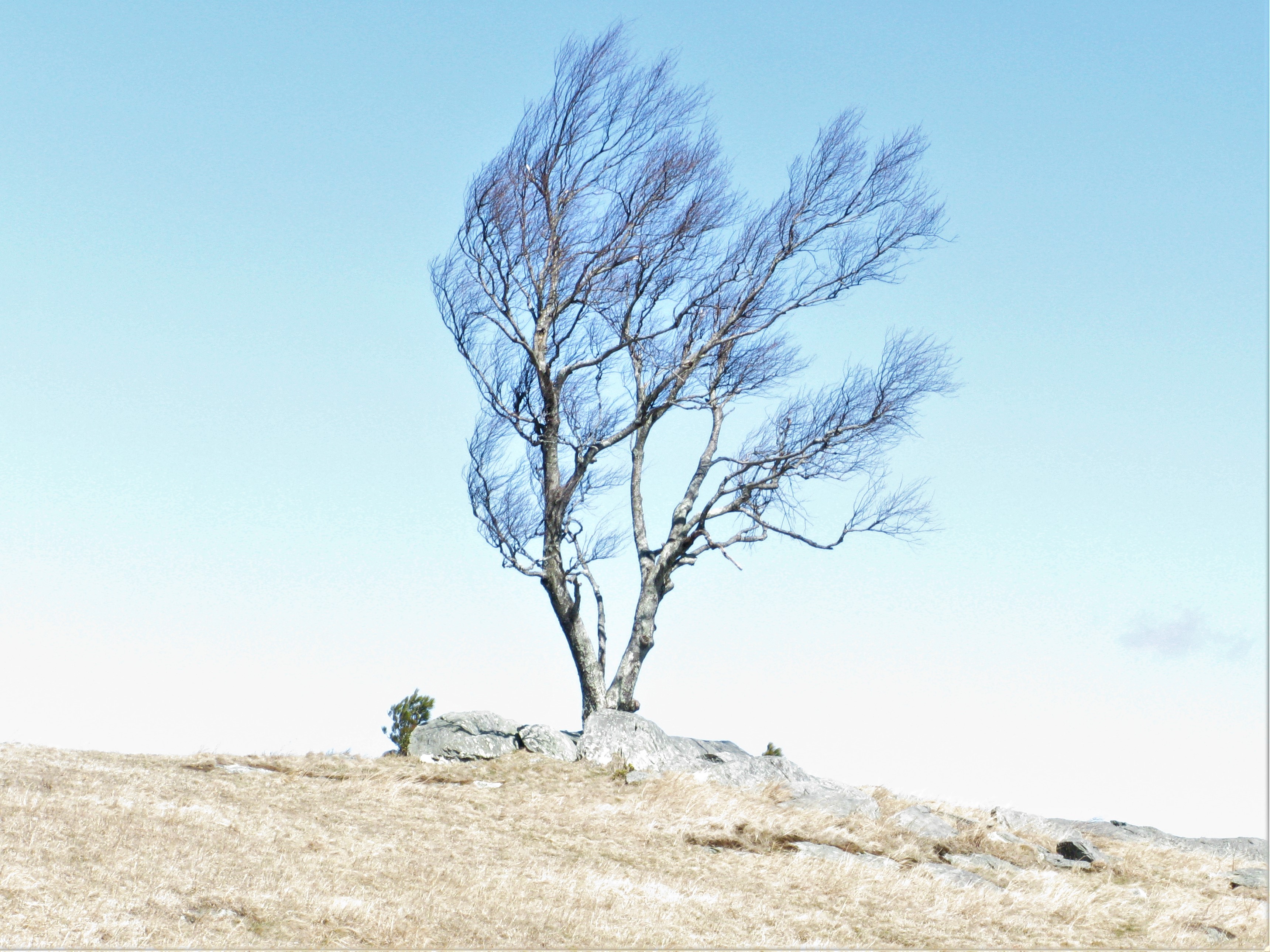
2018-02-09 Doughton Park Tree
 . 

Read Full Post »

 . 
[ with 4 poems by Lori Powell]
 . 
Wings
 . 
Not one bird but two,
black bead eyes staring,
feet curled into question marks.
No one but two
as if they’d made the trip together,
flying deluded to batter the glass
they believed was air, trees, clouds –
a whole landscape of death.
 . 
“There is the trash can,” I say
rolling the bodies
onto the white paper sack.
But my son insists on burial
there, in the parking lot
we push the red clay over them,
under a scrawny tree, itself barely alive.
 . 
Are you disillusioned now
small birds, wiser
in red clay than thin air?
 . 
I have my own
pact with illusion
a daily flight into the glass
my own small birds
stunned, not yet dead,
battering the spot
that might yield.
 . 
I will not bury you small birds,
my one chance at wings.
 . 
Lori Powell
from Truth and Lies, Black Buzzard Press, © 2000
 . 
❦ ❦ ❦
 . 
February 24, first naturalist hike of the season. I begin by telling everyone to look close, real, real close – any flowers we find blooming are likely to be tiny. (Although before we embark on the trail we stand for a minute beneath the huge Acer rubrum near the recreation center, a jillion brilliant flowers over our heads.) The pussytoes and star chickweed won’t be visible for another week or two, but we do discover one Virginia heartleaf with little purple buds just opening their mouths. And then there’s hepatica and trout lily.
 . 
Depending on which woods you walk in, one of these two is likely to be the first native flower to bloom. How do they know when it’s time? Those trees towering over them, bathed in lengthening daylight, can use the calendar to decide when to leaf out (although North American trees are surprisingly sensitive to soil temperature as well). What triggers the tiny plants of the understory to flower?
 . 
It’s a critical question because of one critical concept: spring light window. Wildflowers of temperate forests need to do most or even all of their growing before tree leafbuds burst and the canopy closes. We can see this on our walk today in the local orchid species – they make new leaves in late fall, dark green to absorb weak winter sunlight beneath bare trees, and by the time they bloom in summer their leaves will be gone. Hepatica keeps its old purpled leaves all winter, perhaps for the same reason, and will make new green after flowers fade. But fresh trout lily leaves appear only days before the yellow blossoms spring up.
 . 
Here are my observations: a little clump of hepatica may bloom here and there beginning in December if we have a string of warm days. Trout lily,though, is synchronized – see one leaf and you know within days you will see it everywhere, all blooming at once. Hepatica must be more sensitive to soil temperature and trout lily less so, needing a full spring warming to trigger. Or could trout lily even somehow sense daylight beneath those layers of brown leaves?
 . 
Phenology is the term for this study of cyclical biological phenomena: flowering, leaves, migration, nesting, insect hatching . . . . As the climate changes, “phenological mismatch” is dire – flowers may open when no pollinators are available. And if spring warming causes trees to leaf out earlier but trout lily can’t adapt, that critical spring light window may dim too soon for the little mottled fish-scale leaves to store enough root energy for next spring.
 . 
See this article in NATURE for a deeper discussion of forest and wildflower phenology; comparison of North America, Europe, and Asia; and exploration of terms like FFD (first flower date), LOD (leaf out date), Spring Light Window, and Phenological Escape.
 . 
 . 
❦ ❦ ❦
 . 
Without Teeth
 . 
Instead of striding fearless out of the sea
you’ve become the soft creature inside the shell.
The thing you wish you’d said
shouts in your ear all night long
then lies down
with the thing you wish you hadn’t done
and begets children.
Still you believe in hours without teeth,
hours when you can say,
“That’s not my blood seeping into the sand.”
Hope is ground from your bones.
Hope is the shell that winds you
tighter inside its coils.
 . 
 . 
The Origin of Snow
 . 
When I see a black dog in the snow
I stop wondering if you love me.
All the world’s wet places
have brimmed into flower at once,
as if difficult things
could happen this simply
dog in snow, black on white,
and my thoughts come home
like children with wet feet,
leaving puddles everywhere.
 . 
Lori Powell
from Truth and Lies, Black Buzzard Press, © 2000
 . 
❦ ❦ ❦
 . 
How tall is that stack of unread books beside your bed, on the corner of your desk? Has your homeowner’s insurance raised your premium because of the chance of it tipping over onto your head? Has your home’s foundation shifted from the weight? At great personal risk, I’ve snaked a book from a lower stratum in one of my piles before its carbon could be crystallized to diamond. And discovered it’s layered with gems.
 . 
Lori Powell lives on the coast of Maine, where she teaches English to immigrants and refugees.  Her first poetry collection, Truth and Lies (Black Buzzard Press, Visions International) confirms Jean Cocteau: “The poet is a liar who always speaks the truth.” These poems are condensed, crystallized, sharp enough to cut. The poet’s images, at first elusive, gradually blossom and bloom the longer I contemplate. And then, mirabile dictu, the truth on the page no longer belongs to the writer but belongs to me. A window opens and light enters.
 . 
 . 
Truth and Lies is Volume 14 of the Black Buzzard Press Illustrated Chapbook Series, illustrations by Cathie France Nelson. Visit the Press and Visions International HERE.
 . 
 . 
❦ ❦ ❦
 . 
Like a Well of Sweet Water
 . 
That is your mailbox,
your name in black.
I want to leave you something
like a cat leaves her kill
at her master’s door.
I want to be useful
like a throat filled with song,
like a well of sweet water.
I am both cat and bird.
 . 
But what can I give?
My pockets are orphans,
my words have flown,
my head is filled
with useless music.
I would leave you something,
but not today.
The cat’s in the well
and the bird sings, sings.
 . 
Lori Powell
from Truth and Lies, Black Buzzard Press, © 2000
 . 
❦ ❦ ❦
 . 
 . 
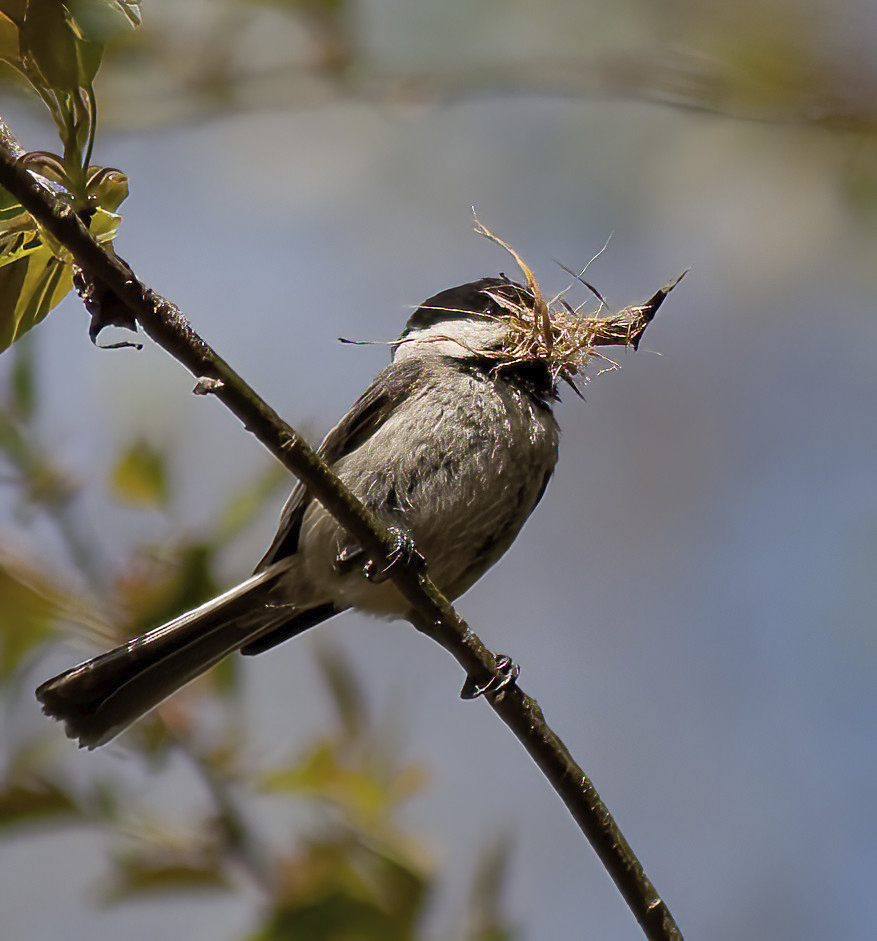
IMG_1827

Read Full Post »

 . 
[with 3 poems by Marilyn Hedgpeth]
 . 
The Lightness of Reprieve
 . 
Standing at our friend’s threshold,
pockets padded with tissues,
we steel ourselves for heartache,
prepare to embrace longer than usual,
voice our true affections,
stutter through farewells.
To our surprise, she rallies,
rises from her sick bed,
responds to the attention,
the memories, the bonds we share.
Glancing back as we leave,
we see her waving from the doorway.
 . 
Later, we knock at the door of a cousin
recovering from a cardiac procedure.
She claims to feel ten years younger.
We fill this bonus time with laughter
and celebrate the lightness of reprieve.
 . 
Arriving home, we cringe to find
ruffled remains of a red-bellied
woodpecker, feathery outline still visible
on our glass door.
We gather its hollow form,
place it tenderly, respectfully,
in a shallow hole, hallowing
the fragility of life
at our own doorstep.
 . 
Marilyn Hedgpeth
from The Lightness of Reprieve, Finishing Line Press, Georgetown, KY; © 2024
 . 
❦ ❦ ❦
 . 
Feb 20, early morning drive: slant light across the fields sets fire to every third tree along the highway. Dark orange, deep red, their crowns glow, a bright haze of flowers at the tips of a million twigs. Almost Spring, and the first maples are blooming.
 . 
Witch hazel has dropped her petals, spent; now maple lifts the baton. Here in the Southeastern USA, maple is one of the earliest trees to bloom. Blossom bud break is triggered in mid-February, primarily by lengthening daylight regardless of weather, weeks before the leaf buds swell and burst. Check the pollen burn in your eyes and nose – you’ll know when those flowers have opened.
 . 
As opposed to most garden flowers which present both pistil and stamen in the same bloom (namely bisexual), maple is, like many trees, monoecious – there are separate male flowers and female flowers on the same tree, even on the same stem. Male red maple flowers look like little ruby crowns of spiky stamens; the female flowers are a bouquet of drooping red pistils.
 . 
But it gets trickier. Some red maples bear only male flowers, while others bear only female (this separation termed dioecious). And individual trees can shift. One year a tree may be male, the next year half and half, the following year all female. The prevalence of Male vs. Female flowers doesn’t seem to be either a cause or an effect of the overall health of the tree. Why?! Why do they do this? What purpose does all this variability serve the tree or the community of red maples?
 . 
I don’t know but the tree knows. Perhaps it’s communicating with all its neighbor maples through its underground network of mycorrhizal fungus, collaborating to decide who’s going to make lots of pollen this year and who’ll make the seeds (and maples do make lots of those little winged seeds). Perhaps their network extends throughout the local woodland and into the next county. Acer rubrum is one of the most plentiful trees east of the Mississippi, from Newfoundland to Florida. Perhaps it creates one vast collective knowing, guiding the roots, the bole, the twigs that will bud into flowers, male or female. Perhaps.
 . 
February into March, every morning the scarlet halo expands. Every day we’re closer to Spring. Every afternoon more sneezes and water from my eyes. Glorious! I trust those maple trees utterly – they certainly know what they’re doing.
 . 
 . 
❦ ❦ ❦
 . 
Mirror Images
 . 
Sliding into a booth,
leather cool to my legs,
we take menus in hand;
we glance around,
tempted by lavish meals
rising before other patrons.
An adjacent mirrored wall
makes the tavern seem
twice its size, twice as lively.
 . 
Across smooth Formica,
you sip ice water,
watching as your doppleganger
tucks a wayward wisp of hair
into her head-scarf.
Maybe that’s an alternate universe,
you say, and this table,
our point of intersection.
Maybe while we grow older, 
grayer, wiser perhaps, 
they grow younger
healthier, more vital and able.
 . 
We toast to what’s possible,
to friendship, regardless.
Condensation drips from our tumblers,
while frost still clings to those
of our glassy companions.
 . 
Marilyn Hedgpeth
from The Lightness of Reprieve, Finishing Line Press, Georgetown, KY; © 2024
 . 
❦ ❦ ❦
 . 
There is, after all, no reprieve. This morning as we’re talking to the palliative care nurse who is  interviewing my mother, my father asks, “Does everyone end up in Hospice?” Or did he say, “Will I end up in Hospice?” It’s a fair question, even for someone not 97 years old. Every year that passes, Dad announces he’s planning to live five more years. One may hope, but perhaps one shouldn’t plan on it.
 . 
The title poem in this first collection by Marilyn Hedgpeth, The Lightness of Reprieve, confronts this reality. Marilyn’s friend will die of cancer very soon and yet the two of them are surprised to share a vibrant afternoon together; Marilyn’s cousin might have died from her heart condition but now feels reborn; Marilyn returns home to confront the death of a beautiful bird on her own doorstep. Other poems throughout the book touch upon our mortality from many different angles, sometimes head on, sometimes in metaphor and with the lightest touch of benediction. I sense a deep abiding theme of sharing. We rarely share with each other this common knowledge that our lives will most definitely end; what we do share is stories and a gift of ripe strawberries; imagination and laughter; silent moments of togetherness; prayer.
 . 
And in sharing don’t we experience reprieve? These are not poems of grief for time lost. These are poems of celebration for time shared. Marilyn has no doubt sat with the bereaved many, many times in her years as a minister, but this is not a book of counsel. These are simply poems of our simple human commonality. I step into the poems and accept my own sadness – sadness lifts as it is borne by many other shoulders. The yoke is not removed from me, but for a few steps along this journey I might almost imagine its lightness.
 . 
 
Marilyn Hedgpeth recently retired as a Presbyterian (USA) Minister of Word and Sacrament after 24 years of “preaching / teaching / leading / loving life.” The Lightness of Reprieve is available from Finishing Line Press HERE
 . 
 . 
❦ ❦ ❦
 . 
Last Leaf
(with a nod to O. Henry)
 . 
One Final Rusty Leaf
clings to the dogwood tree
outside our bedroom window.
Resisting the wind’s wrestling,
it beckons me back to a time
when I painted a single leaf
on our patio wall:
my Hail Mary attempt
to prolong the life of my father
as modern medicine failed,
as the leaves fell.
 . 
Desperate to bring him hope;
venturing outside the boundaries
of my own knowledge and faith,
I scheduled an appointment
with a local healer, Chief Two Trees.
But when travel became impossible,
I resorted to that lone leaf
and a no holds barred prayer.
 . 
After he died, I continued to paint,
self-medicating stroke by stroke,
adding to my winter wall-garden:
fern, forget-me-not, bleeding heart,
wisteria, live-for-ever;
each new leaf, petal, blossom,
balm to my wound.
 . 
Marilyn Hedgpeth
from The Lightness of Reprieve, Finishing Line Press, Georgetown, KY; © 2024
 . 
❦ ❦ ❦
 . 
 . 
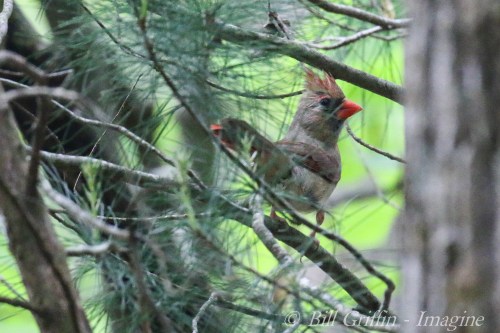
2020-06-11a Doughton Park Tree

Read Full Post »

« Newer Posts - Older Posts »