Feeds:
Posts
Comments

Posts Tagged ‘poetry’

 . 
[with poems from LITMOSPHERE 2024]
 . 
The evening darkens and comes on
+++ for James Wright
 . 
++++++++++ 1
 . 
I have a good friend who doesn’t like birds.
She says it’s the flapping. I say how can you,
a first grade public school teacher, not like birds?
I say it every time we meet at the bar
for a French 75 served in a crystal flute – How
Can You. Not Like. Birds. They’re too loud,
she says. God. I need her to be reasonable.
 . 
++++++++++ 2
 . 
Three cardinals in the hedge have fledged.
They peep in surround sound, one in a flower pot,
one on the low branch of the magnolia, one smack
in the middle of the street, the mother hopping
like mad to nudge it to the safety of boxwoods,
her waxy orange beak a crayon of devotion,
her road baby terrified out of its bird brain.
 . 
++++++++++ 3
 . 
I’m sorry, Mr. Wright, I ever called your poem
worthless, the famous one with the hammock
and the horse shit flaring like gold in the waning
of day. I hear your voice read through the night.
We have not paid attention. Birds slam into glass,
into windows we are not looking out of. Every
new poem, every new life, such a warning.
 . 
Jenny Hubbard
from Litmosphere: Journal of Charlotte Lit, Charlotte NC; © 2024.
 . 
❦ ❦ ❦
 . 
I can picture it lying on the hutch where she laid it not long after they bought the beach house in 1993, and where it has lain ever since. A novelty dinner plate, memento of her years as a teacher, sometimes buried under other plates or the detritus of grandkids visiting and large noisy family groups dining together. There it lies yet, solid and steadfast, secure in its lesson. Every year or two we rediscover it and laugh, so obscure, so obvious, the motto glazed in its simple school marm font: Lie, Lay, Lain. Who but a school teacher actually knows the correct usage, Lie vs. Lay, much less uses it consistently in conversation? Who but a teacher or a teacher’s child?
 . 
Linda jabs me in the ribs when the murder suspect on TV says, “I left the gun laying right there” and I expostulate, “Lying!” The gun, not the suspect. Am I such an ostentatious stickler that I have to correct every grammatical impropriety I encounter? Or am I maybe saying it out loud to re-teach myself? I check its feel on my tongue as the intransitive slides across. An homage to mom and all she taught me. Never forget, never forsake your upbringing. In 100 years the OED will list “Lay, laid, laid: verb, intransitive” as acceptable common usage, but until then I’m not going to lay around waiting.
 . 
 . 
 . 
This evening, behind me, Dad is lying immobile where the nurses have laid him. Wake Forest Baptist Hospital- we’ve finally settled into his tenth floor room after 36 hours in the Emergency Department. He’s asleep, comfortable, the hard collar that is protecting his fractured cervical vertebra no longer agitating him. I’m reading a little poster beside his bed , the Johns Hopkins Mobility Goal Calculator. Level 5 is stand unsupported; Level 10 is walk 250 feet. Oh no, not Level 1: lay in bed! We’ve laid Dad in bed but he will have to do the rest of his lying there on his own with no help from Johns Hopkins. Lie still, Dad. Tomorrow I hope we can say that you lay restfully all night and will have lain free of pain throughout the day. I’ll be sure I say that right when I report to Mom.
 
  .  
 . 
❦ ❦ ❦
 . 
A Universe, in Revolution
 . 
My patient thinks he’s the new messiah.
++++ He’s got the key to the cosmos,
just had to listen to the signals
++++ ++++ ++++ ++++ ++++ ‘til they harmonized.
 . 
He says that I am part of the plan, play a role
++++ in his rise
++++ ++++ ++++ if I will only read the scripture
he sent me off the Internet,
 . 
if I will only hear him out tomorrow. I should believe
++++ he’s delusional, but this night
++++ ++++ ++++ ++++ ++++ makes all thinks possible.
A sound in the sleeping house and my heart races,
 . 
as though the prophecy is already here, rolling
++++ like mist beneath my door.
Who is this, speaking
++++ ++++ ++++ from the wilderness?
 . 
Through the passage, a small boy kneels
++++ on his bed, facing away, fully asleep. Not wanting
to wake him and afraid not to,
++++ ++++ ++++ ++++ ++++ I kneel beside him.
 . 
He holds the corner of the blind, looks out the window
++++ where a new moon blackens the street, the driveway,
the neighbor’s yard.
++++ ++++ ++++ I want that, he says. I see nothing.
 . 
What do you want?
 . 
I want that, he says, resting one finger on the windowsill.
++++ I should believe he’s imagining things,
but this night
++++ ++++ makes all things possible, dreams
 . 
existent on a perceptive continuum and not the ghetto
++++ of reality. I lay my son upon his pillow, aspect slack.
In sleep, we are possibility,
++++ ++++ ++++ ++++ emptied of our devices.
 . 
In the morning, he’ll ask me to play. Nascent diction
++++ blurs diphthong, implores me
++++ ++++ ++++ ++++ ++++ to pray with him instead.
Thank God, this understanding. My patient awaits
 . 
with his urgent need. And what am I, on this brink?
++++ A windowsill. A secret dark. A universe,
++++ ++++ ++++ ++++ ++++ ++++ in revolution.
My son’s cheek. My lips pressed deep.
 . 
Morrow Dowdle
from Litmosphere: Journal of Charlotte Lit, Charlotte NC; © 2024.
 . 
❦ ❦ ❦
 . 
Language. Usage. To get all hot and bothered when someone writes he ‘laid in bed all morning” is maybe as silly as rejecting on principle the dozens, hundreds of new words that enter the lexicon each year. English, world language, is endlessly pleomorphic, evolutional, contortionist, lush. Nourishing and delicious – relish it! And what better way to serve up novelty, invention, and sweet surprise than a healthy helping of poem?
 . 
The poems, fiction, and non-fiction in LITMOSPHERE 2024 have been selected from Charlotte Lit’s final Lit/South contest. As of July 1, 2024 Charlotte Center for the Literary Arts has discontinued the contest but expanded LITMOSPHERE to a twice yearly open submission journal. Submissions are open NOW, July1-31! New horizons and new opportunities are growing from something already strong and rich. Even a newly coined word will show its roots in some sound or utterance, some offshoot from fertile linguistic loam; a new poem also sprouts from the deep soil of music, rhythm, image. It may leave formal gardens to weave and sprawl across the page as a new thing; it may branch and bud into some unexpected inflorescence never before smelled or tasted.
 . 
This current LITMOSPHERE is a meadow, a forest, diverse and fruitful. It is the best of Southern creativity. This verse is not just fresh and new, it is biting and piercing. It makes me think new thoughts. It takes me into new places. Like language, poetry must be ever changing if it hopes to remain necessary and alive. To remain vital – from protoitalic gwīwō, to be alive, through Latin vivo, I live, into vita, a way of life: viable, vitality, revitalizing. This poetry is vital – relating to or characteristic of life . . . absolutely necessary.
 .
 . 
❦ ❦ ❦
 . 
High John (Ipomoea Jalapa,
Bindeweed, Jalop Root)
 . 
Like King Arthur of England, he has served his people. And, like King Arthur, he is not dead. He waits to return when his people shall call him again. . . . High John de Conquer went back to Africa, but he lift his power here, and placed his American dwelling in the root of a certain plant. Only possess that root, and he can be summoned at any time. – Zora Neale Hurston in “High John De Conquer”
 . 
High John manifests
running wild in fields
crouching low in gardens
eve burrowing underground
heeding whispers and chants
for more, for better, ignoring
those who doubt his power
to restore health, to improve
conditions, to bear the fortune, to find courage
He has followed those stolen, those sorrowed,
those steadily holding hope that he will find
them, and his power will transcend their trouble
 . 
Over here, High John
 . 
High John, so high
the Saints still call him
The Orishas cry out, rumble ‘round
to find him, to guide him, to reveal
him, he, unassuming, lowly, powerful and
holy, he moves through, from tall grass to clearing
and arrives holding fortune in one hand and
healing in the other, pours assurance from his
mouth and illuminates love to the seeking
and the scorned from lips dripping in honey and humility
 . 
Oh, High John
 . 
High John come
He could’ve stayed away
but he could not leave his
people, as they entreated, danced
in clearings stump drums thumping in the night
 . 
Yea, High John
 . 
High John arrives
Golden straw crown gleaming
Making ways for his people who
have wailed, wandered, waited watched
fatigued and faltering . . . He still sees the holes to fill
that they might somehow become whole, as whole as he who has scoured
the lands and the seas
 . 
Draw near, High John
 . 
High John finds and fixes
and pulls from robes a
 . 
Conqueror’s Cure
 . 
Regina Garcia
from Litmosphere: Journal of Charlotte Lit, Charlotte NC; © 2024.
 . 
❦ ❦ ❦
 . 
A Long Time Ago This Was a Rich Man’s Backyard 
 . 
Now the trees own their dirt
This morning, a woman and her dog wear silent circles in the pavement
We struggle to make a meager living
In the meadow
I watch a spider thread gossamer between two trees
A collection of crushed paper cups in the brambles
and the spit of the ghosts who gummed them
Anyway, it’s an ant’s world now and always will be
Everyone is pregnant and sharing articles about how to parent through an apocalypse
Of course I want meaning, too
And by that I mean a child of my very own
To walk with through these trees
My child who gathers leaves and never speaks
Maybe at the end there will be no sound
Just gestures of love and violence
The grass shifting slightly to accommodate the breeze
 . 
Rebecca Valley
from Litmosphere: Journal of Charlotte Lit, Charlotte NC; © 2024.
 . 
❦ ❦ ❦
 . 
Jenny Hubbard (Salisbury, NC) manages a used bookshop that raises money for her local public library.
Morrow Dowdle (Hillsborough, NC) hosts “Weave & Spin,” a performance and open mic series featuring marginalized voices.
Regina Garcia (Greenville, NC) has contributed poetic and vocal content to the Sacred 9 Project of Tulane University.
Rebecca Valley (Durham, NC) has written a collection of true crime stories for children which include dognapping, museum heists, and cryptozoology.
 . 
 . 
❦ ❦ ❦
 . 
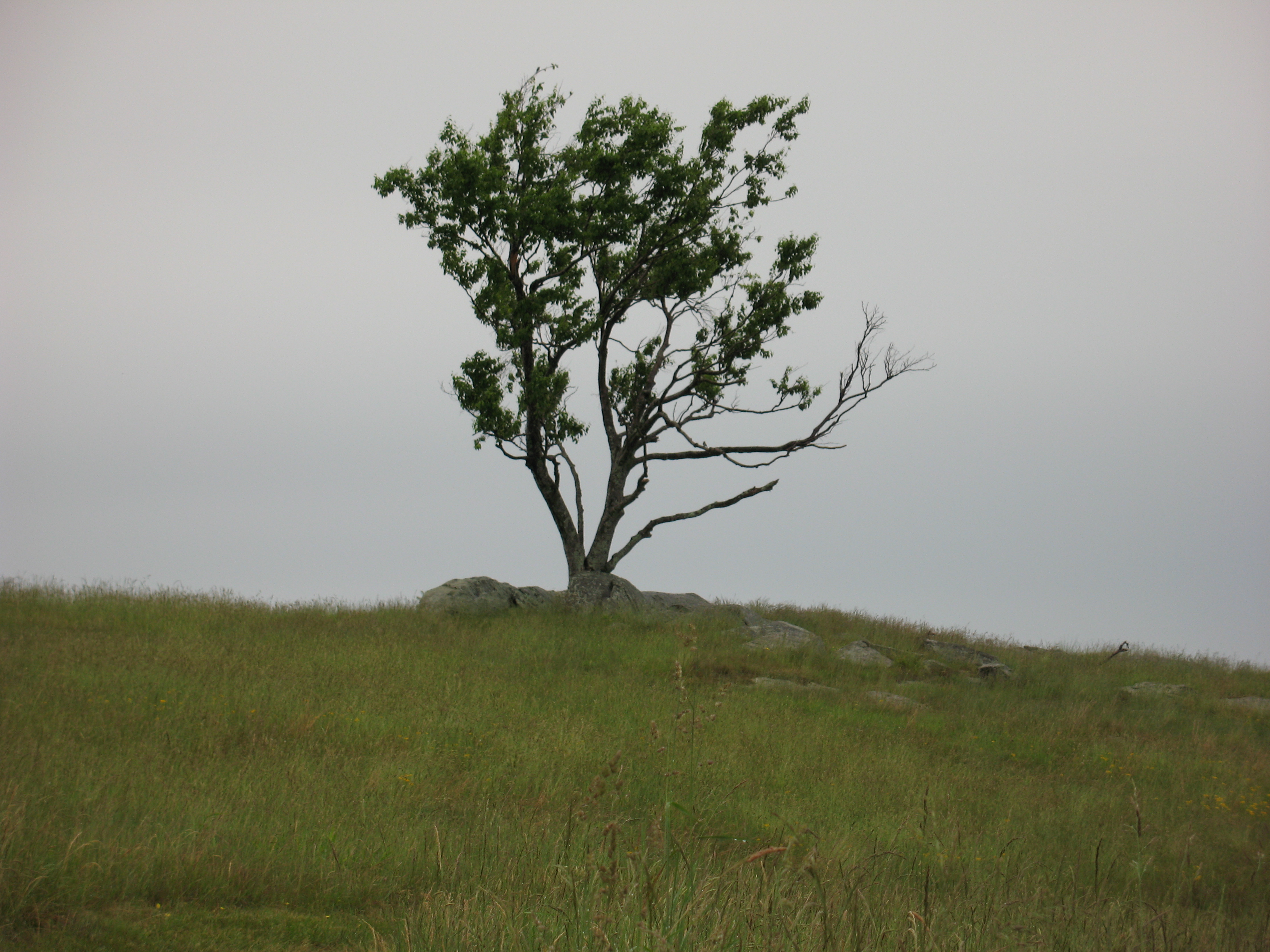
Doughton Park Tree 2021-03-23
 . 

Read Full Post »

[with Pilot Snake by Mary Oliver]

On June 21, I wrote in Tangled my distress at killing, by trying to protect nesting bluebirds, a four-foot long black rat snake. It became entangled in the collar of plastic mesh I’d attached at the base of the birdhouse pole to keep snakes from climbing up the pole to the nesting box. I never saw it there until it began to stink.

The snake’s presence explained the bluebirds’ agitated behavior over the past several days. Once I discovered the dead snake at the base of the post, though, I didn’t see the parent birds visiting the nest any more at all. Had they abandoned the chicks they’d been feeding so obsessively for two weeks? What would I find inside that house? I couldn’t bring myself to look. I hadn’t wanted to kill that snake; I didn’t want the death of birds on my heart as well.

This morning I take down the bird house. I unscrew it and open it for cleaning: an empty nest. A few smears of bird lime but no desiccated baby bird carcasses. They have fledged and flown.

And now in the humidity and sweat of this heat dome morning, I’m moving the cleaned birdhouse to a new location and a new pole. This torpedo-shaped baffle should prevent snakes from climbing to the house, and I’ve added a spiky frill to deter the most persistent climbers. To deter, not to harm. Eat all the mice and voles you desire, O Snake. All my weedy property is yours to roam. Just let me enjoy Bluebird Song this summer.

 . 

 . 

❦ ❦ ❦

Pilot Snake
 . 
had it
lived it would have grown
from twelve inches to a
hundred maybe would have
 . 
set out to eat
all the rats of the world and managed
a few would have frightened
somebody sooner or later
 . 
as it crossed the road would have been
feared and hated and shied away from
black glass lunging
in the green sea
 . 
in the long blades of the grass
but now look death too
is a carpenter too how all his
helpers the shining ants
 . 
labor the tiny
knives of their mouths
dipping and slashing how they
hurry in and out
 . 
of that looped body taking
apart opening up now the soul
flashes like a star and is gone there is only
that soft dark building
death.
 . 
Mary Oliver
 . 

Read Full Post »

 . 
[with 3 poems by Hilde Weisert, plus Wilfred Owen]
 . 
Imagination Itself
 . 
++++ To the eyes of a man of imagination,
++++ Nature is imagination itself.
++++ ++++ — William Blake
 . 
Who needs half a million unpronounceable forms of life
Half a world away? Ah, you do, they say,
And enumerate the ways:
++++ Glues, dyes, inks,
++++ Peanuts, melons, tea,
++++ Golf balls, paint, and gum,
++++ Mung beans, lemons, rice,
++++ And a fourth of all the medicines you take,
++++ And a fifth of all the oxygen you breathe,
++++ And countless life-prolonging secrets their wild cousins know
++++ to tell the Iowa corn and the garden tomato.
++++ And if that’s not enough, think of rubber —
++++ and where we’d all be, rattling down the interstate
++++ on wooden wheels.
 . 
And that’s only the stuff we know how to use,
And that’s only the half-million species we know how to name.
 . 
And in the time it took to tell you this
Five thousand acres more are gone.
And by the time that this year’s kindergarten class
is thirty-five, most of what is now alive —
 . 
But wait. What if — what if this deluge of mind-boggling
statistical connectedness were, true as it is,
only the least of it? What if the real necessity
were of another kind, the connection
 . 
Not with what you consume, or do, but who you are?
 . 
With your own imagination, the necessity there
of places that have not been cleared to till,
of the luxury of all that buzzing in the deep,
of a glimpse of feather or translucent insect wing
a color that’s so new it tells you light and sound
are, indeed, just matters of degree, and makes your vision hum
 . 
And makes you think the universe could hum
in something like the wild, teeming equilibrium
of the rain forest.
 . 
Hilde Weisert
from The Scheme of Things, David Robert Books, Cincinnati OH, © 2015
++++ originally published in THE SUN, Chapel Hill, NC
 . 
❦ ❦ ❦
 . 
Semi trailer in the right lane, speed almost matched, I can’t see green flashing past its far shoulder and the close cropped median is no consolation. Another morning driving to Winston to care for my parents, often a highway hour of calm & reflection, but today none of that. The hugeness of the truck, how much steel and rubber son to squat corroding and stinking in a back lot; the miles of asphalt and concrete, how much of the world we have eaten and smothered; myself no better than any, spewing carbon, cranking high this premature heat of summer – what is this world we have so mangled?
 . 
Linda and I caught a whiff of dead thing two days ago. Cool morning leaving for church then on to Duke Gardens for an outing, just a faint premonition of amines and putrefaction. Pre-stench. That night stronger when we returned too tired to seek its source near the driveway. Yesterday pungent but impossible to pinpoint. I didn’t want to find it. The bluebirds all weekend had been fretful and flighty around the birdhouse, bringing insects less frequently although chirping still audible inside. No chirping yesterday morning. Had the fledglings flown? Or . . .? I didn’t want to see what I feared in the nest.
 . 
This morning the dead scent is a shroud of grief. I need to leave for Winston right now but first I walk the drive’s margin sniffing like a reluctant hound. It comes from everywhere. The compost heap? Down the hill, a dead rabbit or squirrel? I’m avoiding the birdhouse. When I reach it, though, I suddenly know. We couldn’t see from the porch but at the back of the post in webbing I tacked up to deter snakes is one. A large black rat snake.
 . 
So to save the eggs, the nestlings, I’ve killed a beneficial serpent. One just like all those I’ve swerved to avoid running over, one that no doubt has contributed to the absence of copperheads on our property. One I should thank, not destroy. The bluebird parents we saw were mightily upset by him even though he could never reach them. No feathered visitations this morning, no chirping. Have the young ones flown? Or for fear of the snake did the parents abandon the nest?
 . 
I will know when I clean out the birdhouse. But I can’t make myself do it this morning.
 . 
 . 
❦ ❦ ❦
 . 
Ars Poetica
 . 
“I learned to talk from my mother,” I said,
and was startled: Doesn’t everyone?
But “learned from” –
as if it were playing the piano,
or making the sylsalat at Christmas?
But it was: Her speech,
invented for me, her patience
letting my mouth and tongue
work the vowels, open
and open, then clench consonants
hard in my teeth, all nibbled edge,
and me still making of it a gibberish,
a babble; a glottal soup,
a drool;
 . 
My answering nothing but a rhythmic rumination
of nonsense syllables. But she kept on,
now a whisper, now a song, and in a while
the words became words: Epitome
and punctilio, modicum
and masterly; plenty of slang
like vamoose and delish, and play
in the “Ditto” that either one
could say, and smile, (our secret).
 . 
This language of the days
of our small world, dangled from,
rolled in, colored and toddled,
and finally slept on , a pillow,
the sun,
 . 
Is now so many vocabularies ago, fields
of cultivated speech –
 . 
But with this odd sentence I remember
what came first,
the ravishing world she made
me take, word by hungry word,
and how much more there is to tell
in our original language.
 . 
Hilde Weisert
from The Scheme of Things, David Robert Books, Cincinnati OH, © 2015
 . 
❦ ❦ ❦
 . 
As Hilde Weisert read from The Scheme of Things recently at McIntyre’s Books near Chapel Hill, I was captured in the net of imagining that she cast over her audience. For those few minutes I lived in new places and thought new ideas. Now reading her book straight through has expanded and reinforced that experience. I find it remarkable that poems that criss-cross so many years and so much distance can feel entirely local and present.
 . 
Each of the five sections – Three Stars; The Truth of Art; Skylark; Away; Where We Were and What We Were Doing – is a book unto itself. Each section weaves threads to create an entirety. Three stars: New York, Paris, Budapest, and the family relations that occupy them. The truth of art: language, science, learning to speak. Skylark: jazz, baby, jazz! Away: youth and age, what we lose, whom we lose. Where? This earth, this world, this stumbling life and all we might miss and all we might claim.
 . 
Hilde has lived many lives, it seems. Thanks to writers of books, thanks to poetry, you and I may live many lives as well.
 . 
 . 
More about David Robert Books and The Scheme of Things HERE
 . 
 . 
❦ ❦ ❦
 . 
Finding Wilfred Owen Again
 . 
Our college love affair was doomed
like all the romance I outgrew at twenty;
trench warfare’s mad embrace be damned
along with Buffy Sainte-Marie and Nietzsche.
++++ And anyway, the war in Vietnam was ending.
 . 
For decades he lay silent in a book,
moved from Brooklyn to St Louis and LA
with curling snapshots, silver rings turned black
the mildewed albums I will never play.
++++ I left him to his war; our war had ended –
 . 
Until I call, the offhand way you do old flames
(as if you hadn’t kept their trail of numbers)
when something big has changed, or Armageddon looms.
(Shamed moment: Was it Rupert I remembered?
++++ Romance imagined?) Not now: War has descended –
 . 
distant and mine. I”m dazed, feckless, as lost
as my lost country. So I come here,
to find myself standing on shattered ground he blessed
with full eyes ninety years ago and hear
++++ him tell another time how war must end
 . 
in this fell field, on this dark page. The night
opens, closes, opens, a swinging sulphur rhythm in the flare
igniting each line end, the faces lit
and then eclipsed,
but always bright the names.
 . 
Hilde Weisert
from The Scheme of Things, David Robert Books, Cincinnati OH, © 2015
 . 
❦ ❦ ❦
 . 
Anthem for Doomed Youth
 . 
What passing-bells for these who die as cattle?
++++ — Only the monstrous anger of the guns.
++++ Only the stuttering rifles’ rapid rattle
Can patter out their hasty orisons.
No mockeries now for them; no prayers nor bells;
++++ Nor any voice of mourning save the choirs,—
The shrill, demented choirs of wailing shells;
++++ And bugles calling for them from sad shires.
 . 
What candles may be held to speed them all?
++++ Not in the hands of boys, but in their eyes
Shall shine the holy glimmers of goodbyes.
++++ The pallor of girls’ brows shall be their pall;
Their flowers the tenderness of patient minds,
And each slow dusk a drawing-down of blinds.
 . 
Wilfred Owen (1893-1918)
 . 
❦ ❦ ❦
 . 
Doughton Park Tree 4/30/2022
 . 

Read Full Post »

« Newer Posts - Older Posts »