Feeds:
Posts
Comments

Posts Tagged ‘Poetry of Conservation’

[including a poem by Rebecca Lindenberg]

I am still not sure what Will was thinking but he was very distant that evening. It was the last night of our backpacking trip through the Smokies. I knew he lived for wilderness – maybe he was simply ruing how long it would be until he’d have another chance to return to these mountains. Maybe he was doubting his chosen vocation, family doctor, the hectic office where we’d be working together again day after tomorrow. Maybe . . . maybe each of us longs to hang onto those few moments when we really feel we belong in the universe. And then they slip away.

We’d planned this trip together, just the two of us, for months. Now we were cooking our last supper. We had distanced ourselves from Mt. Collins shelter and the other hikers with their butane stoves that roared like jet liners. Will had fashioned a little alcohol stove out of a 7-Up can. Our noodles and dried vegetables simmered in silence.

When we’d finished eating and Will picked up the “stove,” his funk hit bottom. Our heat had fried a pygmy salamander (Desmognathus wrighti). Will lifted its weightless form and we grieved. We didn’t have much of anything more to say to each other that night.

In the morning we headed south on the AT to where our car waited at Clingman’s Dome. Bleached dead Frazer Fir flanked the trail with their mute accusations but the sun was cool and jeweled the dew on ridgeline grasses. About a mile from trail’s end, Will stopped and pointed. Perched on a stem sunning itself – Jordan’s Red-cheeked salamander, Plethodon jordani. Endemic to the Smokies, endangered, icon of biodiversity, preservation, and evolutionary variety. Was it waiting here to condemn us or to offer absolution?

Or to invite us to keep traveling until we discover where we belong?

.     .     .     .     .     .     .

It feels terrible to feel terrible // and so we let ourselves / start to forget.

There are plenty of pygmy salamanders but let me not forget that one. I haven’t heard a whip-poor-will in five years; let me not forget. I can choose to love this or that or the other . . . or you – let me not forget to hold tight to the choices that will hold you and me together.

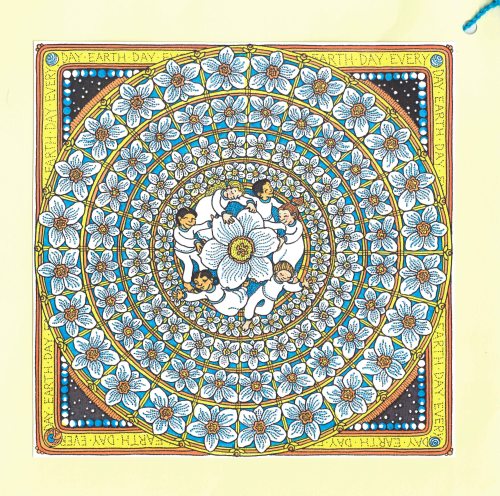
We celebrate Earth Day with the other inhabitants of our single habitable planet on April 22, but how we venerate earth day depends on the choices we make every day.

They’re not wonders, but signs // and therefore can be read.


[#Beginning of Shooting Data Section]<br /> Nikon CoolPix2500<br /> 0000/00/00 00:00:00<br /> JPEG (8-bit) Normal<br /> Image Size: 1600 x 1200<br /> Color<br /> ConverterLens: None<br /> Focal Length: 16.8mm<br /> Exposure Mode: Programmed Auto<br /> Metering Mode: Multi-Pattern<br /> 1/59.9 sec - f/8<br /> Exposure Comp.: 0 EV<br /> Sensitivity: Auto<br /> White Balance: Auto<br /> AF Mode: AF-S<br /> Tone Comp: Auto<br /> Flash Sync Mode: Front Curtain<br /> Electric Zoom Ratio: 1.00<br /> Saturation comp: 0<br /> Sharpening: Auto<br /> Noise Reduction: OFF<br /> [#End of Shooting Data Section]

.     .     .     .     .     .     .

A Brief History of the Future Apocalypse

Worlds just keep on ending and
ending, ask anybody who survived

an earthquake in an ancient city
its people can’t afford to bolt

to the bedrock, or lived to testify
about the tyrant who used his city’s roofs

like planks to walk people off,
his country’s rivers like alligator pits

he could lever open and drop a whole
angry nation into. Ask anyone

who was watched their own ribs emerge
as hunger pulls them like a tide,

who watched bloody-sheet-wrapped
bodies from the epidemic burn,

or fled any of the wars to come.
The year I was eleven, I felt

the ground go airplane turbulent
beneath me. Its curt shuddering

brought down a bridge and a highway
I’d been under just the day before.

And I was not afraid, but should have been
the first time love fell in me like snow.

How could I know it would inter us
both, so much volcanic ash –

how could I not? The world must
end and I think it will keep ending

so long as we keep failing to heed
the simple prophecies of fact –

hot-mouthed coal-breathing machines
fog our crystal ball, war is a trapdoor

sprung open in the earth that a whole
generation falls through, love ends,

if no one errs, in death. When
my love died, I remember thinking

this happens to people every day,
just – today, it’s our world

crashing like an unmanned plane
into the jungle of all I’ve ever

had to feel, or imagine knowing.
It feels terrible to feel terrible

and so we let ourselves
start to forget. That must be it.

Why else would we let the drawbridge
down for a new army, water

the Horseman of Famine’s red steed
with the last bucket from the well

or worse – give up then. A heart
sorrow-whipped and cowering

will still nose its ribcage to be petted.
Will still have an urge for heroics.

And anyway, when has fear of grief
actually kept anyone from harm.

Some hope rustles in my leaves
again. It blows through, they eddy

the floor of me, unsettling
all I tried to learn to settle for.

Would I be wiser to keep
a past sacrament folded in my lap

or would I be more wise to shake
the gathered poppies from my apron,

brush off soft crimson petals
of memory and be un-haunted –

I don’t know. So I choose you and we
will have to live this to learn what happens.

And though it’s tempting to mistake
for wonders the surge of dappled

white-tailed does vaulting through
suburban sliding glass doors,

they are not. Not vanishing bees
blown out like so many thousands

of tiny candle-flames, neither
the glinting throngs of small black birds

suddenly spiraling out of the sky,
the earth almost not even dimpling

with the soft thuds of feathered weight.
Nor the great wet sacks of whale

allowing the tide to deposit them alive
on a strand, nor even the sudden

translucent bloom of jellyfishes.
They’re not wonders, but signs

and therefore can be read. I didn’t
always know that apocalypse

meant not the end of the world but
the universe disclosing its knowledge

as the sea is meant to give up its dead,
the big reveal, when the veil blows back

like so many cobwebs amid the ruins
and all the meaning of all the evidence

will shine in us to finally see –
And there you’ll be and I’ll know you

not by the moon in your voice but the song
rung in my animal self. For I feel you,

my sure-handed one, with something
sacreder than instinct but just as fanged.

Then unfold me the way you know
I want so I can watch the stars

blink back on over the garden as we grapple
in the dimming black like little, little gods.

Rebecca Lindenberg

from Best American Poetry 2019; Major Jackson, editor, David Lehman, series editor; Scribner Poetry 2019
first appeared in Southern Indiana Review; reprinted by permission from Rebecca Lindenberg

More by Rebecca . . . https://www.poetryfoundation.org/poets/rebecca-lindenberg

.     .     .     .     .     .     .

Rebecca Lindenberg teaches in the MFA program at Queens University, Charlotte, and is an Assistant Professor at the University of Cincinnati where she is also Poetry Editor of the Cincinnati Review. She holds a Ph.D. in Literature and Creative Writing from the University of Utah. She is the author of Love, an Index (McSweeney’s 2012) and The Logan Notebooks (The Center for Literary Publishing at Colorado State 2014), winner of the 2015 Utah Book Award.

.     .     .     .     .     .     .

[#Beginning of Shooting Data Section]<br /> Nikon CoolPix2500<br /> 0000/00/00 00:00:00<br /> JPEG (8-bit) Normal<br /> Image Size: 1600 x 1200<br /> Color<br /> ConverterLens: None<br /> Focal Length: 11.8mm<br /> Exposure Mode: Programmed Auto<br /> Metering Mode: Multi-Pattern<br /> 1/30 sec - f/4<br /> Exposure Comp.: 0 EV<br /> Sensitivity: Auto<br /> White Balance: Auto<br /> AF Mode: AF-S<br /> Tone Comp: Auto<br /> Flash Sync Mode: Front Curtain<br /> Electric Zoom Ratio: 1.00<br /> Saturation comp: 0<br /> Sharpening: Auto<br /> Noise Reduction: OFF<br /> [#End of Shooting Data Section]

.     .     .     .     .     .     .

[Behind the scenes karma: I received Best American Poetry 2019 as a gift last Christmas (Oh Santa, you are so good at taking hints!) but I hadn’t read it until this week. I was hoping to discover something that would evoke April as Earth Month anticipating Earth Day, resigned to forgoing my usual focus on Carolina writers. Rebecca Lindenberg’s poem leapt from the page; it is the best of the Best, the Best American Poem of 2019 in my opinion. It wasn’t until after I had asked her permission to use it that I discovered Rebecca’s connection to Queens University and probably to many of the other writers who have appeared in this space. Karmic connection comes through.  – B ]
Read Full Post »

“It is impossible to care for each other more or differently than we care for the earth . . . there is an uncanny resemblance between our behavior toward each other and our behavior toward the earth.”

Wendell Berry

Attention precedes intention.

I know someone (actually, I live with her) who keeps a paper cup and square of cardboard under the downstairs sink.  If a wasp wanders into the house she claps the cup over her, slides the cardboard under her, and sets her free out the front door.  I’m thankful to Linda for this because I am slightly hymenopteraphobic.  I’m also thankful to her for all the crickets, centipedes, “Palmetto bugs,” and occasional skinks that have ridden that cup to freedom.  I can’t exactly express why, but it’s a blessing to be married to someone who doesn’t squash things.

Does Creation rejoice when one wasp is saved?  Maybe not, but you never know – the web of life is complex and chaotic and includes every living organism, not least the trillion bacteria that cohabit my body.  I couldn’t live without them.  Each creature occupies its essential place.

I do know this – Creation rejoices in every moment we take to pay attention.  Attention leads to intention.  Once we notice the life all around us . . . once we notice how all life interacts and how we affect it . . . we become poised to care. And to behave as if we care.

The very concept of interdependence within the natural world is only about as old as the church I belong to, Community of Christ.  That there is an intimate relationship between creatures and their environment was first developed by Charles Darwin, who is considered the Father not only of my other favorite “E” word but also of Ecology.  The first published instance of the word “ecology” was not until 1879.  One hundred and thirty-three years – not a great deal of time for the Western psyche to incorporate a radically new relationship with Creation: not dominion over all, not even stewardship of all, but coexistence with all.  Perhaps it’s not surprising that there are many people who imagine we can somehow live without Cape Fear shiners, Yellow lampmussels, or Schweinitz’s sunflowers, much less wasps, crickets, and skinks.

I expect a visit to the NC Zoo would start a lot of those people on a journey down a path at whose end they would have fallen in love, not only with a baby giraffe, but with a minnow endemic to just five counties in central North Carolina.  At least that visit would get their attention.  That’s the first responsibility of a naturalist, paying attention.  It’s the first responsibility of being human.

IMG_3205

.     .     .     .     .

Two Sundays ago I left the house at 6:30 a.m. to head for a week at the Zoo.  The car was crammed with nature books, poetry books, enough clothes to change two or three times a day anticipating some sweaty 100+ degree weather.  I had enough handouts and resources to lead workshops and present readings.  Enough food for two weeks, probably.  Enough coffee for a month.

I stopped at Bojangles and bought two sausage biscuits because they were on special.  As I headed south on I-77 I ate one, and then I thought – what did it take to make this?  How many thousands of gallons of water to grow the grain to raise the hog?  How much CO2 from tractor exhaust, how much methane from hog lagoon exhaust?   You’ve probably read how the United States creates over 16% of global greenhouse gases with only 5% of the population.  You may have read how raising meat impacts the environment much, much more than raising grain or vegetables, and how in the developing world, especially China, they are shifting their diets to include more meat as standards of living rise.  Well, when I arrived in Asheboro I handed that second biscuit to a friend and decided to give up eating meat.

Will my decision have any greater benefit to Creation than a few more wasps free in the azalea?  Maybe not, but it’s just my intention, growing out of my attention.

No matter how you lift your eyes you can’t actually see beyond the horizon. You can’t be sure of the outcomes of all your actions, but you can pay attention.  Pay attention to the things you experience every day.  To the things you do. Pay attention to what makes you feel within your heart the love your Creator has placed there.

Continue to discover your own place in Creation.Raven crop 02

RAVEN

Listen.
I’m not going to say this twice.
The sum and product of words
is no mark of intelligence.
Case in point – cousin Crow,
not half as smart as all his talk.

So listen,
I know three things:
Sky, that small kiss of warm air
that rises through my primaries;

the Water on its breath, ridgeblown mist
that bathes us all and makes springs
overflow into Inadu Creek;

and Earth, slope and cup of cove,
the steep that gathers with wide black wings
to draw down Sky,
draw Water up,
that sets free all things green
into a world first fledged.

But listen.
I know from twenty circles
of snowdeep and hungry moons
and twenty circles of fresh shoots
that Sky . . . Water . . . Earth . . .
none of them are mine.

And I know none are yours.

from Snake Den Ridge, a bestiary © Bill Griffin and Linda French Griffin, March Street Press, 2008

.     .     .     .     .

IMG_3143

.     .     .     .     .

“The universe story is the quintessence of reality. We perceive the story. We put it in our language, the birds put it in theirs, and the trees put it in theirs. We can read the story of the universe in the trees. Everything tells the story of the universe. The winds tell the story, literally, not just imaginatively. The story has its imprint everywhere, and that is why it is so important to know the story. If you do not know the story, in a sense you do not know yourself; you do not know anything.”

Thomas Berry,  1914-2009

.     .     .     .     .

IMG_0877

Read Full Post »

I’m going to bet your family is a lot like mine.  Sometimes my parents come to stay a few days over a holiday, with Margaret and her Josh in from Raleigh, Mary Ellen down from Sylva (and all with dogs-squared), and finally Josh, Allison, and Saul all squeezed in.  Then it starts.  First hugs, then catching up and gossip, meanwhile eating, momentary pause in eating, start eating again.  Finally, if we’re all under the same roof for long enough, the stories begin.

Haven’t you heard them?  Stories that start out with, “Oh, I remember when you were six and you . . . .”  “Right, and remember that time we thought no one was looking and we . . . .”  “Sure, and can you remember what Nana would say when we . . . ?”  We’ve heard them all a thousand time, but we can’t help ourselves.  We have to re-tell them.  It’s the stories that bind us together and remind us we’re a family.  Those stories make us a family.

IMG_3312_edit01

.

IMG_3438

I was at the Zoo about a year ago when Batir was smaller (though not by any means small).  She still kept pretty close to her mother, Tonga, and they would frequently caress each other with their trunks or even interlace, touching . . . touching.  Today they still spend much of the day near each other; is Batir leaning against her mother’s side?  They’re that close.

Yesterday at the aviary, besides watching the Yellow-rumped Cacique add fronds to a large unruly nest in the very top of a sapodilla, I saw a pair of White-headed Mousebirds that evidently also had nesting on their minds.  They nibbled at each other’s beaks, and then one would preen the neck feathers of the other . . . and they were perched pretty darn close together on that branch.

One morning this week I entered the Park early while the alligators were still bellowing at each other (there are two separate ‘gator enclosures so the males can’t get physical with each other).  As I passed one pool, a larger ‘gator was rubbing his jaw up and down the neck of the smaller, and then she (?) would return the gesture.  I’d have a hard time calling it “nuzzling” when your skin is smooth as an old shagbark hickory, but I can only assume they were making friends.

With such a large extended family of baboons, you can’t pass them by without noticing that there is always some grooming going on.  Sometimes it’s a female picking through the thick mane of a large male; sometimes two females; frequently a mother and child, and then they reciprocate.  The younger members of the troop sometimes stop chasing and wrestling to comb each other out with their claws.

Somehow each species communicates that they are a family.  It may be the complex subsonic telegraphy of elephants or the ritual stereotypic breeding displays of birds, but the message is received.  The bond is forged.  The family prevails.

We humans prevail through the stories we tell.  When that gets old, we tell stories about telling stories. As Zoo ambassador, here’s my challenge to you:  tell me a new story.

I am leaving the Zoo after this week-long residency with a headful of stories.  You’ve got some, too.  Discover them.   Tell them.  You don’t have to visit a zoo, or an aquarium, or a botanical garden, or a national park.  You have a backyard, a neighborhood, a schoolyard.  There is something about any one of those places that can remind you what family you belong to.  Do I have to come right out and say it?  It’s the Family of All Life on Earth.

IMG_3354

.

IMG_3295_crop01

Maybe you’ll encounter a creature you’ve never paid much attention to before.  You might learn to recognize a bird’s call or look up the name of that big butterfly hanging around your bushes.  Perhaps you’ll gain some new understanding about how creature A depends on creature B, and vice versa.  Could be you’ll discover that something you’re used to doing every day actually harms creature C.  You know you’re going to feel invigorated after you get a big dose of Vitamin N (“Nature”).

And you’re going to have some stories. I can hear you now, each time you get together with your Family and spend some quality time under nature’s vast open roof – “Hey, do you remember when we . . . ?!”

.     .     .     .     .

A Prayer for the Mountains

Let these peaks have happened

The hawk-haunted knobs and hollers,
The blind coves dense as meditation,
The white rock-face, the laurel hells,
The terraced pasture ridge
With its broom sedge combed back by wind:
Let these have taken place, let them be place.

And where Harmon Fork piles unrushing
Against its tabled stones, let the gray trout
Idle below, its dim plectrum a shadow
That marks the stone’s clear shadow.

In the slow glade where sunlight comes through
In circlets and moves from leaf to fallen leaf
Like a tribe of shining bees,
Let the milk-flecked fawn lie unseen, unseeing.

Let me lie there too
And share the sleep
Of the cool ground’s mildest children.

Fred Chappell
from Spring Garden, 8 1995 by Fred Chappell, Lousiana State University Press.

.     .     .     .     .

IMG_3319

.     .     .     .     .

You don’t have to visit the Zoo, but it couldn’t hurt.  It’s done me a world of good.  Next time you’re there, see if they’ve started displaying poetry around the Park.  (It won’t happen until after all three of us Poets-in-Residence have submitted our suggestions, but if you don’t see any yet it’ll just be the perfect reason to make another trip before too long.)

Meanwhile, I thank profoundly Ellen Greer, Sue Farlow, and Dr. David Jones as well as all those on the steering committee that developed the vision for this Poetry of Conservation project.  And to all the rest of you folks – design staff, animal handlers, Zoo Com, volunteers, interpreters, Sodexo, Schindler House folks – you welcomed me into your NC Zoological Park family, and I am humbled and grateful.  In sheer awesomeness you are equal to any of the other animals in the Park!

Love, BILL

IMG_3424.

IMG_3480

.     .     .     .     .

IMG_3490

.     .     .     .     .

Read Full Post »

Older Posts »