Feeds:
Posts
Comments

Posts Tagged ‘phenology’

 . 
[with poetry by Mary Oliver and Tennyson]
 . 
On Winter’s Margin
 . 
On winter’s margin, see the small birds now
With half-forged memories come flocking home
To gardens famous for their charity.
The green globe’s broken; vines like tangled veins
Hang at the entrance to the silent wood.
 . 
With half a loaf, I am the prince of crumbs;
By time snow’s down, the birds amassed will sing
Like children for their sire to walk aborad!
But what I love, is the gray stubborn hawk
Who floats alone beyond the frozen vines;
And what I dream of are the patient deer
Who stand on legs like reeds and drink the wind; –
 . 
They are what saves the world: who choose to grow
Thin to a starting point beyond this squalor.
 . 
Mary Oliver
from Devotions, the Selected Poems of Mary Oliver, Penguin Press © 2017; originally collected in No Voyage and Other Poems, Houghton Mifflin © 1965
 . 
❦ ❦ ❦
 . 
In the Spring a young man’s fancy lightly turns to thoughts of . . . phenological mismatch.
 . 
Ah, Alfred Tennyson, better you had continued to tramp the heath and weald of old Locksley Hall and turned away from your infatuations with the inconstant and unreachable Amy. Look here! Amidst the brittle stems of last summer’s arboreal plumage and almost buried beneath autumn’s comforter, an eyelet of green! Gently peel aside the brown leavings of solemn beech and discover: seven pale lilac petals and their swarm of stamens. February 18 and Hepatica has begun to bloom!
 . 
So I hope we’ll be greeted tomorrow, February 22, on our first naturalist walk of the season. Now and every three weeks through April we will tally the progression of blooming along the Elkin Creek Nature Trail. Native wildflowers, these spring ephemerals make their living here beneath the beech / oak canopy. Hepatica, Trout Lily, Bloodroot, Foamflower, they will quickly extend their leaves into the sun before its light can be obscured by budbreak among the overarching trees. Phenological escape – the urgent days of photosynthesis before the canopy closes. These low growing herbs must earn most of their entire year’s salary in just two or three weeks.
 . 
How do they know? What triggers the perennials to leaf and bloom; what swells and opens the leaf buds overhead? What is the key to understanding their phenology (def. – the study of cyclical biological phenomena)? Warming. Soil temperature and air temperature. But some plants are more sensitive to temperature changes and the warming of planet earth than others. In North America, deciduous trees are the most sensitive to warming trends that determine when they will break bud and unfurl leaves. Beech, oak, maple they leaf out earlier as average temperatures increase; Hepatica may not, and so the window of sunlight opportunity shortens.
 . 
This is just one example of phenological mismatch. Imagine how it might affect interconnected species that gradually diverge, out of synch. Will Hepatica have time to turn photons into the sugars it must store for the next long darkness? Will its pollinators and its seed dispersers still thrive in the altered forest? What will our spring walks look like in ten years? in twenty? Alfred Tennyson, I’m afraid there are days I share your melancholy.
 . 
 . 
❦ ❦ ❦
 . 
Wild Geese
 . 
You do not have to be good.
You do not have to walk on your knees
for a hundred miles through the desert repenting.
You only have to let the soft animal of your body
+++ love what it loves.
Tell me about despair, yours, and I will tell you mine.
Meanwhile the world goes on.
Meanwhile the sun and the clear pebbles of the rain
are moving across the landscapes,
over the prairies and the deep trees,
the mountains and the rivers.
Meanwhile the wild geese, high in the clean blue air,
are heading home again.
Whoever you are, no matter how lonely,
the world offers itself to your imagination,
calls to you like the wild geese, harsh and exciting –
over and over announcing your place
in the family of things.
 . 
Mary Oliver
from Devotions, the Selected Poems of Mary Oliver, Penguin Press © 2017; originally collected in Dream Work, Grove/Atlantic Inc. © 1986.
 . 
❦ ❦ ❦
 . 
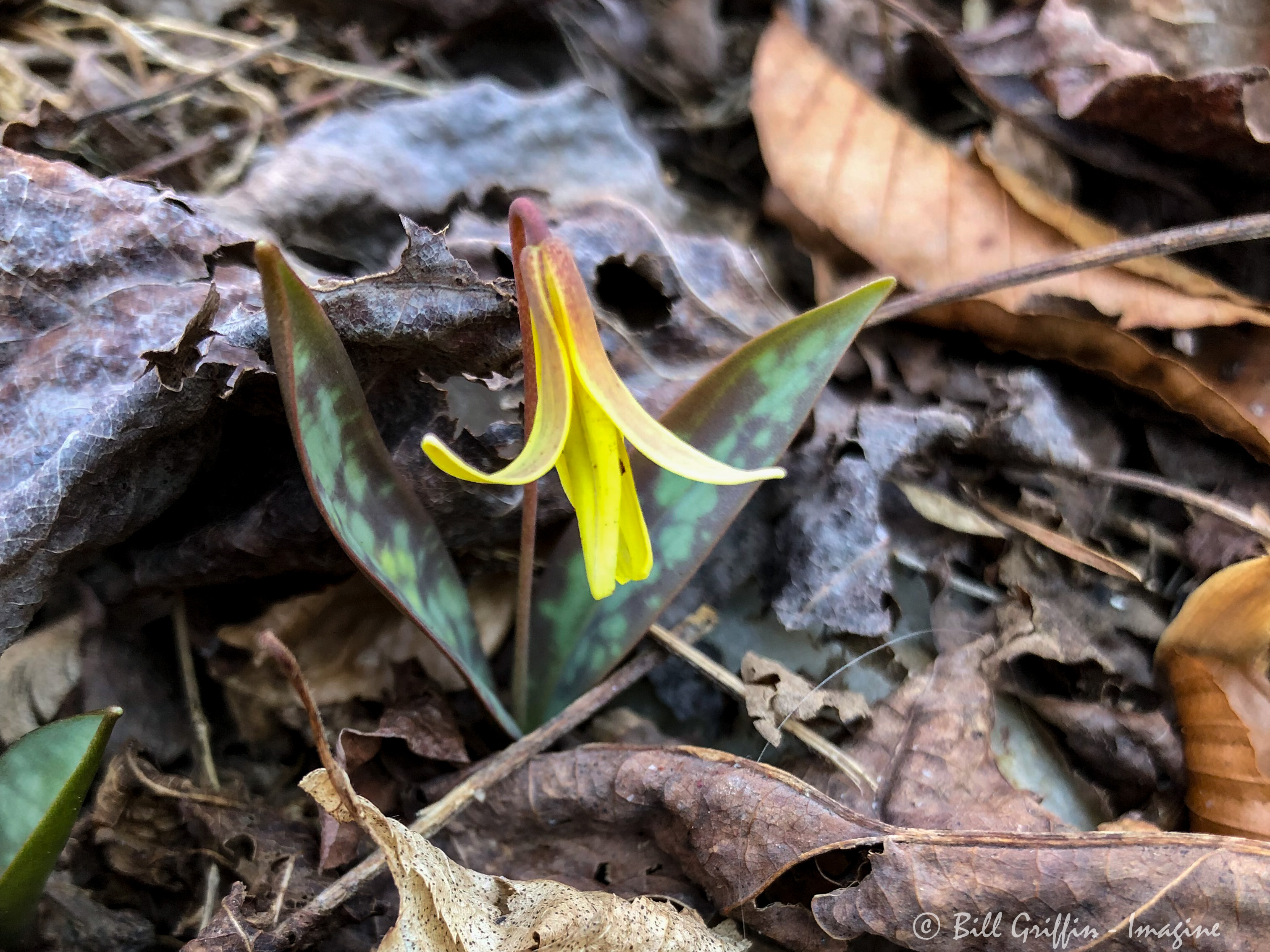
A week after our group walked the trail I am still happy for what the forest shared with us. Yes, one Trout Lily had stretched and curved its petals to open a small yellow flower. Yes, one Hepatica, among the many other slumbering liver-lobed leaves, presented the cold morning after freezing night with a single pale lilac bloom. We knelt closer for its even more remarkable surprise: beneath the blossom nodded two more, sepals already empty of petals and gone to seed. The spring ephemerals know their business and their name. They make more of themselves and fill the world whether we are watching or not.
 . 
I have been watching these flowers but not nearly long enough nor often enough. Nevertheless one remembers – color and scent may spark a flicker of joy into a life that threatens to cloak each day with darkness. On our walk, beside a particular beech tree no different from the hundreds around us, I recall the first time I ever discovered Hepatica blooming in our woods. That year it was the only one I found and I returned to it day after day until it faded. Now here it is again, the very plant. Its leaves are pocked and burnt orange from their long winter’s work. If it has buds, they are still hiding. As yet no new spring foliage. But I will be back to share this brief season with it. Perhaps we will bloom together.
 . 
 . 
❦ ❦ ❦
 . 
Spring
 . 
Somewhere
++ a black bear
++ ++ has just risen from sleep
++ ++ ++ and is staring
 . 
down the mountain.
++ All night
++ ++ in the brisk and shallow restlessness
++ ++ ++ of early spring
 . 
I think of her,
++ her four black fists
++ ++ flicking the gravel,
++ ++ ++ her tongue
 . 
like a red fire
++ touching the grass,
++ ++ the cold water.
++ ++ There is only one question;
 . 
how to love this world.
++ I think of her
++ ++ rising
++ ++ ++ like a black and leafy ledge
 . 
to sharpen her claws against
++ the silence
++ ++ of the trees.
++ ++ ++ Whatever else
 . 
my life is
++ with its poems
++ ++ and its music
++ ++ ++ and its glass cities,
 . 
it is also this dazzling darkness
++ coming
++ ++ down the mountain,
++ ++ ++ breathing and tasting;
 . 
all day I think of her –
++ her white teeth,
++ ++ her wordlessness,
++ ++ ++ her perfect love.
 . 
Mary Oliver
from Devotions, the Selected Poems of Mary Oliver, Penguin Press © 2017; originally collected in House of Light, Beacon Press © 1990.
 . 
❦ ❦ ❦
 . 
Here in closing a few lush stanzas from the overpowering lyric Locksley Hall by Alfred Lord Tennyson:
 . 
Here about the beach I wander’d, nourishing a youth sublime
With the fairy tales of science, and the long result of Time;
 . 
When the centuries behind me like a fruitful land reposed;
When I clung to all the present for the promise that it closed:
 . 
When I dipt into the future far as human eye could see;
Saw the Vision of the world and all the wonder that would be.—
 . 
In the Spring a fuller crimson comes upon the robin’s breast;
In the Spring the wanton lapwing gets himself another crest;
 . 
In the Spring a livelier iris changes on the burnish’d dove;
In the Spring a young man’s fancy lightly turns to thoughts of love.
 . 
Read Locksley Hall in its entirety at The Poetry Foundation
Purchase Mary Oliver’s Devotions at Penguin/Random House
Cutting edge phenological research at Nature.com
 . 
❦ ❦ ❦
 . 
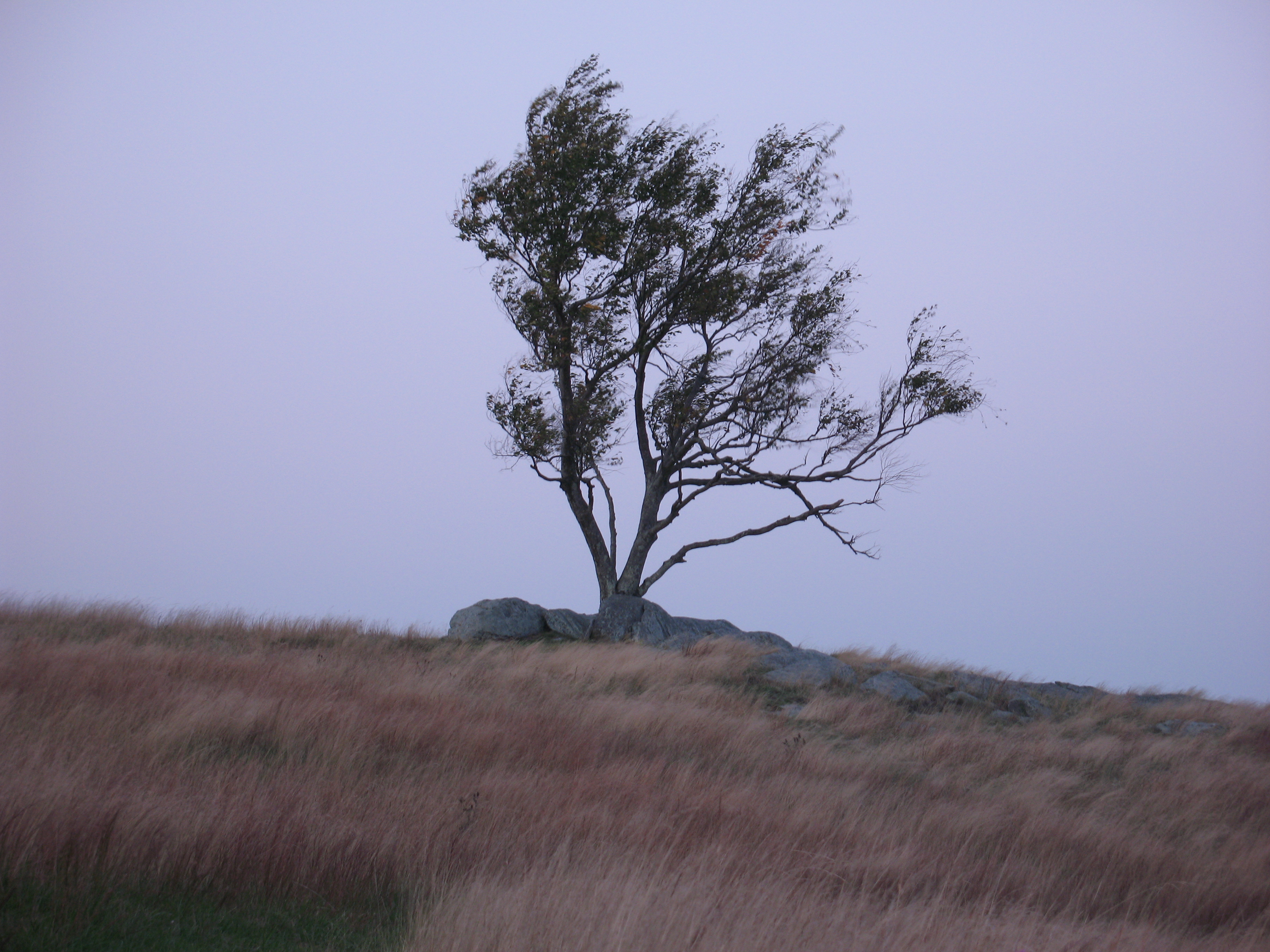
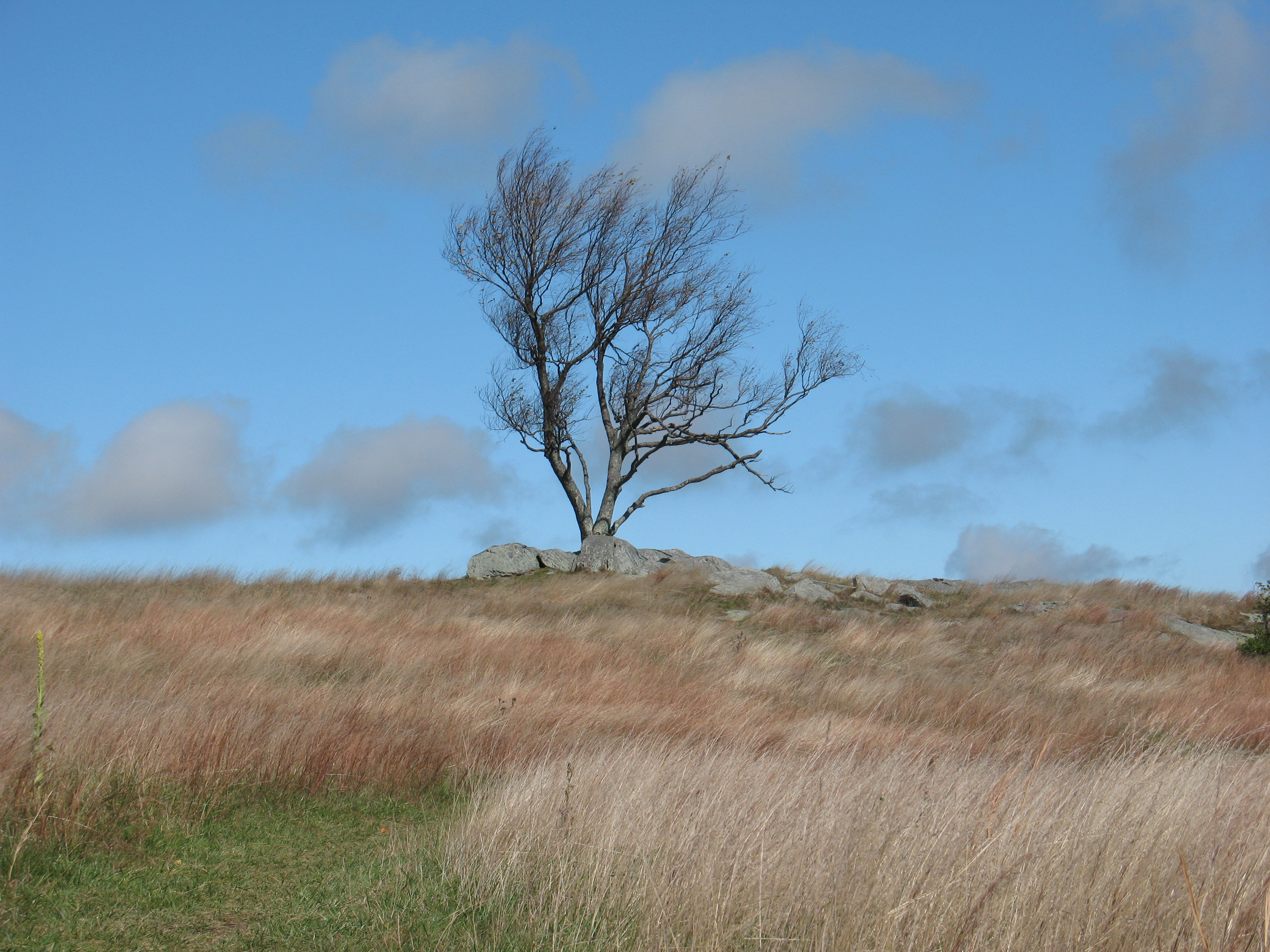
2019-02-09 Doughton Park Tree
 . 

Read Full Post »

 . 
[ with 4 poems by Lori Powell]
 . 
Wings
 . 
Not one bird but two,
black bead eyes staring,
feet curled into question marks.
No one but two
as if they’d made the trip together,
flying deluded to batter the glass
they believed was air, trees, clouds –
a whole landscape of death.
 . 
“There is the trash can,” I say
rolling the bodies
onto the white paper sack.
But my son insists on burial
there, in the parking lot
we push the red clay over them,
under a scrawny tree, itself barely alive.
 . 
Are you disillusioned now
small birds, wiser
in red clay than thin air?
 . 
I have my own
pact with illusion
a daily flight into the glass
my own small birds
stunned, not yet dead,
battering the spot
that might yield.
 . 
I will not bury you small birds,
my one chance at wings.
 . 
Lori Powell
from Truth and Lies, Black Buzzard Press, © 2000
 . 
❦ ❦ ❦
 . 
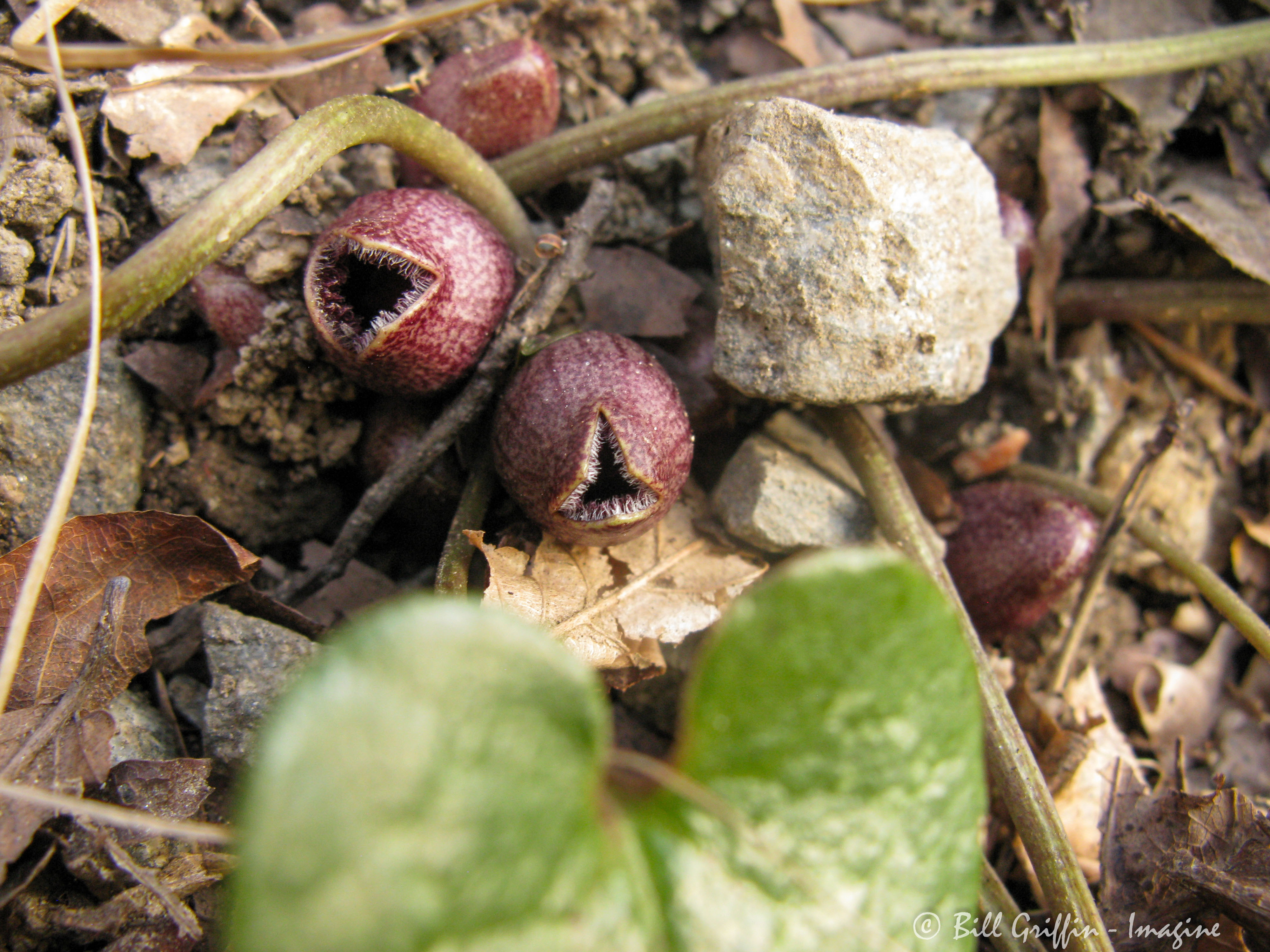
February 24, first naturalist hike of the season. I begin by telling everyone to look close, real, real close – any flowers we find blooming are likely to be tiny. (Although before we embark on the trail we stand for a minute beneath the huge Acer rubrum near the recreation center, a jillion brilliant flowers over our heads.) The pussytoes and star chickweed won’t be visible for another week or two, but we do discover one Virginia heartleaf with little purple buds just opening their mouths. And then there’s hepatica and trout lily.
 . 
Depending on which woods you walk in, one of these two is likely to be the first native flower to bloom. How do they know when it’s time? Those trees towering over them, bathed in lengthening daylight, can use the calendar to decide when to leaf out (although North American trees are surprisingly sensitive to soil temperature as well). What triggers the tiny plants of the understory to flower?
 . 
It’s a critical question because of one critical concept: spring light window. Wildflowers of temperate forests need to do most or even all of their growing before tree leafbuds burst and the canopy closes. We can see this on our walk today in the local orchid species – they make new leaves in late fall, dark green to absorb weak winter sunlight beneath bare trees, and by the time they bloom in summer their leaves will be gone. Hepatica keeps its old purpled leaves all winter, perhaps for the same reason, and will make new green after flowers fade. But fresh trout lily leaves appear only days before the yellow blossoms spring up.
 . 
Here are my observations: a little clump of hepatica may bloom here and there beginning in December if we have a string of warm days. Trout lily,though, is synchronized – see one leaf and you know within days you will see it everywhere, all blooming at once. Hepatica must be more sensitive to soil temperature and trout lily less so, needing a full spring warming to trigger. Or could trout lily even somehow sense daylight beneath those layers of brown leaves?
 . 
Phenology is the term for this study of cyclical biological phenomena: flowering, leaves, migration, nesting, insect hatching . . . . As the climate changes, “phenological mismatch” is dire – flowers may open when no pollinators are available. And if spring warming causes trees to leaf out earlier but trout lily can’t adapt, that critical spring light window may dim too soon for the little mottled fish-scale leaves to store enough root energy for next spring.
 . 
See this article in NATURE for a deeper discussion of forest and wildflower phenology; comparison of North America, Europe, and Asia; and exploration of terms like FFD (first flower date), LOD (leaf out date), Spring Light Window, and Phenological Escape.
 . 
 . 
❦ ❦ ❦
 . 
Without Teeth
 . 
Instead of striding fearless out of the sea
you’ve become the soft creature inside the shell.
The thing you wish you’d said
shouts in your ear all night long
then lies down
with the thing you wish you hadn’t done
and begets children.
Still you believe in hours without teeth,
hours when you can say,
“That’s not my blood seeping into the sand.”
Hope is ground from your bones.
Hope is the shell that winds you
tighter inside its coils.
 . 
 . 
The Origin of Snow
 . 
When I see a black dog in the snow
I stop wondering if you love me.
All the world’s wet places
have brimmed into flower at once,
as if difficult things
could happen this simply
dog in snow, black on white,
and my thoughts come home
like children with wet feet,
leaving puddles everywhere.
 . 
Lori Powell
from Truth and Lies, Black Buzzard Press, © 2000
 . 
❦ ❦ ❦
 . 
How tall is that stack of unread books beside your bed, on the corner of your desk? Has your homeowner’s insurance raised your premium because of the chance of it tipping over onto your head? Has your home’s foundation shifted from the weight? At great personal risk, I’ve snaked a book from a lower stratum in one of my piles before its carbon could be crystallized to diamond. And discovered it’s layered with gems.
 . 
Lori Powell lives on the coast of Maine, where she teaches English to immigrants and refugees.  Her first poetry collection, Truth and Lies (Black Buzzard Press, Visions International) confirms Jean Cocteau: “The poet is a liar who always speaks the truth.” These poems are condensed, crystallized, sharp enough to cut. The poet’s images, at first elusive, gradually blossom and bloom the longer I contemplate. And then, mirabile dictu, the truth on the page no longer belongs to the writer but belongs to me. A window opens and light enters.
 . 
 . 
Truth and Lies is Volume 14 of the Black Buzzard Press Illustrated Chapbook Series, illustrations by Cathie France Nelson. Visit the Press and Visions International HERE.
 . 
 . 
❦ ❦ ❦
 . 
Like a Well of Sweet Water
 . 
That is your mailbox,
your name in black.
I want to leave you something
like a cat leaves her kill
at her master’s door.
I want to be useful
like a throat filled with song,
like a well of sweet water.
I am both cat and bird.
 . 
But what can I give?
My pockets are orphans,
my words have flown,
my head is filled
with useless music.
I would leave you something,
but not today.
The cat’s in the well
and the bird sings, sings.
 . 
Lori Powell
from Truth and Lies, Black Buzzard Press, © 2000
 . 
❦ ❦ ❦
 . 
 . 
IMG_1827

Read Full Post »

Hepatica americana (Buttercup family), last year’s foliage and new barely opened blossoms

[with 3 poems by Sam Love]

On March 15 I walked an Elkin trail I hadn’t visited in months. The Elkin & Allegheny Nature Trail includes a couple of miles of restored railway grade and many more miles of side trails, loops, and spurs, plus 5-6 miles of intermediate level bike trail. I hiked most of those miles on the 15th but only partially for the exercise – I was walking mostly for ephemera.

Note the date. Looking back at my photos and notes I uncover Hepatica blooming as early as January 27, a single plant in a protected hollow, but usually here in Elkin, elevation around 1000 feet, the earliest Hepatica and Trout Lily emerge toward the middle or end of February. So who’ll be showing themselves mid-March? I ask myself, and how long will they last?

The study of cyclical biological phenomena is phenology. When do migrating warblers arrive from Central America? We saw our first Ovenbird March 19; I heard a Northern Parula out back on April 3. When do Wood Frogs lay eggs? When do Midges and Mayflies hatch out and Eastern Bluebirds build their nests? Sometimes local weather affects a given year’s record but longer term trends are linked to climate change. Can’t help worrying about those Parulas if the hatching of their chicks is out of sync with the juicy bugs. Phenology is a leading indicator of climate change impact, especially on vulnerable species.

For today, my phenology project is discovering tiny blooms just making their appearance.

And if that weren’t enough, as I walk a section of bike trail beside Elkin Creek a pair of wood ducks skitter up from the water and the male flashes his phenomenal colors before they veer around a bend.

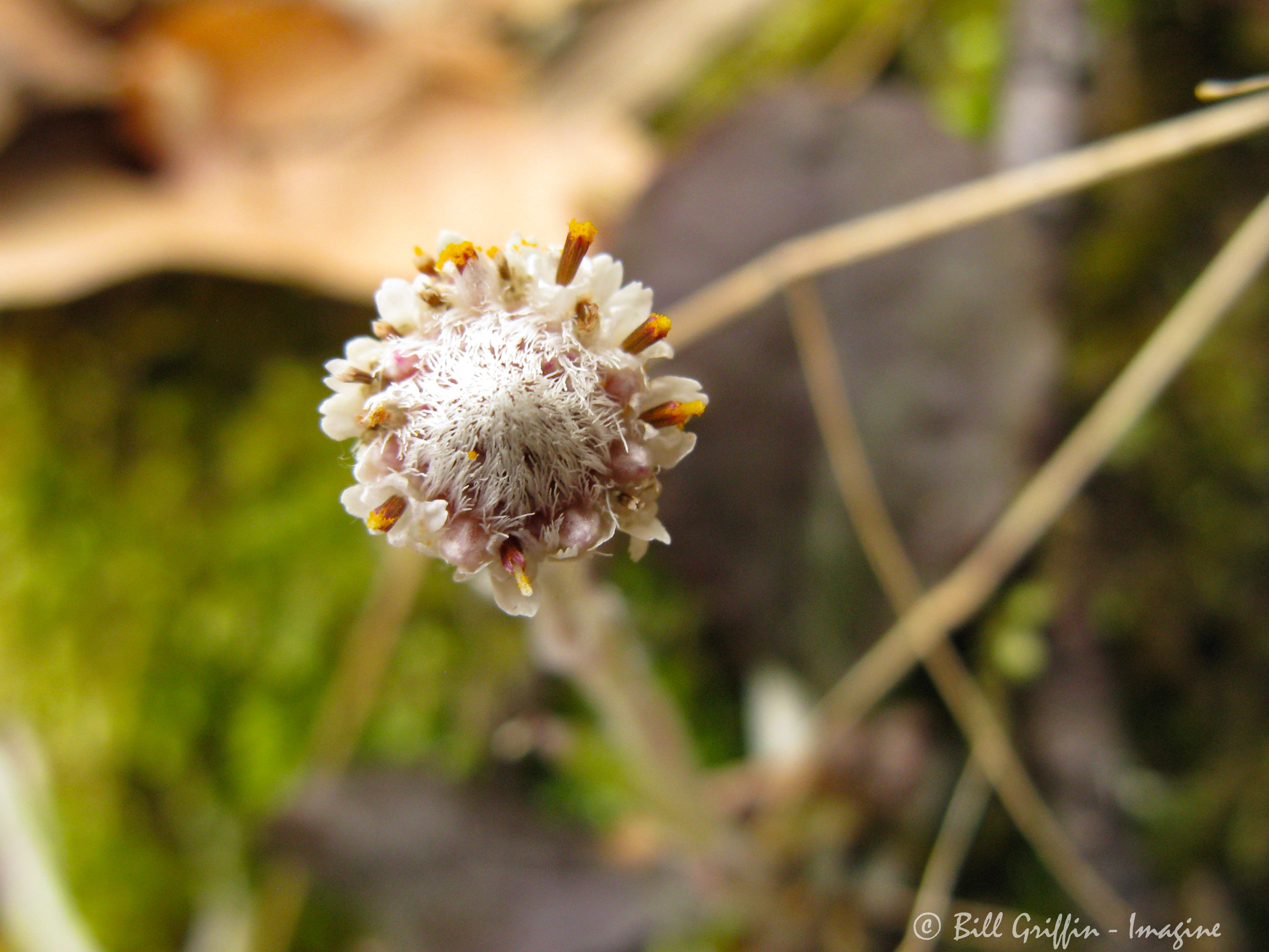
Solitary Pussytoes, Antennaria solitaria (Aster Family), flowers less than 10 mm in diameter

.     .     .     .     .     .     .

A Monument to Another Time

A winding rutted road
rambles through scattered rocks
to an abandoned homestead
that traces time backwards.

In the overgrown clearing
a hand laid stone chimney
pokes above winding vines
and gnarled tree limbs.

The fireplace stands as
tribute to an unknown mason
whose calloused hands
meticulously stacked the stones.

With the charred house gone
front porch music
no longer blesses the mountain
with notes and harmonies
that surf the Appalachian wind.

In spring wild flowers
scatter sun dappled beauty
among the crannies of this dream
of a simpler life, an abundant garden
and a small homestead taming nature.

Through winter the chimney
stands alone among
a palette of brown hues
that wait for spring shoots
to burst forth and repaint
the landscape.

Sam Love
Earth Resonance – Poems for a Viable Future, The Poetry Box, Portland, Oregon, © 2022

.     .     .     .     .     .     .


Bloodroot, Sanguinaria canadensis (Poppy family, Order Ranunculales), flower barely unfurling


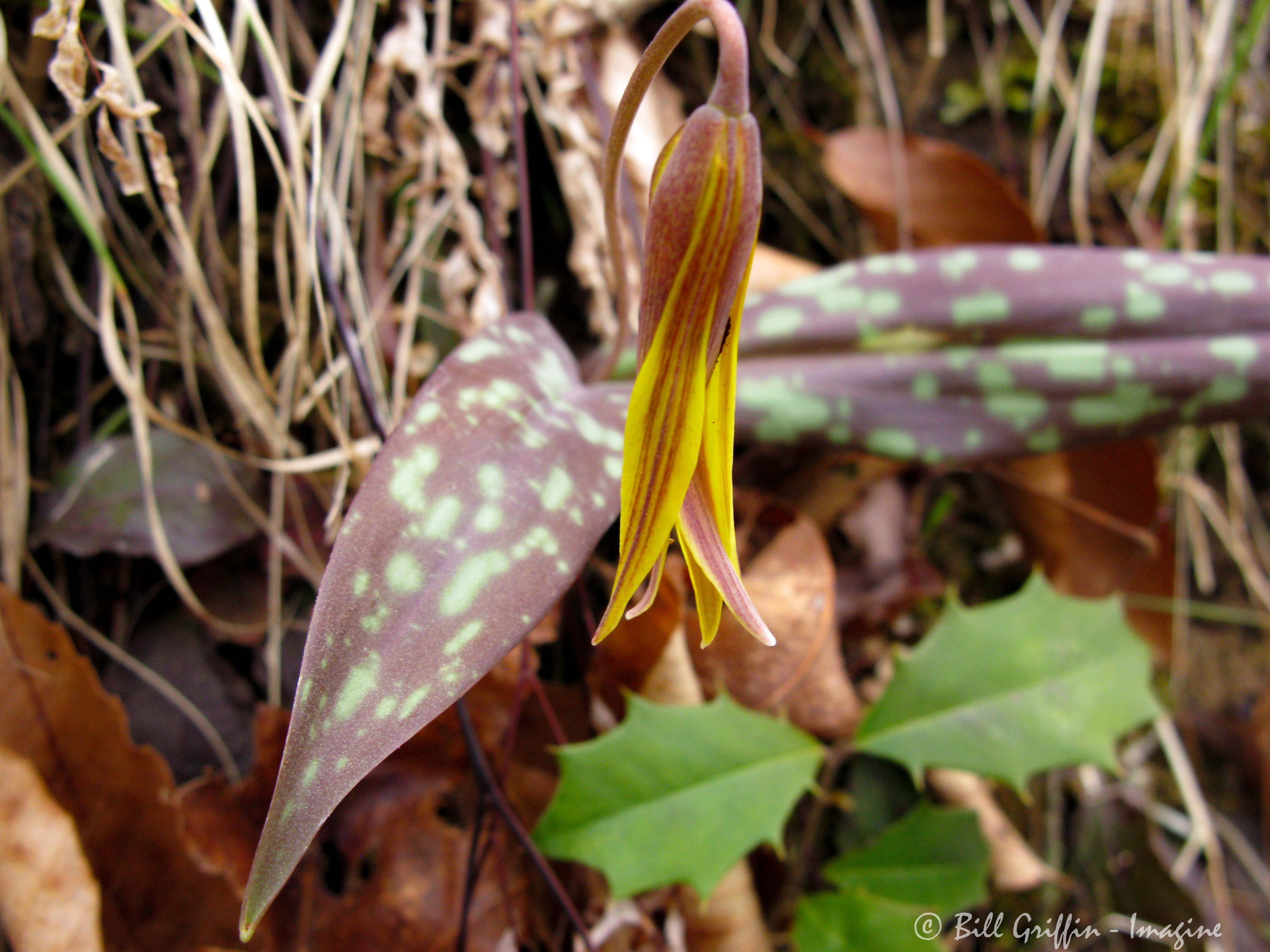
Yellow Trout Lily (Adder’s Tongue, Dogtooth Violet, Erythronium americanum (Lily family)


.     .     .     .     .     .     .

Thanks to Sam Love for alerting me to his new book of poetry about ecology and the environment: Earth Resonance – Poems for a Viable Future. Such an edgy relationship we humans have with all the other creatures in our biosphere. Mostly we ignore them except when they’re on our dinner plates. Any surprise that we have so much trouble getting along with things that creep and crawl and skitter and pounce (much less the ones that just stand there being green) when we can hardly get along with they guy whose yard sign doesn’t match ours?

And thanks to the Town of Elkin Recreation Department and the Elkin Valley Trails Association for all the great places to walk!

.     .     .     .     .     .     .

Visiting Khatyn
+++Peace Memorial in Minsk Region, Belarus

At sunset each step up the earthen berm
slowly reveals stone chimneys standing
as monuments to an unimagined darkness
that reduced hundreds of villages
to stone rubble and ashen timbers.

Across the field masonry memorializes
thousands of villagers burned alive
as Fascists sought revenge
for partisan guerilla attacks
launched from surrounding forests.

On hearths reaching to the horizon
urns rest filled with ashes and soil
scooped from the 628 flamed hamlets.
Each now lovingly stands as
a spiritual reminder of war’s insanity.

Three solitary birch trees and an eternal flame
symbolize the one quarter of Belarusians killed
in the world war that targeted their villages.
On this site twenty-six bells toll every hour
to remember the homes that once stood here.

The wind that whipped the flames
and charred the flesh, now cleanses the earth
leaving only spirits to haunt the memorial
and remind us of the horrors of war.

Sam Love

.     .     .     .     .     .     .


Virginia Pennywort, Obolaria virginica (Gentian family), flowers just about to open


.     .     .     .     .     .     .

Turtle Earth

In the Lenape creation story—Nanapush asks,
“Who will let me put cedar branches on top of you
so that all the animals can live on you?”
And the turtle says, “You can put them on me
and I’ll float on the water.”

In a vision the Native American holy man
sees the animals bringing earth
from under the water to make land
on the back of the turtle
to create a verdant Eden
where plants and animals flourish.

In another dream the Indian shaman
sleeps a long sleep and
sees a barren turtle
with writhing serpents
thrashing rattlers through portals
in its armor-plated shell.

This hollow eerie sound
resonates with a dry rattle
of primordial notes memorializing
the emerging death of nature.

Sam Love

Virginia Heartleaf, Hexastylis virginica, tiny brown jugs are the flowers just emerging

.     .     .     .     .     .     .


IMG_1948

Read Full Post »