Feeds:
Posts
Comments

Posts Tagged ‘NCPS’

[with poems by Kim O’Connor, AE Hines, Cheryl Wilder, Yvette Murray]

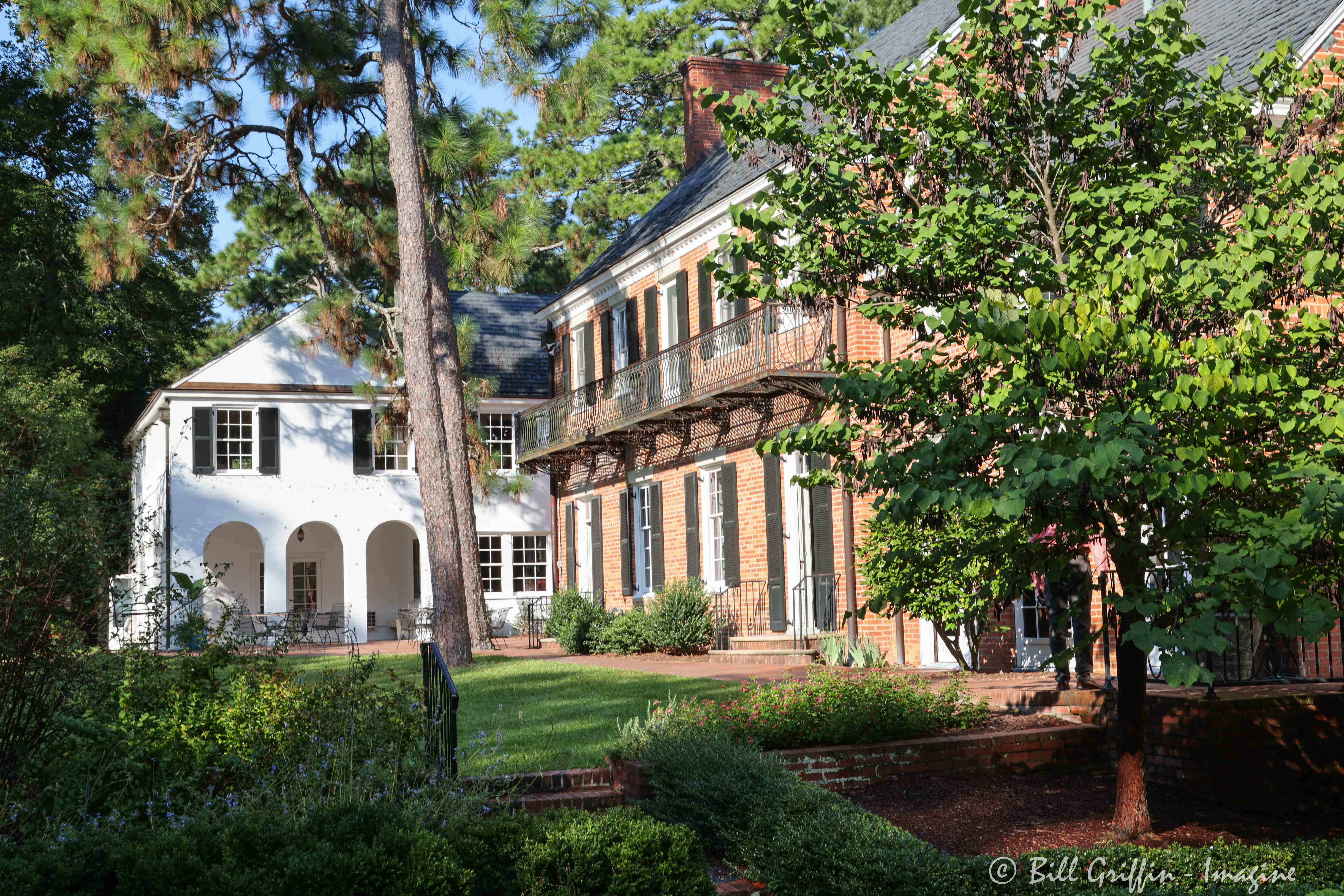
The North Carolina Poetry Society was organized in 1932 at the Charlotte home of Edna Wilcox Talley. The six members present elected Zoe Kincaid Brockman, well known poet and women’s editor of the Gastonia Gazette, as the organization’s first president. Could those six writers have imagined that ninety years later their idealistic endeavor would be thriving, with a membership of over 500 and sometimes more than a hundred persons from all across the state attending meetings? That through the decades the North Carolina Poetry Society would be the forerunner of additional writers’ organizations such as the Poetry Council of North Carolina, NC Writer’s Network, and NC Writer’s Conference, not to mention numerous local and regional groups in NC towns and counties? That poetry would be happening in schools with Poetry Out Loud, in shop windows and on buses through Poetry in Plain Sight, in countless books and journals published in North Carolina every year?

Zoe Brockman, Edna Talley, and friends knew the truth long before Doris Betts coined the phrase: North Carolina is the “writingest state.” Perhaps they wouldn’t have expressed it so eloquently but they would have agreed with Ed Southern, NC Writers’ Network executive director, that “one cannot spit, piss, or throw a rock in the Old North State without hitting a writer.” I like to believe those women of an earlier time would have been pleased but unsurprised at the many poets inducted into the NC Literary Hall of Fame after its inauguration by Sam Ragan at Weymouth Center in 1996; they especially would have applauded when all the inductees in 2014 were poets – Shelby Stephenson, Betty Adcock, Ron Bayes, Jaki Shelton Green. The Charlotte Six would no doubt have volunteered to serve as mentors in the Gilbert-Chappell Distinguished Poet Series, helped set up tables at the Sam Ragan Poetry Festival, and host open mic on Zoom during the pandemic. We who participate in the North Carolina Poetry Society of 2022 benefit from their high ideals, keen vision, and energy – we uphold a worthy tradition, and we have embraced the creativity, inclusion, and diversity that now make this tradition our own.

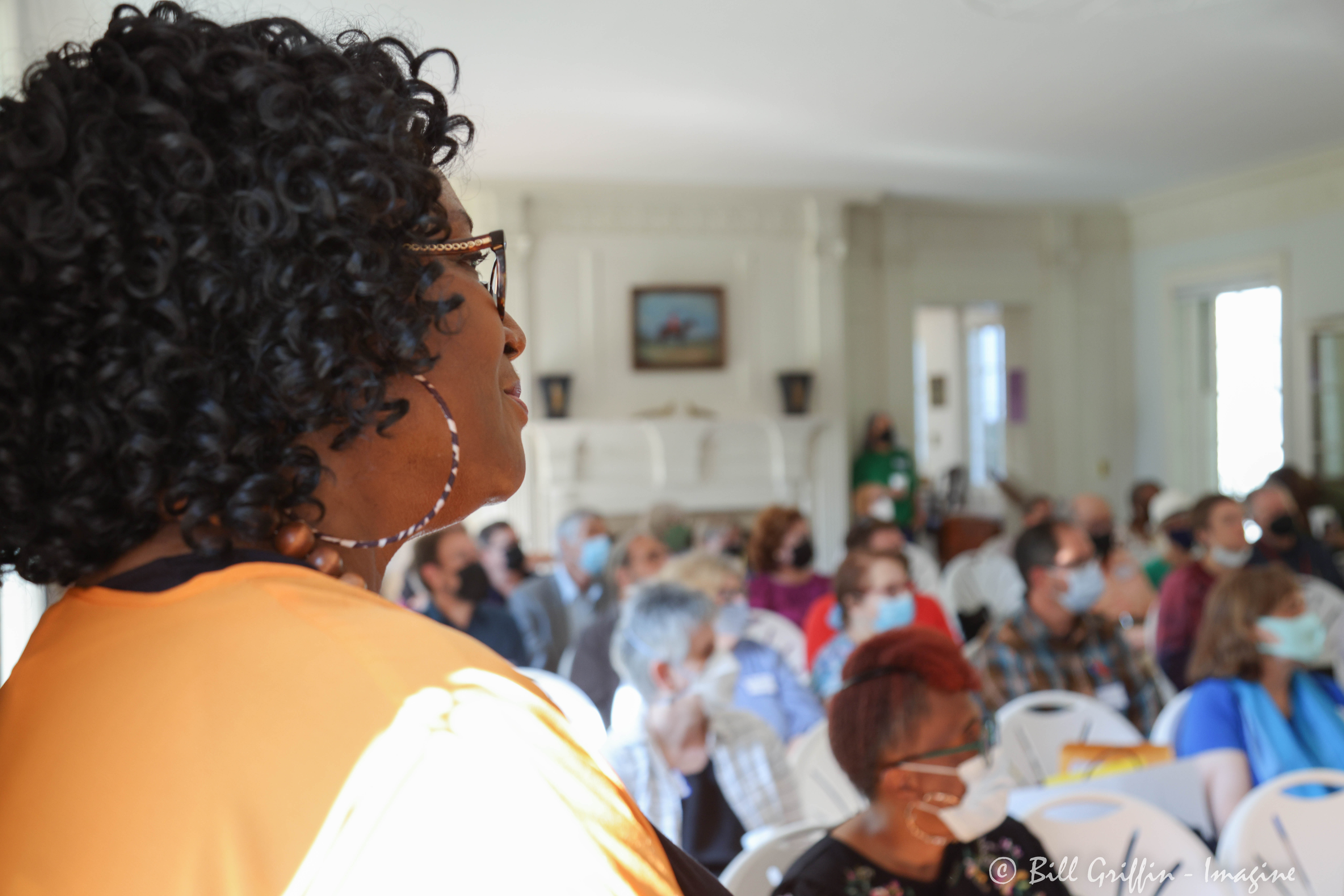
NCPS gathered to celebrate its 90th anniversary on September 17 at Weymouth Center for the Arts & Humanities, Southern Pines, NC – the first meeting in person in two and a half years. We look back and we look forward. We pay tribute to those who have taught and inspired us, and we open ourselves to the newest voices among us. We listen to the words of poets who dedicated their lives to building the power of literature in North and South Carolina: Joseph Bathanti reading Kathryn Stipling Byer, Shelby Stephenson reading Marty Silverthorne, David Radavich reading Susan Laughter Meyers. And we listen to the words of today’s poets reading the poems of now.
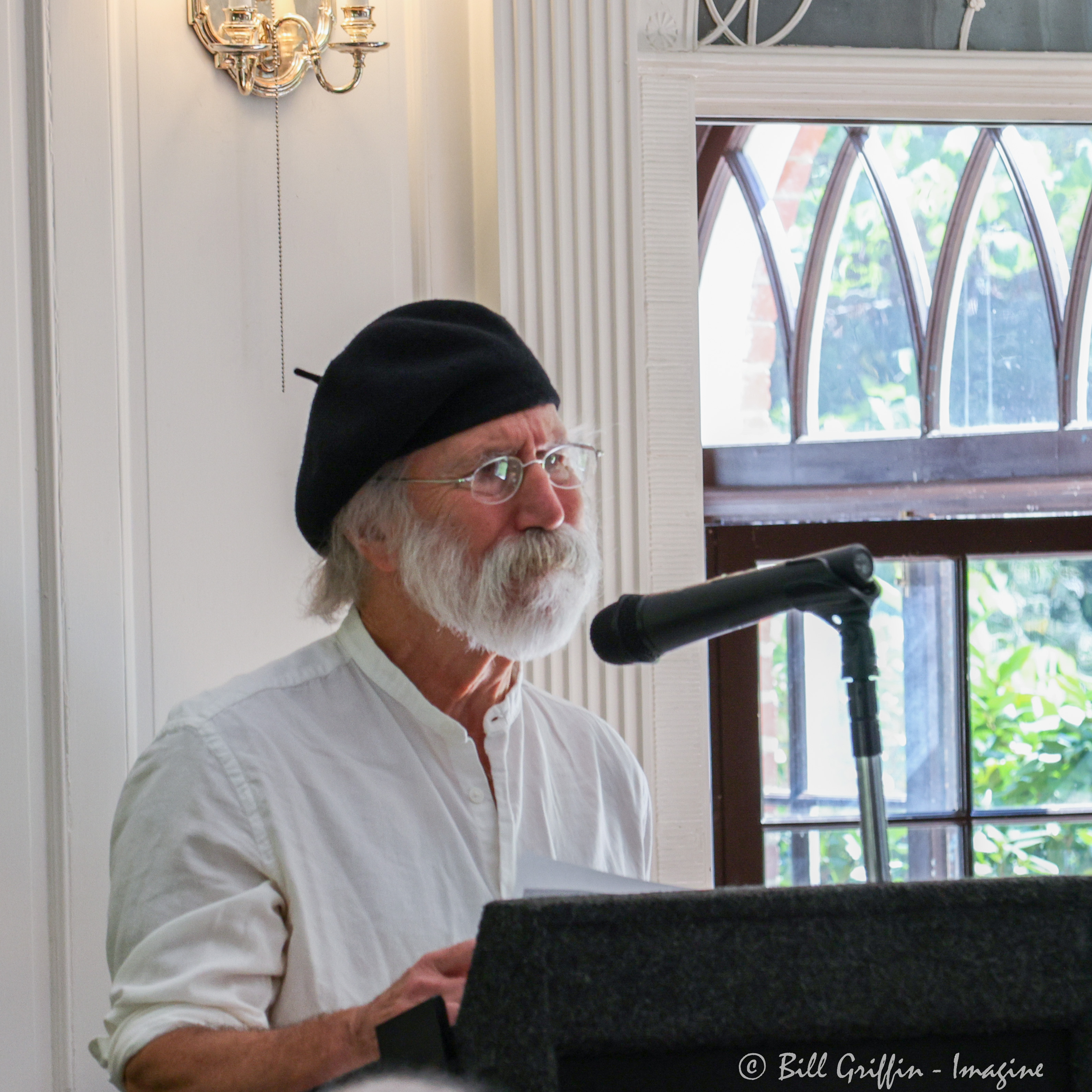
The Brockman-Campbell Book Award is the most prestigious honor bestowed by NCPS, awarded annually for the best book of poetry published by a North Carolina poet in the preceding year. Past winners have included Fred Chappell, AR Ammons, Betty Adcock, and Robert Morgan, among many others. The 2022 winner is Kimberly O’Connor for her book White Lung. Finalists are Anything That Happens by Cheryl Wilder and Any Dumb Animal by AE Hines.

❦ ❦ ❦

The History of My Silence
Hendersonville, North Carolina, 1961

white people sit in the front my great-grandmother
says my mother is angry
she wants to sit in the back

my mother is six years old
her first time on a bus
she wants to sit in the back

why? she stamps her foot

my great-grandmother does not answer the rest of the world
the boycotts the marches the fire
hoses let loose on children burning
crosses any of it does not
exist for them

they sit in the front like good white
women I think that

their silence their
compliance
has flowed into me
a river I have to swim
even as the water turns to flame.

Kimberly O’Connor
from White Lung (Saturnalia Books, Ardmore PA, © 2021)
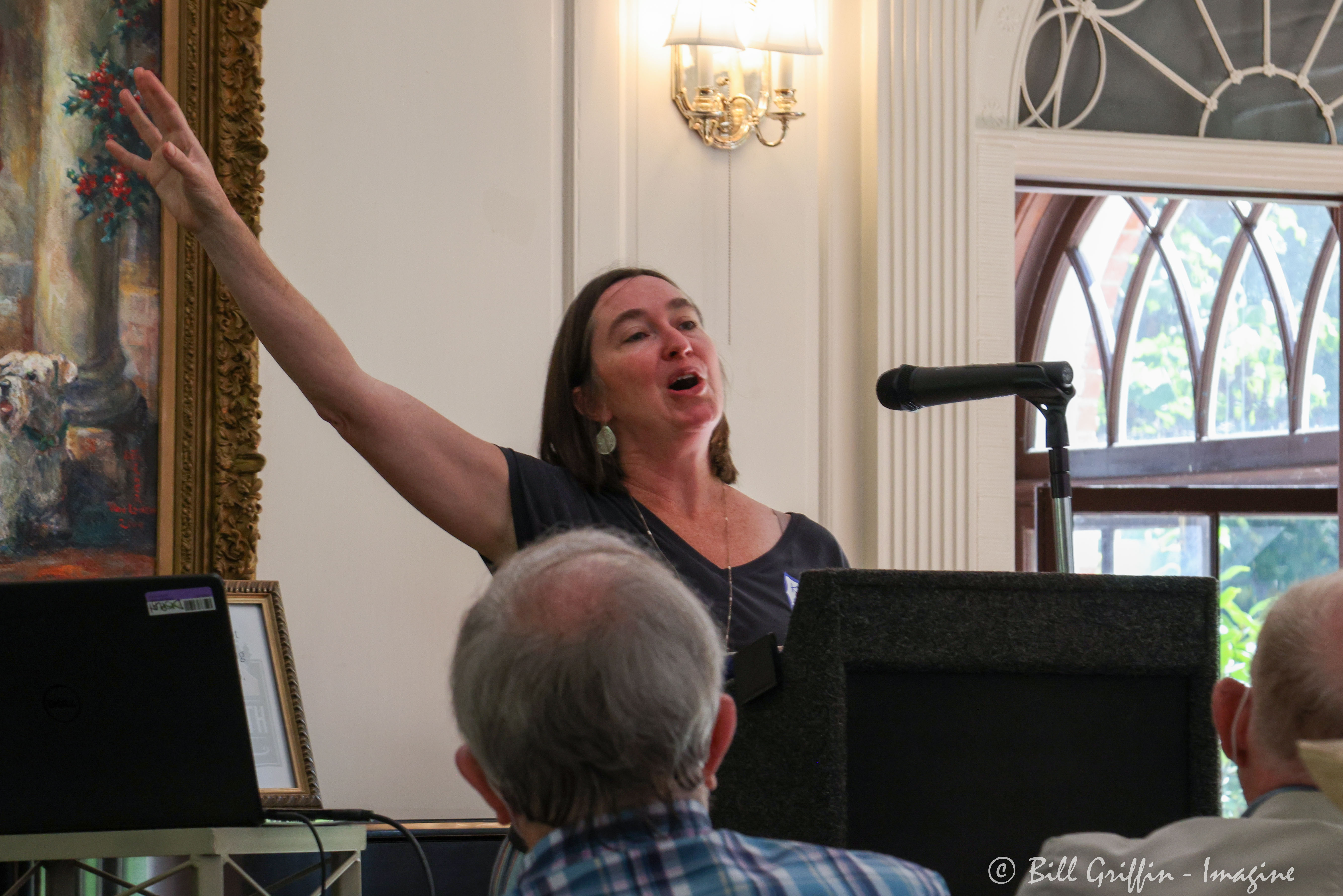
Kim is a North Carolina native who lives in Golden, Colorado. She received an MFA from the University of Maryland and has taught creative writing and literature in middle school, high school, and college classrooms in Colorado, Maryland, West virginia, and North Carolina.

❦ ❦ ❦

Naturalization

We’d been lucky. I’d made it out of Guatemala
alone with the baby, and the baby still alive.
I hadn’t let him crawl out a hotel window.
I hadn’t let him swallow a button from my sleeve.
Managed to feed him and change him
and carry him in taxis and embassies, through
markets and airports, beneath the electric barbwire
of US Immigration. In Houston, I watched
badged women and men berate
brown men in shackles while they sat
tethered to stiff chairs beside us. Most stared
at their shoes. I am embarrassed to admit
I did nothing. Said nothing. Didn’t catch a man’s
tired eye and offer him even a nod, my feeble Spanish.
Instead, I just called my little son’s name over
and over, and bounced him on my lap.
Then we were ushered back into the land
I’d promised him. Bound together by law,
and off to our next gate without a glance back
at the men on their way to whatever place
they no longer called home.

AE Hines
from Any Dumb Animal (Mainstreet Rag Publishing, Charlotte NC, © 2021)

Earl grew up in rural North Carolina and currently resides in Portland, Oregon where he is pursuing his MFA from Pacific University. He is winner of the Red Wheelbarrow Prize and a finalist for the Montreal International Poetry Prize.

❦ ❦ ❦

Bailed Out

The house stirs with my stirring.
I am the elephant, the devil’s minion.
Secure in my arms a woven afghan

blue and darker blue. I run
fingers through holes and open
like a wish bone but cannot pull

them apart. A wish not wished
establishes habit, like sleep-dancing
or tangling the vacuum cord around my wrist

to make love. I am two people now—
the before and the after; one I’ve already forgotten
the other I have not met. I hear voices whisper

what if—a crossroad so difficult to leave
I build a roadside bench. At some point
I will rise from this bed, speak though I only hear

his curdled breath, allow my first taste of bone
in the broth I can smell, but no one will notice
my stained hands, the bloody prints on the wall.

Cheryl Wilder
from Anything That Happens (A Tom Lombardo Poetry Selection, Press 53, Winston-Salem NC, © 2021.)

Cheryl lives near the Haw River in North Carolina, where she gives talks and workshops on art and writing, serves as president of the Burlington Writers Club, and owns a small web development company. She is co-founder and editor of Waterwheel Review.

❦ ❦ ❦

The Susan Laughter Meyers Fellowship in Poetry was established in 2017 in memory of former president of both the North Carolina and South Carolina Poetry Societies, Susan Meyers. The annual merit-based fellowship for one North Carolina or South Carolina poet requires submission of five poems with blind judging by a three-judge panel. It is co-sponsored by NCPS and the Weymouth Center for the Arts and Humanities, and includes a one-week residency at Weymouth Center plus an honorarium. The 2022 Fellowship recipient is Yvette R. Murray.

Poem In Which Words

don’t deserve this.
They have been around a long time; served us well.
Why then do we use them like poisoned blue darts?
Words have been so kind as to adapt.
They want to stay relevant too.
But we spit them into red plastic cups like
‘bacca juice and leave them on the side of the road.
They never harmed us,

Yet we turn them ugly side out,
Pit them against each other,
Use our fangs to inject venom.

The poor words can’t be unheard,
the ring after of their scent,
makes folk mad.

I hope they don’t cry,
I hope they don’t die by suicide,
I hope they don’t vanish within.

Then we will never again find the words.
They might like that though.
Scrubbed clean with different color hair
They can hold hands,
stroll the streets,
carry their shopping bags,
or look for a bistro
in peace.

Yvette R. Murray
from a gathering together literary journal, Spring 2021

Yvette is a Gullah poet from Charleston, SC. She writes because she has to. The words bump around in her head and give her headaches. Just kidding! For Yvette, Poetry is the most beautiful event space on the planet.

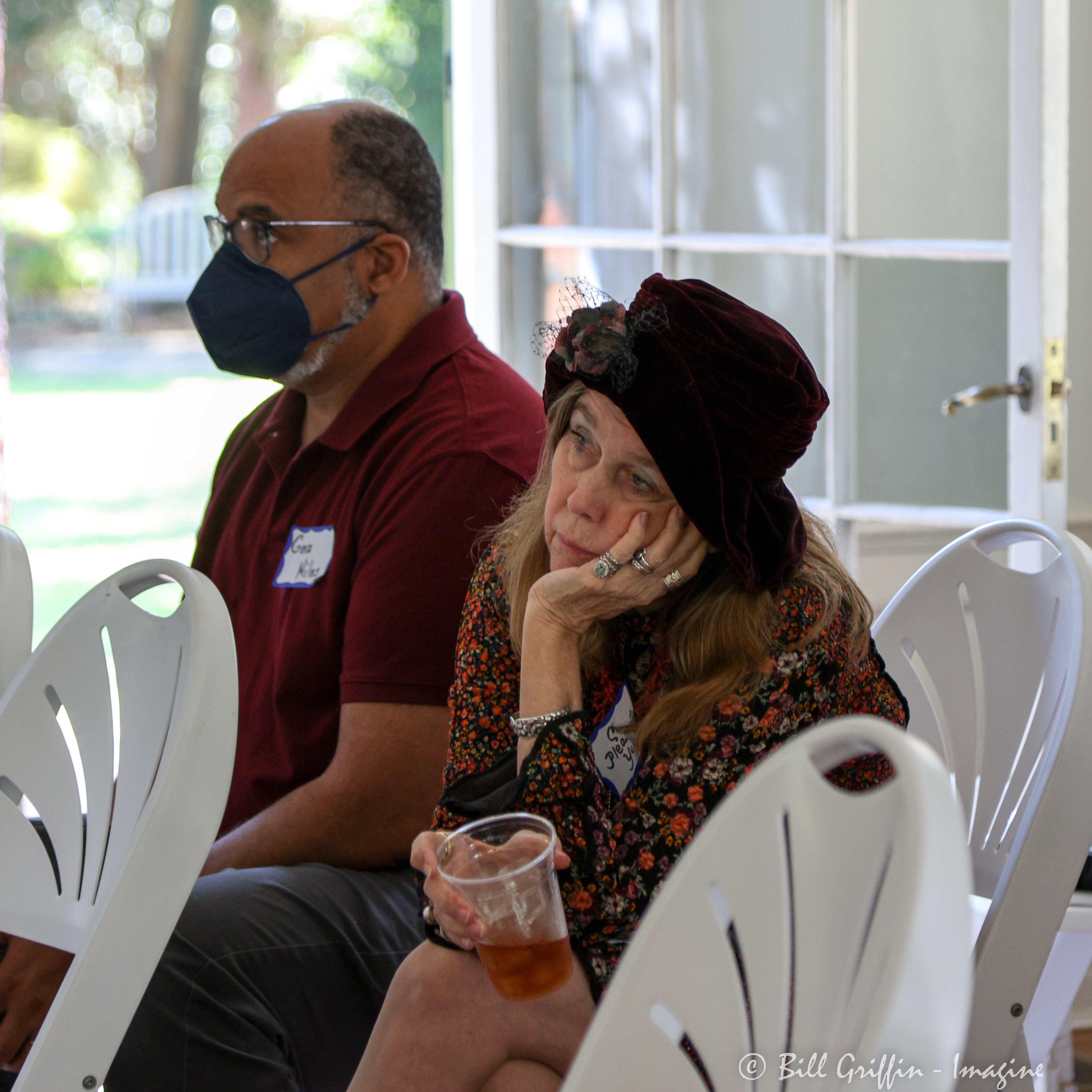
THANK YOU to so many who made this North Carolina Poetry Society 90th Anniversary gathering not only possible but truly worthy of the banner, Infusing Ceremony with Celebration: Poetry with Light, Soul, and Sound: Lynda Rush-Myers, for a year of planning and countless hours of preparation and presentation; Celestine Davis, ever-present ever-encouraging ever keeping the wheels on the bus; Regina Garcia, heart and soul and thrilling Tribute introductions, and Romeo Garcia making sure we all got lunch; the entire NCPS Board of Directors, setting up, hanging signs, welcoming and greeting, picking up the trash; and special thanks to the staff of Weymouth Center and Executive Director Katie Wyatt, we/you couldn’t do it without you/us.

NEXT WEEK: NCPS 90th Anniversary celebrations continue with the Lena Shull Manuscript Prize: poems by winner Ana Pugatch, finalists David Poston and Maureen Sherbondy, and workshop presenter Joan Leotta

❦ ❦ ❦

Portions adapted from The North Carolina Poetry Society: Part 5 – 2012-2022, Ninety Years of Creativity, Challenge, and Change; compiled and composed by Bill Griffin with special collaborator David Radavich; © 2022 The North Carolina Poetry Society.

Why We Are “The Writingest State”; Southern, Ed. North Carolina Literary Review; Greenville NC, Nr. 25 (2016): 92-99.
 

Read Full Post »

[with poems by Augusta Wray]

1932, Charlotte, North Carolina – the Great Depression has all but silenced the constant rumble of railcars from Atlanta to D.C. through this hub of the South. Most of the cotton mills are shuttered but Ben Gossett, president of Chadwick-Hoskins, has an idea. He asks President Herbert Hoover for help. Mill workers will weave cloth from 50,000 bales of cotton sitting in idled factories and sew it into clothing for the needy. Slowly the Queen City will again stir to life.

That same year, 1932, The Charlotte Symphony Orchestra was founded. More songs were recorded in Charlotte than in Nashville (and just 4 years later Bill Monroe would make his first recording in a closed Charlotte warehouse). Seeking a different kind of music, six poets gathered that spring in the home of Edna Wilcox Talley to begin a venture dedicated to expanding the appreciation of poetry in their state. The North Carolina Poetry Society would begin to admit members whose skills “measured up.” Over the next few years they would hold monthly workshops and an annual banquet, with a prominent writer as speaker, begin publication of a regional literary journal, and slowly expand their reach from Charlotte to the entirety of the state and beyond.

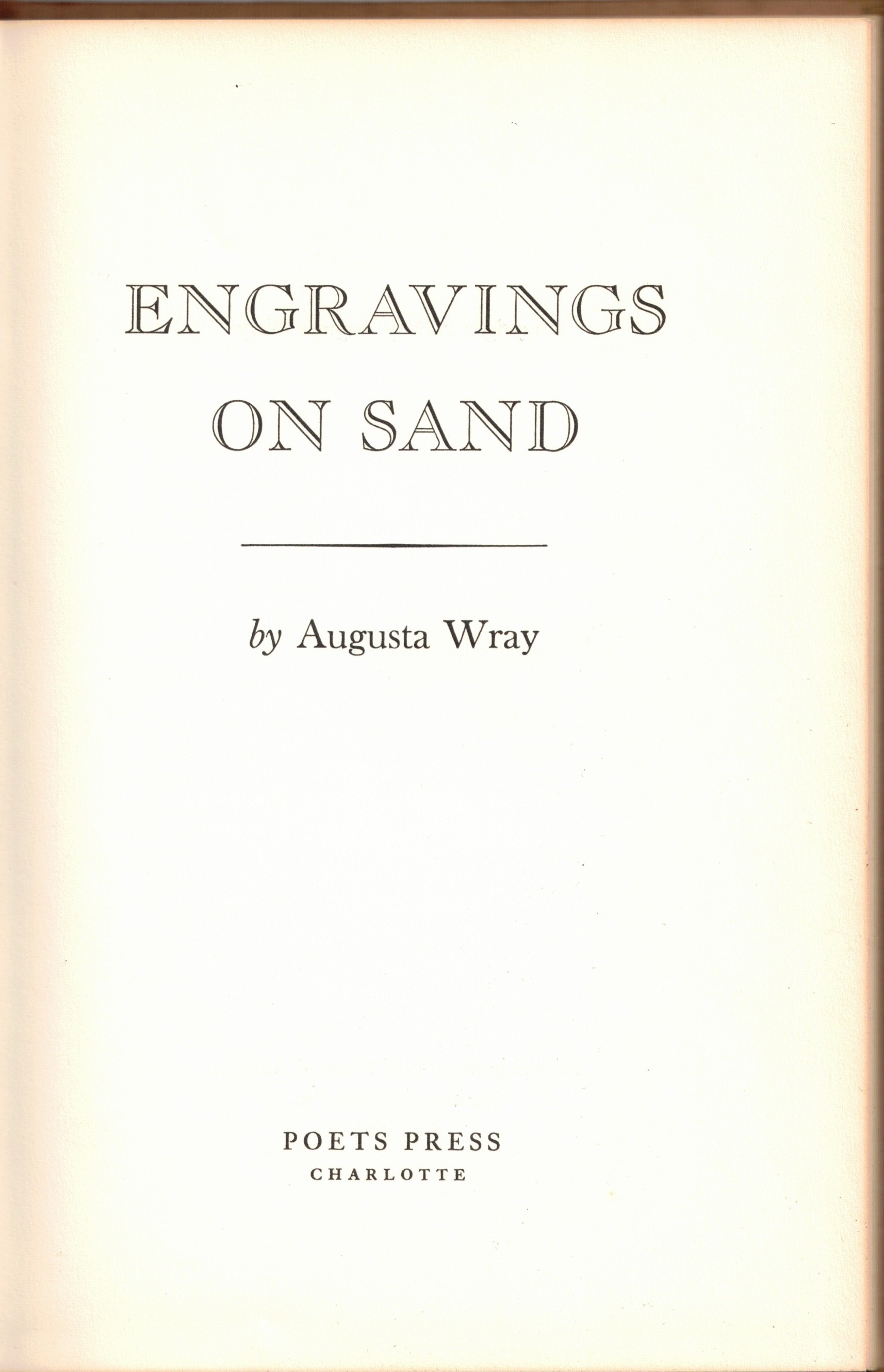
One of these Charter Members was August Wray. She had lived in Charlotte since her marriage in 1902. She attended every meeting of the NCPS through the 1950’s. Her poems would appear in The North Carolina Poetry Review, Journal of American Poetry, and many other publications, especially the poetry column of The Charlotte Observer, edited by Andrew Hewitt. She won many poetry honors and prizes in the 1930’s and 1940’s. And in 1959 she would publish a full length collection, Engravings on Sand, edited by Dorothy Edwards Summerrow.

.     .    .     .     .     .     .

Trees at Night

Ink spots upon a midnight sky – fantastic,
+++ sinister and dark –
At night, trees take on fearsome shapes
+++ with no detail of leaf or bark
To add to grace of swaying limb where
+++ branches curve and intertwine,
No carven foliage of jade – all monotone
+++ in black design,

Carbon pictures, weird and ghostly, of night
+++ Dragons crouched to spring,
Warily silent and foreboding, menacing,
+++ like a wounded thing –
Smoky masses, deeply shadowed, with outlines blurred
+++ that mystify –
Trees clutch the heart in night’s dark silence
+++ silhouetted against the sky.

Augusta Wray
+++ from Engravings on Sand, Poets Press, Charlotte NC, © 1959

.     .    .     .     .     .     .


Last week I received Engravings on Sand in the mail. Bibliophile Carmela Dodd discovered it at a flea market and upon reading its inscription by Augusta Wray to “Mrs. Charles Evans,” Carmela felt that the book deserved a home with the North Carolina Poetry Society. Thank you, Carmela! What an amazing artifact and memorial during the Society’s 90th anniversary year.

Dorothy Edwards Summerrow, who edited the collection, writes this to begin her foreward: When, at Augusta Wray’s request, I was given the pleasure of compiling and editing “Engravings on Sand,” there was turned over to me a large suitcase literally bulging with poetry manuscript. Dorothy describes excitement but also dismay at selecting the best work of one of North Carolina’s finest poets . . . because I must of necessity select for public inspection, only a small fraction of the prodigious output of her private heart.

In 1959 Augusta Wray was 83 years old. She had been widowed four years earlier. She and her husband had no children nor other close family; she told Dorothy, “My poems are my children.” Dorothy describes the treasure before her: When I opened the suitcase entrusted to me, the sparkle of the poems made the dark, rainy afternoon brilliant with the fire of many gems.

.     .    .     .     .     .     .

Release

In the dark and tranquil stillness of the night
When quietude has simulated peace,
When joy is born without the aid of light
And sorrows softly fade away and cease,
When weary eyes are drifting into sleep
That carries them afar from day’s dull care,
When dreams appear invitingly to seep
Through all perplexities and leave them bare –
Then does the spirit take command and things
Become unreal and float away like foam;
The soul is loosed and on unweary wings
takes leave of what was once its mortal home.
++ The soul and body separate, go free,
++ When sleep, or death, gives them their liberty.

Augusta Wray
+++ from Engravings on Sand

.     .    .     .     .     .     .

Nocturne in Silver

Silver shadows in somber silence
Wrap folds around the tranquil night,
Silver rain from a silver moon
Pours its radiance through silver light.

Sleeping leaves from moon-drenched branches
Drip silver pendants edged with pearl,
Flowers with their petals closing
Gleam with silver as the furl.

Cobwebs, silver-strewn with dewdrops,
Chiming tone when brushed by moth wings,
Are silken harps, tht quivering, make
Plaintive music from silver strings.

Augusta Wray
+++ from Engravings on Sand

.     .    .     .     .     .     .

The seasons . . . love . . . death . . . these are the themes of most of Augusta Wray’s collected poems. She is steeped in Carolina culture and climes. In this final poem I’ve chosen, though, I hear an understated voice of longing and regret. Perhaps she refers here to her childlessness, but perhaps she is opening herself, and her readers, to discovering beauty in the reality that is her life – who cares what it may have seemed to some to lack?

Flowering Plum

In loveliness she stands,
Blonde beauty rare,
With white and fragile hands
Folded in prayer.

Of bridal purity,
A perfumed veil
Hides with security
A body frail.

The season waits for her,
She blooms each year
When winds softly murmur:
“Spring is now here.”

Feathered choristers sing
Blithely and loud,
Sheltered beneath the wing
Of petaled cloud..

Lonely she stand apart,
No fruit she bears.
Such beauty serves the heart.
Barren? . . . Who cares?

Augusta Wray
+++ from Engravings on Sand

.     .    .     .     .     .     .

Dorothy Edwards Summerrow was a renowned Carolina poet herself, winner in 1957 of the Roanoke-Chowan Award for Poetry. She also noted in the foreward: In Silver Echoes, the poetry anthology published in the spring of 1959 by the North Carolina Federation and edited and compiled by this editor, more of [Augusta Wray’s] poetry is included that that of any other writer in the state.

.     .    .     .     .     .     .

History of the North Carolina Poetry Society

Charlotte / Mecklenburg historical timeline

Roanoke-Chowan Award for Poetry

2015-06-15Doughton Park Tree

Read Full Post »

photo by Saul Griffin

[with 3 poems by Becky Gould Gibson]

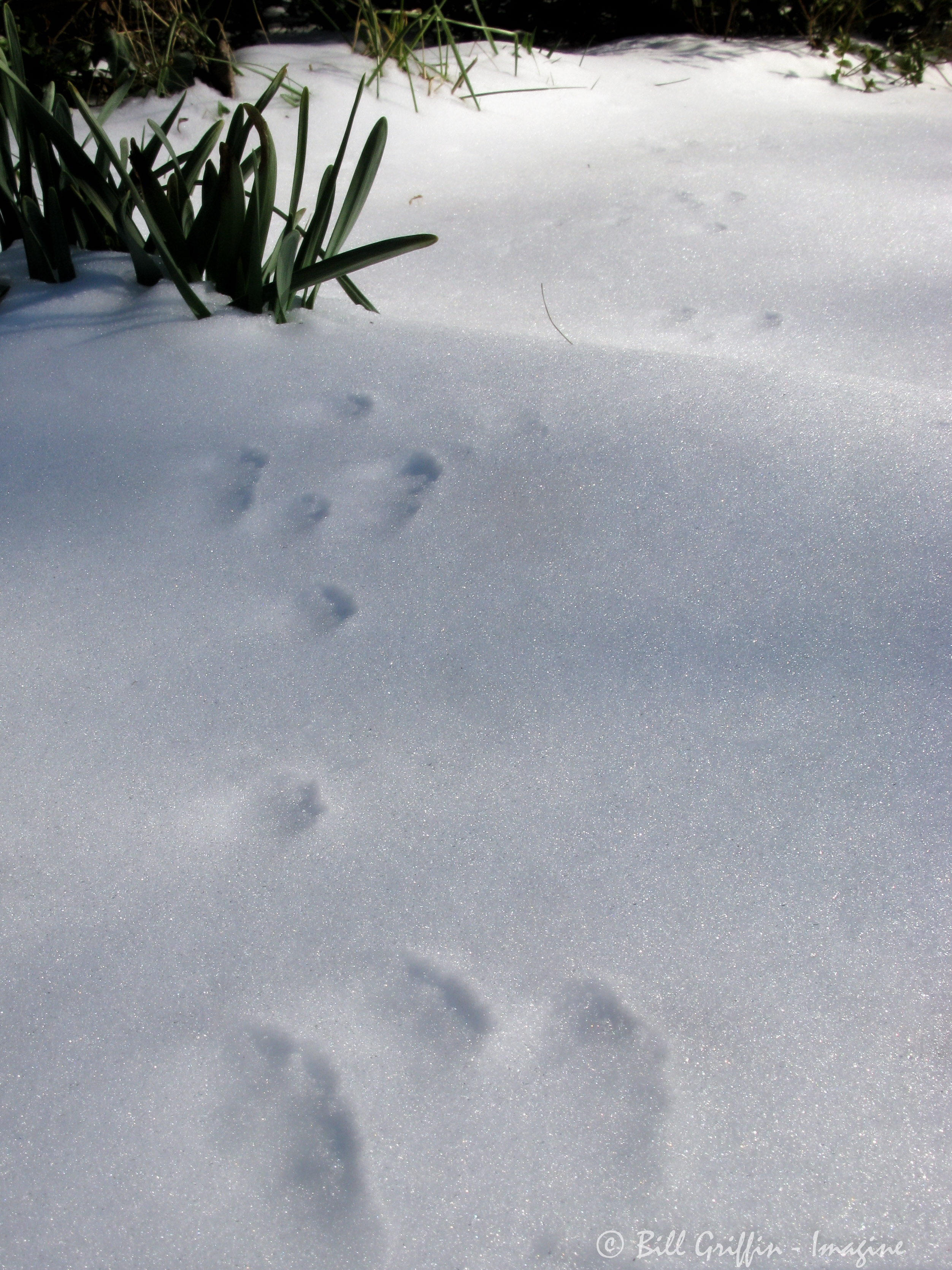
Amelia’s Papa Jimmy brought the bunnies to playschool yesterday. Four of them had fallen from a nest destroyed as he cleared a field two weeks ago. No mother in sight.

When we heard he’d bought bunny milk at Tractor Supply and was feeding them four drops every two hours we first thought, Is he raising them for the dogs? Not to eat, to teach. He trains young beagles to hunt; maybe they need to learn the smell of rabbits?

But no, not at all, it’s just that Jimmy can’t leave helpless young to die. Tractor Supply will mix up formula for any small critter you may have need of. He used a dropper until they learned to suck from a nipple. Two weeks later they’re hopping, eating tasty greens.

Yesterday each four- and five-year old got to hear the bunnies’ story, touch their soft ears and heads. Today Jimmy will release them at the edge of the woods, restored to bunny-ness, preserved for no other purpose than themselves.

.     .     .     .     .     .     .

Stand of Birches

The woods are wet this morning – rain yesterday
or the day before, maybe – such a sense of quiet,
all the damp peace of it, mostly trees to be with,
birches especially, minimalists in chic black and white,
raw silk with horizontal markings like wounds
slashed across white paper, dashes, staples, lines
of ghostly scansion, every beat, every syllable
of wood and glade accented, no scales or hierarchies
scored in their bark, rather universal emphasis,
as if everything mattered – this tiny white-headed
flower, this ant on some errand, even the mosquito
buzzing my ankles, these low-growing grasses,
branch with its bark pulled back, underbelly softening,
chartreuse mosses – though brief, briefly important.

Becky Gould Gibson

photo by Saul Griffin

.     .     .     .     .     .     .

These poems by Becky Gould Gibson are from her book Heading Home, the winner of the inaugural Lena Shull Book Contest in 2013. The poetry is strongly rooted in family and place but also richly steeped in literary tradition and history. I keep coming back to Stand of Birches for its eloquent, even spiritual expression of the deepest premise of Ecology: not utilitarian, not exploitative, not derivative or charismatic or anthropocentric – each living thing in all its interconnectedness is of value in and for itself.

Yes, yes, OK, OK, even mosquitoes.

In 2012 the Poetry Council of North Carolina elected to dissolve its organization and merge its residual funds with the North Carolina Poetry Society. Since 1949 PCNC had promoted the craft of poetry in the state with its annual contests; now in collaboration with NCPS it established an endowment to sponsor the annual Lena Shull Book Contest for an unpublished full length manuscript by a North Carolina writer, named for founder and first president of PCNC. Becky Gould Gibson was the first Lena Shull winner.

.     .     .     .     .     .     .

Scuppernongs
+++ Immortal life will be given . . .
+++ The Lord of harvest gathers us, / Sheaves of the dead –
++++++++++++++++++++++ for Bill

When death lifts its edge a little,
as in the first movement of Mahler’s C minor symphony,
you wonder will you be ready.
We finish a bowl of scuppernongs from the market,
wild bronze from childhood,
delighting in the bite, thick skin between our teeth,
touch tongue-tip to tongue-tip.
You taught my tongue to talk back.
I recall all those summers,
you in another county, nearly a decade before we would meet.

Now, come with me.
We’re together, then. It’s a languid afternoon in late August.
I’m eight. You’re ten.
As for death, I still think I can talk my way out of it.
Follow me across the un-mowed yard,
weeds tickling our legs,
to the scuppernong bush at the edge of Mr. Marcus’s field.
For you, death is no fiction.
At six, made to duck under your desk at school,
wear a dog tag, so someone could identify your body.
No bucket. We stuff ourselves madly.
Know what happens if you swallow a seed? We laugh.

No, love. It is not my own death I worry about, but yours –
will I ever be ready for it?
To be alone as I was that distant August,
memory plucking the fruit of you, scuppernong ripe in my mouth.

Becky Gould Gibson

.     .     .     .     .     .     .

Lines to Yeats on the Anniversary of His Death
++++ January 28, 1939
++++ for Alice

To a soul just fledged, still damp, in a nest
Of paper, flimsy bits of Plato, Paul,
Shelley, Wordsworth, Tennyson, all the rest
Who believed (or even half-believed) soul
Could soar above the earth (earth a mere cast
Of heaven), spirit somehow separable
From flesh, you came, William (my dear Willie)
With your poems of pure song, heart’s own music.

No wonder it entered my veins, my pulse
Learned to tick your rhythms. No matter you
Warned not to pleasure soul at the expense
Of body, who could even listen to
Such warning with such a beat, sound and sense
So perfectly married, as if to show
A manmade thing could become immortal,
Gold bird on a gold limb sing out its soul.

You made me more impatient than ever
To conceive such a poem of my own.
Your artless art merely fed the fever,
Yet every line fell stillborn from my pen.
Blood had become a colorless liquor
Nourished on symbols. Life had to happen,
And it did. Not a woman but a child,
Rather a child’s birth. It was a girl-child

Split me apart. No way to staunch the flood
(Nothing’s sole or whole that has not been rent)
Of blunt necessity. You had your Maud.
I had my Alice. She caught me up, lent
Me her knowledge. She, no man or bird-god,
Made loins shudder, roused me from those years spent
In abstraction, taught me bone, bowel, breath,
Body’s mortal work. She taught me my death.

Becky Gould Gibson

three poems from Heading Home, Winner of the 2013 Lena Shull Book Contest, Main Street Rag Publishing Company, © 2014 Becky Gould Gibson

.     .     .     .     .     .     .

.     .     .     .     .     .     .

2016-05-08a Doughton Park Tree

Read Full Post »

« Newer Posts - Older Posts »