Feeds:
Posts
Comments

Posts Tagged ‘NC Poets’

Saturday morning readers share:
David Radavich and Richard Allen Taylor
 . 
Birthday
 . 
Every year a leaf falls,
one at a time, hands,
days full of raking, scattering
 . 
and I come to see
the bare tree
of us
against the sunlight
strewn in branches, shimmering
naked against all
 . 
those colors you give me
tumbling free
within a small space,
 . 
a time together
walking in woods
 . 
David Radavich
 . 
For a possible Saturday poem I have selected Birthday, which strikes me as a quintessentially autumn poem. It was first published in my book, By the Way: Poems over the Years (Buttonwood, 1998).
 . 
 . 
The picture shows me ensconced in a park in Champaign, Illinois when my hair was not yet silver. As for a curious factoid about me, I enjoy reading German philosophy (in German), especially Schopenhauer and Cassirer. Also, casting horoscopes. Go figure.
 . 
Additional poetry by David Radavich at Verse and Image:
[April every year? David always contributes to our special EARTH DAY posts.]
 . 
❀ ❀ ❀ ❀ ❀
 . 
Blessed Are
+++++ After “Ode on Inheritance” by Kate Partridge
 . 
Perhaps there is no inheritance worth having
+++++that does not include a narrative of water—
++++++++++ a river, a lake, an ocean
 . 
pounding on the beach below the open windows.
+++++My father bought a farm
++++++++++with a white house on a hill, a pond
 . 
at the bottom. My mother inherited. She later sold.
+++++All of it was (shall we say) liquidated.
++++++++++Gone, the tiny lake
 . 
fed by a stream tumbling over my father’s modest
+++++ambitions. Just as well. My brothers and I sought
++++++++++ neither the view nor the serenity.
 . 
We were reaching elsewhere, for something
+++++less pastoral, more hopeful,
++++++++++something more highway
 . 
than country road. But even a cave can elicit hope.
+++++The torch goes out, we keep thrusting our hands
++++++++++ forward, groping the walls,
 . 
feet following our blindness. As if a hole could lean
+++++against its sides. All it takes is the will
++++++++++ to swap adjectives.
 . 
Trade wet for slick. Choose briny over soaked.
+++++ Here we go again with that
++++++++++narrative of water. Snow, hail,
 . 
ice melting in your palm. Later, when the drought
+++++squeezes the pond dry, the spark catches
++++++++++ and fire climbs the hill,
 . 
everything promised burns. The difference between
+++++bold and meek becomes a matter of timing.
++++++++++Bold when we rush forward
 . 
to extinguish the blaze. Meek when the flames
+++++ force us back to a place
++++++++++where faces do not melt.
 . 
When rain comes, finally, we inherit the memory
+++++of blackened hills, even if no lawyers or signatures
++++++++++ attend. When grief follows, we console ourselves.
 . 
We say the trees bury their seeds under layers of ash.
We say the trees dream of resurrection.
 . 
Richard Allen Taylor
 . 
This poem first appeared in Sheila-Na-Gig Online, and received a Pushcart Prize nomination. It is now part of a book-length manuscript, Geography of One, that will be published next year if all goes according to plan. 
 . 
 . 
This is my habitat but not necessarily the only habitat or even where I spend most of my time. But I don’t have a picture of me typing at my desk. That would be my real habitat and that would be boring. 
 . 
Interesting tidbit: After retiring from my job as Regional Human Resources Manager of Hendrick Automotive Group in 2013, I earned an MFA in Creative Writing from Queens University of Charlotte in 2015. 
 . 
Additional poetry by Richard Allen Taylor at Verse and Image:
❀ ❀ ❀ ❀ ❀
 . 
 . 
Saturday Morning Submissions – Once a week on Saturday I feature one or two poems shared with me by readers. If you would like to consider having your poem appear, please see the GUIDELINES here.

Read Full Post »

[2 poems by Lucinda Trew]
if you wish to grow a garden, first seed
your soul with sadness
 . 
for it helps to have an ache, a molecule
of sorrow that will swell, release and drench
the patch of earth you claim
 . 
like a weather plane sowing stingy clouds
with silver beads of iodide, lush promise of rain
something withheld – a slip of rue, s spore
of woe to bury – a slender sprig of remembering
your shallow place in all of this
 . 
a cloister of green where secrets are safe
where worm and peat, centipede and muddy
trowel will carry melancholy to the seedling
graves you dig
 . 
for a garden is forgiving – a copse confessional
a place for penance – pulling weeds, snapping
roots, kneeling in dirt
 . 
and tending, gently tending, to fragile shoot
breaching bud, those in need of holding up
and the healing grace of fresh tilled ground.
 . 
 . 
when trees fall
 . 
from natural cause – nor’easter, drought
decrepitude – they lean in, one upon another
++++ a prayer of knotty hands
 . 
we pray, too, in other ways, holding one another
close in crook and crutch of branch, and nests
++++ for those in need of cradling
 . 
we unfist fingers, unwind clocks, hold one another
in a basketweave of leaf and twig and comforting
++++ like trees, we slant
 . 
against wind and time, hearts and boughs that break
from storm and thorn and toppled crowns
++++ we ease one another
 . 
to ground, to the resting place of forest floor
to beds of moss and tender mercies yielding to ash
++++ as we all fall down
 . 
Lucinda Trew
from What Falls to Ground, Charlotte Lit Press, Charlotte, NC; © 2025
++++
IMG_9468
 . 
♦   ♦   ♦   ♦   ♦
 . 
I love these poems for their compassion in the deep sense of that word, “suffering together.” In reading these lines I am able to pause and slant against the wind of my own doubt and daily struggles. Lucinda writes, “a poem is a bone / in the graveyard of remembering.” In memory I visit the bones of loss and pain but also the roots and seeds of what may again grow into joy. In the music of Lucinda’s words and phrases, the myth and earthy origins her poems suggest, the impermanence of all things resting the midst of rising sun and growing plant – in these I rediscover hope. Yes, we all fall to ground. Yes, we may ease each other as we fall.
 . 
 . 
Lucinda Trew lives and writes in the red clay piedmont of North Carolina, USA. What Falls to Ground is her debut collection and is available from Charlotte Center for the Literary Arts.
 . 
Additional poetry by Lucinda Trew at VERSE and IMAGE:
 . 
 . 
IMG_1948
 . 
 . 

Saturday’s Submission – Once a week on Saturday I feature one or two poems sent to me by readers. If you would like to consider having your poem appear, please see the GUIDELINES here:

About


Read Full Post »

[#Beginning of Shooting Data Section]<br /> Nikon CoolPix2500<br /> 0000/00/00 00:00:00<br /> JPEG (8-bit) Normal<br /> Image Size: 1600 x 1200<br /> Color<br /> ConverterLens: None<br /> Focal Length: 5.6mm<br /> Exposure Mode: Programmed Auto<br /> Metering Mode: Multi-Pattern<br /> 1/558.9 sec - f/4.5<br /> Exposure Comp.: 0 EV<br /> Sensitivity: Auto<br /> White Balance: Auto<br /> AF Mode: AF-S<br /> Tone Comp: Auto<br /> Flash Sync Mode: Front Curtain<br /> Electric Zoom Ratio: 1.00<br /> Saturation comp: 0<br /> Sharpening: Auto<br /> Noise Reduction: OFF<br /> [#End of Shooting Data Section]

 . 
[with 3 poems from Had I a Dove]
 . 
Grief for These Trees
 . 
Nearly half, we’re told, downed by wind,
wrenched from river-flooded ground.
 +++ Clogging streets, parks, schoolyards,
 . 
blocking our hiking trails. Our town is dank
as a worn graveyard, branches and brambles
 +++ strewn among marble stones.
 . 
 +++ So what to do with the haunt
of these crippled trees? My muse would say
go to the woods, hike the trail anyway.
 . 
And I will. But before lacing my boots,
let me honor what we’ve learned of nature,
 +++ how in mystery
 . 
trees speak to one another – give support
 +++ and shade, share water and sun.
And like old friends, mourn when one dies.
Let me rub my fingers into the wound
 +++ of this tulip poplars’s bark,
nod to the beetles and lichen who thrive.
 . 
Smell the sweet air of pine sap.
 +++ Scrunch my body
over broken bones of oaks and willows,
 . 
cling to the dead the way I’d cling
as a kid to our sugar maple
 +++ next to Daddy’s tomato patch.
 . 
Limbs holding me safe,
 +++ a flutter of breeze through leaves
always whispering my name.
 . 
Let me linger here in the trees I”ve known,
the ones now gone, the ones
 +++ still upright and grieving.
 . 
Barbara Conrad
from Had I a Dove: Appalachian Poets on the Helene Flood, edited by Hilda Downer. Redhawk Publications, Hickory NC; © 2025
 . 
❦ ❦ ❦
 . 
It was cold enough to frost last night but I hear music outside my bedroom window and raise the sash. A sparrow is calling, perched on a branch just a few feet from the house. He swivels his head west-south-east and at each turn chirps a metallic almost musical tink. He means business. He is not just any little brown bird – he’s a White-Throated Sparrow, migrated here from Canada to spend the winter. And his perch is not just any tree – it’s a native dogwood. It holds onto color, its coppery leaves, while the tuliptree and maple are already browning in the road. This tree holds onto life when so many of its kinfolk have been taken down by blight.
 . 
Tink, tink, tink. I am here. Brassy foliage and scarlet berries. I am here. We are here for each other.
 . 
Poets who survived hurricane Helene mourn their trees. The poems in Had I a Dove bear witness – trees uprooted, splintered, tumbled down mountainsides, tangled in rivers. Trees crushing houses and blocking roads, trees wiped from entire ridgelines, and with every fresh breeze our own reborn fear of trees falling. We being a species which can grasp large numbers, we try to calculate. How many trees destroyed by wind and flood? Millions? Dozens of millions? It becomes unimaginable. At the loss of even one tree, the heart suffers. That big hickory that shaded the garden. The righteous oak that lifted and held the kids’ tire swing. The dogwood where sparrows perched.
 . 
Hurricane Hugo roared through Charleston in 1989 and felled thousand-year old cypresses in the blackwater swamps, then stomped on up the Appalachian chain to leave behind downed trees all the way to Ohio. Near our home a hundred year old oak blocked Flat Rock Ridge trail where it winds from Basin Cove up to the Blue Ridge Parkway. An anonymous Park Service volunteer with a huge chain saw cleared the trail, and into the face of that massive stump he carved “Hugo 9-21-89.” I have paid homage every time I hike past, until a couple of years ago I had to stop and cast about to find the stump. Rot and lichen and a thick beard of moss had cloaked the inscription. Overhead, the canopy had closed as fellow trees shouldered their way in. In the midst of grief and loss, we hold onto life.
 . 
 . 
❦ ❦ ❦
 . 
I could not hear the trees fall
the morning that yowling she-wolf,
Helene stormed up from Florida,
sank blood-stained fangs into Appalachia,
her torrential mad-drool rain,
drowning wide river valleys,
and all those skinny little hollers.
 . 
From a kitchen window I watched
her lay into a neighboring ridge, her super-charged
breath knocking down magnificent oaks,
colossal hickories, and hundreds of tall pines
which dominoed one by one by one.
She left nothing standing in the upper hillside grove.
 . 
The next day, after that noisy bitch moved on,
I heard an immense tree fall somewhere
close by. There was a crack,
a ghostly groan, a swoosh of leaves,
then, as it met the ground, a tremendous bellow.
And I whispered a prayer for the passing.
 . 
Suzette Clark Bradshaw
from Had I a Dove: Appalachian Poets on the Helene Flood, edited by Hilda Downer. Redhawk Publications, Hickory NC; © 2025
 . 
❦ ❦ ❦
 . 
Barbara Conrad has lived in North Carolina all her life and in Asheville since COVID. She edits Waiting for Soup, an anthology created by her writing group with houseless folks.
Suzette Clark Bradshaw lives in western North Carolina, writes and sculpts, and is employed by her county to manage Helene recovery projects and FEMA grants.
Molly Bolton lives in Foscoe, North Carolina, and upholds the spiritual practice of collective liberation with weekly posts at enfleshed.com.
Had I a Dove: Appalachian Poets on the Helene Flood, an anthology collected and edited by Hilda Downer, includes a preface by Joseph Bathanti. More than 80 poets, voices as various and deep as those wild mountain ridges and hollers, share the night that hurricane Helene’s “thousand year” flooding and gales devastated the mountain counties of North and South Carolina, Georgia, and Tennessee. They share the days and weeks and now months that have come after, the scars and healing. Available from Redhawk Publications at Catawba Valley Community College Press in Hickory, NC.
 . 
 . 
❦ ❦ ❦
 . 
somehow bloodroot
 . 
For Western North Carolina & Gaza
 . 
still blooms, the same
spot as last year
at the crumbling edge
 . 
of the driveway
in the seam
of march and April
 . 
under the body
of a fallen elder oak
each flower coming up
 . 
wrapped around
its stem like a windless
white flag.
they say
among the rubble
there will be dancing –
 . 
beautiful people
in ancient lands
tending fires
 . 
while they are hunted
ghosts unsurprised
by the power of greed
 . 
to route bombs towards
children, a hurricane
to the mountains. my sister
 . 
had to come get me
through maze of
washed-out roads &
 . 
Here
I am, still alive
same spot as last year
 . 
bumming a cigarette outside
the todd community square dance
just to watch smoke rise
 . 
from the creaky porch
past the blown-open riverbank
to the cold white stars.
 . 
Molly Bolton
from Had I a Dove: Appalachian Poets on the Helene Flood, edited by Hilda Downer. Redhawk Publications, Hickory NC; © 2025
 . 
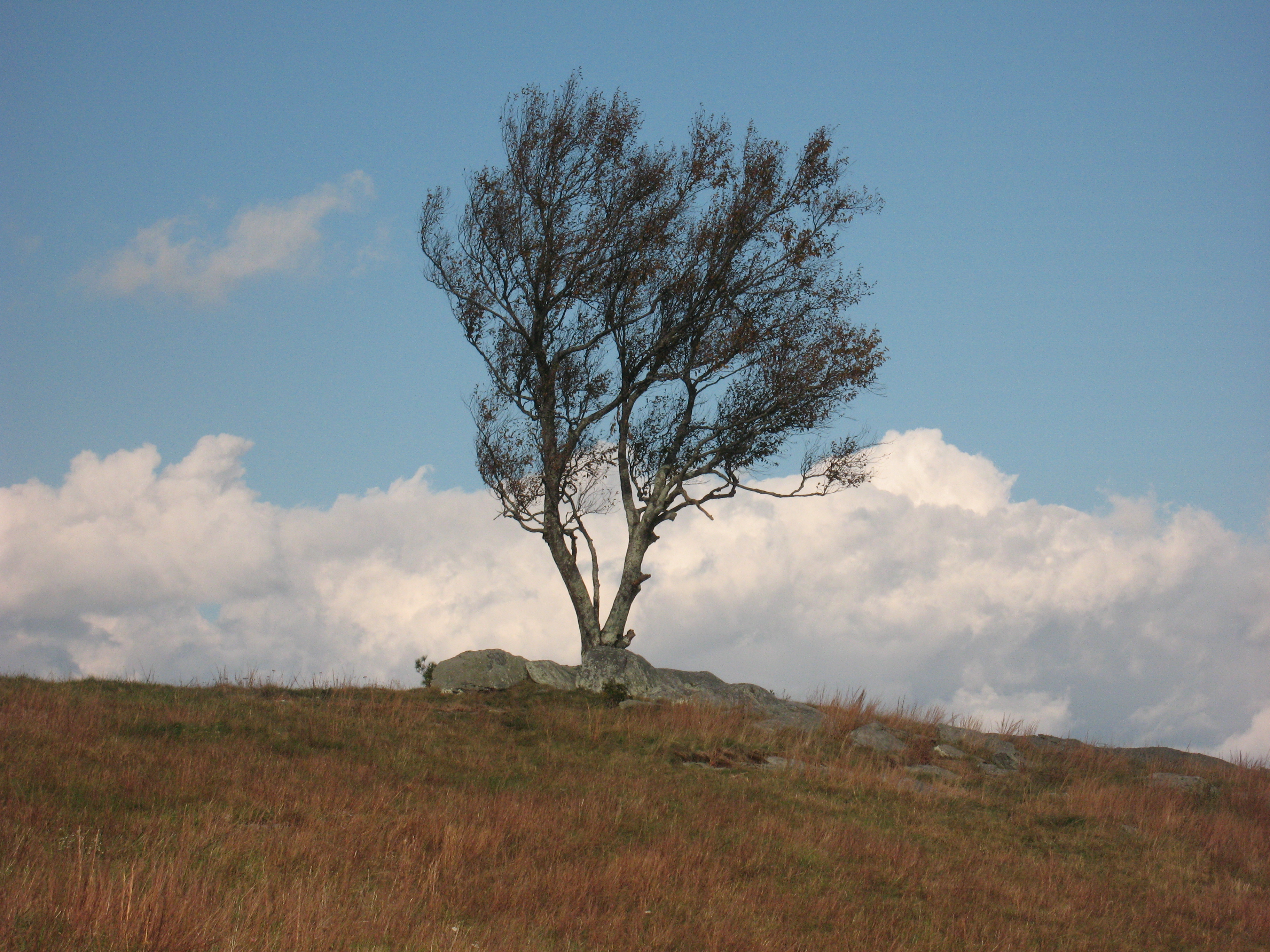
2016-05-08b Doughton Park Tree
 . 
❦ ❦ ❦
 . 
2015-06-15Doughton Park Tree
 . 

Read Full Post »

« Newer Posts - Older Posts »