Posts Tagged ‘NC Poets’
Why Sing – Scott Owens
Posted in poetry, tagged imagery, nature photography, NC Poets, poetry, Redhawk Publications, Scott Owens, Southern writing, The Song Is Why We Sing on March 27, 2026| Leave a Comment »
.
[ with 3 poems by Scott Owens ]
.
Now and Then
.
The mountains came down to Hickory today.
It happens now and then.
Clouds low, mist hanging between the trees,
a coolness that makes everything feel
less urgent, more contemplative.
I saw a boy on a hillside, sitting,
back leaning against a tree,
not minding the fine mist
against his skin at all.
I imagine he was writing.
I imagine it was a poem
about the mountains coming down to Hickory.
I imagine he was me.
It happens now and then.
.
Scott Owens
from The Song Is Why We Sing, Redhawk Publications, The Catawba Valley Community College Press; Hickory NC © 2026
.
❀ ❀ ❀
.
Existential Knot
.
I picked up a knot from the ground today,
not an important knot,
not of significant size,
not of any significance really,
at least not initially,
but then I realized if not for the knot
I likely would not have noticed it at all.
In fact, the knot would have just been
.
a string, not of any special size,
not of any noticeable color,
not anything special about it at all,
but the fact that it was tied into a knot
made it not exactly like every other
unknotted expanse I’d seen.
Of course, I thought about unknotting the knot
but ultimately decided not to,
as the knottiness was exactly what made it
exactly what it was and continues to be,
.
a knot not like any other,
insured by its knottiness
not be left unnoticed.
.
Scott Owens
from The Song Is Why We Sing, Redhawk Publications, The Catawba Valley Community College Press; Hickory NC © 2026
.
.
❀ ❀ ❀ ❀ ❀
.
Ten. You, after all,
are half the poet, and in all
likelihood, the better half.
from 13 Ways of Reading a Poem
.
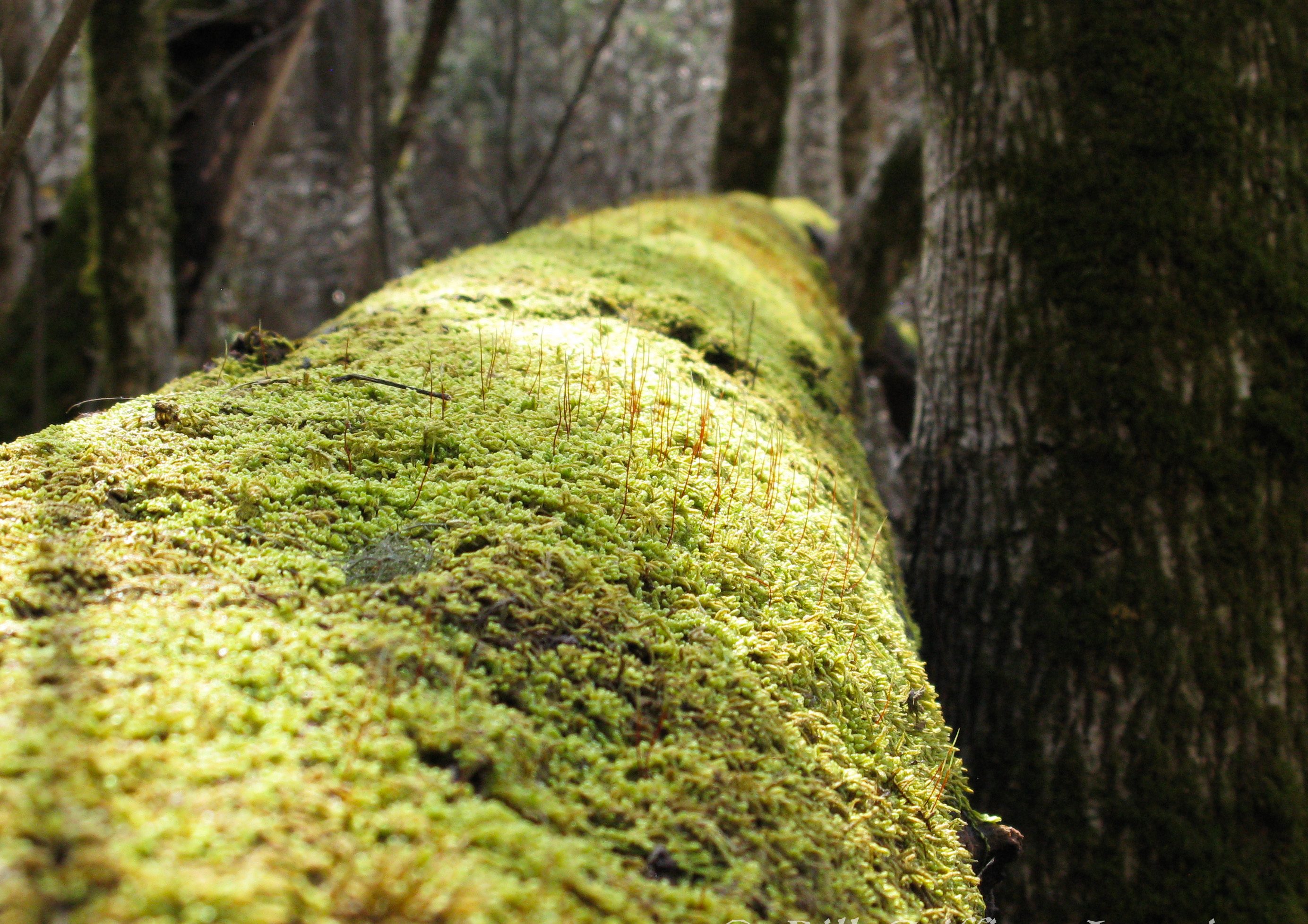
Reading a poem is like turning over a mossy log. As you approach, you appreciate the appealing form of the log without even thinking about it. Its green cushion, so inviting, perhaps a scent of fresh pungent life. But when you turn the log over, who knows? I am personally a fan of grubs and larvae, flabbergasted ants grabbing their white nits and sprinting in all directions, an oozy slug or two. Double bonus if there’s a salamander.
.
But beneath some logs there’s just not much. A few bark fibers lingering in their immediate pre-humus status. A tired worm casting. Dirt. If that’s all there is beneath the mossy log of the poem, I’m done. Maybe I’ll go turn over that rock over yonder instead. I, the reader, need something to discover when I get down on hands and knees and shift the poem. I have to do the work of coming closer, of noticing, and the poem has to do its work of sharing.
.
Scott Owens’s newest collection of poems, The Song Is Why We Sing, is about poetry. Writing poetry, to be certain, but even more this book is about reading poetry. And maybe most of all so many of these poems are about the partnership, let’s even call it companionship, between writer and reader. The lines and stanzas break down the fourth wall. I as reader become part of the process, part of the poem. Perhaps in reading no other book of verse have I been so intimately invited into the mind and life of the writer. Scott’s offer is sincere – here I can be half the poet.
.
Scott’s poems are existential knots that freely allow themselves to be untied. They offer up their essence like a flower offers nectar, hidden but discernable, just follow your nose, and always keeping the promise of a sweet droplet on the tongue. I first encountered the term “quiddity” in a philosophy book but I know I first read the word “dailyness” in a poem, and so are these poems, filled with essence and substance. Here is the world with its warts and its wonderfulness. Scott takes seriously his poet’s calling of showing you what you already know in a way you’ve never seen. That mossy log, what lies beneath? I am dying to turn it over. And throughout these pages I know I will find what this poet is determined to show me, because as he says, You have to care / enough about the world / and all who live in it / to take the time / to not just find the words / but also get them right.
.
.
❀ ❀ ❀ ❀ ❀
.
Chores
.
fr. Latin, chorus, those who do the work, who carry the play forward
(titles from Poetry in Plain Sight selections July 2025)
.
I rise from my knees, not from prayer,
not from planting autumn blooming crocuses,
but from fixing a table bending beneath
the weight of too many ovens. Still,
any rising is a good thing.
In the heat of early July in the South
I head out to make my monthly delivery
of poems. One called “Tomato Sandwich,”
transforming the taste of summer to art,
for the front window of my coffee shop.
One called “Hum,” for the community theater,
about a boy remembering the sound
of his father blowing on his face to cool him
off in a Louisiana Church on Sundays.
Another called “Wild Women,” for the wine shop,
about girls who were told they couldn’t be cowboys,
who hitched up their chaps and spat on the ground.
And one for the library, called “Song
to a Little Tree under the Eve of Terminal 2
at Raleigh Durham International Airport,”
just about a tree in an unlikely place
refusing not to grow.
.
Scott Owens
from The Song Is Why We Sing, Redhawk Publications, The Catawba Valley Community College Press; Hickory NC © 2026
.
❀ ❀ ❀
.
Scott Owens teaches at Lenoir Rhyne University, coordinates the Poetry Hickory program, and promotes poets and poetry year round at his coffee shop and gallery, Taste Full Beans. The Song Is Why We Sing is Scott’s twenty-sixth volume of poetry. Among his many honors and awards are two nominations for the National Book Critics Circle Award and appointment as Hickory, NC, Poet Laureate. Scott’s most recent books are available from Redhawk Publications.
.
Sample additional poetry by Scott Owens at Verse and Image:
.
.
❀ ❀ ❀ ❀ ❀
.
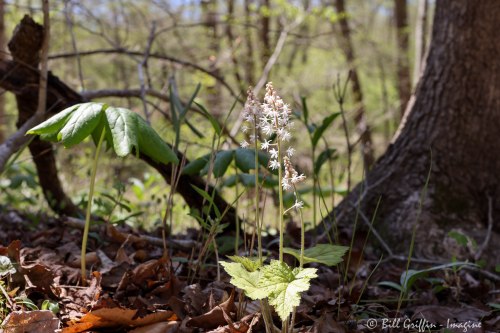
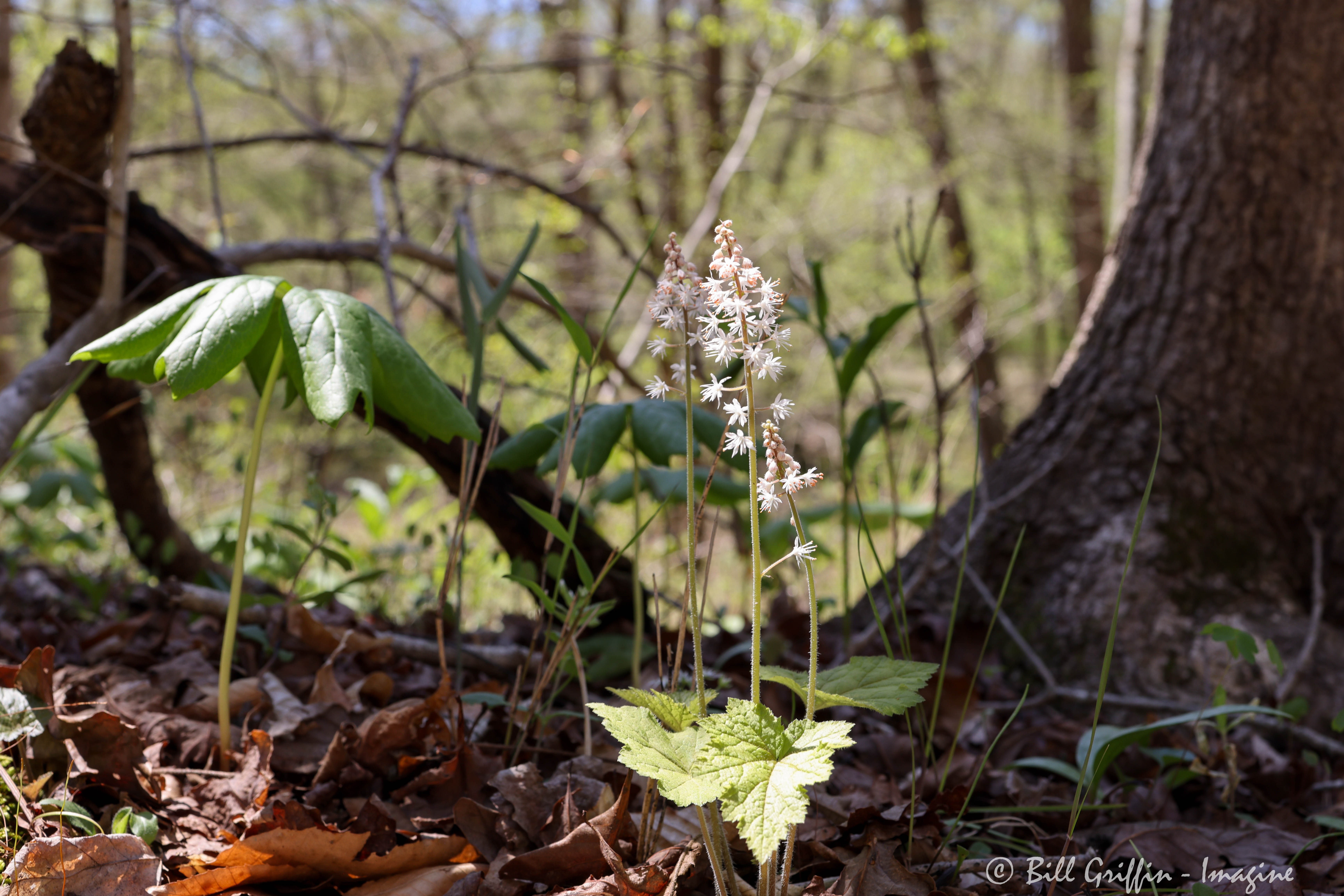
Perhaps you’d like to turn over a mossy log (metaphorically speaking)? Walk along Elkin Creek and discover Foamflower in bloom (for real beginning early April)? Watch a Blue Head Chub build its spawning nest in the creek? Breathe deep? Join me and other curious comrades on one of this spring’s naturalist walks, a program of Elkin Valley Trails Association. Upcoming dates are March 28, April 11, April 25. Details and registration (free!) here:
.
.
❀ ❀ ❀ ❀ ❀
.
Thank you for visiting Verse and Image:
. . . . . every Friday I present one or two poems I’ve read this week that particularly speak to me;
. . . . . every Saturday I present one or two poems submitted by YOU, my readers.
.
If you would like to offer a poem for consideration, either by a favorite author or your own work, please view these GUIDELINES for Saturday Readers Share:
.
. .
If you would like to receive an email each time a post appears, please SUBSCRIBE to Verse and Image using the button on the Home Page.
.
If you have a hard time finding the SUBSCRIBE button on this WordPress site, you can send me your email address and I will add you to the subscriber list. Send your request to
.
COMMENTS@GRIFFINPOETRY.COM
.
Thanks again for joining the conversation.
.
– Bill
.
.

Passage – Earl Huband
Posted in family, tagged Dix Hill Blues, Earl Huband, family, imagery, Main Steet Rag, nature photography, NC Poets, poetry, Southern writing on March 20, 2026| 5 Comments »
.
[ with 3 poems by Earl Huband ]
.
Cocoon-spinner, straining / to engineer the risk out of life.
from Rites of Passage
.
❀ ❀ ❀
.
A Sister’s Presents
.
Across the table
two goggle-eyed owls,
my pepper and salt,
hoot at me. Wise to
a bric-a-brac heart,
my sister Mary
surprised me with them
many meals ago.
.
And here she is still,
cheering me through these
efforts to add spice
to this saucepan life.
.
Earl Carlton Huband III
from The Dix Hill Blues, Main Street Rag Enterprises, Edinboro PA; © 2026
.
❀ ❀ ❀
.
The Pavilion of the Old Chinese Poets
— for Priscilla
.
Leaves resist the ground.
The ground calls to the trees.
The trees slowly nod their heads
and leaves fall to the ground.
.
The canoe is propelled
through the parting waves.
Island water whispers;
the canoe rocks.
.
Here the winds caress
the flanks of the island.
Here the lover caresses
the arms of the beloved.
.
The moon hides its face
behind fingers of cloud.
Lover, close your eyes
at the touch of love.
.
Earl Carlton Huband III
from The Dix Hill Blues, Main Street Rag Enterprises, Edinboro PA; © 2026
.
❀ ❀ ❀
.
Lost
.
Do not condemn this granite.
Become one with the stone
and weep as water trickles
down the cracks in its face
.
Look for your reflection
in the pool of moving water
at the bottom od the stone.
.
Earl Carlton Huband III
from The Dix Hill Blues, Main Street Rag Enterprises, Edinboro PA; © 2026
.
.
❀ ❀ ❀ ❀ ❀
.
Years ago, during one of my longer visits, my mother had me sit for a portrait. I watched the back of the canvas, smelled the linseed oil, while she worked ochre into the surface for an hour. Her technique was to create the subject’s shape and dimensions in monochrome, then remove pigment to add detail. Later she would dip into her entire palette to finish the portrait. Only on another visit when the oils had dried did I realize that for this painting she had folded the canvas and painted me on the right half. She opened the hidden side to reveal beside mine another man’s face with Mephistophelean goatee and declared, “I’m calling it ‘Saint and Sinner.’”
.
How to respond to the idea that my mother considered me a saint? Oldest child, studious, diligent, following the straight and narrow passage through life? I will smile a little that Mom evidently drew some comfort from that image. Only to myself do I confess every thoughtlessness, unkindness, misstep, outright mistake and fuckup I’ve every committed, all those demons that throng three AM when I can’t fall back to sleep. Sins of omission and commission. That is the real passage, straights and turbulence beneath but only untroubled waters showing. On canvas, my mother could create reality from her artist’s imaginings. I ask myself today, is this the life I imagined for myself? My imagination was clearly not sufficient. Short on wisdom, insight, compassion.
.
Earl Huband’s imagination does the heavy lifting of recreating the reality of his life’s passage in Dix Hill Blues. There are no softened edges in these stories, no cheerful hues to the palette. The first two sections of the book capture the struggles and failures of his family through the generations and paints them into a montage which narrates Earl’s own passage through life. One might at certain points use the term sin, or one might simply call this truth. Earl as poet, however, touches each person and each event with benediction. Yes, we are all human, fallible, broken; yes, love can still enter here. These poems need to be read as a whole to grasp the hopefulness that survives even darkest nights.
.
The third and fourth sections of the collection are a deep and cleansing breath. A bit of humor from a wry observation, the other side of a dreadful story, a moment of joy: Earl’s imagination is not short on wisdom, insight, compassion. He unwraps his own failings and I am comforted that we are brothers. The poet can be healed by the telling. Perhaps none of the saints that surround me have such a straight and unerring passage as would seem apparent. Perhaps tomorrow will be the day I glean a little wisdom. Perhaps I will pick this book back up and read again from the beginning.
.
❀
.
Earl Huband lives with his wife Priscilla Webster-Williams, also an accomplished poet, in Durham NC. I have met him many times at various poetry events and never seen him without a warm and welcoming smile. Dix Hill Blues is his third collection and is available HERE
.
.
❀ ❀ ❀ ❀ ❀
.
Thank you for visiting Verse and Image:
. . . . . every Friday I present one or two poems I’ve read this week that particularly speak to me;
. . . . . every Saturday I present one or two poems submitted by YOU, my readers.
.
If you would like to offer a poem for consideration, either by a favorite author or your own work, please view these GUIDELINES for Saturday Readers Share:
.
.
If you would like to receive an email each time a post appears, please SUBSCRIBE to Verse and Image using the button on the Home Page.
.
If you have a hard time finding the SUBSCRIBE button on this WordPress site, you can send me your email address and I will add you to the subscriber list. Send your request to
.
COMMENTS@GRIFFINPOETRY.COM
.
Thanks again for joining the conversation.
.
– Bill
.
.

Creation and Desecration — Liza Wolff-Francis
Posted in ecology, Ecopoetry, tagged 48 Hours Down the Shore, Ecopoetry, Kelsay Books, Liza Wolff-Francis, nature poetry, NC Poets, poetry, Southern writing on February 13, 2026| 3 Comments »
.
[ 3 poems by Liza Wolff-Francis ]
.
The land before we came
.
i.
.
My friend Shelly gets a text
from a woman she’s dating
down south with a picture
of a bullfrog the size of my
hand, caught in a bucket.
.
Its circle ear, a tympanum,
its habitat, the sound of a waltz,
its body, green camouflage.
.
As a teenager, I wore combat boots,
though never camouflage.
.
Camouflage for people is military wardrobe.
Parts of Atlanta were like battlefields,
.
people fist fighting about race, others
hobbling along asking for spare change.
.
To walk through those streets, I needed
combat boots, to run, to kick, to escape,
.
but, as part of the natural world,
I don’t camouflage well into city.
.
I could make a list of all the ways
people get by
and all the things to change.
.
The bullfrog doesn’t live well on asphalted land.
.
We are meant to be in connection with each other,
where no one is spare.
.
ii.
.
I imagine the land before we came.
Acres of thicket, trees and bramble.
.
Humans measure all of this by acreage,
kilometers, miles, rather than
the jump reach of a bullfrog,
rather than the size of its tympanum
and whether it is larger than the eye.
.
.
❀ ❀ ❀
.
Wheelchair in Sand
.
Even in this cool air,
a woman in a magenta
.
bathing suit, unable
to stand alone, is held,
.
at the edge of ocean,
by a man her height.
.
Water billows and turns.
He stands her up as if
.
he plans to stand her up
over and over again.
.
Ocean pulls her into tide,
swallows her with mouth
.
of whale. Her legs dangle
like bait, she is steady
.
in his arms and I think
he must be a man with
.
the heart of a whale. A young
woman yells Hold on Mama,
.
runs for the chair, drags
its robot wheels through
.
beach and saltwater until
it’s behind her and they push
.
against swelling ocean
and sinking sand.
.
❀ ❀ ❀
.
Atlantic City’s Great Black-Backed Gulls
.
Each one like an animal
++++ you could spoon or cradle if they wouldn’t fly away.
They stand facing the wind, lined up
++++ away from the ocean.
.
Even people who’ve never seen the ocean, I think,
must know its waves, like a rhythm of Earth
that water must know even without knowing,
.
just as grass knows sun,
like desert cactus know rain.
.
It’s different just beyond the gulls.
.
Shiny baubles and buildings,
casinos and their flashing lights,
siren sounds, bell-clanging promises,
.
oohs, and ahhhs.
.
Perfume brings back my grandmother.
A gasoline smell reminds me of riding
on a boat on a Georgia lake.
.
I could never know a casino in my body
in the same way as I know
how thirst is quenched with water.
.
If there were a hurricane here, like
the one headed toward Florida,
I would sense it in my muscles,
.
my legs, my head, the heaviness
heaving my body into the menace.
I know that feeling, knew it once,
.
don’t think it every completely left me.
Shape of storm pushes at all of nature—
and I feel it within me,
.
like Earth feels it’s coming.
.
I learn it at every threat of destruction.
.
Liza Wolff-Francis
from 48 Hours Down the Shore, Kelsay Books, American Fork UT; © 2024
.
.
❀ ❀ ❀ ❀ ❀
.
Three writer friends escaping the grinding dailies for a few days together: on the one side ocean, mystery and seduction, infinite expanse of watery planet; on the other side greed and tinsel and different seductions, the exploited and the exploiting. Liza Wolff-Francis’s poems can be arms spreading wide cymbals of glass before they clash and shatter, or arms that lift again the creature in its brokenness and wish for healing. During 48 hours down the shore, as one says in New Jersey, Liza celebrates love and kindness and the dignity of surf and sea-creature. Never, though, does she overlook the struggle all around us, of person and of planet. She describes herself as ecopoet. I feel in these poems not only the ecology of our threatened and suffering earth, but also the social ecology, cultural ecology, human ecology so twisted and strained, so threatened and threatening that it is easy to become overwhelmed.
.
What to do when overwhelmed? My reptilian hindbrain is more likely to retreat than lash out. Close your eyes, close your ears and ignore the impending destruction. Or do lash out – hurt someone before they can hurt you. Or look there – a man is introducing his crippled lover to the surf. Listen – gulls are laughing with you as much as at you, and the waves’ approach and retreat murmur . . . you belong here. Small acts will save our planet, a million small acts of love, a billion. A poem is just such a small act of invitation. You are invited to advance rather than retreat. To embrace rather than to strike. Each act of love declares we are not giving up.
.
❀ ❀ ❀
.
Liza Wolff-Francis is the 8th Poet Laureate of Carrboro, North Carolina, USA. She teaches creative writing workshops, has written plays and reviews, and whatever is happening around the world or down the street, she never looks away. 48 Hours Down the Shore is available from Kelsay Books. More about Liza at http://www.lizawolff.com.
.
.
❀ ❀ ❀ ❀ ❀
.
Thank you for visiting Verse and Image:
. . . . . every Friday I present one or two poems I’ve read this week that particularly speak to me;
. . . . . every Saturday I present one or two poems submitted by YOU, my readers.
.
If you would like to offer a poem for consideration, either by a favorite author or your own work, please view these GUIDELINES for Saturday Readers Share:
.
.
If you would like to receive an email each time a post appears, please SUBSCRIBE to Verse and Image using the button on the Home Page.
.
If you have a hard time finding the SUBSCRIBE button on this WordPress site, you can send me your email address and I will add you to the subscriber list. Send your request to
.
COMMENTS@GRIFFINPOETRY.COM
.
Thanks again for joining the conversation.
.
– Bill
.
.


[…] About/Submit […]