Feeds:
Posts
Comments

Posts Tagged ‘nature’

 . 
[poems selected by and written by the students
of West Carteret High School, Morehead City, North Carolina, USA]
 . 
Earlier this month I asked Jessi Waugh, teacher/scientist/poet and instructor in Earth and Environmental Science, if she would like to have her high school students contribute Poems for the Earth. Jessi replied Yes! and then this:
 . 
Several days before the poem-writing lesson, I gave my students the assignment to post an EcoPoem to a class discussion. They could post any poem or song lyrics related to nature. In this discussion format, students are able to see each other’s posts and like or comment. Few interacted, but they did see each other’s poems as I scrolled through the class submissions.
 . 
This assignment saw some of the expected favorites: Robert Frost, Shel Silverstein, Dr. Seuss. It also saw poems obviously chosen by a Google Search for “ecopoem example,” as I knew it would. But I got unexpected and delightful responses as well, such as:
 . 
Stick your leaves back on
 . 
My mother planted you the day I was born.
I grew with you.
I remember trying to stick your leaves back on in autumn;
I was scared of you changing.
Yet as time passed, my attempts stood no chance.
The cruel seasons ripped apart your branches.
The cruel season ripped me apart, too.
You looked so unrecognizable by the time winter ended,
I didn’t even wanna be near you.
My mother made me blow out a candle for you every year.
She hasn’t lit one in 1…2…3… I lost count.
I grew without you.
You stood tall, but I only kept changing.
I was scared of changing.
I’m 16 now.
A storm ripped you from the earth.
I’m trying to stick your leaves back on.
I wish you could do the same to me.
 . 
Emily M
 . 
 . 
The Rose that Grew from Concrete
 . 
Did you hear about the rose that grew
from a crack in the concrete?
Proving nature’s law is wrong it
learned to walk without having feet.
Funny it seems, but by keeping its dreams,
it learned to breathe fresh air.
Long live the rose that grew from concrete
when no one else ever cared.
 . 
Tupac Shakur
 . 
 . 
❦ ❦ ❦
 . 
Before they wrote a poem, Jessi gave her students this assignment: “Analyze the connections between the biosphere and other Earth systems (geosphere, hydrosphere, atmosphere).” She took them to the back soccer field at their school, which is surrounded on three sides by forest and powerline land. She had cut 2′ x 2′ pieces of an old tarp for them to sit on, and once they were outdoors she handed them a clipboard along with the assignment log sheet and told them to sit facing the forest and far enough apart so they couldn’t distract each other.
 . 
When we first got out there, many students sat in the middle of the field or facing away from the forest, and I came around to encourage them to sit near the wild areas and turn towards them. Most did. Others were not comfortable and chose to stand or remain near the middle of the field, especially girls wary of jumping spiders.
 . 
Students documented the abiotic and biotic factors in the ecosystem, reinforcing those terms, and created a food web with the 10 organisms they observed. These were concepts from class (trophic level, energy flow, limiting factors) put into practice. They then answered a series of questions about interactions between ecosystem components and biodiversity, and then crafted their poems, all while outside.
 . 
Before taking them outside that day, I read the students one of my own poems, Dunation, but didn’t tell them it was mine. I told them to listen for the repetition of sounds and them suggested they repeat sounds in their poems as an easy literary device.
 . 
It was a beautiful day, perfect for sitting in the back field for an hour. We saw at least 20 species between all the different insects, herbaceous perennials, trees, and birds. Likely closer to 50. In general, students were quiet and reflective and did a great job of observing the ecosystem.  – Jessi Waugh
 . 
❦ ❦ ❦
 . 
selected student poems . . .
 . 
The Great Outdoors
 . 
When I step outside to the great outdoors
I see nothing but change, out of our culture nothing
stays the same
not the trees, not the grass, not the very ground you stand on
everything around us is just waiting on its moment
 . 
When I step outside to the great outdoors
I notice change is inevitable but nothing to fear
everything changes even just saying
“the last time I was here”
or the time and age you got, like the sound
of the creek, of the animals above, or even the things
that all of us take for granted like a mother’s love
 . 
Everything changes
please don’t be afraid
be glad you have what you have
and enjoy the change
 . 
Kevin Hunter, Student at West Carteret High School
 . 
 . 
In the Back Soccer Field 
 . 
With all these limiting beige walls I’m stuck with
for over 5 hours a day, it feels
refreshing to see the leaves, feel the breeze
crunch the brittle soil like the wandering ant
I make my pilgrimage
toward NATURE
 . 
My eyes are stimulated by something that isn’t
a screen but the echoes of human
development still make their unpleasant sounds
nature is something that can’t be replicated
truly by plastic or plaster models or
the dull green of money, as nature is
VIBRANT and cannot be comprehended by man
no matter what
 . 
Kyndall Griffin, Student at West Carteret High School
 . 
 . 
Life Cycle
 . 
Green
Life abounds
Sunlight kisses leaves
Insects buzz, a symphony of life
Grass
 . 
Tiny world
Hidden, teeming
spiders spin, frogs leap
nature’s dance, a vibrant scene
Balance
 . 
Stillness
Whispers softly
Decomposers working
Life to death, death into life
Cycle
 . 
Jazireyah Johnson, Student at West Carteret High School
 . 
 . 
❦ ❦ ❦
 . 
and another favorite selected by Jessi’s students . . .
 . 
rises the moon
 . 
Days seem sometimes as if they’ll never end
Sun digs its heels to taunt you
But after sunlit days, one thing stays the same
Rises the moon
 . 
Days fade into a watercolour blur
Memories swim and haunt you
But look into the lake, shimmering like smoke
Rises the moon
 . 
Oh-oh, close your weary eyes
I promise you that soon the autumn comes
To darken fading summer skies
 . 
Breathe, breathe, breathe
Days pull you down just like a sinking ship
Floating is getting harder
But tread the water, child, and know that meanwhile
Rises the moon
 . 
Days pull you up just like a daffodil
Uprooted from its garden
They’ll tell you what you owe, but know even so
Rises the moon
 . 
You’ll be visited by sleep
I promise you that soon the autumn comes
To steal away each dream you keep
Breathe, breathe, breathe
 . 
lyrics and music by Liana Flores
 . 
❦ ❦ ❦
 . 
Dunation
 . 
The sorrows they pile heart-high
head-high, sky-high like peaks
of primary dunes against winter-white
an accumulation of minutia
a hummock too precipitous to persist
Spring’s avalanche comes
grains slip-slide down dune slipfaces
so suddenly, the sound akin to arctic ice breaking
tern eggs crackling, oak limbs fracturing
in furious full-February gales
Hearts, heads, skies on fire
here comes March’s awakening
dunes crash-topple into manageable talus
Here we come
tip-toeing across the tops
paper children tumbling
over ridges and ruins
 . 
Jessi Waugh, Earth and Environmental Science Teacher, West Carteret High School
 . 
The main reaction from students to this project was appreciation for the time sitting outdoors, and they enjoy the social aspect of posting “favorite’ ecopoems on our class discussions. As much as I’d like to turn it into a week of poetry discussions, that would be terribly off-topic for my science class, and I used it primarily as a way to reflect on the connections between earth’s “spheres” (atmo, hydro, litho, geo) and how they interact in ecosystems. In general, I notice that students are disillusioned with politics and technology. They, like all students I’ve taught, enjoy hands-on experience and labs. I think poetry and teens could mix well in many places. – Jessi Waugh
 . 
❦ ❦ ❦
 . 
West Carteret High School is in Morehead City, North Carolina, in the southeastern USA. It is a public 9-12th grade high school, with about 1100 students. Approximately 40% of students are economically disadvantaged. Jessi Waugh teaches Earth and Environmental Science, since 2000 a required course for graduation. She also teaches Biology and Marine Science as needed, and has been a teacher for 12 years. Her students are all 9th & 10th grade, ages 14-16. The poems submitted are from both the honors and standard classes. She holds a Master’s in Teaching Secondary Science and an undergraduate Biology degree. I like teaching this course and age group; it’s my niche.
 . 
IMG_0345
 . 
❦ ❦ ❦
 . 
IMG_1783
 . 

Read Full Post »

 .
 . 
Like a great poet, Nature knows how to produce the greatest effects with the most limited means.  –  Heinrich Heine (1797-1856)
 . 
[poems by Wendell Berry, Gerard Manley Hopkins,
Chapman Hood Frazier, Maria Rouphail, Charles Carr –
shared by Les Brown, Joyce Brown, Joan Barasovska, Bill Griffin]
 . 
What We Need is Here
 . 
Geese appear high over us,
pass, and the sky closes. Abandon,
as in love or sleep, holds
them to their way, clear
in the ancient faith: what we need
is here. And we pray, not
for new earth or heaven, but to be
quiet in heart, and in eye,
clear. What we need is here.
 . 
Wendell Berry
 . 
 . 
When I read What We Need is Here, Mary Oliver’s Wild Geese came to mind. And this poem gives us permission to accept what is here because it is ingrained in our very being as is the flight of geese overhead. Nature can provide all we need. Not explicit, but implicit, in the poem, nature can only provide all we need if we respect and protect it.  –  Les Brown
 . 
 . 
❦ ❦ ❦
 . 
God’s Grandeur
 . 
The world is charged with the grandeur of God.
    It will flame out, like shining from shook foil;
    It gathers to a greatness, like the ooze of oil
Crushed. Why do men then now not reck his rod?
Generations have trod, have trod, have trod;
    And all is seared with trade; bleared, smeared with toil;
    And wears man’s smudge and shares man’s smell: the soil
Is bare now, nor can foot feel, being shod.
 . 
And for all this, nature is never spent;
    There lives the dearest freshness deep down things;
And though the last lights off the black West went
    Oh, morning, at the brown brink eastward, springs —
Because the Holy Ghost over the bent
    World broods with warm breast and with ah! bright wings.
 . 
Gerard Manley Hopkins
Gerard Manley Hopkins: Poems and Prose (Penguin Classics, 1985)
 . 
Selected and shared by Joyce Brown
 . 
❦ ❦ ❦
 . 
Surviving the Six Worlds
     for David Sanipass
 . 
In the sixth world of the Mi’k maq
you walk as if in water
fluid, changing and final.
 . 
Each world a hybrid you move through,
a blink, bend and flutter
where the roots are
and in each power, a sigh or shadow
at the edges of things
that live beyond you
in their hush and whisper.
 . 
Water becomes land
and land, air.
 . 
The golden frog in the dead pool,
the black bear
and, in your long dream, a word
becomes a crow’s call you wake from
that erodes into this life and back again.
 . 
Learn where to walk and where not to,
listen to the wind as if it too might
become you. Discover in your feet
where each path leads. Look,
 . 
a redwing blackbird
settles on the birch branch
and, in its croak, you glide
in a slow melt and shine,
a transparency
as solid as stone
but in a flash, gone.
 . 
Smell the lilac in the wind
and feel how your foot will ache
before finding its step, this your ?
 . 
signature into a white world
where you decay
green and back again.
 . 
Chapman Hood Frasier
from The Lost Books of the Bestiary, V Press LC, February 2023.
 . 
 . 
 . 
I hope you love birds, too.  It is economical.  It saves going to Heaven.  –  Emily Dickinson
 . 
Keep a green tree in your heart and perhaps a song bird will come. –  Chinese proverb
 . 
❦ ❦ ❦
 . 
I Buried a Little Bird Today
 . 
in the backyard
behind the old beech.
What sort of bird I cannot say,
or its age or where in its body
it suffered the fatal flaw.
I only held in one hand
its beating wings, the closed claw
and gaping beak,
its shuddering feathered head.
And when it stopped, I dug a hole
and to the beech I said,
Be kind, be kind.
 . 
Maria Rouphail
from This small house, this big sky (Redhawk Publications, 2025)
 . 
My connection to this poem is as the bird itself. At its dying moments it lies loved and protected in kind hands, as I hope to be. We cannot know, as the speaker cannot know about the bird, what our “fatal flaw” will be. Trust in my loved ones and in a loving God connect me to the little bird buried with compassion under the beech. – Joan Barasovska
 . 
 . 
I was a girl, shy and secretive
 . 
If I just ran fast enough – I was the fastest one –
I knew I could take off, fly, I mean, not sprout wings
or turn into a bird or angel but, as in a recurring dream,
leave the broken sidewalk below, float above the kids
I played with, higher, above the giant sycamore. Higher.
God was sorry I felt so bad.
 . 
Joan Barasovska
from The Power of the Feminine I: Poems from the Feminine Perspective; ThreshPress Midwest (volume 002, 2024)
 . 
IMG_0328
 . 
❦ ❦ ❦
 . 
Appalachian Come Inside
 . 
Morning ends
like a last bite
of apple,
fifty degrees
but who’s counting,
January and coffee
strong enough to hold
my own turns sixty-one,
I would click my heels
if not for their knees.
A tall hickory pitches
a bird at the sky,
noon is a high fly ball,
The New River is quiet
applause,
the air so clean it splashes
the city from my face
and I want to say thank you
but the sun is already
an arm of you’re welcome
around my shoulder.
 . 
Charles Carr
from Autumn Sky Poetry, January 29, 2018.
 . 
Today when I walk outdoors I hope I remember to invite that arm around my shoulder. I confess I need it.  – Bill Griffin
 . 
 . 
If we can believe that we are loved just as we are and that everything else is equally loved, we unveil a cosmic reality that is life-giving and a Christ-like reality that affirms the goodness of all creation. — Barbara Holmes
 . 
❦ ❦ ❦
 . 
 . 
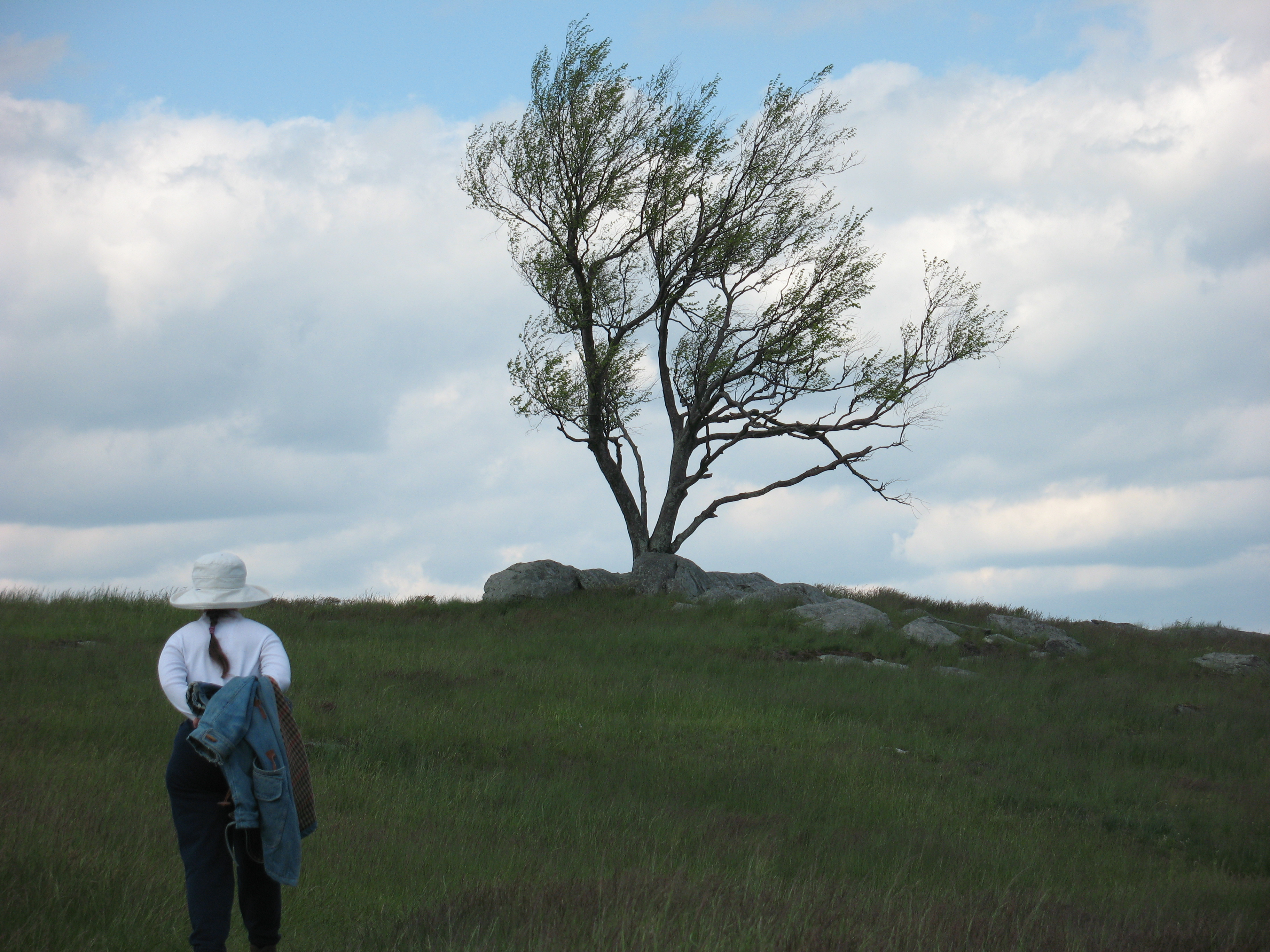
Doughton Park Tree 2020-11-03b
 . 

Read Full Post »

 . 
Poems for the Earth: Kenneth Rexroth, Denise Levertov, Robert Frost
 . 
Lute Music
 . 
The earth will be going on a long time
Before it finally freezes;
Men will be on it; they will take names,
Give their deeds reasons.
We will be here only
As chemical constituents –
A small franchise indeed.
Right now we have lives,
Corpuscles, ambitions, caresses,
Like everybody had once –
All the bright neige d’antan people,
“Blithe Helen, white Iope, and the rest,”
All the uneasy remembered dead.
 . 
Here at the year’s end, at the feast
Of birth, let us bring to each other
The gifts brought once west through deserts –
The precious metal of our mingled hair,
The frankincense of enraptured arms and legs,
The myrrh of desperate invincible kisses –
Let us celebrate the daily
Recurrent nativity of love,
The endless epiphany of our fluent selves,
While the earth rolls away under us
Into unknown snows and summers,
Into untraveled spaces of the stars.
 . 
Kenneth Rexroth
 . 
❦ ❦ ❦
 . 
Is it really so strange that the close observation of life, noticing its many particulars and how desperate it is to spread and mingle and weave itself among the web of all other lives no matter how disparate and also individually desperate, strange that the observation and celebration of this planet solely and most fortuitously devoted to conjuring life should also ferment within the observer a noticing and rumination about death? Beside the stream the liverworts unclasp their primitive green. Rockspray nourishes them for a moment then continues its endless work of washing the ashes of earth to the sea. Between right now and when my own ashes will join them is less than a blink for the water, the rock, the bryophytes. Two or three blinks would be more than enough to embrace the span of my entire species on this middle-aged planet. A small franchise indeed.
 . 
In our current society the virtues have lost most of their value to inflation (inflation of ego primarily), and of all virtues humility seems valued least. Another winter is apparently ended but it is hard to shake the chill of despite that has settled and will not permit dispelling. For the few years left of my personal franchise among the living, where is the warmth? Right here, though, is my favorite seat on the back porch. Its cushion retains the signature of my backside. Ten feet away my favorite among all trees remains undiscouraged, staid Beech perhaps a quarter century my elder. Its scars and knots only enhance its beauty. At its crown the long slender leafbuds already unfurl to prepare the deep shade so welcome come May. And that smooth, grey skin – the filamentous liverworts readily accept its unselfish invitation to reside. As a representative of a large-brained apex species, could I humble myself before such an insignificant creature as a liverwort? Could I be half so generous as the Beech? Perhaps it is warm enough after all – life is poised to spread and mingle. Let’s go out front into the sun and plant some seeds.
 . 
 . 
❦ ❦ ❦
 . 
The Past III
 . 
You try to keep the present
 ==== uppermost in your mind, counting its blessings
 ====  ==== (which today are many) because
although you are not without hope for the world, crazy
 ==== as that seems to your gloomier friends and often
 ====  ==== to yourself, yet your own hopes
have shrunk, options are less abundant. Ages ago
 ==== you enjoyed thinking of names
 ====  ==== for a daughter; later you still entertained,
at least as hypothesis, the notion
 ==== of a not impossible love, requited passion;
 ====  ==== or resolved modestly to learn
some craft, various languages.
 ==== And all those sparks of future
 ====  ==== winked out behind you, forgettable. So –
the present. It’s blessings
 ==== many today:
 ====  ==== the fresh, ornate
blossoms of the simplest trees a sudden
 ==== irregular pattern everywhere, audacious white,
 ====  ==== flamingo pink in a haze of early warmth.
But perversely it’s not
 ==== what you crave. You want
 ====  ==== the past. Oh, not your own,
no reliving of anything – no, what you hanker after
 ==== is a compost,
 ====  ==== a forest floor, thick, saturate,
fathoms deep, palimpsestuous, its surface a mosaic
 ==== of infinitely fragile, lacy, tenacious
 ====  ==== skeleton leaves. When you put your ear
to that odorous ground you can catch the unmusical, undefeated
 ==== belling note, as of a wounded stag escaped triumphant,
 ====  ==== of lives long gone.
 . 
Denise Levertov
 . 
 . 
❦ ❦ ❦
 . 
POETRY FOR EARTH DAY 2025
 . 
Our ability to perceive quality in nature begins, as in art, with the pretty. 
It expands through successive stages of the beautiful to values 
as yet uncaptured by language.
Aldo Leopold
 . 
Is it only serendipity that Earth Day and National Poetry Month are celebrated together each year in April? Our need for the Earth, our love for the Earth, are beyond language, yet poetry must continue to yearn to express that love.
 . 
Do you have a favorite poem that enlarges the boundaries of community? That notices the often overlooked? That celebrates all life on earth as one family together? We invite you to share! The deadline is April 10. See full guidelines at this link:
 . 
 . 
 . 
These poems by Kenneth Rexroth, Denise Levertov, and Robert Frost are collected in The Ecopoetry Anthology, edited by Ann Fisher-Wirth and Laura-Gray Street; © Trinity University Press, San Antonio TX, 2020
 . 
 . 
Liverworts are ancient non-vascular plants, some 9,000 different species inhabiting every continent except Antarctica and almost every habitat and niche. They have been grouped with mosses and hornworts in the division Bryophyta, although some taxonomists split them into their own division, Marchantiophyta. One particular species, Frullania eboracensis, the New York Scalewort, is particularly noticeable on smooth barked trees such as beech, maple, and holly.
 . 
 . 
❦ ❦ ❦
 . 
The Most of It
 . 
He thought he kept the universe alone;
For all the voice in answer he could wake
Was but the mocking echo of his own
From some tree-hidden cliff across the lake.
Some morning from the boulder-broken beach
He would cry out on life, that what it wants
Is not its own love back in copy speech,
But counter-love, original response.
And nothing ever came of what he cried
Unless it was the embodiment that crashed
In the cliff’s talus on the other side,
And then in that far-distant water splashed,
But after a time allowed for it to swim,
Instead of proving human when it neared
And someone else additional to him,
As a great buck it powerfully appeared,
Pushing the crumpled water up ahead,
And landed pouring like a waterfall,
And stumbled through the rocks with horny tread,
And forced the underbrush – and that was all.
 . 
Robert Frost
 . 
❦ ❦ ❦
 . 
Doughton Park Tree 2019-02-09
 . 

Read Full Post »

« Newer Posts - Older Posts »