Feeds:
Posts
Comments

Posts Tagged ‘nature poetry’

[including a poem by Rebecca Lindenberg]

I am still not sure what Will was thinking but he was very distant that evening. It was the last night of our backpacking trip through the Smokies. I knew he lived for wilderness – maybe he was simply ruing how long it would be until he’d have another chance to return to these mountains. Maybe he was doubting his chosen vocation, family doctor, the hectic office where we’d be working together again day after tomorrow. Maybe . . . maybe each of us longs to hang onto those few moments when we really feel we belong in the universe. And then they slip away.

We’d planned this trip together, just the two of us, for months. Now we were cooking our last supper. We had distanced ourselves from Mt. Collins shelter and the other hikers with their butane stoves that roared like jet liners. Will had fashioned a little alcohol stove out of a 7-Up can. Our noodles and dried vegetables simmered in silence.

When we’d finished eating and Will picked up the “stove,” his funk hit bottom. Our heat had fried a pygmy salamander (Desmognathus wrighti). Will lifted its weightless form and we grieved. We didn’t have much of anything more to say to each other that night.

In the morning we headed south on the AT to where our car waited at Clingman’s Dome. Bleached dead Frazer Fir flanked the trail with their mute accusations but the sun was cool and jeweled the dew on ridgeline grasses. About a mile from trail’s end, Will stopped and pointed. Perched on a stem sunning itself – Jordan’s Red-cheeked salamander, Plethodon jordani. Endemic to the Smokies, endangered, icon of biodiversity, preservation, and evolutionary variety. Was it waiting here to condemn us or to offer absolution?

Or to invite us to keep traveling until we discover where we belong?

.     .     .     .     .     .     .

It feels terrible to feel terrible // and so we let ourselves / start to forget.

There are plenty of pygmy salamanders but let me not forget that one. I haven’t heard a whip-poor-will in five years; let me not forget. I can choose to love this or that or the other . . . or you – let me not forget to hold tight to the choices that will hold you and me together.

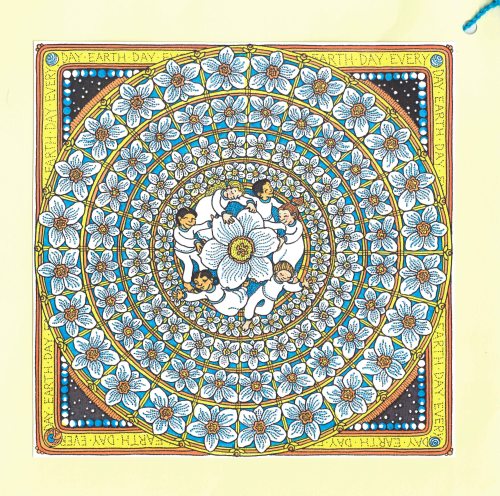
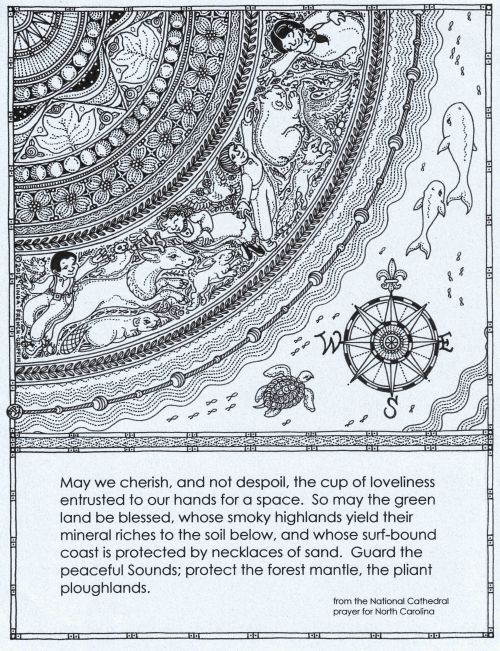
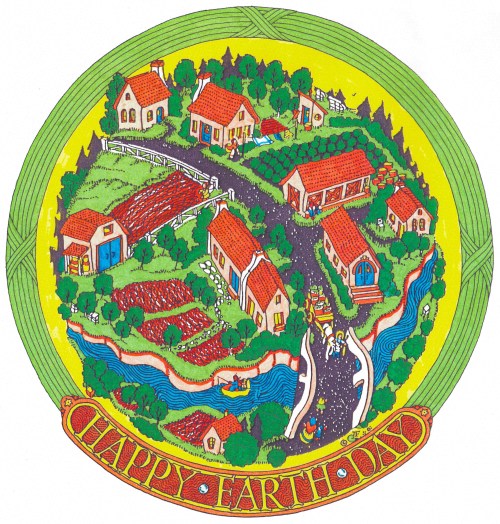
We celebrate Earth Day with the other inhabitants of our single habitable planet on April 22, but how we venerate earth day depends on the choices we make every day.

They’re not wonders, but signs // and therefore can be read.


[#Beginning of Shooting Data Section]<br /> Nikon CoolPix2500<br /> 0000/00/00 00:00:00<br /> JPEG (8-bit) Normal<br /> Image Size: 1600 x 1200<br /> Color<br /> ConverterLens: None<br /> Focal Length: 16.8mm<br /> Exposure Mode: Programmed Auto<br /> Metering Mode: Multi-Pattern<br /> 1/59.9 sec - f/8<br /> Exposure Comp.: 0 EV<br /> Sensitivity: Auto<br /> White Balance: Auto<br /> AF Mode: AF-S<br /> Tone Comp: Auto<br /> Flash Sync Mode: Front Curtain<br /> Electric Zoom Ratio: 1.00<br /> Saturation comp: 0<br /> Sharpening: Auto<br /> Noise Reduction: OFF<br /> [#End of Shooting Data Section]

.     .     .     .     .     .     .

A Brief History of the Future Apocalypse

Worlds just keep on ending and
ending, ask anybody who survived

an earthquake in an ancient city
its people can’t afford to bolt

to the bedrock, or lived to testify
about the tyrant who used his city’s roofs

like planks to walk people off,
his country’s rivers like alligator pits

he could lever open and drop a whole
angry nation into. Ask anyone

who was watched their own ribs emerge
as hunger pulls them like a tide,

who watched bloody-sheet-wrapped
bodies from the epidemic burn,

or fled any of the wars to come.
The year I was eleven, I felt

the ground go airplane turbulent
beneath me. Its curt shuddering

brought down a bridge and a highway
I’d been under just the day before.

And I was not afraid, but should have been
the first time love fell in me like snow.

How could I know it would inter us
both, so much volcanic ash –

how could I not? The world must
end and I think it will keep ending

so long as we keep failing to heed
the simple prophecies of fact –

hot-mouthed coal-breathing machines
fog our crystal ball, war is a trapdoor

sprung open in the earth that a whole
generation falls through, love ends,

if no one errs, in death. When
my love died, I remember thinking

this happens to people every day,
just – today, it’s our world

crashing like an unmanned plane
into the jungle of all I’ve ever

had to feel, or imagine knowing.
It feels terrible to feel terrible

and so we let ourselves
start to forget. That must be it.

Why else would we let the drawbridge
down for a new army, water

the Horseman of Famine’s red steed
with the last bucket from the well

or worse – give up then. A heart
sorrow-whipped and cowering

will still nose its ribcage to be petted.
Will still have an urge for heroics.

And anyway, when has fear of grief
actually kept anyone from harm.

Some hope rustles in my leaves
again. It blows through, they eddy

the floor of me, unsettling
all I tried to learn to settle for.

Would I be wiser to keep
a past sacrament folded in my lap

or would I be more wise to shake
the gathered poppies from my apron,

brush off soft crimson petals
of memory and be un-haunted –

I don’t know. So I choose you and we
will have to live this to learn what happens.

And though it’s tempting to mistake
for wonders the surge of dappled

white-tailed does vaulting through
suburban sliding glass doors,

they are not. Not vanishing bees
blown out like so many thousands

of tiny candle-flames, neither
the glinting throngs of small black birds

suddenly spiraling out of the sky,
the earth almost not even dimpling

with the soft thuds of feathered weight.
Nor the great wet sacks of whale

allowing the tide to deposit them alive
on a strand, nor even the sudden

translucent bloom of jellyfishes.
They’re not wonders, but signs

and therefore can be read. I didn’t
always know that apocalypse

meant not the end of the world but
the universe disclosing its knowledge

as the sea is meant to give up its dead,
the big reveal, when the veil blows back

like so many cobwebs amid the ruins
and all the meaning of all the evidence

will shine in us to finally see –
And there you’ll be and I’ll know you

not by the moon in your voice but the song
rung in my animal self. For I feel you,

my sure-handed one, with something
sacreder than instinct but just as fanged.

Then unfold me the way you know
I want so I can watch the stars

blink back on over the garden as we grapple
in the dimming black like little, little gods.

Rebecca Lindenberg

from Best American Poetry 2019; Major Jackson, editor, David Lehman, series editor; Scribner Poetry 2019
first appeared in Southern Indiana Review; reprinted by permission from Rebecca Lindenberg

More by Rebecca . . . https://www.poetryfoundation.org/poets/rebecca-lindenberg

.     .     .     .     .     .     .

Rebecca Lindenberg teaches in the MFA program at Queens University, Charlotte, and is an Assistant Professor at the University of Cincinnati where she is also Poetry Editor of the Cincinnati Review. She holds a Ph.D. in Literature and Creative Writing from the University of Utah. She is the author of Love, an Index (McSweeney’s 2012) and The Logan Notebooks (The Center for Literary Publishing at Colorado State 2014), winner of the 2015 Utah Book Award.

.     .     .     .     .     .     .

[#Beginning of Shooting Data Section]<br /> Nikon CoolPix2500<br /> 0000/00/00 00:00:00<br /> JPEG (8-bit) Normal<br /> Image Size: 1600 x 1200<br /> Color<br /> ConverterLens: None<br /> Focal Length: 11.8mm<br /> Exposure Mode: Programmed Auto<br /> Metering Mode: Multi-Pattern<br /> 1/30 sec - f/4<br /> Exposure Comp.: 0 EV<br /> Sensitivity: Auto<br /> White Balance: Auto<br /> AF Mode: AF-S<br /> Tone Comp: Auto<br /> Flash Sync Mode: Front Curtain<br /> Electric Zoom Ratio: 1.00<br /> Saturation comp: 0<br /> Sharpening: Auto<br /> Noise Reduction: OFF<br /> [#End of Shooting Data Section]

.     .     .     .     .     .     .

[Behind the scenes karma: I received Best American Poetry 2019 as a gift last Christmas (Oh Santa, you are so good at taking hints!) but I hadn’t read it until this week. I was hoping to discover something that would evoke April as Earth Month anticipating Earth Day, resigned to forgoing my usual focus on Carolina writers. Rebecca Lindenberg’s poem leapt from the page; it is the best of the Best, the Best American Poem of 2019 in my opinion. It wasn’t until after I had asked her permission to use it that I discovered Rebecca’s connection to Queens University and probably to many of the other writers who have appeared in this space. Karmic connection comes through.  – B ]

Read Full Post »

Poetry Formatting in WordPress

Are you frustrated when you try to re-create complex line formatting in a WordPress post?

Sure, you can right / left / center justify a paragraph, and you can “add indent” to a paragraph, but unless you open the hood and get grease on your hands writing HTML, you can’t add tabs or spaces to a line to get it to look like this:

.     .     .     .     .

The damselfly hovers,
+++ lays her eggs
++++++ in the sky
+++++++++ of pond,

her abdomen
+++ a slender J
++++++ pierces
+++++++++ the mirror.

.      .     .     .     .

Instead after you save your draft and preview the screen here’s how it looks:

.     .     .     .     .

The damselfly hovers,
lays her eggs
in the sky
of pond,

her abdomen
a slender J
pierces
the mirror.

.     .     .     .     .

How pedestrian. How constipated.

Here’s my fix: clunky but effective. Tell me your fix if it’s better!

1 – ADD CHARACTERS TO THE SPACES OR TABS YOU WANT TO INSERT INTO THE LINE:

The damselfly hovers,
+++ lays her eggs
++++++ in the sky
+++++++++ of pond,

her abdomen
+++ a slender J
++++++ pierces
+++++++++ the mirror.

Here I’m using THREE +’s for each tab grouping; use more, fewer, any character you like.
I am also adding a [SPACE] after each grouping of +’s to make it easier to highlight them later.

2 – ONE AT A TIME, HIGHLIGHT EACH GROUPING OF +’S YOU WANT TO TRANSFORM

3 – CHANGE THE FONT COLOR TO “WHITE”

Click the small down arrow next to the A for Font and select the White square

Note – if your blog uses a background color OTHER than white, then instead of white you need to change the font color to your background color!

4 – CONTINUE FOR EACH GROUPING . . .
++++++++ SAVE DRAFT . . .
++++++++++++++++ PREVIEW . . .
++++++++++++++++++++++++ VOILA!

You can speckle random text all over the screen using this technique.

There must be a better way (short of learning to write code), but I haven’t found it!

Here’s the entire poem, which appeared in a slightly different version in my chapbook RIVERSTORY : TREESTORY published by the Orchard Street Press, © 2018

.     .     .     .     .     .     .

Light

The damselfly hovers,
+++ lays her eggs
++++++ in the sky
+++++++++ of pond,

her abdomen
+++ a slender J
++++++ pierces
+++++++++ the mirror.

+++ Once.
+++ Again.
+++ One egg.
+++ Another.

Light as a morning
+++ kiss, light
++++++ as the voice

that ripples
+++ between
++++++ these lines,

+++ airy, watchful,

let no hungry trout
+++ swirl, lunge,
++++++ swallow
+++++++++ their maker.

+++ One.
+++ Another.
+++ Again.
+++ And tomorrow

these words become
+++ creatures
++++++ with silver wings

+++++++++ that rise
++++++++++++ into light.


from RIVERSTORY : TREESTORY, The Orchard Street Press, © 2018 Bill Griffin

.     .     .     .     .     .     .

.     .     .     .     .     .     .

Read Full Post »

[with 3 poems by Patricia Hooper]

Great Smoky Mountains Institute at Tremont, February 05-07, 2021

the assurance of things hoped for, the evidence of things not seen . . .

Faint tracks – but when has life ever laid it out plain, an open book, page upon page with footnotes? Aren’t I still searching between the lines, faint traces, no clear prints? Lately I dream every night of making diagnoses, explaining treatments, buffing up my charts. Is Jung telling me that this was my only purpose in life and now it’s over?

Deer walk a diagonal gait – each hoof print is really two impressions, the forefoot overlaid with the rear. If the rear hoof strikes a little lateral within each fore print it means the pelvis is wider = you are following a female.

Don’t plan on seeing a bear in the Smokies in February. Mom is asleep in a hollow tree with her cubs and Dad is dozing under a bush somewhere (he snores), though he might rouse up to forage on a warm afternoon. So why are we studying mammals at Tremont in February? In the sere meadows, the leaf-littered groves, under the pale unforgiving sky the book of all their signs is open for us to read. Let’s hike up to that oak tree and see who’s been scratching for acorns, see who has left us some scat. Let’s follow that faint trail through dry brown stalks to check out predator and prey. Who clawed up this white pine? Who stepped in the mud?

Canids: dog paw prints show deep claw marks with claws of outer toes angled outward; coyote claw marks are less distinct but all aligned strait ahead; gray fox claw marks are the least distinct since they save the claws for climbing trees, and the rear pad looks scalloped like a chevron.

But clear prints are maybe 1% of tracking. We’re learning a new vocabulary of chewed nut and compressed grass. Tracking is patterns and connections, habitats and behaviors. Measure the size of the incisors that gnawed this antler. Measure the bits of skull and femur in this dropping.

And can I learn a new language? Maybe all these dreams are about knitting up the years, tying the last knot, laying it away to pull out when I need to reminisce. Or maybe I need to discover something missed. Life is not disjunctive – the end of every moment flows into the beginning of the next. The assurance of past creates future. Tracking in Cades Cove – a metaphor for opening oneself to an unseen message within, to the evidence of human purpose. Connections, convictions. We track a personal ecology that leaves signs for us to discover, to question, to wonder.

To follow.

Tracks have lead us to this place, maybe with a lesson or two that sunk in along the way. Some wisdom. And the tracks that still lead forward?

.     .     .     .     .     .     .

Patricia Hooper’s bright clear poetry touches earth with a feather – to bring color and flight. Garden, feeder, wild crag, starry night, in all seasons she observes the particular and discovers its connection to the universal. Nature is her palette but human nature is the canvas she illuminates. The poems of her latest book, Wild Persistence, taken singly seem to open our eyes to brief moments or localities, but as a whole these poems weave a complex narrative of family, longing, grief, redemption. I find joy in her art.

Patricia moved to North Carolina in 2006 and lives in Gastonia. In 2020 she was awarded the Brockman-Campbell Award of the North Carolina Poetry Society for Wild Persistence, awarded for the year’s best book of poetry by a North Carolina author.

.     .     .     .     .     .     .

Elegy for a Son-in-Law

1.

A distant figure on the mountainside
seems to be coming closer, then it turns,
a blue, retreating cap, a scarlet jacket.
Without another sign, I know you’re there,
climbing again the way you used to climb
before you were a ghost. I want to call
Don’t go! Come back! I have your two small sons
sleeping behind me in the car, their mother
watching the sky for falcons. But you move
farther away. Or we do. Now you’re gone,
back toward Mount Sterling where she took your ashes.
I hope it’s peaceful there. I hope you know
they’re doing well. I hope you didn’t see us.

2.
These are the mountains where you were a boy,
broad waves of mountains rolling like an ocean
into the distance, no horizon, only
these smoky contours where you knew each rise
and hemlock forest, plunging stream. Your friends
tell how you often left them for a while
after you’d reached the top, to be alone,
then met them at the camp, all tales and laughter.
Today, a red-tailed hawk riding the breeze,
gold leaves, cascading creeks, – your kind of joy:
cold rushing currents, then the ecstatic slide.

3.
This is the world you wanted: brisk fall air,
the valleys hung with haze, that long blue range
half-hidden by the clouds. It’s coming clear.
How far you must have seen from there! And here?
It’s hard to see around so many hills,
so many peaks and gorges, and the curves
are slippery on the parkway, miles of turns.
We’re heading home. The boys are waking now,
their mother’s passing crackers, pointing out
the overlook ahead: blue waterfall,
deep river valley, autumn leaves, the pines
along the ridge, the rising trail – and there,
the summit you’d have shown them. Mist and shine.

from Wild Persistence, Patricia Hooper, University of Tampa Press, 2019

.     .     .     .     .     .     .

In Tennessee

The Blue Ridge at sunset – hardly a missed note
in the hemlocks where a mockingbird is singing
while to the west a falcon dips, then glides
over the valley, indistinct from here
except that the bird falls lower than the chair
I’m sitting in, and disappears. The sky
is the color of pomegranate, and the balcony
slips into shadow like the distant hills.
No wonder that the mockingbird is singing
a medley of every song he knows,
no matter whose. No wonder that he sits
in the glow of a single flood lamp high above
the roof, a pool he must mistake for sunlight,
enough to urge him on and on and through
his repertoire that bird by bird is ringing
over the day’s end, over the night’s coming.
Maybe he has to sing to know himself
as part of things – finch, cardinal, wren, and now
that long coarse call that sounded like the crow
or Steller’s jay – whatever voice he’s pulling
out of himself, some sound against the silence,
against the signs of brightness vanishing.
The railing of the porch dissolves in mist,
the sun has set, and now we’re weightless, drifting
as if suspended in the blackening air.
His sphere of light no longer seems as clear.
Maybe he knows the lamplight isn’t sunlight.
Maybe he feels he too is disappearing
into the darkness like this porch and chair.
he has to sing, he has to keep on singing,
to know he’s really there.

from Wild Persistence, Patricia Hooper, University of Tampa Press, 2019

.     .     .     .     .     .     .


.     .     .     .     .     .     .

At the Rifle River

When the eagle unfurled, clearing
the green dome of the forest,
I almost missed it

till somebody cried, “Look up!”

and there it was
in the sky over the river

which I saw it must have owned
the way it spanned the rapids
with a single stroke,

and the sky parted.

I can’t say I believe
in messengers from the clouds,

but I didn’t believe
this was an accident either,

the way its light
tore through the drab morning
I barely lived in, and then

it rose over the steaming
forest, it disappeared.

*
At the time I was only watching
my own path by the river,

but afterward
I knew it must still be there
over the rim of maples

its white helmet, its fire,
and its gold eye turned toward me,

or something enough like it,
something powerful and amazing
which someone else sees.

Imagine my certainty
the moment before it rose
through the world, crossing the water,
that there was nothing anymore to surprise me.

Imagine my emptiness.

Imagine my surprise.

from Separate Flights, Patricia Hooper, University of Tampa Press, 2016

.     .     .     .     .     .     .


GSMIT // SANCP

Special thanks to Jeremy Lloyd and John DiDiego directors and instructors at Great Smoky Mountains Institute at Tremont, for the weekend Mammals course, which is part of the Southern Appalachian Naturalist Certification Program, and to Wanda DeWaard, guest instructor for the day and master tracker and naturalist.

The Southern Appalachian Naturalist Certification Program at GSMIT comprises eight weekend courses designed to provide fundamental and specialty skills in Southern Appalachian ecology and interpretive techniques. Each weekend includes 15 hours and more of lecture and hands-on field study. Upon completion the student receives the non-credit Southern Appalachian Naturalist Certificate from the University of Tennessee.

.     .     .     .     .     .     .

IMG_1827

Read Full Post »

« Newer Posts - Older Posts »