Feeds:
Posts
Comments

Posts Tagged ‘nature poetry’

[with poems by Jonathan Revere, Maggie Dietz, William Butler Yeats ]

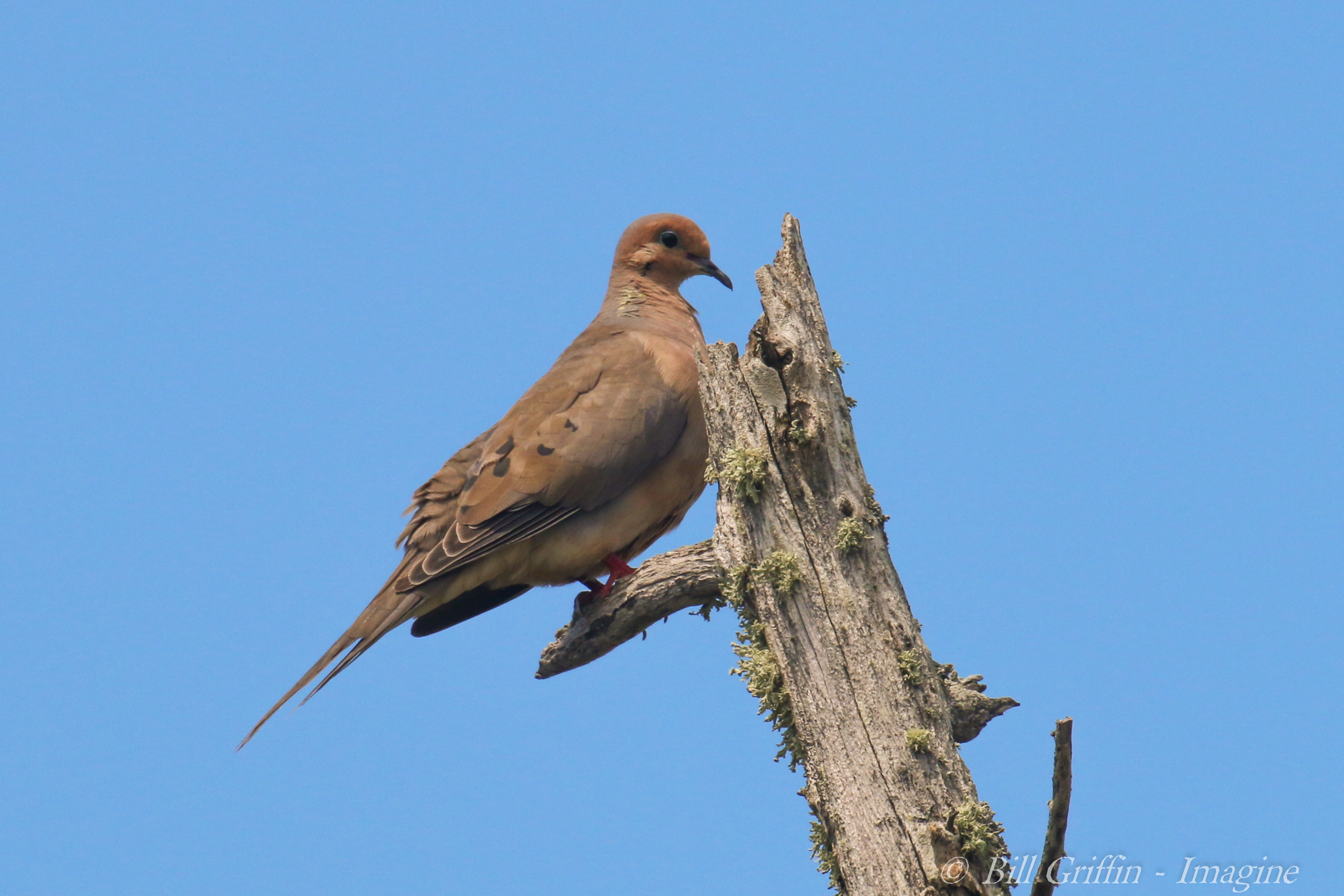
Actually, that’s a Herring Gull.

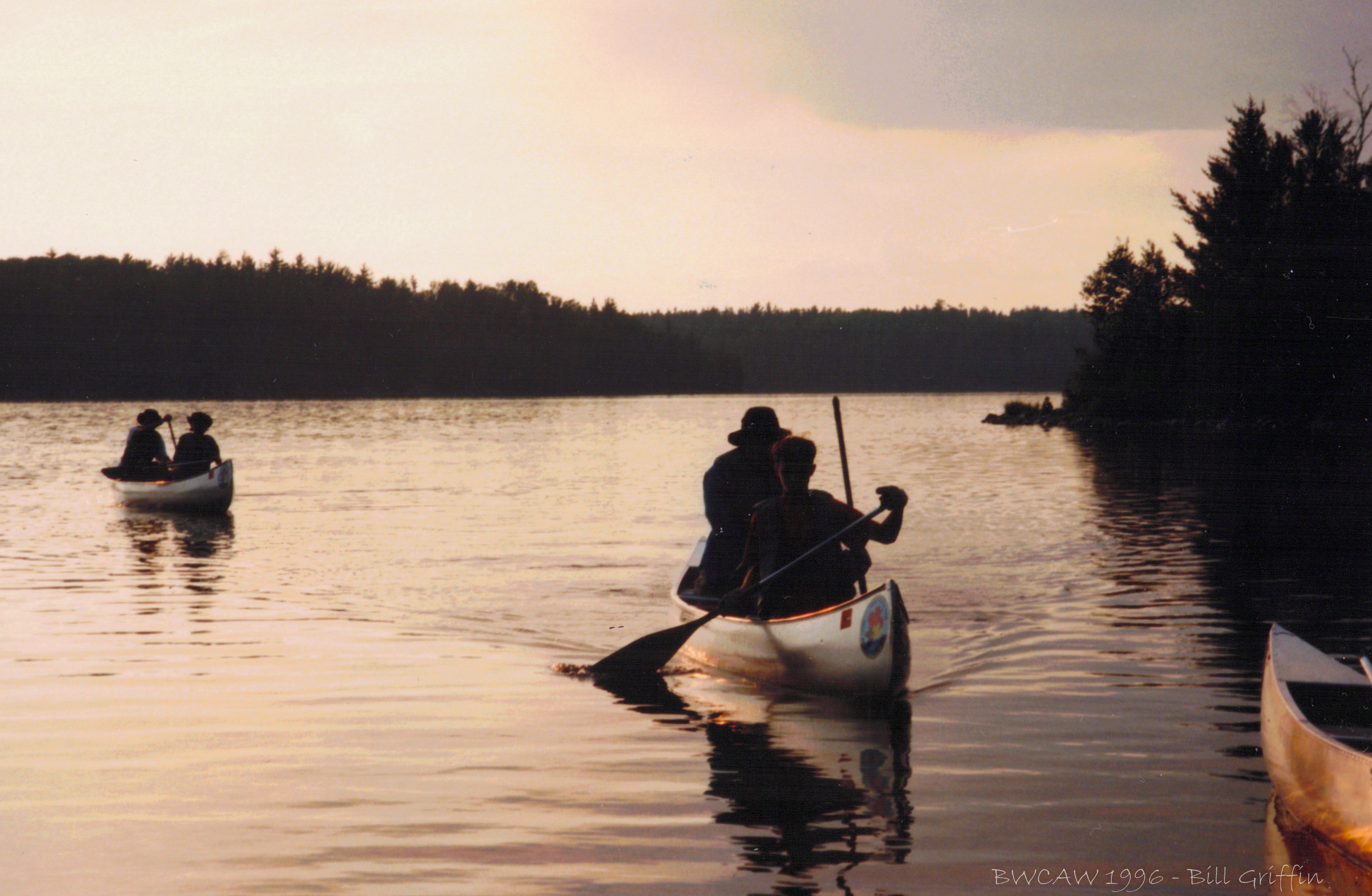
Day 7 of our Boundary Waters Canoe Area Wilderness adventure and Josh and I are feeling pretty fit in the lead canoe this morning. We’re almost across Ima Lake to our next portage, the other two canoes lagging. A quarter mile to starboard on a high bluff we spy a campsite of Girl Scouts watching and waving. We paddle our manly J-strokes and pay no attention to the big rocky crag jutting up out of the lake to port.

Until Fury rains from the skies.

Actually, more like flaps and squawks. Atop the crag one big frizzed-out Herring Gull chick gangles from its nest and Mom & Dad are divebombing our canoe. Josh and I whoop and splash and all but capsize as we invent a whole new series of paddle strokes.

We finally manage 50 yards of headway; the attackers call truce and return to the nest. Josh and I take a break while we check our heads for gull guano. The Girl Scouts seem to be convulsing – dreadful concern or laughter? And here come Matt and Greg and Little Brad around the point. They’re fixated on the Girl Scouts. They haven’t even noticed us.

Josh and I scull the canoe around and take a sighting. Hmmm. Direct line from us to the crag to oblivious canoe number two.

“Hey guys! Here we are! This way!”

Matt, Greg, and Brad are twenty feet from the crag when the gulls open fire. The guys cower so far below the gunwales they can’t even get a paddle into the water. It’s a couple of minutes before Josh and I can even breathe for laughing, then we start hollering that they’re going to have to put some distance between themselves and that rock.

The guys end up paddling with their hands, scrunched down in the canoe like drowned haversacks. Finally they catch up to us and they ain’t laughing. Or showing their faces to the Girl Scouts. At least we can’t see any fresh blood.

The five of us cool off for a minute. We look back. Around the point come Everett and Big Brad in canoe number three. Hmmm.

.     .     .     .     .     .     .
.     .     .     .     .     .     .

Gull Skeleton

In the first verse I find his skeleton
nested in shore grass, late one autumn day.
The loss of life and the life which is decay
have been so gentle, so clasped one-to-one

that what they left is perfect; and here in
the second verse I kneel to pick it up:
bones like the fine white china of a cup,
chambered for lightness, dangerously thin,

their one clear purpose forcing them toward flight
even now, from the warm solace of my hand.
In the third verse I bend to that demand
and – quickly, against the deepening of the night,

because I can in poems – remake his wild eye,
his claws, and the tense heat his muscles keep,
his wings’ knit feathers, then free him to his steep
climb, in the last verse, up the streaming sky.

Jonathan Revere

POETRY magazine, April 1971, The Poetry Foundation.

.     .     .     .     .     .     .
.     .     .     .     .     .     .

Seasonal

Summer-long the gulls’ old umbra cry
unraveled ease
but certain waves went by, then by.
The sky shook out the days.

The seabirds’ hunger rose in rings,
flung rock-clams to their shatterings,
raked gullets full, the bone-bills scraped.

High noon: oceans of time escaped.

++++++++++ *

All winter we slept benched together,
breakers, sleepdrunk children in a car
not conscious where they go.

We kneaded bread, kept out the weather,
while old suspicions huddled by the door,
mice in the snow.

++++++++++ *

In spring, the leaving bloomed—
oak leaf unfurled, a foot, resplendent
vigorous, aching to shake loose
but still dependent.

One morning moongreen loaves
rose into bones that rose to lift
our skin like sleeves,
our time together’s revenant.

++++++++++ *

Perennial fall, come cool the cliffs,
bring quiet, sulfur, early dark.
Represent as you must: dusk, dying, ends
and row us into winter’s water:

The body, wind-whipped, forms stiff peaks,
ice settles in the marrow bone.
At the chest, the live stone breaks against the beak,
beak breaks against stone.

Maggie Dietz

from Perennial Fall. Copyright © 2006 by Maggie Dietz. Reprinted in POETRY magazine online, The Poetry Foundation.


.     .     .     .     .     .     .

.     .     .     .     .     .     .


On a Political Prisoner

She that but little patience knew,
From childhood on, had now so much
A grey gull lost its fear and flew
Down to her cell and there alit,
And there endured her fingers’ touch
And from her fingers ate its bit.

Did she in touching that lone wing
Recall the years before her mind
Became a bitter, an abstract thing,
Her thought some popular enmity:
Blind and leader of the blind
Drinking the foul ditch where they lie?

When long ago I saw her ride
Under Ben Bulben to the meet,
The beauty of her country-side
With all youth’s lonely wildness stirred,
She seemed to have grown clean and sweet
Like any rock-bred, sea-borne bird:

Sea-borne, or balanced in the air
When first it sprang out of the nest
Upon some lofty rock to stare
Upon the cloudy canopy,
While under its storm-beaten breast
Cried out the hollows of the sea.

William Butler Yeats

reprinted in POETRY magazine online, The Poetry Foundation.


.     .     .     .     .     .     .

Yeats wrote On a Political Prisoner at the beginning of 1919 as the Anglo-Irish war for independence was about to explode. It refers to a woman he admired and loved (scholars differ on her exact identity) who had been imprisoned for her strong nationalistic beliefs. Yeats supported Irish home rule but had become disenchanted with radical politics, and the poem reflects that ambivalence in describing the woman’s mind as bitter, abstract thing while still admiring her patience and gentleness in befriending the gull.

.     .     .     .     .     .     .

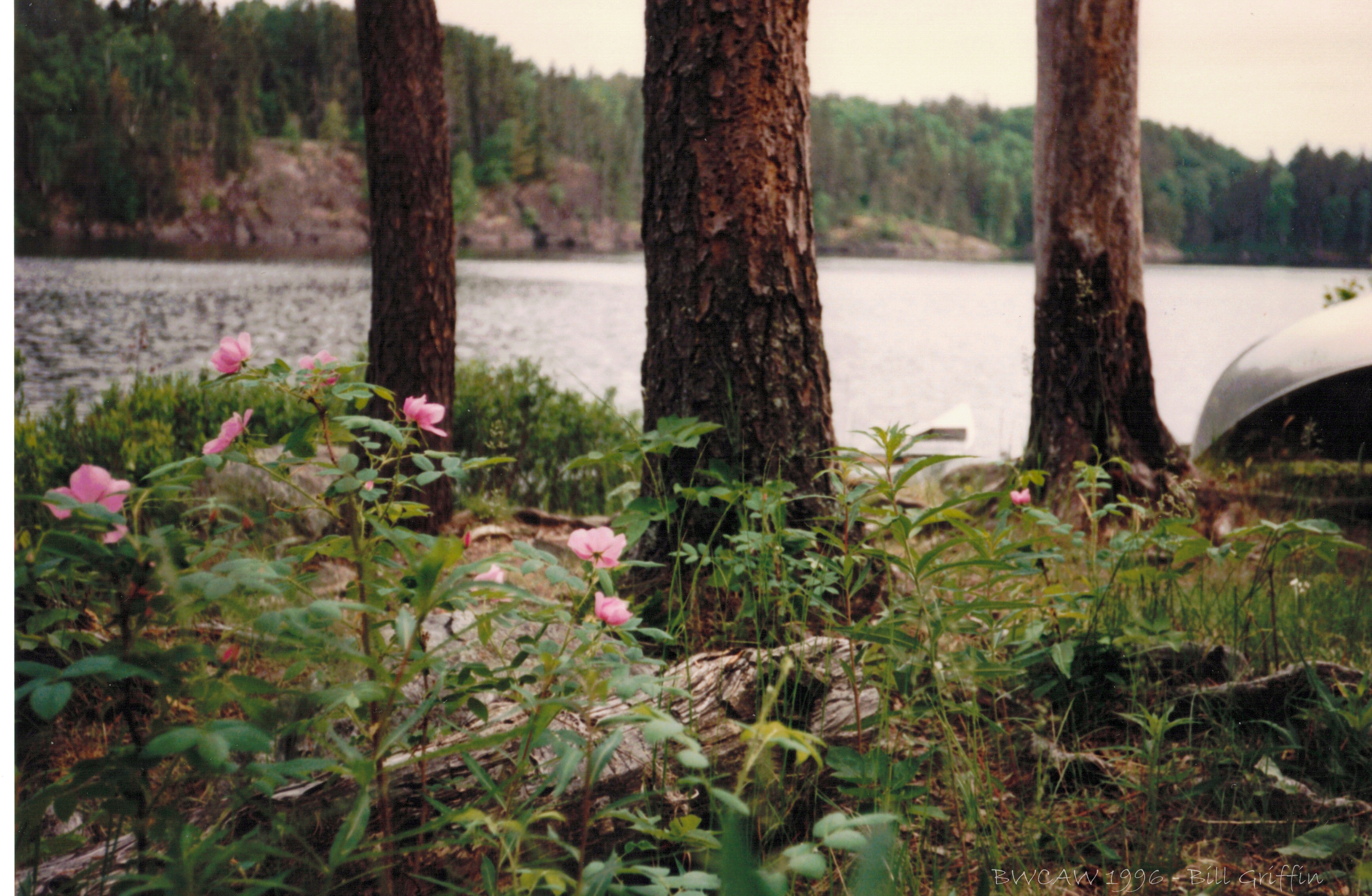
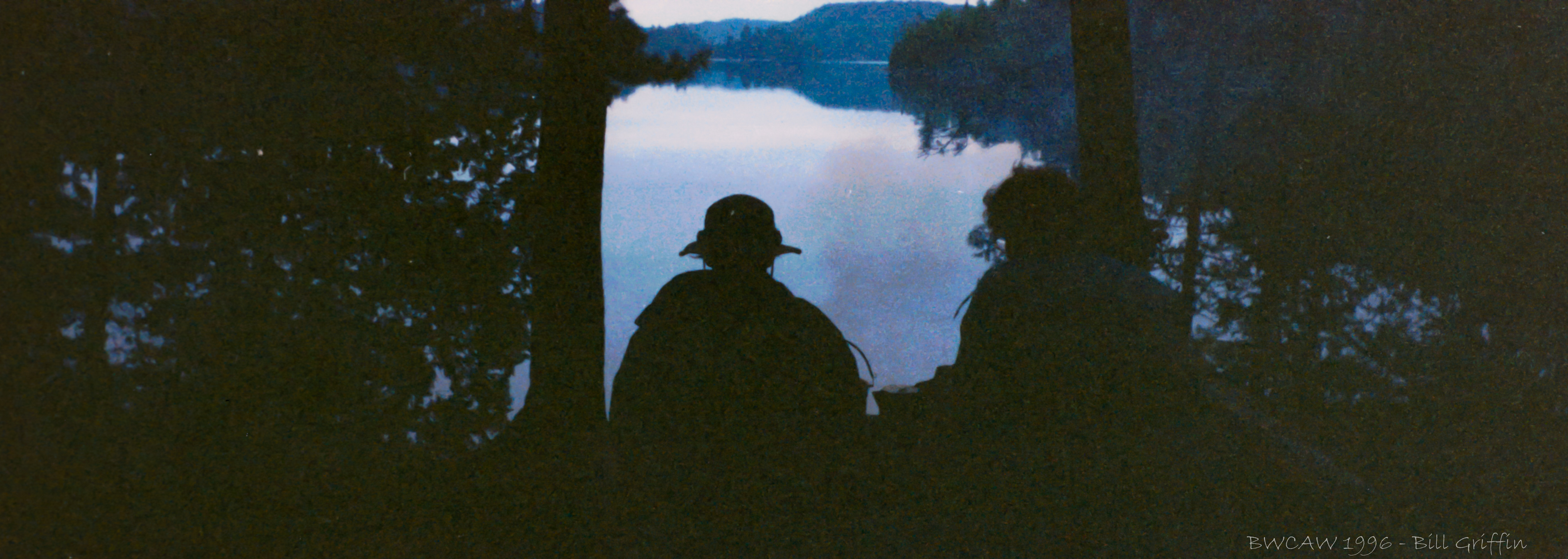
The Terror of Gull Rock occurred in June, 1996 when I and my son Josh as co-leader shepherded a little crew of Boy Scouts through the Boundary Waters Canoe Area Wilderness in northern Minnesota. Nine days on the water, 28 lakes traversed, 33 portages (carrying packs and canoes) = 70 miles afloat and afoot. We lived to tell the tales and there were plenty of tales. Thank you for all that paddling and for eating my cooking to Everett, Greg, Matt, and Brad, and to Big Brad our summer intern. There ain’t no place more glorious than the middle of nowhere.
 

.     .     .     .     .     .     .

IMG_1609

Read Full Post »

[with poems by Donald Hall and Charles Martin]

Have you ever imagined, while walking a well-worn woodland trail, simply stepping off into the forest? What if you moved just ten feet, twenty, into the trees? Would you be standing on a spot untouched by human feet for years? Decades? Forever?

I considered this years ago when I led, with my son Josh as co-leader, a little crew of Boy Scouts on a 10-day canoe trek in the Boundary Waters Wilderness of northern Minnesota. We camped each night on the shore of different lake. Some mornings (sunrise 0400) while they still slept I walked away from the water into the trackless forest. Did the last human rest on this lichen crusted boulder more than a hundred years ago, a French voyageur taking a break from trapping? A thousand years ago, a young Anishinaabe scout hunting meat for his village? Ten thousand years ago?

Now Josh spends every day it’s not raining trekking the Blue Ridge & foothills as a surveyor. When did a human foot last jump this creek or climb this unforgiving steepness? This corner marked by a chestnut ten feet in girth – today Josh must discover the remnant of its stump. How long must the earth rest from the tread of human feet before all sign of our passage is erased? How far is it from here to the middle of nowhere?

Last Saturday I joined a trail crew to maintain a little section of the Mountains-to-Sea trail near Elkin. The MST is a work in progress – departing Elkin hiking east, you follow Rte 268 most of the way to Pilot Mountain. Our day’s assignment was an orphan – 1 ½ miles of footpath leading away from the road and on through the woods with no trailhead or connectors. Probably no one had walked this way since it was last maintained in 2020.

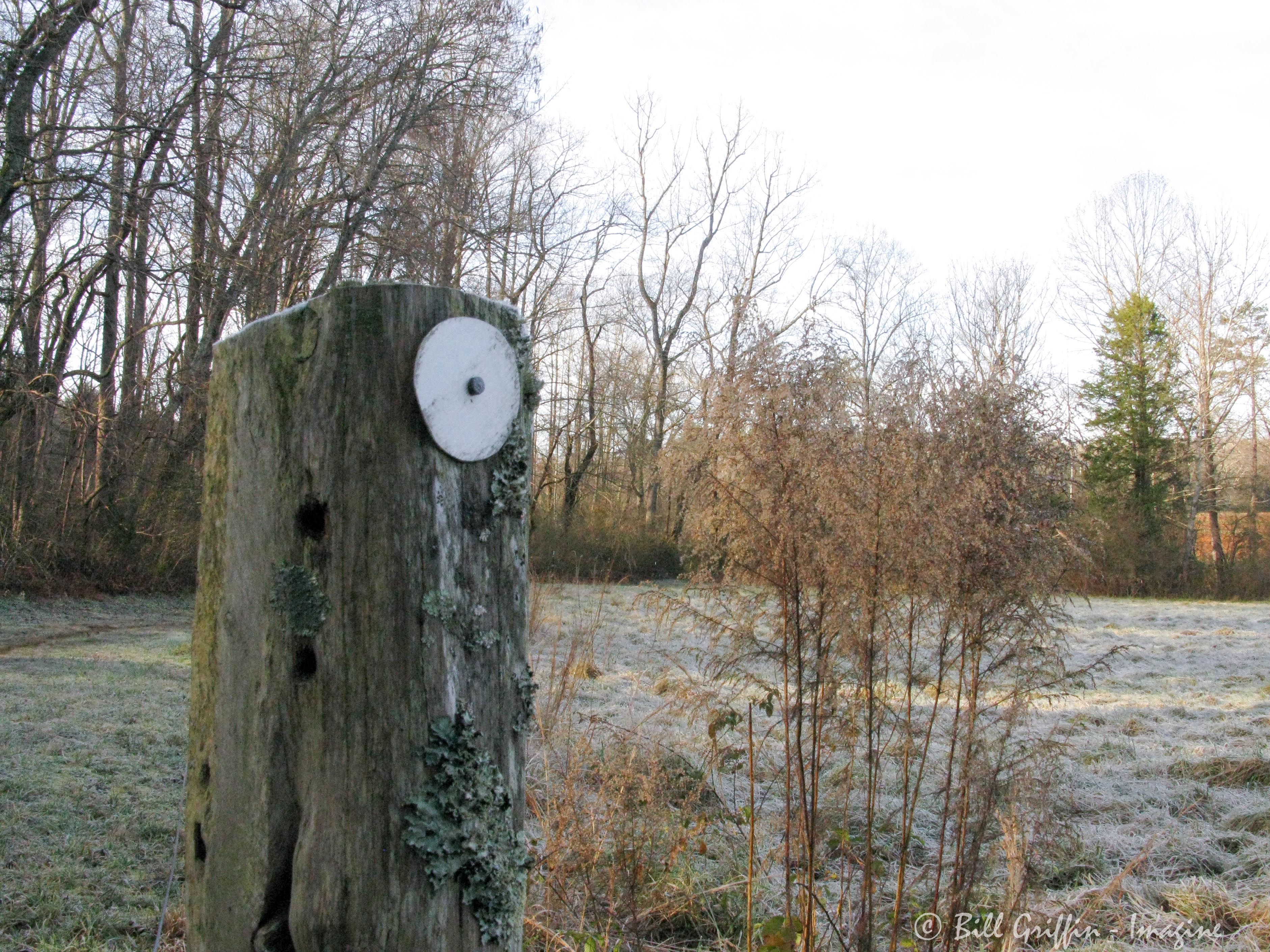
Everywhere a little sun penetrates the undergrowth thrives: Goldenrod, Burnweed, Wingstem, Boneset, all manner of grasses native and exotic – summer asters up to eight feet tall, especially through the Duke Energy right-of-way beneath power lines. Add obstructions from grapevine, Smilax, fallen trees and in one single year the trail had become impenetrable, almost disappearing except for the white circular MST blazes on the trees.

In a few more years it might have lead to the middle of nowhere. Which is how you get to the middle of everywhere. Which is the trail I want to walk.

.     .     .     .     .     .     .

.     .     .     .     .     .     .

Surface

The surveyor climbs a stonewall into woods
scribbled with ferns, saplings, and dead oaktrees

where weltering lines trope themselves into stacks
of vegetation. He sees an ash forced around a rock

with roots that clutch on granite like a fist
grasping a paperweight. He stares at hemlocks

rising among three-hundred-year-old sugarmaples
that hoist a green archive of crowns: kingdom

of fecund death and pitiless survival. He observes
how birch knocked down by wind and popple chewed

by beaver twist over and under each other, branches
abrasive when new-fallen, turning mossy and damp

as they erase themselves into humus, becoming
polyseeded earth that loosens with lively pokeholes

of creatures that watch him back: possum, otter,
fox. Here the surveyor tries making his mark:

He slashes a young oak; he constructs a stone
cairn at a conceptual right-angle; he stamps

his name and the day’s date onto metal tacked
to a stake. His text established, he departs

the life-and-death woods, where cellular life keeps
pressing upward from underground offices to read

sun and study slogans of dirt: “Never consider
a surface except as the extension of a volume.”

Donald Hall

from Poems for a Small Planet: Contemporary American Nature Poetry. Edited by Robert Pack & Jay Parini, A Bread Loaf Anthology, © 1993, Middlebury College Press.

.     .     .     .     .     .     .

.     .     .     .     .     .     .

Both of today’s poems are from Poems for a Small Planet, edited by Robert Pack & Jay Parini. This next one by Charles Martin stuck to my soul like beggar lice – I’ve imagined myself stuck in a dry spell for the past several weeks. I can’t resist the epigraph by Randall Jarrell, one of North Carolina’s most luminous poets. While waiting for lightning to strike I’ll learn to endure the rain running off my chin.

.     .     .     .     .     .     .

Reflections after a Dry Spell

++++ A good poet is someone who manages, in a
++++ lifetime of standing out in thunderstorms, to be
++++ struck by lightning five or six times.
++++ — Randall Jarrell

And the one that took this literally
Is the one that you still sometimes see
In the park, running from tree to tree

On likely days, out to stand under
The right one this time – until the thunder
Rebukes him for yet another blunder. . . .

But the one who knew it was nothing more
(That flash of lightning) than a metaphor,
And said as much, as he went out the door –

Of that one, if you’re lucky, you just may find
The unzapped verse or two he left behind
On the confusion between World and Mind.

Charles Martin

from Poems for a Small Planet: Contemporary American Nature Poetry. Edited by Robert Pack & Jay Parini, A Bread Loaf Anthology, © 1993, Middlebury College Press.

.     .     .     .     .     .     .

.     .     .     .     .     .     .

[My immense gratitude to the Elkin Valley Trails Association for imagining, creating, maintaining, and improving the Mountains-to-Sea Trail from Stone Mountain State Park to Elkin and onward east through Surry County, North Carolina. And for inviting this lunkhead with a shovel to join in.]

.     .     .     .     .     .     .

2016-10-17a Doughton Park Tree

Read Full Post »

[with 3 poems by Shelby Stephenson]

While I sit with Dad in the hospital we make a checklist of everything we need to do to close up the house. He had a TIA last night – “a little health problem” is how he’ll describe it to the agent at the News & Observer to explain why he’s canceling his subscription. His scans show no stroke. We wait for the doctor to discharge him, then he’ll take it easy (will he?) for a few days while I do laundry and winterize the cottage in Pine Knoll Shores, avoid the Labor Day traffic for the drive back to Winston.

Check lists. Dad already has a dog-eared collection, each one another page on his yellow pad. I create an updated list on my phone while we wait – first entry, “check Dad’s check lists.” When we finally buckle in on Tuesday and tick off the last item we will have accomplished something.

Or so I want to think. The next five hours in the car generate their own list: find accessible bathrooms, some roadside shade for the lunch we packed. Damn, forgot to give Mom a COVID mask at the rest stop. Unload, unpack, raid the freezer for supper. Make sure we’ve sequestered all the medical records for his appointment with his local doctor.

When I shoot a macro of a flower I want that anther tack sharp, but the blur of stem and leaves hinders identification of the species. Hey, I know all these lists I make are just to keep me hopping from one moment’s task to the next but I see the big picture. I read Dad’s echocardiogram and joke that he’s 94 in the body of an 80-year old. I know there’s a check list whose final box is his final breath.

But then flip the page. Another list. At the top: Remember. Let me tell you all the stuff we talked about on that drive home.

.     .     .     .     .     .     .

[TIA – transient ischemic attack: a brief episode of decreased brain perfusion
that may herald an impending stroke]

.     .     .     .     .     .     .

The Local Falls

When I come home I walk to Middle Creek
through thirty minutes of springtime bushes
to where the Mouth of Buzzard Branch trickles
with water to bridge the bubbly rushes.

Dangling their legs, a few bank-fishermen
mumble to Chub Robin full moon in May,
cigars and cigarettes in roll-your-owns,
eyes on lead-lines for bottom feeders they

bait with grub-worms dug behind the outhouse.
They fish too with fat swamp-worms freed from mud
near head of Cow Mire’s spring, a pudding-souse
Time works into clumps like huge Angus cuds.

All’s quiet: Daddy sets a turtle-hook
and baits it with chicken guts, one motion
as he stabs the stob, slings the cord the brook
settles, waffling under his location.

His hands gather Nature’s complete cunning.
Love allows for fresh food on our table,
His tongue, lips, face, limbs, and actions winning
affection of his wife, my mother, Maytle.

He’s gone; I help turtles cross Sanders Road.
Interstate-40 whizzes loud nearby.
Every waking day’s a different load.
What glory warriors must have wooed with sighs.

Pollution’s out of honor and our shame.
The sunfish’s eyes bloat like old eyes.
They wear bumps like my psoriasis (blame
chemicals on crops – fertilizers).

I bid the owl keep me pitched with tenor
to carry this: run blue-tailed swamp-rabbit?
I hear the beagles yow-yowing: Jake Mills
says those rabbits taste like the swamp run-off.

Shelby Stephenson

.     .     .     .     .     .     .

These selections are from more, by Shelby Stephenson; Redhawk Publications, Hickory, North Carolina; © 2020 Shelby Stephenson. Used by permission of publisher.

A new book by Shelby Stephenson in his 82nd year is an anchor to the past and a beacon to the future. His lines settle you down and hold you fast like the mud near Cow’s Mire spring. His lines open your heart to love, death, redemption – to all of life. His lines advocate for the heritage of language and the language of heritage spoken in unflinching truth. There is no sentimentality here. And woven through each poem is the music of his tenor cum baritone – never forget Hank Williams! – and the gentle humor that wraps an arm around your shoulder and lets you know you’re welcome here.

Shelby has been professor, editor, NC Poet Laureate, minstrel, and most of all traveling ambassador of the word. If you’ve met him or heard him, you’ve been encouraged to read more, to write more. During years of submitting to Pembroke Magazine while Shelby was editor, I came to treasure his rejections, hand written on a tiny slip, invariably with a message like “not quite, Bill, but keep trying.”

Shelby Stephenson still lives on his family farm, Paul’s Hill; his family has “owned” it for generations. Shelby always adds those quotation marks. It must be quite a lofty hill because from there Shelby seems to be able to survey and discern all of human nature, as well as animal and earth nature. His poems may nest in the springtime bushes near Middle Creek but they fly over the countryside and lighten all the sky. He reminds me of North Carolina’s second Poet Laureate, James Larkin Pearson (1879-1981), who in his poem Fifty Acres (1937) sees all the world from his home in Boomer, Wilkes County, NC.

I’m just beginning to see a bit myself.

More please, Shelby – more!


.     .     .     .     .     .     .

Circling Sonnet Number Two

You call it “realistic” that we should stay
where we are, you among your friends for life
and I, here, on Paul’s Hill miles away
from you and the very feel of a knot
sanctimonious ceremonies would
sour tightly sweaty aspersions barren
of Discord and Disdain and just a ton
of regret that we two should let heaven
outstrip all praise for earthly things and fame.
The easy new is not décor but blood
turned jelly in emotions and refrain.
Your reputation may dull those whose load
might turn both sides from love’s scent
if we do not sound out Love’s instrument.

Shelby Stephenson

.     .     .     .     .     .     .

For Robert Frost

When you came to Memorial Hall to read,
Your black coat made your white shirt muss your hair,
As if you were standing outside in wind.
In a speech class I presented a “there”
in “Birches,” letting music in your lines
Lead the way of conversation in rhyme.

I did not try to imitate you, as ome would.
That crackle down in your throat, the doting
Tone seeking for you that turn in your woods,
When you paused, said someting about the road
You took that made for you the difference.
You reminded me of Luke the Drifter,

One of my childhood heroes who brought me
To songs and music, along with sermons
That wadded the pulpit at my Rehobeth
Primitive Baptist Church, yes, the come-ons,
A Brother, never a Sister, lining
Off a hymn for me in perfect timing.

I had never been to a poetry
Reading, by the way, would not have been there
Except for Charlie Whitfield who barged in
My dorm room in Lewis, saying, “Shelby,
You want to see a cadaver?” (Charlie
Was studying hard for medical school.)

I was silent; my mind flashed to Rehobeth,
Mortality, death, promises, and grace,
While there beside a long scalpel she lay,
Uncovered, more naked that a fish, scaled.
I said, “Charlie, let’s get out of this place.”
We arrived at The Hall; I sat blank-faced.

A few years later I failed the law; my
Memory never did lose your presence.
I bought easements, rights-of-way, for towers
Around New Hampshire, saw birches bending,
And boulders sunning, plus those rambling walls,
And I could hear you leading me, always.

Shelby Stephenson

.     .     .     .     .     .     .

.     .     .     .     .     .     .

.     .     .     .     .     .     .

2016-10-17a Doughton Park Tree

Read Full Post »

« Newer Posts - Older Posts »