Feeds:
Posts
Comments

Posts Tagged ‘nature poetry’

 . 
[with poems from Shelby Stephenson’s PRAISES]
 . 
The World Leads Us to the Arts and Back
+++ for Sam Ragan (December 31, 1915 – May 11, 1996)
 . 
How glad I am that my school helped move your hand toward journalism
and poetry and democracy with a little “d.” Cleveland High School:
This land of ours if full of schools, schools both great and
 . 
small; when it comes to praising them, why my school beats them all.
I’m proud you graduated from my Johnston County alma mater. I’m
sorry your family lost the farm in Granville, around Berea, Shake Rag,
 . 
Stem. You came to Bailey’s Crossroads, lived near Ebenezer Church,
among the Ogburns; your love of words showered acres, snuffling the
burning crosses. Hope was your story, lyric, svelte. Poverty? You
 . 
wrote in “That Summer”: “a wild turkey flew out of the woods / And
even if it was out of season, He fed a family for two days. / And it was
better than that mud turtle / That looked like mud and tasted
 . 
like mud.” I loved to walk into your office piled high with papers.
You’d peer over them, rise, jingle some change in your pocket and say,
“Well, what do you know?” “On a scale of one to five, Sam, about
 . 
minus two,” I’d say. Your vacations you took in your office, mostly.
Sunday mornings? When I’d drive by, I’d see your Buick parked beside
The Pilot.
 . 
Shelby Stephenson
from PRAISES, Main Street Rag Publishing Company, Charlotte, North Carolina. © 2021.
 . 
❦ ❦ ❦
 . 
Can a poem which is simply a list mean anything? Can a list of place names – counties and towns and neighborhoods and destinations – catch in the throat and widen the eyes? What are all these words if not the name someone has found for home?
 . 
Canton, Carolina, Carrollton, Carpinteria, Cary, Chapel Hill,
 . 
Driving south from Ohio, we exit I-77 at Pearisburg (the four-lane still under construction up the escarpment), careen switchbacks from Fancy Gap to Mount Airy, then cross the state line into North Carolina: at their first glimpse of Pilot Mountain, my parents break out in unison every time, “Here’s to the Land of the Longleaf Pine, a summer land where the sun doth shine . . . .”
 . 
Cleveland, Columbia, Dan, Dauphin, Durham, Edenton,
 . 
But I wasn’t born here. I didn’t grow up here. A couple of summer weeks in Morehead with Nana, Bogue Sound funk and fig preserves; in Hamlet, the iron bed in the back bedroom with Grandaddy’s snores, his Old Spice and gun oil; a swing past the house on Runymede near Old Salem where Mom grew up – phantoms, atavisms, only glimpses and dreams, none of them really my home. So why do the names in Shelby Stephenson’s Precedence, the introductory poem in his book PRAISES, why do they have the power to squeeze my heart?
 . 
Hamlet, Harnett, Highlands, Hillsborough, Huntersville,
 . 
Five days after we married Linda and I moved to Durham: June 20, 1974. That’s hot breath on the neck of fifty years in North Carolina and Lord how I have wanted to call this place my home! The generations of Griffins plowing fields in Union County, can they bring me home? Great-grandmother Griffin holding me on her knee in that old photo in Mt. Gilead above the dam, can she? Two kids born in Durham County General, two grandkids at Hugh Chatham in Elkin, surely they must be able. There must be something that can heal me of the apprehension that in any conversation someone may at any moment accuse, “You’re not from around here, are you?”
 . 
Nashville, New Bern, New Hope, Neuse, Northampton, North Wilkesboro
 . 
This book of Shelby’s has come as close as anything. His long and careful listing A to Z – I read and recall all the clay and sand and sod Linda and I have trod. That summer we lived in Clinton and she learned to drive. The sweet corn from his garden Dr. Murphy bestowed when I externed with him in Hillsborough. Two little kids with us on those rotations in Fayetteville, Goldsboro, Mt. Olive. Every detail of all the lighthouses climbed, of Tryon Palace, of the Town Creek Mounds, of our little patch of Blue Ridge. Hiking the state parks and greenways and nature trails in all seasons and all weathers, even Nags Head Woods in February and Roanoke Sound beginning to freeze. Years and changes and the earth moving beneath our feet.
 . 
Wake Forest, Waxhaw, Weaverville, Weymouth, Winston-Salem
 . 
Dang, I guess we are from around here. Thank you, Shelby, you who still live on Paul’s Hill in the house where you were born, thank you for opening the door that invites us all inside to discover that we’re home.
 . 
 . 
After that one prefatory poem, each page of Shelby Stephenson’s PRAISES is just that – praise and homage for those who have created literature and art in North Carolina for 300 years. He begins with John Lawson (b. 1674) and George Moses Horton (b. ~1798) and ends a hundred pages later with Jill McCorkle (b. 1958) and Randall Kenan (b. 1963). Many of the poems are rooted in anecdote and personal friendship but they reach into the heart of everything that makes the writing vital. Perhaps there is no North Carolinian past or present who could have created such a treasure. As Ron Smith writes on the cover, “Shelby Stephenson does not offer lyric effusion in a neutral space; he demonstrates that Emerson’s “the mind of the Past” is best encountered through the generous sensibility of a grounded poet. . . . This volume should be in every collection devoted to Southern Studies.”
 . 
. . . Every form grows beauty 
and impermanence, layers of voices, precise as one head, hand, face,
 . 
page, pen.
 . 
 . 
❦ ❦ ❦
 . 
Making Words Breathe Conscience
+++ for Jaki Shelton Green (June 19, 1953 – )
 . 
One day I went to her poetry reading.
I stole tones and breaths of her poet’s song.
I could hear Billie Holliday singing “Strange Fruit.”
I wanted to ask for mercy,
 . 
Undo history’s botched economics,
when the mercury’s 103 and there is
more to do with heat than trees.
 . 
I stubbed my toe in the room,
to doubt the river branching
blossoms, watery,
 . 
in Efland
running
with wild deer and rabbits,
Carolina wrens turning
oceans to hope,
a thing with hymns
and children whiling
desire, their shoes digging
ruts a flagpole schools.
 . 
Possums wobbled
cobbled swamps,
home of the blue-tailed hare.
 . 
Listen, she hears this.
 . 
Shelby Stephenson
from PRAISES, Main Street Rag Publishing Company, Charlotte, North Carolina. © 2021.
 . 
❦ ❦ ❦
 . 
 . 
❦ ❦ ❦
 . 
Looking for the Apple Tree
 . +++ for Fred Chappell (May 28, 1936 – )
 . 
+++ HIS NAME that was ever used was Stovebolt Johnson and he was a short
+++ black man, heavily muscled, a chunk of a man.” (The opening sentence in
+++ the story “Blue Dive” in Moments of Light)
 . 
++++++++++ I
 . 
He loves to salute with a drink
And raise a wrinkling thumb
Towards intellection, think,
I mean, then throw all thought to some
Seeming lore a shortstop
Might snag, talking up baseball.
He can carry on about a hog-box
And make you see the hog, a Farmall
In the mix, and Pope, too,
Alexander, I mean: never would he
Name a poem for any part of the pope, though.
His work’s morality plays the wee
Canton, his stomping ground, though he left
It here and there,
For occasional sightings as allegory.
 . 
++++++++++ II
 . 
I’ve seen Lee Jones ride a bucket down
To clean out our lot-well
And to retrieve my mother’s doggie, brownie.
I read River to a bunch of students
Once and they sprouted shoots and shouts
When I danced in front of them,
Letting Virgil Campbell swear he could
Shoot the god-raging Pigeon swurging
In his pants, the yard, the rose
Garden gate, open, debris watering fast
Familiar voices gushing from a cathedral funeral,
Yet common as a mule drinking water from a trough,
 . 
And, lo, Fred came out with three more volumes,
Bloodfire, Wind Mountain, Earthsleep,
And I was sore surprised the tenor
Of the faces of parents and grandparents,
The children passing by, the cornered bull
 . 
In the pasture, all lounged animals and human flesh
In lineages for miles to keep away
The drinking Virgil put into words,
The fish slapping and sliding for lures
Snagging murmurs of drifting glasses
Shot-filled and choked with gregarious whiffs
Undoing his own talking.
 . 
++++++++++ III
 . 
In prose, essays, fiction,
Short stories, forms diction,
Multi-told tales along
Side villanelles, sestinas, you name it, Infinity, Plus One,
The scattered debris of chewed billy goat wads,
the cuds of cows on the Blue Ridge, the lows
Murmuring indolence dependent
On freedom he lends
To every piece, hails,
Then takes on the world again and nails
A greeting the page spans – he makes me laugh right out and smile
Aslant at rhythms working syllables mile by mile
Until haints themselves
 . 
wallow down beside me, as if to say,
Goodnight, Somewhere, there’s a beyond
The world’s engine dawdles:
The raised fist for freedom
Shines humor for consolation;
Wanting not to be bored, the Muse of Music
Surprises him with more news,
A book of verse, collection of stories, another novel.
Universes, constellations, – lower
Shoals for minnows fanning
Swirling apple blossoms bedding
 . 
Shelby Stephenson
from PRAISES, Main Street Rag Publishing Company, Charlotte, North Carolina. © 2021.
 . 
❦ ❦ ❦
 . 
Shelby Stephenson earned many awards for teaching during his long tenure at UNC Pembroke, where he also edited Pembroke Magazine and raised it to national prominence. He served as Poet Laureate of North Carolina 2015-2018. Recent books: Possum (Bright Hill Press), winner of Brockman-Campbell Award; Elegies for Small Game (Press 53), winner of Roanoke-Chowan Award; Family Matters: Homage to July, the Slave Girl (Bellday Books), the Bellday Prize; Paul’s Hill: Homage to Whitman (Sir Walter Press); Our World (Press 53); Fiddledeedee (The Bunny and the Crocodile Press; reprinted by Press 53); Nin’s Poem (St. Andrews University Press); Slavery and Freedom on Paul’s Hill (Press 53); Shelby’s Lady: The Hog Poems (Fernwood Press). He lives at the homeplace on Paul’s Hill, where he was born.
 . 
Author Clyde Edgerton says of Shelby: “He writes poems that skin raccoons, sweeten the pot-likker, shine through the window, and sing like a gold and silver bird. I’m lucky to know the boy.”
 . 
 . 
❦ ❦ ❦
 . 
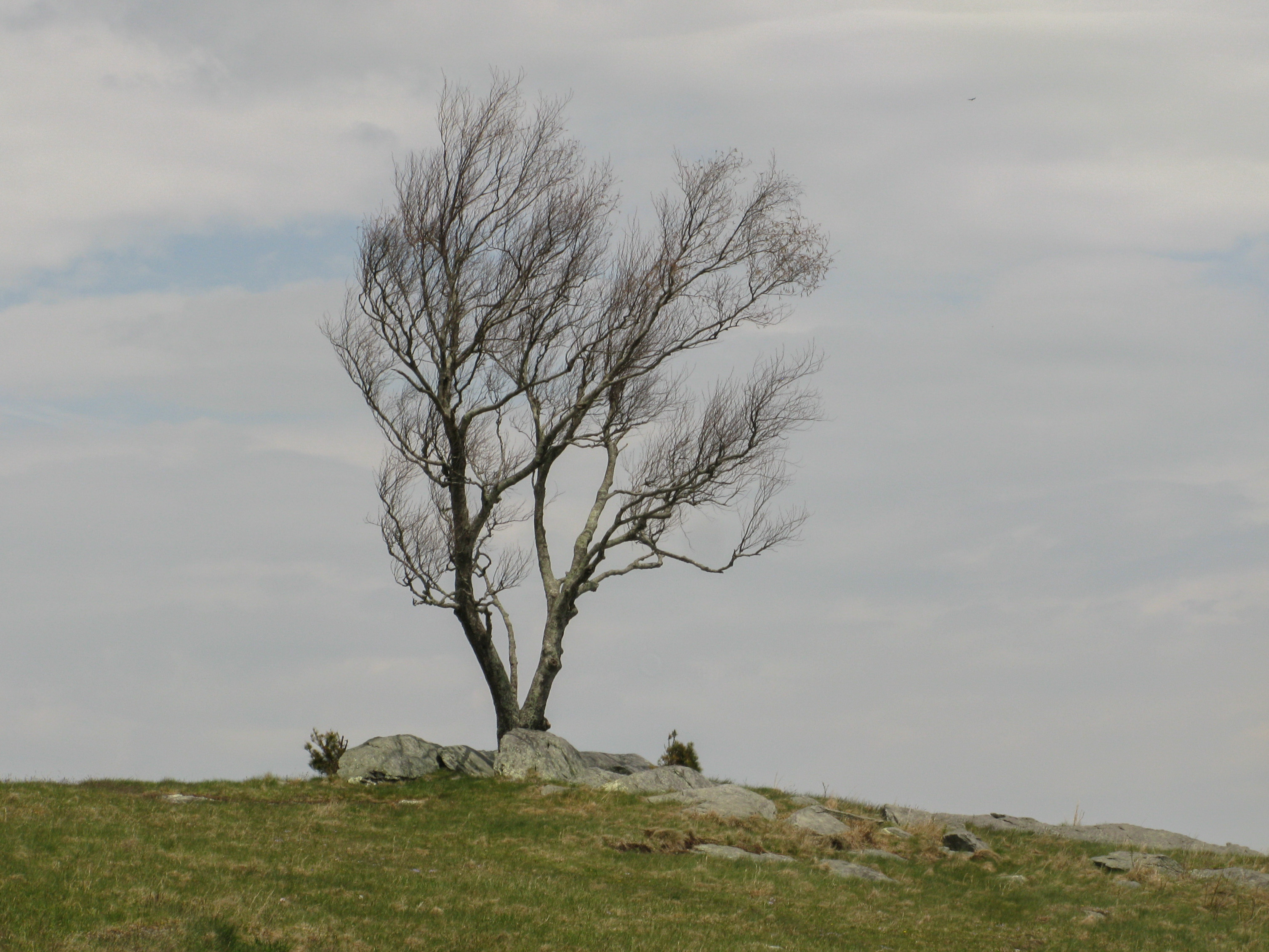
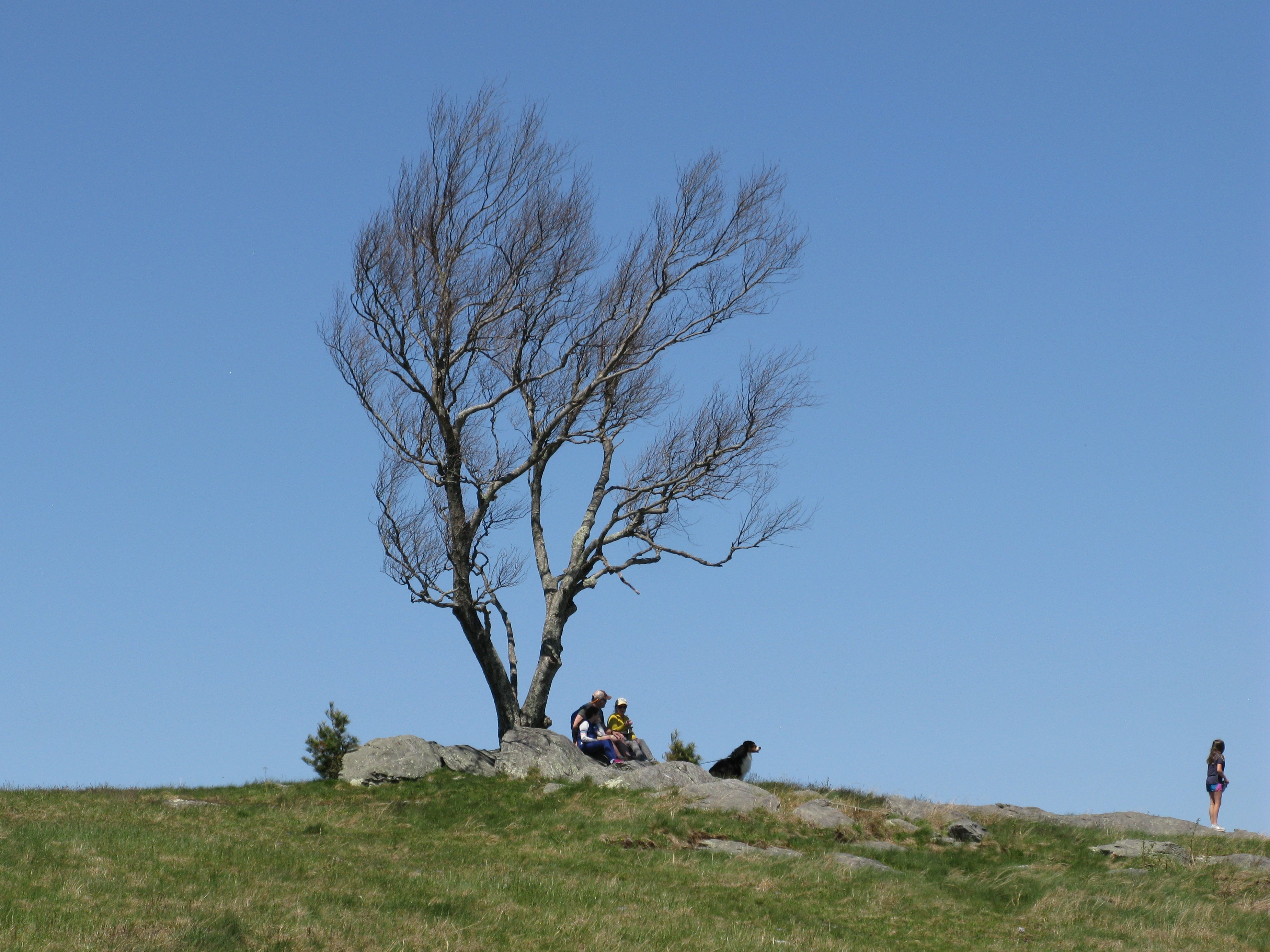
Doughton Park Tree -- 5/1/2021

Read Full Post »

 . 
[3 poems from The ECOPOETRY Anthology]
 . 
from Song of Myself
 . 
6
A child said What is the grass? fetching it to me with full hands;
How could I answer the child? I do not know what it is any more than he.
 . 
I guess it must be the flag of my disposition, out of hopeful green stuff woven.
 . 
Or I guess it is the handkerchief of the Lord,
A scented gift and remembrancer designedly dropt,
Bearing the owner’s name someway in the corners, that we may see and remark, and say Whose?
 . 
Or I guess the grass is itself a child, the produced babe of the vegetation.
 . 
Or I guess it is a uniform hieroglyphic,
And it means, Sprouting alike in broad zones and narrow zones,
Growing among black folks as among white,
Kanuck, Tuckahoe, Congressman, Cuff, I give them the same, I receive them the same.
 .  . 
And now it seems to me the beautiful uncut hair of graves.
Tenderly will I use you curling grass,
It may be you transpire from the breasts of young men,
It may be if I had known them I would have loved them,
It may be you are from old people, or from offspring taken soon out of their mothers’ laps,
And here you are the mothers’ laps.
 . 
This grass is very dark to be from the white heads of old mothers,
Darker than the colorless beards of old men,
Dark to come from under the faint red roofs of mouths.
 . 
O I perceive after all so many uttering tongues,
And I perceive they do not come from the roofs of mouths for nothing.
 . 
I wish I could translate the hints about the dead young men and women,
And the hints about old men and mothers, and the offspring taken soon out of their laps.
 . 
What do you think has become of the young and old men?
And what do you think has become of the women and children?
 . 
They are alive and well somewhere,
The smallest sprout shows there is really no death,
And if ever there was it led forward life, and does not wait at the end to arrest it,
And ceas’d the moment life appear’d.
 . 
All goes onward and outward, nothing collapses,
And to die is different from what any one supposed, and luckier.
 . 
Walt Whitman (1819-1892)
collected in The Ecopoetry Anthology, Ann Fisher-Wirth & Laura-Gray Street (Trinity University Press, San Antonio, Texas, © 2020)
 . 
❦ ❦ ❦
 . 
They are alive and well somewhere . . . there is really no death
 . 
June 21 is cold and rainy. Perhaps that is why the slug feels confident to patrol the deck rail fully exposed. They (one slug being both male and female) retract their delicate ommatophora when we approach, perhaps because we are large and our movement is easily sensed. After a minute they once again extend those beautiful slender eyestalks, perhaps because we are large and easily overlooked. In a moment their glide and wander will discover a dense patch of algae shaded by a finial. Their many-toothed radula will work hard and satisfy.
 . 
Amelia and I watch until the rain drives us indoors. In a quarter hour it lessens and we return, but the slug has motored out of sight. Who knew it was so speedy? We peer under and around – no slug. She desires more slugs, so we hunt each post and rail of the deck, the green-hazed porch screens, the planters. We reach the far corner and look down into the mud and mangled trunks and branches left by this spring’s severe storm. Amelia asks why there is a layer of straw strewn across a patch of ground there.
 . 
 . 
Seeing the forecast for a week of rain, on Monday morning I had finally taken up my fire rake and attacked the old sandbox site. When April’s tornado uprooted a big maple and white oak next to it (along with a dozen other trees behind our house), it exposed the bones of half-eaten 6×6’s I’d used to build the sandbox for Josh and Margaret in 1983. I dug them up and hacked out chickweed, smartweed, much despised stiltgrass. What had once been white sand was now filled with worms and 40 years of accumulating humus. Delicious.
 . 
June 19-24 was Naturalist Challenge Week, sponsored by Great Smoky Mountain Institute at Tremont. Participate from anywhere on earth; earn points and you can win a prize – 10 points for planting pollinators. I mixed all my leftover native seeds from last fall: a tablespoon of Bluecurl my son-in-law Josh collected for me, four kinds of milkweed, some monarda and coreopsis and who knows what. I sowed them across 200 square feet now newly introduced to sunlight. I  sprinkled with straw as Amelia noticed. And around the edges I planted pumpkin seeds preserved from soup last Christmas, seeds Josh begged from his 100 year-old grandmother, perpetually propagated.
 . 
Yes, it’s late in the season for planting. Then again, who knows if we’ll even have frost this winter? Foothills NC, the new tropics. Every week Amelia and I can pause from our slug hunt, peer over the deck rail, and watch a patch of earth turning newly green. More life. I’ll save you a photo.
 . 
 . 
❦ ❦ ❦
 . 
November Cotton Flower
 . 
Boll-weevil’s coming, and the winter’s cold,
Made cotton-stalks look rusty, seasons old,
And cotton, scarce as any southern snow,
Was vanishing; the branch, so pinched and slow,
Failed in its function as the autumn rake;
Drouth fighting soil had caused the soil to take
All water from the streams; dead birds were found
In wells a hundred feet below the ground—
Such was the season when the flower bloomed.
Old folks were startled, and it soon assumed
Significance. Superstition saw
Something it had never seen before:
Brown eyes that loved without a trace of fear,
Beauty so sudden for that time of year.
 . 
Jean Toomer (1894-1967)
collected in The Ecopoetry Anthology, Ann Fisher-Wirth & Laura-Gray Street (Trinity University Press, San Antonio, Texas, © 2020)
 . 
❦ ❦ ❦
 . 
Today’s poems are from The Ecopoetry Anthology, edited by Ann Fisher-Wirth and Laura-Gray Street, with a rousing introduction by Robert Hass (Trinity University Press, San Antonio, Texas, © 2020). It is a comprehensive volume, with over a hundred twentieth- and twenty-first century poets, and the book’s opening Historic section includes, among many others, the three poets in today’s selection:
Walt WhitmanLeaves of Grass was first published in 1855 and by the second edition had doubled in length. Today’s small excerpt from Song of Myself highlights the manifold metaphor of the most common of green living things.
Jean Toomer – moved to the South in 1921 and was inspired to write Cane in 1923, a hybrid work intertwining narrative and poetry, then continued on to pursue a literary career. He became an important figure in the Harlem Renaissance.
Wallace Stevens – the vice president of an insurance company, Stevens wrote poetry late into the night and on vacations. He also wrote treatises which suggested poetry’s ability to supplant religion; his Collected Poems in 1955 won the Pulitzer Prize.
 . 
 . 
❦ ❦ ❦
 . 
from Sunday Morning
 . 
VI
Is there no change of death in paradise?
Does ripe fruit never fall? Or do the boughs
Hang always heavy in that perfect sky,
Unchanging, yet so like our perishing earth,
With rivers like our own that seek for seas
They never find, the same receding shores
That never touch with inarticulate pang?
Why set the pear upon those river-banks
Or spice the shores with odors of the plum?
Alas, that they should wear our colors there,
The silken weavings of our afternoons,
And pick the strings of our insipid lutes!
Death is the mother of beauty, mystical,
Within whose burning bosom we devise
Our earthly mothers waiting, sleeplessly.
 . 
VII
Supple and turbulent, a ring of men
Shall chant in orgy on a summer morn
Their boisterous devotion to the sun,
Not as a god, but as a god might be,
Naked among them, like a savage source.
Their chant shall be a chant of paradise,
Out of their blood, returning to the sky;
And in their chant shall enter, voice by voice,
The windy lake wherein their lord delights,
The trees, like serafin, and echoing hills,
That choir among themselves long afterward.
They shall know well the heavenly fellowship
Of men that perish and of summer morn.
And whence they came and whither they shall go
The dew upon their feet shall manifest.
 . 
Wallace Stevens (1879-1955)
collected in The Ecopoetry Anthology, Ann Fisher-Wirth & Laura-Gray Street (Trinity University Press, San Antonio, Texas, © 2020)
 . 
❦ ❦ ❦
 . 
 . 
2016-05-08a Doughton Park Tree

Read Full Post »

[with 3 poems from litmosphere
Journal of CHARLOTTE LIT]
 . 
Birds Speak to the Women in My Family
 . 
This time,
+++++ when a trail of feathers
+++++ +++++ leads me into the forest,
+++++ +++++ +++++ I follow.
 . 
Don’t think about where it’s taking me,
only the flightless thing, torn to tufts,
crawling in the underbrush,
but I find no blood, no body.
 . 
Whisper of deep woods
Of gifts and pleasures planted and earthed. What was I
so afraid it would say?
 . 
I’m here,
+++++ arm full of feathers, unsure
+++++ +++++ which of us is the offering,
+++++ +++++ +++++ which way is home.
 . 
My grandmother was told
by an out-of-season swallow
when her mother died.
 . 
We have family in town,
my mother says, pointing to a pair of sandhill cranes
stilt walking through the yard.
 . 
I’ve collected
+++++ so many feathers.
+++++ +++++ I could be mistaken
+++++ +++++ +++++ for wings.
 . 
My mother’s tongue,
her mother’s birdsong
softer with every daughter,
but still a trace, feather by feather
through the old mountains,
disappearing into stone.
 . 
Arielle Hebert
litmosphere, Journal of Charlotte Lit, Charlotte Center for the Literary Arts, © 2023
 . 
❦ ❦ ❦
 . 
Chilly for June, but after all sunrise isn’t for another half hour. It’s 5:25 AM and Sharon and I are standing in the Surry County foothills a few miles south of the Virginia line. At 5:30 we’ll begin to count. Last year at this very spot a Chuck-Will’s-Widow fired up and sang for 45 seconds before I’d even started the timer. I counted him anyway.
 . 
This year the first voice is a Wood Thrush. Oh, thank you, Audubon’s flute . . . in the summer woods, silver notes pour by the afternoon river. Of all the forest’s music my favorite. Now Catbird, Cardinal, Chipping Sparrow, Indigo Bunting; I call their names when I hear them sing – still too dark to see. Sharon inscribes their presence on our tally sheet. One by one, they fly from mysterious spirit into settled data points.
 . 
I didn’t really believe Sharon at first. Back in March she asked me to describe these USGS Breeding Bird Surveys and then said, “Can I come?” Really? Pick you up at 5 AM to drive to our first stop? Then 49 more stops, spaced half a mile apart? Set the timer for 3 minutes, count every bird heard or seen, then back in the car and on to the next? Finish late morning somewhere northeast of Pilot Mountain with Hanging Rock looming? You really want to do that?  “Yes! Really! And I’ll bring a picnic!”
 . 
Now we’re at Stop 28. Some of the landmark descriptions, established decades ago when these survey routes were first established, are obscure and changeable: overhead power lines and opening in trees. Well, yes, there is a nice opening in the mixed forest, and yes, there’s an Indigo Bunting as expected. Now we hear a Scarlet Tanager, first one of the morning, but these devious birds love to glean insects at the very apex of the canopy and you could crick your neck trying to spot one. Nevertheless there it appears, flitting to the outer branches of a tall loblolly. Brilliant crimson, stark black wings, pausing to snatch a moth then raise beak in its raucous warble. Sharon gasps. “I’ve glimpsed a Tanager before, but I’ve never seen one in the open. Oh my! This is worth the trip!”
 . 
And we still have 22 more stops. Not to mention the promise of a picnic at Hanging Rock.
 . 
 . 
Enter the litmosphere, a universe of writers and readers. The readers may be physically situated anywhere in the world, same for the writers although they must at some time have lived in North Carolina or one if its four bordering states. Today’s poems appear in the second annual edition of litmosphere as winners, finalists, or semi-finalists in this year’s Lit/South Awards.
 . 
Charlotte Lit, the Lit/South Awards, and the publication of litmosphere are the brainchildren of Kathie Collins (East Bend, NC) and Paul Reali (Charlotte, NC). In establishing the Charlotte Center for Literary Arts, they are creating a community of writers with a unique definition of Southern, and the poetry, essays, and fiction in this year’s journal speak from a creative realm without boundaries. Place and persona are powerfully freed from constraint. I really could not anticipate where the turn of each page would take me. Ever been welcomed into a gathering that challenges you, surprises you, fills empty spots you didn’t even know you had? And leaves you feeling welcomed and ready for more?
 . 
Charlotte Lit, besides its annual contest, offers more than a hundred classes and events every year. Membership information is available here:
 .
 . 
❦ ❦ ❦
 . 
Of Rock Doves
 . 
We call these doves pigeons
because they are many
because we once built them cotes
because we collected their guano
because we spread it on melon
patches and near tomato beds
because they bob their heads
in their staggering walk
like professional wrestlers
at the end of their careers
because they can’t see
straight ahead any other way
because they are easily misled
because no matter what
some find their way back home
because when some vanish
there are always many more
because their name is an echo
of the hungry noises
that come from their flimsy nests
because they raid each other’s nests
they kill their neighbors’ young
because they kill their own young
because together in a group
they are called a deuil
which means mourning in French
because we eat their young
because they taste so sweet
and have very small bones
 . 
Paul Jones
litmosphere, Journal of Charlotte Lit, Charlotte Center for the Literary Arts, © 2023
 . 
❦ ❦ ❦
 . 
When the Universe Told Me You Were Dead
 . 
That very morning, the feral cat left
a dead bluebird on my doorstep,
splayed open.
 . 
Heart gutted, this remained:
a blood-empty chamber
caged behind delicate, shattered bone.
 . 
Newly lifeless, feathers still wet
with morning sky, the orbs of her
eyes set to flight.
 . 
Anita Cantillo
litmosphere, Journal of Charlotte Lit, Charlotte Center for the Literary Arts, © 2023
 . 
 . 
❦ ❦ ❦
 . 
Audubon in the summer woods
by the afternoon river sips
his flute, his fingers swimming on
the silver as silver notes pour
. . .
from Audubon’s Flute by Robert Morgan
[read the entire poem here]
 .
 . 
NOTE: June 19-24, 2023 is NATURALIST WEEK sponsored by Great Smoky Mountains Institute at Tremont. Wherever you are in the world, you can participate in the Naturalist Challenge by spending time outdoors as a naturalist: Pay Attention; Ask Questions; Make Connections; Share. You can also receive a prize if you earn 25 points for your activities! See details here:
 .  . 
 . 
The Breeding Bird Survey is a long-term, large-scale, international avian monitoring program initiated in 1966 to track trends of North American bird populations. There are currently over 4100 courses in the US and Canada, run each spring by volunteer surveyors, and in recent years Mexico has also been added. More than 450 scientific publications have relied heavily, if not entirely, on BBS data; essentially every avian conservation study in North America turns to the BBS in some way.
 . 
In the 1960’s, Chandler Robbins and colleagues at the Patuxent Wildlife Research Center were developing survey techniques to monitor populations of hunted birds: Woodcock, Snipe, Mourning Dove. Inspired by Rachel Carson and her publication of Silent Spring in 1962, Robbins realized that larger surveys were needed to document the effects of DDT, as well as other human and non-human variables affecting bird populations. He invented the roadside survey used today: 50 stops plotted on a 24.5 mile course to be counted once a year. The goal is broad longitudinal observation rather than stop-by-stop variation, and the technique for counting in 2023 is the same as in 1966: a single observer, no “pishing” or other enticements to the birds, no apps or electronics, just two ears and field glasses.
 . 
I ran my first course in 1995: Copeland, southern Surry County. I’ve counted the course every spring except when BBS shut down for COVID in 2020 (because many courses run through parks and federal lands that were closed to visitors that year). In 2022 I added a second course when it became vacant, Mount Airy in northern Surry County. If you’re interested next year, I’ll pick you up at 5 AM. But Sharon has first dibs.
 . 
Bill
 . 
 . 
❦ ❦ ❦
 .  . 
 .
 . 

Read Full Post »

« Newer Posts - Older Posts »