Feeds:
Posts
Comments

Posts Tagged ‘nature poetry’

 .
I think of soul as anything’s ultimate meaning which is held within. Soul is the blueprint inside of every created thing telling it what it is and what it can become. When we meet anything at that level, we will respect, protect, and love it.
While calling ourselves intelligent, we’ve lost touch with the natural world. As a result, we’ve lost touch with our own souls. I believe we can’t access our full intelligence and wisdom without some real connection to nature.
The Soul of Nature, Fr. Richard Rohr, OFM
 . 
[with poems by Ted Kooser, Maura High, Mary Oliver]
 . 
❦ ❦ ❦
 . 
Turkey Vultures
 . 
Circling above us, their wing-tips fanned
like fingers, it is as if they are smoothing
 . 
one of those tissue-paper sewing patterns
over the thin blue fabric of the air,
 . 
touching the heavens with leisurely pleasure,
just a word or two called back and forth,
 . 
taking all the time in the world, even though
the sun is low and red in the west, and they
 . 
have fallen behind with the making of shrouds.
 . 
Ted Kooser
from Delights and Shadows, Copper Canyon Press; © 2004
 . 
❦ ❦ ❦
 . 
You’ve seen those vultures, haven’t you, up there in the summer sky? You know you have – soaring in great circles, effortless, never a single flap. How their wings cant upwards, how they tip one wingtip down to begin a spiral, how they splay their primaries to feel the updraft, like fingers reaching to gather it in, or like the blades of great shears ready to snip the endless blue. Shepherds of the dead, preparing our funeral shrouds.
 . 
Is this a Nature poem? A Human Nature poem? A Death poem?
 . 
However you may want to label it, I can’t imagine Ted Kooser writing this poem without spending hours outdoors, on one of his many daily walks, looking up, paying attention to those turkey vultures. Just paying attention until he sees the poetry of their existence.
 . 
Paying attention. Observing. Noticing. That’s the first task. If I were to remind you of all four tasks of the naturalist, would you sit up straight and exclaim, “Hey, but aren’t those the very things that poets do?” Here they are according to my reckoning, the four tasks of the naturalist:
++Pay Attention++Ask Questions++Make Connections++Share
 . 
Naturalists embrace the Earth and everything that fills the Earth in the hope of bringing their companion human beings to join that same embrace. And don’t poets as well, through their noticing and questioning, also hope to connect their fellow beings within our shared existence?
 . 
 . 
❦ ❦ ❦
 . 
We Woods
+++Dry-mesic oak-hickory forest on a ridge along the north bank
+++of Bolin Creek, central Orange County, North Carolina
 . 
Yes be a color—nos & maybes,
++++ like drab.
Shrug, like slough-off,
peel, mould & mildew,
winterkill,
 . 
sometimes we surprise ourself
++++ & sprout.
 . 
Tell ourself, this stem this leaf, vine,
++++ oak, spindle, sucker, upstart hickory—
 . 
spring! we lagging over the redbud
(pink the redbud
++++ & green leaf-leaf
 . 
dogwood), &
 . 
troublemaker
honeysuckle: they pull-us-down vines
++++ pale, rampant.
 . 
++++ Yes, we someplaces sick, crack, split,
stump & burl, rootballs what
 . 
gave up hanging in, dragged themself out & fell
++++ ++++ ++++ ++++ up.
We woods, anyways: our down-
++++ ++++ leaf & needlefall,
seedhoard, twiggery, sprig windfall,
 . 
they good, the earth approve,
 . 
let us rootway through dirt & stone.
 . 
Maura High
from the forthcoming manuscript Field as Auditorium
 . 
 . 
❦ ❦ ❦
 . 
If I speak in the tongues of men and of angels, but have not love, I am only a resounding gong or a clanging cymbal.    [1 Corinthians 13:1]
 . 
Who will speak in the voice of those whose language is yellow leaves rattling and releasing each fall? Whose sleepy muttering is the squeak of limb upon limb in a winter breeze? Whose whispered promise of love is sweet sap rising in columns every spring? Who, and how, to speak tree?
 . 
My first weeks as an exchange student are still shrouded in fog. I did not hear another person speaking English except for one hour each weekday, English class for the German students in the high school I attended. Gradually, steadily, however, I steeped in vocabulary and grammar – by Christmas I was fully connecting with my host parents and siblings and had become part of the family. Steeping ourselves in the foreign languages that surround us – Maura High instructs us in this by translating the voices of trees into poetry. Ecopoetry.
 . 
One aspect that sets Ecopoetry apart from Nature Poetry, of which it is a distinct subset, is the willingness to listen to and learn languages other than human. Ecopoetry makes audible the voices we might otherwise ignore and walk right past. Ecology is the science of living things in community, whether a subalpine spruce fir community on Kuwohi  in the Smokies (formerly Clingman’s Dome) or the community of bacteria, viruses, parasites, and fungi living in your colon. Ecopoetry as well is focused on community, connections, interdependencies.
 . 
In the grand spectrum of diversity of life on this planet, Homo sapiens is a single thin line. For Ecopoetry, the human is not necessarily the locus of all significance and importance. We rampant humans might even be the bad guys. We are woven into the communal whole, our skills and our gifts, our consumption and our neglect, for good and ill, and the continuing strength of our threads depends on the warp and weft of every other living thing, not to mention geology and hydrology and meteorology and . . . well, have I quit preaching and gone to meddling?
 . 
May poetry lift voices that have the power bring us all together as one.
 . 
❦ ❦ ❦
 . 
Sleeping in the Forest
 . 
I thought the earth
remembered me, she
took me back so tenderly, arranging
her dark skirts, her pockets
full of lichens and seeds. I slept
as never before, a stone
on the riverbed, nothing
between me and the white fire of the stars
but my thoughts, and they floated
light as moths among the branches
of the perfect trees. All night
I heard the small kingdoms breathing
around me, the insects, and the birds
who do their work in the darkness. All night
I rose and fell, as if in water, grappling
with a luminous doom. By morning
I had vanished at least a dozen times
into something better.
 . 
Mary Oliver
collected in Devotions: The Selected Poems of Mary Oliver, Penguin Press; © 2017 by NW Orchard LLC
 . 
 . 
❦ ❦ ❦
 . 
In the end we will conserve only what we love.  We love only what we understand.  We will understand only what we are taught.
Baba Dioum, Senegalese environmentalist
 . 
 . 
If you would like to explore this subject further, try The ECOPOETRY Anthology
Ann Fisher-Wirth, Laura-Gray Street, editors; Trinity University Press, Austin TX; © 2013, 2020
 . 
❦ ❦ ❦
 . 
 . 
 . 
 . 
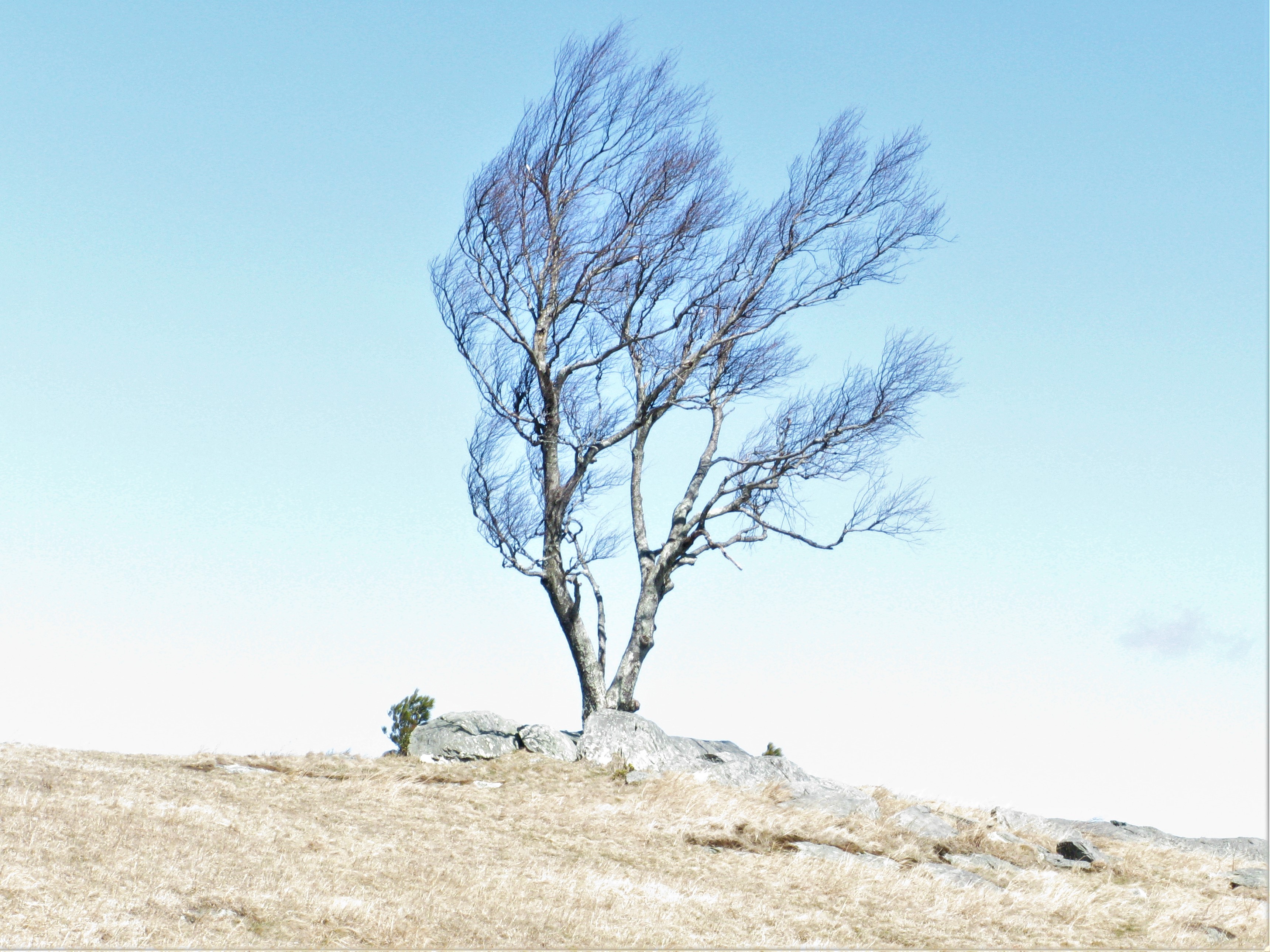
Doughton Park Tree 2020-09-08b

Read Full Post »

 . 
[with 3 poems by Catherine Carter]
 . 
Good morning, unseen
John-John was back from college and told Moses that 99 percent of
the matter in the universe is invisible to the human eye. Ever since,
Moses made sure to greet what he could not see.
        –“A Good Story,” Sherman Alexie,
The Lone Ranger and Tonto Fistfight in Heaven
 . 
Good morning, bacteria
breeding in my coiled gut,
your endless collective of many
the true core of my one. Good
morning, yeasts fermenting
diligently away at all my crevices
and folds, and magnetic field
of gravity which grounds me so close
to this home planet, your pull connecting
the water in this flesh with the drag
of the moon beneath these feet.
Good morning, hairs of fungi
connecting tree to tree and all
earth to all other earth. Good morning,
trails of mouse urine
through the multifarious paths
of grass, which to the vision
of the hovering sparrow hawk glow
ultraviolet, forming arrows
which point the way to the door
of the soft grass-lined burrow.
Good morning, possum crushed
by the roadside, visible but
from which most eyes flick away,
your unseen atoms already
disaggregating to take on fresh
lives as fly larva, carrion beetle, silver
flash beneath the flight pinion
fo the black buzzard, the death-
devourer. Good morning, unmet eyes
of Maria, whose home is this
intersection’s northeast corner;
good morning, ongoing anguish
of the lumbar vertebra fractured
in the stockroom job where she
broke and was fired for breaking;
good morning, urgent grip
of the bowels she must walk
a mile to relieve from this corner
where she stands with her sign
hoping for change that won’t come.
And good morning, unrecorded
conference called in a corner suite,
which even now is about to close
the shelter where tonight she hopes to sleep.
 . 
Catherine Carter
from Good Morning, Unseen, Jacar Press, Durham NC; © 2023
 . 
❦ ❦ ❦
 . 
Not secret. Not hidden. Neither cloaked nor covert, simply not seen. These are the glimpses of my mother’s life I am getting since she died. No tremors from within locked strongboxes, no heart attacks delivered by anonymous post – simply the small bright fragments of her unseen life. The bits not dependent on her being Mom to me.
 . 
I’m paying more attention to the glimpses because I don’t have Mom beside me on the couch any more, although she was never one to draw attention to herself anyway. Here they come, all these versions of my mother through the years, fragmentary visions arriving in photos I’ve glanced at in the past but never really examined. Here she is on her bike, smiling, maybe ten years old; here’s that very same smile again at another age, at every age. What confidence, what honesty! So open. A real person smiling at me.
 . 
Today I’ve found her college annuals – do universities still publish such things? Do people still save them for 75 years? Here’s Mom with the other officers of her Freshman class, 1946, and she the President. I never knew! As a Junior her she is at the centerfold – with a dozen friends – from their listing in Who’s Who in American Universities. The two women beside her remained her friends for life, names even I recall her mentioning. Such a full, rich world Mom inhabited. So many worlds.
 . 
In a few weeks we’ll hold Mom’s memorial service and I’ll no doubt hear even more stories of her unseen life. Already Linda’s youngest sister has told us how she loved Miss Cookie as her Kindergarten teacher. Linda and I were already away at college; the only glimpse I had of Mom’s teaching life was when she brought the gerbils and ducklings home from her classroom for holidays. I wish I’d had the curiosity and imagination to follow her around her world for a few days. But no – she was just our Mom.
 . 
Grief is the empty place beside me on the couch that becomes the empty place inside. I try to fill it with memories, all those moments I’ve known and seen, but they aren’t nearly enough. Where to find more? Show me everything I missed before so I can try harder to open my eyes. Show me every bright fragment. Good morning, Unseen.
 . 
 . 
❦ ❦ ❦
 . 
This Stone
 . 
This stone is a particular stone,
mica-flecked lichen-splotched quartz-
veined hunk of granite hunched
by the side of the road where I climb the cove.
It has a history; it has been places.
It knew the molten earth-heart
and the grind of the glacier.
It gouged grooves in the flesh
of this world as gravity dragged it down.
It crushed small plants in its path,
and offered a matrix to lichen,
coolness to soil in the heat of the day,
shelter to mushrooms, midges, mice.
This one particular manifestation
of all that rockness,
created in fire, is still
joining in creation,
participating in being. It has known
billions of mornings; this one
is new. Though it will not answer,
I nod to it as I pass, and, if no one
human is there to hear, I speak:
good morning, you one
rock exactly like no
other. Here we are again,
short life and long one
brushing past each other beside
this road of crushed and broken
stone. Good morning,
spirit of earth, on this one morning
here on earth’s stony flesh.
 . 
Catherine Carter
from Good Morning, Unseen, Jacar Press, Durham NC; © 2023
 . 
❦ ❦ ❦
 . 
Beyond perception as well as beneath notice, these are the unseen in Catherine Carter’s Good Morning, Unseen. The bacteria in our gut upon which our lives and health depend. The homeless woman who might once have thought she could depend on the lives around her. Noticing the ignored and overlooked and essential: Catherine’s piercing images and mind frothing metaphors bring all into stark relief. These poems are revelation.
 . 
How did I miss that? Why am I only now first seeing? Unseen is the dirt that bears me up, unseen is sunlight fusing itself into wood. Glad may be the cat in coyote country but Magic is one man opening the door to one small apartment as refuge. It’s all around us, always has been. The first commandment is “pay attention.” Forgive us for how often we have sinned.
 . 
 . 
Catherine Carter’s Good Morning, Unseen is available from Jacar Press.
 . 
 . 
❦ ❦ ❦
 . 
The unseen says
 . 
from the magnolia I wave to you through the wind,
my dark leaves quivering in the glitter of winter
sun, though I knew you would not see.
As the dog I rest my chin on our bed,
tell you it’s safe to wake, as you shudder with the fear
and despair you clutch so close.
Under your feet as the dirt I bear you up;
as the air without which you cannot live
two hundred seconds, I lift your rigs again, again,
seven hundred million times, never wearying
until you do. As the sunlight I fuse myself
into wood, bursting forth again in flame;
as the rain I show you safe passage, falling,
seeping, leaping through my selves the clouds and the sea.
As you breathe, as you drink as you stretch cramped hands
to my electric coil, toast me in the bread, you ask
whether I’m even here, or forget to ask.
Refugee on the long road, back bent
with the treasures you lug, the fears you haul:
lay down the weighted silver, your grandparents;
plate and grief, let home evaporate behind you,
unbind the albatross corpse festering your neck.
Set it all down. Be free of it,
and take my hand in yours. With a second hand,
and a third, I pipe for you now:
just for a moment, dance.
 . 
Catherine Carter
from Good Morning, Unseen, Jacar Press, Durham NC; © 2023
 . 
❦ ❦ ❦
 . 
 . 
 . 
IMG_1827

Read Full Post »

 . 
[with 3 poems by Les Brown]
 . 
Pause
 . 
I placed my hand on the moon
++++ to keep it from its course,
to stop time in the comfort of night
++++ when sleep subdues sounds
of machines and urgent voices.
++++ Starlight and still moon
are enough to guide my stroll.
++++ I cross the meadow
among sparse trees,
++++ where snowy crickets cry fast
with time kept by heat
++++ of past day’s searing sun.
I lie down and listen
++++ for the whippoorwill
whose call is rare now,
++++ watch fireflies wink love calls.
I will hold the moon until
++++ the world stirs and wonders
why the night endures,
++++ with dreams of Earth
where fires do not rage,
++++ floods do not drown,
spiraling winds cease,
++++ oceans retreat from shores
and the cricket cries slow
++++ once again.
 . 
Les M. Brown
from A Coming of Storms, Main Street Rag Publishing, Charlotte, NC; © 2024
 . 
❦ ❦ ❦
 . 
Light rain in the woods, droplets coalesce and cascade through the upper canopy, tuliptree, oak, & hickory, until they freefall onto our heads and shoulders. A fat drop flicks a browned leaf or blinks in the duff. We imagine small creatures leaping up from the earth and then they do! Angel-winged insects are bobbing up and down to touch the fresh damp with the tips of their abdomens, animated by moisture. Linda watches one female Cranefly, notices nearby a delicate floral spike with angel-winged florets, and says,  “Look, it’s planting orchids!”
 . 
Cranefly Orchid and Cranefly, so like each other, elongated nectar tube of the flower resembling the long abdomen of the insect ending in its ovipositor, but so unlike! Except in our visual imagination they’re not related at all . . . or are they? Both favor moist woodlands with a nice layer of decomposing vegetation. Both reproduce in midsummer, by bloom and seed or egg and larvae. Both look a little creepy if you’re not fond of long spindly legs.
 . 
Altogether unrelated, entirely different Kingdoms – Animalia and Plantae – and yet these two are related ecologically, if simply by the places in which they thrive and by the company they keep. They live in community. But mightn’t  the relationship go deeper? All living creatures on this planet are genetically related; we share many of the same genes for  basic functions like metabolism, DNA replication, and protein synthesis, share them with every bacteria, archaea, fungus, protist, and plant. Compare the genome of any plant – Cranefly Orchid – and any animal – Cranefly – and you’ll discover hundreds of identical genes. It’s one big family tree, this Kingdom Earth, with some pretty twisted and winding branches, and yet all connected to the same trunk.
 . 
 . 
Alas, the Cranefly is not planting orchids. She’s laying eggs in the moist duff; they’ll hatch into larvae called leatherjackets. She doesn’t care a whit for her namesake orchid, which is pollinated by Owlet Moths (Noctuidae). The Cranefly Orchid’s tiny flowers twist either left or right as they progress up the stalk (raceme), so that as the moth’s long proboscis probes the nectar tube she gets a dusting of pollen on one or the other of her large compound eyes. And carries it with her to the next flower.
 . 
 . 
 . 
❦ ❦ ❦
 . 
Mayfly Swarm
 . 
Night on the Pearl River, steaming warm –
our small boat pierces the tunnel of blackness.
Beams of head-bound lights play
across the dark slow current.
 . 
We tease out an occasional moccasin,
quiescent in boughs of bald cypress.
Lock on bright-lit eyes of river frogs,
the hungry raccoon eating a mussel.
 . 
The motor pusher our johnboat upstream –
Suddenly, a blinding blizzard
of white-winged snow rises.
Shimmering mayflies fill the blackness.
 . 
They are in our eyes, nostrils, mouths, ears,
and hair, an erupting silent lace-winged storm.
Millions rise in singular ecstasy, then die.
Their gossamer bodies blanket the river.
 . 
Fertile eggs drift into black depths.
Frog, fish, and bird devour the dead,
a one-night feast, a gift, a magic cycle
of lovers, death, and satiated flesh.
 . 
Les M. Brown
from A Coming of Storms, Main Street Rag Publishing, Charlotte, NC; © 2024
 . 
 . 
❦ ❦ ❦
 . 
Les Brown’s new book, A Coming of Storms, has plenty of vivid and hair-raising (literally) descriptions of black cumulonimbus monsters plowing down the mountainside to batter us with hail and impale us with jagged barbs of lightning. The storm he’s really warning us of, however, is metaphorical and of our own making: the devastation of Planet Earth by that most destructive invasive species, Us. Among these poems are Lamentations for the now diminished towns and farms where our lives were once so rich, Jeremiads proclaiming the dire future we’re creating for ourselves, and the Psalmist’s tender recollection of family homestead, tender sojourns in nature, and all the smells and tastes and feel of our fertile world at its best.
 . 
Les has all the necessary credentials of a prophet. He grew up in the rural mountainscape of North Carolina; his poetry is most poignant when populated by his grandparents, uncles, neighbors. He earned a Ph.D. in Biology and taught ecology to college students all his working life. He himself feels most personally and pointedly our loss of unspoiled fields and forests, our disconnection from the earth that sustains us. I wish he were here beside me this afternoon so we could both get our knees dirty investigating Cranefly Orchids and Rattlesnake Plantain. I’ll be looking forward to his next observation, and holding my breath for a cooling breeze of hope.
 . 
 . 
A Coming of Storms is available from Main Street Rag Publishing.
 . 
❦ ❦ ❦
 . 
Think seeds, not bullets
 . 
++++ melons instead of bombs.
Drink wine, rest a while
++++ instead of scorching earth.
Rip off epaulets
++++ and but on bedroom shoes.
Call mothers. Tell them
++++ their children are safe
Revere the earth,
++++ cool it.
Grow chanterelles,
++++ not mushroom clouds.
Bend barrels
++++ and weld triggers
into metallic art.
++++ Read a different Good Book.
Let only birds tweet.
++++ Read only magazines
instead of loading them.
++++ What is beneath the skin
of an apple?
++++ It is a simple question.
 . 
Les M. Brown
from A Coming of Storms, Main Street Rag Publishing, Charlotte, NC; © 2024
 . 
❦ ❦ ❦
 . 
 . 
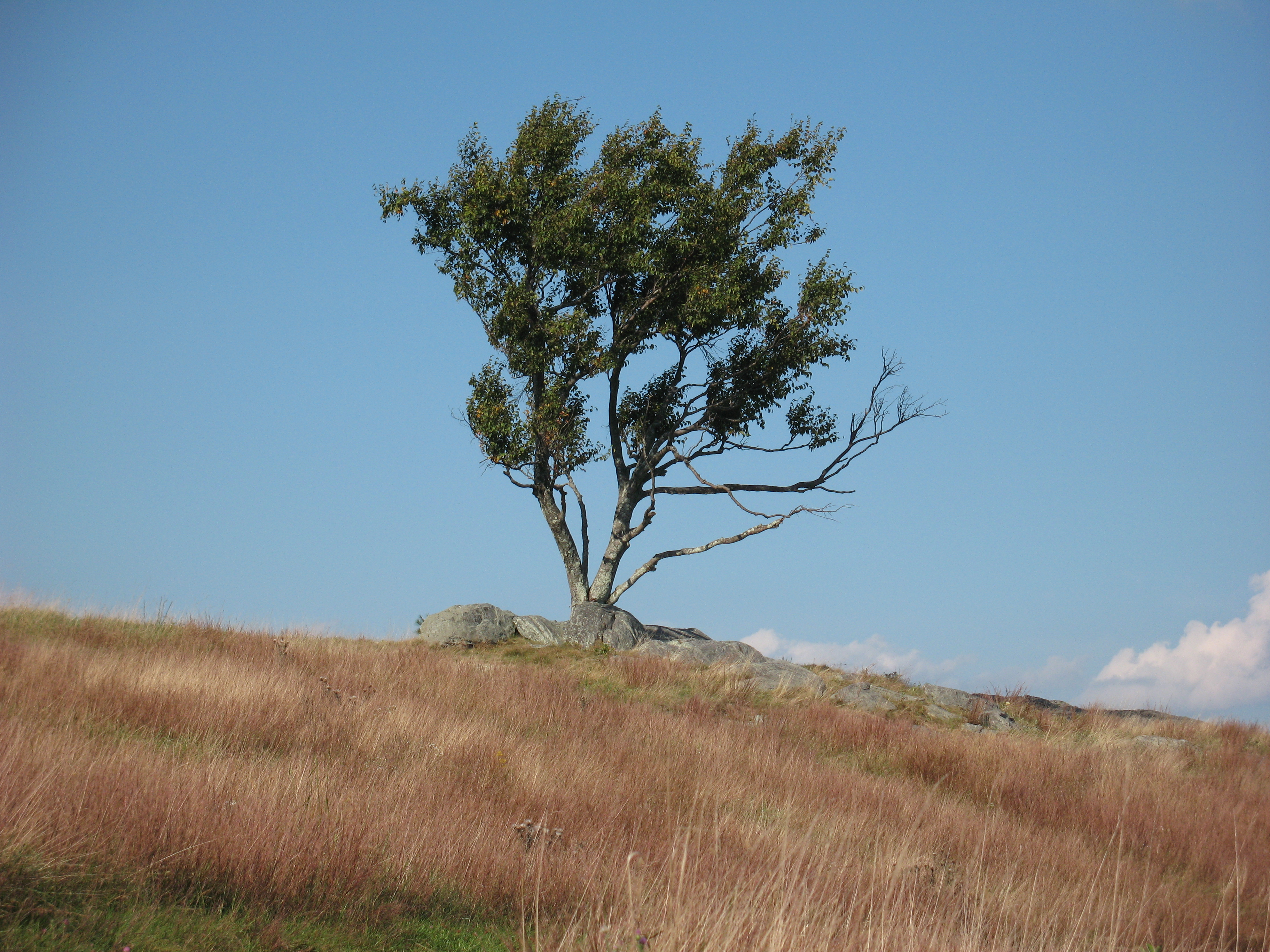
Doughton Park Tree 2014-07-13

Read Full Post »

« Newer Posts - Older Posts »