Feeds:
Posts
Comments

Posts Tagged ‘Mark Smith-Soto’

 . 
[with 3 poems by Mark Smith-Soto]
 . 
Sunroom Twilight
 . 
Another thunk against the window glass,
another broken wing or neck, as like as not,
another muted spill of feathers on the grass –
I love this space, but it’s been dearly bought.
 . 
Of course, the same might well be said
of the lamb we grilled last night, honoring
its sacrifice with salad and good bread.
The whole-grain loaf, the baby kale, everything
 . 
sundered from daylight for my sake,
floods the mind in unforgiving surge,
sweeps me into the sobering give / take
 . 
that underpins life / death. In the sun’s wake,
birdsong dapples the gold air with its dirge.
Or rather, hymn of wonder; my mistake.
 . 
Mark Smith-Soto
from Daybreak, Unicorn Press, Greensboro, NC; © 2024
 . 
❦ ❦ ❦
 . 
Passenger side floorboard there’s a Mason jar of flowers, black-eyed susan and zinnia, marigold and mint. I cut them from our garden this morning for Mom’s bedside table. On I-77 South just past Jonesville there’s a field of sunflowers blooming, another field near the coverleaf with 421, all looking southeast right now because it is still morning. I’m driving to Winston to visit Mom and Dad in Kate B. Reynold’s Hospice Home. Life surely does suck. Life surely is exalted.
 . 
This is a respite care admission, scheduled so we can upgrade their bathroom and bedroom. Make their home more liveable while dying. Their dates of death are not clearly visible to us over the horizon, certainly not etched in stone, but how distant can they be? Is this what people mean when they say live one day at a time? Mom can still laugh when we joke around, although each day a bit more of her releases into airy nothingness. Dad’s crash has been more sudden, broken neck, delirium, bedfast, but he still seems to add a few more good minutes to each ensuing day. All three of their children will be under the same roof today, now that’s red-letter. We’ll be helping them with lunch, sitting with Mom in the flower garden for a half hour, logrolling Dad in bed to rub ointment on his back. And while the two nap, we three will have a long conversation in another room about next week, and the weeks after.
 . 
Yesterday afternoon my son called after he returned from a few hours visit with his grandparents. Josh took Granddaddy grits and collards and says he spent most of their visit eating. Yeah! Josh has been afraid to see the changes in the two up close and had put been putting this day off for months. I told him I know he still hurts from Jonathan, his best friend all through school, right after graduation the cancer. But then at the end of talking, Josh says to me, “So how are you doing, Dad?”
 . 
Don’t get that question a lot and even less often do I say anything more than, “Fine.” I hear the sincerity when Josh asks. All the drive down today and all the drive back what I’m really thinking about is how to continue the conversation. I’ll stop at his house before I get home to drop off a cooler he left at Granddaddy’s house. I’ll begin by taking him outside and telling him how much I appreciate what he said. I’ll ask how he’s doing. And then I’ll ask another – rehearsed in my head for days, weeks, months: “And how are you doing on your path to quit drinking?” Life can surely do its best to convince you it sucks. But I have a feeling the two of us standing in the driveway for a half hour talking is going to show life it doesn’t have to.
 . 
 . 
❦ ❦ ❦
 . 
Segue
 . 
Now that you mention it: death,
the cherry outside the kitchen
in full bloom, the novel I left
open on my bed, the stitch in
 . 
my side riding a rib, the small
hole at the center of my retina
where nothing registers at all,
the rip in the screen letting in a
 . 
gnat adrift on the whiff of daphne
blooming along the broken driveway,
the sudden abandon of your laugh, me
forgetting what I was going to say,
 . 
closing my eyes, holding my breath,
and now that you mention it, death.
 . 
Mark Smith-Soto
from Daybreak, Unicorn Press, Greensboro, NC; © 2024
 . 
❦ ❦ ❦
 . 
The poet notices a little something, a little nothing, really: breakfast, a chess board, chalk dust; light across a woman’s profile, flowers that shouldn’t be there, a word that carries on its back two meanings. Common things, every day things. The poet notices and his smile as he points out what he has noticed is almost sly; the pointing is all about what he’s not quite saying. Then all at once you notice, too. And you smile.
 . 
In Mark Smith-Soto’s world you might discover wonder in commonplace, joy in commonalities, mystery in what we share and have always shared without noticing that we do. You might join him in memories that make you cry, realizations that lift from within you a deep sigh, possibilities that sober you right down before they exalt you. In Mark’s ultimate collection, Daybreak, every single one of the 56 sonnets has touched me, gently but insistently, until I admit I’m relieved: I am / a human being. I’m pretty sure of that. [Biology Lesson]. After reading these poems, I begin to notice the flowers in the cracks of my walkway with new eyes; they implore me that death [is] a lifetime of hours away [Aria da Capo].
 . 
During the years of this twenty-first century, my orbit and Mark’s intersected only a handful of times, for only a handful of hours. But what gravity and what luminosity! In life I knew Mark only a little; I am glad to know him much more in poetry.
 . 
 . 
Mark Smith-Soto (1948-2023) was born in Washington, DC, and lived in Costa Rica until the age of 10, when his bilingual family returned to Washington, his father’s native city. Mark’s awards include a fellowship in creative writing from the National Endowment for the Arts and the NC Writers Network’s Persephone Competition for his chapbook Green Mango Collage, among many others. Daybreak is his seventh poetry collection and is available from Unicorn Press in Greensboro, NC.
 . 
Thank you, Michael Gaspeny, for sending me Mark’s book as a gift. A treasure.
 . 
❦ ❦ ❦
 . 
There You Are
 . 
I do feel somehow exiled here, outside
the frame – just what is it about a woman
at an open window, seen from the side,
an opalescent half light on her hands
 . 
holding the curtains apart, head tilted,
questioning? Maybe her gaze has stranded
on the naked lady half-hidden by the shed,
a blossom she knows she never planted,
 . 
her wondering, These small, random gifts,
why do they touch one so? But of course,
I can’t begin to guess her mind, it’s
 . 
me trespassing here, I should go before
she sees me, leave her to her thoughts –
“Oh, there you are, amor. Come look at this.”
 . 
Mark Smith-Soto
from Daybreak, Unicorn Press, Greensboro, NC; © 2024
 . 
 . 
❦ ❦ ❦
 . 
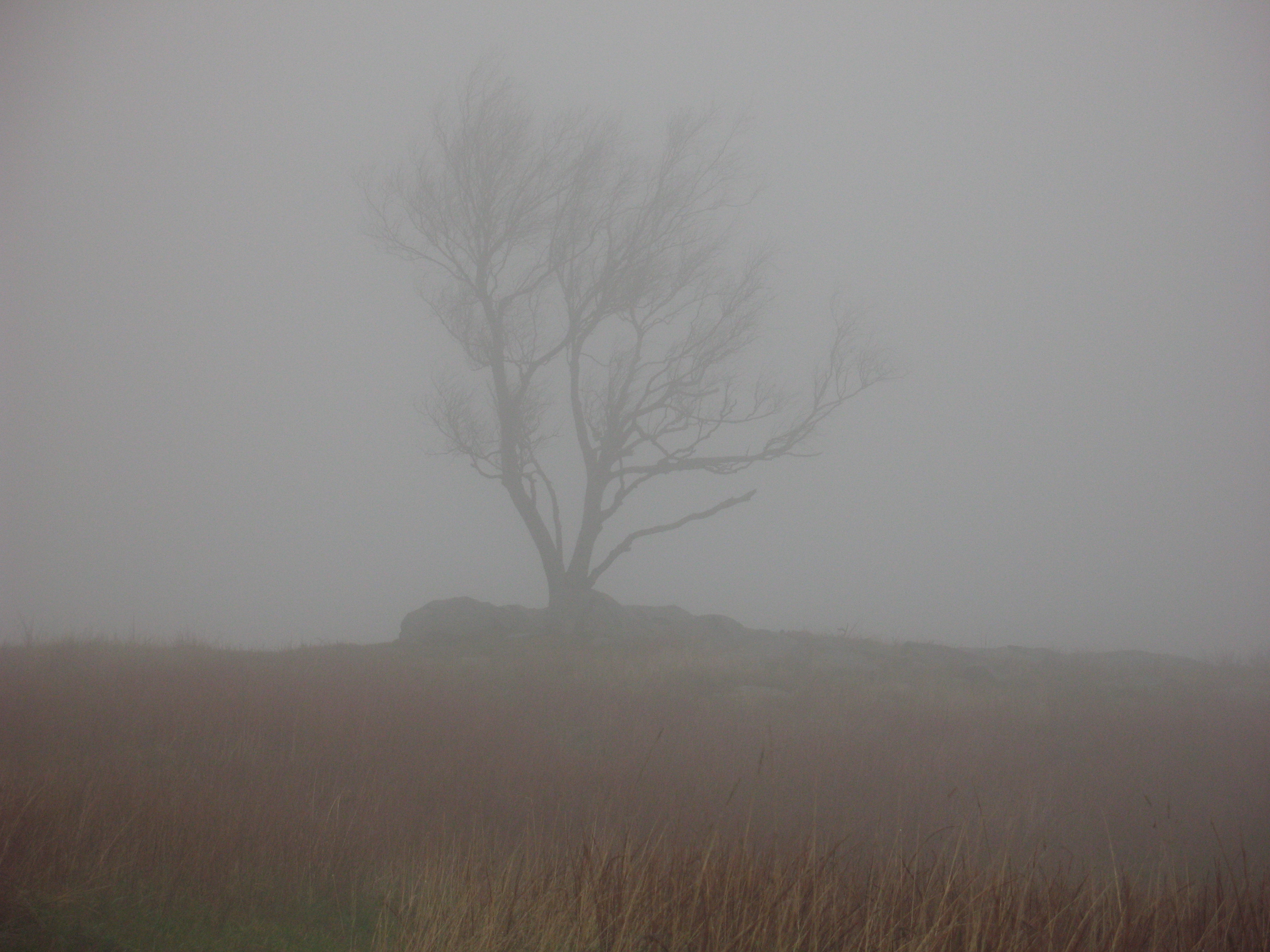
Doughton Park Tree 2016-10-17a
 . 

Read Full Post »

Waiting for you is full of everything except you.

It didn’t start out to be Valentine’s Day. You and I prefer Hatteras and Pea Island in the off season. I wanted to see the winter migrant visitors again and you don’t mind long walks in freezing spray. How amazing you are. You began telling our friends, “He wants to see the snow geese,” in a tone that sounded like you looked forward to them, too. Amazing.

When we pulled into the First Colony Inn there were big pink and red plywood hearts under the pine trees. Who knew! Godiva on the pillows and champagne in the mini-fridge. Each afternoon we explored another iced-over marsh, the entirely vacant Elizabethan Gardens, narrow lines of threatened dunes; each night we made a small supper in our room, wore caps & jackets while the wind discovered new cracks around the windows. Not really roughing it, not so self-sufficient – but sufficient as two selves. Us. Being each other’s present. Chocolate optional.

Snow Geese 2015-02_72

Chen caerulescens, Pea Island Wildlife Refuge


*     *     *     *     *

I’ve read most of Mark Smith-Soto’s previous books and I always pause and savor when I discover him again in The Sun. I carefully packed his newest, Time Pieces, for the February trip to the Outer banks. Waited for the stillness of sunset across Roanoke Sound, drew another blanket around my shoulders. How does he do it? How capture the small moment that stretches wide the reader’s heart? Not because the poem has cast searchlights into the grand gnostic meaningfulness of the universe, but because the poem is just itself, the poet is himself, the moment is this moment. And we always have been and are still becoming ourselves.

*      *      *      *      *

Present

Waiting for you at our favorite table by
the window decorated with a rough decal
of a giant coffee cup, I stare at the long,
gray, rain-washed, car-clotted street, the tip

of my tongue fretting against a cracked
tooth. You’re half an your late. You wouldn’t wait.
The coffee is so dark and smooth it lingers like
a song. There are clouds and telephone poles

and two tattooed youngsters smoking outside
the window; inside, all is chatter and clatter,
French pastries in the toaster oven, giggly laughter.
Waiting for you is full of everything except you.

And for this gift, at least, I must thank you:
this moment so completely mine.

*      *      *      *      *

Linda_2015-02_Pea Island_resize-1

Present first appeared in Sounds of Poets Cooking, Jacar Press

Time Pieces is available from Main Street Rag Publishing

Read more selections of Mark’s poetry from The Sun.  In fact, subscribe.  Now!

Mark Smith-Soto’s bio is available at the Poetry Foundation.

*      *      *      *      *

IMG_6432

Read Full Post »

Sometimes when the latest Audubon arrives in the post I dread reading it.  Unsustainable logging in old growth forests in Oregon threatens the marbled murrelet.  Ground water depletion by development in the San Pedro watershed (the major undammed river corridor in the entire intermountain West) may destroy twenty years of conservation gains.  American eel populations have declined ninety percent in the past four decades because of obstructing dams in Eastern rivers.

Does it ever seem to you that we humans just can’t get along with the other species on this planet?  The neighbors cats have eaten most of “my” house finches.  Just one careless chicken farmer upstream on the Big Elkin Creek is enough to silt up what could have been a decent trout stream.  Last week we had to replace about forty yards of sewer line on the steep ridge behind our house, plowing under at least a tenth of an acre of prime wild red raspberries.

I walked along the scraped red clay and exposed roots under the power lines down to the manhole where our sewer ties into the city.  Given the previously impenetrable briars, it was a new perspective on our little four-acre plot in the woods.  I hadn’t realized how massive that sentinel white oak had become in the thirty years we’ve lived here.  It has a Virginia Creeper hanging from it as thick as my arm.  And since the backhoe has knocked down a dozen or so gangly box elders, there’s enough sunlight seeping into our backyard that I’ve sown a pound of wildflower seed . . . after my daughter Margaret and I had picked about a pint of raspberries from canes we’d never been able to reach before.

In New England, a naturalist named Chris Bowser has set up a citizen stewardship program using net-filled PVC pipe to lift eels above the dams and enable them to complete their migration.  My friend Bill Blackley and a local crew are building hiking trails and restoring Big Elkin Creek to make it trout-worthy.  Virginia letter-carrier Rita Shultz has installed a hundred and ten bluebird houses along her route (in her time off) to prevent the birds from nesting in newspaper boxes, and prevent people from tossing out the nests, eggs, chicks and all.  And since February loggerhead turtles, piping plovers, least terns – and dozens of other nesting species – have a safer home on Hatteras Island: the National Park Service issued a new rule that allows off-road vehicles on 28 miles of shoreline, preserving the other 39 miles for wildness.

We might just get to go on living next door to critters.  We might just be able to pump from our hearts enough compassion for critters to make a place for them to go on living next door to us.

.     .     .     .     .

DSCN0523

Bubble

The heat hunkers trenchant, loud.
Lilies are budding on the lake.
Calf-high grass quivers.

He has wanted this moment to exist:
the insect flares blue on a sticky branch,
opening and closing, the size of his hands.

He heart pumps a bubble over the world:
it holds.

Mark Smith-Soto
© 1990 by Trans Verse Press.

.     .     .     .     .

DSCN5178

Mark Smith-Soto is professor of Spanish at UNC Greensboro and has been chairman of the Department of Romance Languages.  His poems appear frequently in the monthly magazine Sun.  He has served as editor or associate-editor of International Poetry Review since 1992.  His first full-length book of poetry, Our Lives Are Rivers , was published by Florida University Press in the summer of 2003.  Born in Washington, D.C., Mark grew up in his mother’s native Costa Rica.

.     .     .     .     .

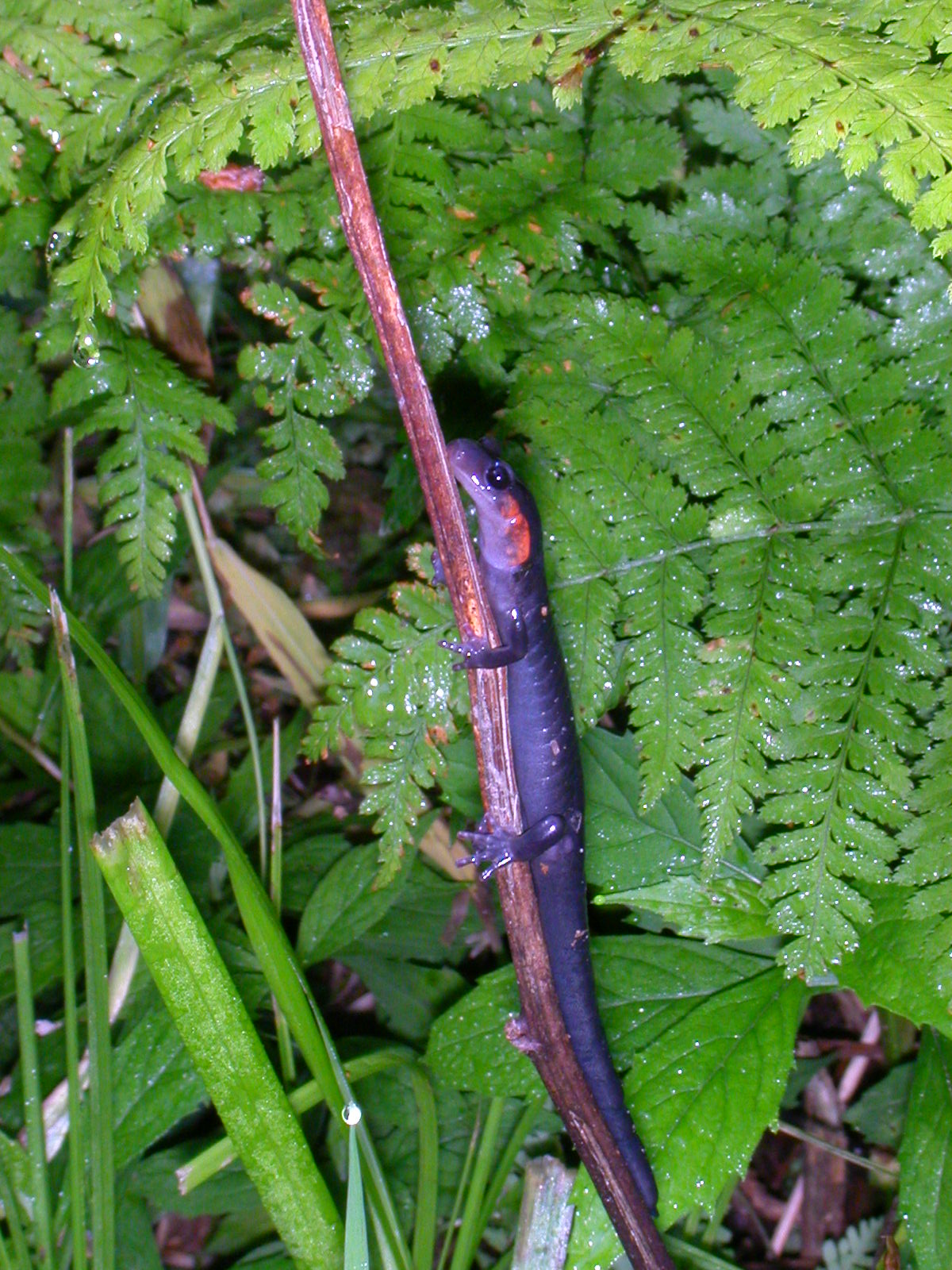
The photo of Jordan’s red-cheeked salamander (Plethodon jordani) was taken near Clingman’s Dome along the Appalachian Trail in 2003.  The cute little Appalachian cottontail (Sylvilagus obscurus) eating jewelweed beneath the stand of bee balm was at Cosby Knob Shelter on the AT (also GSMNP)  in 2007.

IMG_6432

Read Full Post »