Feeds:
Posts
Comments

Posts Tagged ‘imagery’

 . 
[with 3 poems by Jane Shlensky]
 . 
Balance
 . 
Each morning Granny hobbles to the spring
uphill two miles with buckets in her hands
through woods now thick with frost, limbs cleared of leaves.
And over rocks almost atop a hill
behind her house, she sees the water gush,
and, slow with age, she stoops to clear away
the leaves and sticks that clot the pulses’ rush,
and, cracked cup in her hand, she dips into
“sweet water” as she calls it, gathered wild
as honey in abandoned rees, and pours
the nectar into metal milking pails
to carry down the mountain, arms held far
from hips and sides, all tense – as pugilists
might hold their arms, quite low with hands in fists.
But her fists grip the metal handle’s cut
into her palms, as water weighs her down
and down the well-worn path toward her house.
I offer her a new artesian well,
but she just laughs at me and shakes her head.
I ask if I may carry home the spring
for her, but she denies she wants the help
and says it gives her reason for a walk
among the trees on any given day
and carrying two buckets makes her sure
of foot and balanced in a world that’s not.
 . 
Jane Shlensky
from Barefoot on Gravel, Finishing Line Press, Georgetown, KY; © 2016
 . 
❦ ❦ ❦
 . 
I hate my anger more than I hate vomiting. The dead sick inevitability as it rises, how it makes my hands go cold and clenches my jaw. Disorienting, paralyzing rational thought. I am not going to let that anger out.
 . 
People tell you it’s best if you do. You have to let go of your anger. Maybe they’re right, because while it’s rising I don’t even see it coming, I don’t know to call it anger, I have no warning or defense that might prevent the stupid things I will do or the hurtful things I will say. I am afraid of the anger so I run from it before it can get me. Running, stumbling, I usually fall. Anger blasts me off balance.
 . 
Linda and I are sitting in the car. We had thought to take a walk in the gardens but now I’ve picked a fight with her, I can’t even recall about what. Linda has never let me get away with anything – I say this with honest, grudging admiration – and she says something now that jars me: “So is this what it’s going to be, then?” She is seeing something I can’t see. I admit it. I’m so confused, I tell her. And so she pushes me to relive the last couple of hours, ticking over the balance sheet – frustration at last night’s botched meeting, undercurrent of worried anticipation for tomorrow, niggling mis-steps and course changes this morning that had me snapping at a friend, patience evaporating to hot steam. Little angers mounting, not let out.
 . 
At last she wants to give me some justification. “Anyone would feel that way.” Not this time. True or not, I’m not buying that line. I’ve used it a hundred times to tamp down the anger, cover it and hide it. I don’t actually gain much insight into all this until much later, but there is one best way to regain some balance. To let anger’s own entropy cool it down to nothing. Sitting in the car next to Linda, I open up and own it. I said and did things that hurt people; I am responsible. I am sorry. I’m not happy with myself or the situation, but at least the two of us are finding enough balance to begin our walk after all.
 . 
❦
 . 
It hurts to walk barefoot on gravel. When I first met Linda, she and her sisters went barefoot all summer long. It was nothing for them to walk a mile or two on those tar-and-gravel Ohio roads or through the woods over dry twigs and sweetgum balls. I tried to keep up, limping like an old codger and next day lame. But I kept walking on sore feet because I wanted to keep up. I wanted to be near them.
 . 
Jane Shlensky’s poems will not make you limp although they can be sharp and pointed. They will make you want to come along and keep up. Jane loves her characters, which she has drawn from generations of rural memories and red clay. She grew up in Yadkin County, NC, just across the muddy river from me, and she sees those farmers and grandmothers and wives more clearly than they ever saw themselves, perhaps. I don’t sense Jane imploring us to return to those old times and old ways. Instead, she shines her light on the truth of what brought her up and made her. What we carry in our pockets may change, but what we carry in our hearts does not. Read Barefoot on Gravel and find a moment of balance in a world that is so often not.
 . 
 . 
❦ ❦ ❦
 . 
Ain’t No Sunshine
 . 
“Oh, Lord,” she says, mixing the batter
for pancakes, the sausages sizzling,
the coffee perking in her mama’s pot
that’s so worn it’s barely metal.
She keeps it for the comforting perk,
fragrant life bubbling up, making promises.
 . 
But he’s in his wing chair, hunkered
over his guitar, his face blank as rain,
his strum, hum, strum him,
accompanying his slow moan.
His voice is like buttered rum, oiled
and warm as fever, just enough gravel
in his bass notes to scratch at her heart.
 . 
“Oh, Lord, that man,” she says to no one,
but her Lord hears everything in her heart.
She knows this as sure as she knows
the spit of oil before she tips the batter in,
as sure as she knows the hiss and blister,
bubble browning in the cakes.
 . 
He is having one of his blue days –
won’t fight the sadness, just leans on
that old guitar, curls in on himself
like a dog that hopes to lick the pain away.
He’s finding a sound to help him stand,
a trembling chord to lift a mighty weight.
 . 
He’s singing his own song and she knows it,
her heart clutching at his words, wishing
she could mother is sorrow away, feed
his hopes. She needs him, even if
they struggle every day. She turns to Jesus
kneeling on the wall and whispers,
“Dear Lord, that man there . . . we best
but some blueberries in these cakes.”
 . 
Jane Shlensky
from Barefoot on Gravel, Finishing Line Press, Georgetown, KY; © 2016
 . 
 . 
❦ ❦ ❦
 . 
One Better
 . 
While we puzzled over the perfect
birthday gift for our father,
he packed up his fishing gear and
a few clothes and bid us farewell.
 . 
Jane Shlensky
from Barefoot on Gravel, Finishing Line Press, Georgetown, KY; © 2016
 . 
❦ ❦ ❦
 . 
 . 
❦ ❦ ❦
 . 
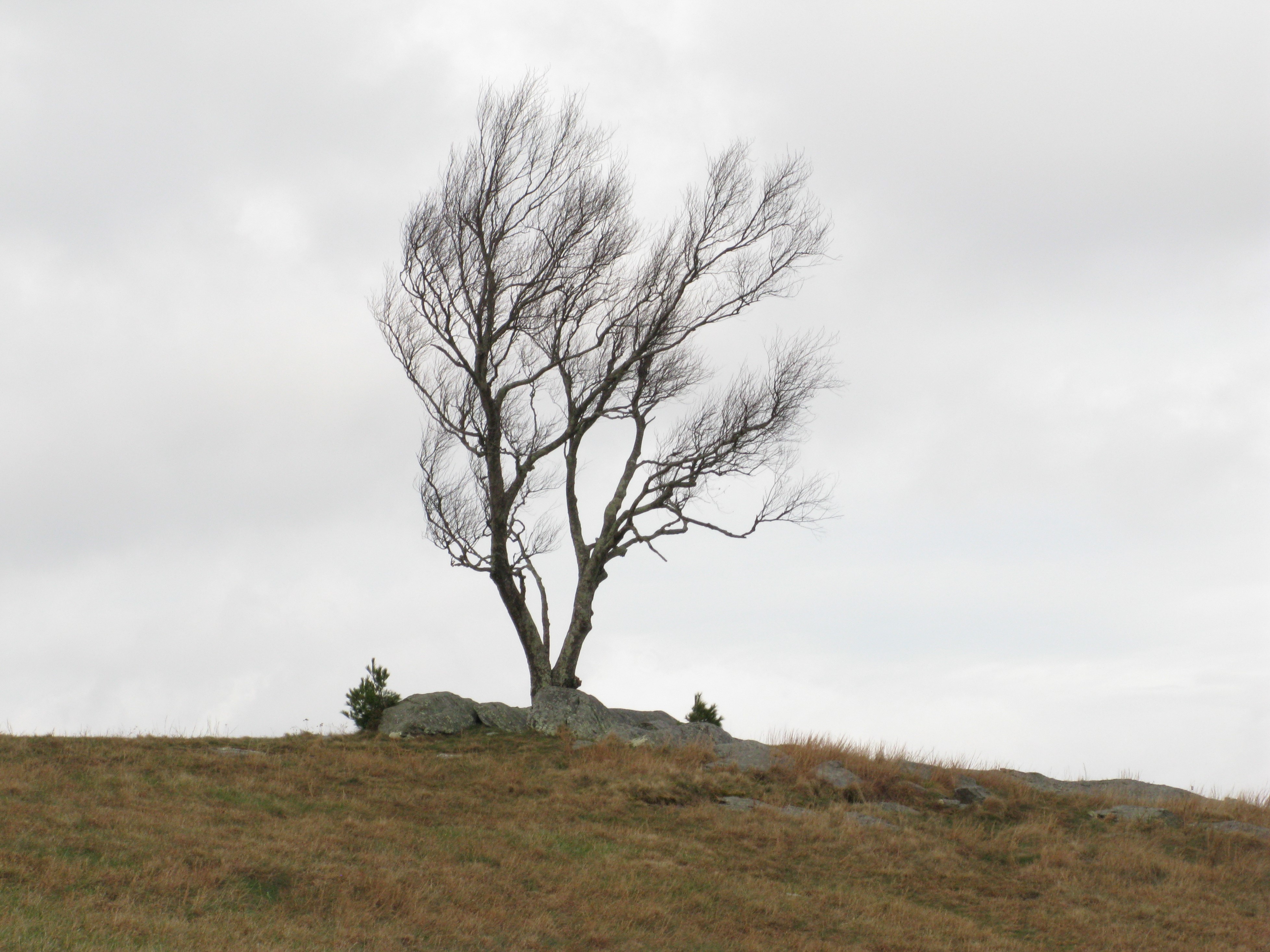
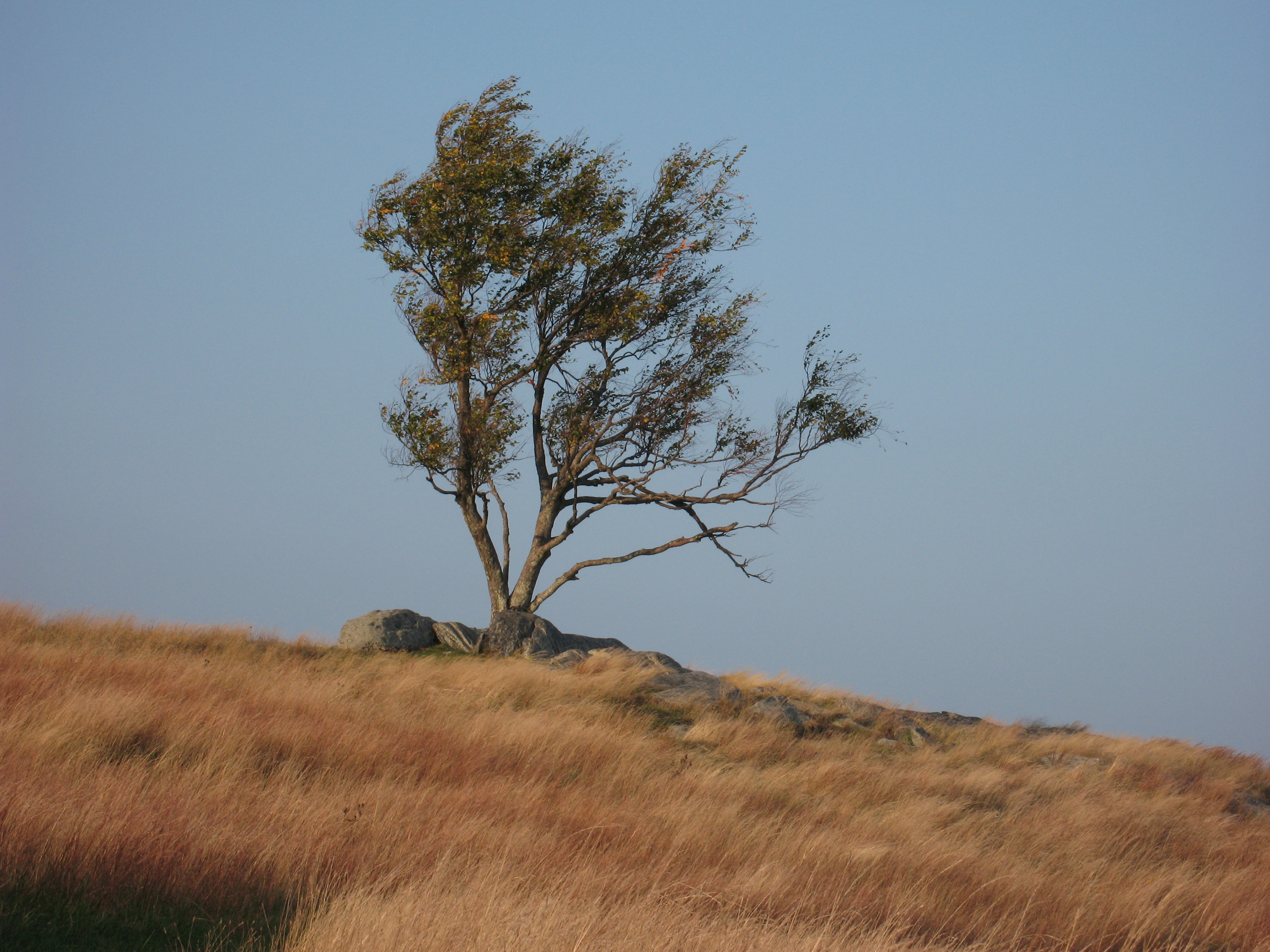
 . Doughton Park Tree 2020-11-22

Read Full Post »

 . 
[with poems by the 2023 Tremont Poetry Cohort]
 . 
Awaken
 .  . 
You came because the river quiets your soul,
the sassafras soothes and sweetgum settles.
Have you gotten your breath? Do you remember who you are?
Leave us, now; it’s our time to sleep. You go, awake.
 . 
Sarah Small / Alcoa, Tennessee
postcard – Mother bear & cubs
 . 
❦ ❦ ❦
 . 
The Little River is singing ‘October Blues’ and I can listen if I’ll just roll down my window. Leaving the Smokies on a Sunday morning, who would have imagined such a glut of traffic, but I can make the choice to gentle my right foot and blend with the flow. And here on the right comes another choice: I pull off at Chimneys and flush the press of schedule and itinerary from my mind.
 . 
A ten minute climb into old growth hardwood cove and road noise no longer penetrates. Every few steps another chipmunk whistles its alarm. Fecund – whoever coined that word was smelling this place. The carpet is bright green hepatica saving up to flower in just a few months, the understory is summer seedhead bounty and autumn wood asters blooming like crazy, and the overstory is way up there, crooked and knobbed, reaching and mingling and only allowing an occasional glimpse of Balsam Point.
 . 
I’ve been waiting since breakfast and now I pull out the small slip of lined paper Renée gave me, a personal parting note; she prepared one for each of us in the cohort. “Read it later,” she had said. I’m going to trust she won’t mind if I share one line: “I came to this conference with some heaviness and I’m leaving with light and a sense of belonging.” A mystery, a wonder, an inexplicable blessing that in just a few days eight strangers can so deeply connect.
 . 
 . 
❦ ❦ ❦
 . 
[untitled]
 . 
You’re not a flightless bird,
+++++ your wings held tight
against your breast;
+++++ unfurl your plumage,
Go from here with boldness,
+++++ revel in your glory.
 . 
Jeannine Jordan / Lima, Ohio
postcard – Wild Turkey
 . 
❦
 . 
Community
(the Park speaks)
 . 
Inspire, breath in, be filled with spirit –
think I’d tip you like a funnel and pour
right in? Look around this circle and take
a lesson from the Queen of Connection.
 . 
Bill Griffin / Elkin, North Carolina
postcard – entrance to GSMNP
 . 
❦ ❦ ❦
 . 
Frank fans the deck and asks us each to select one. They’re postcards, of Great Smoky Mountains National Park, face down so we can’t see what we’ve picked. “The card has picked you,” Frank suggests. “What is it telling you about why you are here and what you’ll take with you when you leave?”
 . 
This is our last exercise during our last session of this inaugural Tremont Writers’ Conference. Can it be only three days ago that Frank X Walker introduced himself to us as an artist who speaks Poet? Besides the language of linebreak and word choice, what Frank so incisively speaks is creativity, challenge, connection, community. Oh yes, we learn to critique each other’s poems through his quiet observations. Yes, we engage in color studies and sound studies and we write to prompts. But Frank is not teaching us to be writers – he is teaching us to be human. His carefully considered comments touch our gifts and expose our needs, and even more than that he weaves us seven into a whole whose true commitment is to bring out the best in each other.
 . 
After ten or fifteen minutes of writing – channeling the voice we are hearing in our card’s image – Frank stops us and presents his next to last prompt: now break that all down into four lines. We probably should have seen this coming. We really aren’t ready, though, for his final instruction. He has us each pass our card two people to the left, write our home address on the fresh card we’re holding, then pass it back right to its original owner. Each of us will write our four-line poem on our card and mail it, and in a few days we will each receive a poem from one other member of the cohort.
 . 
We won’t be driving home from this gathering to resume our scribbling in isolation. We will be watching the mailbox (and text messages) with a tingle. We are now a creative family. We are connected.
 . 
 . 
❦ ❦ ❦
 . 
The Experience
 . 
Like me, a yearling bear,
caged and carried away.
You came for the experience.
Imagine me gone. Write it.
 . 
Kim Hayes / Weaverville, North Carolina
postcard – Ursus americanus, Black Bear
 . 
❦
 . 
Somewhere, Sometime
 . 
Sunlight  in this open field
Safely wander, graze
Trust the treeline
Grow. (I am growing, too.)
 . 
Suzanne Bell / Pisgah Forest, North Carolina
postcard – deer graze in Cades Cove
 . 
❦ ❦ ❦
 . 
Connecting People with Nature is the motto of Great Smoky Mountains Institute at Tremont. Amen! In completing the Southern Appalachian Naturalist Certification Program at Tremont, I have felt the web of connections forged there welling up in me and changing me. One begins with the name of a thing, then comes to recognize how it makes its living and gets along with its neighbors, until at last there dawns an appreciation of the deep interdependence and kinship of all life, place, and planet. One living community.
 . 
But if ecology is the study of living communities, poetry also has its ecology. How does the poem bring together all these living bits that make it come alive? Its images, its allusions, its music? How does the poem make its world equally real to or perhaps even more real than the world speeding by outside my window?
 . 
It seems to me that the technique we learn at Tremont, the Naturalist Method, is entirely congruent with the Poetic Method – Pay Attention; Ask Questions; Make Connections; Share. All of this we try to do when we “speak Poet.” And Frank X Walker has certainly enabled every bit of this in us during our few days of communion with mountains, rivers, bears, each other. It is a language of laughter and surprise. It is a language of change and growth. It is a language of discovery, insight, and awe. We are leaving Tremont bubbling with its voice and overflowing with its joy. Poetry, and Nature, are how we connect.
 . 
 . 
 . 
❦ ❦ ❦
 . 

[untitled]
 .
Born on the top, nestled through the sides, tumbled to the bottom.
Again and again.
Those mountains captured and created.
Then they carried.

Renée Whitmore / Vass, North Carolina
postcard – sunrise through mountains in Cades Cove

 . 
❦
 . 

Clouds in my Skin

You are here
Not to burn through the mist
To roll around in the slick slopes
Of your soft hope—this knowing, this peace

Sophia Fortunato / Bozeman, Montana
postcard – mountain ridges fading into blue mist

 . 
❦ ❦ ❦
 . 
The Poetry Cohort of the First Tremont Writers’ Conference, October 15-29, 2023, is Jeannine Jordan, Bill Griffin, Sophia Fortunato, Sarah Small, Renée Whitmore, Kim Hayes, and Suzanne Bell. Our teacher, mentor, guide, and brother is Frank X Walker from Lexington, Kentucky, speaker of poetry, professor at University of Kentucky, and former state Poet Laureate.
 . 
Other instructors at this inaugural conference are Janet McCue (Non-Fiction) and Annette Saunooke Clapsaddle (Fiction) and the featured speaker is Richard Powers, Pulitzer Prize-winning author of The Overstory. Jeremy Lloyd, Tremont Manager of Field and College Programs, has been the primary organizer, assisted by Tremont staff Elizabeth Davis, Erin Cantor, Lyndsey Kessler, education director John DiDiego, and many others.
 . 
This conference was also made possible through the integral participation and partnership of Great Smoky Mountains Association and Creative Services Director Frances Figart. Thank you!
 . 
 . 
 . 
 . 
 . 
❦ ❦ ❦
 . 
IMG_1783

Read Full Post »

 . 
[with haiku by William Winslow]
 . 
azalea in bloom
seems early this year –
what else have I missed?
 . 
❦
 . 
bent over and lean –
I have become the tree I
climbed in my childhood!
 . 
❦
 . 
Yesterday after church I carried the rocking chair out to the car. Scratches and scars from a thousand children in Mom French’s school library, this chair was just one of her oh so irresistible enticements to read – and she the most enticing of all as Mother Goose, Good Witch, Hobbit, Elementary Librarian. The rocker first retired to our church nursery and now is finally retiring home.
 . 
As I fumbled for keys, Darlene called from across the lot, “Now Bill, you better do some rocking!”
 . 
“Are you kidding?” I hollered as I popped the hatch. “I’ve been retired three years and I haven’t had a chance to rock yet!”
 . 
❦
 . 
an early morning
baptism: bluestem grasses
brush against my legs
 . 
❦
 . 
I’ve been here before
but these flowers are not like
those of my childhood
 . 
❦
 . 
I’m not rocking this morning but the feeder rocks after the chickadee scolds, then grabs a seed and pushes off. My rock-equivalent here on the porch is this: coffee and notebook at hand, a book of verse, feet up, fleece jacket and cap for 50 degrees & autumn. Two young guys down the street are hacking out busted flooring from the house that has squatted empty since last spring’s tornado. The yard crew just pulled their big trailer up next door and here come the weed-eaters & blowers & zero-turn-radius terrafirmanator. Around the corner someone is hammering. For a few minutes the breeze settles and the trees around me and all down the ridge just listen.
 . 
❦
 . 
music for the soul:
dog tags dancing on the rim
of a metal bowl
 . 
❦
 . 
forgotten clothesline
linens pop in the wind – a
restless night ahead!
 . 
❦
 . 
This morning the season rocks and tilts and won’t return to summer. It makes itself known even if I close eyes and plug ears – the keen edge of that scent, crisping leaves and browning forbs. When I open my eyes again I notice the beech tarnished copper, I discover an ornamentation of Virginia creeper indistinguishable green last week now stepping forward into red, and look there’s the one unfractured maple branch dressing up in its indescribable orange while new growth from the trunk still clings to some jade hope. I shove my pale fingers into my armpits between these phrases. The chickadees resume their scolding but the freshening breeze pays me no mind at all.
 . 
❦
 . 
not yellow brick but
wingstem and aster lead me
through this hillside field
 . 
❦
look, a child spattered
mustard along the roadside –
oh, yellow ironweed!
 . 
❦
 . 
Rocking at the tempo of breath, surrendering to the heartpulse rhythm – bustle can’t touch this. I turn another page in William Winslow’s haiku collection. Resistance is futile. My subconscious tries to push back – I don’t want to merge into your momentariness, Mr. Poet, I’ll make my own revelations, thank you! But reading haiku is like breathing. You can only hold out for so long before the pressure to inhale, before the desire to step into that cool shaded invitation. As William reminds us in his afterword, a haiku is written to be spoken in a single breath. As I stroll further down the page, pausing after each poem, often retracing my steps, my anxious breath slows and I enter the moment. Look, Darlene, I’m rocking!
 . 
❦
 . 
look, the centerpiece
of my garden is that tall
weed I did not plant!
 . 
❦
 . 
dead limb your tree no
longer needs you – it seems that
we could be brothers
 . 
❦
 . 
hiking stick my hands
have carved you but my legs may
send you on alone
 . 
 . 
❦ ❦ ❦
 . 
All selections are from 112 HAIKU by William Winslow, Palmetto Publishing, Charleston SC, © 2023. William lives in Mount Pleasant, South Carolina but spends many days in the Southern Appalachians in western North Carolina, as evident from the flavor and setting of his writing. He lived in Japan for two years and immersed himself in the culture. Of the art of haiku, he says, “Set aside some time, take a deep breath, and write yours!”
 . 
Visit Palmetto Publishing HERE
 . 
 . 
❦
 . 
Next week I will attend the Tremont Writers’ Conference in Great Smoky Mountains National Park, led by poet Frank X Walker. Most likely you won’t find a post here on October 27, but take a moment that morning to silently wish my father, Wilson, a happy day on his 97th birthday. I’ll see you back here on November 3.   — B
 . 
❦
 . 

Read Full Post »

« Newer Posts - Older Posts »