Feeds:
Posts
Comments

Posts Tagged ‘Gary Snyder’

 . 
[with poems from The Ecopoetry Anthology by
Gary Snyder, Evie Shockley, Adrienne Rich]
 . 
For the Children
 . 
The rising hills, the slopes,
of statistics
lie before us.
the steep climb
of everything, going up,
up as we all
go down.
 . 
In the next century
or the one beyond that,
they say,
are valleys, pastures,
we can meet there in peace
if we make it.
 . 
To climb these coming crests
one word to you, to
you and your children:
 . 
stay together
learn the flowers
go light
 . 
Gary Snyder
from The Ecopoetry Anthology, edited by Ann Fisher-Wirth and Laura-Gray Street; Trinity University Press, San Antonio, TX; © 2013
 . 
❦ ❦ ❦
 . 
In the cook tent behind the Big Top, the carnies are eating breakfast together. One rowdy slurps coffee with the spoon handle jutting up from his cup. His buddy hollers, “You’ll put your eye out!” but he just ignores the danger and goes right on drinking.
 . 
Young Toby Tyler and I just gape, he at the jostling men and me, age eight, at the black & white TV. Both of us are convinced it’s going to happen any minute, spoon into eyeball. No matter what happens during the rest of that movie, we keep watching the guy with the doomed eye.
 . 
Sixty years of foreboding later and I still can’t tell you much else about the film (wasn’t there a chimp?), but it doesn’t take much for me to still feel that gut tug of imminent blinding: the teaspoon of Damocles. “Putting your eye out” was one of the more graphic horrifics that dogged my childhood. When it became the tagline for “A Christmas Story,” I couldn’t laugh with quite the same gusto as my wife. As readers we’re admonished to be vigilant for foreshadowing; as writers we’re taught to incorporate it; as kids we’re just scared into behaving ourselves.
 . 
Turns out the rowdy never even poked his eye. It wasn’t foreshadowing at all, just a one off Disney gag. Can you even call something foreshadowing if it never connects to the unwritten future, if there isn’t some aftshadowing of destiny that confirms the prophesy? Am I trying to tell myself to quit worrying so much about a future that may never arrive? Standing in the TSA line at the airport – oh no, do I have a weapon in my pocket, nail file of Damocles? Dad speeding toward his 95th birthday with driver’s license in his pocket, gleam in his eye, and in his ignition the key of Damocles. What could possibly go wrong?
 . 
Alas, I’m afraid that eight-year old kid already had thinking about, planning for, and worrying about the future inscribed deep in his psyche. In the fable about ants and grasshoppers it never even occurred to him to identify with anyone but the ant. Here I am now, all grown up, carefully rinsing the teaspoon and putting it in the washer. But what the hell: gimme another cuppa coffee!
 . 
❦ ❦ ❦
 . 
notes for the early journey
+++ for j.v.k.
 . 
somewhere along the way you will need to lean
over a bluff’s edge   drop you shoes and keep moving   use
the feel of greening grass under your feet as a guide   if a
rainbow confuses you   which end   go the third
way   on the mountain you’ll remember   climb on
up to where the aspens tremble   you will be alone   these
high winds can knife some lungs to gasping rags   but for you
 . 
there’s nothing to worry about   breathe   sniff the air like
a bloodhound and head the opposite way   find the
place where the land dissolves into sand   keep walking   when
that sand becomes sea   speak a bridge into being
I know you can do it   your father’s son ain’t
heard of can’t   follow the song   don’t stop until you’re south
of sorrow and all yo can smell is jasmine   I never
once stumbled on such a place   hard to say if a brown child
is the last four hundred years has had such
a luscious dream   day or night   but this is your mother’s
lullaby   I know she meant you to sleep sweet
 . 
Evie Shockley
from The Ecopoetry Anthology, edited by Ann Fisher-Wirth and Laura-Gray Street; Trinity University Press, San Antonio, TX; © 2013
 . 
❦ ❦ ❦
 . 
At Christmas we celebrate the past and resolve to be worthy of the present – to give life to the divine presence within our own hearts. At New Year’s we look to the future. In recent years that gaze forward has generally been accompanied by a soto voce “Oh, shit.” Yeah, pretty bleak outlook for 2024: politics, race, climate, war. Party’s over.
 . 
This is the best time to open a book of poetry. Not to escape to some idealized past but to connect to another human being who is also muttering, but who hasn’t yet given up hope. And this is especially the time I open my Ecopoetry Anthology, all hefty 0.9 kg of it. I’ve read many definitions of ecopoetry (as differentiated from nature poetry), some of them requiring thousands of words,  but here’s my personal take: poems that observe the world as it is, life and geology and physics without rose-colored glasses; poems that put is in our place in the world, in the literal and figurative connotation of that phrase, no holds barred, no punches pulled; poems that, even in the face of reality, still hold onto hope that we creatures might understand, appreciate, and love every particle of it.
 . 
And each other. Love each other. This is the best time to read a poem, connect with the poet, and connect with every other reader of that poem. Past, present, and future. What the hell: gimme some love and hope!
 . 
 . 
More information on The Ecopoetry Anthology, and where to order,  HERE
 . 
. .
❦ ❦ ❦
 . 
What Kind of Times Are These
 . 
There’s a place between two stands of trees where the grass grows uphill
and the old revolutionary road breaks off into shadows
near a meeting-house abandoned by the persecuted
who disappeared into those shadows.
 . 
I’ve walked there picking mushrooms at the edge of dread, but don’t
+++ be fooled,
this isn’t a Russian poem, this is not somewhere else but here,
our country moving closer to its own truth and dread,
its own ways of making people disappear.
 . 
I won’t tell yo where the place is, the dark mesh of the woods
meeting the unmarked strip of light –
ghost-ridden crossroads, leafmold paradise:
I know already who wants to buy it, sell it, make it disappear.
 . 
And I won’t tell you where it is, so why do I tell you
anything? Because you still listen, because in times like these
to have you listen at all, it’s necessary
to talk about trees.
 . 
Adrienne Rich
from The Ecopoetry Anthology, edited by Ann Fisher-Wirth and Laura-Gray Street; Trinity University Press, San Antonio, TX; © 2013
 . 
 . 
❦ ❦ ❦
 . 
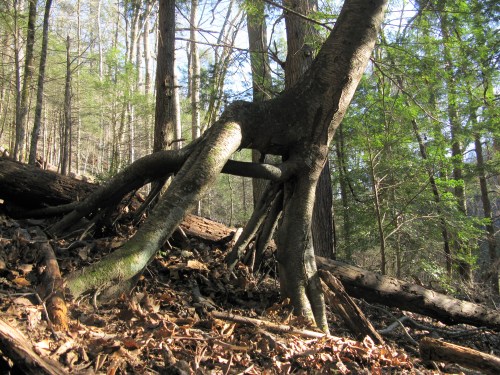
IMG_0768, tree
 . 

Read Full Post »

[poems by Gary Snyder, Wendell Berry, Rose Fyleman, David Radavich]

an offering from Craig Kittner . . .

Piute Creek
– Gary Snyder –

One granite ridge
A tree, would be enough
Or even a rock, a small creek,
A bark shred in a pool.
Hill beyond hill, folded and twisted
Tough trees crammed
In thin stone fractures
A huge moon on it all, is too much.
The mind wanders. A million
Summers, night air still and the rocks
Warm. Sky over endless mountains.
All the junk that goes with being human
Drops away, hard rock wavers
Even the heavy present seems to fail
This bubble of a heart.
Words and books
Like a small creek off a high ledge
Gone in the dry air.

A clear, attentive mind
Has no meaning but that
Which sees is truly seen.
No one loves rock, yet we are here.
Night chills. A flick
In the moonlight
Slips into Juniper shadow:
Back there unseen
Cold proud eyes
Of Cougar or Coyote
Watch me rise and go.

Piute Creek” by Gary Snyder from Riprap and Cold Mountain Poems. Copyright © 2009 by Gary Snyder

.     .     .     .     .     .     .

an offering from Alana Dagenhart . . .

The charming landscape which I saw this morning, is indubitably made up of some twenty or thirty farms. Miller owns this field, Locke that, and Manning the woodland beyond. But none of them owns the landscape. There is a property in the horizon which no man has but he whose eye can integrate all the parts, that is, the poet.

Ralph Waldo Emerson, Nature, 1836

Poet, will you put the parts back together? The seed, the roots, the petals that have been thrashed and trampled? The bits that once meshed and fit now distracted and ignored? The air we can’t taste, the sunlight we can’t breathe, the stone beneath our feet, the water in our hair? Who will put us back together and put us into the places where we belong, all together?

Several friends have offered poems that speak to them about our Earth and which offer to gather us all in together to celebrate Earth Day! I’m posting their offerings April 21, 22, and 23. What do you see? What do you hear? What do you notice? What do you feel?

.     .     .     .     .     .     .

an offering from both Lynda Rush-Myers and Kitsey Burns Harrison . . .

The Peace of Wild Things
– Wendell Berry –

When despair for the world grows in me
and I wake in the night at the least sound
in fear of what my life and my children’s lives may be,
I go and lie down where the wood drake
rests in his beauty on the water, and the great heron feeds.
I come into the peace of wild things
who do not tax their lives with forethought
of grief. I come into the presence of still water.
And I feel above me the day-blind stars
waiting with their light. For a time
I rest in the grace of the world, and am free.

The Peace of Wild Things” by Wendell Berry, from Collected Poems (North Point Press), © 1985

.     .     .     .     .     .     .

an offering from Kitsey Burns Harrison . . .

Mice
– Rose Fyleman –

I think mice
are rather nice;
Their tails are long,
their faces small;
They haven’t any
chins at all.
Their ears are pink,
their teeth are white,
They run about
the house at night;
They nibble things
they shouldn’t touch,
and, no one seems
to like them much,
but, I think mice
are rather nice.

Mice” by Rose Fyleman (1887-1957)

.     .     .     .     .     .     .


Roundleaf Yellow Violet; Viola rotundifolia; Mountains-to-Sea Trail above Brinegar Cabin

an offering from David Radavich, his poem . . .

Enough

Rare is better:
The price soars
when you lack
what you need.

A poem carries
everything
in your pocket
like a mind.

Love can be
stored in a cell
whose DNA
heartens life.

Music is soul
saving, the simplest
math and finding
one solution.

O earth that is
rare and good,
sing to the unclean
with your seas.

“Enough” by David Radavich, originally appeared in Iodine Poetry Journal

.     .     .     .     .     .     .


+     +     +     +     +

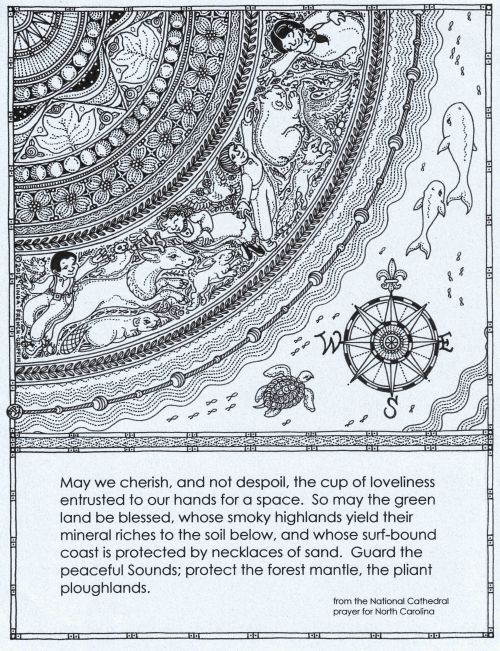
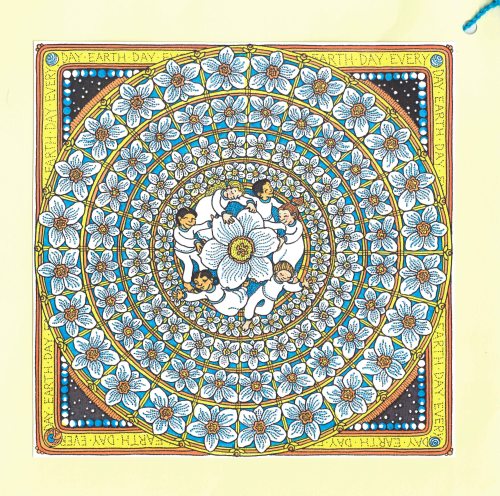
[original artwork by Linda French Griffin (c) 2021]

Read Full Post »

I remember the first bird that counted. Clarification: I remember the first bird I counted.

Mom and Dad had rented a cabin so we could join them for a long weekend on Skyline Drive in the Shenandoahs, June, 1988. Did they think their grandkids were Nature undernourished? Mountain vistas, enfolding trees, night sky – we even saw a bobcat at dusk one evening. Maybe I was undernourished.

The second morning we hiked up a lonely trail in deep shade that suddenly brightened. A forest giant had fallen and invited into its space the sun and the sky. And birdsong. (Prime transitional habitat, I’ve since learned.)

Mom spotted a yellow streak come to rest on a bare branch and begin to sing. I focused. What is this?! Never had one of these on the feeder outside my dorm window, never saw one snagging worms on the front lawn. And listen to it sing! What?!

That Chestnut Sided Warbler is the first bird in my list. Well, make that lists: pocket notebooks, index cards, the backs of trail maps. And of the course the database on my hard drive, which has swelled to megabytes. But what’s the big deal? Thirty-five years old and writing down the name of a bird? What?

I wasn’t a Nature-deprived child. We played outdoors until the street lights blinked on. Caught fireflies in our hands and honey bees in jars. Raised tadpoles to peepers. Camps, beach trips, hiking, Scouts; I was out in Nature pretty much, but I count that CSW as the moment I began to notice. This is not just an unpopulated landscape, not a homogenous backdrop for picnics or games or a nice walk. These are things. Individuals. Differentiated. Species. I start by counting birds but then I notice wildflowers and take up botany, notice one side of the ridge has more blossoms and different, it’s geology, get down on my knees for the tiniest blooms and dang there’s a beetle, entomology.

Pretty soon I want to notice it all, the great grand beautiful interconnected mess, ecology, the parts and the whole. I’m becoming a Naturalist – someone who pays attention. Someone who notices.

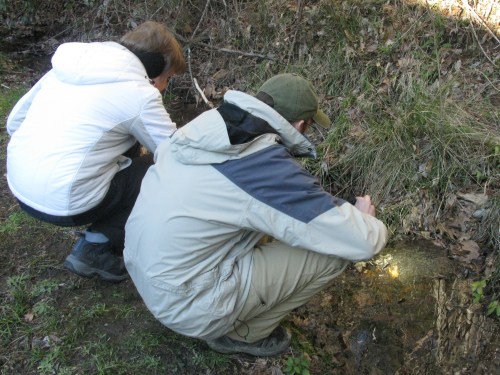
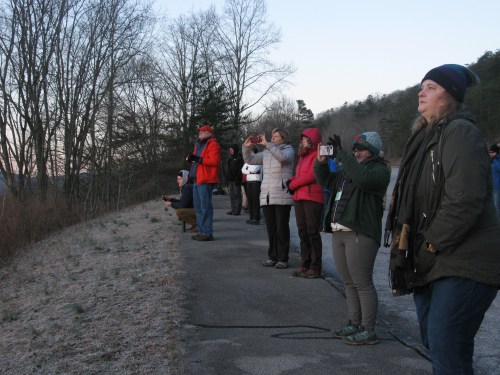
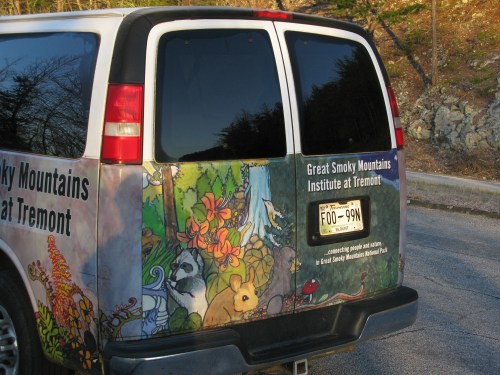
Chestnut Sided Warbler in Virginia was my gateway drug. How much was I missing all those years before? Now I can’t help but notice. Blame the wrens that scold me every morning in the driveway. Blame my friend Mike who is always so careful to step over every millipede on the trail. Blame Amelia my granddaughter as she watches the crocuses open. And after last weekend blame Emily Stein* as my chief enabler, she and the other twenty hard core Naturalists I joined at Tremont in the Smokies for an intense course in “Skills for Sharing Nature.” As always, begin with some questions:

Where have I come from to reach this place? Why do I care? What is my personal story? What do I have to share?

The answers may arrive like spring buds that swell along the flank of the mountain seeking the summit, a lifetime of questions and answers, but now it’s time to screw up my courage and take Step 2: I’m going to get you hooked on Nature, too. Come here a minute. Try my binoculars. See that little dab of brown fluff that just flew up to that branch? Yes, that’s the one. Let’s see what he has to tell us.

.     .     .     .     .     .     .

* Emily Stein: Great Smoky Mountains Institute at Tremont naturalist educator, youth programs coordinator, and instructor for the February 2020 course “Skills for Sharing Nature,” part of the Southern Appalachian Naturalist Certification Program (SANCP). More information at www.gsmit.org

.     .     .     .     .     .     .

Prayer for the Great Family

Gratitude to Mother Earth, sailing through night and day—
and to her soil: rich, rare, and sweet
in our minds so be it

Gratitude to Plants, the sun-facing light-changing leaf
and fine root-hairs; standing still through wind
and rain; their dance is in the flowing spiral grain
in our minds so be it

Gratitude to Air, bearing the soaring Swift and the silent
Owl at dawn. Breath of our song
clear spirit breeze
in our minds so be it

Gratitude to Wild Beings, our brothers, teaching secrets,
freedoms, and ways, who share with us their milk;
self-complete, brave, and aware
in our minds so be it

Gratitude to Water: clouds, lakes, rivers, glaciers;
holding or releasing; streaming through all
our bodies salty seas
in our minds so be it

Gratitude to the Sun: blinding pulsing light through
trunks of trees, through mists, warming caves where
bears and snakes sleep—he who wakes us—
in our minds so be it

Gratitude to the Great Sky
who holds billions of stars—and goes yet beyond that—
beyond all powers, and thoughts
and yet is within us—
Grandfather Space.
The Mind is his Wife.

so be it.

Gary Snyder (after a Mohawk prayer)
from EARTH PRAYERS, edited by Elizabeth Roberts and Elias Amidon, HarperSanFrancisco, 1991

.     .     .     .     .     .     .


.     .     .     .     .     .     .

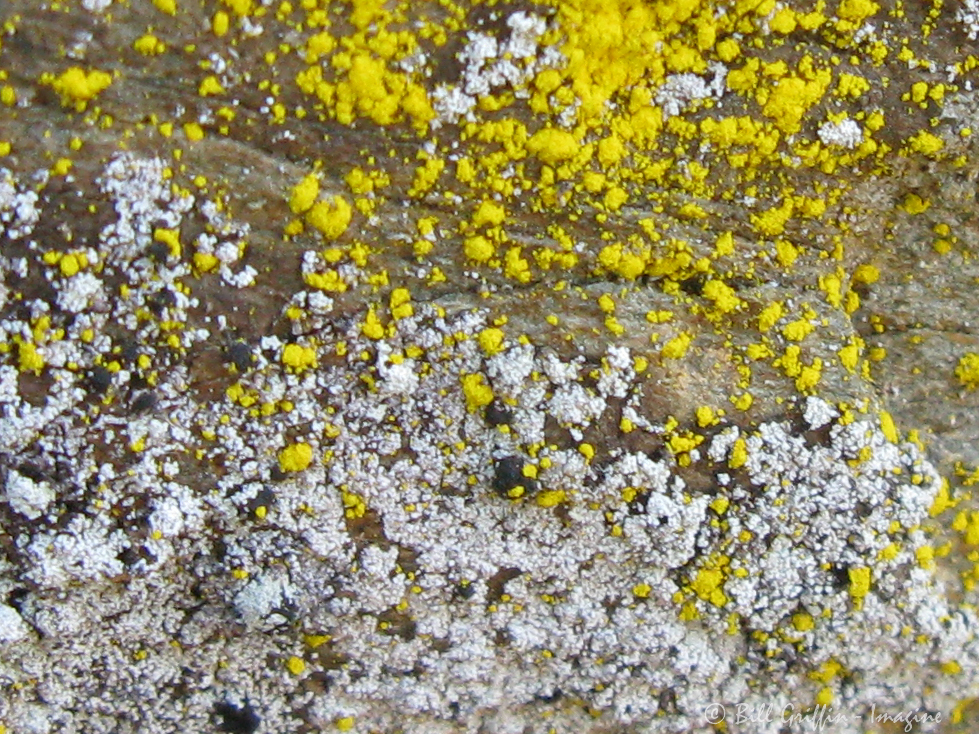
IMG_6944

Read Full Post »