Feeds:
Posts
Comments

Posts Tagged ‘Finishing Line Press’

 + 
[with 3 poems by Sarah Small]
 + 
Dad, Peeling Apples
 + 
++++++ The color of wheat
bread speckled
like the skin of a Golden Delicious,
freckles on top of freckles
and tiny nicks
from his knife, dots of blood
turned to brown scabs.
My father’s hands
 + 
have never changed. Every night
a different apple
skinned naked,
split and seeded without him
ever looking down, loving the fit
 + 
of apple
in the left hand, brown-handled
knife in the right.
He licks the tip of his finger
where the juice runs clear
and skewers a slice
 + 
for me, which I take
regardless
of whether I want
an apple or whether
the flesh has begun to brown
around the edges.
 + 
When he is done,
knife set down and fingers wiped
clean against the legs
of his beige corduroys, I will take
the leathered back
of his hand to my cheek
and hold it there, begging
 + 
his weathered roots to spread
their soil-caked fingers
long and strong
as deep as the generations will go.
 + 
Sarah Cummins Small
from Stitches, Finishing Line Press, Georgetown, Kentucky. © 2025
 + 
❦ ❦ ❦
 + 
Last week I was out on the Mountains-to-Sea Trail with Bob and Steve digging ditches. “Erosion mitigation features” – yeah, ditches. Along one stretch we kept turning up huge earthworms, dozens of them, fat and long as little snakes. As we rescued each one and chucked him/her off the trail, Bob turned to me, local naturalist, and asked, “Say Bill, can you tell which is male and which is female?” Smirk on, Bob. If I recall correctly from Mrs. Schilling’s high school biology, every worm is both. One end is boy and the other end is girl, hermaphrodites. When they want to make little wormlets, they line up parallel head to tail and exchange genetic material. Slimy but exciting!
 + 
Thank you Hermes, Aphrodite, and Mrs. Schilling, whose motto was, “There’s no place in the world for weak women!” Everybody, now, hands on! as we dissected our earthworm. And each 9-week term Mrs. Schilling also sent us out collecting: leaves, insects, fungi. In mid-winter Ohio it was bare bud identification time, each labeled per Linnaeus. I’ve never forgotten Acer rubrum and Quercus alba. My lab partner Dave tried to foist off the bare tip of his defunct Christmas tree as one of his collected buds. Just before he turned his project in, I replaced its label (Pinus pinus?) with Gluteus maxiumus. It was exactly five minutes before Mrs. Schilling’s menacing contralto penetrated to our back row table: “Mr. Mason, come forward!”
 + 
Mrs. Schilling was one of my three most memorable teachers (Mr. Geigel, English, and Herr Watt, German, the other two). I am still in love with Latin binomials and squishy things thanks to her. Mrs. Schilling would certainly never shrink from describing in the most squirm-inducing detail the reproductive habits of earthworms. And at age 15 who is not obsessed with sex in all its varieties, manifestations, and practices? I can’t in all honesty confess that the mystery has even now been fully dispelled, although I think I may have finally figured out the convoluted sex life of ferns. (Listen up, y’all, that’s pronounced Thallus.)
 + 
When I was 12, Dad never sat me down for THE TALK. He just handed me a slim pamphlet, mysteriously titled Where You Came From, then sent me off to read it somewhere my little brother couldn’t peep. “When you’re finished, let me know if you have any questions.” I returned it to him later with the 1965 equivalent of “All good,” but for at least the next two years I still confused female anatomy with British monarchy (Elizabeth Regina). And now I’m supposed to be the one to sit Dad down at 98 and explain to him the facts of why he can’t be asking his physical therapist out on a date? I think I’d rather just stick with the earthworms.
 + 
 + 
❦ ❦ ❦
 + 
War
 + 
++++++ Our mother is beautiful
Without makeup, with the round balls
Of her cheekbones like crabapples
Or plums, and her crooked front
Tooth. But with a little
Pencil to shade in the sharp arch
Of eyebrows and bright red lipstick, she becomes
A black-and-white
Photograph hung in a young man’s barracks
Where in the early evening before dark
And after a green supper, one soldier lies
Sideways on his cot facing her,
Tracing the soft outline of her cheek
With one knuckle, three fingers from his lips
To hers and back. We will never be
So carefully memorized.
 + 
Sarah Cummins Small
from Stitches, Finishing Line Press, Georgetown, Kentucky. © 2025
 + 
❦ ❦ ❦
 + 
We will never be / so carefully memorized – Sarah Small begins her collection Stitches with a portrait of her parents in the 1940’s, deeply imagined, drawn deep from her heart. Poem by poem she pieces a quilt of memory and legacy, reverence and longing. This is one poetry collection that left me wanting more when I had turned the final page. Its beautiful pattern gradually emerges, on each page so carefully felt and conveyed. The simplest things conceal the greatest mysteries. Within the simplest the greatest is revealed.
 + 
The poet’s eye and ear, her imagery and music, each delicate detail and meticulous observation, all the lives shared, every secret revealed: the colors and textures arrange themselves until we recognize not only the poet’s family but our own place among the tribe of humankind. These are indeed the stitches that gather us into a single human family.
 + 
 + 
Stitches is Sarah Cummins Small’s debut collection and is available HERE.
The book’s cover art and design are by Summer Small.
 + 
 + 
❦ ❦ ❦
 + 
Unstitched
 + 
I am held together
by tiny stitches
on small scraps of feed sack,
snatches of wool, snips of gingham.
A patchwork of pastels—
a slipshod collage of cotton.
I’ve been silk, satin, taffeta;
I’ve been flowers, polka-dots, and plaid.
 + 
Thin white thread
++++ ++++ zig-zags
++++ across
++++ ++++ the decades
++++ hemming me in, keeping me
from ripping.
 + 
I’ve been zipped.
++++ Buttoned.
++++ ++++ Unsnapped.
I’ve been bumblebunched, twisted,
and straightened. Held pins in my mouth,
pricked fingers, and calloused
my thimble-less thumbs.
 + 
I am done.
Unravel me now:
Rip out the seams
one by one, untwist strings
and untangle knots. Fold me gently.
What I haven’t finished—
take now.
Begin again.
 + 
Sarah Cummins Small
from Stitches, Finishing Line Press, Georgetown, Kentucky. © 2025
 + 
❦ ❦ ❦
 + 
Just a reminder that I m leading a naturalist hike the morning of Friday, September 12, 2025 on the Mountains-to-Sea Trail near Elkin and you are invited. During the month of September we celebrate the birthday of the MST! It’s an easy walk, 2 hours or so, lots of stops to check out flora and fauna. Sign up at:
 + 
 + 
And if you can’t come on the Friday, we will probably repeat the hike on Saturday, September 27. Sign up with Elkin Valley Trails Association at Meetup.com to receive notices.
 + 
 + 
❦ ❦ ❦
 + 
2014-06-30a Doughton Park Tree

Read Full Post »

 . 
[with 3 poems by Gail Peck]
 . 
Prayer
 . 
Please let me see
 . 
the cow’s big eyes
the goldenrod
 . 
the coffee in my cup
turning color with cream
 . 
all that painters have made
stone sculpture in a field
 . 
family photographs
old letters
 . 
poems and stories
that funny looking bug
 . 
I can’t catch
how to read the clouds
 . 
if there’s a bee in the flower
I lean to
 . 
color of fruit
sheen of silk
 . 
what time it is
my bright painted toes
 . 
label on the wine bottle
I like to study
 . 
how full to pour my glass
word and words and words
 . 
and faces of those I love
yes   mostly those
 . 
Gail Peck
from In the Shadow of Beauty, Finishing Line Press, Georgetown KY; © 2025
 . 
❦ ❦ ❦
 . 
The question is not what you look at, but what you see.
++++++++++++++++++++++++++++++++ — Henry David Thoreau
 . 
Toward the end I took over the ritual, but when had it begun? I had never paid much attention to the cut flowers in the vase on the dining room table until I became complicit in their procurement. When Dad relinquished driving . . . correction, when we made Dad give up driving at age 96, it fell to one of us to take him to Trader Joe’s every week for flowers. Mom came along with us as long as she was physically able – was she choosing the flowers she liked or the ones Dad wanted her to choose?
 . 
When it became too much to shepherd two elders on walkers and still push a shopping cart, it became just Dad doing the choosing. Same variety every week, pink or mauve Alstroemeria, Peruvian Lily – I truly think Mom would have been equally happy with anything from TJ’s lush bank of bouquets, but these in particular held their petals longer, according to Dad. Most blooms would last until next week’s shopping, and even then Dad would order us to separate out any stems that still seemed fresh. Thrifty. A good provider. The manager in charge. My Dad. The flowers were one last affirmation of his life-long identity.
 . 
What do we see when we look at another person’s life? We are adrift in the ocean of “Why did she do that?” and “Why does he act that way?” Rocked by chop and foam, no safe or simple way to dive deep, a fathomless conversation. We observe from arm’s length how the one we love reacts, their judgements and choices, but the water is opaque; what impulse impels the rudder? Did Dad keep flowers on the table to make Mom happy, or did he do it to feel happy about being seen to be making Mom happy?
 . 
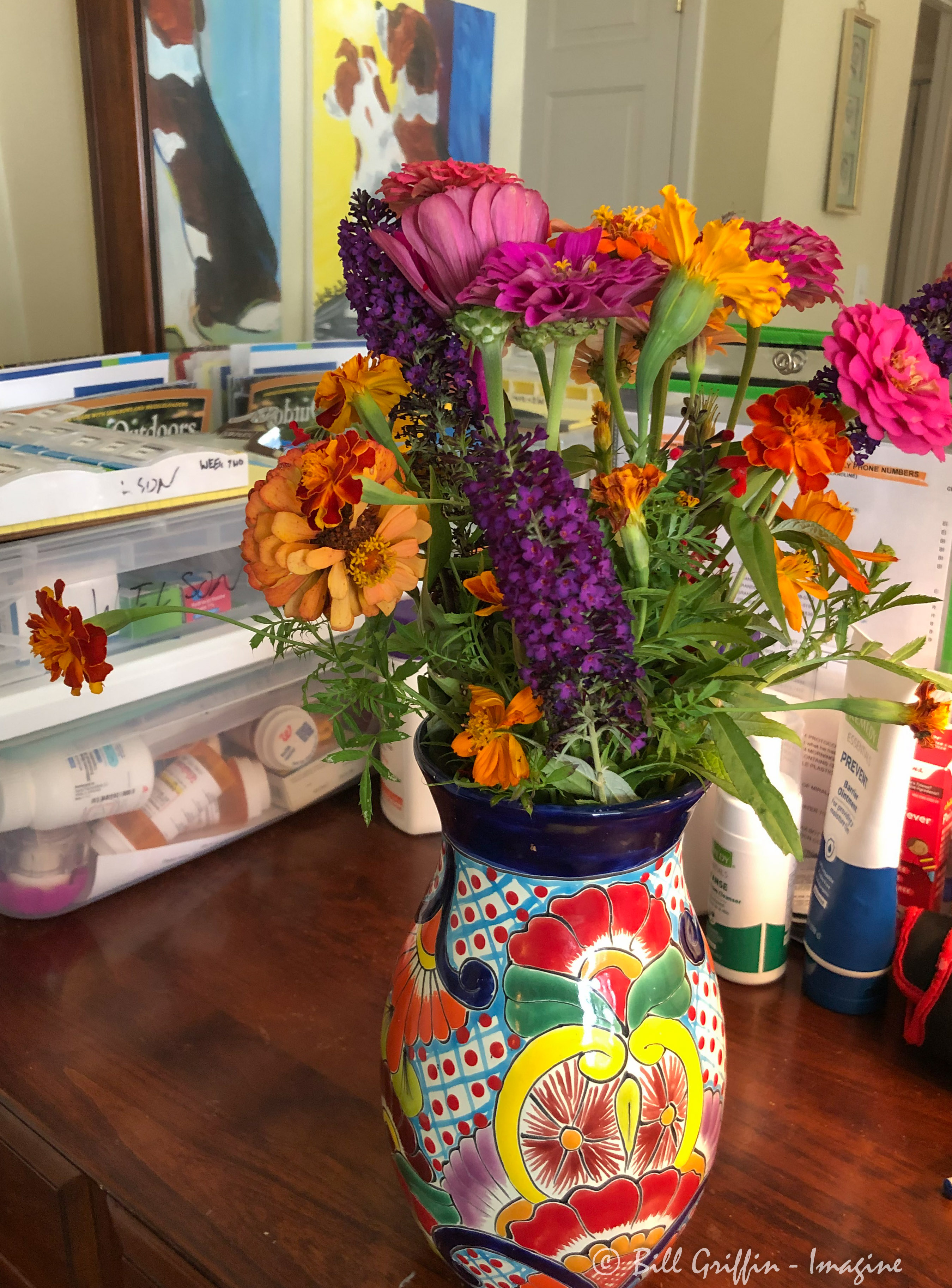
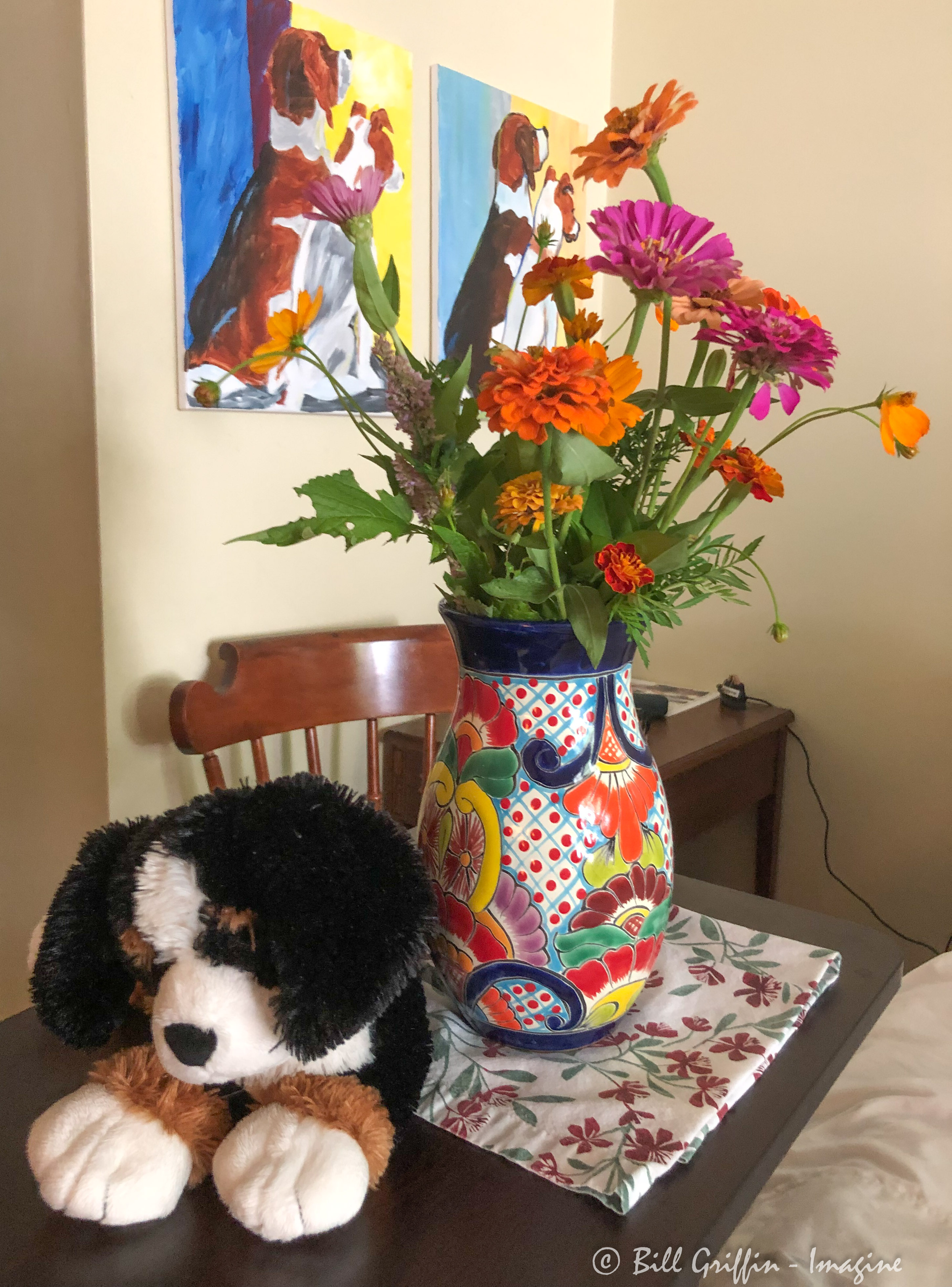
During the last months Mom lived I brought her flowers from my own gardens. First Lenten Rose (Hellebore) and Redbud branches, then Daffodils and Narcissus that kept blooming for a solid month. As the weather warmed I shared Beebalm and Anise Hyssop my son-in-law had started for me in his greenhouse, then the cavalcade of Asters, Black-Eyed Susans giving way to Marigolds and Zinnias, the first year I’d planted such. I think I brought them every week to make Mom happy, a last chance for a final gift just from me. But I think I was also incredulous that my lackadaisical gardening could produce such bounty – I was showing off.
 . 
I would place a few long stems in a fluted vase on the tiny kitchen table where Mom read the comics each morning; another small vase beside her accustomed seat on the couch; finally all vases came to rest beside her bed where she spent most of her final weeks. It never failed. She would, with effort, turn her head and spy my offering. Then she would look at me and smile.
 . 
 . 
❦ ❦ ❦
 . 
Leaving
 . 
Once you are left
you are always left
a clock ticking backwards
 . 
You tried to crawl out the window
when your father packed his suitcase
and were pulled back
You opened the door
and ran after the car until breathless
 . 
Why does the sound of a train whistle
not make you sad when one
took your mother away for months
 . 
Perhaps because your grandmother
played The Lonesome Railroad Blues
on her harmonica and the dog danced
 . 
The calendar nailed to the wall
turned one month over another
until winter was gone
 . 
Daffodils bloomed    the dogwood
reopened Christ’s wounds
 . 
Curious girl who gathered flowers
from fields and pulled petals
from daisies – he loves me, he . . .
 . 
Gail Peck
from In the Shadow of Beauty, Finishing Line Press, Georgetown KY; © 2025
 . 
❦ ❦ ❦
 . 
Your family, like mine, has stories you break out at every gathering, dust off, polish up, and share good as new. I’m sure Dad is glad we finally quit telling the one about him breaking a full bottle of ketchup at the diner in Parkersburg, West Virginia when we were teenagers. Then again there are probably any number of stories that deserve more retellings than they get. Stories make us a family. What will happen to the stories that no one keeps alive?
 . 
Gail Peck’s In the Shadow of Beauty tells stories that make a family. The stories are cut flowers and lace, and they are rancid wounds and meanness. The people we want to love can hurt us the most. The people we want to hold onto forever will all leave us in time. We seek meaning by revisiting and reliving the turning points as well as the ho-hum trivial passages that have somehow hooked themselves into our memory. For most people, we will never truly grasp their intent or purpose, but when we’re brave enough to re-experience how they have affected us, we might discover our own purpose.
 . 
Gail often uses photographs of her family, which capture a single moment without judgement or commentary, to rekindle events to which she then applies the art of poetic commentary and judgement. This book is their lives as well as hers. At one point Gail admits she does not know where the ashes of her sister are scattered but she still wants hers to mingle with them. She reveals her bonds with her mother as a many-faceted jewel, some faces bright crystal but others tarnished. And Gail inspires me to keep visiting, keep remembering, keep looking and never be satisfied that I have seen all there is to see in my own stories and my family’s. As she confesses in Arranging Flowers:
I can’t cut a flower without thinking of her,
and I may go again to place some
on her grave, but I’ll have no desire
to continue. Once you sever the stems
you know to make the most of it,
and isn’t that why we love them,
their beauty, the petals that will fall.
 . 
 . 
In the Shadow of Beauty, poems by Gail Peck, is available from Finishing Line Press HERE
Enjoy poems from an earlier book by Gail Peck, The Braided Light, at last week’s issue of VERSE & IMAGE
 . 
 . 
❦ ❦ ❦
 . 
Past Tense
 . 
How quickly it passes
from is to was
 . 
from has to had –
as quick as a bird
 . 
flies from a windowsill –
you hear its song
 . 
but no longer see it.
They’d slit her gown
 . 
up the back
to spread beneath her.
 . 
Small, embroidered roses
at the top with beads
 . 
in each center.
The eyes don’t totally close
 . 
near the end
and once the hands cooled
 . 
we knew
and I know almost no Bible verses
 . 
but it came to me
when they removed the body
And the peace of God, which surpasses
all understanding
 . 
for she was a godly woman,
my mother.
 . 
Dress her in pink
with the white lace blouse
 . 
for she loved white –
white of the lily, white of the clouds.
 . 
Gail Peck
from In the Shadow of Beauty, Finishing Line Press, Georgetown KY; © 2025
 . 
❦ ❦ ❦
 . 
 . 
❦ ❦ ❦
 . 
Doughton Park Tree 2020-03-07

Read Full Post »

 . 
[with 3 poems by Marilyn Hedgpeth]
 . 
The Lightness of Reprieve
 . 
Standing at our friend’s threshold,
pockets padded with tissues,
we steel ourselves for heartache,
prepare to embrace longer than usual,
voice our true affections,
stutter through farewells.
To our surprise, she rallies,
rises from her sick bed,
responds to the attention,
the memories, the bonds we share.
Glancing back as we leave,
we see her waving from the doorway.
 . 
Later, we knock at the door of a cousin
recovering from a cardiac procedure.
She claims to feel ten years younger.
We fill this bonus time with laughter
and celebrate the lightness of reprieve.
 . 
Arriving home, we cringe to find
ruffled remains of a red-bellied
woodpecker, feathery outline still visible
on our glass door.
We gather its hollow form,
place it tenderly, respectfully,
in a shallow hole, hallowing
the fragility of life
at our own doorstep.
 . 
Marilyn Hedgpeth
from The Lightness of Reprieve, Finishing Line Press, Georgetown, KY; © 2024
 . 
❦ ❦ ❦
 . 
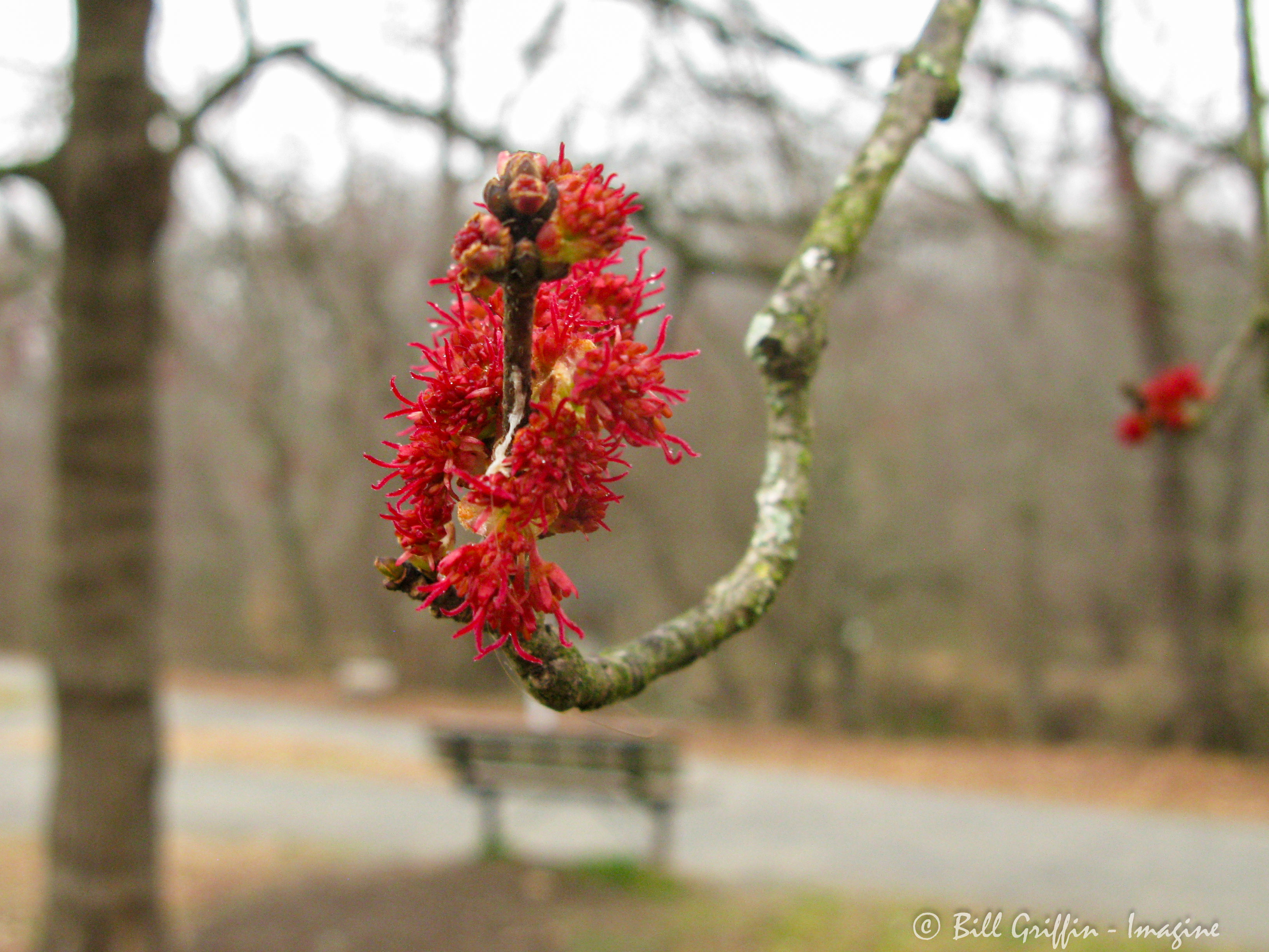
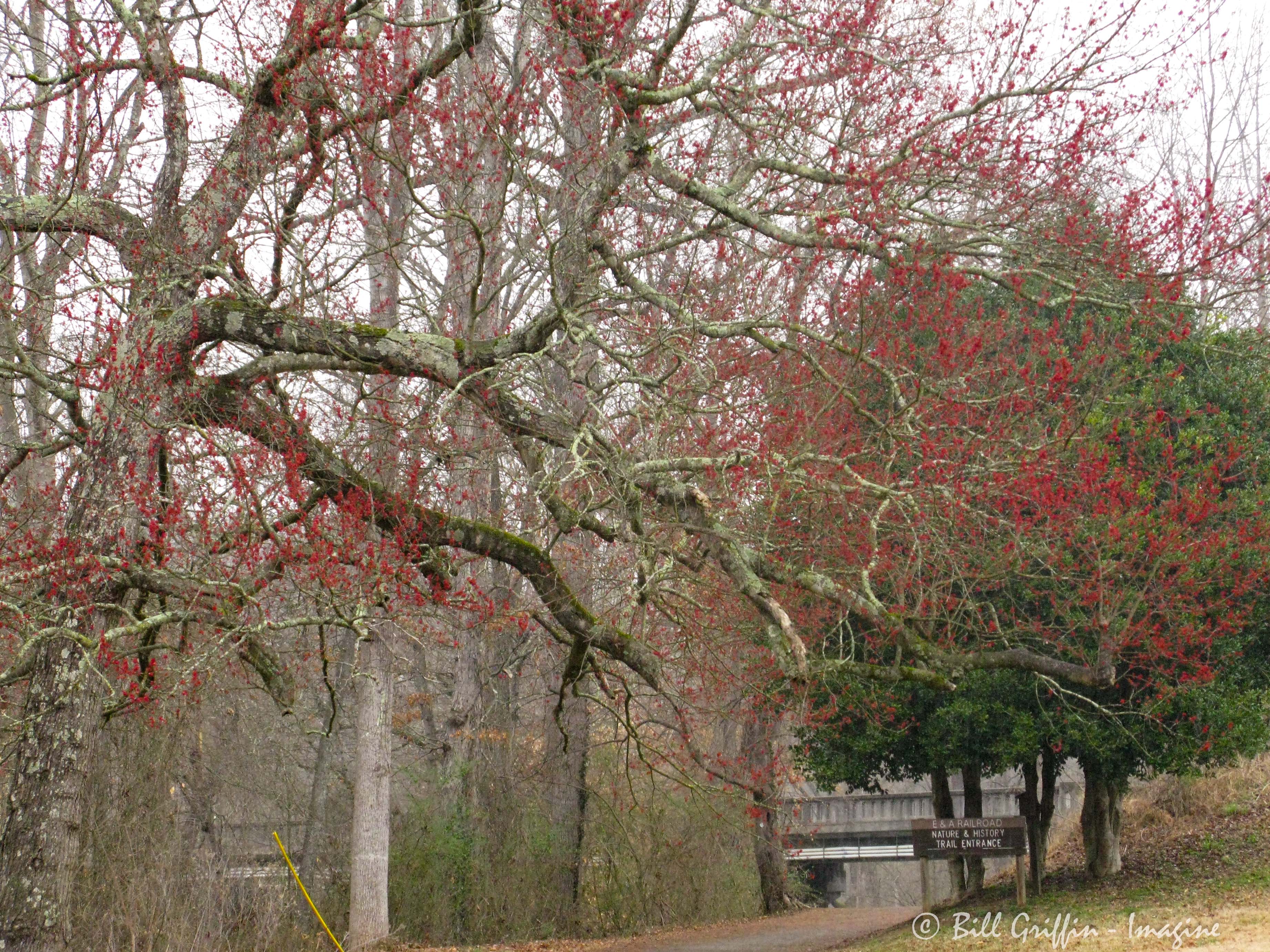
Feb 20, early morning drive: slant light across the fields sets fire to every third tree along the highway. Dark orange, deep red, their crowns glow, a bright haze of flowers at the tips of a million twigs. Almost Spring, and the first maples are blooming.
 . 
Witch hazel has dropped her petals, spent; now maple lifts the baton. Here in the Southeastern USA, maple is one of the earliest trees to bloom. Blossom bud break is triggered in mid-February, primarily by lengthening daylight regardless of weather, weeks before the leaf buds swell and burst. Check the pollen burn in your eyes and nose – you’ll know when those flowers have opened.
 . 
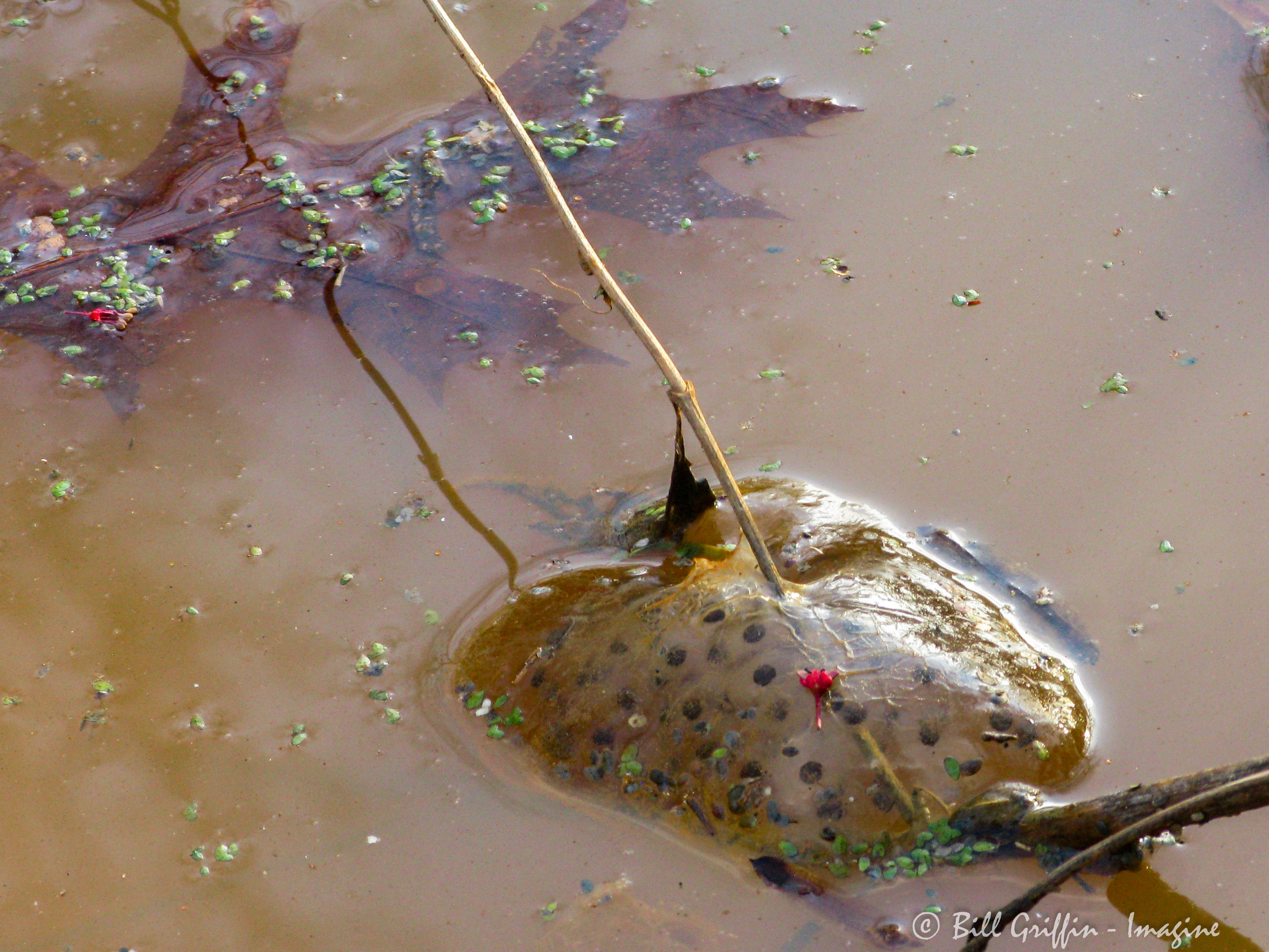
As opposed to most garden flowers which present both pistil and stamen in the same bloom (namely bisexual), maple is, like many trees, monoecious – there are separate male flowers and female flowers on the same tree, even on the same stem. Male red maple flowers look like little ruby crowns of spiky stamens; the female flowers are a bouquet of drooping red pistils.
 . 
But it gets trickier. Some red maples bear only male flowers, while others bear only female (this separation termed dioecious). And individual trees can shift. One year a tree may be male, the next year half and half, the following year all female. The prevalence of Male vs. Female flowers doesn’t seem to be either a cause or an effect of the overall health of the tree. Why?! Why do they do this? What purpose does all this variability serve the tree or the community of red maples?
 . 
I don’t know but the tree knows. Perhaps it’s communicating with all its neighbor maples through its underground network of mycorrhizal fungus, collaborating to decide who’s going to make lots of pollen this year and who’ll make the seeds (and maples do make lots of those little winged seeds). Perhaps their network extends throughout the local woodland and into the next county. Acer rubrum is one of the most plentiful trees east of the Mississippi, from Newfoundland to Florida. Perhaps it creates one vast collective knowing, guiding the roots, the bole, the twigs that will bud into flowers, male or female. Perhaps.
 . 
February into March, every morning the scarlet halo expands. Every day we’re closer to Spring. Every afternoon more sneezes and water from my eyes. Glorious! I trust those maple trees utterly – they certainly know what they’re doing.
 . 
 . 
❦ ❦ ❦
 . 
Mirror Images
 . 
Sliding into a booth,
leather cool to my legs,
we take menus in hand;
we glance around,
tempted by lavish meals
rising before other patrons.
An adjacent mirrored wall
makes the tavern seem
twice its size, twice as lively.
 . 
Across smooth Formica,
you sip ice water,
watching as your doppleganger
tucks a wayward wisp of hair
into her head-scarf.
Maybe that’s an alternate universe,
you say, and this table,
our point of intersection.
Maybe while we grow older, 
grayer, wiser perhaps, 
they grow younger
healthier, more vital and able.
 . 
We toast to what’s possible,
to friendship, regardless.
Condensation drips from our tumblers,
while frost still clings to those
of our glassy companions.
 . 
Marilyn Hedgpeth
from The Lightness of Reprieve, Finishing Line Press, Georgetown, KY; © 2024
 . 
❦ ❦ ❦
 . 
There is, after all, no reprieve. This morning as we’re talking to the palliative care nurse who is  interviewing my mother, my father asks, “Does everyone end up in Hospice?” Or did he say, “Will I end up in Hospice?” It’s a fair question, even for someone not 97 years old. Every year that passes, Dad announces he’s planning to live five more years. One may hope, but perhaps one shouldn’t plan on it.
 . 
The title poem in this first collection by Marilyn Hedgpeth, The Lightness of Reprieve, confronts this reality. Marilyn’s friend will die of cancer very soon and yet the two of them are surprised to share a vibrant afternoon together; Marilyn’s cousin might have died from her heart condition but now feels reborn; Marilyn returns home to confront the death of a beautiful bird on her own doorstep. Other poems throughout the book touch upon our mortality from many different angles, sometimes head on, sometimes in metaphor and with the lightest touch of benediction. I sense a deep abiding theme of sharing. We rarely share with each other this common knowledge that our lives will most definitely end; what we do share is stories and a gift of ripe strawberries; imagination and laughter; silent moments of togetherness; prayer.
 . 
And in sharing don’t we experience reprieve? These are not poems of grief for time lost. These are poems of celebration for time shared. Marilyn has no doubt sat with the bereaved many, many times in her years as a minister, but this is not a book of counsel. These are simply poems of our simple human commonality. I step into the poems and accept my own sadness – sadness lifts as it is borne by many other shoulders. The yoke is not removed from me, but for a few steps along this journey I might almost imagine its lightness.
 . 
 
Marilyn Hedgpeth recently retired as a Presbyterian (USA) Minister of Word and Sacrament after 24 years of “preaching / teaching / leading / loving life.” The Lightness of Reprieve is available from Finishing Line Press HERE
 . 
 . 
❦ ❦ ❦
 . 
Last Leaf
(with a nod to O. Henry)
 . 
One Final Rusty Leaf
clings to the dogwood tree
outside our bedroom window.
Resisting the wind’s wrestling,
it beckons me back to a time
when I painted a single leaf
on our patio wall:
my Hail Mary attempt
to prolong the life of my father
as modern medicine failed,
as the leaves fell.
 . 
Desperate to bring him hope;
venturing outside the boundaries
of my own knowledge and faith,
I scheduled an appointment
with a local healer, Chief Two Trees.
But when travel became impossible,
I resorted to that lone leaf
and a no holds barred prayer.
 . 
After he died, I continued to paint,
self-medicating stroke by stroke,
adding to my winter wall-garden:
fern, forget-me-not, bleeding heart,
wisteria, live-for-ever;
each new leaf, petal, blossom,
balm to my wound.
 . 
Marilyn Hedgpeth
from The Lightness of Reprieve, Finishing Line Press, Georgetown, KY; © 2024
 . 
❦ ❦ ❦
 . 
 . 
2020-06-11a Doughton Park Tree

Read Full Post »

Older Posts »