Feeds:
Posts
Comments

Posts Tagged ‘family’

[with 3 poems by Melinda Thomsen]

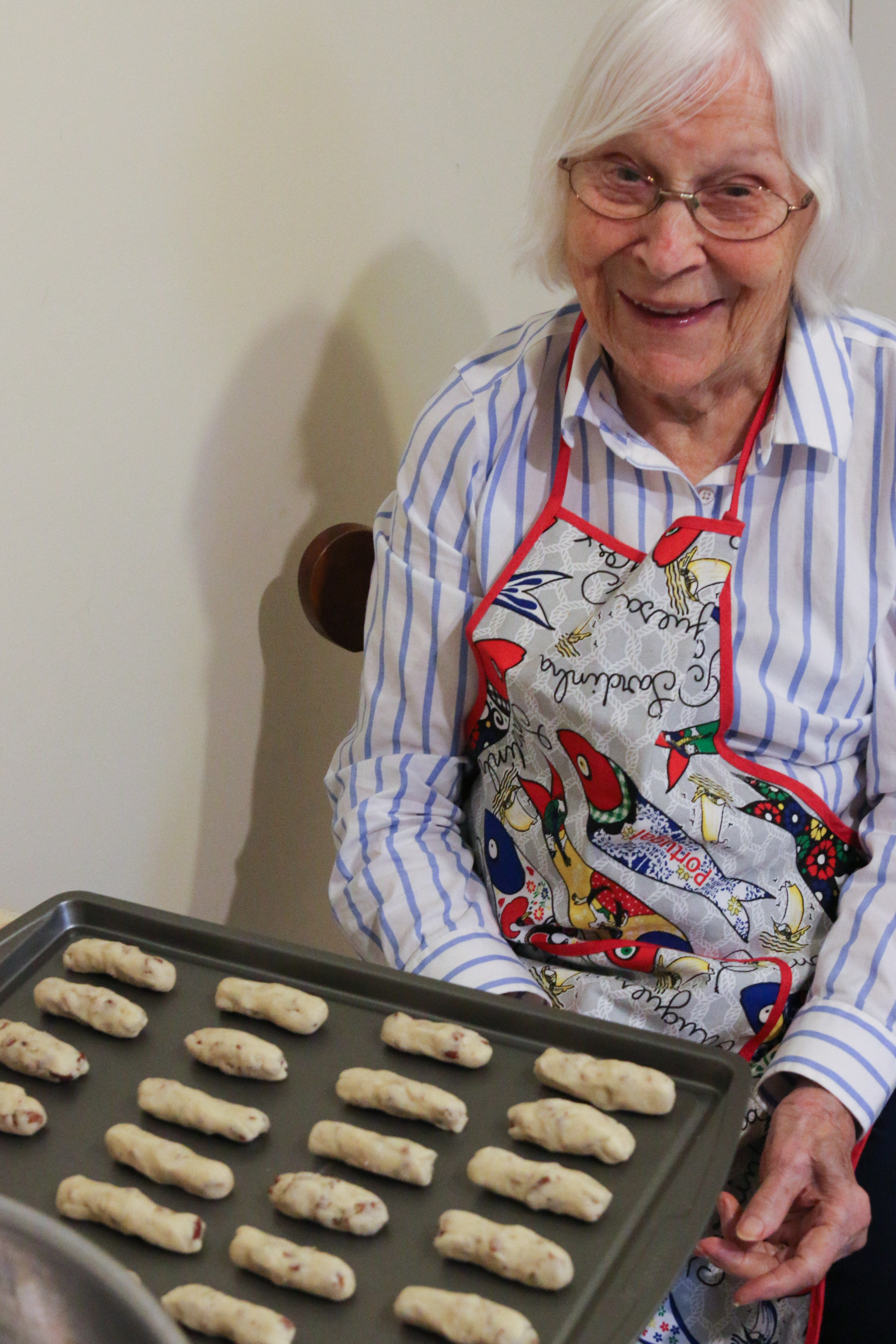
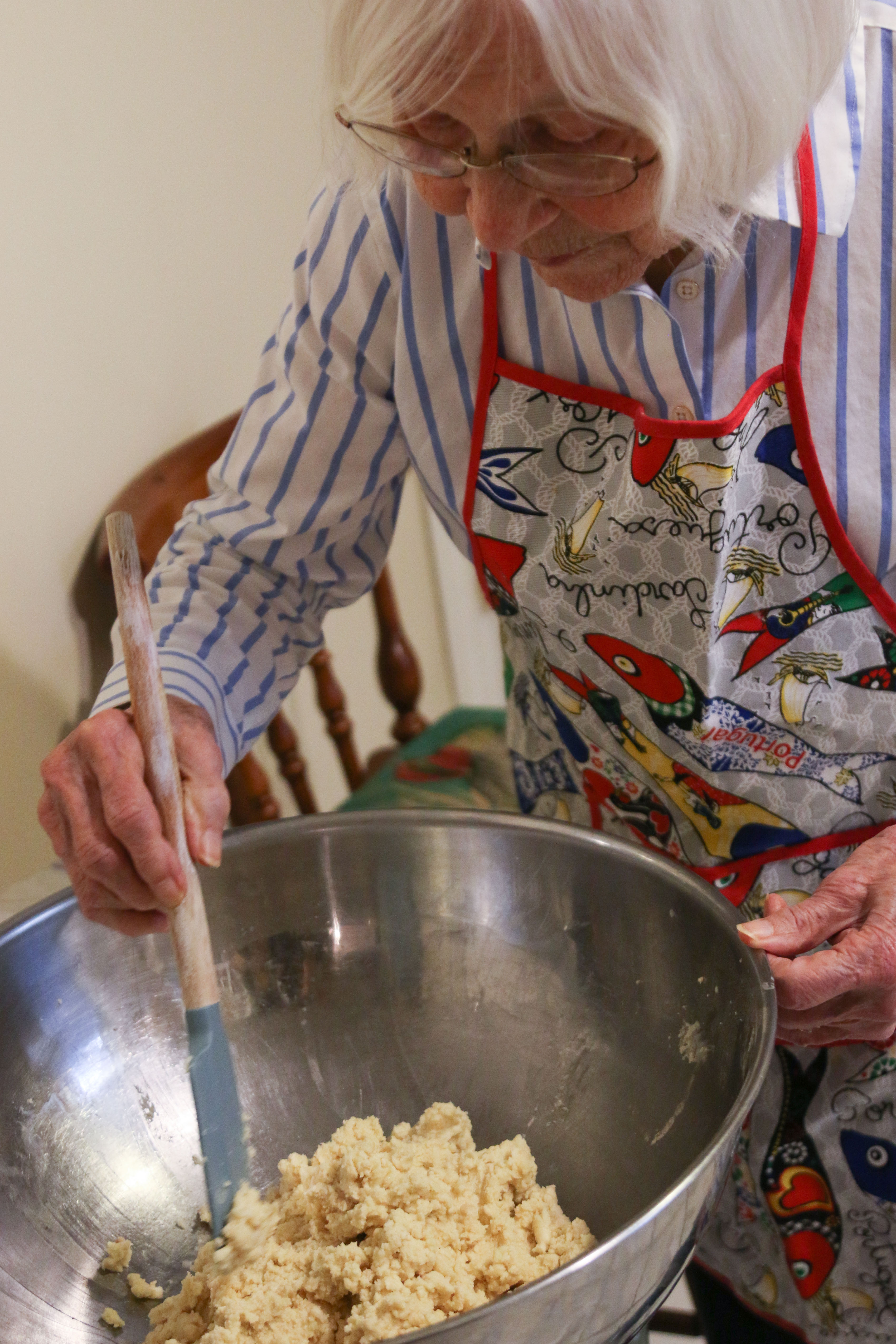
How about you cream the butter and sugar while I chop the pecans? At 93 Mom does not need to be wielding the big chef’s knife. Last week I bought vanilla, nuts, butter, and a couple of new cookie sheets at Harris Teeter while shopping with Dad. This morning I pre-measured the sugar and flour into ziplocks before I left the house. This afternoon Mom woke up early from her nap, so excited to be baking cookies for Thanksgiving.

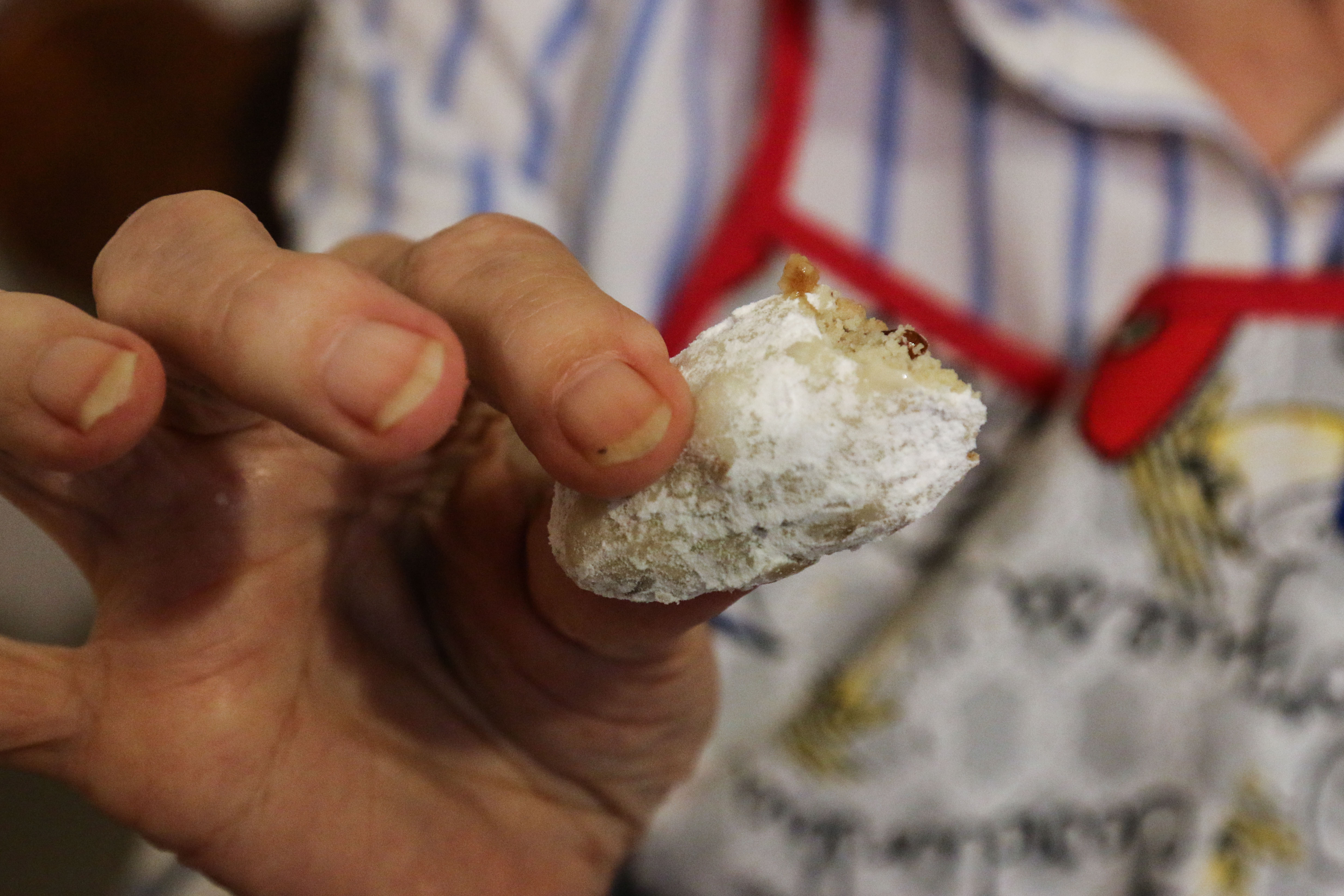
Whenever we visited Nana while I was growing up, we kids (and Dad, too) couldn’t wait to visit the little village of tins that would have sprung up like magic on her kitchen counter. Homemade fudge, humdingers, Moravian Christmas cookies. And there were always, there had to be, nutty fingers. When I got married she bequeathed me the recipe and that’s how I labeled the index card – Nana’s Nutty Fingers.

Nana’s only daughter – my Mom – hasn’t made nutty fingers since any of us can remember. Last night I printed a copy of the recipe and scribbled out my fraction calculations to double it. When I walk into Mom’s kitchen today, though, she already has the recipe laid out on the counter.

The original – centered on page 53 of What’s Cooking?, compiled by the Winston-Salem Woman’s Club in 1948, “Pecan Fingers” contributed by Ellen Cooke, alias Nana. It’s identical to the recipe we’ve used all these years as long as you realize that 4X sugar means granulated.

O Baby, in about an hour their home is smelling good, and all the laughs and stories we share during the making are even more delicious. Good job, Mom, high five. Dad pronounces these the best nutty fingers he’s ever tasted and the powdered sugar down his sweater affirms. When granddaughter Claire arrives from Maine for Thanksgiving, there just might be a couple left for her.

Maybe.

.     .     .     .     .     .     .

Sweet Potato Casserole

One poet says she waits to hear what
the words are trying to say. Meanwhile,

a documentary shows fifty pounds of yams,
gathered in one plastic basket, heaved up

to a migrant from Chihuahua, standing
in a school bus. The bus trudges through

the turned fields of North Carolina, a taxi
with an open top and wooden slats for sides

reaping filled baskets. Another poet hopes
the best wind finds me ready to wrestle it

to the page. As farm workers examine
and measure, sweet potatoes lift skyward.

Thousands of roots piled up in moving crates,
all hand gathered, are waiting for words.

Gently but quickly, these men harvest,
and I keep searching for nouns so small

but will swell in the mind to voice the labor
and sweat of my Thanksgiving dinner.

A friend tells me, if you think one person
can’t make a change, you’ve never been in bed

with a mosquito. Advice swirls like gnats
while I peel yams, whose discarded skins,

the width of fingers, almost rise as hands
to choke my verbs. Still, I dot mashed sweet

potatoes with mini marshmallows before
placing the heavy pan in a 375 degree oven.

Melinda Thomsen

.     .     .     .     .     .     .

Melinda Thomsen’s book Armature lives in the personal moments that create each day of our lives. The title refers to the skeletal framework a sculptor uses to support her clay model. She adds form and matter to shape the work into three dimensions. The book’s framework includes descriptions of four castings of Degas’ Dancer Looking at the Sole of Her Right Foot; the poems throughout add shape and form through their close observation and grounded presence within the many places they dwell.

Armature, © 2021 Melinda Thomsen, Hermit Feathers Press, Clemmons, North Carolina

.     .     .     .     .     .     .

Old Tractor Equipment

Their armature emerges from
a forging of farm equipment:
rasps, chains, gears, and pipes.

Metal tractor parts fashioned
a horse whose neck
and ligaments are strong

enough to face the wind
with a mane of almost twenty
flat files billowing in the breeze.

We all move this way, right?
After years of pulling it
together in cut and paste jobs

of bad or non choices,
even if our hearts resemble
rusted tractor ball bearings,

we construct and forge ourselves
from a hodgepodge of muzzles
and flanks in to running mares,

stalky goats, or bold stallions.
Walk over to us, and see our
sprocket nut nostrils flare.

Look at these haunches
made of 20th century shovels
and lawnmower parts.

A trip of goats and a pigpen
of swine have propane
tank bellies, pulley hooks

for horns, and porcine
snouts are marked
by stainless steel forks.

Nearby, bric-a-brac horses
cast galloping shadows
as we roam and graze.

Melinda Thomsen

[Melinda notes: Jonathan Bowling is a sculptor based in Greenville, NC. His field of sculptures is on the corner of Dickinson and Atlantic Avenues.]


.     .     .     .     .     .     .

Whirligig Park in Wilson, NC

I come from a nearby
town whose herons
sport feathers of golf club

handles and clipper beaks
flash shadows on the walls.
But here, looking up at all

these odd parts forged
into metal marionettes
with no strings or motor,

I see thy leave it to wind.
A cloud-laden morning
moves in and fifty feet

above, a front propeller
turns and two farmers
quickly cut a metal log.

Their saw’s teeth drag across
the tree as if their first stroke,
and behind them, a dog sits

whose tail wags at each cut.
It seems the earth begs us
to twirl, even if our spirits

have been sapped to rust,
even if our most dead
selves dwell in squeaking.

Melinda Thomsen

[Besides Wilson’s Whirligig Park, Vollis Simpson’s kinetic art is also on permanent display at the North Carolina Museum of Art.]

.     .     .     .     .     .     .
.     .     .     .     .     .     .

Postscript: My children and their kids have always called my Mom Grandmommy. My brother’s three girls, however, know their grandmother as Nana. Of course. The nutty finger legacy lives on.

.     .     .     .     .     .     .

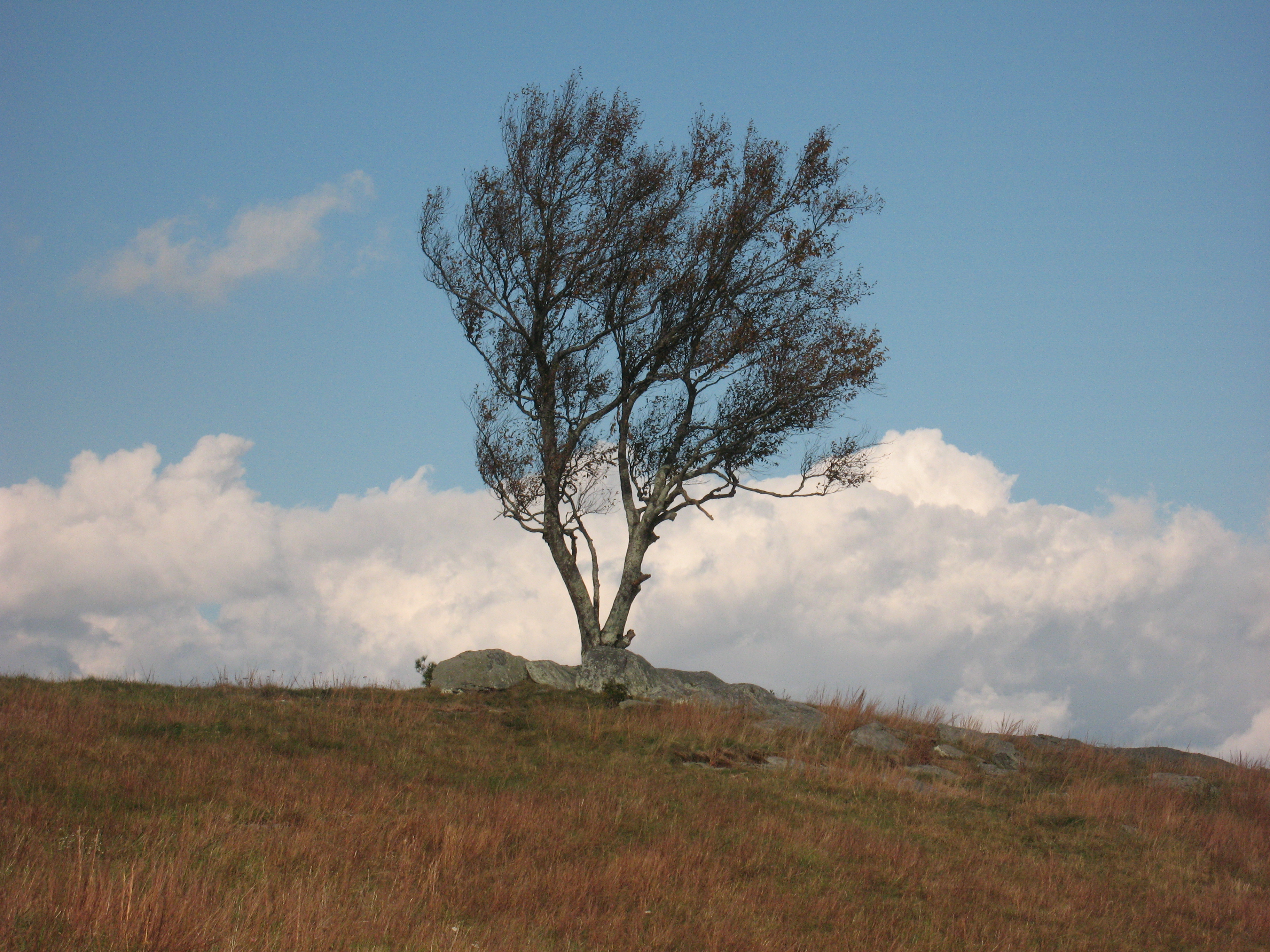
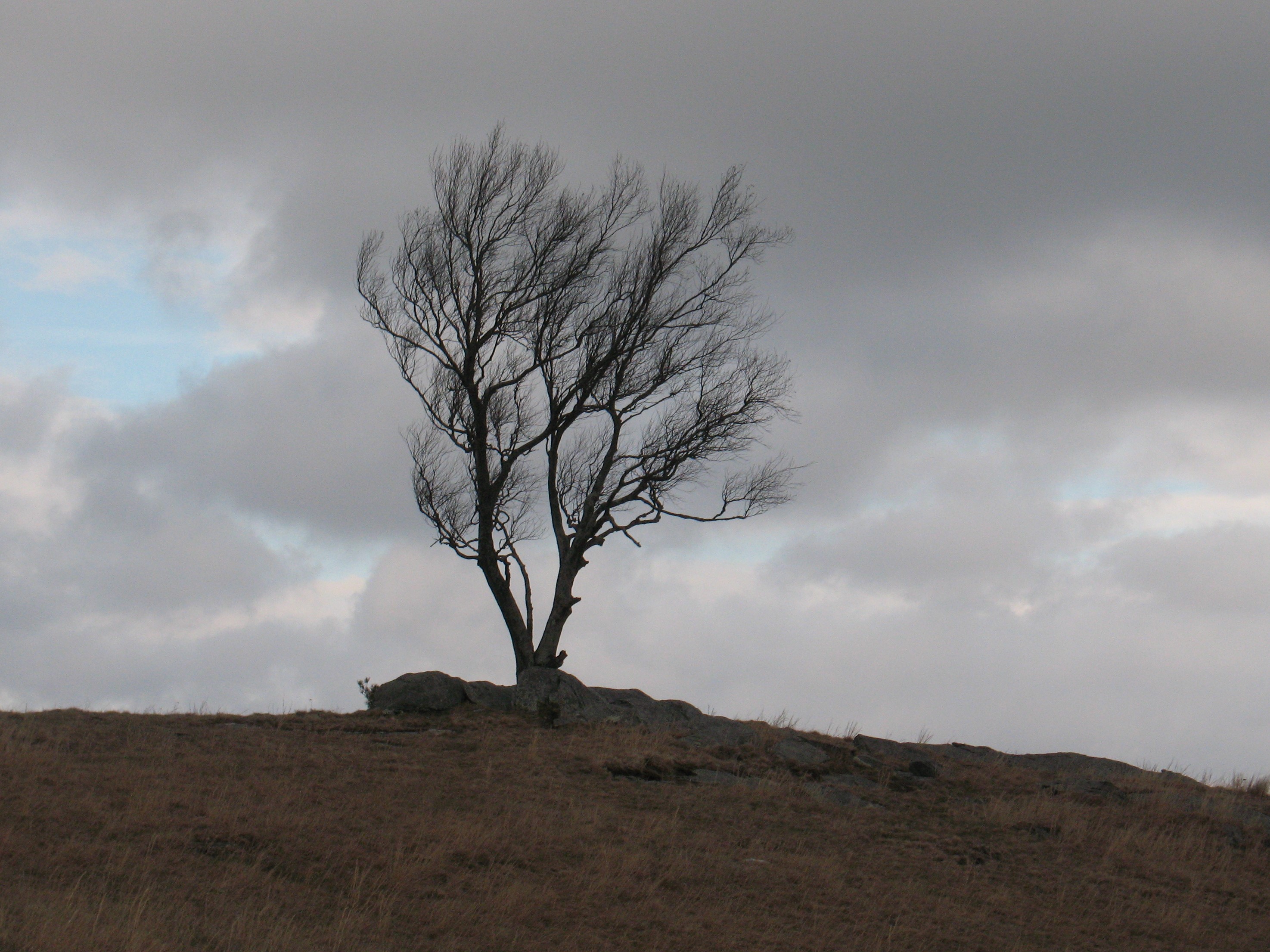
2016-10-17b Doughton Park Tree

Read Full Post »

[with 3 poems by Shelby Stephenson]

While I sit with Dad in the hospital we make a checklist of everything we need to do to close up the house. He had a TIA last night – “a little health problem” is how he’ll describe it to the agent at the News & Observer to explain why he’s canceling his subscription. His scans show no stroke. We wait for the doctor to discharge him, then he’ll take it easy (will he?) for a few days while I do laundry and winterize the cottage in Pine Knoll Shores, avoid the Labor Day traffic for the drive back to Winston.

Check lists. Dad already has a dog-eared collection, each one another page on his yellow pad. I create an updated list on my phone while we wait – first entry, “check Dad’s check lists.” When we finally buckle in on Tuesday and tick off the last item we will have accomplished something.

Or so I want to think. The next five hours in the car generate their own list: find accessible bathrooms, some roadside shade for the lunch we packed. Damn, forgot to give Mom a COVID mask at the rest stop. Unload, unpack, raid the freezer for supper. Make sure we’ve sequestered all the medical records for his appointment with his local doctor.

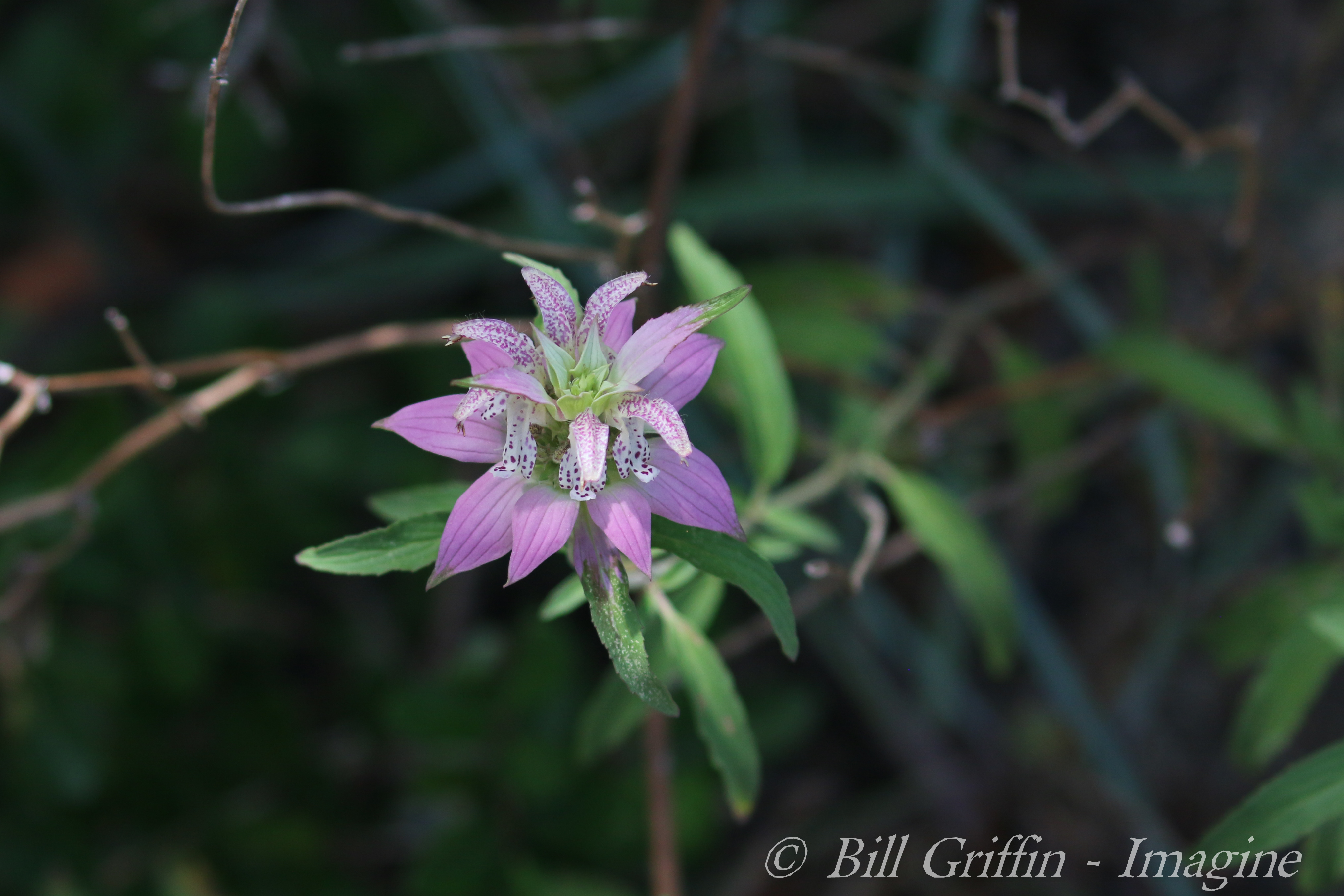
When I shoot a macro of a flower I want that anther tack sharp, but the blur of stem and leaves hinders identification of the species. Hey, I know all these lists I make are just to keep me hopping from one moment’s task to the next but I see the big picture. I read Dad’s echocardiogram and joke that he’s 94 in the body of an 80-year old. I know there’s a check list whose final box is his final breath.

But then flip the page. Another list. At the top: Remember. Let me tell you all the stuff we talked about on that drive home.

.     .     .     .     .     .     .

[TIA – transient ischemic attack: a brief episode of decreased brain perfusion
that may herald an impending stroke]

.     .     .     .     .     .     .

The Local Falls

When I come home I walk to Middle Creek
through thirty minutes of springtime bushes
to where the Mouth of Buzzard Branch trickles
with water to bridge the bubbly rushes.

Dangling their legs, a few bank-fishermen
mumble to Chub Robin full moon in May,
cigars and cigarettes in roll-your-owns,
eyes on lead-lines for bottom feeders they

bait with grub-worms dug behind the outhouse.
They fish too with fat swamp-worms freed from mud
near head of Cow Mire’s spring, a pudding-souse
Time works into clumps like huge Angus cuds.

All’s quiet: Daddy sets a turtle-hook
and baits it with chicken guts, one motion
as he stabs the stob, slings the cord the brook
settles, waffling under his location.

His hands gather Nature’s complete cunning.
Love allows for fresh food on our table,
His tongue, lips, face, limbs, and actions winning
affection of his wife, my mother, Maytle.

He’s gone; I help turtles cross Sanders Road.
Interstate-40 whizzes loud nearby.
Every waking day’s a different load.
What glory warriors must have wooed with sighs.

Pollution’s out of honor and our shame.
The sunfish’s eyes bloat like old eyes.
They wear bumps like my psoriasis (blame
chemicals on crops – fertilizers).

I bid the owl keep me pitched with tenor
to carry this: run blue-tailed swamp-rabbit?
I hear the beagles yow-yowing: Jake Mills
says those rabbits taste like the swamp run-off.

Shelby Stephenson

.     .     .     .     .     .     .

These selections are from more, by Shelby Stephenson; Redhawk Publications, Hickory, North Carolina; © 2020 Shelby Stephenson. Used by permission of publisher.

A new book by Shelby Stephenson in his 82nd year is an anchor to the past and a beacon to the future. His lines settle you down and hold you fast like the mud near Cow’s Mire spring. His lines open your heart to love, death, redemption – to all of life. His lines advocate for the heritage of language and the language of heritage spoken in unflinching truth. There is no sentimentality here. And woven through each poem is the music of his tenor cum baritone – never forget Hank Williams! – and the gentle humor that wraps an arm around your shoulder and lets you know you’re welcome here.

Shelby has been professor, editor, NC Poet Laureate, minstrel, and most of all traveling ambassador of the word. If you’ve met him or heard him, you’ve been encouraged to read more, to write more. During years of submitting to Pembroke Magazine while Shelby was editor, I came to treasure his rejections, hand written on a tiny slip, invariably with a message like “not quite, Bill, but keep trying.”

Shelby Stephenson still lives on his family farm, Paul’s Hill; his family has “owned” it for generations. Shelby always adds those quotation marks. It must be quite a lofty hill because from there Shelby seems to be able to survey and discern all of human nature, as well as animal and earth nature. His poems may nest in the springtime bushes near Middle Creek but they fly over the countryside and lighten all the sky. He reminds me of North Carolina’s second Poet Laureate, James Larkin Pearson (1879-1981), who in his poem Fifty Acres (1937) sees all the world from his home in Boomer, Wilkes County, NC.

I’m just beginning to see a bit myself.

More please, Shelby – more!


.     .     .     .     .     .     .

Circling Sonnet Number Two

You call it “realistic” that we should stay
where we are, you among your friends for life
and I, here, on Paul’s Hill miles away
from you and the very feel of a knot
sanctimonious ceremonies would
sour tightly sweaty aspersions barren
of Discord and Disdain and just a ton
of regret that we two should let heaven
outstrip all praise for earthly things and fame.
The easy new is not décor but blood
turned jelly in emotions and refrain.
Your reputation may dull those whose load
might turn both sides from love’s scent
if we do not sound out Love’s instrument.

Shelby Stephenson

.     .     .     .     .     .     .

For Robert Frost

When you came to Memorial Hall to read,
Your black coat made your white shirt muss your hair,
As if you were standing outside in wind.
In a speech class I presented a “there”
in “Birches,” letting music in your lines
Lead the way of conversation in rhyme.

I did not try to imitate you, as ome would.
That crackle down in your throat, the doting
Tone seeking for you that turn in your woods,
When you paused, said someting about the road
You took that made for you the difference.
You reminded me of Luke the Drifter,

One of my childhood heroes who brought me
To songs and music, along with sermons
That wadded the pulpit at my Rehobeth
Primitive Baptist Church, yes, the come-ons,
A Brother, never a Sister, lining
Off a hymn for me in perfect timing.

I had never been to a poetry
Reading, by the way, would not have been there
Except for Charlie Whitfield who barged in
My dorm room in Lewis, saying, “Shelby,
You want to see a cadaver?” (Charlie
Was studying hard for medical school.)

I was silent; my mind flashed to Rehobeth,
Mortality, death, promises, and grace,
While there beside a long scalpel she lay,
Uncovered, more naked that a fish, scaled.
I said, “Charlie, let’s get out of this place.”
We arrived at The Hall; I sat blank-faced.

A few years later I failed the law; my
Memory never did lose your presence.
I bought easements, rights-of-way, for towers
Around New Hampshire, saw birches bending,
And boulders sunning, plus those rambling walls,
And I could hear you leading me, always.

Shelby Stephenson

.     .     .     .     .     .     .

.     .     .     .     .     .     .

.     .     .     .     .     .     .

2016-10-17a Doughton Park Tree

Read Full Post »

[with 3 poems by Crystal Simone Smith]

First day of kindergarten – we pick Amelia up from the bus stop. Glassy-eyed. She climbs into the carseat and takes off her mask but won’t say a thing. Or can’t. We paw through her backpack to find Tammy, well-worn fox companion – nuzzle, no words. We search her face for psychic trauma. “How was school?” “Are you OK?” Silent nods.

I drop them off and drive to fetch her brother from middle school. When we return Amelia and Granny are playing Candyland. Audible levity. After the rematch Amelia hops over to me. “Play, Pappy.”

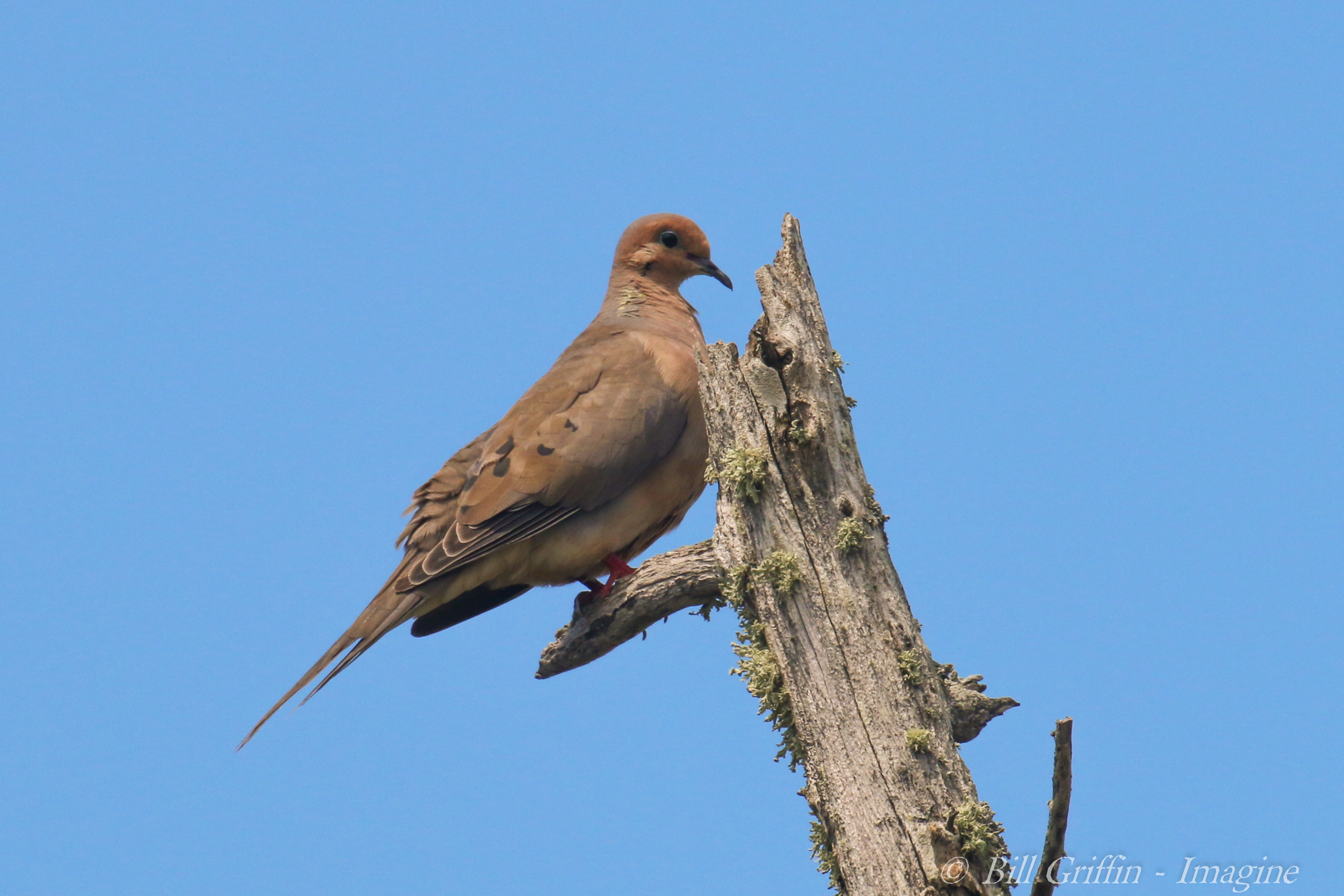
Hummingbirds in the Andes descend into protective torpor every cold night. Their heart rate drops from 200 to 30. When sun reaches them next morning it takes 30 minutes for the little engine to rev back up. You can watch the brief shiver, flexing feathers, accelerating vibration of their chest. The tiny eyes pop open and they fly.

Amelia wants to ride her scooter to the mailbox, fly through August heat and sweat to chase the rainbow soccer ball across the yard, run and kick and score. When we take her home at suppertime, Mom meets us in the driveway, hugs her bouncing vibrating child, says, “My, your hair is wet.”

.     .     .     .     .     .     .

Eastern Horsemint, Mondarda punctata

Eastern Horsemint, Mondarda punctata

.     .     .     .     .     .     .

It Took a Village

It took a village to raise me
+++++and when my best friend’s
++++++++++islander mother shouted

in her broken tongue for me to ge’ toff
+++++the building roof, I listened –
++++++++++saved moon rock scavenging

for a safer day. It was a sort of lovespeak.
+++++I was no different than her own
++++++++++bouquet of fatherless children –

a brood of six, all hues and ages. She had lived,
+++++had become religious and arthritic,
++++++++++grimacing as she peeled the smooth,

maroon skin from mangos she offered,
+++++and I’d scoff down
++++++++++before I scaled a tree

to peer at the building – a colossal dollhouse
+++++or real live stirring.
++++++++++and when she stood,

crying and talking to the sun,
+++++I looked away. I knew
++++++++++she was talking to God.

Crystal Simone Smith

.     .     .     .     .     .     .

Uncloudy Day

At the tenth year’s dark mark
+++++the clouds are white as bones

and the sky is the sky
+++++where the ocean stand
+++++after the last splattering of night,
a horizon so convincing even
+++++the cynic can glimpse the other side.

For so long I resented the swallowing earth,
held every pinch of darkness –

+++++a co-worker’s harmless but sharp remark:
++++++++++Exhume a body after a year
++++++++++and it’s basically human soup.

my mother stood stove-side once,
+++++her eyes filled with a clumsy glee
+++++as she spoke of fourth Sundays.
Her mother fried chicken after church.

The preacher might come.
All other days they ate beans and ham hocks.

+++++She gave it a name, uncloudy day,
a day that is just so, you are unbroken
+++++by memories where you stand
gazing at the sky, unfisted and glad.

Crystal Simone Smith

.     .     .     .     .     .     .

Can a poem be a shovel, stabbing the earth to turn over what’s hidden and dark, to bring up a spadeful that smells also of fecundity and life? Dig, demand these poems of Crystal Simone Smith, into the heart of things, weeds and flowers worthy and alive, discover them all. Dig to the roots.

Perhaps a few poems can dig into our hearts and make us one family.

Amber Flora Thomas writes, “Has freedom made us lazy, we might wonder as we read these incredible poems in Smith’s Down to Earth? Are we tourists in our lives, troubled by a history of enslavement? The voices and stories of black lives penetrate these questions in this collection of poems that don’t coddle or pull away from our earthly struggles to find hope and meaning in our human work. Down to Earth is an asking, a plea to take comfort in the stories and people who anchor our living.”

These three selections are from Down to Earth, Longleaf Press at Methodist University, Fayetteville, NC, © 2021.

.     .     .     .     .     .     .

Still Becoming

+++++~after Full Frame Documentary Film Festival

Age forty plus & I still consider
what I can become.

The slave wage of an adjunct is a choice,
the gatekeepers say.

So I teach the slave narrative
to white, affluent students.

A lesson they’ll never find use for – how to
escape bondage without it killing you.

I drive thirty miles with the sun rising in the east.
Every morning I speed – a lesson

taken from oppression – never offer
overtime without the compensating penny.

Often I pass a pulled-over brother struggling
to gaze into the cop’s face through riotous rays.

Those days especially, I consider a career change
or at least, how I can be a better citizen.

The narrative being, we are all keepers
with our iPhones and droids on standby.

I could become the viral documenter
of what can still become of a man

freed a century & fifty plus years
under the same magnificent sun.

Crystal Simone Smith

.     .     .     .     .     .     .

Crystal Simone Smith holds an MFA from Queens University of Charlotte and lives in Durham, NC with her husband and two sons where she teaches English Composition and Creative Writing. She is the Managing Editor of Backbone Press. Her other books are Routes Home (Finishing Line Press, 2013), Running Music (Longleaf Press, 2014), and Wildflowers: Haiku, Senryu, and Haibun (2016).

.     .     .     .     .     .     .

2017-03-06a Doughton Park Tree

Read Full Post »

« Newer Posts - Older Posts »