Feeds:
Posts
Comments

Posts Tagged ‘ecology’

[with poems from Visions International]

From the ridge above the creek the tallest tulip trees poke their heads up to catch the evening sun. Hammered gold, bright lemon and lime, for a moment they torch the forest and we who look up catch their display. Without this certain angle of sun, autumn lends these trees only ochre dashed with butterbrown; without us looking up at just this certain moment we might not appreciate them at all.

Most everyone mid-October is planning their looking up. Hey Honey, wanna drive up on the Parkway on Saturday (the crowds, the crowds!)? Which weekend will be peak color? Was late summer wet enough and September nights cool enough for the maples to manufacture their anthocyanins? (Yes, most everyone is debating phytochromes and anthocyanins whether they know it or not.) Slowing the car. Craning necks. Meanwhile Linda and I are back in deep shade where beech and hickory still hold onto their leaves. We’re looking down, not up. The color we seek is reclusive, modest, avoiding the limelight.

Right now is when Beech Drops bloom. No one is noticing. If you see them at all, you probably assume they’re the leafless twigs of some summer forb that’s already succumbed. It’s hard to even realize that their bare centimeter-long appendages are flowers. Bud, bloom, and pod all look pretty much the same. In fact I didn’t even realize they were blooming until I got down on my belly with a macro lens and then blew up the images. A streak or two of deep purple up their sides; pursed lips of fused petals; one protruding yellow stigma, anthers too delicate to see – but little friends, you’re gorgeous!

Epifagus virginiana is the only member of its genus. It is parasitic, like many other members of the Broomrape family (Orobanchaceae). It attaches to roots of Beech trees for all of its nourishment; it makes no chlorophyll and the only remnants of leaves are tiny scales along its stem. There’s no sign that Beech Drops weaken or harm their host, but in late summer and fall their pale stems emerge from the leaf litter like bony fingers of the undead – just in time for Halloween! Walk through a beech grove: when you notice your first Beech Drop you’ll suddenly realize there are hundreds all around you, and when the low angle of late sun catches them, translucent purple like pale flesh, you might just get creeped out.

For years I had mistaken Beech Drops for the dry leavings of Puttyroot or Cranefly Orchid. Now that I’ve learned their identity, I make a point of seeking them out. On display, this is the one qualification of the Naturalist: Curiosity. The four steps along the path of the Naturalist: Pay attention; Ask questions; Make connections; Share. And the motto of the Naturalist, a motto I just made up and have taken for myself, at least: Semper plus discere. “Always more to learn.”

❦ ❦ ❦

Snow on the Back of Cattle

They seem, at first, dark formations of stone,
half drifted in, bunched and volcanic, rectangular
with oddly shaped outcroppings, sun glinting
on crystal, fringes of gray-green and palest
yellow: lichen, sage, bleached dry grasses
Then small puffs of steam, their breath, shift
and snuffle, soft voices lowing, hooves cracking
the frost. In two places near the herd’s edge,
bright splashes of red where calves dropped
in the darkness, where rough tongues licked
them clean and muzzles nudged small bodies
until they stood, shaking with wonder, to
search out the straining udders and drink.

B. J. Buckley (Power, Montana)
from Visions International, #106, Autumn, 2022

❦ ❦ ❦

Forty years ago Bradley Strahan collected work from poets from around the world and created the first slender volume of Visions International. Twenty years ago I first picked up a copy from a table at a poetry conference, not fully grasping what I was holding. I wondered about the title. Not the International part – holy cow, Bulgaria, Ukraine, Ireland, Italy – but the Visions. For the past several years I’ve been a subscriber and I think I’m finally getting it. To see . . . with another’s eyes, from within another’s place and persona. With every issue that arrives, the poems nudge, jostle, encourage with their quiet insistence that I open my eyes. And learn.

Semper plus discere – always more to learn. The two Latin roots disco and doceo are closely related (from the same Proto-Indo-European origin) – to learn, to understand / to teach, to instruct or show. I perceive that Bradley’s mission is to rattle us loose from the cage of our unquestioned routine, to crack a first fracture into our ossified assumptions. Always more to teach, always more to learn. And how about the homologue discern – from dis – cernere, to take apart – to be able to distinguish or perceive the differences between two things that might at first have seemed to be identical. The poems in Visions International never fail to open my eyes, my mind, my heart to a larger world, more varied, more diverse. More exciting!

❦ ❦ ❦

Tell Me Where All Past Years Are

She had a broad lap, a feed sack apron.
We sat warming on the stoop, and everything around falling
fell into her sack, golden
catkins, chinquapin burs, pods
of locust sticky with their honey,
dust of stars, dust out of the furrows.
She hummed; I translate:
+++++ When will the time come back to me
when hours were in my pocket
as man and heavy as loose pennies,
when days oozed thicker than
end-of-summer honey, when happiness
formed in my hands like butter from the churh
to squeeze and pat into a cake
and print with a petal crown of daisies?
+++++ No we both are humming, sixty or more
years between renditions, and while
we sing the sun clocks out and the moon
on the ridgetop stands and shakes out its lap,
a glowing radium dial.

J. S. Absher (Raleigh, North Carolina)
from Visions International, #106, Autumn, 2022
❦ ❦ ❦

Magpie Potential

The cloak requires to be worn lightly.
You cope with its invisibility
and, trying it on for size, dip your hands
in its deep pockets until they

smuggle up four eggs of lustrous blue,
brown-spotted, the same eggs
you climbed to find in Ballyduggan wood
in your barefoot childhood.

One by one you put the eggs
to your ear, amazed to hear from each
the whir of magpie potential.
Gently you bed them back down,

hoping for wingtips to sprout, bodies
and legs and darkly the eyes
and cowled heads
to come about. Hoping for feathered

iridescence, even for flight,
and your life of hoard-need, or reining in,
of fear that you might fail,
seems only a grounding for this

exuberant scatter and go. You withdraw
your hands, but all is empty now,
and clay, make of it what you
will, clings cold under every fingernail.

Patrick Deeley (Dublin, Ireland)
from Visions International, #106, Autumn, 2022

❦ ❦ ❦

Note: Issue Number 106 of Visions International also includes a poem by Deborah Doolittle (Jacksonville, North Carolina) that I admire, Bird Poem, plus work by poets from Italy, China, Germany, France, Bulgaria, Hungary, Ireland, Ukraine, and eleven states in the USA.

Visions International is published by Visions International Arts Synergy, a 501(c)3 non-proift group for the promotion of poetry and the arts. Subscriptions are $25 for 4 issues; Contact BLACK BUZZARD PRESS / 309 Lakeside Drive / Garner, NC 27529.

To which little magazines do you subscribe? Support poetry by reading it. I’ve got 20 years of Mainstreet Rag piled on the bookcase; the mailman brings me every issue of Tar River Poetry and Cave Wall. Semper plus discere. Semper plus legere.

❦ ❦ ❦
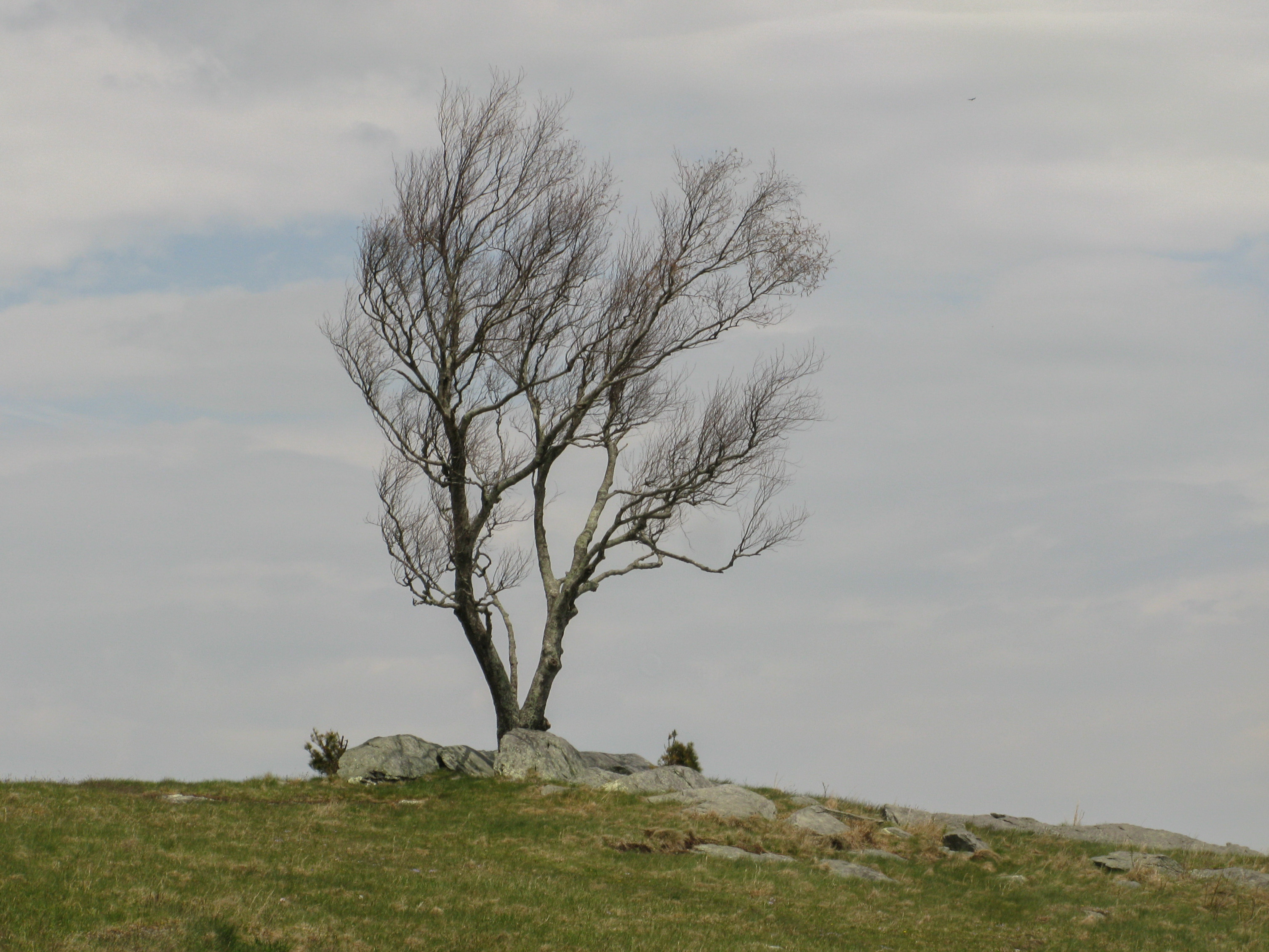
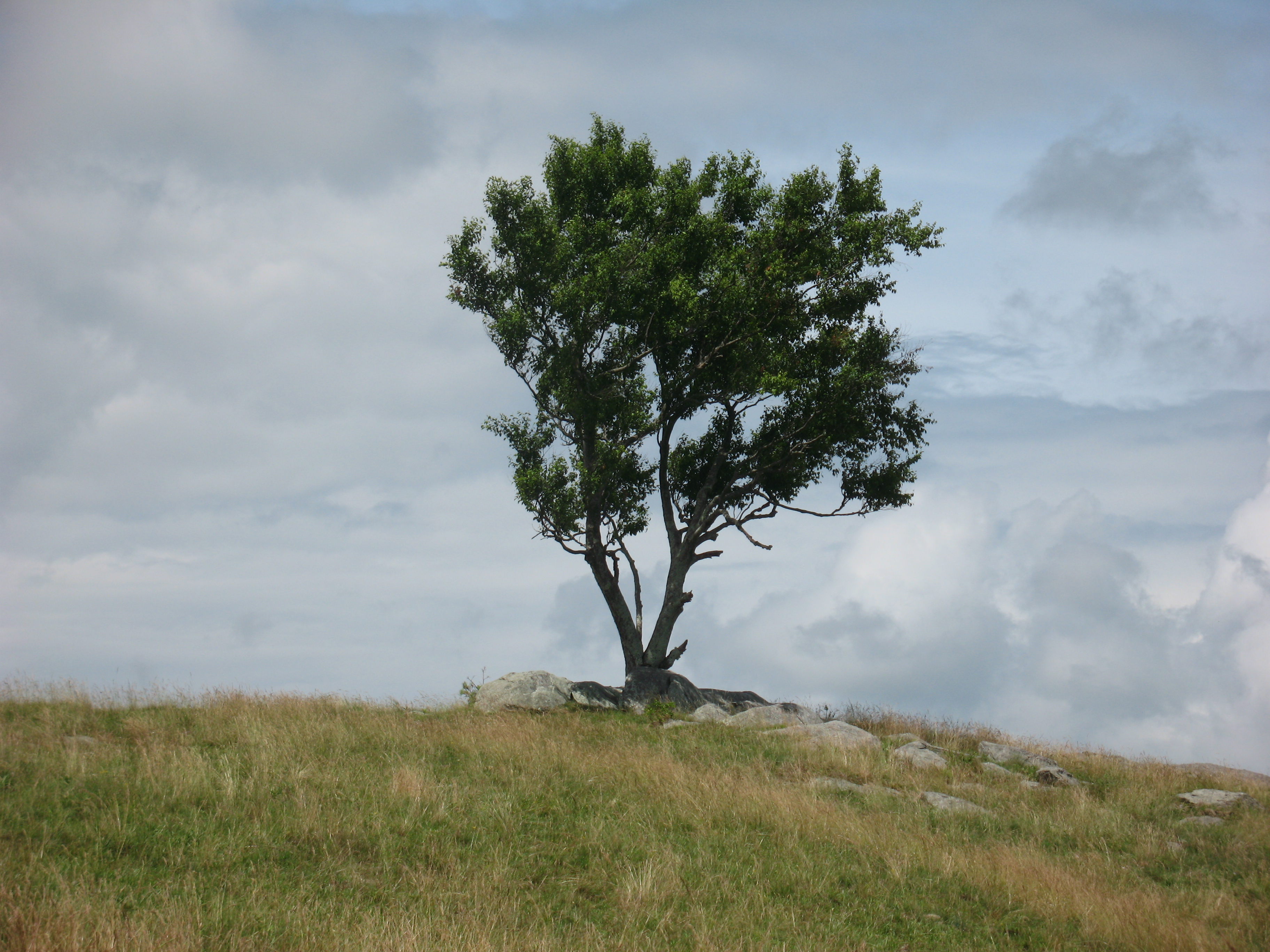
Doughton Park Tree 4/30/2022


Read Full Post »


[poems by David Radavich, Peter Makuck,
Paul Jones, Sam Barbee]

Earth Song

It is something between
lament and celebration,

perhaps both at once,
perpetually mourning yet

dancing in survival

like the seed that
disappears one whole season
then erupts in a plume
of green or garish purple.

Animals hear it, even plants,
but rarely humans

who are too busy raking
off what they can never get
enough of, this free air

that awards us love
in every verse.

Listen to the chorus
tonight and always,
so long as we’re alive

among the sentience
even now chanting
all around us
like bells or birds.

David Radavich

❦ ❦ ❦

I am trying to listen, Earth. I hear the celebration, I breathe it in, I feel it in my chest and beneath my feet. But I hear the lament as well. Loud, always louder. Is it even possible for me to give more than I take, or is despair all that is left for me? Left for us?

What can this one single person do to preserve you, Earth?

Earlier this year I took a hike in the Smokies with a lichenologist. Oh Smokies, your blue mist horizons, your saturated earth and clear chattering streams. Oh you temperate rainforest, your endless variety of creatures that creep and buzz and flit. Oh you breathless diversity of trees and flowers, heath and ferns, every patch of everything alive.

But this was a winter hike. The hardwoods were bare, the understory brown. After a brief chill shower, though, and how often it showers, nondescript grey patches on every branch, bark, and stone turned green – lichens photosynthesizing.

This is where the lichenologist explained the term poikilohydric – lichens passively soak up moisture from the air and passively release it when the air is less humid. They can’t actively retain water. They’re just little sponges. One little sponge isn’t likely to create those blue mist horizons or temperate fecundity, but in the Smokies everything is covered in lichen. Kneel and examine any rock – you’re not likely to discover much actual “rock” showing.

One lichen might not do much but billions of little sponges actually do moderate the microclimate about them. They contribute their small yet huge part to Great Smokies National Park possessing greater biodiversity than the Amazon rainforest.

One person’s contribution may not seem like much but there are billions of us. Small changes are the stream running a little clearer and colder so the brookie can spawn. Small changes are one more monarch laying her hundred eggs. Small changes are the wood thrush discovering insects for her chicks when they hatch.

Read below for some ideas about small changes. Celebrate each one. And thank you, Earth, for the opportunities.

❦ ❦ ❦

Red Foxes at Pahaska Tepee

In an isolated no-frills cabin
on the banks of the Shoshone,
we spent two nights on the site
of Wild Bill Cody’s hunting camp,
but unlike Bill, I had no gun
+++++ to discourage the bears.

Make noise when you walk the trails,
they told us at the office,
and don’t go into the woods after dark.

As a kid growing up in the country,
I read about Cody,
+++++ Crockett, and Boone,
had a pistol and two rifles,
hunted rabbit and squirrels for the table,
trapped muskrat, fox, and mink for the money,
often missing the bus into school.

Behind our cabin one morning,
I spotted five deer
and a fawn feeding among the aspens.
At first I thought they were shadows.
+++++ A few minutes later,
my binoculars brought a fox up close,
black forelegs and white-tipped tail.

I couldn’t stop watching her
down on a path by the riverbank.
I’d never seen one playfully roll in the dust,
or stretch out while her two kits
+++++ nipped at each other,
and tumbled over their mother.

Years ago
+++++ when I saw a fox
it was held in the jaws of my trap –
five bucks bounty from the farmer’s grange,
another buck and a half for the pelt.
+++++ Who was I?
What was I doing?
I must have imagined I was Crockett.
What stays
from one of those mornings
is a red fox, bloody foreleg tight in my trap.
She was just standing there panting
with her tongue out
like my good dog Jonesy on a hot day.

But now as I watched, she jumped up,
this red fox mom,
+++++ looked right at me, frozen,
flanked by her two kits.
I was dangerous,
I didn’t deserve this gift of seeing.

Something stirred in the bushes beside me.
When I looked up again and tried to refocus,
they were gone,
+++++ +++++ and the riverbank empty.

Peter Makuck
from Mandatory Evacuation, BOA Editions Ltd, Rochester NY, © 2016

❦ ❦ ❦

Earth, you’re looking stressed. Getting a little balder – someone cutting down your forests to raise cattle? Dryer – rivers become trickles, aquifers squeezed, not enough water to go around? Dirtier – nitrates in your ponds, forever chemicals (PFAS) in your streams, microplastics in everydamnthing? And of course hotter, always hotter?

O Earth, we’re all feeling stressed, too. We don’t need to be the pika at the top of Bear Tooth Pass with no higher to go to cool off – we know we’re all running out of everything and especially time. Habitat loss, phenological mismatch, aridification, salinization, sea level rise – all accelerating.

What do we do?

Perhaps one response parallels the Naturalist method: notice; ask questions; make connections; tell about it. With one added step – take action. A big action, a little action, a lot of actions but make sure to choose something that makes you happy. Earth Day Every Day is celebration, not burden.

One idea: plant native. Non-native trees and shrubs are plant deserts for birds and butterflies but my Serviceberry feeds the neighborhood all three seasons: kinglets and chickadees eat the buds, wrens and bluebirds feed babies caterpillars and other insects, robins and waxwings arrive in the fall for berries. And my soul is fed every spring by the starry petals falling like late snow.

Another idea: eat closer to the ground. If not every meal then at least a few meals. Eat things that sprout instead of eating things that eat things that sprout. Growing one pound of protein from beans requires 2,270 gallons of water. One pound of beef protein uses 13,438 gallons. One acre can produce 250 pounds of beef or 20,000 pounds of potatoes. (And we’re not even considering the powerful greenhouse gas methane = cow farts).

Here are a few interesting readable resources. SHARE YOUR OWN FAVORITES WITH US IN YOUR COMMENTS!

Earth Day 2022 – Invest in Our Planet

World Water Day

Water footprint of your favorite food & bev

Tips from 2019 World Water Day

How much water do you save the planet if you eat less meat?

101 tips to save water at home

GreenMATCH – becoming ecofriendly

30 tips to be ecofriendly today

❦ ❦ ❦

At The Big Sweep

No one likes to wade
knee deep in the creek
to pull out plastic
snags from the places
turtles seek the sun.
I pretend I do
to do the hard work
that needs to be done.
I take what I have
of magic, of what
I found of pleasure,
in cleaning the creek.
I remember why
I hate what mud can
do to weigh plastic,
to make the load twist
and shudder and shift.
My feet find new paths
in the sucking mud,
some purchases on stone,
that lead to the bank.
My slow slogs resets
stream’s rushing free flow.
I remember nights
I couldn’t fall asleep
on a mountain train
how it like the creek
would twist, turn, and shift
along the river.
I got off the train
and it moved again.
More smoothly or so,
it seemed as distance
grew and the river
ran in parallel.
I knew then, as here,
that joy comes when work
and journeys are done.

Paul Jones


This poem in honor of the Big Sweep was first published by Silver Birch Press in their Saving the Earth series.
Paul writes: The Big Sweep is a continuing volunteer effort to free the waterways and other natural areas of litter – especially plastic. Some may find these efforts a pleasure, but for me these necessary tasks are more rewarding in retrospect when you can see the results from a distance in time and space. Writing is, of course, similar as are taxing trips on rattling trains.


❦ ❦ ❦

Flowers Mean May

April’s rimless wet
++++++++++++ wagers grief’s roulette.
Blooms rattle,
++++++++ frenetic mesh.
Prod imperfection;
++++++++++++ spatter flimsy rosette:
desperate for a kindly set
++++++++++++++++ to count-off
and confirm us.
++++++++++ Hold dear.
Tactic of desire –
++++++++++ odd-numbered
to denote She Loves Me. . . .

I stroll the peristyle
++++++++++++ encircled
with springtime bouquet.
++++++++++++++++ Piecemeal fragrance
to wilt all winter weed.
++++++++++++++ Appetite of delicate petals
on cue:
++++ summon like addiction
Snatch a daisy
++++++++ off the edge,
eager to dissect our fate.
++++++++++++++++ Each casualty
may heal, while any sum
++++++++++++++++ must be forgiven –
abide pledge
++++++++ as she may love me not.

Sam Barbee
from The Writer’s Morning Out on-line site in Pittsboro, April 2020

❦ ❦ ❦

Early in April I asked readers to share a favorite poem that celebrates the interdependence and interconnection of all life on earth. I am including their offerings in three posts before, on, and after Earth Day, April 22. Thank you to all those who responded, and thanks to all of you who read this page and share in the celebration of life on earth.

❦ Bill Griffin ❦

2016-10-17a Doughton Park Tree


Read Full Post »


[poetry by Catherine Pierce, Noel Crook, Jenny Bates,
Nikolai Kantchev, Sam Love]

Planet

This morning this planet is covered by winds and blue.
This morning this planet glows with dustless perfect light,
enough that I can see one million sharp leaves
from where I stand. I walk on this planet, its hard-packed

dirt and prickling grass, and I don’t fall off. I come down
soft if I choose, hard if I choose. I never float away.
Sometimes I want to be weightless on this planet, and so

I wade into a brown river or dive through a wave
and for a while feel nothing under my feet. Sometimes
I want to hear what it was like before the air, and so I duck
under the water and listen to the muted hums. I’m ashamed

to say that most days I forget this planet. That most days
I think about dentist appointments and plagiarists
and the various ways I can try to protect my body from itself.

Last weekend I saw Jupiter through a giant telescope,
its storm stripes, four of its sixty-seven moons, and was filled
with fierce longing, bitter that instead of Ganymede or Europa,
I had only one moon floating in my sky, the moon

called Moon, its face familiar and stale. But this morning
I stepped outside and the wind nearly knocked me down.
This morning I stepped outside and the blue nearly

crushed me. This morning this planet is so loud with itself—
its winds, its insects, its grackles and mourning doves—
that I can hardly hear my own lamentations. This planet.
All its grooved bark, all its sand of quartz and bones

and volcanic glass, all its creeping thistle lacing the yards
with spiny purple. I’m trying to come down soft today.
I’m trying to see this place even as I’m walking through it.

Catherine Pierce
© 2017 Catherine Pierce. This poem originally appeared in The Southern Review, Spring 2017. https://poets.org/poem/planet

Selected by Jeanne Julian

❦ ❦ ❦

I’ve just returned from a morning’s hike and it’s time to write. My desk looks out a window past the holly bush to profligate red azaleas of glory. The window to the right is dark with dense crowding boxwood; window to left glows with every shade of new leaf green, unfurling dogwood, maple, tuliptree. I can even see a little sky. Thank you, Planet, for all colors and for colorless crisp bright breath.

Earlier this morning at Isaac’s trail head before I’d even shrugged into my pack I heard a Parula. Not sixty feet up in some obscurantist oak but right above my head in the lowest breezy branches of a black cherry. Glean – sing – glean. Fattening up after his flight from Belize. Blue and yellow! You never get to see these little buggers without 8X field glass, if then. Thank you, Planet, for all creatures that move of themselves or that allow the air to move them.

Swept the back porch when I got home from hiking. Our “yard” slopes steeply away from the house, slowly maturing third-growth beech-oak. These past two weeks Linda and I have measured each day by the rise of green up from the creek, first brassy gold, then lime chiffon, now encroaching emerald. And of course the fecund kelly milt from each of a trillion anthers that has powdered the world in extravagant hope of seeds. Sweep – sneeze – sweep. Thank you, Planet of wombs, womb of a Planet, for all life.

Thank you, Planet, and may my reverence, my gratitude, and whatever other small parts of my life I can give you be worthy of what you give to all, life without ceasing.

nature tadpole Amphibian

❦ ❦ ❦

Big Sky

Little sky in these Carolina woods,
more greens than you can number,
above us crooked rafters of washed-out

blue. Here are ten kinds of birds all hollering
at once, ten songs of secret nest and sifted
light. Here we are hemmed in by tendrils,

socked in, loblolly so high and thick
even the pasture’s a cracked sarcophagus

where you have to look quick to locate the moon.

I want the western sky
of my girlhood, purple as lupines
and longing. Unligatured wind

that will hollow your bones
like the kiss of a boy at sixteen
who flattened me over the hot hood

of his Ram truck. Give me sun-stunted
scrub oaks rooted in rock and shaped like
bad hearts; the summer a mountain lion

ambushed an appaloosa colt by the barn
and two bottle-fed backyard deer, their bones
dragged to the dump to be picked clean

and sun-whitened. Give me found flint
arrowheads the color of lost rivers,
the barbed-wire fact that Comanche girls

liked burning the captured fawn slowly
to death before breakfast; scorched
earth, nights rampant with stars,

the Pleiades fleeing, an orange skiff of moon going
down fast into black swells of hills. Sunrise
the colors of cataclysm, the singular

solace of the canyon wrens, their strafed
ululations, and, in a cartwheel of azure,
the lone buzzard wheeling and waiting.

Noel Crook
from Salt Moon (2015), Southern Illinois University Press. This poem first appeared in One.

Selected by Richard Allen Taylor, who writes: I had the privilege of reviewing Noel Crook’s book Salt Moon for The Main Street Rag several years ago and fell in love with this poem, which reminds us that ecology is not just a just a polite society of sweet little animals getting along with Mother Nature and each other. Ecology runs on violence and the brutality of food chains, varies from place to place, and interacts with humans—us!

❦ ❦ ❦

Clouded Leopard

How does it feel returning from extinction?

Climbing head first down
my Anthropocene spine

I break, with each twist of
wrist, incision of claw.

Divergent several million years
reduced to eleven in captivity.

Under your limber bones
I squall, choke and pitch
tipping into your patient wound.

Wind your tail round my neck
hero of revenge, and ossified
purr.

Your long tooth guilt-piercing.
We won’t say anything to anyone
perilous beauty kills,

Shroud me in your cloud.

Jenny Bates

Published (online) by Self Educating Poets Network in 2021. The Self-Educating Poets Network is an education group providing resources and meeting space to poets, writers and artists. It was founded on principles of grassroots activism as well as the free spirit of poets who met from the Cantab Poetry Lounge and Boston Poetry Slam.

❦ ❦ ❦

Autumn Resurrections

The autumnal equinox is uneasy,

restless with the pain of the lonely stork.
Time has paused along the way for a visit
and won’t raise its voice in defense.
Unworldly, I accept the world
surviving its deadly silence by the skin of my teeth.

After the summer swarms have stopped their buzzing,
see how time droops amidst the bickering clocks.
Nothing will remain of their springs.
Instead the journal of eternity will endure
and a calm tear will glaze its eye.

Look, the sky has its blue-jeans on
and the chimney smokes its millionth cigarette.
The city lifts up its multitude of windows,
while it puts out fires in the dreams of the burnt.
Somnambulists look out in a riot of joy, wondering,
will the blaze of their lust seduce the moon.

There’s such a fine female smell about the meadow.
The fog has dropped its handkerchief there
and we long to pick it up as a token
but our trembling betrays our cowardice.
The breath of resurrection wakes the silence.
Let all the crowns of thorns burst into blossom!

The farmer stands calling for his cart
loaded with dried out lightnings and sets off.
Don’t weep poor one, for while you wring your hands
the wheat spins its golden fleece
and the wind-rose will bloom at dawn.
Paradise is just this world with an other-worldly climate.

Nikolai Kantchev
Translated from the Bulgarian by Pamela Perry, with B. R. Strahan

Selected by Bradley Strahan

❦ ❦ ❦

The Ecology Symbol

Once upon an Earth Day millions
marched to Ron Cobb’s creation
melding the E for environment
and the O for organism
to create the ecology symbol

Such a simple graphic,
just a circle and slash to symbolize
care for the planet,
respect for nature,
and the nurturing of a legacy
for generations unborn

Today I didn’t see the ecology symbol
at the Climate March
But it’s co-conspirator the peace symbol
seems to be everywhere
At Wal-mart you can buy it
on underwear and day glow T shirts

The vanishing ecology symbol
with its pesky admonitions
to reduce consumption,
reuse materials, and respect nature
must be too threatening
to the dollar sign worshippers

It must be too threatening
to the comfort of North Americans
who consume 60 percent
of the Earth’s resources
just to support our obese life style

It must be too threatening
to the 80 million new mouths
birthed on the planet each year
babies who will aspire to America’s life style
Babies who will be in for a surprise

If everyone lived like Americans
we would need a planet three times
the size of Mother Earth
and the last time I looked
she’s not gaining weight

Sam Love
from Earth Resonance: Poetry for a Viable Future, The Poetry Box, Portland, Oregon, © 2022

❦ ❦ ❦


Early April I asked readers to share a favorite poem that celebrates
the interdependence and interconnection of all life on earth.
I am including their offerings in three posts before, on, and after Earth Day, April 22. Thank you to all those who responded, and thanks to all of you
who read this page and share in the celebration of life on earth.

❦ Bill Griffin ❦

2014-06-30a Doughton Park Tree

Read Full Post »

« Newer Posts - Older Posts »