Feeds:
Posts
Comments

Posts Tagged ‘Bill Griffin’

[with poems by Joan Barasovska and Kathy Ackerman]

Everything or nothing. The radio is off. The screen is frozen. The refrigerator snores. The clock won’t tick any faster, any slower. In an hour we leave for Raleigh to see our grandson (backyard, distanced, masked) but right now nothing is happening

I’m no good at nothing. If I wake in the dark my brain whirls venom trying to bite its tail. Where is dawn’s blessed peace? If I take deep breaths, watch the feeder, daily agendas begin to scroll down the back of my cornea. How many seconds after emptying myself before I fill back up with everything?

We are entering the season of nothing. The azalea may feint a few off-season blossoms but will we ever bloom again? We are in the season of waiting. Where is the so fragrant earth we lost so long ago? Where is the muscle and spunk of summer that convinced us we might carry through? The season of turning. What justice like waters, what righteousness like an ever-flowing stream? When? How do these shortened days stretch so long?

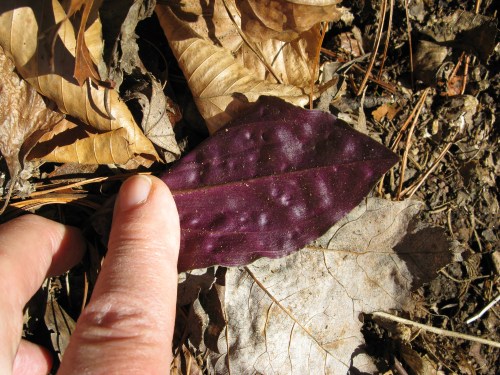
In the woods, something is happening. Orchids are making sugar. How have I missed that? One species will bloom in May, the second in August, but their leaves are now. Their delicate little tenacious tough-ass corms swell all winter waiting to rocket up a spike of summer flowers into a leafed-out overshaded world.

Something is always happening. Something is deeper than those scrolling agendas. Something in the world and something behind my optic chiasm in deep matter. Something that maybe wants me to be still and notice. Something to hope for, to wait for, to go forth and meet.

There is no nothing. It’s all everything.

.     .     .     .     .     .

These two poems are from Kakalak 2020, the annual anthology of Carolina poets. It is an eclectic volume – conversational, confessional, contemplative. Not as many COVID poems as I expected but wait until 2021.

The poems by Joan Barasovska and Kathy Ackerman speak to me of the winding thread that connects our past to our present. Knots and tangles, yes, but also a lashing to secure us in the lashing storm. The something that is happening every day is us becoming human.

.     .     .     .     .     .

Cranefly Orchid, Tipularia discolor

.     .     .     .     .     .

Her Breath

Mike and I exchange a glance
over her cooling body.
Our eyes are dry.
Elsie wears a faded housedress
with a pattern of flowers.
Thirty minutes ago
an aide crossed
her swollen hands.

All morning we sat waiting
while Death rattled her.
She died in the afternoon
while we were out walking.
Our mother took a slow
rollercoaster ride to this day,
dragging us with her on
every shivery dip and climb.

Back from the dead,
Mike said when she woke
from a coma, angry to find herself
in a clean hospice room.
She raged until he put her back home.
Frail, sick, ninety-three, hanging on
ten hears after Dad’s death.
She scolded me yesterday.
I was late for lunch.
I had forgotten to pick up her mail.

Their old bed had been replaced
by a narrow hospital bed
rolled in the hospice workers
while she fumed in the living room
and I boiled water for tea.
Now her jaw is slack,
her last silent treatment.
Above her head hangs
a sad-eyed portrait of me at nine,
painted in blues and grays.

Mike and I are limp with relief.
the secret of Elsie’s anger died with her,
but it was probably sadness.
We are second-generation Americans,
inheritors of the sadness seed.

This mother
lying flat between us
birthed me sixty years ago.
With her last breath,
She’s in a better place
and so am I.

Joan Barasovsaka, Kakalak 2020, Main Street Rag Publishing Company

.     .     .     .     .     .

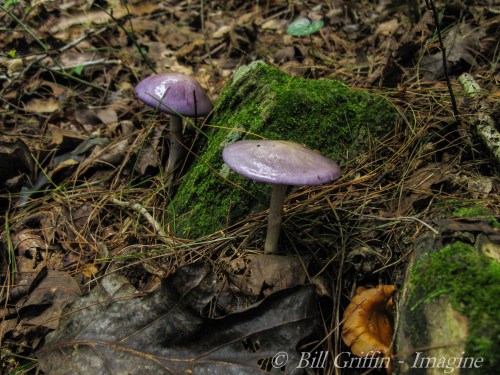
Adam-and-Eve Orchid, “Puttyroot,” Aplectrum hyemale

.     .     .     .     .     .

Misnomer
for Goliath, my father

i.
This story begins when I believed every word my daddy said.
Honeysuckle, he called them, tending the cuttings
that go all the way back to Rock Creek 50 years,
Aunt Gracie’s yard in the hills where I never lived.

Honeysuckle was all I had to root me to that ancient soil,
so every home I bought I planted some
from Daddy’s supply, rooted in plain clear water.
I wondered why it had no scent, was not a vine,
was pink, for crying out loud.

Now shopping for plants for house #5,
I see the truth in 5-gallon pots before me:
Weigela.

I imagine old Aunt Gracie shooing my father away
from her quilting or canning or sitting alone.
Go cut back that honeysuckle
before it swallows up the outhouse.

Later, seeing his mistake, she didn’t correct him –
a name is just a name –
Grace just glared at tiny Goliath
so proud of his mound of pink and green
already wilting

while the roof of the outhouse
still plushed with yellow sweetness
he’d confuse for 80 years
with a plant that belongs
to the same family, after all,
but so much harder to say.

ii.
Start me some honeysuckle, Daddy, I blurt out
in one of awkward lulls.
I want to imagine his hands on the branch,
the snip of sprigs of coal country
where Gracie’s old feist
barked me all the way to the outhouse and back
when I was too small to know
how hard it is
to keep what lives alive.

Kathy Ackerman, Kakalak 2020, Main Street Rag Publishing Company

.     .     .     .     .     .

.     .     .     .     .     .
Let justice roll down like waters, and righteousness like an ever flowing stream.
Amos 5:24

.     .     .     .     .     .

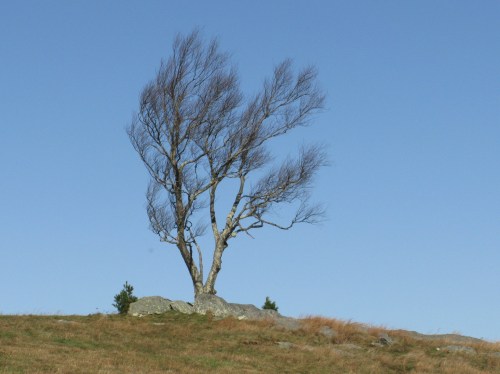
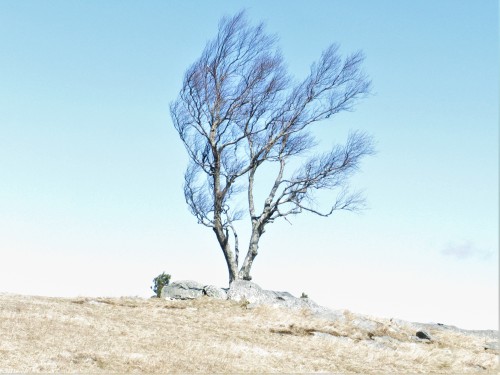
2019-02-09 Doughton Park Tree

Read Full Post »

Poetry Submissions Calendar — UPDATE

In 2015 I originally posted a table I use to keep track of when and where to submit poems for publication. Here’s the original post with description:

https://griffinpoetry.com/2015/08/31/editors-mercy-part-2/

Here’s how I use the calendar:

It’s arranged by month – look down the column to see what journals and sources are open for submissions right now!

Each row includes the web address – be sure to check before you submit, because requirements may have changed since I last updated!

The row also includes other information such as:

  • Is this an online publication only?
  • Should your submission be a single document?
  • What format files do they accept?

There are more instructions on the table itself. Feel free to print it out. And I would really appreciate it if you notify me of any errors or suggested changes!

If you have journals you’d like me to add to the table please send me the particulars!

Poetry Submissions Calendar 2020-11

I will try to post an updated table once or twice a year.

THANKS!

BILL GRIFFIN


.     .     .     .     .     .     .


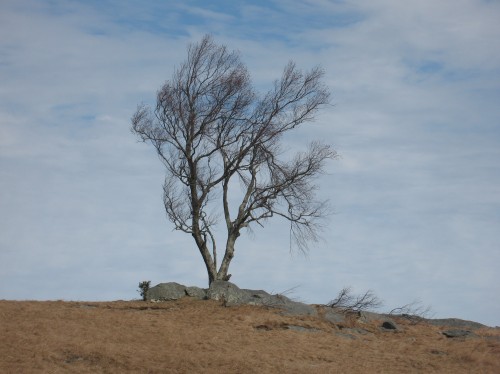
2020-03-07 Doughton Park Tree

Read Full Post »

Upload Burrowing Crayfish, Cambarus dubius

[with poems by Lesley Wheeler and Bill Griffin]

How? Crayfish taste with their skin. Well, not skin precisely: cuticle is what their carapace is called, their shell, made of chitin. (Read to the end for a science geek discussion of chitin vs. keratin.) It’s hard and it’s tough but it has chemoreceptors that detect dissolved molecules. With their skin, crayfish taste the water. Or smell it.

Taste and smell, inseparable as yeast and flour. Apart only mildly interesting, but mix them together and suddenly it’s 1979, Durham, that little red house on Green Street, waiting at the table with your toddler for hot bread from the oven. Or if you’re Crayfish maybe a tasty caddisfly larva. Or perhaps that taste/smell is Otter on the prowl and it’s time to find a rock.

This big guy (guy: we have our ways of knowing these things, though we don’t like to pry when those pincers are cocked) is possibly an Upland Burrowing Crayfish, Cambarus dubius. Yes, he really is blue; I swear I didn’t touch the hue sliders. (Read to the end for a science geek discussion of crustacean blueness). He was tooling across the level patch near the creek below our house where the Sewer Authority crews clear a path to check their access ports. Lovely spot for a walk, although you might catch the occasional whiff of fabric softener lightly swirled with hydrogen sulfide and anaerobic bacteria. Poop perfume.

Ah, ineffable links, scent and memory. Strolling down the aisle at Food Lion I pass the Downy and my olfactory bulb & hippocampus spark to tell me I’m hiking beside the autumn creek. And look! A Crayfish!

Mountains-to-Sea Trail with Sassafras; near Elkin, NC and Isaac's trailhead

.     .     .     .     .     .

I don’t believe I’ve missed reading an issue of Cave Wall since its inception. Editors Rhett Iseman Trull and Jeff Trull never fail to craft a collection that sparks neurons I’ve been neglecting. In the same way that a forgotten aroma can open a memory door into all the senses, a poem can flash and growl and shudder the reader with sudden insight. Circles, ripples, connections. My college English prof taught a whole semester on it: epiphany. Or an even better word (thank you Caren Stuart for this indispensable addition to the lexicon) – the gasp-sigh.

Invocation by Lesley Wheeler appears in Cave Wall Number 16 (Spring 2020). Something here is thirsty . . . something is called to wake up! How much of each of us is mud, condensation? Shall we pause a moment for spore and mire to convene again within us?

Worship begins with invocation, a call to the divine presence to enter this place. But since divine mystery comprises the entire universe, every boson and lepton, where can we sojourn where the divine is not? Perhaps practicing invocation we are really calling ourselves. Enter this moment. Reside here. Abide with the mystery. Wake up!

.     .     .     .     .     .

Invocation

Bottomland: rouse. Sedge, knotweed:
time to rally. You’ve been lost
in thought, ebb and fuming flood,
since the glacier, thin winters
digging for turtles in cold mud.
Valley was tundra. Elk and moose
drank at water’s brink while firs
invented shade. Panthers melted

into the dark, but spore and mire could
convene again. Softness feed us
and eat our footholds away. Something
here is thirst for living’s every
rivulet, hospitable and
treacherous in her oblivion.
Misty divots. Condensation
beads on the throat, where pulses drum.

What kind of god is this? Her name
just a hieroglyph drawn in muck
by a tentative finger. No
answer but a hissing river.
Drowsy spirit, I’m pleading. Take
this blood shed unseasonably,
mineral gift. Be comfort. Be
danger. Of sleep, of trough. Wake up.

Lesley Wheeler, in Cave Wall Number 16, Spring 2020

Lesley Wheeler is a poet, novelist, scholar, and blogger. She is the poetry editor of Shenandoah.

Sassafras, Sassafras albidum, illustrating the three lobe types

.     .     .     .     .     .

The following poem appears in Snake Den Ridge: a Bestiary (2008, March Street Press). Linda and I collaborated on the book and her illustration appears below (at the time she agreed to interrupt her many other projects because I promised to dedicate the book to my friend Mike Barnett – I can’t even calculate the hours she spent drawing or the height of the field guides and science books piled beside her on her desk).

Crayfish

Just wiggle this rock
and the stream
hums a whole new flavor –
in the turbulence I taste
last night’s shower
on the Ridge
and this morning’s stirring
of awakened larvae.
Tailflap, legtips,
cuticle,
all of me every moment
strummed by roil and eddy,
random caress
of molecules,
divine order of chaos.

I’ll tell you a secret –
God is deliciousness!,

the constant inconstancy
of current
that reveals my breakfast
or Otter on the prowl,
and just maybe
the passing of a lovely
arthropod I long to meet.

Join me! Immerse yourself,
not in Inadu Creek
but in your own lifestream.
Savor it, sense it as I do
in every part of you.

Bill Griffin, in Snake Den Ridge: a Bestiary (2008, March Street Press)

Illustrations by Linda French Griffin.


.     .     .     .     .     .

Chitin is the hard part of invertebrates: cicada exoskeleton, crayfish and lobster shell, squid beaks (and vertebrate fish scales). Keratin is the hard outer part of vertebrates: bird feathers, tiger claws, what little hair I have left. The two are chemically completely different but function in the same way, for protection and structure.

Chitin is a polymer of sugars, glucose with added nitrogen = glucosamine (a polysaccharide), the stuff I take for my bad knee. Keratin is a polymer of amino acids, namely a protein (polypeptide). Here are two more factoids you can’t possibly live without: Keratin resists digestion, which is why cats hark up hairballs. Spider silk is classified as keratin, although production of the protein probably evolved independently of the process in vertebrates.

Crustacyanin is not a Spongebob character. It’s what makes this crayfish blue. Crustacyanin is a carotenoid, which are pigment proteins found in everything from tomatoes to pink flamingos. The crustacyanin is made from stacks of another carotenoid protein (astaxanthin), which itself is red, but depending how many and how it’s stacked can actually reflect the blue portion of the spectrum. Blue crayfish (also look up Blue Lobsters) have a genetic variation in their stacking. If you steam them (perish the thought!!!) the astaxanthin comes unstacked and that’s why cooked crabs, lobsters, and crayfish are bright red.

Brushy mountains reflected in compound eye

.     .     .     .     .     .


2016-10-17b Doughton Park Tree

Read Full Post »

« Newer Posts - Older Posts »