Posts Tagged ‘Bill Griffin’
Enter the Circle
Posted in Imagery, tagged Bill Griffin, Brillig, Deborah Doolittle, imagery, nature photography, NC Poets, poetry, Southern writing on July 4, 2025| 4 Comments »
+
[poems from BRILLIG: a micro lit mag]
+
Ghazal for sunrise
+
Wrens are first out of bed at sunrise. Their sharp warbled song suits the sky’s deep red at sunrise.
+
Down the hill a deer slips out of mist. Then her fawn, ready to be fed, at sunrise.
+
Then a fieldmouse, light as a wisp, climbs a spent coneflower with most careful tread – at sunrise
+
The night’s winds are done. Above, only a last fading star, and a few clouds sill ragged at sunrise . . .
+
I join this pause to which all things have led (at sunrise), I close my eyes on what he last said, at sunrise.
+
Matt Snyder
from BRILLIG: a micro lit mag, Winter/Spring 2025
+
❦ ❦ ❦
+
Gravity is an illusion, a charade played out behind the scenes by matter as it warps spacetime. The illusion is complete within my deep never-spoken sense that somehow the universe ponderously orbits me. Where is my wider view? Long lens and tight focus blur everything except the center where for one moment light falls.
+
Thoreau sits beside the pond for hours so long and so still that the otters have come to consider him simply a natural element within the universe they inhabit. They pursue their plashy play all about him unperturbed. When the otters finally leave for elsewhere, Thoreau walks to town to buy a pair of socks.
+
Oh Mr. Lennon, my beloved, my idol, is life really what happens while you’re making other plans? Or is life the plans the universe has made for you whether you subscribed to them or not? Evidently the universe is not a bus you can hop off at the penultimate stop before you reach the bad side of town.
+
I’m trying to figure this out. The mockingbird doesn’t shut up when my neighbor fires up his Terrafirminator and attacks the clover. Just sings louder, it seems. And me? An hour walking in the woods, sweat and deep cleansing breaths, but driving home I hear again that last snarling conversation and begin another rehearsal of its next installment in my head. I thought I might have hopped off that bus, but no.
+
The titmouse perches above the peanuts I’ve laid out and squeaks and scolds with his head thrown back, ten iterations. Then he swoops down and pecks the hell out of them. What was he saying up there? “These are mine, bug off!” – or – “Hey world, good eats here!” What am I saying to the universe? Scratch that – what am I saying to myself?
+
+
❦ ❦ ❦
+
Vim
+
Your clay pots are stacked into towers.
Stakes propped in the garden shed corner.
Out-of-use stuff claims off-season place:
a montage of tools ready to oblige.
+++++++++++++++++++++++++++ Regret
drops by every day, helps leisure select midwinter
pastimes. Our most-recent waltz only a twitch
in the calf on gray afternoons. So much
overlooked when we busy ourselves.
+
I rake leaves wedged into fences. Sharpen tools
in case we plant again. Zest fallen out of favor,
the Almanac forecasts weather cycles, but desire
for a new garden is shelved.
++++++++++++++++++++++++ Verve fastened
behind the shed door, our pursuits dwindle.
Intuition must carry us through seasonal tedium,
and each loss it festers. You stare at me and ask,
+++++++ Tell me again where do seasons go?
+
Sam Barbee
from BRILLIG: a micro lit mag, Winter/Spring 2025
+
❦ ❦ ❦
+
+
When Deborah Doolittle first placed in my hands a copy of her hand-made lit mag BRILLIG, all I could say was, “O Frabjous Day!” The slim booklet is delicate yet solid with surprising heft; it is simple in its turning pages yet subtle and complex with its interlockings and interweavings, concealing treasures, revealing them. But glue and ink and color are not enough to create treasure. The words, the lines, the flow, the side-steps and juxtapositions – these poems by ten authors link arms and pull me into their circle.
+
If you were to step into my office and attempt to calculate the mass of processed printed-upon cellulose that surrounds you, you would intuit that I have a thing for words on paper. Oh yes, most every day I read from my bright paper-white monitor the poems the internet offers up to me, but if you were to step onto my back porch today when it’s 85 degrees and 85 percent humidity and discover me there with a book nonetheless, you would intuit that real creative thought requires an adequate escape velocity from computer gravity. And if a print journal’s appeal is an order of magnitude greater than poems online, then art and quirky originality, BRILLIG, is an order greater yet.
+
I unfold the pages, read backwards and forwards, turn and return. These poems surround me as if I am an element of the universe they inhabit. While they pursue their plashy play, I will abide in their circle. I have all the socks I need.
+
❦
+
Deborah Doolittle contrives and creates BRILLIG: a micro lit mag with the help of artist friends and submissions of poetry. Each issue is published in a limited edition, but she no doubt has one she would like to send you and will make an extra copy if you subscribe.
+
+
❦ ❦ ❦
+
Onions
+
I think of you prepping risotto,
stirring the pan while you add
onions, red wine and broth.
you wore a red-striped apron.
I have it still. Should have worn it.
My shirt is dotted with oil.
Oversized sweet onions
roast in the oven, ready
to add life to a sandwich.
My eyes leak. Nose drips.
I yank a paper towel off
the rack and remember.
+
Patricia Joslin
from BRILLIG: a micro lit mag, Winter/Spring 2025
+
❦ ❦ ❦
+
+
+
Some Heal Us
Posted in Christian themes, Ecopoetry, Imagery, tagged Bill Griffin, Christic, ethnobotany, Ilia Delio, nature, nature photography, poetry on June 20, 2025| 9 Comments »
.
A human being is a part of the whole called by us universe, a part limited in time and space. He experiences himself, his thoughts and feelings as something separated from the rest, a kind of optical delusion of his consciousness. This delusion is a kind of prison for us, restricting us to our personal desires and to affection for a few persons nearest to us. Our task must be to free ourselves from this prison by widening our circle of compassion to embrace all living creatures and the whole of nature in its beauty.
Albert Einstein.
.
❦
.
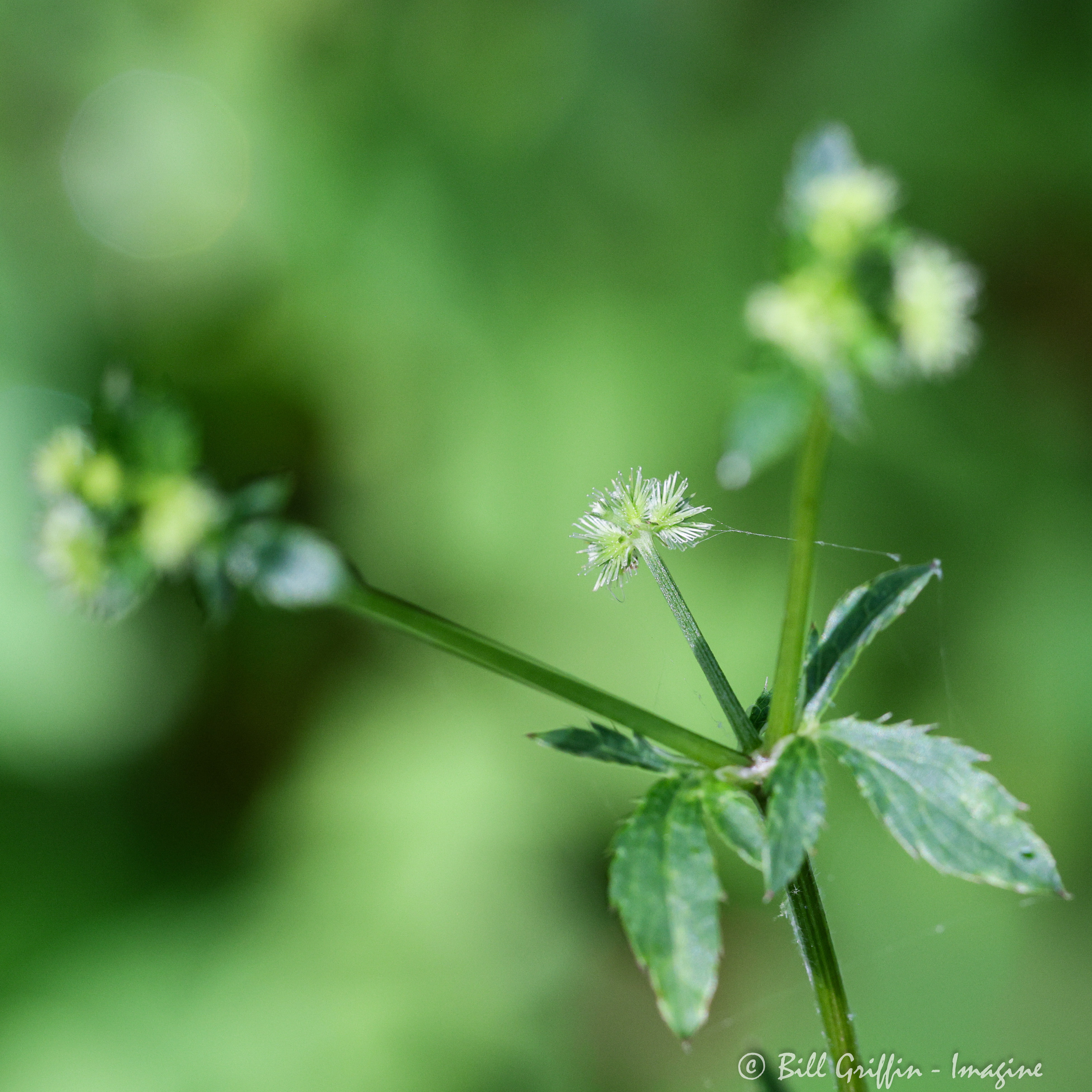
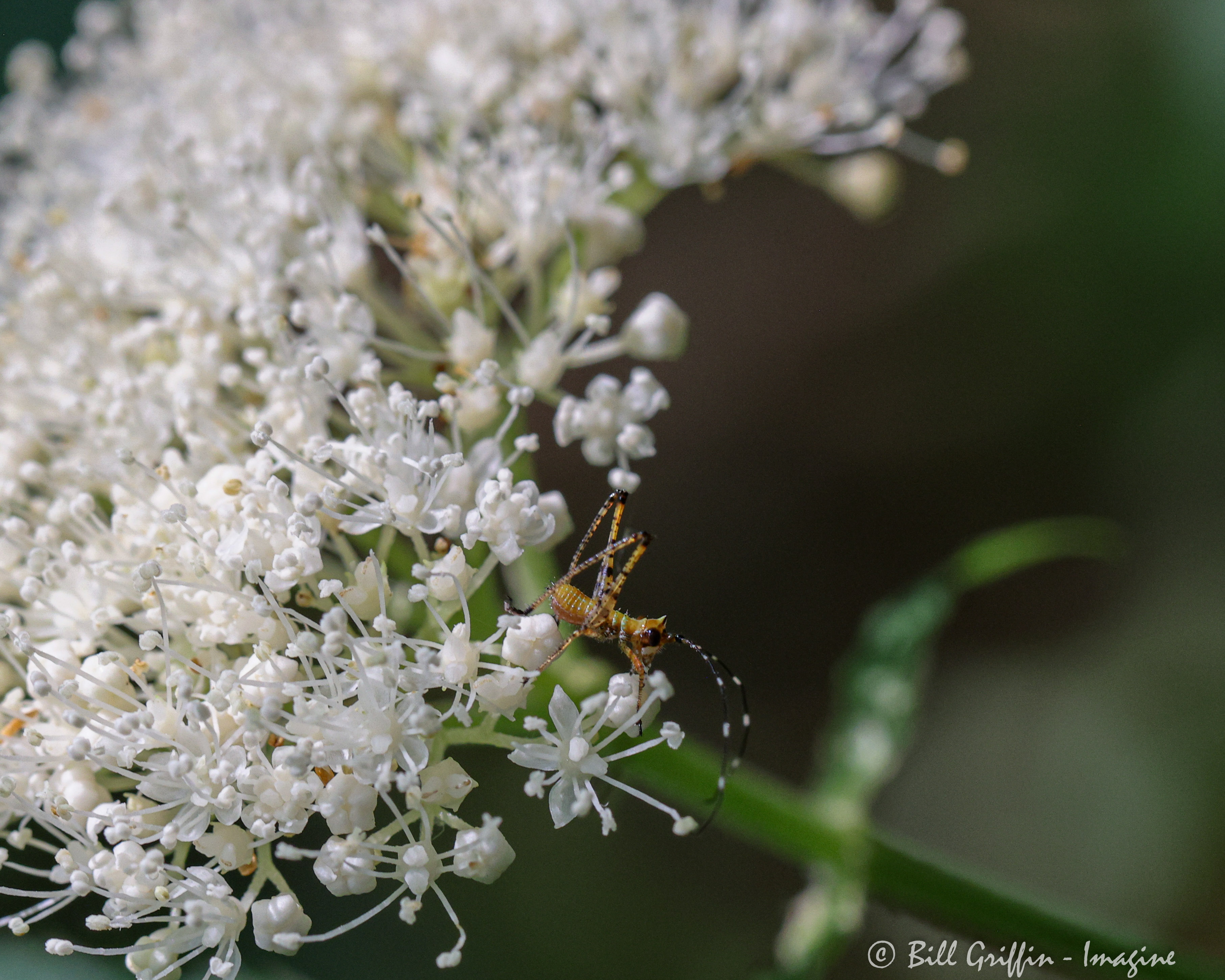
All these years, how have I overlooked this humble herb growing up through the pavement? Tough narrow leaves, bottle brush of tiny flowers climbing its central spike, an entire array of bottle brushes – Virginia Pepperweed. It’s in the Mustard family, Brassicaceae, so I can already imagine its spicy taste as I pinch off a leaf and raise it to my . . . but wait! Now I’m recalling the Fourth Question you must ask yourself when you forage in the wild: “Do dogs poop here?”
.
In a few minutes I’ll explain Questions One, Two, and Three to my hikers that are now gathering in the field beside the nature trail. Thus we’ll begin our first ever Ethnobotany hike as part of NC Trail Days in Elkin. I’ve titled the event, “Some Feed Us, Some Heal Us, Some Kill Us.” Doesn’t our culture of plants teach us exactly that? Or have we become so far removed from nature that we’ve forgotten how everything around us affects us, and how we affect everything around us? Culture is the wisdom and traditions we pass along from generation to generation; Ethnobotany studies cultural relationships to plants. These hikers have signed up to satisfy their curiosity and learn something new, but I expect we will all learn from each other. I’m sure someone’s granny once picked creasy greens in the Spring or stirred up a mess of poke salet.
.
.
❦ ❦ ❦
.
I go to Nature to be soothed and healed, and to have my senses put in tune once more.
John Burroughs
.
Everyone needs beauty as well as bread, places to play in and pray in where Nature may heal and cheer and give strength to body and soul alike.
John Muir
.
❦
.
The Elkin & Allegheny Nature Trail, a part of the Mountains-to-Sea Trail, just three miles or so if you include all its side loops and detours, has become my textbook. I’ve walked here several times a week, all seasons and all weathers, until I know where to find the single Fairy Wand and the four Adam-&-Eve orchids. When the first Hepatica blooms and when the last Trout Lily has dropped its petals and set seed. And yet this trail is always new. Last week a just-fledged Pileated Woodpecker poked its head out of the hole we’d been watching for a month. This week American Hornbeam displays its little chandeliers of seeds, glistening with afternoon rain. There is always something to discover, something to become part of.
.
This little three mile trail has also become my refuge. Maybe I start down the trail with a dark cloud around my head and my breathing sounds like thunder, maybe there is only cold encircling my heart. Maybe the dark and the cold have not fully dissipated by the time I return to my car, but nevertheless some small seed of hopefulness always finds a way to take root. I recently encountered this saying: “Each one of us carries a sack of rocks. You don’t know how heavy your neighbor’s sack is. You’ve just got to carry your own rocks.” There is always a way to put one foot in front of the other. Slow or fast, heavy or light, grunting or singing, there is a way to walk on down the trail.
.
.
❦ ❦ ❦
.
How important is a constant intercourse with nature and the contemplation of natural phenomena to the preservation of moral and intellectual health!
Henry David Thoreau, from his Journal, May 6, 1851
.
The healing potential of flowering plants is an integral part of the deep bond that exists between humans and nature. That flowers have the ability to heal us, not only physically but also emotionally and spiritually, is something that has been recognized and utilized as far back as we know.
Anne McIntyre, from Flower Power
.
❦
.
Last week granddaughter Amelia and I played Scavenger Hunt. We took turns drawing little pictures of things in the yard and having the other one find them. My Dandelion and Holly she spotted right off. The Pill Bug she recognized but took longer to find. Just a half hour outdoors on a muggy day, but it erased a good fraction of my load of dread and loathing. She and I connected with each other in those connections with nature. As Einstein suggested, our task is to somehow discover that we are not separate from the universe, to widen our circle of compassion. As people come together on my little nature hikes, fifteen or twenty crouching in fields and woods eight or ten times a year, do we accomplish that? Do we connect?
.
The First Question you must ask yourself before you pick a leaf or a flower is, “Am I 100% certain of my identification?” You wouldn’t want to brew up a tea of Pukeweed (Lobelia inflata). Wild Carrot is closely related and looks quite similar to the most toxic plant in North America, Poison Hemlock (Conium maculatum), both of them introduced from Europe and prevalent in our area. On the other hand, if I can recognize every member of the Rose family, Rosaceae, from apple to quince to almond, I can be pretty confident they are all edible.
.
The Second Question is, “If I pick this, how will that affect the local ecology?” I tell folks they wouldn’t want to eat the last wild huckleberry if a hungry bear was standing beside them, but the full complexity of the web of life is impossible to grasp. Pollinators and larval hosts, things that creep beneath the leaf litter and fly down from the Red Oak’s crown, how does each feed and heal the next? My friend April supplemented her meager nutrition while she through-hiked the Appalachian trail by chewing greenbrier, cooking up pots of stinging nettle, cracking hickory nuts. She had a personal rule – never dig up a Cucumber Root if it was busy making a flower or a berry. It’s hard to imagine now, but a hundred years ago Galax was almost extirpated from the southern mountains as people gathered it to ship north for Christmas decorations. May we widen our circle of compassion to discover we, too, are part of these woods, these fields.
.
And the Third Question is really just a subset of the Second: “If I pick this plant, how will it affect the experience of those who come after me?” Aren’t most major world philosophies and religions based on some paraphrase of this? The Golden Rule; the Second Commandment. It would seem obvious that in the shared space of a public park you wouldn’t dig up the flowers. Is it possible for us large-brained primates to widen our consciousness until we can image the entire earth as shared space?
.
So let’s take a walk in the woods. Let’s imagine how our grandparents would have experienced and related to the life here. Let’s learn from these plants about other cultures, the Cherokee, the European pioneers. Let’s discover our own connections, to the diversity around us and to each other. Let’s be fed, and let’s be healed. Let us be part of the universe.
.
.
❦ ❦ ❦
.
The Christic
.
I am looking at a tree, but I see such astounding beauty and
graciousness, the tree must be You, O God,
I look at the wild weeds playing across the fields, and their
wild joyful freedom speaks to me of You, O God.
Yesterday, I saw a child crying alone on a busy corner, and
the tears were real, and I thought, you must be crying, O God.
God, you are the mystery within every leaf and grain of sand,
in every face, young and old, you are the light and beauty
of every person.
You are Love itself.
Will we ever learn our true meaning, our true identity?
Will we ever really know that we humans are created for
love?
For it is love alone that moves the sun and stars
and everything in between.
.
We are trying too hard to find You, but You are already here,
We are seeking life without You, but You are already within,
Our heads are in the sand, our eyes are blinded by darkness,
our minds are disoriented in our desperate search
for meaning.
Because you are not what we think You are:
You are mystery.
You are here and You are not,
You are me and You are not,
You are now and You are not,
You are what we will become.
You are the in-between mystery
The infinite potential of infinite love,
And it is not yet clear what You shall be,
For we shall become something new together.
.
Ilia Delio, OSF
from The Not-Yet God: Carl Jung, Teilhard de Chardin, and the Relational Whole. Orbis Books, Maryknoll, NY. © 2023
.
.
❦ ❦ ❦
.
If you’re passing through Surry County, North Carolina, visit our trails! Elkin Valley Trails Association builds and maintains Section 6 of the Mountains-to-Sea Trail as well as many connecting trails in the area. The Over Mountain Victory Trail (Revolutionary War era) and Yadkin River Trail both pass through Elkin.
.
EVTA also plans many trail activities and work days throughout the year, plus we partner with Explore Elkin to present NC Trail Days for four days at the beginning of June every year.
.
And if you would like a copy of the handout I prepared for “Some Feed Us, Some Heal Us, Some Kill Us,” click HERE. This is a small subset of the 250+ plant species we’ve discovered on the E&A Nature Trail. Walk the trail and help us add more!
.
Finally, you may notice that the title of our ethnobotany hike bears a resemblance to the title of the wonderful book by Hal Herzog, Some We Love, Some We Hate, Some We Eat, which I suppose you might call Ethnozoology. Dr. Herzog is a psychology professor at Western Carolina University in Cullowhee, NC and a world leader in the field of anthrozoology. Thanks, Hal, for continuing inspiration!
.
And, for teaching me about sacks of rocks, warm thanks to Pat Riviere-Seel.
.
.
❦ ❦ ❦
.
.
.


Very true. And not that she ignores the grief and woe of living but somehow makes all of life a…