Feeds:
Posts
Comments

[for the first post in this series of four, see May 8]

Years ago, before I’d reached my fortieth birthday, I remember talking to a friend who was looking pretty darn glum about his fiftieth. “Oh come on,” I said, “Just think of it as the half-way point.” I couldn’t understand why that didn’t cheer him up. Now my own fiftieth has got dust and flyspecks on the binding, and apparently I still haven’t memorized its aphorisms. If it’s impossible, as must seem obvious to any rational being, to put right all the mistakes I’ve made, why do I keep looking back? Why do all the possible futures unfolding out of my particular Heisenbergian uncertainty seem to have edges of creeping tarnish?

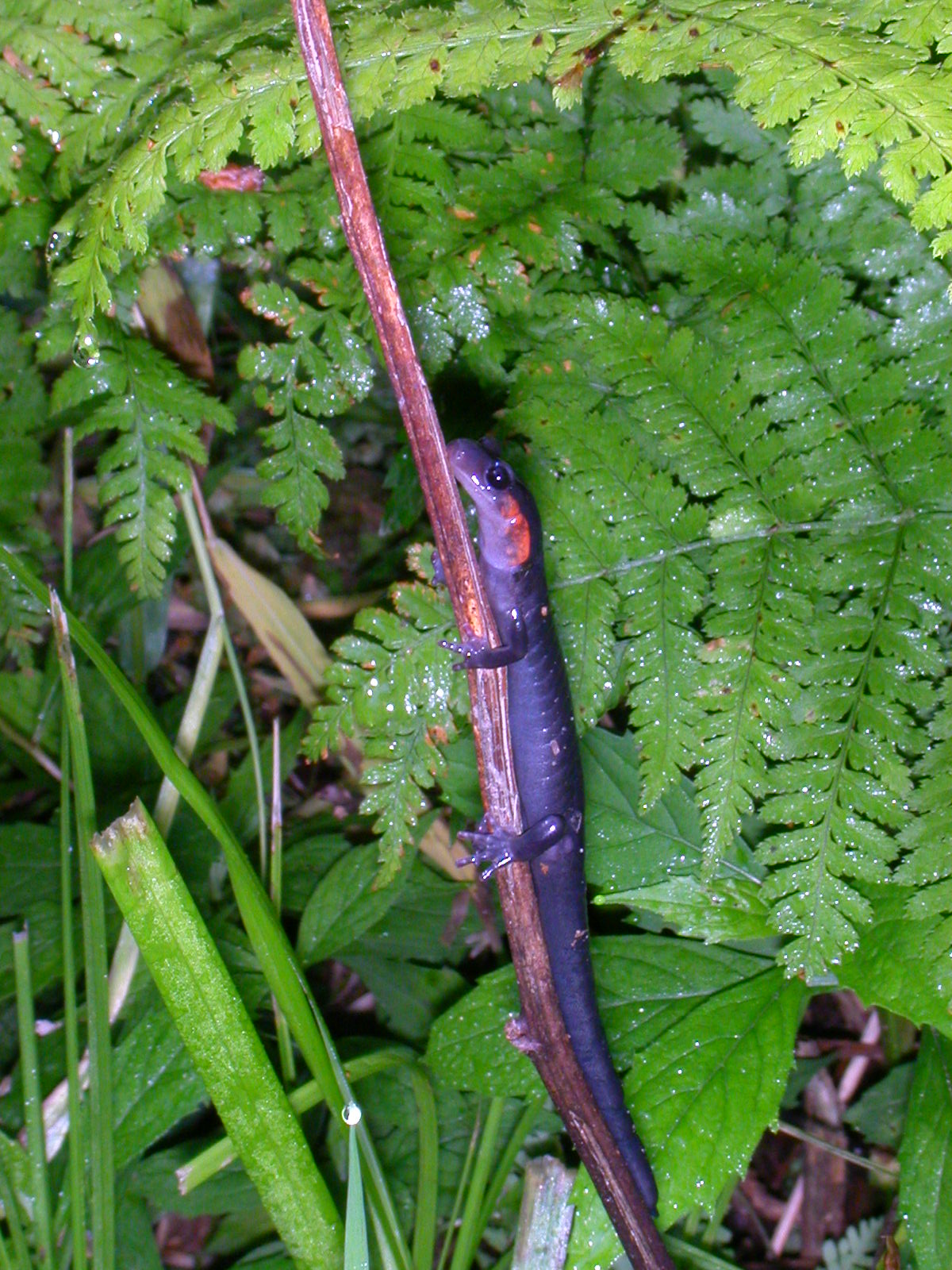
In this second section of my poem Leave and Come Home, I am struggling with uncertainty. Will our future relationship, mine and my son’s, be bright as the Firethroat or remain out of reach? I think of my own Dad, turning 85 this year. So much of our communication in my younger years was subterranean, never quite reaching the surface. How much angst did I cause him with my long hair and Grateful Dead? (Some other day I’ll share about how Linda helped us re-learn how to hug.) So much I didn’t know about my father, and so long before it occurred to me that I didn’t.

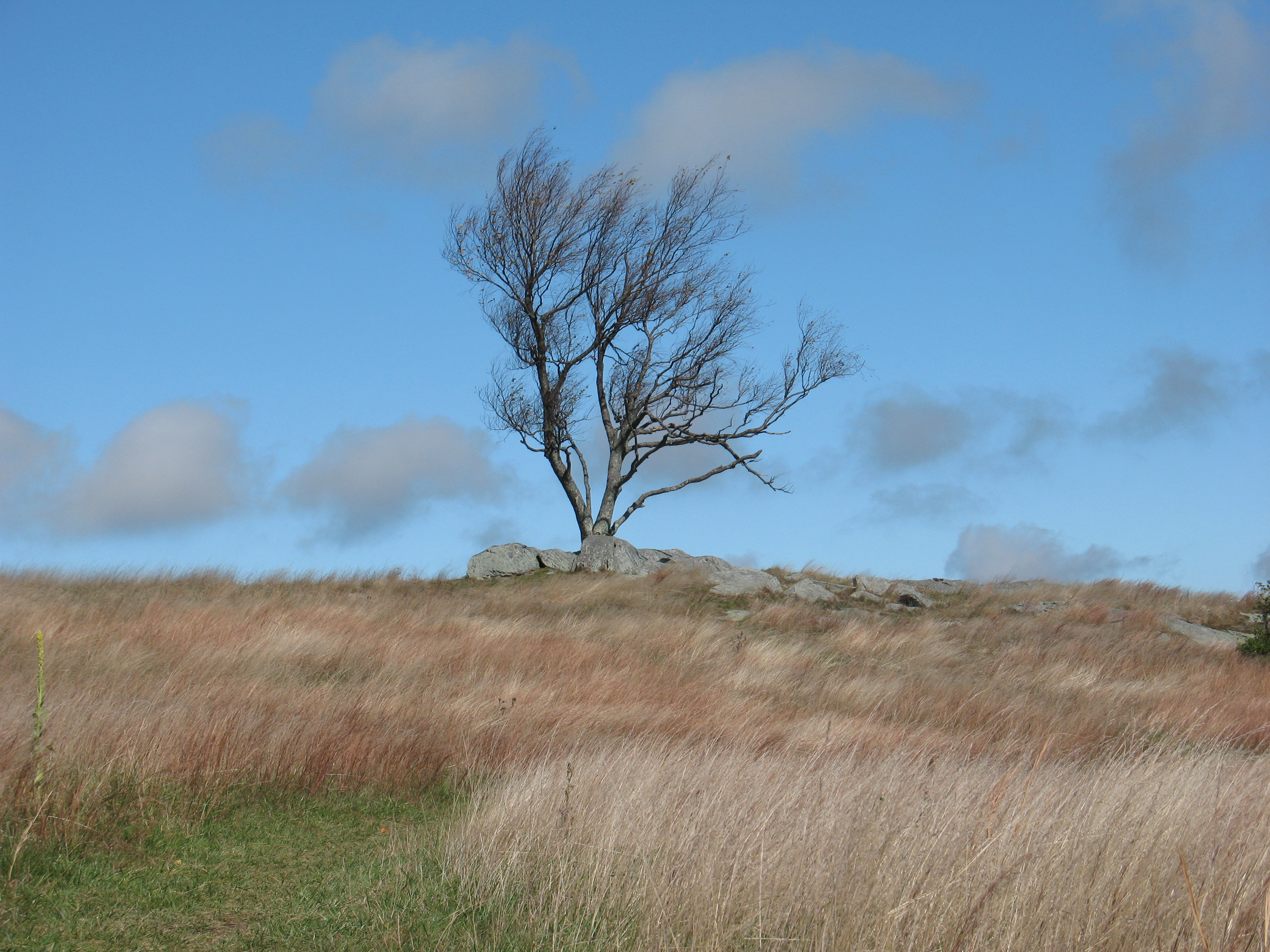
DSCN4536

Several year’s ago Aunt Ellen (Dad’s sister) was going through boxes of papers from their parents’ home and discovered a letter Dad had written to his Mom from Boy Scout camp. He must have been thirteen. He had just passed the requirements to earn Birdwatching Merit Badge and was describing the birds he’d identified. Wait a minute! Big Momso is the bird watcher! You sneaky Dad, you, looking up into those branches all that time and never telling me what you were seeing. Well, I’m telling.

.  .  .  .  .

Leave and Come Home

Horseshoe Island, Newfound Lake, Boundary Waters Canoe Area Wilderness, Minnesota

Last night a pair of Bald Eagles scrawled their wild script
along the silver lake. We lay on high rocks above the water, waited
for the final stars of our adventure to ignite.
Only Hermit Thrush spoke – silence
unaccustomed from our Scouts but habitual
for Josh and me.

This morning I leave him to goad
the younger ones to break our last camp –
when he leaves for college will he goad himself?
I follow the island trails, aim field glasses high
as if the warblers I’ve learned this trip might bestow
some special unction. When I pause they gather
in low branches and cock their heads, a query
I can’t answer. They leave me there.

Almost finished now, this last solitude, this last trail that has tried
to lead back to my son, close enough to hear
the tink of scrubbed pots; high in the spruce
another unnamed voice reedy and ascending
into emptiness. I search, it flees; I scan, it eludes until
on a gray limb in the gray-green canopy with a gray moth
in its needle beak it blazes: Firethroat. Blackburnian Warbler.
And if I rush to camp and pull Josh back in time
will we look up and share the prize
or stare into empty branches?

.  .  .  .  .

[Leave and Come Home won the 2009 Poet Laureate Award of the NC Poetry Society. In four sections, it covers fifty some years of being a son and father to a son. Each section covers a different geography, the sighting of a different warbler, and a new phase in our relationship as a family. I posted section 1 on 5/8; I will post section 3 on 5/22 and section 4 on 5/29.]

.

.

Less is more.      –       Ludwig Mies van der Rohe

My high school art teacher was more than eclectic. I can’t see a cityscape without thinking of Lyonel Feininger, and we did an entire unit on the Bauhaus. Gropius, Kandinsky, Klee, there is music in the names. Years later when I began writing poetry, though, I guess van der Rohe’s aphorism had failed to inform. My early stanzas were little bricks, four-square and chunky, nary a chink much less any breath. Did I imagine the proper density of “condensed language” was that of neutronium?

I trust that my current poems can sometimes walk through the woods without the need for supplemental oxygen, but I am still far from mastering that most ephemeral, jewel-like and perfect poetic form. I have yet to write a decent haiku. I get twitchy wanting to add more painted-on layers of complexity. I want the scarlet oak leaf to become a scarlet tanager. I can’t let the image be the image. How many haiku masters does it take to change a light bulb? None, for they are the light bulb.

I will have to be content to let that light shine into me by reading Night Weather. Stan Absher’s poems are airy, piercingly bright, yet willing to settle briefly on your palm. Never can they be pinched between thumb and forefinger like a dead specimen. Open to any page, touch your tongue to a line, inhale the pinprick drop of scent as from honeysuckle flower. In the book, the seasons of haiku are punctuated by longer poems, but even these retain the sense of being present in their one precise moment: low sun / raking the leaves / into long shadows.

On your neck, the soft breath of these images. And patiently between the pages, watercolors by Katie Nordt. Also deceptively simple in their color and form. Follow the quiet path that winds among verse and line and season and you discover a deep story unfolding. Complex in its simplicity. From less becomes . . . ever more.

NigntWeather_bamboo01_crop

bamboo

the bamboo grove
glimpse of stray light
butterfly

old house

no one can sleep

the flooring relaxes
on its joists

the downspout
hisses like a snake

in his shorts, Daddy
leans in the open
doorway, smoking

NigntWeather_eno01

Night Weather

JS Absher PoetryNigntWeather_cvr01

Katie Nordt, art and illustrations

.

.

.

.

.

.

.

.

.

.

IMG_0768

So they say a distinctive of Southern writing is attention to “place?” If not obsession with? What, you mean like Spanish moss dripping from live oaks on the old plantation? Oh come on, the South has so gotten over Tara. The South is the Doobie Brothers at Merle Fest in North Wilkesboro last weekend. The South is Beer Fest in Raleigh last month, a hundred artisanal microbrews. And the South is the Piedmont Land Conservancy preserving the Mitchell River watershed, or the grand opening on May 21 of the restoration of historic Jennette’s Pier in Nags Head, home of the newest NC Aquarium.

You can say that Southern writing celebrates connection to place, but I’d put the emphasis on the first word in the phrase. Connection. And that’s what I get when I read the poems of Richard Allen Taylor. Connection to a moment — as if the lines I’m reading have just popped into his head and I’m party to the tangled warp of consciousness poised to say, “Ah ha!” Connection to people, not only all manner of ex-lovers but also that tall waitress with the dark hair, and then the rest of the just slightly off-center characters he seems to encounter everywhere he goes. OK, OK, and connection to place, too, especially his hometown of Charlotte: the notorious ice storms, stuck in traffic on the beltway, deep into re-write with his writer’s group. And as the reader, I discover after each poem that I feel more and more connected with Richard. Even when he’s writing about the murkiest wanderings of the heart, and certainly with every tart turn of phrase and crisp newly minted image, he just can’t help but be his quirky crack-me-up self. (Hmmm . . . maybe that’s a distinctive of Southern writing, too.)

So there’s a lot more to geography than getting from here to there or droppin’ in to set a spell. The connections within these poems are personal, revealing; they invite me into the poem and into a relationaship with the poet. He and I, lets take us a rollicking road trip together, through the geography of the heart.

IMG_1677.jpg

Geography of the Heart

She was never happy in Charleston, though I loved
the sultry nights there, silken breezes from the harbor

where the Cooper joins the Ashley and dark ships
plod like old mules past Patriot’s Point,

plow into the fog beyond Fort Sumter,
stern lights fading to nothingness.

She grew bored with the moist softness of the South,
mountains low, lowlands tame. She took me

to her desert, a crackling skillet — wildfires,
burnt sagebrush, soot-blackened ponderosa.

On the way to Tahoe she showed me poles by the road
over Mt. Rose, put there to measure the snow

and guide the plows away from the edge. The Sierras,
in a hurry to fall down, tossed boulders like dice

across the brown valleys. She loved living
where desert and mountain can kill. Nevada — her dream,

not mine. She kissed me goodbye in Reno,
completing my degree in geography of the heart.

Richard Allen Taylor, from Punching Through the Egg of Space, Main Street Rag Publishing, 2010

Richard Allen Taylor, sample poems

IMG_1783