Feeds:
Posts
Comments

Releasing Ariel

[with 3 poems by Val Nieman]

Great Smoky Mountains Institute at Tremont – February 5-7, 2021

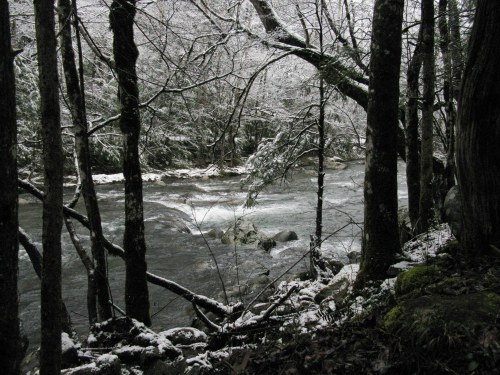
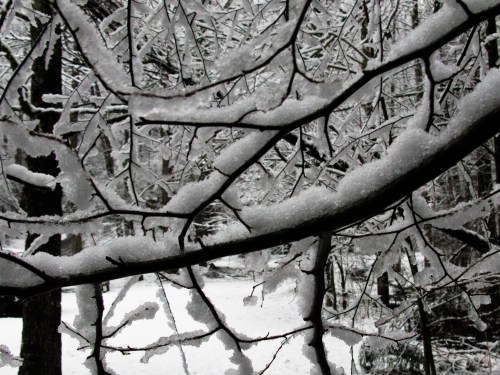
Winter on the mountain gavels its sentence, no appeal: wrestle the cold to keep it at bay; eat, feed the inner fire; light the darkness or fall and break. I pull my hood closer and hide myself. In the tent at night I bind my neck against cold fingers. I watch my feet.

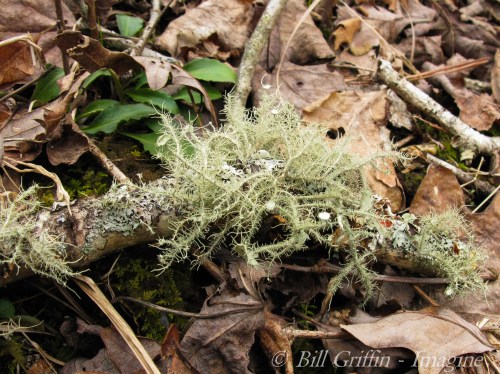
The day is short. Nevertheless we fill it and discover it filling us. Small signs begin to reveal their stories – an incisored nut, scratches in the bark, one single hair. At first we hesitate, we thirteen who’ve journeyed here to explore, but in the light we gather as closely as prudence permits. Muddy track, scrabbled duff, compressed leaf, scat: where did Bear sleep? what did Coyote eat?

Winter on the mountain: what crouches here for us to notice?

The night is long. In this valley darkness is complete. The rush and growl of Middle Prong fill the cove as well as empty it. Are we alone? In the gap of sleep a brush and skitter, a brief chittered voice – I imagine dark eyes and gliding flight. The spirit is released from the prison of his tree. In the morning we will seek signs of his passing.

Winter on the mountain – I release myself to see, to question, to wonder.
 

.     .     .     .     .     .     .

Valerie Nieman journeys landscapes of memory, family, heartache to reveal stories in the signs unearthed along the way. A path may seem clear but its meanings fissure and deepen into many layers. A bud, a leaf, a branch – are they simply of themselves wholly themselves? Look deeper: there are mysteries unfolding.

Val teaches creative writing at North Carolina A&T State University but she is preparing to retire this summer and replace syllabus revisions with fly selection for a day on the trout stream. Her poetry has appeared widely and has been published in numerous anthologies, including Eyes Glowing at the Edge of the Woods and Ghost Fishing: An Eco-Justice Poetry Anthology. Her fifth novel, Backwater, will be published in 2021.

.     .     .     .     .     .     .

Becoming Ariel
for Gerald Stern

Groundhog in a tree, behaving like a bird, like a squirrel,
nibbling tender green buds at branch end, high-wiring
above a bog. Any burrow dug here would be swamped,

front door to back stoop – how did he come to cross water
and ascend, diggers curved deep in the bark as a lineman’s spikes?
A crow would think twice about lighting on a branch so frail.

Soil-shoveling wedge of a face, a fat tail that never could balance
his loose bulk: this creature was not meant for such heights.
His round belly was destined to bloat in a ditch beside the road.

Still, he sways against the sky, close to the sun, Caliban
joyously drunk on spring sap drawn up from the mud
and darkness he was born to, tiny feet dancing and dancing.

from The Georgia Review, University of Georgia

.     .     .     .     .     .     .

Captures

I sprayed for tiny ants
late last night, killing the spider
doing its best to corral them.

Between the sheets I struggled
hand to hand with old lovers
and other aliens

descending cosmic ladders
to pincer my heart,
boiling them in the ichor

my bare claws released
from their flesh.
But this morning,

I catch a humpback cricket
in the sink, cup it
between my hands

and toss it out
the back door
to take its chances.

This morning, I’m
mild as a painted virgin,
my hands empty of slaughter.

from Change 7

.     .     .     .     .     .     .

Approach

Arms stretched wise,
right hand to the dawn,
left toward eventual night,
I face north.

As latitude rises,
life flattens:
forest to taiga,
to tundra, to permanent ice.

Everything will have
a name of cold:
polar bear, arctic fox,
glacier flea, snowy owl.

~ ~ ~

A compass is known to stray
from true north, lured
by the earth’s magnetic heart.
Now the needle swings

at the approach
of a frost spirit
from those barrens
I’ll have to cross

without advice,
without a companion,
or a harness of wolf-dogs,
or good boots.

from Hotel Worthy, Press 53, Winston-Salem, © 2015

Becoming ArielCapturesApproach  © Valerie Nieman


.     .     .     .     .     .     .

The Southern Appalachian Naturalist Certification Program at Great Smoky Mountains Institute at Tremont comprises eight weekend courses designed to provide fundamental and specialty skills in Southern Appalachian ecology and interpretive techniques. Each weekend includes 15 hours and more of lecture and hands-on field study. Upon completion the student receives the non-credit Southern Appalachian Naturalist Certificate from the University of Tennessee.

Ariel, the spirit in Shakespeare’s The Tempest, is released from his prison in the split pine by the magician Prospero.


.     .     .     .     .     .     .


IMG_7952


[with 4 poems by Ruth Moose]

I’m driving from Elkin up to Dobson, our county seat, smack in the center of Surry. About half way there, as Mountain Park Road peels off to the left, Poplar Springs Road completes its transformation to Zephyr Road. I love that – Zephyr Road. There are farms and rolling hills and plenty of zephyrs, though some of them are perfumed with a whiff of chicken house or skunk. Soon winter wheat will green the fields, then Spring will raise corn, soybeans, finally tobacco. Off to the south you can see vineyards pruned and expectant.

While the pastures are still winter brown, pay attention. Look, there’s one – close to that big oak in the middle of an empty field, a little patch of green. Come March you’ll spy the yellow nod of daffodils. Why out there of all places?

Those daffodil plots, slowly spreading, most likely once knelt at the front stoop of a farm cabin. A century ago, even longer? No sign of it from the road but if I walked around the oak I might scuff up a few squared off stones that were its foundation or that hoisted a step up to the porch. The daffodils remember. And maybe it was the same man and the woman who hoed the corn, milked the cow, every winter killed the hog, two together across the years who some quiet evenings found an hour to sit on that porch, maybe they’re the ones who named the wagon track below the field Zephyr Road. I love that.


.     .     .     .     .     .     .

Ruth Moose’s poems reflect the North Carolina icon she is. She draws on generations of memory to weave her stories and sketch her vivid images of locality and personality. Her sly wit, cloaked but never hidden by gentility, brings out the quirky individuality of the denizens of her world, real and imagined. And she reveals the deep, deep heart of longing, loss and yearning, our fragile mortality.

These poems are from three of her collections spanning decades. Ruth has also published novels, many short stories including two collections, and has won many awards and fellowships. Charles Edward Eaton said of her: Few writers can handle both prose and poetry, but Ruth Moose does them equally well, and with this double grasp has become one of North Carolina’s best writers. Ruth taught creative writing at the University of North Carolina until her retirement and she continues to support the creative life our home state.

.     .     .     .     .     .     .

Smith Grove

There is a heaven
for farmhouses.
Acres of them
lit by cloud hills
that plunge and wind
past creeks
where cows crowd on hot days.
A million windows watch
where farm wives waited,
minded those who came,
those who left,
counted the colors
of morning, evenings,
the sky at noon.
From back door stoops
they marked storm clouds,
summers rent with heat lightning,
saying both aloud and under
their tongues the chant
of superstitions, old tales,
familiar talk until the dark
dissolved.

In the museum
of porch swings and farm tools,
kitchen work is rusted,
thick with the oven of meals,
baked enamel, porcelain polished
like plates.

from Smith Grove, Sow’s Ear Press, Abingdon, Virginia, 1997
Illustrations are by Ruth’s husband the late Talmadge Moose, widely published and displayed artist and illustrator; read more at Life As He Saw It in Our State Magazine, April, 2011, by Ruth Moose.

.     .     .     .     .     .     .

.     .     .     .     .     .     .

Making the Bed

No matter how well
or worse the sleep
someone must take
the four cornered world
and set it straight.
Two can do it better,
take turns with edges,
coverlet, shams,
blanket and bolster,
wait in turn.

You can do it in the dark,
by feel, familiarity,
plumping feathers or foam.
You know your own scent,
shallow spots your knees
seek, the place you
fall into, dark and faraway,
taking you back or forward
like a train, all scenes
lighted cars you can look into,
out again. You hear the engine
that goes nowhere, the solitary
shriek as daybreak unrolls,
all wrappings out like flowers.

We go on with our lives.

from Making the Bed, Pure Heart Press / Main Street Rag Publishing, 1995

.     .     .     .     .     .     .

.     .     .     .     .     .     .

Almost a Pantoum on Being

A script is not needed; our place is already there.
We come into the world naked, unafraid.
Helpless we learn as we go, if somebody cares.
From water we swim, kicking into blue air.

We come into the world naked, unafraid.
The spell is everywhere, something the soul knows.
From water we swim, kicking into blue air.
Alive as the earth is alive and newly green.

The spell is everywhere, something the soul knows.
No angels hover over us, sit on our shoulders.
We are alive as the earth is alive and newly green.
Taking the flight one wing at a time.

No angels hover over us, sit on our shoulders.
Celebration waits in the arms of others.
We learn the dance one step at a time.
Moving to tunes heard in our heads.
No script is needed. Our place is already there.

.     .     .     .     .     .     .

How I Think It Will Be

My mother never talked about that winter
she had a husband in the VA hospital
not knowing how or if or when
he’d recover, three children sick
with the big red measles and twelve
inches of show on the ground
for over a week. She mentioned
it once, that’s all I remember
and the sound of her sewing
machine late, late into the night.
What did she sew? Her sanity?
Her soul? I only know I woke
suddenly, had gone from hot to cool,
my fever broken, my pillow wet.
I felt her hand on my forehead,
her touch, her voice as I left
that darkness and came into light.

I imagine it will be as she said then,
“Oh, here you are.”

both selections from The Librarian and Other Poems, Main Street Rag Publishing 2009
dedicated to HWLWG – HE WHO LEFT WITHOUT GOODBYE

.     .     .     .     .     .     .

Chatham Arts Council bio of Ruth Moose
Poetry Foundation listing


.     .     .     .     .     .     .

IMG_0768

Improvisation

[with two poems by Lenard D. Moore]

Mockingbird knows both of Blue Jay’s songs: the astringent lament that flings the blue name of the blue Corvid into pathos; the softer plaintive wheedle of him who begs to be thought better of. What does all that conversation signify when it erupts from the beak of the Jay? What meaning has the Mocker usurped, if any meaning at all? Who can listen and understand, and who can answer?

We of different class order family genus species can only speculate why the Mockingbird repeats four times each song he knows, and each song he himself composes, as he hops from the tip of power to the mailbox to the thorn bush and back again and his notes spiral the neighborhood. We are probably safe to bet that Mocker doesn’t care two bits about impressing the Jays. Song as proclamation, song as beacon, song as telegraphy, song as bulwark – let’s just imagine that Mockingbird proclaims music is glory and improvisation is king.

Listen and understand.

.     .     .     .     .     .

I have known Lenard Moore mainly from his haiku. He points the way to that parallel universe which is only a hairsbreadth from ours and then with observation and pointed brush he opens the door.

I also know Lenard as a teacher and mentor to Carolina writers in many, many different organizations and settings, and particularly I remember a meeting about 10 years ago at Weymouth Center in Southern Pines, NC. While Bill Blackley played blues harmonica, Lenard riffed and bopped with his jazz poetry. Now I’m holding a book that brings it back: The Geography of Jazz, issued in 2020 by Blair as a reprint of a publication by Mountains and Rivers Press in 2018.

Sultry, syncopated, steamy – if you can read this book without bobbing your head and tapping your foot you need a little more sax in your life.

.     .     .     .     .     .     .

At the Train Stop

I imagine the quick hand:
Thelonious Monk waves
at red, orange, yellow leaves
from Raleigh to Rocky Mount.
Alone in this seat,
I peer out the half-window
at the rainbow of faces
bent toward this train
that runs to the irresistible Apple,
determine to imagine Monk
glows like Carolina sun
in cloudless blue sky.
I try so hard to picture him
until his specter hunkers
at the ghost piano, foxfire
on concrete platform.
Now I can hear the tune ‘Misterioso’
float on sunlit air.
If notes were visible,
perhaps they would drift crimson,
shimmer like autumn leaves.
A hunch shudders
into evening, a wordless flight.

.     .     .     .     .     .     .

Ascension: John Coltrane

I didn’t pick up the tenor
and soprano saxophones
for legendhood.
I wanted only to explore chords
into progression, step into another world
I had to escape anything too strict,
take ‘Giant Steps’ all the way
from Hamlet, North Carolina.
The music shimmered like a lake
inside me and turned blue.
It was kind of spiritual.
I thought of extending the scales.
I wanted to play on and on,
sail as long as the horn could
and eventually come back again
as if I had never left.
It was maybe the only time
I left my body.

both selections from The Geography of Jazz, Lenard D. Moore, Blair Publishing 2020 reprint, © 2018 Lenard D. Moore

More about Lenard D. Moore, his poetry, and haiku.


.     .     .     .     .     .     .

Afterword: Old Jay still has a few tricks of his own. He can mimic perfectly the three Buteos in his breeding range: Red-tailed, Red-shouldered, and Broad-winged Hawks. Nobody messes with Mr. Blue Jay.


.     .     .     .     .     .     .

2020-09-08b Doughton Park Tree