Feeds:
Posts
Comments

Archive for the ‘Imagery’ Category

[with 3 poems by M. Scott Douglass]

I don’t eat meat. Just a decision ten years ago, my choice. It has nothing to do with you; I don’t think you’re “bad” if you eat meat. I has nothing to do with Bambi; I don’t think oysters are especially cute but I refrain from eating them as well. It has nothing to do with personal health; my cholesterol readings were already to (not) die for. And it certainly has nothing to do with ought or should; hominids evolved eating meat (and lots of insects) – perhaps all that protein made possible these brains we think are so big.

All it has to do with is my personal effort to make somewhat less of an impact on this planet. Leave it in a little better shape for my grandkids. Per pound of protein, how much acreage . . . water . . . diesel fuel . . . nitrates & phosphates . . . methane & CO2? Beans and beets will always beat out beef and poultry. How many billions of people can this planet sustain? Not nearly all the billions we have right now if we all want meat every day.

But what baffles me is how “vegetarian” has become a fighting word to some people. If I order plant-based sausage at Cracker Barrel will it make the guy at the next table choke on his chicken-fried steak? Simmer down, Dude. If nine billion people eating meat is going to hurry up and toast Mother Earth to a crispy golden caramelized finish, isn’t it kind of cool that a few people opt for rabbit food? Think of the choice this way – consider it my gift to you.


❦ ❦ ❦

A Tinderbox of Unsubtle Discourse
++++ It is the law: as a civilization dies and goes down
++++ to eat ashes along with all other dead civilizations
++++ – it is the law all dirty wild dreamers die first –
++++ gag ‘em, lock ‘em up, get ‘em bumped off.
++++ And since at the gates of tombs silence is a gift,
++++ be silent about it, yes, be silent – forget it.
+++++++++++ ~ Carl Sandburg, from At the Gates of the Tombs

There are those who prefer silence
to the sound of the wind in the trees.
For them, my voice rustles their peace
like a harsh unwelcome breeze.

I am the ghost of a storm they
would rather forget, as if they
believe a wave of their hand could
disperse an approaching hurricane.

There’s a red sky this morning,
red as the hot California hills,
and they think they can wish it
away with happy thoughts.

The wind has had its day, they say.
They want to muffle it, muzzle
the barking dog that wakes them,
shakes them from their comfort zone.

I am an inconvenient dog,
a crusty leaf skittering down the road,
a spark dropped in a dry forest:
Pretending won’t make me go away.

M. Scott Douglass
from Living in a Red State Blues, © 2022, Paycock Press, Arlington VA
❦ ❦ ❦

In the forward to his poetry collection Living in a Red State Blues, Scott Douglass wonders about attracting readers. The people on the reading end may have been burned out by it. Perhaps they were eager to move on from this period in our history or tired of hearing angry voices – . . . I prefer to think of it as exhaustion. Yep, I’d say that about sums it up. Exhaustion. Probably explains why the book’s cover stared at me from my desk for months before I finally cracked it open. I just get bone tired sometimes. Many’s the day I haven’t even opened my news feeds because I figure I already know all the headlines.

Also probably because I know Scott Douglass does not suffer fools gladly. Or quietly. But which of us has never been the fool? OK, I know this book will include at least one (high decibel) rant about all the bullshit of our current epoch, but it has been born from the pen and heart of a human being. One whose voice I respect. And hey, I’m a human being, too. Scott and I have something in common. Oh yes, we do.

❦ ❦ ❦

Reunion in an Airport Restroom

What do you do when
the man at the adjacent urinal
starts a conversation as if
resuming a thought left hanging
with a long-lost relative at
a wedding or picnic. You,
having held silent the business
at hand, the business for which
you have waited for hours stuffed
into a flying steel barrel, your
plumbing aching to be drained
for so long now that, amid this
scintillating discussion, it
sputters to a slow rebellious
drip, but wait, did he ask
a question; try to divert you
from your primary purpose
in this porcelain concourse,
where all the gates are full
and line runs from the door
to the tarmac; try to draw you
out of your self-conscious state,
shake off antisocial incivility,
embrace your fellow man?

M. Scott Douglass
from Living in a Red State Blues, © 2022, Paycock Press, Arlington VA
❦ ❦ ❦

March 13

Today is the anniversary of my
father’s death, or was it the day before
when his eyes last opened ore the week before
when he froze in mid-sentence, rigid fingers
reaching up to still air for stray words
that never returned to him again.

His words find me at odd times.

It’s only the last two minutes
of the game that matter.

But it’s unspoken moments
that haunt me most, moments
that echo throughout my day: the way

he turned a cereal spoon upside down
on the table when he was finished eating,
peanut butter spread to the edge
of a Ritz, a dab of Smucker’s
black raspberry jelly in the middle.

knowledge is the only thing that’s truly ours,
the only thing they can never take away.

On a shelf above my head he sits,
an eight-year-old on a black and white pony,
tall and proud, fists full of reigns. Sometimes
I look up to that pony boy and chuckle knowing
his parents paid a nickel to have it taken at
a carnival, how it was the closest he ever got
to riding a real horse, city boy that he was.

if you’re going to do something,
don’t do it half-assed

I though of my father every day
of the week leading up to this date,
but morning found me immersed in work,
the work he taught me, a job he envied.
When my nephew texted a photo of
his grandfather in a 1940’s Navy uniform,
shame swept a chill through me, realizing
I’d almost let the day slip by neglected.

do unto others as you would have them
do unto you

I look up at the pony boy on the shelf
and remember why, of all the photos
I have of him, I choose to display this one.
It’s because it frames him as someone
I know he never was, but reminds me
of his most cherished gift to me:
a sense of wonder, imagination,
the foresight to perceive the possible.

face the music, even when
you don’t like the tune

I am my father’s dreamer son,
the one who sometimes loses track
of time, the one who’s been tossed
from numerous horses, landed hard,
but always found a nickel to climb back on
because that’s what he expects of me.
While I may forget days and dates,
I will never forget that. Not that.

M. Scott Douglass
from Living in a Red State Blues, © 2022, Paycock Press, Arlington VA

❦ ❦ ❦
 

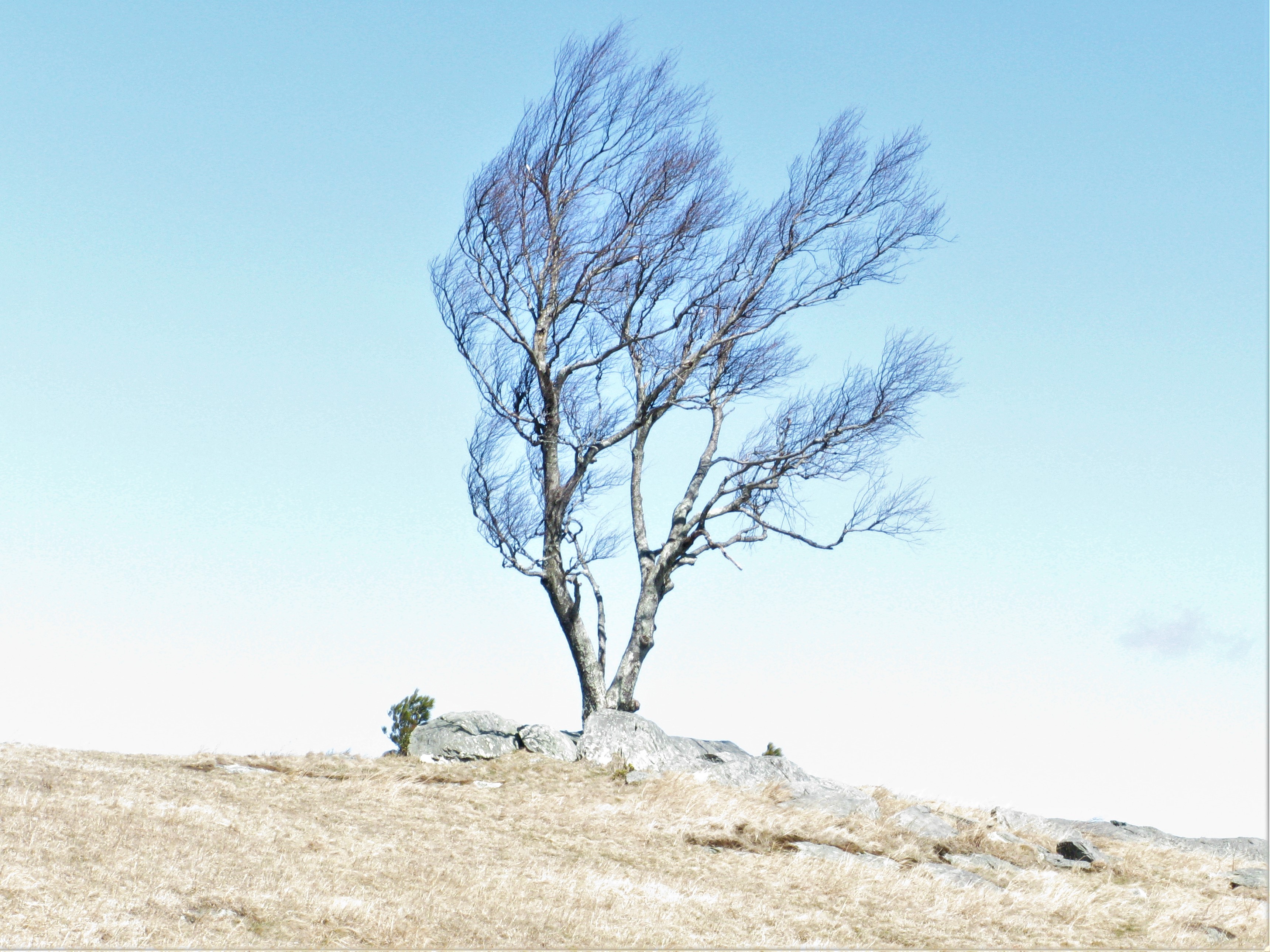
2020-03-07 Doughton Park Tree

Read Full Post »

Epicenter

[with 2 poems from The Ecopoetry Anthology]

On this night Earth shades her moon. In Padua, the Maestro climbs to the roof after supper and trains his marvelous compound eye on the fifth planet. He will continue until dawn diagraming in his notebook the movements of the tiny satellites about their fierce one-eyed God; his are the first earthbound eyes to perceive what he will call the four Medicean Stars. He pays homage to his patron as we do to ours – tonight with a strong pair of binoculars we as well can observe the Galilean Moons of Jupiter.

Galileo’s calculations of the moons’ orbits, his observation of the phases of Venus, the circulation of sunspots across the great orb’s face, all were cogs in the relentless wheel of evidence that the earth and other planets revolve about the sun – Ptolemy refuted, Copernicus triumphant. But Galileo was a devout man. Before the Inquisition compelled him to recant, he argued before the Pontiff that all his observations and equations simply confirmed the perfect creation of a perfect Creator. (Perhaps it was not in the Pope’s hearing that he also declared, “Mathematics is the language in which God has written the universe.”) While the rest of Renaissance Europe praised with astonishment his Dialogo sopra I due massimi sistemi del mondo, Galileo spent the final years of his life under house arrest.

In 1822 the College of Cardinals ruled to permit publication of books teaching that the earth revolves around the sun; in 1835 the Vatican removed Dialogue Concerning the Two Chief World Systems from its list of banned books. Not until 1992 did Pope John Paul II concede that the earth is not stationary in the heavens. But in 1622 all politics was religion. And in 2022?

Today evolutionary biologists will tell you that dinosaurs are not extinct: they’re hunting worms and singing in your front garden. Neither is the Inquisition extinct but only sporting different feathers. Each time I hear that a book has been banned, a scientific fundamental barred from schools, evidence ignored, warming climate denied, scientific breakthroughs refused in favor of the cult of ignorance, I ask myself: Why are you so afraid of ideas? Why are your ideas of God so small? Now the James Webb Space Telescope reveals with crystal clarity light reaching us from 13.4 billion years ago. God of all the universe, how unimaginably large you are! How wide, how old, how great, how ever new.

Haven’t you and I experienced the beautiful complexity of our natural world? I have also experienced the ineffable wonder, I guess you would call it joy, of living on this planet with my fellow humans and all creatures. I want to believe that there is a deep and abiding presence within the universe that desires us to feel this joy as we together revere creation. I do believe this. And I do believe that one thing is central for us to survive and thrive as a species: to acknowledge all Truth and allow ourselves to be guided by it. I am grateful to be part of a faith community that teaches this:

The earth, lovingly created as an environment for life to flourish, shudders in distress because creation’s natural and living systems are becoming exhausted from carrying the burden of human greed and conflict. Humankind must awaken from its illusion of independence and unrestrained consumption without lasting consequences.

and this:

. . . the call [is] to every generation to witness to essential truths in its own language and form. Let the Spirit breathe.

❦ ❦ ❦

The Big Picture

I try to look at the big picture.
The sun, ardent tongue
licking us like a mother besotted

with her new cub, will wear itself out.
Everything is transitory.
Think of the meteor

that annihilated the dinosaurs.
And before that, the volcanoes
of the Permian period — all those burnt ferns

and reptiles, sharks and bony fish —
that was extinction on a scale
that makes our losses look like a bad day at the slots.

And perhaps we’re slated to ascend
to some kind of intelligence
that doesn’t need bodies, or clean water, or even air.

But I can’t shake my longing
for the last six hundred
Iberian lynx with their tufted ears,

Brazilian guitarfish, the 4
percent of them still cruising
the seafloor, eyes staring straight up.

And all the newborn marsupials —
red kangaroos, joeys the size of honeybees —
steelhead trout, river dolphins,

so many species of frogs
breathing through their damp
permeable membranes.

Today on the bus, a woman
in a sweater the exact shade of cardinals,
and her cardinal-colored bra strap, exposed

on her pale shoulder, makes me ache
for those bright flashes in the snow.
And polar bears, the cream and amber

of their fur, the long, hollow
hairs through which sun slips,
swallowed into their dark skin. When I get home,

my son has a headache, and though he’s
almost grown, asks me to sing him a song.
We lie together on the lumpy couch

and I warble out the old show tunes, “Night and Day”…
“They Can’t Take That Away from Me”… A cheap
silver chain shimmers across his throat

rising and falling with his pulse. There never was
anything else. Only these excruciatingly
insignificant creatures we love.

Ellen Bass
from The Human Line. © 2007 Ellen Bass. Copper Canyon Press, http://www.coppercanyonpress.org.

❦ ❦ ❦

Both of today’s poems are collected in The Ecopoetry Anthology; Edited by Ann Fisher-Wirth and Laura-Gray Street, © 2013, Trinity University Press, San Antonio, Texas.

Ellen Bass is a Chancellor of the Academy of American Poets. Her most recent collection is Indigo (Copper Canyon Press, 2020). She has founded poetry workshops at Salinas Valley State Prison and the Santa Cruz, CA jails, and she currently teaches in the low residency MFA writing program at Pacific University. In 1973 Ellen co-edited (with Florence Howe) the first major anthology of women’s poetry, No More Masks! (Doubleday).

Linda Hogan is Writer in Residence for The Chickasaw Nation and Professor Emerita from the University of Colorado. Rounding the Human Corners (Coffee House Press, April 2008) was nominated for the Pulitzer Prize and her many honors include the 2016 Thoreau Prize from PEN. Linda has worked with “at-risk” teens in various places, including the Chickasaw Children’s Home. She teaches Creative Writing workshops for all ages, and was inducted into the Chickasaw Nation Hall of Fame in 2007 for her contributions to indigenous literatures.

❦ ❦ ❦

Moving the Woodpile

Never am I careless,
yet when I lift the wood,
before I even see the wasp nest

I see spiders and ants, some preserved in pitch
and when I lift the wood
the bark falls from the log
and there are silk cocoons,
worm-carved lines worked into the
woodflesh,
the beautiful work of insects
before they were white-winged, dusted creatures
who never asked the tree, What am I, who could I be,
never did they say, Oh world I love you
yet I loosen your skin and then I fly into the night.

As I lifted the log,
there they were in the wood, not yet anything,
the paper wasp nest of the barely alive,
only pale fingers searching, without eyes.

It’s been so many years ago now
and still I have the haunting
memory and feel, standing there with the nest,
offering the wasps back their young,
but they could not approach a human holding their nest.

Maybe our sin is not enough
of us get on our knees and ever see
how everything small and nearly gone
is precious, the paper wasp nest,
made by the moment-by-moment creation of care.

Maybe our human sin is for us never to say
all these are great.
And I, the one who took it, in innocence, apart
as if being human I could not help it,
despite myself, generous and thieving
at one and the same time.

I’ve always wished
to hold the truly stolen, broken world together
but my every move is to break
by degrees, acres, even the smallest atom.

Still, from this other body continent
I offered them their young
and they could not come near the untamed woman,
only fly with desperation
and I think of this still
every evening, like a prayer,
that day holding out the nest for them, placing it down,
but never for them to approach,
and how I waited, how I watched.

Linda Hogan
from Rounding the Human Corners, © 2008 Linda Hogan. Coffee House Press, http://www.coffeehousepress.org.

❦ ❦ ❦

[Scriptural references above are from the open canon of Community of Christ:
Doctrine and Covenants 164:4b and 162:2e.]


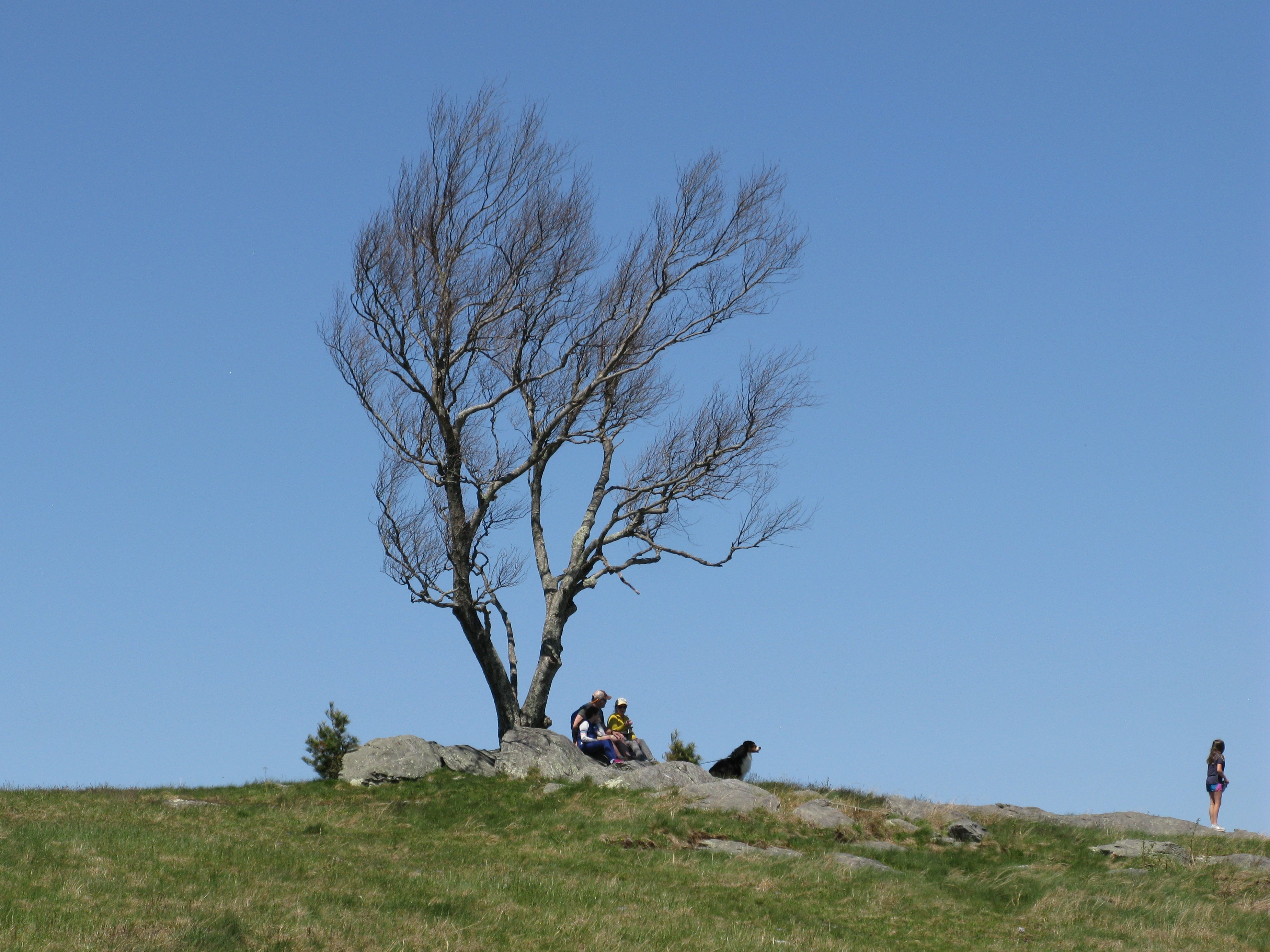
Doughton Park Tree -- 5/1/2021

Read Full Post »

[with 4 poems from I Thought I Heard a Cardinal Sing]

Eyes closed I listen as if casting a great spiral net into the forest. Behind, around me, above, although my two ears fixed in the horizontal plane are not excellent at discerning degrees of vertical, the vibrations arrive. Rarefaction and compression, faint means far, high amplitude is close beside me. A great disk of song and squeak and rustle, a half globe. What is the definition of a sphere? A surface whose every point is equidistant from the center.

How difficult, then, not to imagine the center is me. Plant my feet in sand and watch the sun descend below the western horizon; lie on my back at night for an hour and notice how Taurus and the Sisters wheel around me, I the fixed tether of all movement, I the pivot of their dance. My mind will argue against such silliness but my senses know its truth. As kids we never question the solar system we learn in school, later we even snicker at Ptolemy, his deferents, epicycles, and yet centrality is burned into us, ten thousand years of human psyche.

But imagine. What if? Hardwood creaks upstairs, Linda out of bed, but instead of imaging her descending soon to join me I am with her now, stretching, brushing teeth, gathering her hair and braiding. The first step is to step away from the imaginary center. The second is to not look back at self. Look out, look into the space between the hickory leaves and ferns, fly up with feathers and lace-veined wings. Claw the earth, creep between the rootlets. Not just imagine – be the other lives that pass in cars, that tend a child, that worry. Be the angry ones, the broken, the sad & silent. Behind, around, above. First step is to give up the center.

❦ ❦ ❦

Common Ground

What’s incomplete in me seeks refuge
in blackberry bramble and beech trees,
where creatures live without dogma
and water moves in patterns
more ancient than philosophy.
I stand still, child eavesdropping on her elders.
I don’t speak the language
but my body translates best it can,
wakening skin and gut, summoning
the long kinship we share with everything.

Laura Grace Weldon
from I Thought I Heard a Cardinal Sing: Ohio’s Appalachian Voices, edited by Kari Gunter-Seymour; Sheila-Na-Gig Editions, © 2022

❦ ❦ ❦

Cardinal

I know my mother’s weeping is real by the way
she exhales, fragmented and flailing,

like someone newly mourning. My head only hip-high,
I stare up to her saddened face, too young to understand

any of this, but old enough to know something
is broken, and that with breaking, anguish follows,

old enough to know she would want to watch
the male cardinal she feeds every morning

newly perched in the bare Maple outside
the kitchen window. I nearly tell her to look,

to witness its bright red flame up against all
that white winter. But I wait, keep quiet

and listen, trying to hear in place of her grief,
the cardinal’s song just beyond the glass.

William Scott Hanna
from I Thought I Heard a Cardinal Sing: Ohio’s Appalachian Voices, edited by Kari Gunter-Seymour; Sheila-Na-Gig Editions, © 2022

❦ ❦ ❦

As I read deeper into I Thought I Heard a Cardinal Sing, I feel my center shifting. In good poetry I discover how the poet feels; in excellent poetry I discover how I feel. These pages enfold an entire world – gardens and farms, back roads and highways, mining towns and river towns; people who struggle, joyful people, yearning, grieving, loving. Line by line, image by image these voices create a powerful place. I am drawn in, I am invited and indeed welcomed in. Hearing with their ears, seeing with their eyes, feeling their hearts I discover what has made meaning in my own life.

Thank you, Ohio’s Appalachian Voices. I am humbled to become part of the family.

Oh, and don’t forget the cardinals. I’ve lost count of the poems with the singing of cardinals. Spirits of the dead and still desired; messengers of color in a countryside too often locked in grey and white; outstanding singers of endless variation – and shared by OH and NC as state bird (along with WV, VA, IL, IN, KY)! Visitors from the West Coast see their first Cardinalis cardinalis and say, “I didn’t believe they were real!” Yes indeed, as real as these poets and as real as their poems.

❦ ❦ ❦

Chink

Backyard,
this is as small
as the cardinal’s good cheer gets,
sharp shard of sound
chipped from as-if-frozen air.
Still, if it were to have color
it would be pointed scarlet,
like a splint of fire,
or blue-white
like the flame of acetylene.
If it were music
it would be one high C,
some maestro’s hot-headed urge
of his horns.

In the woods,
chink is enough.
Under pine signs,
near the stony mumble
of the creek,
it speaks everything needed
to cardinal:
Here.
I know you’re there.
Listen.

Richard Hague
from I Thought I Heard a Cardinal Sing: Ohio’s Appalachian Voices, edited by Kari Gunter-Seymour; Sheila-Na-Gig Editions, © 2022

❦ ❦ ❦

This Place Does Not Care If I Am Happy

This ruby-throated world is not for me.
Not mine, this jack pine tar, this chunky sunlight.
Not mine, the eggs or weeds or garter snakes.
This limping yellow willow is not for me,
Nor is the wrinkled willow that the lake makes.

These thrushes will still be here when I go.
Maybe not this robin and maybe not these reeds
But some robin in some reeds will be here when I go.
Some or another maple, some lightning-bent bough,
Some summer-sick magnolia will be here when I go.

This place has never cared if I am happy.
The fungus does not care, the fox does not care,
The deer looks as though – for just a moment –
But no. This place does not care if I am happy.

And I am thank you, thank you, I am.

Erica Reid
from I Thought I Heard a Cardinal Sing: Ohio’s Appalachian Voices, edited by Kari Gunter-Seymour; Sheila-Na-Gig Editions, © 2022

❦ ❦ ❦

❦ ❦ ❦

IMG_0880, tree


Read Full Post »

« Newer Posts - Older Posts »