Feeds:
Posts
Comments

Archive for the ‘Imagery’ Category

[with 3 poems by Richard Widerkehr]

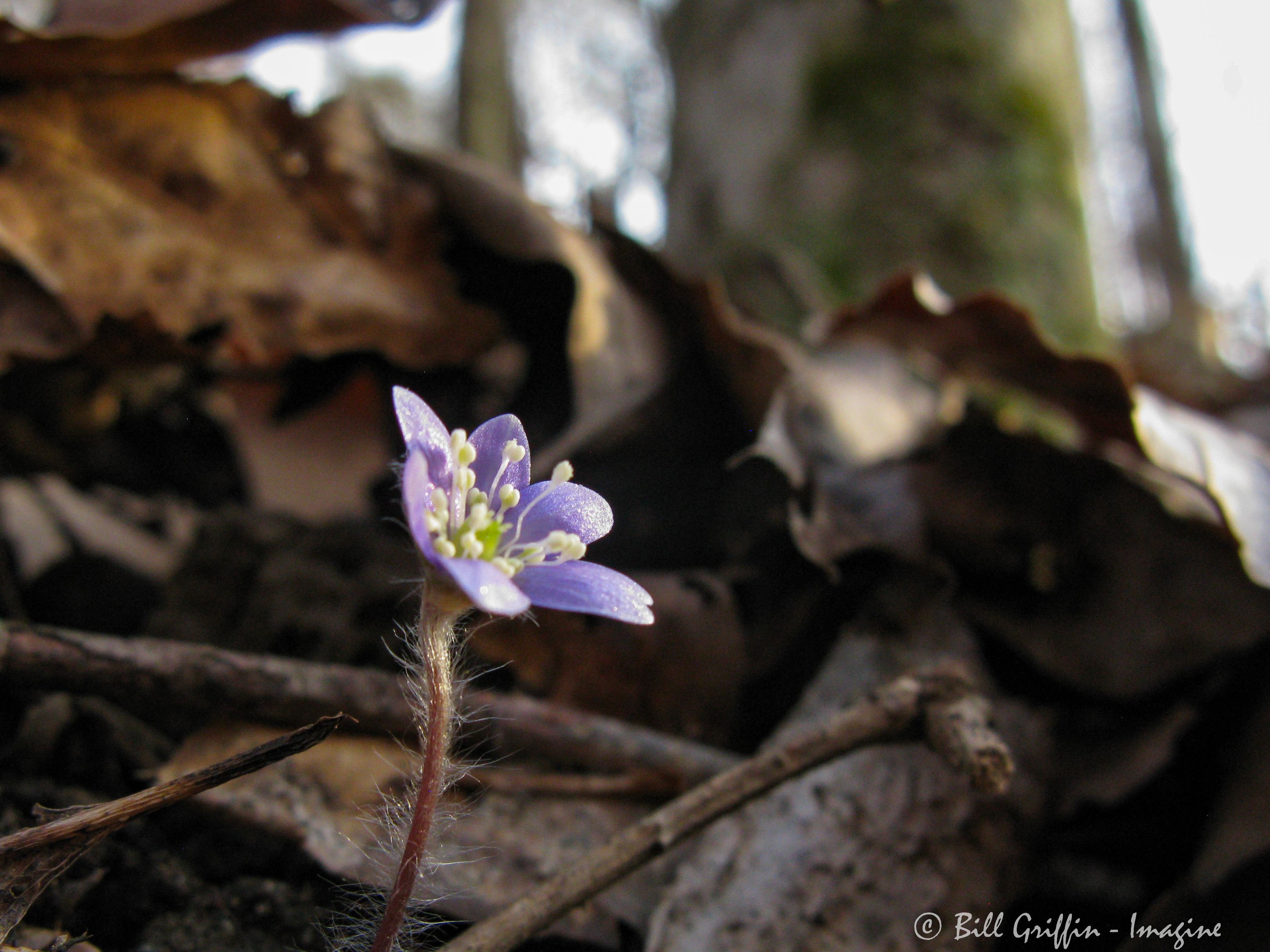
Cold March drizzle makes Hepatica nod and droop. Nevertheless, the twelve accompany me undaunted on a naturalist hike along Elkin Creek. What will we discover? Here are the last few Hepatica blossoms of the year; their sister plant opened her first bloom along this trail on February 7, five weeks earlier. Now a single flower on each silky hairy scape looks down at its feet, the winter-pocked liverleaves also fading ahead of summer’s foliage. It’s cold this morning and the vernal equinox is still three days off.

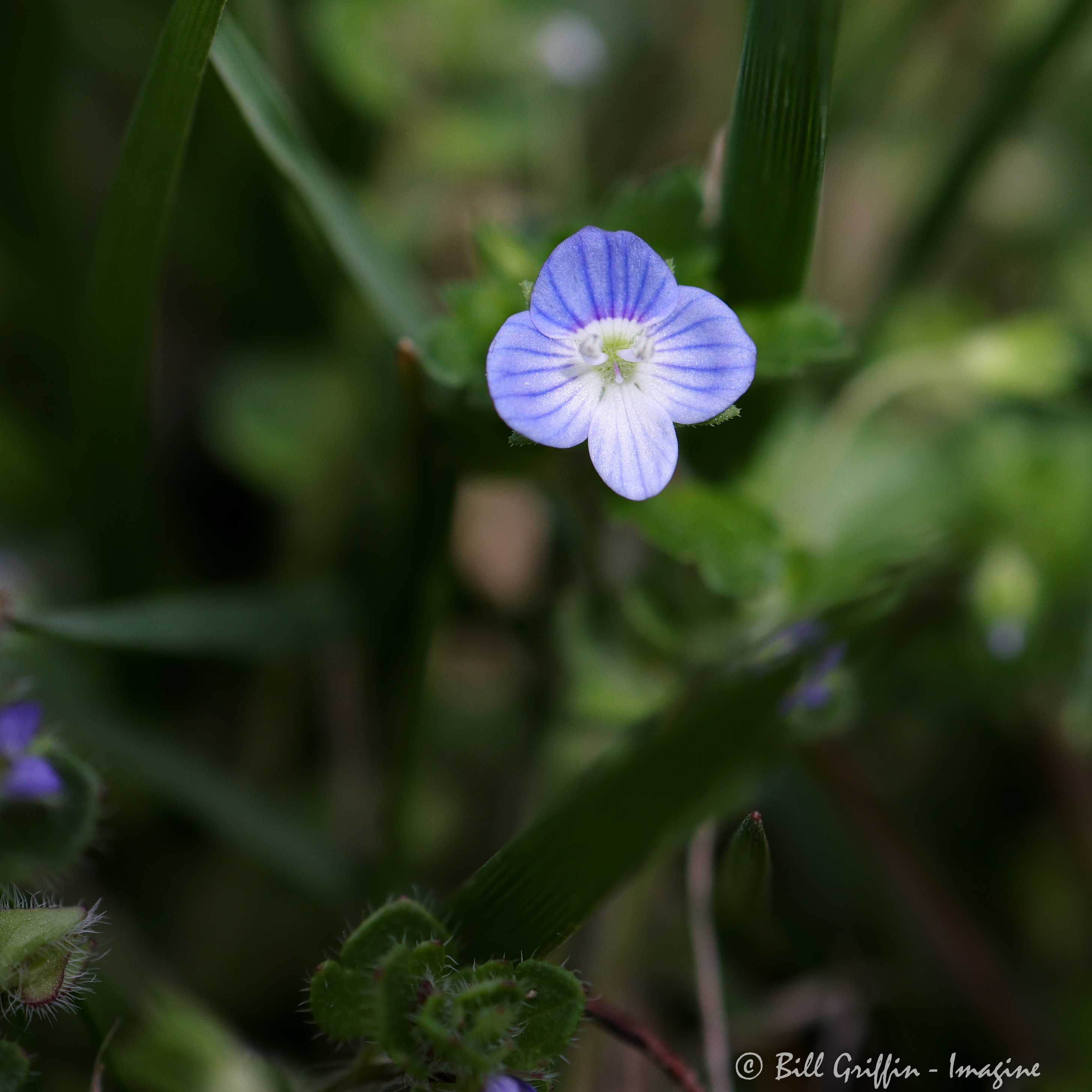
But cheek by jowl with old Hepatica are fresh patches of its second cousin, Rue Anemone. No drooping at all! Both from the same family (Buttercup, Ranunculaceae), the two flowers share many features and from a distance look similar – our crew’s task is to learn to tell them apart. Both are easily overlooked, pale blooms only a cm. or so in diameter, with 6-10 petals and a jostle of stamens crowding multiple pistils clumped in the center. Even color is not a reliable clue: the pale Hepatica in this neutral soil is only one shade of lavender removed from Anemone’s white. Rue Anemone’s smooth slender flower stem is one giveaway, and then of course the leaves, Anemone’s fine clusters like little paws climbing toward the bloom, contrasted with Hepatica’s broad, basal, waxy lobes, each like a liver. What some might casually mistake for a clump of sameness, in haste undifferentiated, what we ourselves might at first glance have misidentified have now become familiar, individual: each uniquely itself.

❦ ❦ ❦

A Sabbath of Complete Rest

I’ve been thinking what that might mean, so I listen
to the wind in the fir trees outside our red house –
how the trees stand almost like horses asleep on their feet,

how their roots touch crevices in soil, how at night
their branches, blacker than the sky, must not forget
yellow forsythias, summer, their own dark needles,

how they wait, how they’ve waited. This is no psalm
of light, Chloe, no song of white horses in the sun.
The root of the word Shalom means complete.

Richard Widerkehr
from At the Grace Café, Main Street Rag Publishing, Charlotte, NC, © 2021

❦ ❦ ❦

How does a poem draw you in? How does it invite you to live in the world it creates? Place must be one way. Just a few pages into At the Grace Café, I realize I’m damp and about to shiver in the Pacific Northwest. Not that it’s raining absolutely all the time – the great dark firs lifting their heavy sleeves also propel me into the landscape. A trail through clouds and mist leads me. A swirling lake shore is mysterious and at once consoling.

Personality is another thread that weaves through these poems and entangles me: the writer’s sister, her mental illness an elusive and threatening animal that speaks wild into every situation; his mother, reminding us that each of us must live a portion of our lives in denial; and the personality of the writer himself, illuminated by recurring heartbreak in his work as counselor and by longing for stability and resolution. Personalities approach and retreat, promise to reveal just as they again withhold – all I can do is hold on and join the dance.

Finally there is joy. Not waiting beyond all conflict or at the conclusion of all sorrows, rather joy that emerges from and lives within these troubles that we all, confess it, share. A fleeting moment with one’s beloved, a brief lifting of fog, moon on snow – a simple singular presence can form us into fellow sojourners. The poem can make us family. The poem may grant us grace.

❦ ❦ ❦

Pay Attention, You Say

No, I haven’t read updates about the orca
+++ nursing her dead calf. I try not to get
upset about too many things. Lately,

I write these poems for my sister –
+++ I can’t spare the least insect or angel,
she says. Yes, plankton lined with oil

covers some sea beds. I’ve seen orcas
+++ breach the surface, black and white,
their bodies like mountain sides

sliding under. When we were kids,
+++ my sister and I caught a tiny fish –
she cried, and our mother threw it back.

Yes, there’s the sadness of plankton,
+++ the orcas, snow fields at night.
Last evening on this mental health unit

where I work, a patient I’ll call Carla –
+++ she’d cut her left wrist – she said,
Some scars are mercy and justice.

I let out my breath. At least my sister
+++ no longer sleeps with the moon
in her cardboard box. Now

you point out two otters on the bank
+++ of No Name Slough, how they
their small black eyes on us.

Richard Widerkehr
from At the Grace Café, Main Street Rag Publishing, Charlotte, NC, © 2021

❦ ❦ ❦

Crane Flies
O for a Life of Sensations rather than of Thoughts! – John Keats

In late August, the crane flies
come back, nervously feeling their way
up windows, trying to get out. They flutter
like huge, scatter-brained mosquitoes,
scraping this way and that, sometimes just
hanging as they flex their long
front legs like feelers, emitting
a dull, frustrated buzz.
++++++++++++++++++ Is it light
they want, the world outside?
They can’t get used to glass, its cool
way of whispering about the uselessness
of struggle, also its dry comments
on their death flights.

Each time I sweep these nutty insects
out the window, more fly in, as if
I were the absence they brush against,
their life of sensations
come to an end.

Richard Widerkehr
from Disappearances, The Wind Room Series #4, Radiolarian Press, © 1996, 2003
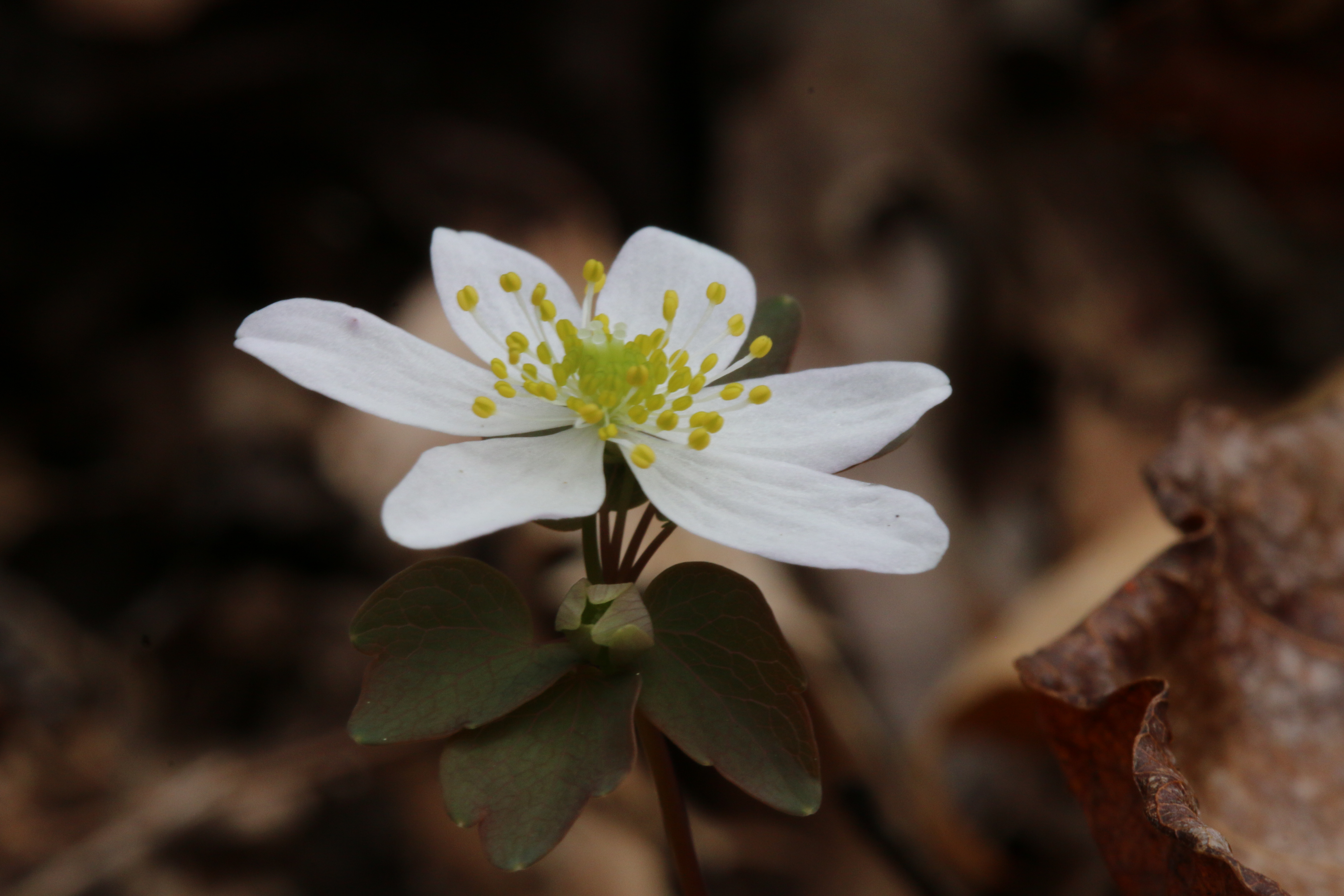
rue anemone

❦ ❦ ❦

Richard Widerkehr has a new book from Shanti Arts Press, Night Journey. Richard has taught writing in the Upward Bound Program at Western Washington University and has worked as a case manager for the mentally ill.

❦ ❦ ❦

IMG_0880, tree

Read Full Post »

Archetype

[with 3 poems by Michael Hettich]

Linda keeps a little book beside the bed, a dictionary of Jungian dream archetypes. If she awakens from a dream of an elf, that could mean she’s searching in her conscious life for a guide for her soul. If dancing, maybe she’s expressing joy or sorrow in her role as woman. Leafing through the pages, I have to admit I notice many mundanities wandering through our normal days – dirt, a flock of birds, hiking in the forest – that when they appear in dreams basically translate into one simple message: we’re anxious about something.

No surprise, I suppose, that after I first retired from medical practice my dreamlife erupted with vivid and unrepressed energy. I had spent 8 or 10 hours a day in pretty focused cogitation for some forty years, and my subconscious was now frantically trying to re-engage the clutch. But the content! I’m at the office or the hospital but everything is off-kilter, out of sync. I can’t get from here to there. I can’t find the patient I’m looking for, or make the connection I need, or get someone to listen. Every morning I remember the dreams and struggle to imagine what they might have to do with my conscious life.

Conscious life, what a concept. Homo sapiens sapiens, man who thinks about thinking. How many hours in every day pass by without me giving them much thought, even though an observer would say I was nominally conscious? Yesterday I suddenly remembered that I wanted to know what the heck is alfalfa, anyway, and an hour of reading later I’d become the alfalfa-meister. Perhaps it would have been more useful, at least for a minute, to ask myself why I wanted to know about alfalfa (which is a member of the Pea family, Fabaceae, originated in ancient Iran 2,500 years ago, and whose name in Arabic means horse food). What I choose to think about, and why, must be formed from my inner identity even as it forms my identity.

And what about dreams? Are they created from our consciousness, or do they create our consciousness? I still have one of those work dreams about twice a week, and often, just when I have been able to complete some task, I’ll suddenly tell myself, “Wait, you don’t have a medical license any more,” and I wake up sweating. What is the object of this subjective? I could make a long list of all my actual daily challenges and try to connect the symbolic dots – loss of control, weight of responsibility, nagging uncertainty. Could it even be existential anxiety about my true identity?

Perhaps the dream is just trying to say, “How about if you just slow down for a minute and simply think about this.”

❦ ❦ ❦

Constellation

1.
Before we start shooting salt into the sky
to cool the planet and cloud our days,

perhaps we should simply
sit down in the shade
with stories – of moons that break open into flowers,
of foxes that sleep at the foot of our beds
to keep our feet wild. And before we start dreaming

floating cities adrift on a rising
ocean, perhaps we should undress ourselves
of who we’ve become, slip out of the habits
we’ve devised to feign our innocence, and swim
out into the deeper water

until whatever’s still phosphorescent
within us glows like small constellations
beneath which the huge, warm-blooded swimmers,
with minds and memories, and songs that might teach us
new ways to hear, are moving through the darkness.

2.
Imagine the feel of their huge backs rubbing
against our pale feet, as they move on through the night.

Michael Hettich
from To Start an Orchard, Press 53, Winston-Salem, NC, © 2019

❦ ❦ ❦

In each of Michael Hettich’s poems, I amble through a dreamlike landscape of the obvious, the mysterious, the unfathomable. Familiar characters behave in unexpected ways; they transpose and reform and suddenly I’ve arrived in an entirely new space. It is scary when the parents strip naked and slip into the skins of horses, then walk gaunt and slack into the field, but when you ride them bareback you remember who they are by the feel of your small legs around them. There is happiness in wailing on even when no one is listening. “In a room of rubble and brittle light, / I suddenly know things I’ll never understand: / each moment is an animal, leaping sunlight / to give us these bodies.”

To Start an Orchard is a work of unrepressed imagination and deep inner exploration. Be guided by the archetypes. The window is for seeing out of and looking into but must become a door before one can walk through. Trees and grass, things grow without your direction into what you most need them to be. And love, it may be unreachable as birds gone from the trees or turning to dust in a spider’s web, or it may be a feather dreamed in the egg and growing into flowers.

Something that is hard to grab and hold may still be possible to grasp and feel. These poems climb and fall and turn but without a lurch – I never fear being thrown clear. Where there is bleeding there is also healing. I look about and for a moment I don’t recognize my surroundings, but I find myself saying, “Yes, yes, this is just as it should be.”

❦ ❦ ❦

To Start an Orchard

Whatever silences we’d always maintained
we continued to nurture, like the fruit from a landscape
that was foreign to us, even after all these years,
a fruit we weren’t sure whether to peel,
cook, or eat raw, kept on our windowsill
until it had withered and was somehow
beautiful, like a curiosity we’d collected on the beach
that reminded us of journeys, fathomless depths,
and yet was just a piece of fruit, desiccated and black,
curled like the pit of a dream, or a nut.
And so, when you spoke, or tried to, a small plant
emerged from its folds and darkness, delicate
and proud and needing to be watered until
it could be planted outside. I could already
hear the birds singing from its wilderness of branches.
I was already humming to the buzzing of its bees.

Michael Hettich
from To Start an Orchard, Press 53, Winston-Salem, NC, © 2019

❦ ❦ ❦

Starting from Sleep

+++ She tells me our bodies are nets dropped into
the ocean. And when they are pulled up, the minnows
are spilled out to flip-flop and strangle.

+++ And then we are tossed back over, to dream:

+++ +++ I talk, she says, to my great-great-grandchildren
+++ +++ +++ by treating all things with whatever compassion
+++ +++ I’ve drawn from the grace I’ve been shown. And those children
+++ +++ +++ +++ thank me, and dream of being born.

The wild parts of everything are disappearing everywhere.

+++ +++ +++ +++ Wood grain faint fingerprint
+++ +++ +++ +++ +++ pores eyes blue breathing
+++ +++ +++ +++ wind dust mind afternoon
+++ +++ +++ +++ +++ tide lips +++ and sudden flowers.

Michael Hettich
from To Start an Orchard, Press 53, Winston-Salem, NC, © 2019

❦ ❦ ❦

Doughton Park Tree 2020-11-22


Read Full Post »

[with poems from Black Nature]

The world of experience speaks the language of the Absolute. In that language, the language of the universe, all of the metaphors which spring offers must simply mean: LIVE!  – – – –  Marilyn Nelson

What makes Spring for you?

When I was a first year med student, every lecture paid homage to the History of Medicine (invariably capitalized). Even today when I read of the recent cholera epidemic in Haiti, I immediately remember Dr. John Snow, the father of modern epidemiology, who arrested the London cholera epidemic of 1854 by removing the handle from the Broad Street pump. When I progressed to the clinical wards at Duke, including Osler Ward, history continued its exposition on morning rounds with frequent pithy quotations by Sir William Osler, such as, “A physician who treats himself has a fool for a patient,” or, “It is astonishing with how little reading a doctor can practice medicine, but it is not astonishing how badly he may do it.”

One quotation baffled me a bit: “One swallow does not make a summer, but one crescent makes malaria.” I quickly learned to recognize the crescent, that minute malaria parasite living inside a red blood cell, and I spent hours at the microscope trying to find just one. But I had little experience of the natural world outside the lecture hall and the swallow part (Osler riffing on Aristotle, I learned later) made no sense. I was stuffing my head with the vocabulary of microbiology and immunology but never even heard of phenology (the study of periodic biological phenomena). The completion by swallows of their long northward migration each year defines the arrival of summer? Of that I had no clue.

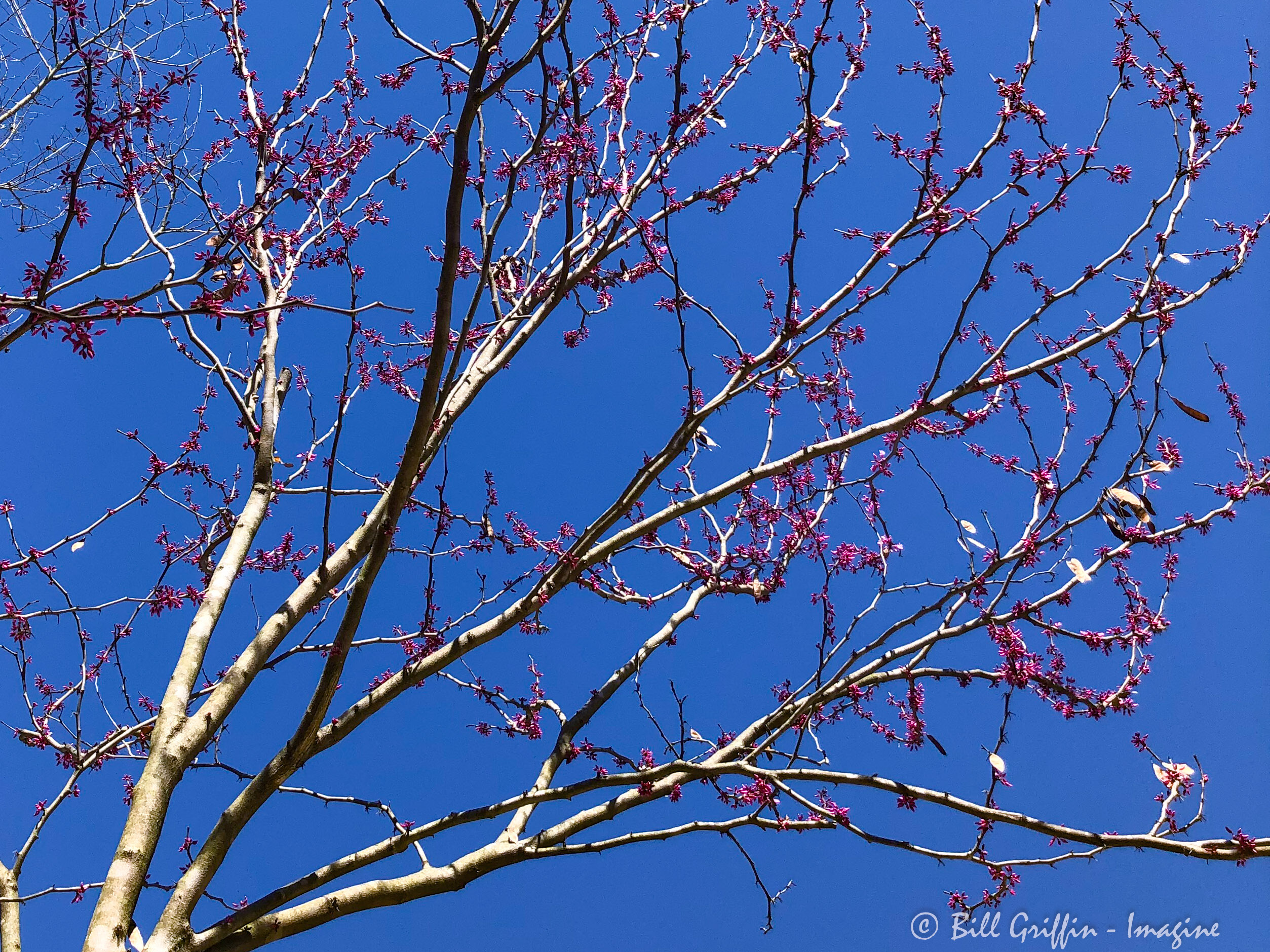
Indeed, one crocus does not make a spring. So what does make spring for you? There’s a stretch of I-40 between Winston-Salem and Kernersville where the surrounding woodland has been sheared back and sun percolates into deep shade. Over the years the native redbuds have leaned into that light. As gray February shuffles so languorously along step by step, a faint golden haze haloes the maples and deepens to peach and brick red. A willow here and there hints of green. It’s coming, it’s coming. Then suddenly, it seems within just days of each other, the redbuds pop their magenta bud covers into lush, rich, raspberry bloom. The solstice hasn’t yet arrived, but for me redbuds do make spring.

❦ ❦ ❦

Spring Dawn

There comes to my heart from regions remote
+++++ A wild desire for the hedge and the brush,
Whenever I hear the first wild note
+++++ Of the meadow lark and the hermit thrush.

The broken and upturned earth to the air,
+++++ By a million thrusting blades of Spring,
Sends out from the sod and everywhere
+++++ Its pungent aromas over everything.

Then it’s Oh, for the hills, the dawn, and the dew,
+++++ The breath of the fields and the silent lake,
And watching the wings of light burst through
+++++ The scarlet blush of the new daybreak.

It is then when the earth still nestles in sleep,
+++++ And the robes of light are scarce unfurled,
You can almost feel, in its mighty sweep
+++++ the onward rush and roll of the world.

George Marion McClellan
from Black Nature: Four Centuries of African American Nature Poetry, edited by Camille T. Dungy, © 2009 University of Georgia Press, Athens GA.

❦ ❦ ❦

This week I’ve been spending time with an anthology I’ve been reading off and on over the past year, Black Nature: Four Centuries of African American Nature Poetry, edited by Camille T. Dungy. Cycle Ten, the final section of the book, is titled Comes Always Spring. We have come through nine other cycles, including Dirt on Our Hands and Disasters, Natural and Other; we have been reminded What the Land Remembers; at last we are left with a hope of renewal. What can make Spring for us as a community, as a shared human family?

GEORGE MARION MCCLELLAN (1860-1934) was born in Tennessee and lived in Kentucky. A poet an minister, he attended Fisk University and Hartford Theological Seminary. He published Poems in 1895 and The Path of Dreams in 1916.

CLAUDIA RANKINE, born in Jamaica in 1963, earned her BA from Williams College and her MFA from Columbia University, and now lives and teaches in California. She is the author of four collections of poetry; Nothing in Nature is Private (1995) received the Cleveland State Poetry Prize.

CAMILLE T. DUNGY has received fellowships from the National Endowment for the Arts, the Virginia Commission for the Arts, the Dana Award, and Bread Loaf. She is Associate Professor of Creative Writing at San Francisco State University. Besides Black Nature, Dungy is also co-editor of From the Fishouse: An Anthology of Peoms That Sing, Rhyme, Resound, Syncopate, Alliterate, and Just Plain Sound Great.

[biographies adapted from the anthology]

❦ ❦ ❦

The Man. His Bowl. His Raspberries.

The bowl he starts with
is too large. It will never be filled.

Nonetheless, in the cool dawn,
reaching underneath the leaf, he frees
each raspberry from its stem
and white nipples remain suspended.

He is being gentle, so does not think
I must be gentle as he doubles back
through the plants
seeking what he might have missed.

At breakfast she will be pleased
to eat the raspberries and put her pleasure
to his lips.

Placing his fingers beneath a leaf
for one he had not seen, he does not idle.
He feels for the raspberry. Securing, pulling
gently, taking, he gets what he needs.

Claudia Rankine
from Black Nature: Four Centuries of African American Nature Poetry, edited by Camille T. Dungy, © 2009 University of Georgia Press, Athens GA.

❦ ❦ ❦

What to Eat, and What to Drink, and What to Leave for Poison

1
Only now, in spring, can the place be named:
tulip poplar, daffodil, crab apple,
dogwood, budding pink-green, white-green, yellow
on my knowing. All winter I was lost.
Fall, I found myself here, with no texture
my fingers know. Then, worse, the white longing
that downed us deep three months. No flower heat.
That was winter. But now, in spring, the buds
flock our trees. Ten million exquisite buds,
tiny and loud, flaring their petalled wings,
bellowing from ashen branches vibrant
keys, the chords of spring’s triumph: fisted heart,
dogwood; grail, poplar; wine spray, crab apple.
The song is drink, is color. Come. Now. Taste.

4
Down anyone’s street-bright invitations.
Suck ‘em. Swallow ‘em. Eat them whole. That’s right,
be greedy about it. The brightness calls
and you follow because you want to taste,
because you want to be welcomed inside
the code of that color: red for thirst; green
for hunger; pink a kiss; and white, stain me
now. Soil me with touching. Is that right?
No? That’s not, you say, what you meant. Not what
you meant at all? Pardon. Excuse me, please.
Your had was reaching, tugging at this shirt
of flowers and I thought, I guess I thought
you were hungry for something beautiful.
Come now. The brightness her might fill you up.

7
Daffodils are up, my God! What beauty
concerted down on us last night. And if
I sleep again, I’ll wake to a louder
blossoming, the symphony smashing down
hothouse walls, and into the world: music.
Something like the birds’ return, each morning’s
crescendo rising toward its brightest pitch,
colors unfurling, petals alluring.
the son, the color, the rising ecstasy
of spring. My God. This beauty. This, this
is what I’ve hoped for. All my life is here
in the unnamed core – dogwood, daffodil,
tulip poplar, crab apple, crape myrtle –
only now, in spring, can the place be named.

Camille T. Dungy
from Black Nature: Four Centuries of African American Nature Poetry, edited by Camille T. Dungy, © 2009 University of Georgia Press, Athens GA.

Mom looks at the Redbud

❦ ❦ ❦

And here’s one final epigram from Sir William Osler, dedicated to William J. Blackley MD, my Senior Resident for the first day I arrived on the ward as a green intern: “One finger in throat and one in the rectum makes a good diagnostician.”

More quotations by the master clinician Sir William Osler can be found here:
“The good physician treats the disease; the great physician treats the patient who has the disease.”

2016-05-08a Doughton Park Tree

Read Full Post »

« Newer Posts - Older Posts »