Feeds:
Posts
Comments

Archive for the ‘Imagery’ Category

 . 
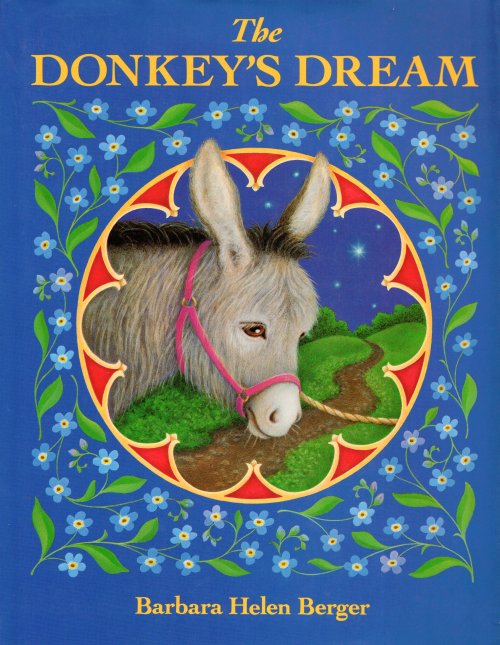
[excerpts and art from
The Donkey’s Dream, Barbara Helen Berger]
 . 
Once there was a gray donkey. He was
walking along as usual, with a load on
his back. A man was leading him. And
as they walked on and on through the
starry night, the donkey began to dream.
 . 
 . 
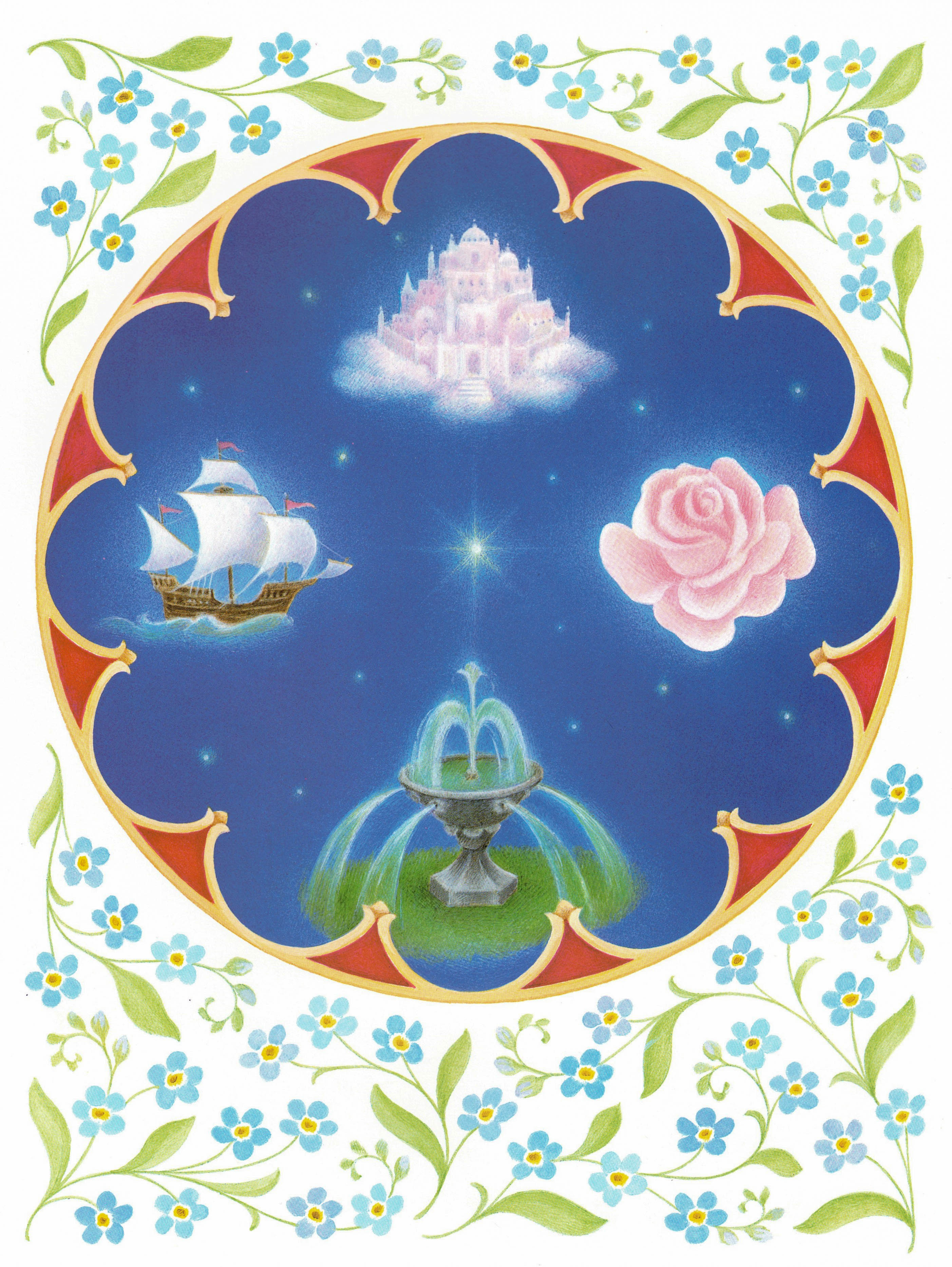
He dreamed he was carrying a city,
with gates and towers and temple domes.
He dreamed a child cried in the city.
And doves flew all around.
 . 
 . 
He dreamed he was carrying a ship.
I rocked like a cradle. It shone like the moon.
And the sea danced all around.
 . 
 . 
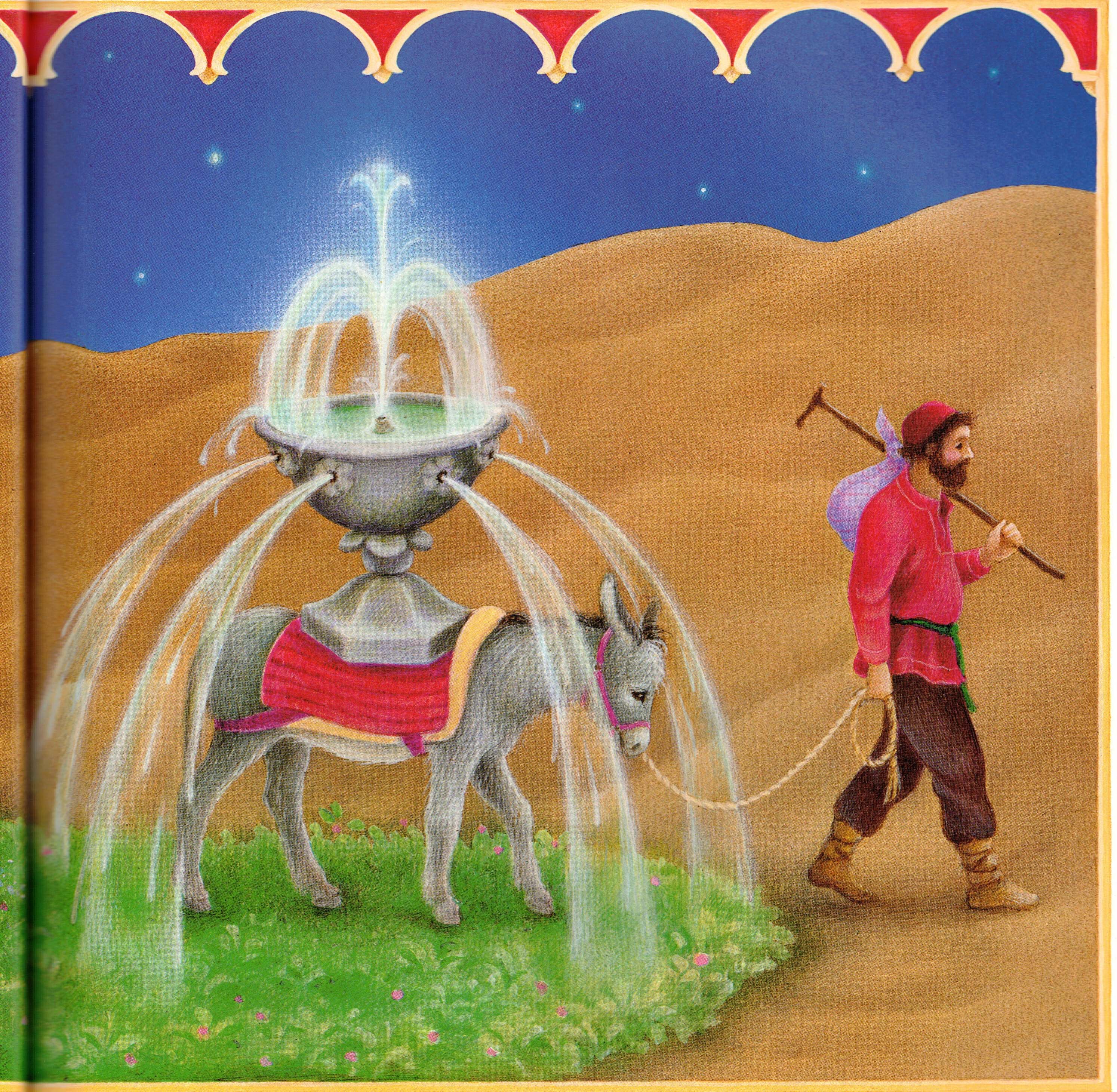
He dreamed he was carrying a fountain.
Its waters splashed and sang like a child’s laughter.
And a garden sprang from the desert sand all around.
 . 
 . 
He dreamed he was carrying a rose, soft as a
mother’s touch and sweet as the sleep of a baby.
Angels stood all around.
 . 
Then he dreamed he was carrying a lady full of heaven.
They had come to a town. But only the village dogs
ran to greet them.
 . 
 . 
❦ ❦ ❦
 . 
The donkey’s lot in life is to carry. He is bred to carry. All his days are carrying, and if he remarks upon a particular burden or complains, well, for the donkey tomorrow will still be carrying.
 . 
As for us all. So much we carry. So many things, and heavy. My dreams, as the donkey’s, are mostly of things I have carried or will carry or am still carrying. Burdensome. Worrisome. Or have I misinterpreted my dreams? Beside our bed, Linda keeps a little handbook of Jungian dream symbology. But can dreams be constrained to pages and print?
 . 
The world is heavy upon the donkey’s back. He is tired, he labors beneath the weight, and yet his dreams are of light and beauty entering the world. For the donkey, as for us, the longest night seems always to stretch before. And yet a star lights his trough. He sees his burden with new eyes and his weariness is no more.
 . 
In this dark and heavy world, is it still possible to dream of light?
 . 
And, dreaming of light, is it possible we will wake?
 . 
 . 
❦ ❦ ❦
 . 
But the donkey was left alone outside.
He had walked so long, his back was
aching and his legs were sore. One star
high above him shone in the watering
trough below. The tired donkey drank.
 . 
 . 
Just then a cry rang out in the cave.
And its echo rang like a bell,
over the hills, all around. The night
was so still, even the stars heard it.
The man came out of the cave.
He whispered to the donkey, “Come.”
 . 
 . 
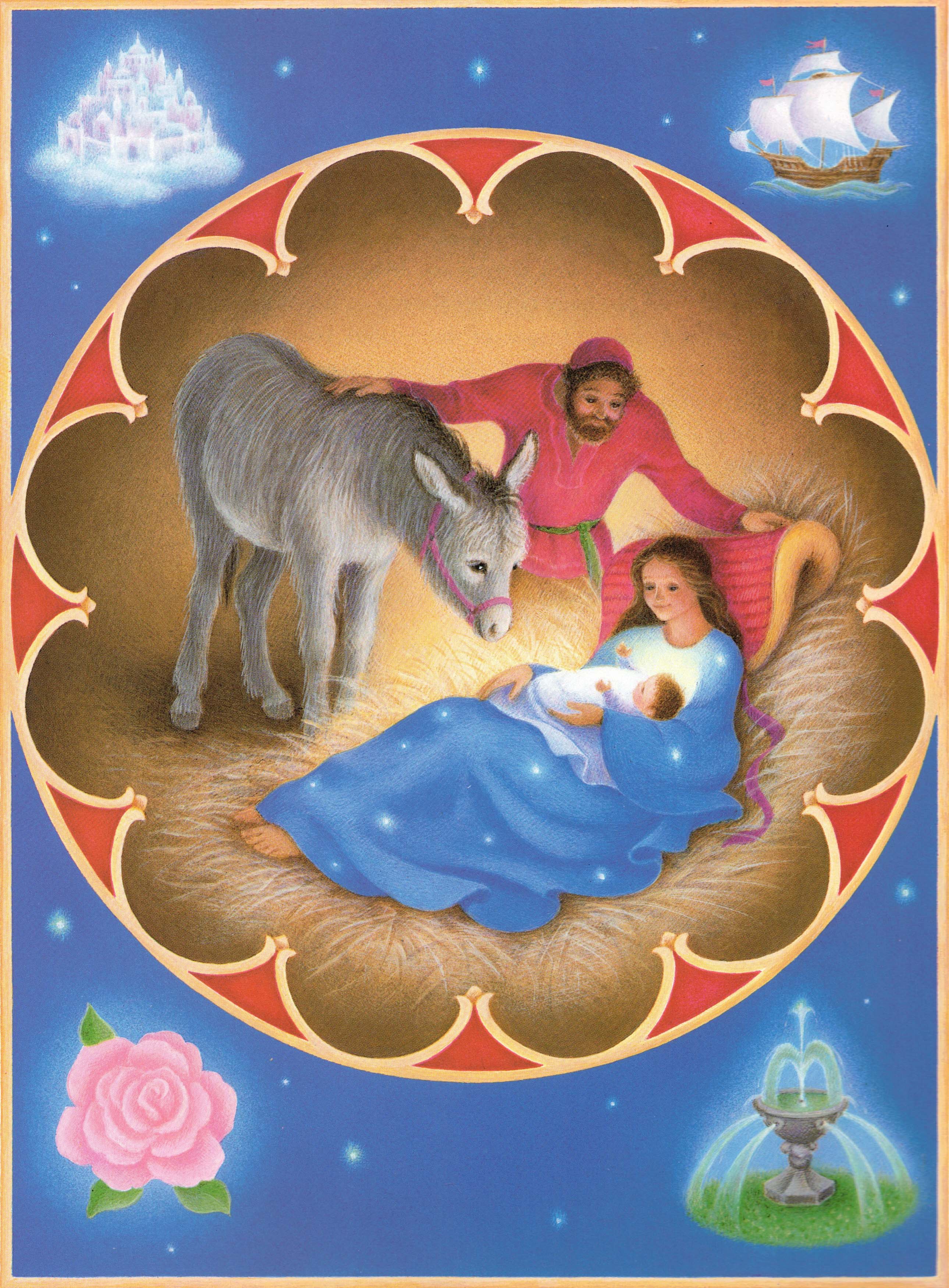
Together they went inside the cave, where they lady lay
on a bed of hay. The donkey’s saddle was her pillow.
She smiled. “Come,” she said to the donkey.
“See what we have carried all this way, you and I.”
 . 
 . 
And suddenly, the donkey was not
tired anymore, though he had carried
a city, a ship, a fountain, a rose,
and all the heavens on his back.
 . 
❦ ❦ ❦
 . 
The Donkey’s Dream, written and illustrated by Barbara Helen Berger; Philomel Books, New York NY; © 1885 by Barbara Helen Berger
 . 
 . 
Merry Christmas, Maya! (Michael & Diane, too.)
 . 
❦ ❦ ❦
 . 
IMG_7952
 . 
 . 

Read Full Post »

 . 
[with 3 poems by John Amen]
 . 
Ode to Country Music
+++ after Sparklehorse
 . 
I come from men who shoveled reserve for a living.
Who needs the wings of communion?
The veindrain of forgiveness?
Las night, my drowned brother paused at the fence,
parties his lips to sing, then vanished,
a shy oracle leaving a trail of mud
in the yellow leaves. the world
has always been broken or breaking,
&who can say whether loss or contentment
is the heart’s lifeblood. Who can say
whether time is bored or ambitious. Who’s
beyond reloading, firing a prayer into the long night?
 . 
John Amen
from Dark Souvenirs, NYQ Books of New York Quarterly Foundation; © 2024
 . 
❦ ❦ ❦
Who can say whether time flows, one long line cast downstream with the current? Who can say time streams unbroken and we can ride that roller that curls but never crests? We don’t know, we aren’t paying attention, we don’t even feel the tug until we try to stop and look around, try to see what brought us here and where it’s taking us next. Then, if we’re honest, we confess we don’t know anything about time, especially this one particular moment of time. All those past times and all those future times keep roiling our mind like a pebble caught in the mad froth beneath a waterfall, hard edges knocked off until every pebble looks like every other pebble. How do we get back to sharp?
 . 
Who can say time is not clots and frags and whirling pieces, uncoupled and festinating like an old man with one leg shorter than the other? Who can say those sharp chunks of time won’t break open right in front of us over and over and each time we will fall into them from a different angle? Time can be a hard-jawed mastiff that won’t let go of our leg. Time can be a poem that isn’t afraid of the truth and will overtake us no matter how swift we may think we run.
 . 
Dark Souvenirs will break open right in front of you, every time a different angle. Dark Souvenirs will get you back to sharp. John Amen’s poetry is a can of broken glass shaken and scattered across the pavement. The splinters draw blood if you touch them but you can’t manage to hold yourself back. The shards are dull and bright, clear and clouded. Piece by glittering piece they begin to reveal a pattern that skips and stretches across time. The writing of these poems must be a last ditch bid to make sense; the reading of them and re-reading is to join the travail. As Amen himself says in Waiting for the Sibyl who never shows her face: For years I’ve studied the shadows that lurk behind a curtain, listening for a voice in the rafters. . . . I’ve made it my life’s work to put words in her mouth. Time, jagged wrenching unrepentant time can’t save us, but words can try, and sometimes with light to spare.
 . 
 . 
❦ ❦ ❦
 . 
Days of Love & Horses
 . 
That Memorial Day when I was nine,
the demon leapt from my father’s hands.
My wax-paper mom crumpled in the kitchen,
surrounded by coffee mugs. All June & July,
trailers, U-hauls, our house was gaveled
into smoky embers. I kept flying Emily, though,
my Morgan with the milky left eye, surging
above the hospital, courthouse, labor camp.
++++ These days I rarely see a horse,
but that smoldering August
before the glow turned to ash,
I found myself lost in Scriven’s Holler,
toeing those dinosaur traps in the jimsonburr.
Emily carried me through Jones’s Gulley,
past the gray & yellow farms, night crashed
as we reached the dilapidated barn.
++++ Years later, May ‘99, IC unit on the Oconoluftee,
I grabbed for rocks, branches, craving subsided.
Sprawled on a grassy bank,
I dialed three exes, apologized
for stampeding through their sober lives.
A friend had warned me not to expect sorrys in return.
Good thing, I didn’t get any.
++++ Recently in a restless dream, I beheld
that familiar kitchen. My wife hummed the national anthem,
frying slabs of meat in a Mississippi wok. I crawled the floor,
gathering the coffee mugs, & woke to the canter of rain.
++++ I haven’t climbed a saddle in decades,
but when sleep eludes me, skull
throbbing with twisted math & phantom schemes,
I pretend I’m atop my loyal Emily,
we’re stranded in a minefield, blind beneath moonless sky.
I squeeze my thighs against her mahogany loins,
bury my face in her mane.
The champing in my belly calms, dawn returns,
the jumps I need to clear don’t seem as insurmountable
as when the world is smothered in darkness
We make it home again, with light to spare.
 . 
John Amen
from Dark Souvenirs, NYQ Books of New York Quarterly Foundation; © 2024
 . 
❦ ❦ ❦
John Amen is founder and managing editor of Pedestal Magazine. His five previous poetry collections include Illusion of an Overwhelm (NYQ Books), which was finalist for the 2018 Brockman-Campbell Award of the North Carolina Poetry Society. Many of the poems in Dark Souvenirs explore addiction and recovery. A moment that recurs is John’s brother Richard’s suicide. Reading the book cover to cover in sequence one enters a mystical landscape without pathway or signpost, where time makes its own rules and where meaning gradually but persistently accrues as if percolating up through the floorboards of the subconscious.
 . 
Purchase Dark Souvenirs from the publisher, New York Quarterly Books.
 . 
 . 
So is time a continuum or is time quantized? Is it a silky thread or pieces? Is there a smallest finite particle of time of which all emergent time is an integer multiple? Is time even real, or is time simply a perceptual phenomenon, an illusion our consciousness creates to make sense of the quantum reality utterly beyond our perception or comprehension?
 . 
No one knows! But you and I certainly know how time refuses to be shackled or delimited in dreams, and when we awake we know that moments supposedly separated by vast measures of time crowd in close and overwhelm. Only poetry can corral and release time, its sharp jab in the ribs, its clutch around the heart, its cool hand on the forehead. With wary reluctance and a shudder I say this to time – Welcome!
 . 
 . 
❦ ❦ ❦
 . 
Dark Souvenirs
 . 
I studied your craft,
how you drove the demon of gluttonous age
from his hiding place,
freeing the infant who starved for 84 years,
pang & its host
dismantled with a single twitch.
Little mess, little clean-up,
nailbrush, toothbrush, soapy sponge.
No mention in the real-estate ad,
the previous owner’s
impeccable marksmanship.
No way to preserve your opus,
air that still trembles,
trying to catch its breath.
Memory does its best
to salvage a keepsake
– pulp, bullet, bone,
a new constellation in the night sky –
but symbols are lost,
art fails, except as it screams at the dead.
I hope what remains of you
can recognize my voice.
 . 
John Amen
from Dark Souvenirs, NYQ Books of New York Quarterly Foundation; © 2024
 . 
❦ ❦ ❦
 . 
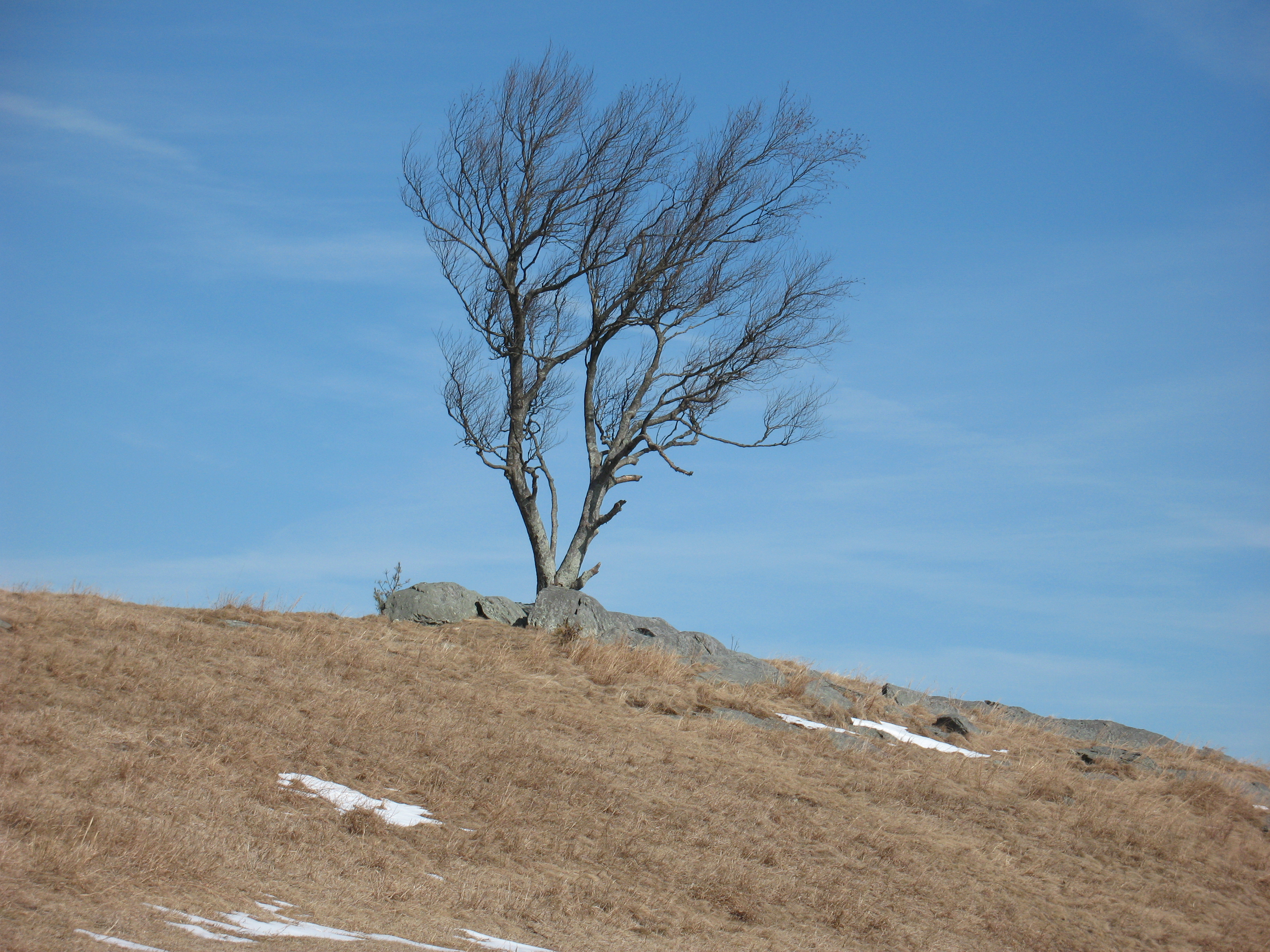
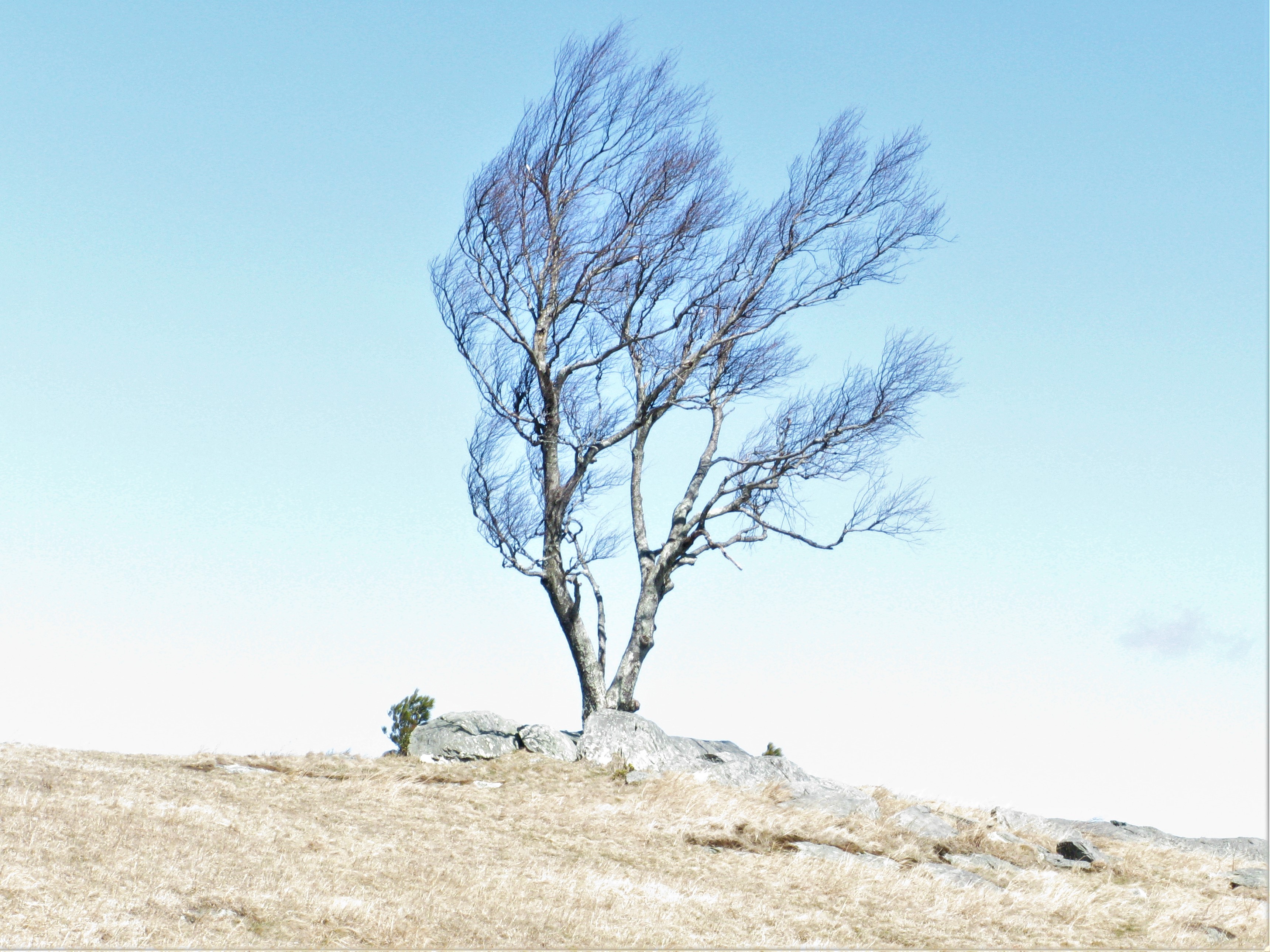
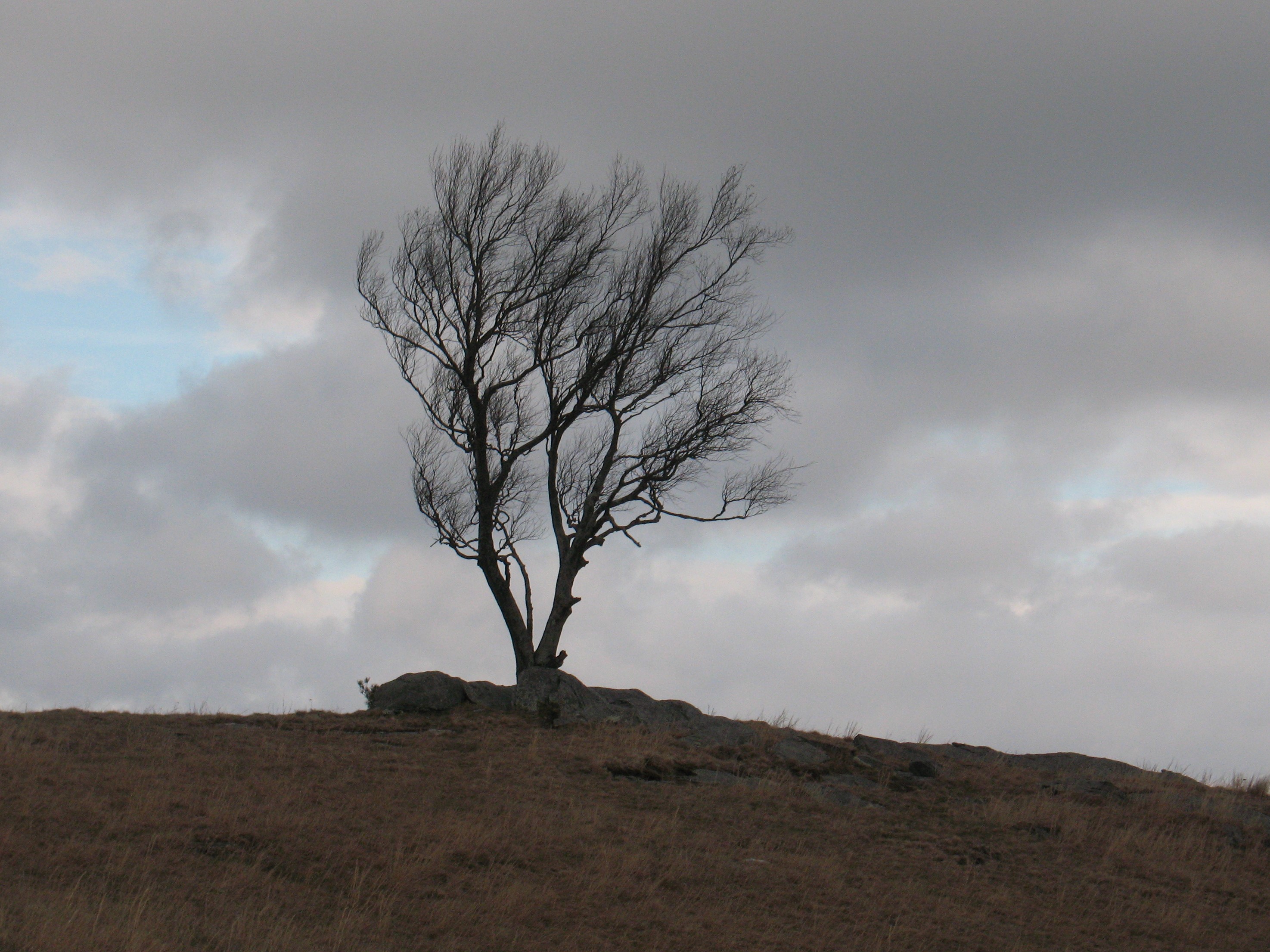
Doughton Park Tree 2020-03-07
 . 

Read Full Post »

 . 
[with 3 poems by Cheryl Wilder]
 . 
Anything That Happens
 . 
Until I was twenty, I believed anything
wouldn’t happen to me.
 . 
Walking from the car,
leaving you behind,
 . 
sirens whining louder as they closed on us;
I didn’t understand anything
 . 
had just happened.
People said it wasn’t my fault
 . 
and for reassurance,
It could have been me. But
 . 
I heard what they didn’t say.
I’m so glad it wasn’t.
 . 
Cheryl Wilder
from Anything That Happens, Press 53, Winston-Salem NC; © 2021.
 . 
❦ ❦ ❦
 . 
It’s 1990 and my kids are cruising toward teenagerdom. Every week in the throw-away medical journals that cross my desk there’s at least one article with a title like We Never Even Suspected, or Why Me? The doctor or doctor’s spouse laments about their teen who is (pick one): flunking out of college; a closet alcoholic; pregnant out of wedlock; addicted to Percocet. That becomes the one article I am compelled to read before assigning the journal to the round file. It’s a solid principal of statistics: if it happened to them it’s that much less likely to happen to me.
 . 
Because today in 1990 my kids are, well, not perfect but above average. They are so good. And I am so good. Whatever that other doctor did to cause his child to go wrong, I would never do that. Because somehow at this interchange along the cosmic highway I am totally in charge of (and totally to blame for) all the choices my kids are making and will make.
 . 
And responsible, of course, for all the rest, now and forever after. Are my parents happy? Is my wife fulfilled? Are my grandkids smart? Is there crabgrass in the flower bed? (Well, maybe I am responsible for that one.) Don’t worry, I am not poised here to write an article titled Everything That Would Have Been Better if I Were Better. That’s between me and 4 AM.
 . 
Instead, I’m attempting a more compelling practice. A practice without textbooks or certification exams. One that requires nothing but offers everything. A practice never free from pain but sometimes tinged with joy. All that this practice endeavors is to prod a slight change in phraseology, poke a minor shift in frame of reference. When I learn of your misfortune, when you tell me about your pain, when I recognize that you are suffering, I will try my best not to say to myself I’m glad that isn’t me, and instead I will say, That is me.
 . 
 . 
❦ ❦ ❦
 . 
Xing
 . 
I don’t know how I brought a child
into the world when I can’t reconcile
 . 
if crashing a car and a friend’s skull
is karmic debt created
 . 
or payment for a past immoral act.
I open doors and say thank you and do not try
 . 
to behave in a way I cannot afford.
There’s no barometer, no way to know
 . 
if the pendulum is swinging
away or toward, how many pay-it-forwards it takes
 . 
before I break even at the gambling table.
I cold blend in with the pure
 . 
if it weren’t for the scars that don’t fade
no matter how many turtles I save,
 . 
so am I all that surprised
when my little boy tells me
 . 
of his palpable fear
to cross the street.
 . 
Cheryl Wilder
from Anything That Happens, Press 53, Winston-Salem NC; © 2021.
 . 
❦ ❦ ❦
 . 
Sostenuto – a musical notation indicating a passage sustained to the utmost. Unrelenting. Imagine a violin’s piercing note, almost impossibly high and rising, horsehair glissando across the E-string. Now it’s joined in harmony by the A-string, discordant, the two dancing and warring with each other. They weave pitch and volume but never rest, sostenuto. You lean forward on the edge of your hard seat, your teeth are on edge, you want, you need, you crave desperately some resolution.
 . 
Cheryl Wilder sustains tension throughout sixty-four pages to the ultimate climax of Anything That Happens. Her story is too piercing: one tastes blood and tears. She lives every moment with that high, sharp note, days and years of guilt and pain – she has irretrievably damaged her friend – and then also weaves discordant disharmonies from her cold relationship with her mother and her non-relationship with her father. More than once I had to lay the book aside and breathe deeply to slow my pounding heart.
 . 
And more than once I resisted the urge to flip pages to the end. Who doesn’t crave resolution? What follows in this post today is the book’s penultimate poem. Some hurt can never be removed. No one can return to the moment before anything happens. Scars are just that, permanent marks and reminders of pain. How do any of us go on living? How? I invite you to enter the music of this book, its atonality and discord, one poem after another, until you reach its final page.
 . 
 . 
Anything That Happens by Cheryl Wilder is a Tom Lombardo Poetry Selection and is available at Press 53. Among other awards, the book was a finalist for the 2022 Brockman-Campbell Award of the North Carolina Poetry Society; read an additional poem from the collection and celebrate 90 years of NCPS HERE.
 . 
 . 
❦ ❦ ❦
 . 
Home Safe
 . 
Friends visit the hospital
where I am not wanted. It’s just as well
 . 
that I stay in bed, carve poplar
into a shield I can place between
 . 
myself and others, learn you wake
from a coma by the drop
 . 
of my manslaughter charge. Years pass
before I hear your voice again,
 . 
asking me to lunch over the phone, your mother
telling me I am only allowed in her home
 . 
because you found my number
on your own. You reach for my arm
 . 
to steady your walk, lean close
to see me in focus, your smile wide
 . 
on one side of your face, brightened even more
at the restaurant when you flirt with the waiter.
 . 
That is enough, to see a glimpse of the friend
I once knew, but then you reach cross the table
 . 
for my hands, look at me to say
what you defied your mother to say,
 . 
It’s not your fault. Over and again,
I forgive you. You can’t remember
 . 
the night I cannot forget, but you know
your words are my salvation.
 . 
There is no talk of next time.
You get out of the car and walk
 . 
into the house, back to your mother
who can breathe once again.
 . 
Cheryl Wilder
from Anything That Happens, Press 53, Winston-Salem NC; © 2021.
 . 
❦ ❦ ❦
 . 
Doughton Park Tree 2017-03-06a
 . 

Read Full Post »

« Newer Posts - Older Posts »