Feeds:
Posts
Comments

Archive for the ‘poetry’ Category

[with 3 poems by Brad Strahan]

Though faces fade as years fly past
I raise to you this parting glass.

What shall we keep when the house has shed its bustle and the clock makes known its ticking from the next room? Bright paper discarded, plates stacked, car doors slammed as farewells spiral out into the cold, biting, stark? What shall we keep when not presents but this present settles itself again into the chair beside us, all its remarks past uttering?

My hands in the suds, Linda passes me crockery and remarks, “I wonder what the next year will be like.” “Different from this one,” I say without thinking, but then I start the tally. What gloom do I hope will not be repeated and how shall I number the gathering portents that threaten? Whoa, there. Why does it slip in so easily, no effort at all, this brooding on past troubles and fretting about some foreboding future yet unseen?

Share in the closing refrain from the Irish folk song, “The Parting Glass”:

But since it has so ought to be
By a time to rise and a time to fall
Come fill to me the parting glass
Good night and joy be with you all!

I have no resolutions; so little of this past year seems resolved. I have responsibilities and unfulfilled tasks and hovering demons aplenty, but let us pause a moment in this rare quietude to let the little mice of joy creep in from the corners. A young girl’s laughter, a little boy’s raised eyebrows, an afternoon walk with a teenager grown suddenly voluble, a recollection shared with a beloved companion – there is time enough to fall, time enough to mourn, but time as well for a smile if we but make it so. What we keep and what we carry – may they rest light upon our shoulders tomorrow.

❦ ❦ ❦

What Shall We Keep?
(a moment in Ireland, where the world ends)

And the answer that comes back
is the wind off the Irish sea.
Not to be, not to see,
beyond understanding.

This damaged flesh we hold,
a fortress against nothing,
like the ruined Viking towers;
exclamations left
after the words are erased.

Should we care what wind blows
our dust into tomorrow?
Could we feel the rain
that washes clean the green face
of this unsceptred isle?

Would we matter when
even our names are washed
clean as the stones in those
abandoned churchyards?

Somehow, blessed between green
and gray; sometime, bound between
the blaze of Fall and white Winter
I have loved you and maybe
that is answer enough.

Bradley R. Strahan
from A Parting Glass, BrickHouse Books, Baltimore, MD; © 2014 Bradley R. Strahan

plant, trail

❦ ❦ ❦

“A remembrance of Ireland” is how Brad Strahan describes A Parting Glass, his collection inspired by a year in Mallow, County Cork. His wife Shirley had “filled the long-vacant post of organist” and in addition to the congregation of St. James, Church of Ireland, they were welcomed into the community of poets. These fourteen poems are themselves a spare congregation, the lines spare, reverent, musing, and infused with the philosophy of rain-washed green island and mossed stones in ancient churchyards.

Fitting and more than fitting are these poems for the final few days of another roiling storm-tossed year. These are the days when we plant our feet and hope to feel what anchors us to the turf before the next year launches forth, uncertain, yes, but bright and hopeful for what it may discover. This is the reckoning, the nod of acquiescence when my grandson calls out to me, “Old man!”, the acceptance that a new year is no newer than any day which begins with taking another breath.

Read these poems in the warm companionship of ghosts that welcome your presence. Read and find company with the distant traveler and the warm hearth. With days of green and gray passed, passing, yet to pass. Raise your glass, all of us raise our glasses to the joy that may find each one.

❦ ❦ ❦

Hymn

Winter, solid to the bone,
melts in the music.
Colored light pearls
the faces in the wooden pews.

The news, good or bad,
has no foothold here.
The cold rain and snow
vanish in a flame of song.

Here we robe our tarnish
in vestments of harmony:
snow crystal bells
and a storm of organ-sound.

Here we are, not what we are
but what we would be,
notes on a purer staff,
leaning hard from brass to gold.

Bradley R. Strahan
from A Parting Glass, BrickHouse Books, Baltimore, MD; © 2014 Bradley R. Strahan

❦ ❦ ❦

A Book of Common Prayer
(St. James Church, Mallow)

Let me not for the flowers
by the altar placed.

Let me not for the windows
that gleam with grace.

Let me not for the music,
simple voices raised.

Let me still recall
the goodness that amazed

though nothing follows
being in this state of grace:

no more smiles, no more roses
and none there to embrace.

Bradley R. Strahan
from A Parting Glass, BrickHouse Books, Baltimore, MD; © 2014 Bradley R. Strahan

❦ ❦ ❦

NOTE: if you would like to purchase a copy of A Parting Glass from Bradley Strahan, please comment on this post or email me at comments@griffinpoetry.com.
++++++++++++++++++++++ Thanks! — Bill


❦ ❦ ❦

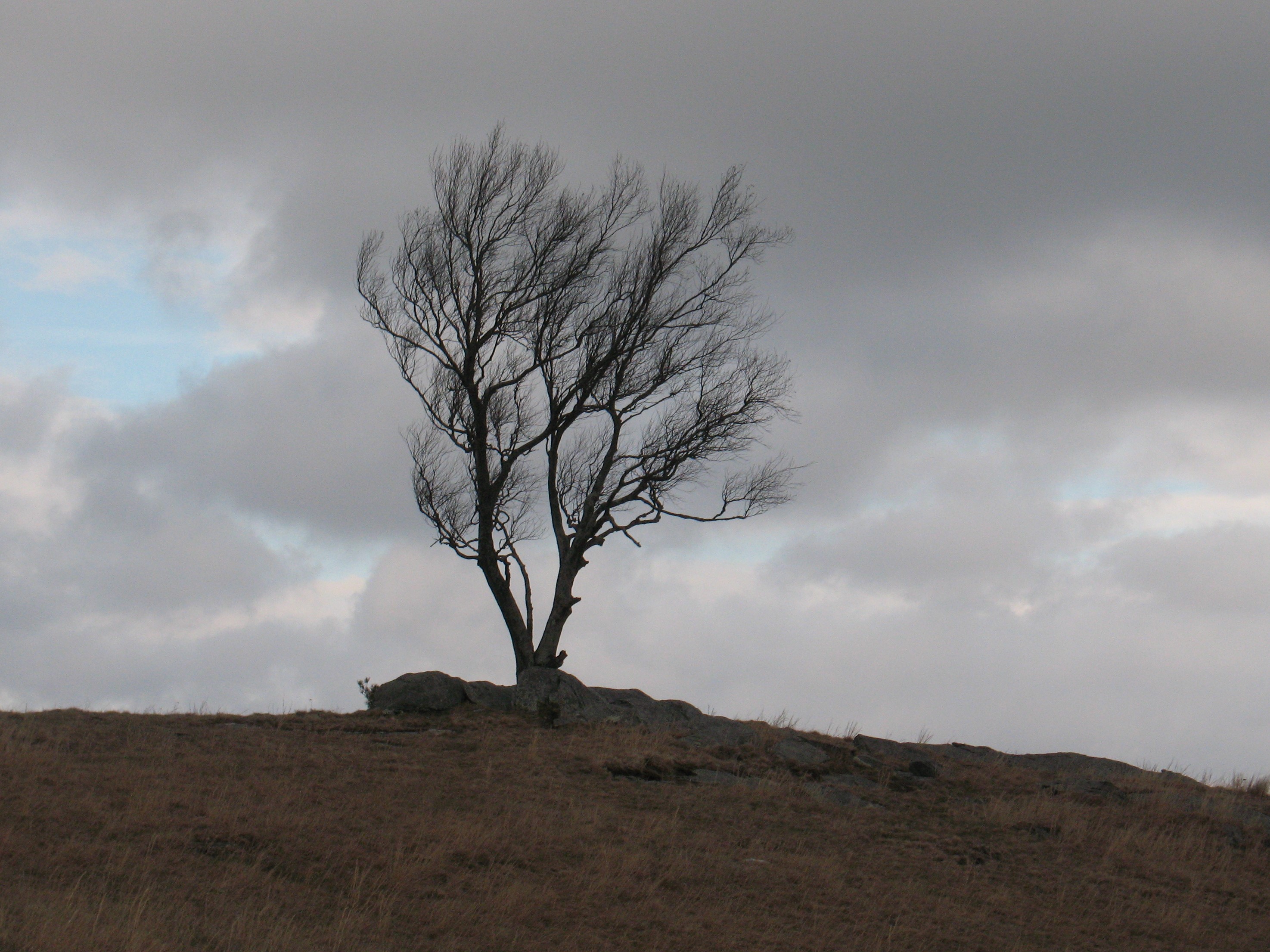
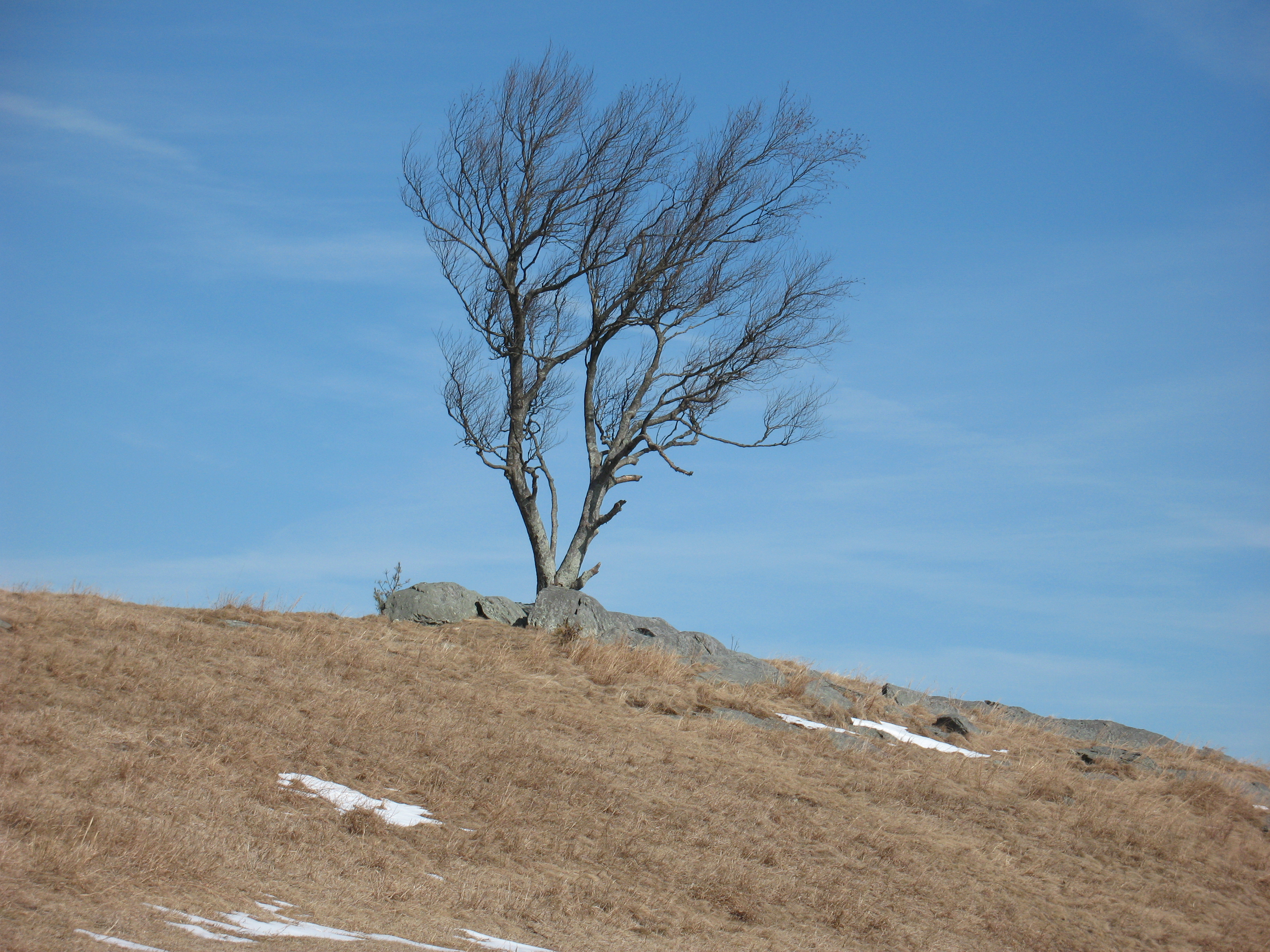
2017-03-06a Doughton Park Tree

Read Full Post »

Lessons & Carols

Linda and I opened our favorite Christmas present early. In November, our friend and fellow vocalist, Rebecca, had invited us to sing with her choir for their Festival of Lessons and Carols this fourth Sunday of Advent; their small group was dwindling in size and they had no tenor. Becky is a director of deep sensibility and infectious joy, and her husband Eric is a virtuoso organist and musicologist. If a naturalist is someone overcome with wonder at the organization and life history of tiny wildflowers and beetles, then a musicologist is one who discovers wonder and creates joy in the ecology of music.

The Lessons are a series of readings from Old and New Testament that reveal God’s presence in the world: creation; prophecy of the Messiah and the promised kingdom of peace; the arrival of Immanuel, God With Us. Each lesson is punctuated with music, the Carols. For this year’s service, Eric compiled a sequence of early American hymns and folk tunes, melodies that were once on every tongue but through the decades have largely fallen from familiarity and favor: Shape Note, Shaker, Appalachian, Moravian. We practiced, we rehearsed, and on Sunday morning with the Corda String Quartet and thundering pipe organ, we sang.


❦ ❦ ❦

THIRD LESSON: The king is coming and will usher in a reign of justice for the poor and peace for all of God’s creation. There shall come forth a shoot from the stump of Jesse, and a branch from his roots shall bear fruit. (Isaiah 1:1)

Behold a Lovely Vine
. . .
Shall feeble nature sing
and man not join the lays,
O may their throats be swell’d with notes
and fill’d with songs of praise.
. . .
++++++ Jeremiah Ingalls (1764-1838)

If nature itself sings the praises of earth and all it holds, how can we help but join in? Lays are medieval ballads, songs sung by minstrels. This hymn from 1805 retells Old Testament prophecies using metaphor and symbolic imagery. Interwoven is the theme that Nature fulfills its purposes and exists in harmony with the flow of creation. May we humans hope to be restored to that same harmony and oneness? Nature may become our “spiritual training ground.” Poetry and song throughout the 19th century reflect this vision of the perfection of nature as an example for humankind, as in the book length poem Wilderness and Mount by Ellen T. H. Harvey:

Here is the field: the insects in the grass
Sing praise as by their little tents we pass.
They are in harmony with all God’s move:
Ah, why can man do any less than love?

++++++ Ellen T. H. Harvey, 1872

Observation, identification, contemplation: is it possible that these insignificant grasses and insects reveal wisdom? Is it possible that I might see past the fractures and trials of my daily preoccupations to discover a truer purpose? To love?

❦ ❦ ❦

NINTH LESSON: John unfolds the great mystery of the incarnation. In the beginning was the Word, and the Word was with God, and the Word was God. (Gospel of John 1:1)

Surely at my age, threescore and ten, I have discovered my life’s purpose. I have degrees in biochemistry and medicine; I’m a trained and certified naturalist. Where is God in all of this? Where is the natural theology that integrates quantum reality and molecular genetics and the transcendent experience of oneness with the universe?

Word – Logos – is intrinsic and essential to every atom and its component quarks, to nucleic acids infinitely recombining, to each minute dust-like spore of the luxuriant fern, to tangles of neurons from whose organized chaos arises thought. Word is that which calls us; that which explains and enlightens; that challenges and assures; that speaks the inchoate and expresses the ineffable, uncreated and continuously creative.

Word is the beak of the finch and the long tapered nectary of the orchid. Word is Hawking radiation and Planck’s constant. Word is the affinity of carbon to bond with nitrogen, oxygen, hydrogen, and most wonderfully of all with itself. Word is the specific heat of water which permits a planet the proper distance from its star to moderate its climate.

Where is God? In all of this. There is nothing that is not God.

We have words, paltry words, but we use them the best we can to express Word. Sometimes we call it poetry – non-linear, condensed and rarified, transcendent. Ponder the individual words and they scatter like grains of sand running through your fingers. Cup them and hold them whole, lift them on the wings of music, organ and strings, melody and harmonies. In this fullness and flow of words we might hope to experience Word.

A crescendo sung by a choir – a goldfinch plucking down from a thistle – a speck of grey-green lichen on a metal post: O may our throats be swell’d with notes!

Behold a Lovely Vine

Behold a lovely vine
her in this desert ground;
the blossoms shoot and promised fruit
and tender grapes are found.

It’s circling branches rise
and shade the neighb’ring lands;
with lovely arms she spreads her arms,
with clusters in her hands.

This city can’t be hid,
it’s built upon a hill;
the dazzling light it shines so bright
it doth the vallies fill.

Ye trees which lofty stans
and stars with sparkling light;
Ye Christians hear both far and near,
Tis joy to see the sight.

Shall feeble nature sing
and man not join the lays,
O may their throats be swell’d with notes
and fill’d with songs of praise.

Glory to God on high,
for His redeeming grace,
the blessed Dove come from above
to save our ruined race.

++++++ Jeremiah Ingalls (1764-1838)

❦ ❦ ❦

And of course the most important and utilitarian facet of the word Lays is that it rhymes with Praise.

Thank you to Central United Methodist Church, Mt. Airy, NC.
Thank you to Rebecca Cook – she lifts her arms and we raise our voices.
Thank you to Eric Cook, master of multiple manuals, for devising this inspiring program and equal thanks for his copious and enlightening notes.

Ellen H. T. Harvey, Wilderness and Mount: A Poem of Tabernacles. John Bent, Publisher; Boston, 1872.

Brett Malcolm Grainger, The Vital Landscape: Evangelical Religious Practice and the
Culture of Nature in America, 1790-1870. Doctoral dissertation, Harvard Divinity School (2014).

❦ ❦ ❦

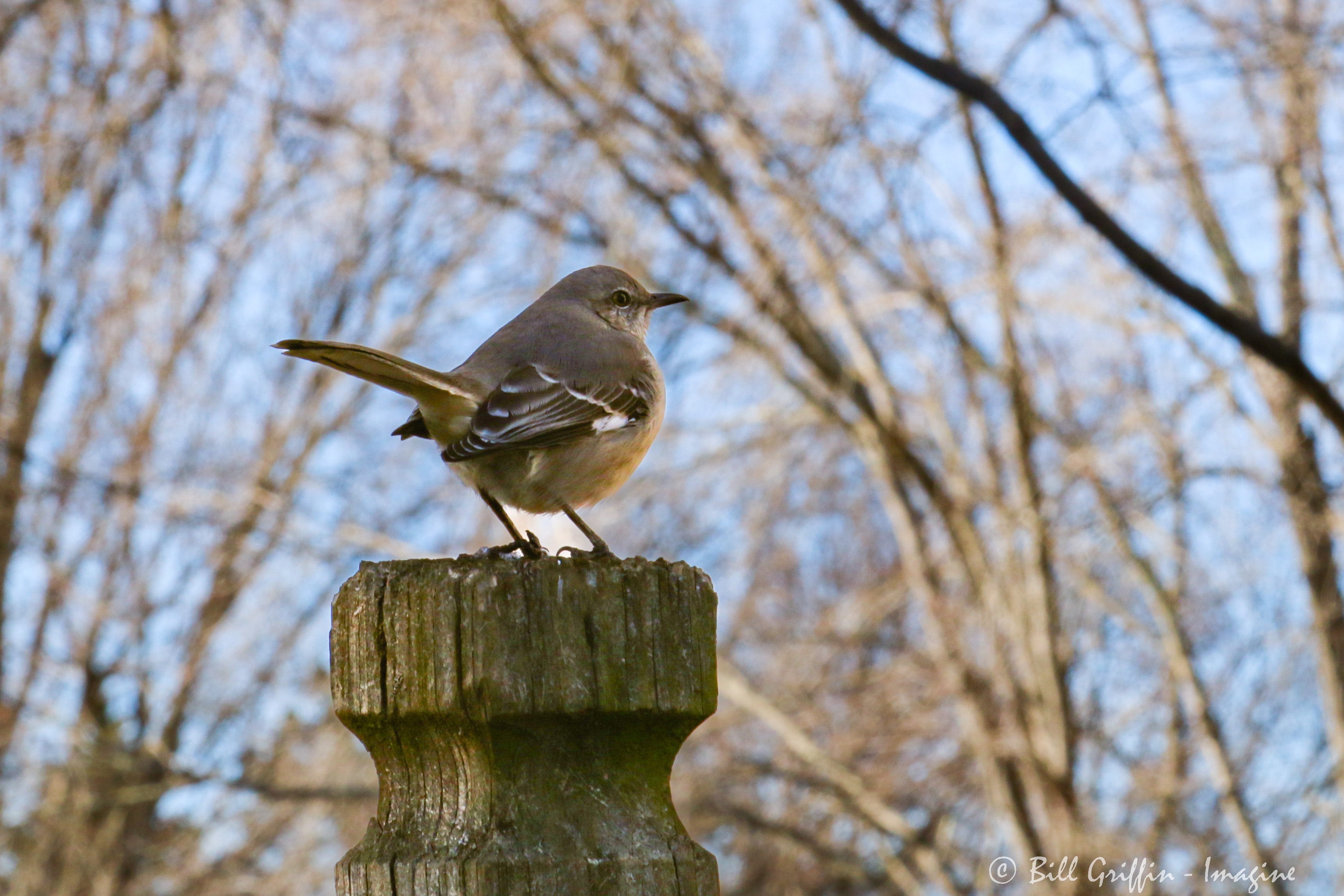
IMG_7952


Read Full Post »


[with 4 poems by Joan Barasovska]

In just a few days our home planet will reach that point in its yearlong circumsolar peregrination at which it will feel the maximum effect of its 23 degree axial tilt off the perpendicular. In other words, today is way too close to the solstice for us to have waited until 3:30 to begin our 5 mile hike.

Byrd’s Branch to Grassy Creek and out to the far terminus of Forest Bathing: when we turn at last to retrace our steps we see that the shadows have lengthened into no shadows at all. Splitting the utter stillness as we skirt Klondike Lake, fifty geese suddenly spook and lift and wheel over us. The urgency of their wings is the sound night makes when it is falling too fast. As we leave the creek and climb up from the shadowy vale, we do regain a bit of skyglow from the western horizon, that thin chill winter platinum that can’t penetrate between the gray trunks closing around us but which persists in the pale leaves covering the path. Light still leads us on.

Serenely quiet here. No breath of breeze, no quarreling crows, no road noise. The squirrels have hushed their startled rattling up the hickory trees. We can’t see into the cloaked woods; we imagine we’re entirely alone until our last companion calls. A Towhee sings his plaintive two-note motet, his mate answers, and they ferry us along the trail.

Here’s the road crossing, isolated rural lane. Only another mile to our car – a mile through Mr. Byrd’s close-planted white pine woodlot. Shall I describe the pathway leading down into the embrace of those lowering dense-woven needled boughs?

It’s dark!

❦ ❦ ❦

Sore Throat

The best light in our rowhouse on St. James Street
is from the tall front windows in the living room.
I wait by the window in my pajamas for Dr. Barol
to ring the doorbell and for his jolly voice.
I’m to sit on the piano bench where he can see best,
his black leather bag beside me, its jaw wide open.
He stands above me in horn-rimmed glasses and bow tie,
shakes down the mercury in his glass thermometer.
He tells me to say AH and says, Open wide.
My tonsils are infected again, he tells my mother.

I want him to convince her to pity me.
Tell her I must stay in bed for a week.
Tell her to be nicer when she talks to me.
Don’t tell my mother that sickness
is what I crave most of all.
I’m sure he can tell. He’s shined a light
in my throat and ears so many times
he must know my trick.
I’m a little girl who believes she can
make herself sick just by being sad.

The nurse at school, Mrs. Marx, knows me well.
She rolls crinkly paper down the padded leather
table so I can rest with her if no one else is there.
She plays the opera music she loves on her radio.
I know she knows my secret, but maybe
she forgives me. From the bottom of my being
I want the gentleness that only sickness gets you.

But it doesn’t really work that way.
My throat is so sore. My mother’s angry
that I’m sick again. She has too much to do.
She makes me Cream of Wheat
with brown sugar. She pours medicine
from a brown bottle into a spoon.
She takes my temperature, gives me baby aspirin,
puts cool washcloths on my forehead, changes
the sheets. She does all that she should do.
I need what I can’t name.

Joan Barasovska
from Orange Tulips, Redhawk Publications, The Catawba Valley Community College Press, Hickory NC, © 2022

❦ ❦ ❦

Darkness. It creeps to overtake you whether you mark its arrival or not. Once surrounded, engulfed, overwhelmed, you may imagine that the darkness is all. That there is no way out, that there is nothing other than darkness.

Joan Barasovska’s Orange Tulips, a memoir in narrative verse, is a path into darkness. The world of this girl child opens with joy but already hints of inexplicable sadness; the adult journeys through suffering, doubt, pain, the wrenching temptation of hopelessness. Despair is palpable.

But no life is a single arc. There are many stories and their outcomes are not foreordained. An unexpected door may open into light. The arc of another person entwines with our own and we are touched, changed. As memoir, Joan’s story begs to be read cover to cover, front to back in a single sitting. I am lifted into the promise of light by the possibility of healing and redemption in its final pages. I am finished with the book, but it is not finished with me.

❦ ❦ ❦

1963

I’m a merry Girl Scout in green uniform
and felt beret. My troop is walking east across
the Schuylkill River Bridge. It’s an old bridge,
prickly sandstone under our palms.

You can sit on the ledge if you’re brave.
You can stand on the ledge if you’re foolish.
We look between the columns way down ito the water.
How deep is it? Miss Kelly doesn’t know.

What I care about, in one breath, is the impact of a fall.
The magnet of the gray river. The sick.
I don’t ask Miss Kelly why people jump.
She knows about hikes, knots, campfires.
Starting today, I’m the authority on jumping.

Merit badges, saddle shoes, jokes I am famous for.
I am nine, maybe ten.
Now I have a secret so strong it makes me dizzy.
On my honor, for God and my country,
it’s 1963 and I have fallen down.

Joan Barasovska
from Orange Tulips, Redhawk Publications, The Catawba Valley Community College Press, Hickory NC, © 2022

❦ ❦ ❦

All Wrong

Done so many things wrong
I don’t know if I can do right.
+++++++++++++ – Tracy Chapman

The built world defeats me.
My apartment, the building
where I answer phones,
the sidewalks I walk on,
have all done great things
to my nothing at all.

If I were in charge
this city would be empty,
wind blowing soot.
Just look at me!
A shandah, disgrace,
such a smart girl,
dropout, breakdown,
breakup, crackup.

I am twenty.
I read long novels.
I walk and walk.
I only feel well
on trains and buses.
I draw odd diagrams
in small books.

I don’t wonder
why I’m done for.

I only want to be
as useful as a sidewalk,
to hammer one nail straight.

Joan Barasovska
from Orange Tulips, Redhawk Publications, The Catawba Valley Community College Press, Hickory NC, © 2022

❦ ❦ ❦

The Day I Walked on Fire

it wasn’t fire
it was gingko leaves
the sun lit them yellow
they were juicy with heat

the day I walked on ginkgo leaves
I imagined they were fire
that my shoes were melting
that my feet were burning

and I felt no pain
on that autumn day
when I burned to be
a holy woman

Joan Barasovska
from Orange Tulips, Redhawk Publications, The Catawba Valley Community College Press, Hickory NC, © 2022

❦ ❦ ❦

2017-02-11 Doughton Park Tree

Read Full Post »

« Newer Posts - Older Posts »