Feeds:
Posts
Comments

Archive for the ‘family’ Category

 . 
[with 2 poems by Catherine Carter]
 . 
Crow cosmogony
 . 
The day we made the world, scattered
shattered sand across the deep
steeps and hollows of the sea,
we were playing with chance,
a stance few other gods admired.
We retired then from creation and let things
sing as they would, go
to whatever end luck called good.
We could, and did, breath in a platypus here,
a shearwater there – evolution
our solution to dogma and fate,
the weight of always being in charge
of stars, shoals, plague, all that –
but by and large, we let go, let
sweat and thought fall away,
stray like questing possums
or blossoms of blown snow.
So it was. We didn’t worry how
our sowing would grow. We went back
to hacking with our thick
black bills at death and waste, harrying
carrion, even as the dead
bled ever more numerous over the new
true-straight roads, here
where we shaped the bright turns
and returns of the world, invited
night in: do that, and you get
what you get. Despised
as flies, we pick through pale grass
for carcasses gone flat and dry;
we rise under your very wheels
from meals scant and cold, bring
strings of gut back to our young. But so
goes the world, when you let it go,
throw yourself in its rolling motion, chance
chance: we live on broken squirrels
in the world we made this way.
 . 
Catherine Carter
from By Stone and Needle, Louisiana State University Press, Baton Rouge LA; © 2025; winner of the L. E. Phillabaum Poetry Award for 2025
 . 
 . 
❦ ❦ ❦
 . 
The postmark is 03-09-97. Linda found the torn envelope, letter inside, at the bottom of a box of mementos she’s still sorting from her parents’ home after their deaths over a decade ago. Dear Dad . . . It’s me writing to my father-in-law, the nuclear physicist. I’ve got an idea for a new story and I need your help. Dad French and I would sometimes share first drafts with each other, his hard science fiction that could use a cool breath or two of metaphor, my airy prose in desperate need of some fact checking. So here’s my pitch:
 . 
Imagine a craft traveling to Proxima Centauri, 4.25 light-years away. It’s under a constant acceleration of 2G for the first half of the voyage, then 2G deceleration for the second half. What would be its peak velocity at the mid-point? And how much time will pass for the voyagers relative to earth time? 
 . 
Relative is the operative word. Dad French was an Einsteinian guru. His favorite Saturday afternoon pastime was to lean back on the couch with a big yellow legal pad and work through the equations of Special Relativity. He felt that he had identified a flaw and was determined to elucidate (from the Latin, “bring it into the light”). The most I could understand from his explanations of time dilation is that any object, whether charged particle or self-aware being, as it approaches the speed of light experiences a slowdown in the passage of time. To me on that spaceship there’s no difference in the ticking of my clock, but if my buddy back on earth could listen in he’d hear an expanding silence between each tick and the next.
 . 
But big deal. Who hasn’t felt time speed up or slow down in certain situations? Man, last week was so busy it just flew by.  – or – I feel like I’ve been sitting in this waiting room for a week. We human beings are just rubbish at time. If you asked that charged particle, it would know to the femtosecond how long since it got spat out of the cyclotron. My perception of time, though, is all tangled with context and saturated with subconscious. Don’t even ask me how long I’ve been sitting here at this keyboard, much less whether a certain something happened five years ago or ten.
 . 
Which is why, when I wake up in the dark, I avoid looking at the clock. If I should still happen to be lying there with my brain in fifth gear when light begins to seep around the shades, when any hope of re-entry into the land of Nod is laughable, then I don’t want to know how long it’s been. I don’t want to know that I’ve just spent two hours on this inventory of all my faults and failings. Surely no more than a handful of ticks. Grant me the bliss of imagining I’m half way to Proxima Centauri at nine-tenths the speed of light and I have all the time in the universe.
 . 
 . 
Oh, and here is what else I found in that old envelope along with the letter: a Post It stuck to the page with these lines in Dad French’s handwriting.
 . 

Park French

 . 
❦ ❦ ❦
 . 
Choptank bluegills take part
in the creation of the world
 . 
You couldn’t say bluegills create the stream.
Torn from the stream, they choke
on blazing air. And yet. Those nests,
those few dozen shallow divots together
pocking the creek bottom in dimples
rich with sunfish generations: changing
creekbed, reshaping foundation.
That steady fan-flow of air-
bearing water over eggs settled among
the pebbles, ever so slightly changing
the river’s braiding and unbraiding. That labor
of life: the work to work
with the current as it is and yet
to change it just enough, to manifest
a place a little better for bluegills, co-creating
the world in concert with oxygen exchange,
tectonic motion, that smashed and gash-
edged hubcap pinning down an immortal
plastic bag, the gravity of the moon, whirligig
beetles inscribing creek-skin with runes
written in water, whatever God you say. Flood
of protestors in the street’s torrent, choking
on blazing air. A woman stirring cut
onions over heat, changing them just enough
to turn their burning tears to something
a little more sweet. Fingers moving the pen, the keys,
the lever, and the air and ground
of our lives ever so slightly shifting
in response, recreated (ever so slightly) anew.
The fearful fact: it matters what you do.
 . 
Catherine Carter
from By Stone and Needle, Louisiana State University Press, Baton Rouge LA; © 2025; winner of the L. E. Phillabaum Poetry Award for 2025
 . 
 . 
❦ ❦ ❦
 . 
What is left for us to believe in? What even matters? When hate is the day’s currency, those who can’t bring themselves to live on hate are emptied and cast aside. As if! Whatever. It’s all just relative, anyway. But stone is still stone, underfoot, under earth, under all, and if you rub the lodestone along the needle and suspend it by a thread, it will still swing north.
 . 
And so these poems. Crows and bluegills continue to create the universe and stirring onions in a skillet continues to make the world just that much sweeter. There is still truth you can pin down, categorize, calculate, and right alongside that truth is the truth of breath, discovery, awe. I am not afraid to say it, Catherine: you make me believe that even I matter. How could any of us walk through a world that smells a little of skunk; feel sun on our face while the grass turns that sun into sugar; tremble one moment at the closeness of death and the next moment laugh as life surprises us; travel these lines of verse into strange realms and incantations that transform into our own familiar muscle and blood and mind; how could we do all this and not discover that we matter and that this planet we love matters?
 . 
I believe. That there is still hope for us all. And for all that surrounds us.
 . 
 . 
Catherine Carter’s By Stone and Needle is available from LSU PRESS.
If you read one book of poetry this year, make it By Stone and Needle. These poems are comforting and harrowing, enlivening and enlightening. They are true.
I featured two additional poems from the collection at last weeks posting (October 10, 2025).
 . 
 . 
❦ ❦ ❦
 . 
 . 

Read Full Post »

 . 
[poems by Stephen Dunn, Robert Bly, Bill Griffin]
 . 
Circular
 . 
Daylight illuminated, but only for those
who had some knowing in their seeing,
and night fell for everyone, but harder
for some. A belief in happiness bred
despair, though despair could be assuaged
by belief, which required faith,
which made those who had it
one-eyed amid the beautiful contraries.
Love at noon that was still love at dusk
meant doubt had been subjugated
for exactly that long, and best to have music
to sweeten a sadness, underscore joy.
Those alone spoke to their dogs,
but also to plants, to the brilliant agreeableness
of air, while those together were left
to address the wall or open door of each other.
Oh for logs in the fireplace and a winter storm,
some said. Oh for Scotch and a sitcom, said others.
Daylight concealed, but only for those
fond of the enormous puzzle, and night rose up
earth to sky, pagan and unknowable.
How we saw it was how it was.
 . 
Stephen Dunn (1939-2021)
Shenandoah, Volume 52, Number 3; Fall 2002
 . 
❦ ❦ ❦
 . 
Josh has taught me how to spot a sourwood across the meadow along the treeline. Always crooked. Curved and arched, clutching branches and trunk like an old man’s spine, in medical parlance kyphosis. It must be because the sourwood is grasping at something always out of reach. Always overtaken by shadow but always trying to edge closer into the light.
 . 
When we bought this house in 1983 the steep back lot was choked with hickory and tuliptree; in front, two weighty red oaks flanked the door, centenarian sentries. A dogwood struggled in their shade and at the northern lot line one sourwood straggled out from under. Crooked! That first summer I noticed, of all the trees in leaf, only the sourwood labored with tent caterpillars, messy tangled webbing and bare patches chewed out of its foliage. I though maybe I should try to save old sourwood from its pests, but they were too high for me to spray and I had no spare cash for an arborist. Oxydendrum arboreum, you are on your own.
 . 
After Hurricane Hugo walloped the Appalachians in 1989, we cut down those two oaks that leaned two threatening meters from our walls and roof. At the base they were bigger around than oil drums. A few years after those monsters came down I noticed the sourwood, not standing any straighter but now stretching a new arm pure vertical, due upward, sunward. Another thirty years along and that sourwood is still making flowers in the spring, champion of honeybees, and still sharing its bright summer green with any and all itinerant webworms. The dogwood and redbud look up and pay homage from around its knees. But even with all the newfound light my sourwood remains crooked as hell.
 . 
Teach me the same lesson, Josh and Sourwood. Life ain’t ever going to get cobbled together perfect. Most mornings I have to claw through a web of nasty wormsilk before I can struggle up from sleep. Most days I’m noticing the weeds and cankers I haven’t yet yanked from my beds more than I’m noticing the asters’ spiral floret emerging or bumblebees’ shanks stuffed with pollen. Step back. Look again. Forgive the mess of life just making its daily living. Forgive the darkness that less hides the light than shows it brighter. Forgive myself that I can’t fix it all, make it come out straight. Forgive my own crookedness. Isn’t that what makes the sourwood a sourwood?
 . 

Oxydendrum arboreum

 . 
❦ ❦ ❦
 . 
What Things Want
 . 
You have to let things
Occupy their own space.
This room is small,
But the green settee
 . 
Likes to be here.
The big marsh reeds,
Crowding out the slough,
Find the world good.
 . 
You have to let things
Be as they are.
Who knows which of us
Deserves the world more?
 . 
Robert Bly (1926-2021)
Academy of American Poets, https://poets.org/poem/what-things-want
 . 
 . 
❦ ❦ ❦
 . 
Sourwood
 . 
Bent from overshadowing,
+++++ crippled
by the broad red oak;
tent caterpillars, years
+++++ of limp submission,
robbed of flowers
by heartless shade.
 . 
Rocky soil, no tap root, many winters:
the big red finally kneels, prostrates itself,
 . 
and Spring delivers sun to sourwood.
Straight up tangent to the curve of trunk
+++++ new arms jubilate,
new fingers reach to pull down sky, bees
celebrate creamy clusters
 . 
and there is honey.
 . 
Bill Griffin
featured in Poetry in Plain Sight 2014 by the Winston Salem Writers.
 . 
 . 
❦ ❦ ❦
 . 

Wingstem & Bill

 . 
❦ ❦ ❦
 . 
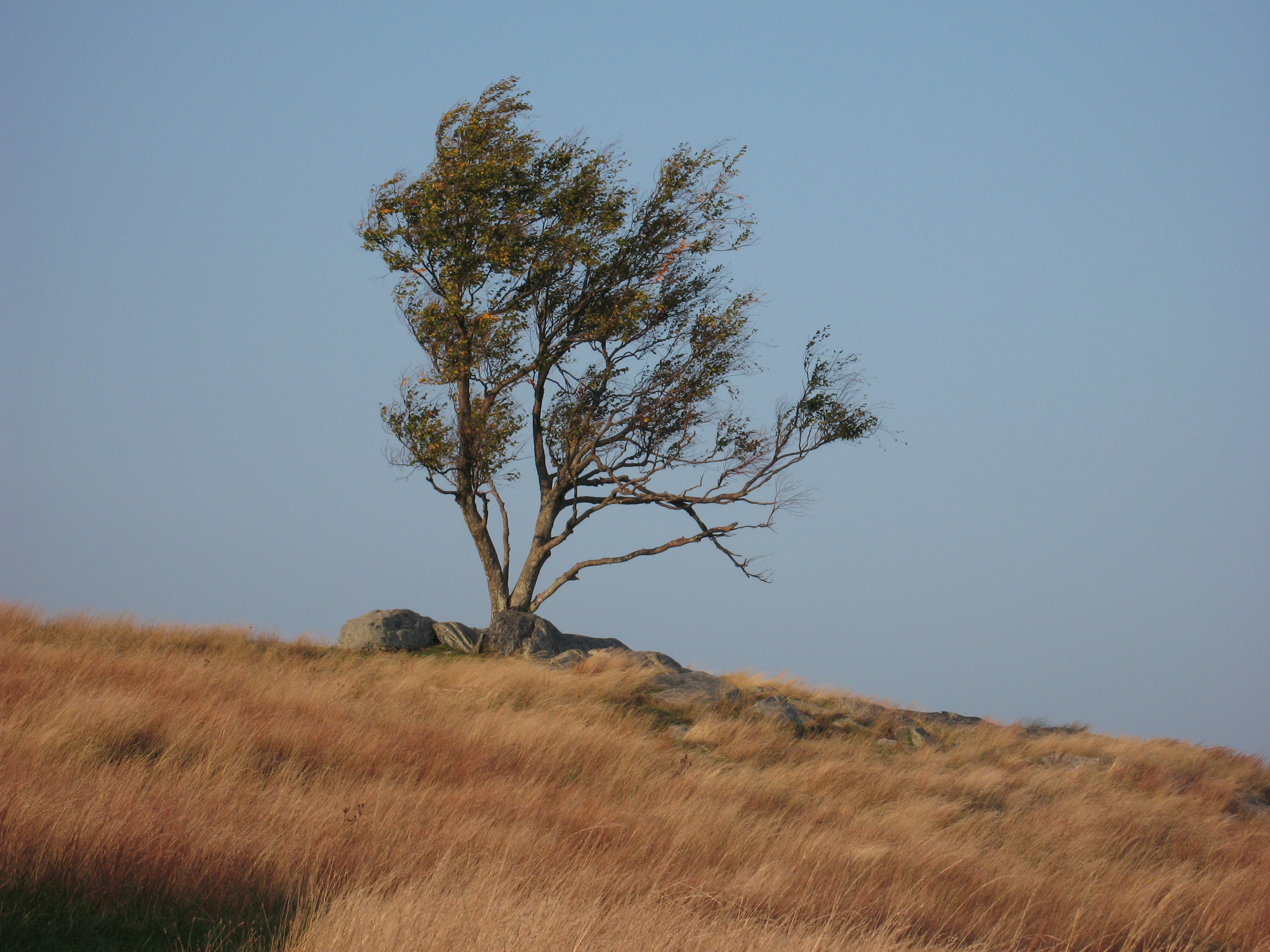
IMG_0880, tree

Read Full Post »

 . 
[including Carbon Canyon by David Duchovny]
 . 
We cannot know how good for us
the bad times were. 
. . . . . . . . . . . . . . . . . . . .High Five in the Sky
 . 
Bill and I decide to take a walk together this autumn afternoon. The year is 2020. Does visceral memory plunge you into context? When did he and I last see each other, if only above the nasal hem of an N-95? But today we will be together outdoors, the light breeze adequate to disperse particulates as we pick our way along the steep trail down to Dutchman Creek below our homes. Near neighbors, nearly always separate in our daily meanderings. Today reconnecting. Today again confessing to each other that we are connected somewhere deep in our guts, spleen & pancreas, since that first day in 1979 when Bill introduced himself to me as my Senior Resident and I stepped onto the wards at Durham County General as an Intern.
 . 
That first night we stumbled on the brink of fucking up completely. One patient we had stabilized and put to bed crashed at 3 AM while we were looking elsewhere. We were able to bring her back and at 0600 coffee before rounds with the Attending we listed to each other all the things we’d just learned. Still learning now, forty-one years later, Bill on the bench I’ve planted on my hill and me on a rock six feet distant. We confess completely fucking up again, this time our friendship when we split ten years after that very first connection. Time is not calligraphy, an artful line advancing with curlicues that mark each pleasant memory. Time is a patchwork of craters where the bombs went off. Time may soften a few scars, allow fireweed and fleabane to bloom amidst the desecration, but be careful you don’t stumble at the lip of former chaos.
 . 
Or do stumble. Look up for once from always looking down. Pull up your sleeve and share the bruises. I’m talking to you, one Bill to another Bill. I am grateful to have you as my friend.
 . 
 . 
❦ ❦ ❦
 . 
Carbon Canyon
 . 
We lived in Carbon Canyon the, before the fire,
unpack that given irony – were there no
carbon copies, we so unique and blessed?
 . 
There was a time when I walked
with my three-year-old daughter
(I think three . . .).
Anyway, I know we were walking the deep decline
of Carbon Canyon
on one of those short, mommyless jaunts . . .
And we came upon
the recently car-crushed carcass
of a gray field mouse, part three-dimensional
as in life,
part flattened as in a drawing,
the weight of the car
having made its lower half unreal, a cartoon.
The drive long gone,
unaware of their handiwork, guiltless.
 . 
A tiny trickle of blood from its slightly opened
mouth, a last profound unheard utterance,
so perfectly dramatic and telling
as if to seem placed by a movie crew
hiding in the bushes perhaps.
 . 
And my daughter (two, three, four?)
about to spy it on the ground, and I, a daddy,
with knowledge spilling out of my pockets,
life lessons, sense a teaching moment for the disquisition
on mortality that very parent believes
every three-year-old needs –
(see, it all ends, best laid plans and all that,
life’s unfair; carpe diem, little one;
Latin for . . . heaven; there but for the grace of god –)
in these moments, I realize I am nothing but a recording
of my own parents’ voices – their greatest hits,
my soul their phonograph . . .
 . 
Fade in: a father slows his daughter, allowing
the chance to happen upon a dead mouse,
it/death knowledge. Consequence. Mortality.
But it is only now, as we kneel,
that I notice the vibrant cha-cha line of ants
dancing in and out of the ruined creature
in all their anarchic discipline,
carrying to and fro unseeable bits of meat
and nutrient mouse ooze.
 . 
And my breath catches
because suddenly this lesson is for Daddy,
and it is Daddy who cannot face too much death,
the death after death, my death
in this mouse’s mouth, my daughter’s death.
I’ve not quite stomach enough
to face the pieces of us all carried off into oblivion,
eaten till we are unrecognizable, digested,
shit. Roadkill.
 . 
Dizzying, I say, “Oh, let’s go sweetheart . . .”
 . 
But it’s too late – my daughter,
two or three or four, has seen
leans down farther, her blue eyes
in inch or two from the ground, and says,
“Daddy, look the ants, there’s so many of them.”
“Yes, I see. Maybe we should let the mouse sleep, let her
sleep.”
 . 
I take her hand to lead her, though I don’t know where.
I know I am blind and unprepared,
a child leading a child,
and the little one stops and smiles,
and points back to the carnage –
 . 
“No, the ants, Daddy, the ants – look how much they love
her.”
 . 
David Duchovny
from About Time, Akashic Books, Brooklyn NY; © 2025
 . 
❦ ❦ ❦
 . 
This morning, 6 Sept. 2025, I pick Bill up at his door for another walk. Before we get in the car he hands me a gift, a book, a book of poetry. Poetry, admit it, has been the gravity that brought Bill and me back to earth after we had orbited so far apart. Years of smoldering enmity smoke out when a friend made us sit down together in the sam room to read poetry, to write it, to share it with each other. Something as tenuous as spider silk can still contain the angry wasp – we did indeed think we were still intent on stinging each other until we discovered we weren’t. One line leads to another. Today Bill reaches out to give me David Duchovny’s book after he himself has read it, most pages heiroglyphed with his own lightly pencilled checkmarks and squiggled connectors. Which I will pay more attention to than the words themselves.
 . 
Time, I tell myself, is a crap teacher. I’m always ever looking backwards at the time I’ve mangled and wasted, misunderstood and misspent. If time is so instructive, why can’t I look forward and craft a hunk of time into the shape I hope it shall become? Now time has brought Bill himself across a health threshold from which there is, this time, no returning. We talk about it as we reach our trailhead; we live within its reality as we walk the trail. We reach our limit, turn around, walk back towards the car, and time keeps on arrowing in its singleminded direction. Here we stand in the mess and glory of autumn blooming. Some flowers, dying and dry, want their seeds to hitch a sticky ride on our pants; some pods pop as we brush by; some buds are just this day erupting. Time is not a thread. Time is a thousand threads, a billion-billion threads and all tangled and intertwined like this patch of hog peanut within the thicket of goldenrod. You can’t pick it apart but here and there you can find the flowers. Wherever our threads have crossed and re-crossed, Bill, I will keep learning to be grateful.
 . 
❦ ❦ ❦
 . 
David Duchovny is an actor, director, singer-songwriter, podcaster. About Time, his first full length poetry collection, follows four published novels and is available HERE.
 . 
❦ ❦ ❦
 . 
 . 
 . 

Read Full Post »

« Newer Posts - Older Posts »