Feeds:
Posts
Comments

Archive for the ‘family’ Category

 . 
Saturday morning readers share:
Nancy Barnett
 . 
Death Tree
 . 
The aging oak tree on our block, which we had watched together,
Noting the frailty of its branches even in Spring,
Now, stripped and gaunt after an autumnal hurricane
Stands in death tall, powerful, alone.
 . 
I walk beneath, longing to tell you,
“Our tree is gone” – but you are not here.
You went out in another tempest, bruised and broken
Before one leaf had turned to gold.
 . 
Like the tree you stand before me,
Shattered of branches, defaced of bole and leaf,
Torn away without gentleness,
Naked, wrapped in the invisible sheet of pain,
Noble in the completeness of death.
 . 
I walk in sharp winds that cut life between us;
In clearness of winter light,
Along icy edges of despair,
I keep watch by your dark death tree;
Knowing in storms that will come
No lightning bold, in terror or anguish,
Can shatter the roots that bind me to you,
Plunged deep in primal earth clay,
In the passion and endurance of love.
 . 
Katherine Garrison Chapin (1890-1977)
 . 
 . 
This poem by Katherine Garrison Chapin is one I’ve had for 40  or 50  years.  I believe I cut it out from the New Yorker. It’s a little on the somber side; not for the holidays!
 . 
It caught my eye because of my memory of the elm tree we had in our back yard in our home in Springfield, Missouri. I lost one of my brothers when I was 11 in 1962 to a car accident. When I was 15 years old I came home from school one day and the tree was gone! It was during the elm tree  blight and the city was removing the elm trees. This was about 1966.
 . 
The tree was special because we had bought an old house and my mother, noticing my reaction  at 7 years old, told me we’d put up a tree swing. (It hadn’t been lived in for awhile and looked haunted…. We’d owned a nice brick home in Independence.)  My brothers put up the swing and I had much enjoyment swinging in the tree for a few years. When we came home from my brother’s funeral I headed straight for the tree swing.
 . 
The last two lines I find especially poignant. There was no bereavement counseling in those days and over the years and to this day I’ve found comfort in poetry.
 . 
– Nancy 
 . 
Additional poetry shared by Nancy Barnett at Verse and Image:
 . 
 . 
❀    ❀    ❀    ❀    ❀
 . 
Thank you for visiting VERSE and IMAGE:
. . . . . every Friday I present one or two poems I’ve read this week that particularly speak to me;
. . . . . every Saturday I present one or two poems submitted by YOU, my readers.
 . 
If you would like to offer a poem for consideration, either by a favorite author or your own work, please view these GUIDELINES for Saturday Readers Share:
 . 
 . 
Also note: after January 1, 2026 I will no longer be sending separate weekly email reminders.
If you would like to receive an email each time a post appears, please SUBSCRIBE to VERSE and IMAGE using the button on the Home Page.
 . 
If you have a hard time finding the SUBSCRIBE button on this WordPress site, you can send me your email address and I will add you to the subscriber list. Send your request to
 . 
COMMENTS@GRIFFINPOETRY.COM
 . 
Thanks again for joining the conversation.
 . 
– Bill
 . 
 . 

Read Full Post »

 . 
[two poems from Intervale]
 . 
Poem from November
 . 
The leaves have fallen, releasing the distances.
This year of my turning moves
in an arc like a preying bird’s,
purposeful.
 . 
My loves have dried. I find
I can remember only the least things:
mouse-gray of my grandmother’s hair
dead in the silverbacked brush,
the smell of hardpacked dirt
under black grease in the smokehouse.
 . 
Here is the old sky, the one we always had.
Everything in it is small,
punctuation for a vanished story.
 . 
I have forgotten the trick
an old man taught me: how the voice
can be made to nest in the cupped hands,
calling. Was it the dove
or the owl I brought close then?
There was a calling.
Something came.
 . 
❀    ❀    ❀
 . 
Penumbra
 . 
The child in the cracked photograph sits still
in the rope swing hung from a live oak.
Her velvet dress brims with a lace frill.
 . 
Her pet Bantam is quiet in her lap.
It is the autumn day of a funeral
and someone has thought to take a snap-
 . 
shot of the child who won’t be allowed
to go to the burying – the coffin in the house
for days, strange people going in and out.
 . 
She’s dressed as if she’d go, in the blue church-
dress from last Christmas, almost too short.
The rooster loves her, she guards his perch
 . 
on her lap, his colors feathering the mild air.
She concentrates on this, now that her father
is unknowable, crying in his rocking chair.
 . 
Her mouth knife-thin, her small hands knotted hard
on the ropes she grips as if to be rescued.
She’s growing a will that won’t be shed
 . 
and something as cold as winter’s breath
tightens in her, as later the asthma’s vise
will tighten – hands on the throat, the truth.
 . 
Black and white, she is hiding
in every one of my bright beginnings.
Gold and deep blue and dark-shining
 . 
red the cockerel’s feathers, gold the sun
in the skyblue southern fall, blue
over the four o’clocks and the drone
 . 
of weeping that drains like a shadow from the house
where someone is gone, is gone, is gone –
where the child will stay to darken like a bruise.
 . 
I am six years old, buried
in the colorless album.
My mother is dead.
I forgive no one.
 . 
Betty Adcock
from Intervale: New and Selected Poems, Louisiana State University Press, Baton Rouge LA; © 2001
 . 
 . 
❀    ❀    ❀    ❀    ❀
 . 
This is the season of perfect-family photos arriving by text after reunions for feasting or bursting from the envelopes of early Christmas cards. These cousins with their complimentary sweaters on the front steps, their lovely smiling children and companions. I spent the first day with my father after our dual week-long Covid quarantine helping him watch a home movie from 1936, his little sister on a tricycle, he barefoot astride his cousin’s pony. His aunts and grandmother crossed in the greytone background like hovering angels or benevolent wardens. And then the next reel, in color, my father in white t-shirt is twenty-six and I am a flame-haired infant in my grandfather’s arms.
 . 
These two poems and others in this collection by Betty Adcock take me deeper than I’ve ever labored into my own past. She sees everything. What no one but she had yet noticed, the voices, the smells, all are now alive in her sharp, unsentimental, raven-eyed truth telling. What memories are waiting half-asleep for each of us? What memories call us to create them fresh from fragments and tales and slowly disintegrating histories? A few words from Betty Adcock and forgotten ghosts materialize. There was a calling. Something came.
 . 
 . 
Betty Adcock (b. 1938) was inducted into the North Carolina Literary Hall of Fame in 2014. She has taught and served as writer-in-residence in the state for many decades. Among her numerous awards and publications, this comment by Mary Oliver stands out: Adcock “writes poems that are as upright as houses, and as flighty as clouds. She never postures. The poems … are beautiful, meaningful, and very real.” (for The Difficult Wheel, 1995)
 . 
Intervale and Betty Adcock’s other books are available from LSU PRESS.
 . 
Another poem by Betty Adcock at Verse and Image:
 . 
❀    ❀    ❀    ❀    ❀
 . 
Thank you for visiting VERSE and IMAGE:
. . . . . every Friday I present one or two poems I’ve read this week that particularly speak to me;
. . . . . every Saturday I present one or two poems submitted by YOU, my readers.
 . 
If you would like to offer a poem for consideration, either by a favorite author or your own work, please view these GUIDELINES for Saturday Readers Share:
 . 
                            https://griffinpoetry.com/about/
 . 
Also note: after January 1, 2026 I will no longer be sending separate weekly email reminders.
If you would like to receive an email each time a post appears, please SUBSCRIBE to VERSE and IMAGE using the button on the Home Page.
 . 
If you have a hard time finding the SUBSCRIBE button on this WordPress site, you can send me your email address and I will add you to the subscriber list. Send your request to
 . 
COMMENTS@GRIFFINPOETRY.COM
 . 
Thanks again for joining the conversation.
 . – Bill
 . 
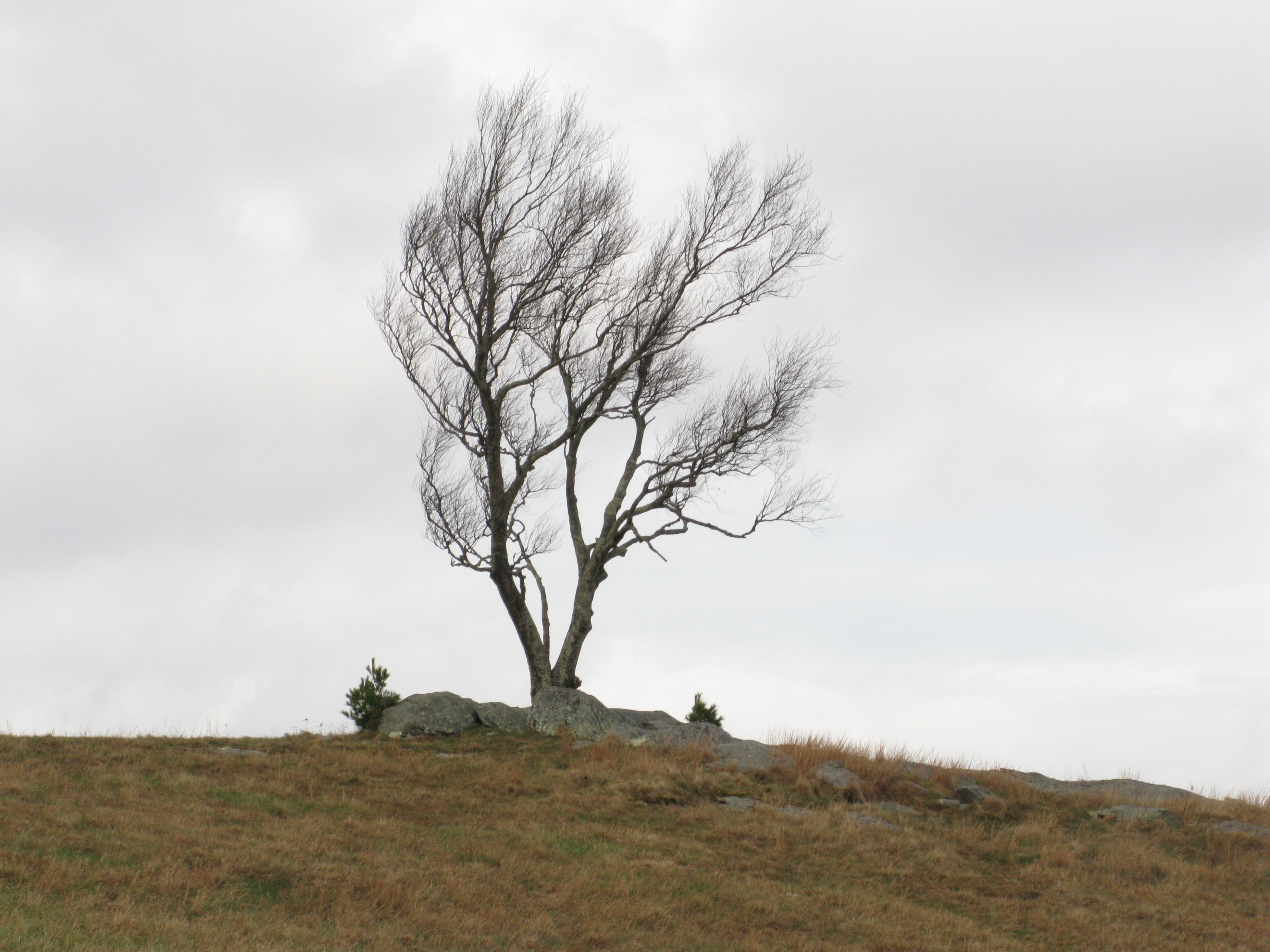
2020-09-08b Doughton Park Tree

Read Full Post »

[2 poems by Lucinda Trew]
if you wish to grow a garden, first seed
your soul with sadness
 . 
for it helps to have an ache, a molecule
of sorrow that will swell, release and drench
the patch of earth you claim
 . 
like a weather plane sowing stingy clouds
with silver beads of iodide, lush promise of rain
something withheld – a slip of rue, s spore
of woe to bury – a slender sprig of remembering
your shallow place in all of this
 . 
a cloister of green where secrets are safe
where worm and peat, centipede and muddy
trowel will carry melancholy to the seedling
graves you dig
 . 
for a garden is forgiving – a copse confessional
a place for penance – pulling weeds, snapping
roots, kneeling in dirt
 . 
and tending, gently tending, to fragile shoot
breaching bud, those in need of holding up
and the healing grace of fresh tilled ground.
 . 
 . 
when trees fall
 . 
from natural cause – nor’easter, drought
decrepitude – they lean in, one upon another
++++ a prayer of knotty hands
 . 
we pray, too, in other ways, holding one another
close in crook and crutch of branch, and nests
++++ for those in need of cradling
 . 
we unfist fingers, unwind clocks, hold one another
in a basketweave of leaf and twig and comforting
++++ like trees, we slant
 . 
against wind and time, hearts and boughs that break
from storm and thorn and toppled crowns
++++ we ease one another
 . 
to ground, to the resting place of forest floor
to beds of moss and tender mercies yielding to ash
++++ as we all fall down
 . 
Lucinda Trew
from What Falls to Ground, Charlotte Lit Press, Charlotte, NC; © 2025
++++
IMG_9468
 . 
♦   ♦   ♦   ♦   ♦
 . 
I love these poems for their compassion in the deep sense of that word, “suffering together.” In reading these lines I am able to pause and slant against the wind of my own doubt and daily struggles. Lucinda writes, “a poem is a bone / in the graveyard of remembering.” In memory I visit the bones of loss and pain but also the roots and seeds of what may again grow into joy. In the music of Lucinda’s words and phrases, the myth and earthy origins her poems suggest, the impermanence of all things resting the midst of rising sun and growing plant – in these I rediscover hope. Yes, we all fall to ground. Yes, we may ease each other as we fall.
 . 
 . 
Lucinda Trew lives and writes in the red clay piedmont of North Carolina, USA. What Falls to Ground is her debut collection and is available from Charlotte Center for the Literary Arts.
 . 
Additional poetry by Lucinda Trew at VERSE and IMAGE:
 . 
 . 
IMG_1948
 . 
 . 

Saturday’s Submission – Once a week on Saturday I feature one or two poems sent to me by readers. If you would like to consider having your poem appear, please see the GUIDELINES here:

About


Read Full Post »

Older Posts »