Feeds:
Posts
Comments

Archive for the ‘Ecopoetry’ Category

 . 
Poems for the Earth: Kenneth Rexroth, Denise Levertov, Robert Frost
 . 
Lute Music
 . 
The earth will be going on a long time
Before it finally freezes;
Men will be on it; they will take names,
Give their deeds reasons.
We will be here only
As chemical constituents –
A small franchise indeed.
Right now we have lives,
Corpuscles, ambitions, caresses,
Like everybody had once –
All the bright neige d’antan people,
“Blithe Helen, white Iope, and the rest,”
All the uneasy remembered dead.
 . 
Here at the year’s end, at the feast
Of birth, let us bring to each other
The gifts brought once west through deserts –
The precious metal of our mingled hair,
The frankincense of enraptured arms and legs,
The myrrh of desperate invincible kisses –
Let us celebrate the daily
Recurrent nativity of love,
The endless epiphany of our fluent selves,
While the earth rolls away under us
Into unknown snows and summers,
Into untraveled spaces of the stars.
 . 
Kenneth Rexroth
 . 
❦ ❦ ❦
 . 
Is it really so strange that the close observation of life, noticing its many particulars and how desperate it is to spread and mingle and weave itself among the web of all other lives no matter how disparate and also individually desperate, strange that the observation and celebration of this planet solely and most fortuitously devoted to conjuring life should also ferment within the observer a noticing and rumination about death? Beside the stream the liverworts unclasp their primitive green. Rockspray nourishes them for a moment then continues its endless work of washing the ashes of earth to the sea. Between right now and when my own ashes will join them is less than a blink for the water, the rock, the bryophytes. Two or three blinks would be more than enough to embrace the span of my entire species on this middle-aged planet. A small franchise indeed.
 . 
In our current society the virtues have lost most of their value to inflation (inflation of ego primarily), and of all virtues humility seems valued least. Another winter is apparently ended but it is hard to shake the chill of despite that has settled and will not permit dispelling. For the few years left of my personal franchise among the living, where is the warmth? Right here, though, is my favorite seat on the back porch. Its cushion retains the signature of my backside. Ten feet away my favorite among all trees remains undiscouraged, staid Beech perhaps a quarter century my elder. Its scars and knots only enhance its beauty. At its crown the long slender leafbuds already unfurl to prepare the deep shade so welcome come May. And that smooth, grey skin – the filamentous liverworts readily accept its unselfish invitation to reside. As a representative of a large-brained apex species, could I humble myself before such an insignificant creature as a liverwort? Could I be half so generous as the Beech? Perhaps it is warm enough after all – life is poised to spread and mingle. Let’s go out front into the sun and plant some seeds.
 . 
 . 
❦ ❦ ❦
 . 
The Past III
 . 
You try to keep the present
 ==== uppermost in your mind, counting its blessings
 ====  ==== (which today are many) because
although you are not without hope for the world, crazy
 ==== as that seems to your gloomier friends and often
 ====  ==== to yourself, yet your own hopes
have shrunk, options are less abundant. Ages ago
 ==== you enjoyed thinking of names
 ====  ==== for a daughter; later you still entertained,
at least as hypothesis, the notion
 ==== of a not impossible love, requited passion;
 ====  ==== or resolved modestly to learn
some craft, various languages.
 ==== And all those sparks of future
 ====  ==== winked out behind you, forgettable. So –
the present. It’s blessings
 ==== many today:
 ====  ==== the fresh, ornate
blossoms of the simplest trees a sudden
 ==== irregular pattern everywhere, audacious white,
 ====  ==== flamingo pink in a haze of early warmth.
But perversely it’s not
 ==== what you crave. You want
 ====  ==== the past. Oh, not your own,
no reliving of anything – no, what you hanker after
 ==== is a compost,
 ====  ==== a forest floor, thick, saturate,
fathoms deep, palimpsestuous, its surface a mosaic
 ==== of infinitely fragile, lacy, tenacious
 ====  ==== skeleton leaves. When you put your ear
to that odorous ground you can catch the unmusical, undefeated
 ==== belling note, as of a wounded stag escaped triumphant,
 ====  ==== of lives long gone.
 . 
Denise Levertov
 . 
 . 
❦ ❦ ❦
 . 
POETRY FOR EARTH DAY 2025
 . 
Our ability to perceive quality in nature begins, as in art, with the pretty. 
It expands through successive stages of the beautiful to values 
as yet uncaptured by language.
Aldo Leopold
 . 
Is it only serendipity that Earth Day and National Poetry Month are celebrated together each year in April? Our need for the Earth, our love for the Earth, are beyond language, yet poetry must continue to yearn to express that love.
 . 
Do you have a favorite poem that enlarges the boundaries of community? That notices the often overlooked? That celebrates all life on earth as one family together? We invite you to share! The deadline is April 10. See full guidelines at this link:
 . 
 . 
 . 
These poems by Kenneth Rexroth, Denise Levertov, and Robert Frost are collected in The Ecopoetry Anthology, edited by Ann Fisher-Wirth and Laura-Gray Street; © Trinity University Press, San Antonio TX, 2020
 . 
 . 
Liverworts are ancient non-vascular plants, some 9,000 different species inhabiting every continent except Antarctica and almost every habitat and niche. They have been grouped with mosses and hornworts in the division Bryophyta, although some taxonomists split them into their own division, Marchantiophyta. One particular species, Frullania eboracensis, the New York Scalewort, is particularly noticeable on smooth barked trees such as beech, maple, and holly.
 . 
 . 
❦ ❦ ❦
 . 
The Most of It
 . 
He thought he kept the universe alone;
For all the voice in answer he could wake
Was but the mocking echo of his own
From some tree-hidden cliff across the lake.
Some morning from the boulder-broken beach
He would cry out on life, that what it wants
Is not its own love back in copy speech,
But counter-love, original response.
And nothing ever came of what he cried
Unless it was the embodiment that crashed
In the cliff’s talus on the other side,
And then in that far-distant water splashed,
But after a time allowed for it to swim,
Instead of proving human when it neared
And someone else additional to him,
As a great buck it powerfully appeared,
Pushing the crumpled water up ahead,
And landed pouring like a waterfall,
And stumbled through the rocks with horny tread,
And forced the underbrush – and that was all.
 . 
Robert Frost
 . 
❦ ❦ ❦
 . 
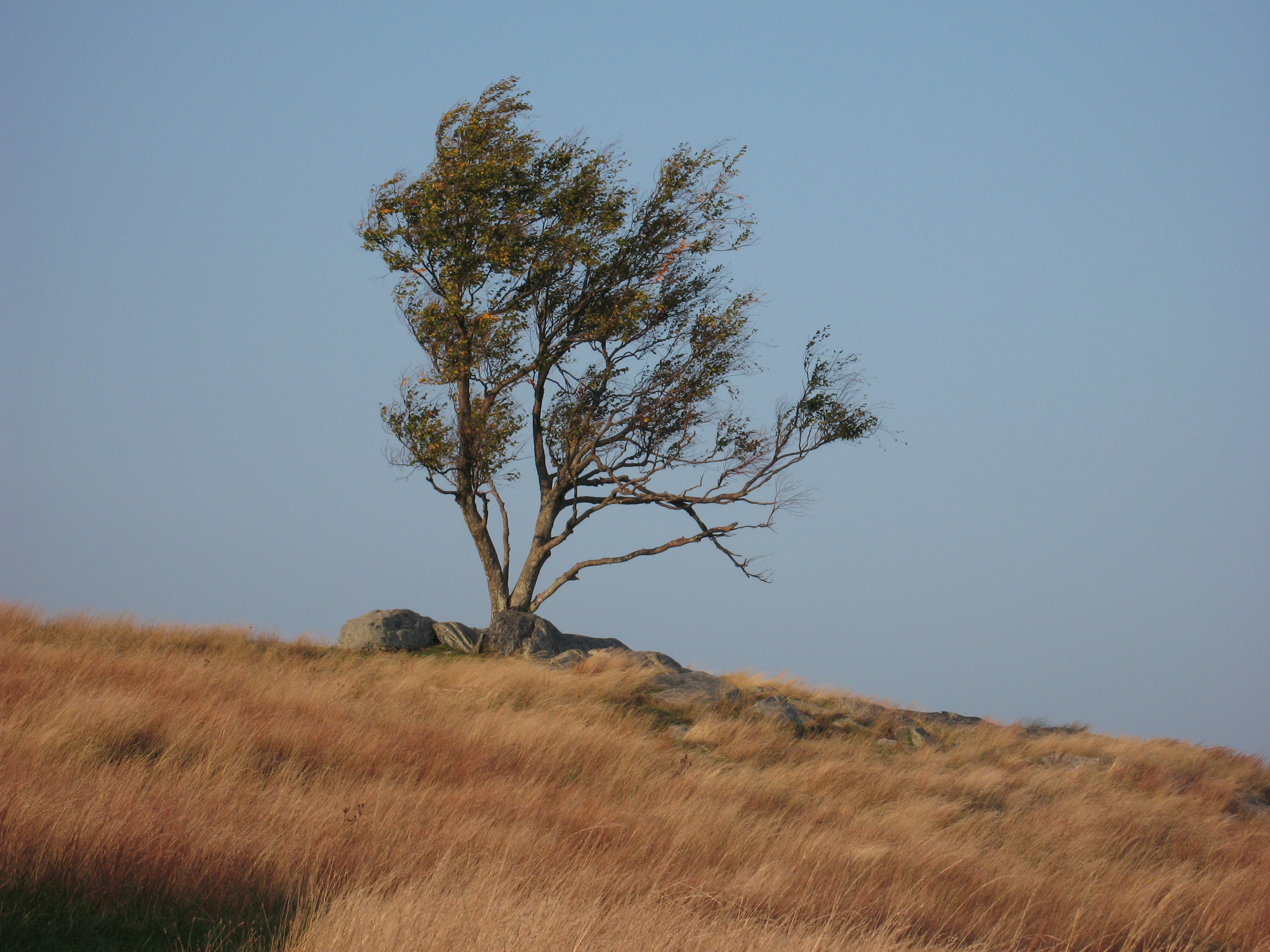
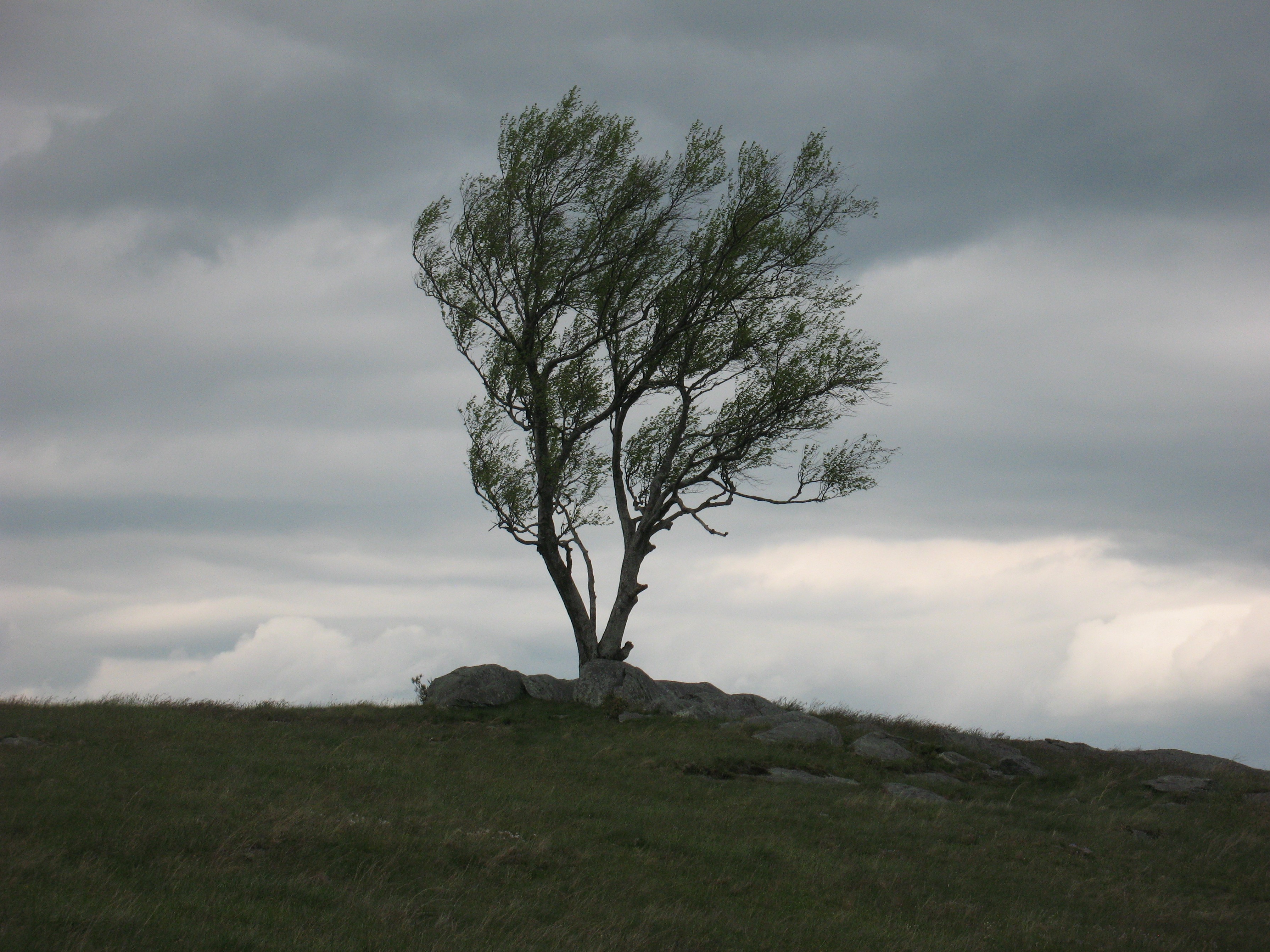
Doughton Park Tree 2019-02-09
 . 

Read Full Post »

POETRY FOR EARTH DAY 2025
 . 
All ethics so far evolved rest upon a single premise: that the individual is a member of a community of interdependent parts. . . . The land ethic simply enlarges the boundaries of the community to include soils, waters, plants, and animals, or collectively: the land.
Aldo Leopold
 . 
 . 
VERSE & IMAGE celebrates Earth Day, April 22, throughout National Poetry Month. Do you have a favorite poem that enlarges the boundaries of community? That notices the often overlooked? That celebrates all life on earth as one family together?
 . 
Send your poem to: ++++++++ ecopoetry@griffinpoetry.com
 . 
We may share it in one of several posts dedicated to living together on our living planet.
 . 
 . 
Please read these GUIDELINES:
 . 
Deadline April 10, 2025, midnight Eastern Daylight Time USA
 . 
Send ONE poem by any author other than yourself addressing the theme of community.
 . 
Include the poem in the body of an email, or as a .DOC or .RTF attachment, to ecopoetry@griffinpoetry.com.
 . 
Please add info about where the poem has been published.
 . 
Also include a personal statement – how do you feel connected to this poem? What does it mean to you? How has it connected you to the earth? [I would suggest 100 words or less; may be edited for length.]
 . 
Visit GriffinPoetry.com between April 15 and April 30 to see if your poem has been selected for presentation.
 . 
Optional: if you submit one poem by an author other than yourself, you may also submit one original poem on the same theme that you have written. We prefer previously published – include acknowledgments.
 . 
VERSE & IMAGE is a weekly blog of poetry, nature photography, personal essay, and ecology.
 . 

Read Full Post »

 . .
[with 4 poems by Emilie Lygren]
 . .
Ritual
 . .
In each new place I look at the leaves.
 . .
Some are gray and withered, others gold or green.
 . .
The round spots of fungi, insect holes, split lines along veins all say:
 . .
I have been here long enough for here to change me.
 . .
May I stay half as long.
 . .
 . .
You Find Hope When
 . .
You find hope when you remember that
your best friend was elected Prom Queen.
 . .
We were shocked.
She was not popular or plastic or a cheerleader,
like prom queens in the movies always were.
 . .
She was kind to everyone.
 . .
When things feel bleak, remember the people out there
who thought that mattered.
 . .
Emilie Lygren
from What We Were Born For, Blue Light Press / 1st World Publishing, Fairfield IA; © 2021
 . .
❦ ❦ ❦
 . .
Something here beside the river is dragging. Something is slowing me down, clenching me inside, holding my skull between two fists. What is this cud of anger I’m chewing, chewing? I tug it loose when it snags on last summer’s dry aster or catches on a shard of quartz. I refuse to let go because it’s mine and I deserve to have it.
 . .
As I walk its banks, the river notices that I have stopped noticing it but the river doesn’t comment. The river refuses to tell me whether I’m good enough or why I’m not. I can’t convince it to admit that it’s really all those others hurting me and not me hurting them. The river has plenty to carry without taking on another load of trash. Stuff, big and little, just wants to tag along with the river. Silt enjoys the life of swirls and eddies, leaves love to dance. Stones tune up and provide the music. The river invites their company and moves along.
 . .
Is time passing here? The movement of water, always movement, and yet there is always always more water. Time must have passed, because I find I have misplaced whatever it was that was dragging me, I mean, whatever I was dragging. The music hasn’t stopped and there is singing. Suddenly I notice that what I really want is to join the river. And I find I have.
 . .
 . .
❦ ❦ ❦
 . .
River, competence
 . .
Rocks once ripped
from mountainsides,
broken branches of trees,
leaf or tuft of grass.
 . .
Swept up by
constant working currents,
blue undersides of streams,
mud unstuck from banks,
wed to clear movement.
 . .
Ripple pool and wave
reduce rough edges into roundness,
sand sticks into gleaming bare swords,
hold stones until their shapes converge.
 . .
Stay here long enough
and the parts of you, too,
that have been broken
will be made smooth
 . .
Emilie Lygren
from What We Were Born For, Blue Light Press / 1st World Publishing, Fairfield IA; © 2021
 . .
❦ ❦ ❦
 . .
Emilie Lygren’s poems are not all quiet. Some rage against tyrants. Some spit and hiss at what the ocean spits up, the trash we have crammed down its throat. Some push back hard against cruelty and prejudice, anything that willfully splits and cleaves.
 . .
But all of Emilie Lygren’s poems quiet me. When I am disgusted by things people do and say and think; when it hurts me that the people I love are hurting and are hurting me; when I despair that we human beings will never learn kindness; when I can’t see any hope for our future as a species or for all the species we destroy –
 . .
When all this noise and rage and torment shake me like a maple leaf, then Emilie Lygren’s poems return with their voice of understanding. We all feel these things. We all need something better. Listen, just listen. The earth is still here for you. Join it, the earth and all it embraces. Find its place in you and rediscover your place on the earth. Every day, if only for a moment – quiet.
 . .
 . .
Emilie Lygren is a poet and outdoor educator in California. What We Were Born For is the winner of the 2021 Blue Light Book Award from Blue Light Press / 1st World Publishing and can be purchased at Bookshop.org.
 . .
Read an additional poem by Emilie Lygren, Erosion, HERE:
 . .
 . .
All of today’s photos are by Jonathan Saul Griffin, © 2022
 . .
 . .
❦ ❦ ❦
 . .
Meditation
 . .
Sitting near the window.
I watched a fly stammering
against the glass,
trying to break free
and transcend the
transparent boundary
it could not comprehend.
 . .
As I cupped my hands around the fly
then let it out the open door,
I wished that we could trade places –
 . .
that someone would gently remove me
from the invisible walls
I have pressed myself up against,
offer an opening I am too small to see.
 . .
After sitting longer,
I start to think that maybe I am all parts of the story –
 . .
the trembling fly,
the gently cupped hands,
the clear glass window,
the necessary air outside.
 . .
Emilie Lygren
from What We Were Born For, Blue Light Press / 1st World Publishing, Fairfield IA; © 2021
 . .
❦ ❦ ❦
 . .
 . .

Read Full Post »

« Newer Posts - Older Posts »