
[with poems by Jennifer Elise Foerster, Robert Service,
Sam Love, Ada Limón]
One day for Earth Day? One day to honor our kinship with every thing that lives – Animal, Plant, Fungus, Protist, Archaea, Bacteria, all of them? One day to celebrate chlorophyll, the absolute best idea that life has ever had? One day to ponder in reverence this single solitary place in the universe that sustains life?
In Kim Stanley Robinson’s recent novel, The Ministry for the Future, one character, a member of The Ministry, reckons that what the earth needs to save itself is a new religion. Not new economics, not new politics, not even new technologies – a new religion.
Why religion? At its essence, religion is about The Good – how to define it, pursue it, encounter it, how to live encompassed in its expansive presence. Religion is permeative and interpenetrative – for its adherents, it occupies every aspect of life and every moment of consciousness. Religion is transcendent – ego, personal comfort, power, possessions, all fade to irrelevance in the presence of The Good. Religion is immanent, not there & then but here & now.
Here and now. Every day. Reverence and celebration. Stop and listen and you will hear Earth whispering its transcendent message: “More Life!”
❦
Thank you to the readers of these pages
who have responded to my call for poems this Earth Day.
Watch for new posts on April 21, April 22, and April 23.
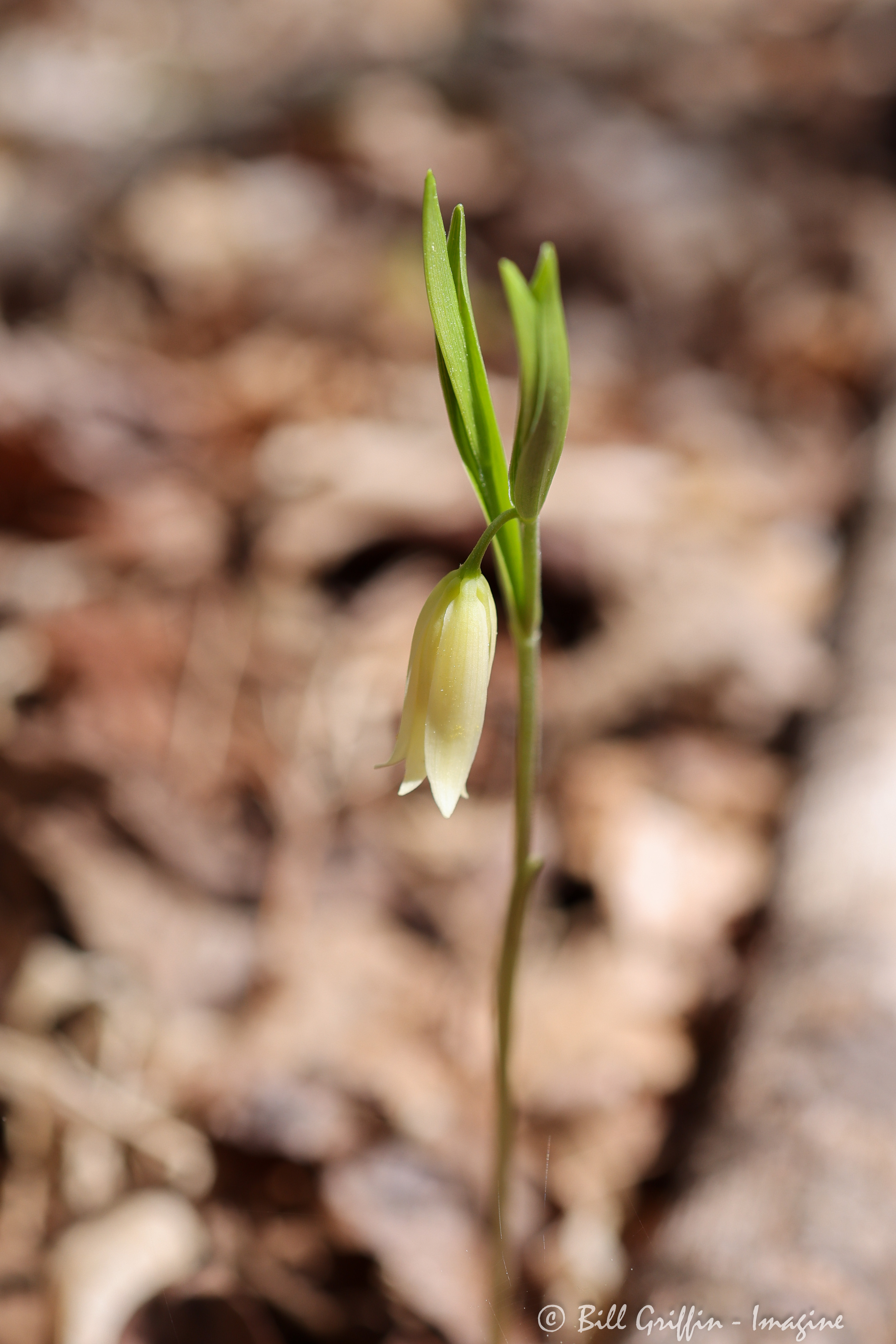
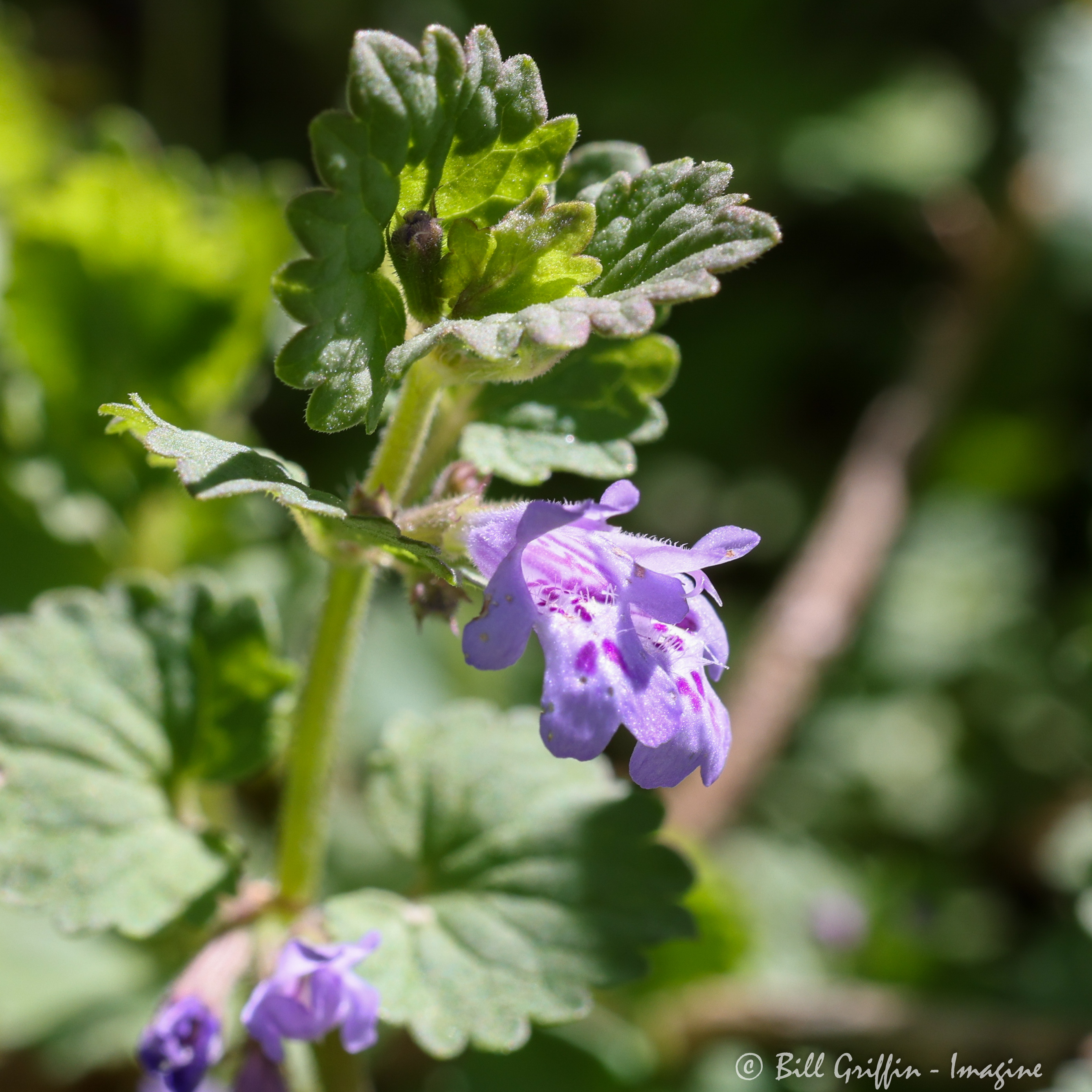
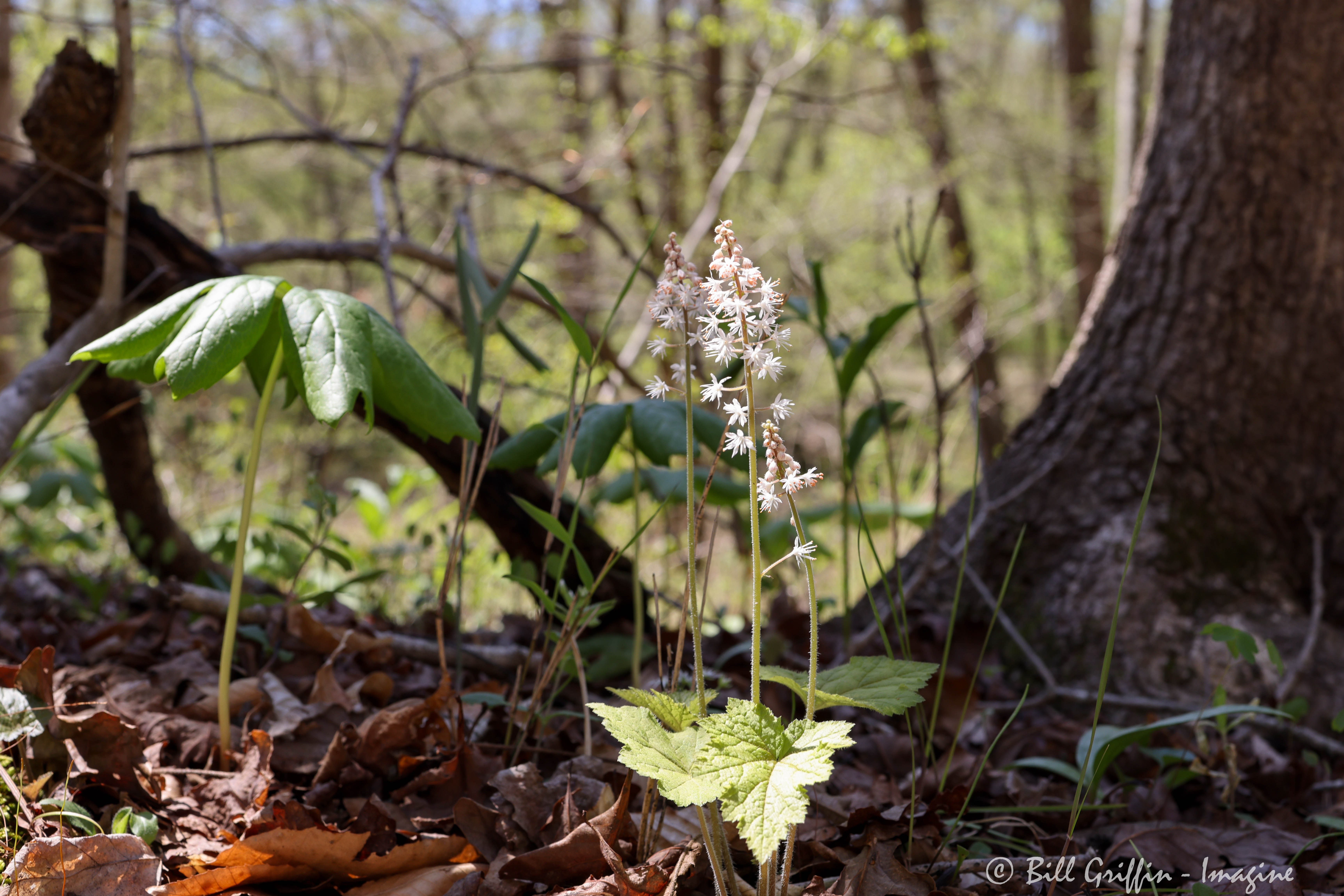
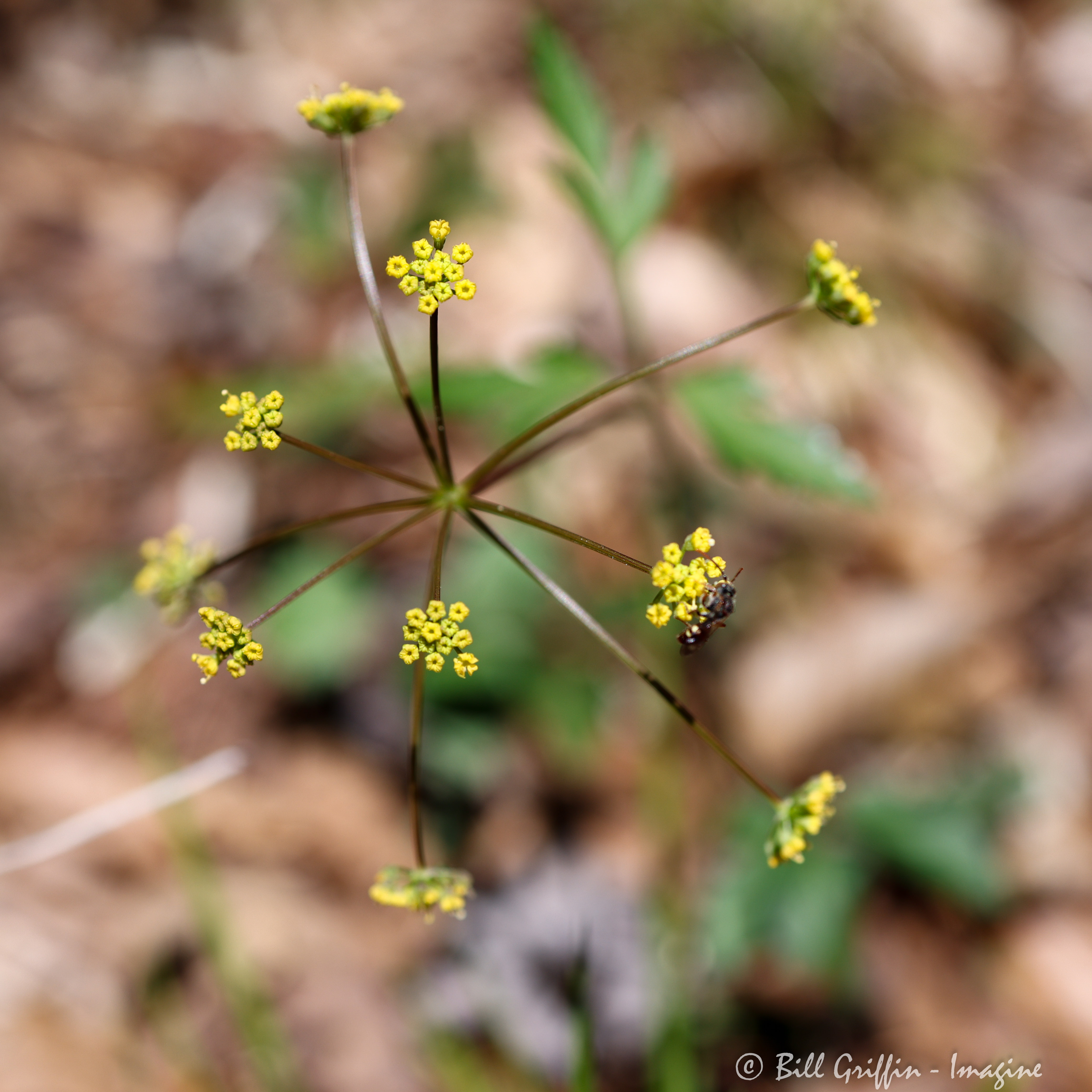
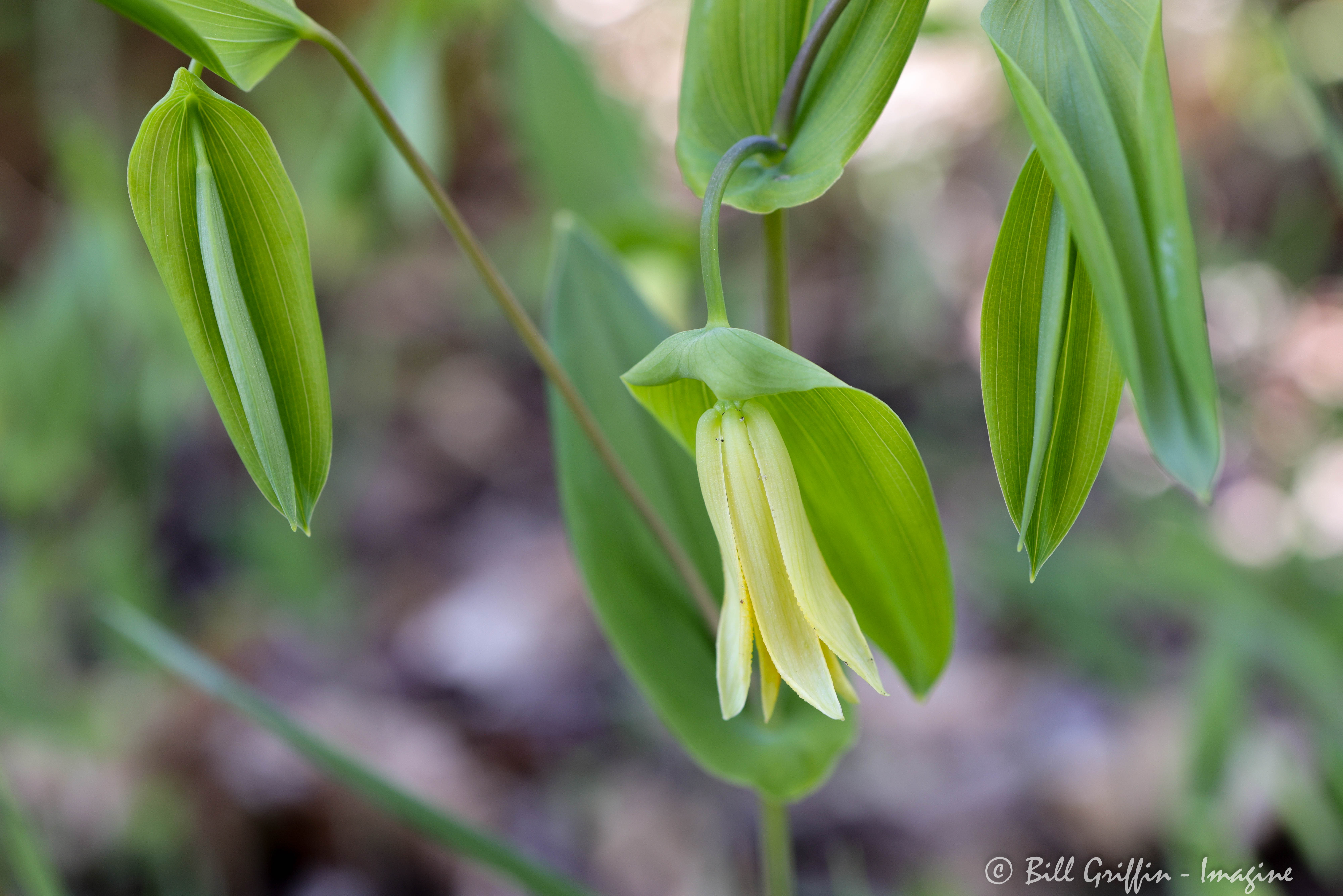
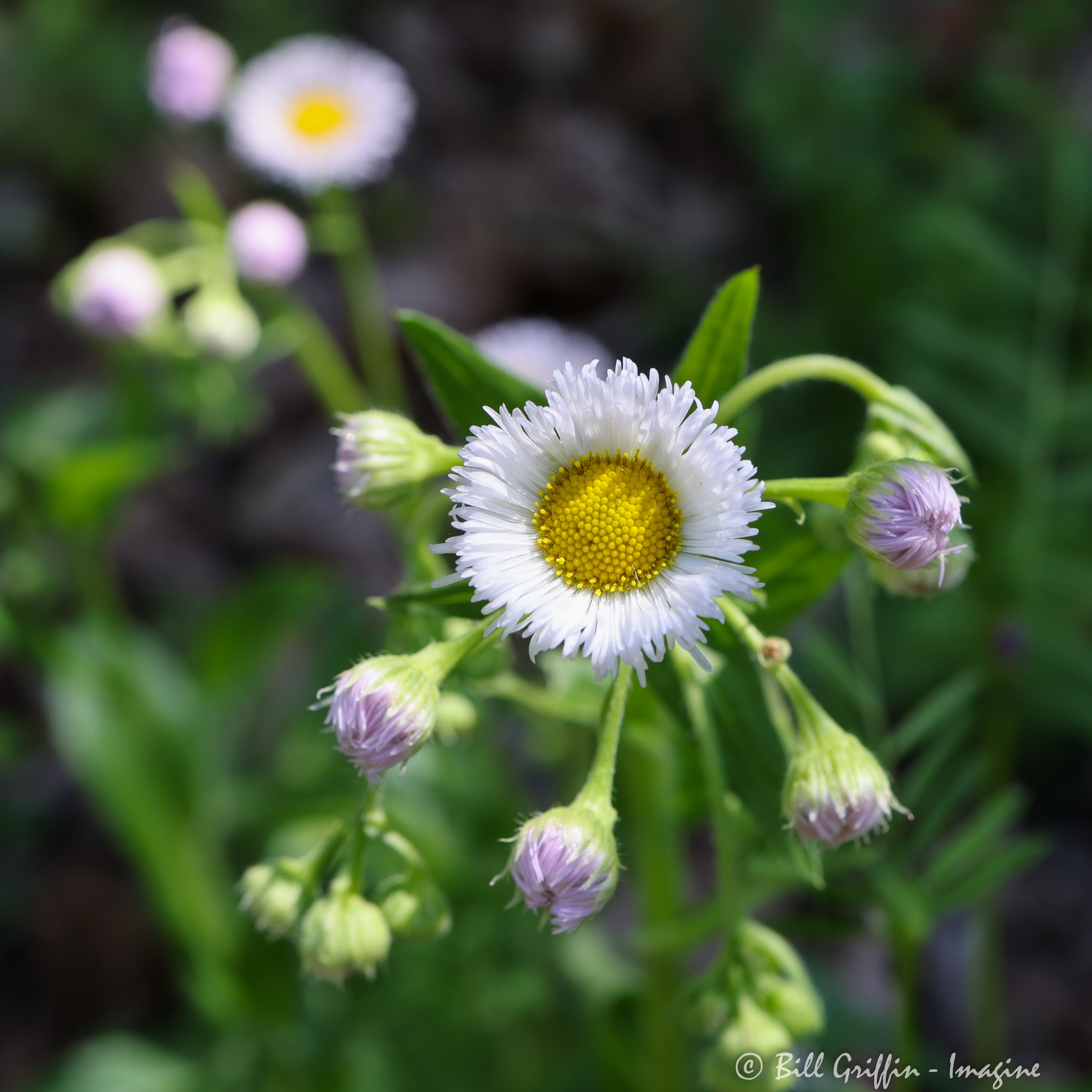
All photographs were taken April 11-17, 2023,
along the Elkin & Allegheny Nature Trail,
part of the Mountains-to-Sea Trail in North Carolina, USA.
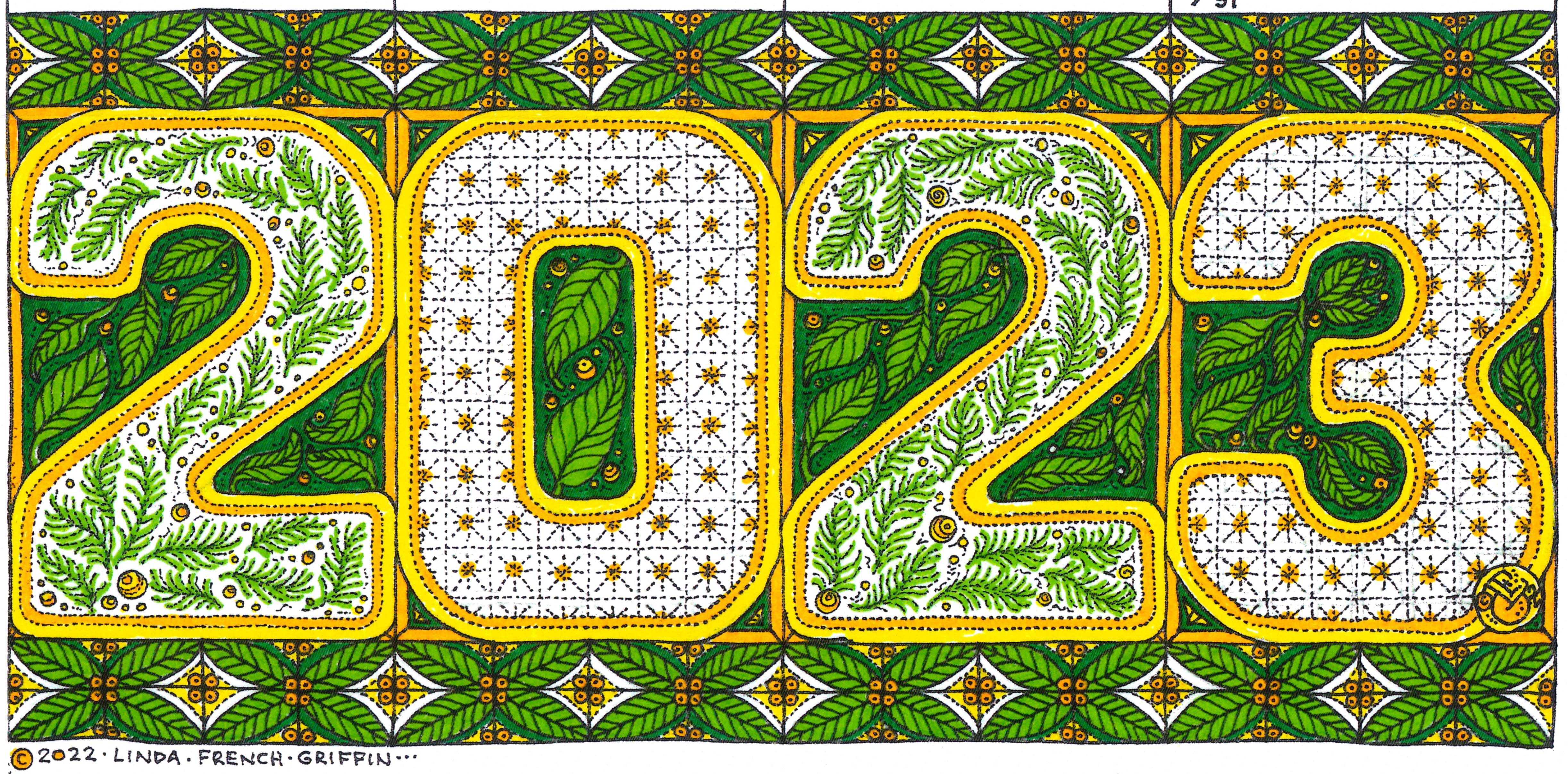
Earth Day 2023 art by Linda French Griffin.
❦ ❦ ❦
Origin of Planets
In this version, the valley
lime green after rain
rolls its tides before us.
A coyote bush shivers with seed.
We hold out our palms as if catching snow—
our villages of circular tracts
overcast with stars.
We have been moving together in sequence
for thousands of years, paralyzed
only by the question of time.
But now it is autumn under bishop pines—
the young blown down by wind feed
their lichens to the understory.
We follow the deer-path
past the ferns, to the flooded
upper reaches of the estuary.
The channel snakes through horsetails
and hemlock as the forest deepens, rises
behind us and the blue heron,
frozen in the shallows.
The shadow of her long neck ripples.
Somewhere in the rustling tulle reeds
spider is casting her threads to the light
and we spot a crimson-hooded fly agaric,
her toadstool’s gills white
as teeth as the sun
++++++++ bleeds into the Pacific.
We will walk the trail
until it turns to sand
and wait at the spit’s edge, listening
to the breakers, the seagulls
as they chatter their twilight preparations.
What we won’t understand
about the sound of the sea is no different
than the origin of planets
or the wind’s crystalline structures
irreversibly changing.
The albatross drags her parachute
over the earth’s gaping mouth.
We turn back only for the instant
the four dimensions fold
into a sandcastle—before its towers
are collapsed by waves.
The face that turns
toward the end of its world
dissolves into space—
despite us, the continuum
remains.
Jennifer Elise Foerster
Selected by Bill Griffin; Originally published in Poem-a-Day on December 20, 2022, by the Academy of American Poets. Copyright © 2022 by Jennifer Elise Foerster.
Jennifer Elise Foerster comments: “This poem emerged from one particular version of a day when I had the gift of walking with a friend on the Point Reyes National Seashore. I say ‘version’ because the path this poem follows is inevitably different from the path we walked, and distinct, too, from the many paths in my memory of that day. What all my versions share is that we walked toward the beach, toward twilight, at which point I wondered what it really meant to ‘turn back.’ At which point I watched the waves, the wind, the endless endings and beginnings, the turnings of gulls and seashells, planets peering through dusk. I love that wonderment doesn’t require understanding. How brief we are, and infinite in our versions of being here on earth.”
. . . wonderment doesn’t require understanding. I love understanding like I love the specifics of this poem, the creatures that occupy it, their occupations, but I also love the door it opens into reverence that requires no understanding. That, in fact, requires nothing of me at all except to take my place as part of the continuum.
– Bill Griffin / Elkin, North Carolina

❦ ❦ ❦
The Call of the Wild
Have you gazed on naked grandeur, where there’s nothing else to gaze on,
Set pieces and drop-curtain scenes galore,
Big mountains heaved to heaven, which the blinding sunsets blazon,
Black canyons where the rapids rip and roar?
Have you swept the visioned valley with the green stream streaking through it,
Searched the Vastness for a something you have lost?
Have you strung your soul to silence? Then for God’s sake go and do it;
Hear the challenge, learn the lesson, pay the cost.
Have you wandered in the wilderness, the sage-brush desolation,
The bunch-grass levels where the cattle graze?
Have you whistled bits of rag-time at the end of all creation,
And learned to know the desert’s little ways?
Have you camped upon the foothills, have you galloped o’er the ranges,
Have you roamed the arid sun-lands through and through?
Have you chummed up with the mesa? Do you know its moods and changes?
Then listen to the wild, — it’s calling you.
Have you known the Great White Silence, not a snow-gemmed twig a-quiver?
(Eternal truths that shame our soothing lies.)
Have you broken trail on snowshoes? Mushed your Huskies up the river,
Dared the unknown, led the way, and clutched the prize?
Have you marked the map’s void spaces, mingled with the mongrel races,
Felt the savage strength of brute in every thew?
And though grim as hell the worst is, can you round it off with curses?
Then harken to the wild, — it’s wanting you.
Have you suffered, starved, and triumphed, groveled down, yet grasped at glory,
Grown bigger in the bigness of the whole?
‘Done things’ just for the doing, letting babblers tell the story,
Seeing through the nice veneer the naked soul?
Have you seen God in His splendours, heard the text that nature renders
(You’ll never hear it in the family pew),
The simple things, the true things, the silent men who do things?
Then listen to the wild, — it’s calling you.
They have cradled you in custom, they have primed you with their preaching,
They have soaked you in convention through and through;
They have put you in a showcase; you’re a credit to their teaching –
But can’t you hear the wild? – It’s calling you.
Let us probe the silent places, let us seek what luck betide us:
Let us journey to a lonely land I know.
There’s a whisper on the night-wind, there’s a star agleam to guide us,
And the wild is calling, calling… let us go.
Robert Service
Selected by Mike Barnett; published in Robert Services’ first book of poetry, Songs of a Sourdough, in 1907.
Robert Service (1874-1958) was a British-Canadian poet, often called “the Bard of the Yukon.” This poem has always had a positive affect on me with its rugged description of wild places similar to the ones I have traveled while camping and backpacking. I have used the last two stanzas as quote material or ‘words of wisdom’ in camps I have directed, and I still use it often with my Family Nature Club.
– Mike Barnett / Eustis, Florida.

❦ ❦ ❦
Forest Bathing
My artificial cocoon
is really cozy as it
guards me from
nature’s wildness
My illuminated habitat
wards off the elements
and creates its own micro climate
oblivious to its carbon footprint.
And yet something is missing
as the artificial light challenges
the setting sun and the stale air
maintains a constant temperature.
In contrast a short distance away
nature beckons me to a forest
where natural bioenergy
can alter my mental state.
Strolling through this verdant space
I enjoy a heightened awareness
of life’s web and become open
to unspoiled wildness.
Feeling restored I thank the trees
and say goodbye to the
rustling leaves, trickling water,
melodic birds, dappling light,
and healing spirits.
Sam Love
Published in Earth Resonance: Poems for a Viable Future (Poetry Box, Portland Oregon)
The Japanese believe time in the forest can be healthy. They practice “forest bathing” or shinrin-yoku. Shinrin means “forest,” and yoku means “bath.” I find the noise in my head begins to quiet when I walk in an area untouched by so called civilization.
– Sam Love / New Bern, North Carolina
❦ ❦ ❦
Give Me This
I thought it was the neighbor’s cat back
to clean the clock of the fledgling robins low
in their nest stuck in the dense hedge by the house
but what came was much stranger, a liquidity
moving all muscle and bristle. A groundhog
slippery and waddle thieving my tomatoes still
green in the morning’s shade. I watched her
munch and stand on her haunches taking such
pleasure in the watery bites. Why am I not allowed
delight? A stranger writes to request my thoughts
on suffering. Barbed wire pulled out of the mouth,
as if demanding that I kneel to the trap of coiled
spikes used in warfare and fencing. Instead,
I watch the groundhog closer and a sound escapes
me, a small spasm of joy I did not imagine
when I woke. She is a funny creature and earnest,
and she is doing what she can to survive.
Ada Limón
Selected by Melinda Thomsen; originally published in Poem-a-Day on September 16, 2020, by the Academy of American Poets. Copyright © 2020 by Ada Limón.
I love this poem because the speaker at first mistakes the groundhog for a cat, something typically tame, but as she watches the animal enjoy its life, somehow this wild thing has sucked away all the speaker’s pain and replaced it with a jolt of unexpected joy. The wild draws us out of ourselves and into a healthier being.
– Melinda Thomsen / Greenville, NC
❦ ❦ ❦






 V E R S E and I M A G E
Glad to hear from you Jenny. May life continue to surprise . . . ---B