Archive for September, 2024
Anticipate
Posted in Ecopoetry, poetry, tagged Bill Griffin, Katherine Soniat, Kathrine Cays, Kenneth Chamlee, Michael Hettich, nature photography, NC Arboretum, NC Poetry Society, NC Poets, poetry, Southern writing on September 27, 2024| 10 Comments »
.
[with poems by Michael Hettich, Kenneth Chamlee, Katherine Soniat]
.
First View – Chicago Lakes
.
Sleet needles past my fastened collar
as we rise into the house of rain.
Mr. Byers of the Mountain News
has horsed us up this flyspeck path
with avowals of Alpine views but
now is silent. I think he has missed
the spur trail. My blood is gelid,
fingers numb beyond recovery.
Clouds tickle and drip and when we crest
this timbered ridge I will ask that-Oh!
Sublime cirque! The Alps surpassed again!
Stay the mules-I must-I need my paints,
stool. Fifteen minutes, please you; see how
the near lake mirrors the breaking storm
with light fine as milkweed fluff, that one
pearled peak soft as the edge of heaven!
.
Kenneth Chamlee
from The Best Material for the Artist in the World; Albert Bierstadt, a Biography in Poems, Stephen F. Austin University Press, Nacogdoches TX; © 2023. Finalist for the 2024 Brockman-Campbell Award for the best book of poetry published by a North Carolina writer.
.
❦ ❦ ❦
.
First Nature, Once Removed
.
Is childhood different from any body of (loose) clothing or rising water? Make
of it what you will. +++ I did. +++ +++ Some are grounded by target practice
.
but return with leaks known as homesickness for life. +++ +++ Wobbly
flotilla of cargo I was . . . no water-wings to inflate. Imagine those wings
.
I did not have +++ but suspected were present +++ when it was calm enough
to reflect and pull faces into focus. +++ +++ Wishing is like sadness at sea.
.
Say, you are on a beach with waves – the circular myth of family collapsing.
I had this part-time job of being a daughter apart – job that paid in tips
.
for those with damp inward pauses. +++ +++ Deep water girl
who keeps washing up anywhere. +++ +++ +++ Everywhere.
.
I was a surprise to those gathered in bed. +++ How I rose to float in
on a man and woman dancing in bed. +++ +++ Or were they clouds?
.
I could not keep them straight +++ +++ (though they were trying
hard to act happy) +++ like knives flying simultaneously as birds
.
at twilight.
.
Katherine Soniat
from Fates: Starfish Washup, Etruscan Press, Wilkes University, Wilkes-Barre PA; © 2023. Finalist for the 2024 Brockman-Campbell Award for the best book of poetry published by a North Carolina writer.
.
.
❦ ❦ ❦
.
The Parents
.
One morning, my wife and I followed our eight-year-old
daughter along a crowded beach
just far enough behind her that she wasn’t aware
we followed, as she walked with her energetic stride,
swinging her arms as though she were singing.
.
We marveled at her independence, at her
fearlessness; we compared her to other
children we knew, who would never have ventured
so far with such self-confidence.
.
We were congratulating ourselves on our excellent parenting
skills, laughing proudly at her spirit,
wondering where she was going with such
lively determination, when she stopped
.
and turned to look back: she was crying, with such
deep heaves she could hardly, breathe, desperately
lost. She’d been frantically looking for us
and the place we’d left our towels–she feared
we’d forgotten her, gone home without her.
.
What could we say, kneeling beside her
in the bright sun–we’d been right there
the whole time, behind her, laughing affectionately
at the way she walked, as she walked
.
the wrong direction to find us, at the way
she looked from behind as she searched for us,
as she howled in such terror
we thought she was singing?
.
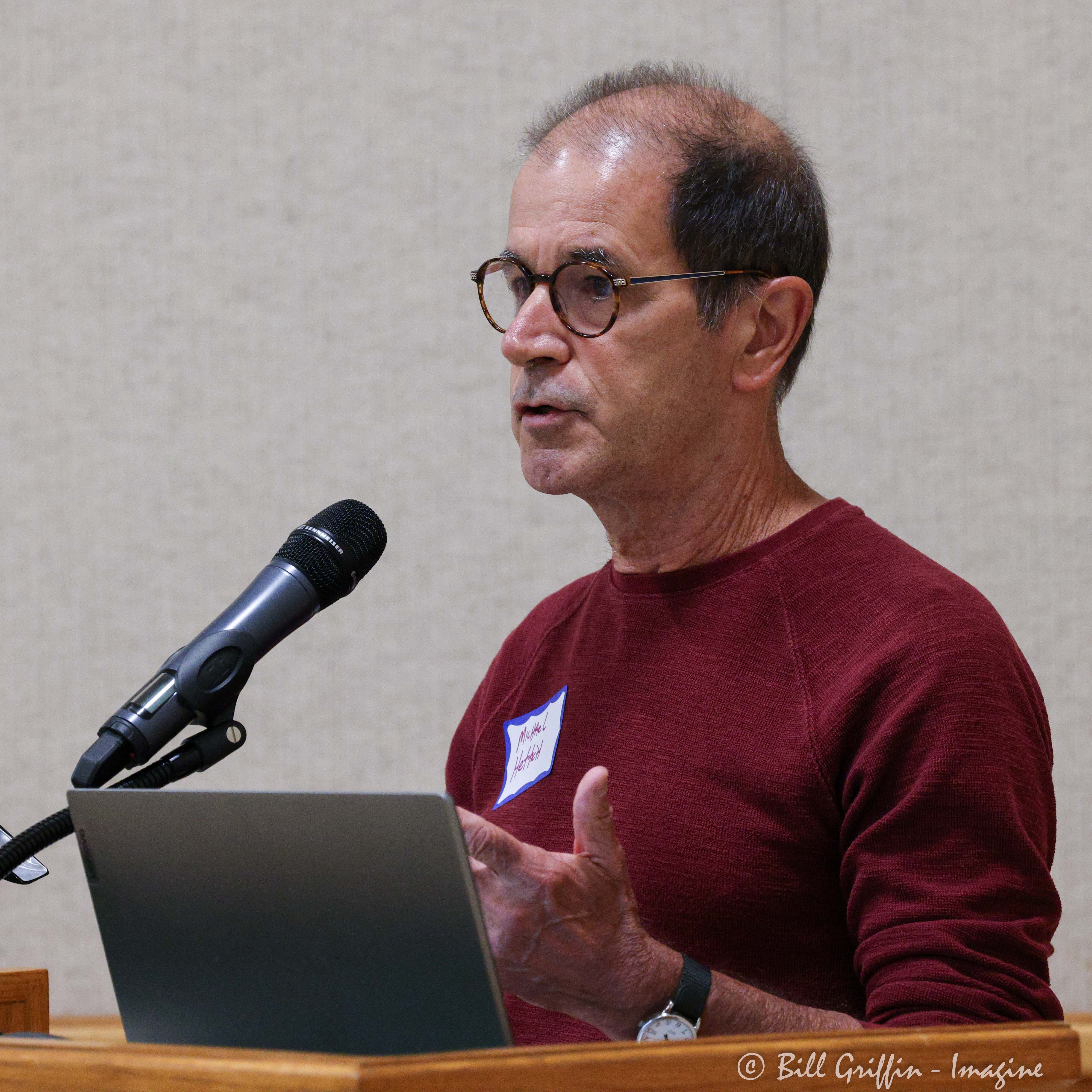
Michael Hettich
from The Halo of Bees: New & Selected Poems, 1990-2022, Press 53, Winston-Salem NC; © 2023. Winner of the 2024 Brockman-Campbell Award for the best book of poetry published by a North Carolina writer.
.
.
❦ ❦ ❦
.
Which is better, to expect beauty and encounter exactly that, or to arrive without expectation or anticipation and be surprised by joy? Which is worse, to open the window on a forecast of sun and discover drizzle, or to walk around every day under a cloud with no awareness of a sun above? Which is worse, to tool around for years just one county removed from your anger, or to cross the line and smack into it head on? Which is better, fond memories of the past or even fonder memories of the future?
.
Each of today’s three poems appears in books selected by Eric Pankey, this year’s judge of the Brockman-Campbell Award of the North Carolina Poetry Society: winner Michael Hettich for The Halo of Bees and finalists Kenneth Chamlee, The Best Material for the Artist in the World, and Katherine Soniat, Starfish Washup. What if everything we can sense and see turns into something wholly unexpected? Don’t the most beautiful creatures sometime pack the deadliest stings? What if even time itself slips us up, the solid past dissolving into mist and mud, this moment twisting inside out like a Moebius strip? What if a poem doesn’t begin or flow or lead us where we anticipated, and what if it doesn’t end as we hoped?
.
❦
.
Emerging from COVID’s virtual meetingspaces two years ago, the NC Poetry Society made a studied decision to emerge as well from its long tradition of meeting four times each year in Southern Pines at Weymouth Center for the Arts & Humanities. Last September’s meeting convened at the North Carolina Museum of Art in Raleigh. Each September meeting serves to showcase readings by contest winners: the Brockman-Campbell Book Award (NCPS); the Lena Shull Poetry Manuscript Award (NCPS); the Randall Jarrell Poetry Competition (NC Writers Network); the Susan Laughter Meyers Poetry Fellowship (NCPS and co-sponsor Weymouth Center for the Arts and Humanities); and the Jackie Shelton Green Performance Poetry Prize (NCPS in partnership with NC Literary Review and East Carolina University).
.
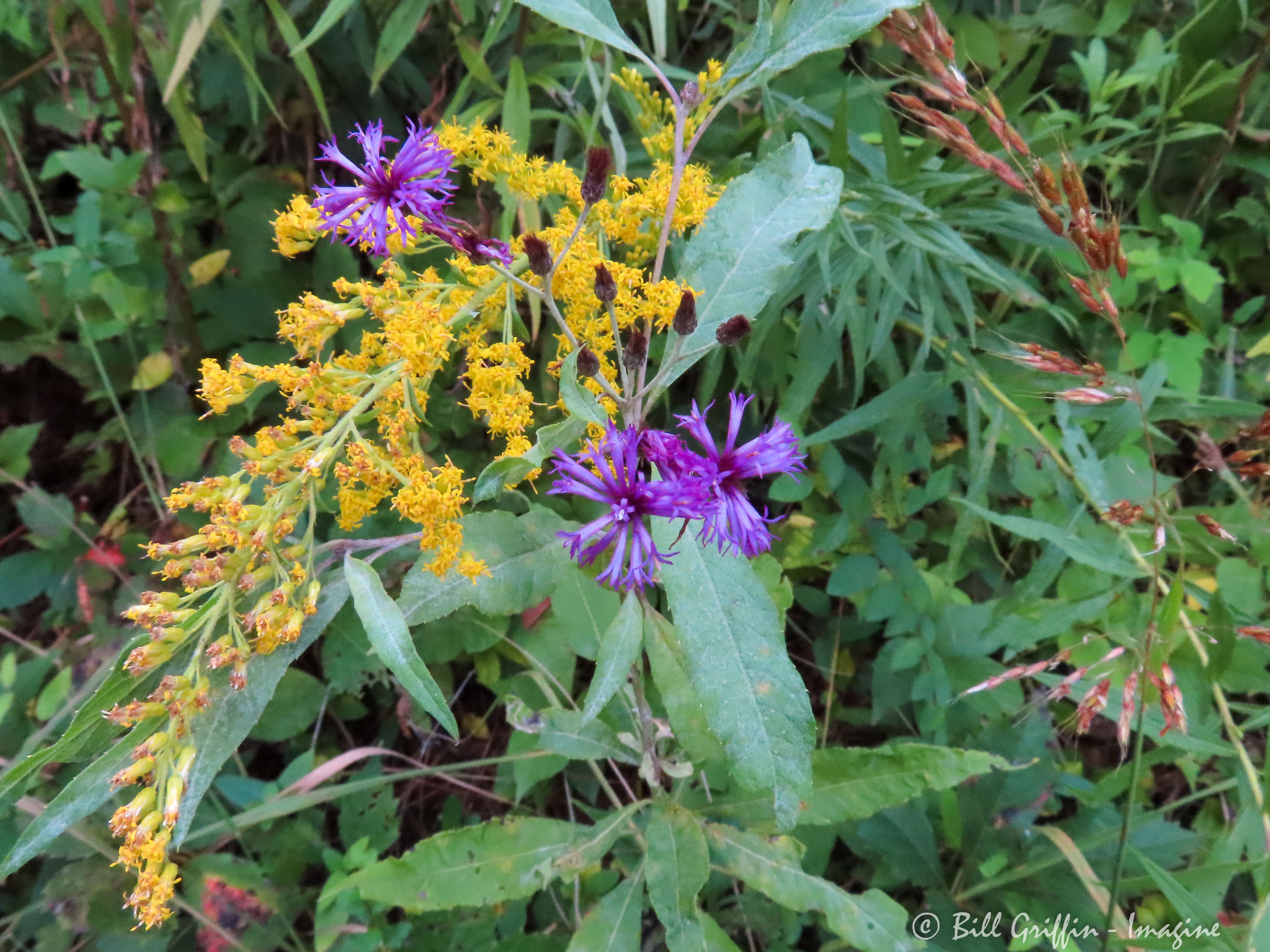
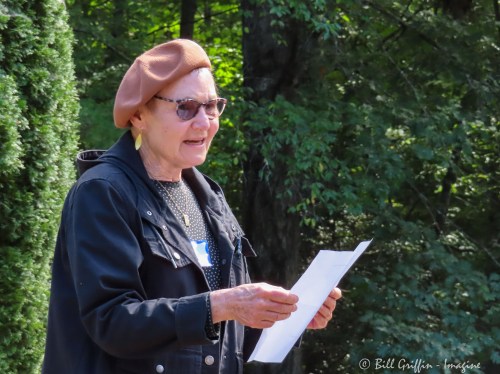
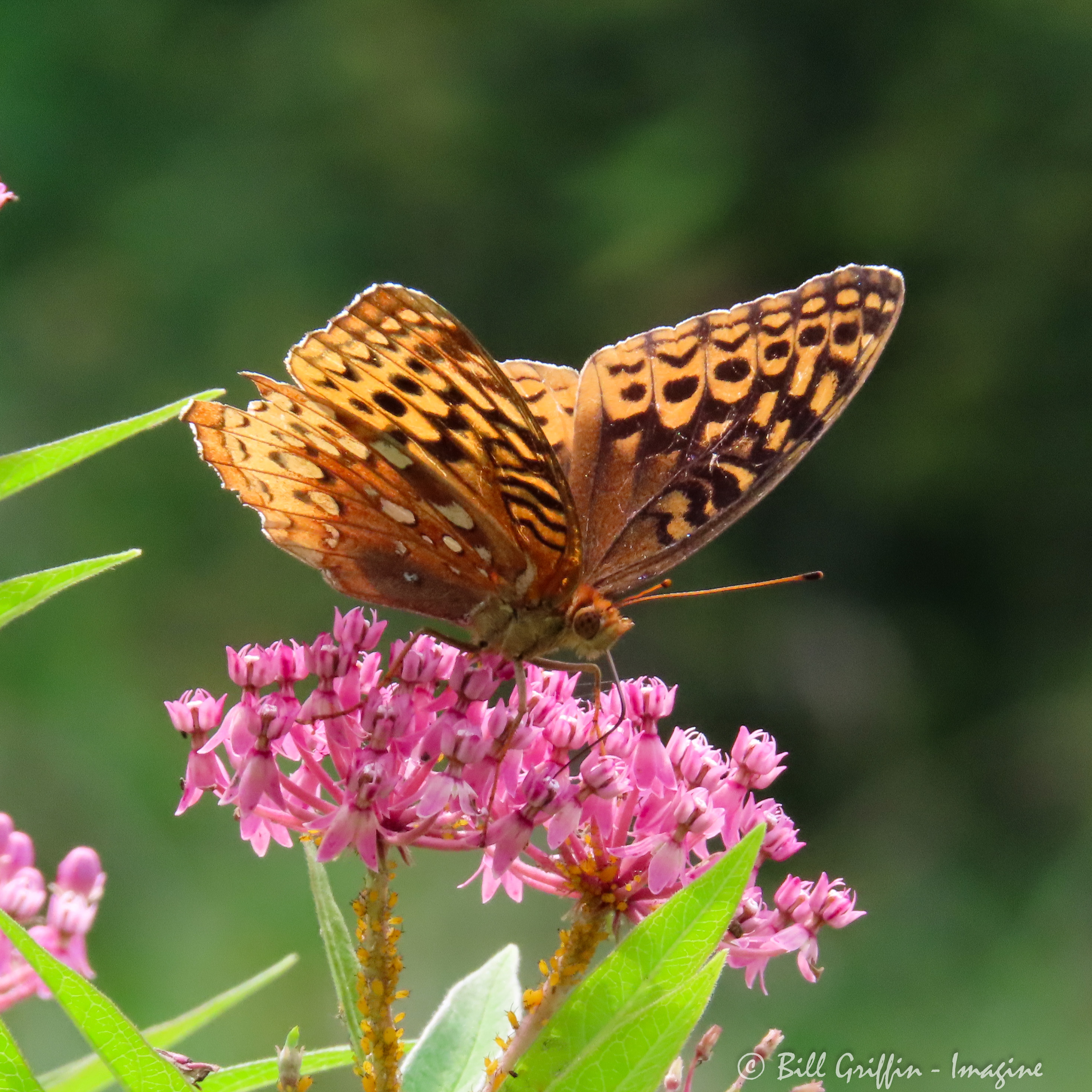
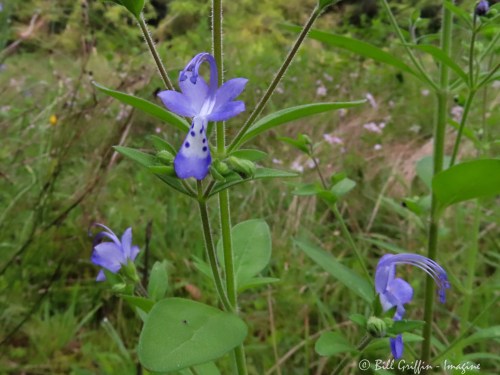
This September 14 NCPS gathered at the North Carolina Arboretum outside Asheville. As if award winning readings in such a beautiful venue were not enough, the afternoon program connected the gardens, mountains, and wild spaces into a workshop by Kathrine Cays, “Writing the Natural World.” Kathrine offered many prompts and led a guided meditation to coax us to listen to the voices of earth and sky around us, and to the voice within us that reaches to connect with nature. (See last week’s poem by Mary Oliver, Sleeping in the Forest, which Kathrine read to open her workshop.) How can I sense the communities and individuals that create my world? What do flower, tree, bird, beetle want to say to each other, and to me? How can I discover my true place on earth and return gratitude and reverence in a way that sustains me, and sustains the earth?
.
.
.
.
.
❦ ❦ ❦
.
2024 Contest Winners
.
Brockman-Campbell Award: given annually to the best book of poetry published by a North Carolina poet during the past year
Winner: Michael Hettich, The Halo of Bees
Finalist: Kenneth Chamlee, The Best Material for the Artist in the World
Finalist: Katherine Soniat, Starfish Washup
.
Lena Shull Award: honors the best manuscript of unpublished poetry written by a native or resident of North Carolina
Winner: Doug Sutton-Ramspeck, Smoke Memories
Honorable Mention: Maura High, Field as Auditorium
Honorable Mention: Becky Nichole James, Little Draughts and Hurricanes
.
Susan Laughter Meyers Fellowship: in honor of the life and work of Susan Laughter Meyers; co-sponsor Weymouth Center for the Arts and Humanities
Winner: John Amen
Honorable Mention: Maria Martin, Terri McCord, Claudine R. Moreau, Erica Takacs
.
Jaki Shelton Green Performance Poetry Prize: honors the best performance poem by a writer who fits the NCLR definition of a North Carolina writer; co-sponsor North Carolina Literary Review / East Carolina University
1st Place: Edward Mabrey
2nd Place: Jess Kennedy
3rd Place: Marcial “CL” Harper
Honorable Mention: Alessandra Nysether-Santos, Regina YC Garcia, Brenda Bailey
.
Randall Jarrell Poetry Competition: one poem by any writer who is a legal resident of North Carolina or a member of the North Carolina Writers’ Network; sponsored by NCWN
Winner: Lee Stockdale
Honorable Mention: Jackson Benton, Mary Alice Dixon
More information about all North Carolina Poetry Society contests HERE
.
❦ ❦ ❦
.
.
.
Speak Tree
Posted in Ecopoetry, Imagery, tagged Bill Griffin, ecology, Ecopoetry, imagery, Maura High, nature, nature photography, nature poetry, NC Arboretum, NC Poets, poetry on September 20, 2024| 7 Comments »
.
I think of soul as anything’s ultimate meaning which is held within. Soul is the blueprint inside of every created thing telling it what it is and what it can become. When we meet anything at that level, we will respect, protect, and love it.
While calling ourselves intelligent, we’ve lost touch with the natural world. As a result, we’ve lost touch with our own souls. I believe we can’t access our full intelligence and wisdom without some real connection to nature.
The Soul of Nature, Fr. Richard Rohr, OFM
.
[with poems by Ted Kooser, Maura High, Mary Oliver]
.
❦ ❦ ❦
.
Turkey Vultures
.
Circling above us, their wing-tips fanned
like fingers, it is as if they are smoothing
.
one of those tissue-paper sewing patterns
over the thin blue fabric of the air,
.
touching the heavens with leisurely pleasure,
just a word or two called back and forth,
.
taking all the time in the world, even though
the sun is low and red in the west, and they
.
have fallen behind with the making of shrouds.
.
Ted Kooser
from Delights and Shadows, Copper Canyon Press; © 2004
.
❦ ❦ ❦
.
You’ve seen those vultures, haven’t you, up there in the summer sky? You know you have – soaring in great circles, effortless, never a single flap. How their wings cant upwards, how they tip one wingtip down to begin a spiral, how they splay their primaries to feel the updraft, like fingers reaching to gather it in, or like the blades of great shears ready to snip the endless blue. Shepherds of the dead, preparing our funeral shrouds.
.
Is this a Nature poem? A Human Nature poem? A Death poem?
.
However you may want to label it, I can’t imagine Ted Kooser writing this poem without spending hours outdoors, on one of his many daily walks, looking up, paying attention to those turkey vultures. Just paying attention until he sees the poetry of their existence.
.
Paying attention. Observing. Noticing. That’s the first task. If I were to remind you of all four tasks of the naturalist, would you sit up straight and exclaim, “Hey, but aren’t those the very things that poets do?” Here they are according to my reckoning, the four tasks of the naturalist:
++Pay Attention+–+Ask Questions+–+Make Connections+–+Share
.
Naturalists embrace the Earth and everything that fills the Earth in the hope of bringing their companion human beings to join that same embrace. And don’t poets as well, through their noticing and questioning, also hope to connect their fellow beings within our shared existence?
.
.
❦ ❦ ❦
.
We Woods
+++Dry-mesic oak-hickory forest on a ridge along the north bank
+++of Bolin Creek, central Orange County, North Carolina
.
Yes be a color—nos & maybes,
++++ like drab.
Shrug, like slough-off,
peel, mould & mildew,
winterkill,
.
sometimes we surprise ourself
++++ & sprout.
.
Tell ourself, this stem this leaf, vine,
++++ oak, spindle, sucker, upstart hickory—
.
spring! we lagging over the redbud
(pink the redbud
++++ & green leaf-leaf
.
dogwood), &
.
troublemaker
honeysuckle: they pull-us-down vines
++++ pale, rampant.
.
++++ Yes, we someplaces sick, crack, split,
stump & burl, rootballs what
.
gave up hanging in, dragged themself out & fell
++++ ++++ ++++ ++++ up.
We woods, anyways: our down-
++++ ++++ leaf & needlefall,
seedhoard, twiggery, sprig windfall,
.
they good, the earth approve,
.
let us rootway through dirt & stone.
.
Maura High
from the forthcoming manuscript Field as Auditorium
.
.
❦ ❦ ❦
.
If I speak in the tongues of men and of angels, but have not love, I am only a resounding gong or a clanging cymbal. [1 Corinthians 13:1]
.
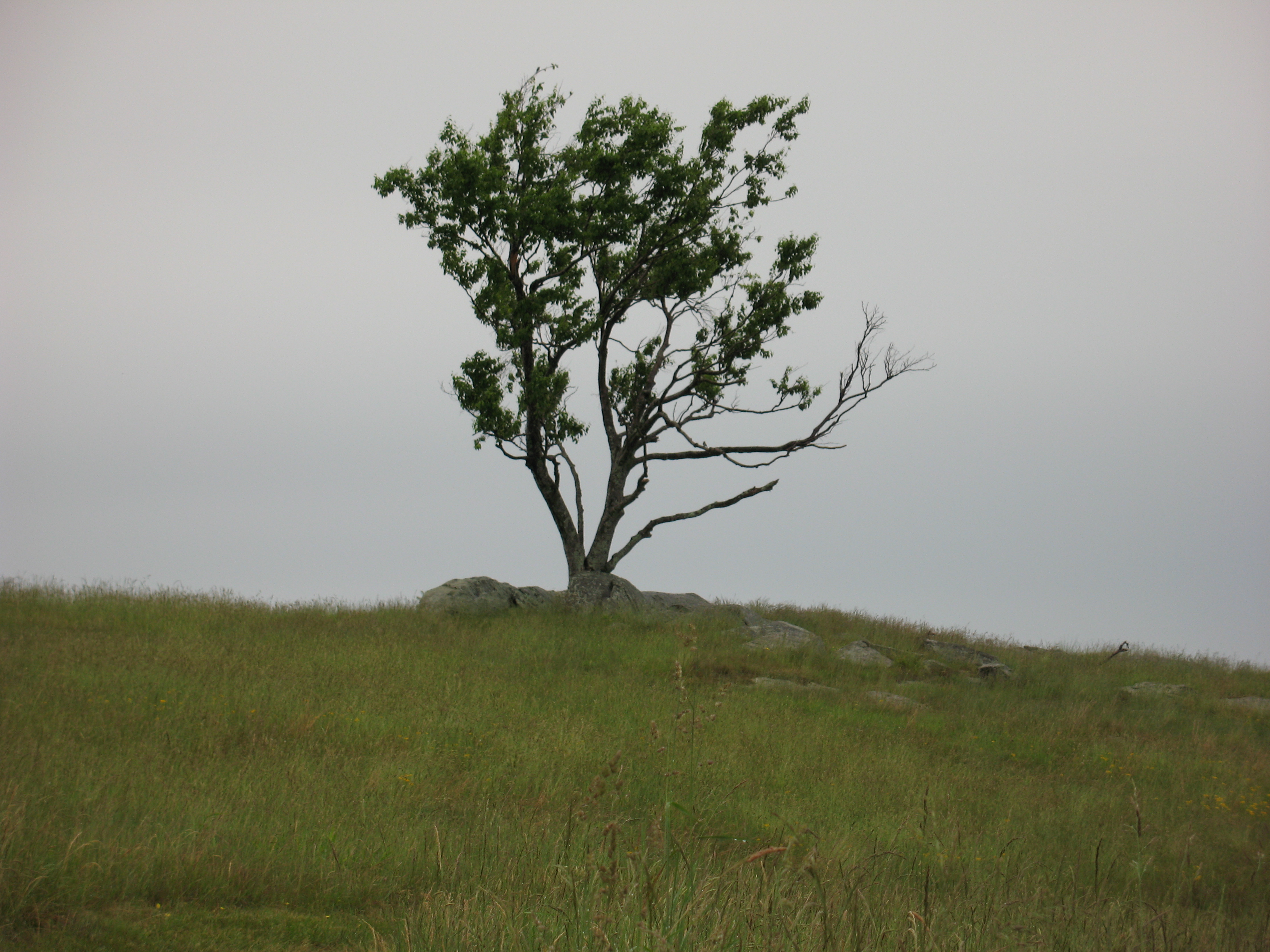
Who will speak in the voice of those whose language is yellow leaves rattling and releasing each fall? Whose sleepy muttering is the squeak of limb upon limb in a winter breeze? Whose whispered promise of love is sweet sap rising in columns every spring? Who, and how, to speak tree?
.
My first weeks as an exchange student are still shrouded in fog. I did not hear another person speaking English except for one hour each weekday, English class for the German students in the high school I attended. Gradually, steadily, however, I steeped in vocabulary and grammar – by Christmas I was fully connecting with my host parents and siblings and had become part of the family. Steeping ourselves in the foreign languages that surround us – Maura High instructs us in this by translating the voices of trees into poetry. Ecopoetry.
.
One aspect that sets Ecopoetry apart from Nature Poetry, of which it is a distinct subset, is the willingness to listen to and learn languages other than human. Ecopoetry makes audible the voices we might otherwise ignore and walk right past. Ecology is the science of living things in community, whether a subalpine spruce fir community on Kuwohi in the Smokies (formerly Clingman’s Dome) or the community of bacteria, viruses, parasites, and fungi living in your colon. Ecopoetry as well is focused on community, connections, interdependencies.
.
In the grand spectrum of diversity of life on this planet, Homo sapiens is a single thin line. For Ecopoetry, the human is not necessarily the locus of all significance and importance. We rampant humans might even be the bad guys. We are woven into the communal whole, our skills and our gifts, our consumption and our neglect, for good and ill, and the continuing strength of our threads depends on the warp and weft of every other living thing, not to mention geology and hydrology and meteorology and . . . well, have I quit preaching and gone to meddling?
.
May poetry lift voices that have the power bring us all together as one.
.
❦ ❦ ❦
.
Sleeping in the Forest
.
I thought the earth
remembered me, she
took me back so tenderly, arranging
her dark skirts, her pockets
full of lichens and seeds. I slept
as never before, a stone
on the riverbed, nothing
between me and the white fire of the stars
but my thoughts, and they floated
light as moths among the branches
of the perfect trees. All night
I heard the small kingdoms breathing
around me, the insects, and the birds
who do their work in the darkness. All night
I rose and fell, as if in water, grappling
with a luminous doom. By morning
I had vanished at least a dozen times
into something better.
.
Mary Oliver
collected in Devotions: The Selected Poems of Mary Oliver, Penguin Press; © 2017 by NW Orchard LLC
.
.
❦ ❦ ❦
.
In the end we will conserve only what we love. We love only what we understand. We will understand only what we are taught.
Baba Dioum, Senegalese environmentalist
.
❦
.
If you would like to explore this subject further, try The ECOPOETRY Anthology
Ann Fisher-Wirth, Laura-Gray Street, editors; Trinity University Press, Austin TX; © 2013, 2020
.
❦ ❦ ❦
.
.
.
.
Noticing
Posted in Ecopoetry, tagged Adrian Rice, Bill Griffin, Ecopoetry, imagery, nature, nature photography, NC Poets, poetry, Press 53, The Chances of Harm on September 13, 2024| 2 Comments »
.
[with 3 poems by Adrian Rice]
.
Yard Work
.
The neighbour and I.
We joke across the avenue aisle
about the onset of porch time.
While praising the advent
of all that it means, we
comradely lament the yard work
that has to be tholed.
.
As if we are somehow
equals in the seasonable labour.
As if I could shake a spade
at her miraculous endeavours,
her skilled green-fingered-ness,
her laudable efforts to keep
her garden, and shrubbery, pristine.
.
It’s almost is if we are fellow poets,
fast farmers of verses.
As if one of us isn’t slacking
in what it takes to carry
the living thing forward,
not lacking in showing
the proper respect
.
for the copious rose,
the sculpted shrub,
the blade of grass,
the whole blooming lot.
As if one of us isn’t lazily inattentive,
undeserving of the true line
that is the all of spring.
.
Adrian Rice
from The Chances of Harm, Press 53, Winston-Salem NC; © 2024
.
❦ ❦ ❦
.
Every walk is preparation for the next. The past few weeks I’ve been preparing to share naturalist skills with poets on a walk through the woods. Poets! I’ve led fourth graders and trail maintainers and garden clubbers, but this is daunting. The organizer sent out a notice referring to the afternoon as an “Ecopoetry Walk.” What is such a thing? Will we be reciting Robinson Jeffers and Jane Mead as we struggle not to trip over tree roots? Perhaps not, but on the other hand I ought to consider holding up the ecopoetry moniker.
.
Ecopoetry is not synonymous with Nature Poetry. Perhaps Ecopoetry can be best summed up in three lines by Wendell Berry:
There are no unsacred places;
there are only sacred places
and desecrated places.
How do you make a place sacred? You don’t. You can’t. Its sacredness already resides within it, this little patch of dirt ribboned with mycelia and protists, springtails and worms busy making their lives and becoming someone else’s lives. Roots down and stems up and a tiny native bee stops by to test the flower for sweetness. Life has already brought sacred into being within this drab, insignificant patch.
.
And the stone that slowly disaggregates, the minerals it offers up to become incorporated into cellulose, chitin, bone; the light from a nearby star that filters through; the carbon turned organic, the oxygen exhaled as generous gift – all sacred. All worthy of veneration. Ecopoetry is kneeling in respect, recognizing the holy, bearing witness to the filaments of love that extend and stretch and bind everything together. Love binds us to everything and everything to us.
.
Turning away, withholding love, even just simply not noticing, these are desecration. Ecopoetry bears witness also of our sins. Maybe we didn’t know. Maybe we never stopped to think. Maybe we let ourselves become so disconnected that we no longer see beyond our own orbits and really believe that everything revolves around our personal center. How have we come to this place?
.
Let’s take a walk. Smells like autumn. Someone beyond this patch of woods is baling hay. A little less humid than last week. Tears of joy or ragweed? It’s too easy to pass beech-drops and pinesap blooming now so close to the earth, so let’s slow down. Red and green, the partridgeberry is already decorating for Christmas. One tuliptree leaf has fallen and flares lemon curling brown. All the usual September changes. There’s nothing really special here. Nothing except for everything.
.
.
❦ ❦ ❦
.
30 Doagh Road
.
She’s my grandmother, or she may be yours,
sitting in her small living room by a real fire,
sanctifying her evening corner of the fireplace.
In shot is the old black-and-white TV
standing stalk on thin brassy legs,
.
as much a part of the family as anyone else.
In her aproned lap she holds her knitting.
She grows colourful garments from a ball of yarn,
her hands kiting above unspooling wool-skeins.
Those busy needles of ancestral love
.
are clicking with effortless expertise
while she stages a smile for the camera.
Over the tiled mantelpiece, such as it is,
a family of ducks are forever in flight,
rising toward the moon of a plain white clock
.
cheap kind you’d see in local schoolrooms.
The chimney breast is lavishly papered,
dressed up in a floral flourish, unlike
the workaday plainness of the other walls.
On the mantelpiece there’s Scottie dog delph,
.
Grandchildren’s gift-knacks, small-framed pics,
another clock, a fancy one, polished and centred,
shaped like the Cavehill overlooking the house.
It tells the time, again, time that she is
religiously the last person to idly ignore.
.
O photographic proof of an old-fashioned
faith in the possibility of family!
O stitcher of seconds of unwasted time
into useful coverings to clothe the given clan!
Take these thanks for your example to that boy; this man.
.
Adrian Rice
from The Chances of Harm, Press 53, Winston-Salem NC; © 2024
.
❦ ❦ ❦
.
Lately I’ve taken to describing myself as a “full time” naturalist. All this really signifies is that I can’t walk across the yard without noticing the bugs and naming the weeds. It also reveals which books and apps occupy most of my attention. No paycheck is involved for the full time naturalist, except that when one pays attention, attention pays one back with interest.
.
It is obvious, reading The Chances of Harm by Adrian Rice, that he is a full time poet. No particle of life escapes his pondering gaze. He chides himself as “slacker” in Yard Work but feet-up-on-the-porch time is clearly a fertile spawning ground for poetry. Everything, in fact, becomes poetry when Adrian lays eyes and mind and heart on it. When I first opened this book, I imagined bringing those two words closer together until a blinding arc leaps between “Irish” and “Poet.” But it is not blinding. It is full and bright, the light Adrian brings, and suddenly I am seeing all the things around me in their true colours.
.
This world and all it holds, everything is worthy of the poet’s noticing. And I, the reader of poetry, am drawn into the poet’s embrace. Thank you, Adrian, for welcoming me to stroll through your neighbourhood and put my feet up on your porch rail. Thank you for opening the voices of things and places and people so they can share their stories. Next time I pause along my favorite trail to kneel and touch the stem of tiny lobelia peering from the shadows – pubescent? glabrous? – may it and all existence spreading out from it tell me the rest of its story, its poetry.
.
❦
.
Visit PRESS 53 for books by Adrian Rice including his latest, The Chances of Harm
.
.
❦ ❦ ❦
.
This Letting Go
.
Why wouldn’t we invest
them with such significance?
This letting go of leaves
from the avenue trees
which feels like the deaths
of so many people,
each struggling to hang on
.
until the very last breath;
all of them subject
to each sudden
mood swing
of wind that sends
showers of them
wending to the ground
every time it lifts.
.
But we come and go,
they seem to say,
we come and go,
and at least we’re not alone
like so many of you –
just look at us lushing
the dainty driveways
.
with our leafy selves!
And if we hadn’t have fallen,
how long, in this world,
in your world,
do you think we could’ve
happily hung on?
How long?
.
Adrian Rice
from The Chances of Harm, Press 53, Winston-Salem NC; © 2024
.
❦ ❦ ❦
.
.
.


[…] About […]