Feeds:
Posts
Comments

Archive for April, 2023

[ with 3 poems by Jane Mead]

In Need of a World

Who wouldn’t want a life
made real by the passage of time
or a world, at least,
made real by the mind. Something
solid and outer, though connected.

Who wouldn’t want to know
for certain how to get there?

I’d like to tell you simply
how I passed this day putting tomatoes up,
or how I tied a stern cicada to a string
so I could feel the gentle tug
its flying in frantic circles made.

I’d like to show you the red
worm-shaped burn on my wrist
and in this way claim myself.

Instead I slip out of my every day –
away into the distant and lulling sound
of “once-upon-a-time-there-was-a-woman.”

Will I ever find that perfect stance
of soul and mind from which sparks
a self uttering itself?
I’m always slipping between rows of corn –
through the field that rises toward this ridge
from which I like the houses for their smallness.

Here I lean against a Honey Locust,
feathery tree with its three-inch thorns,
and watch sagging strands of barbed wire
sway slightly in the wind – the clump
of brown fur hanging there, waving.

I watch the field of drying corn beyond,
and beyond that the soccer field
and rows of clean-lined condos.
I wait for the yellow light to flick on
in the white church across the valley.

Will I ever learn the way to love
the ordinary things I love to look at?

I’m always slipping away
between rows of corn, climbing
toward this ridge to think,
when really what I want is a ridge
or a lonely field on the edge of the world
of the mind. A place from which to speak
honestly to that man on the porch, a way
to greet the children who are swinging
on the edge of duck behind chain-link fences.

But always it’s either I or world.
World or I.

And when it’s I, I’m dreaming
on a quiet ridge that the tomatoes
ripened and, though I was missing,
a woman put an apron on and canned them.
And when it’s world, it pushes me back
toward that madness of the soul
which is not a field, nor a ridge, nor a way.

Jane Mead
from To the Wren, collected & new poems 1991-2019; Alice James Books, Farmington, Maine; © 2019

❦ ❦ ❦

I am sitting at the kitchen table reading these poems by Jane Mead when Linda asks me if I have any trash that needs to go out. I am sitting at the kitchen table because if I sit at my desk I will remember all the things that need to be done but that are not reading poems by Jane Mead. Of the things I will remember sitting at my desk some are a chore, like writing checks, and some are sober, like checking in with Dad to see if he is still having pain, and although reading Jane Mead is not a chore the poems are certainly sober. She makes me wonder: will there be a moment later today or tomorrow to sit and stare into the green chapel of April and ponder who I am?

Yesterday walking the Forest Bathing Trail, Linda and I saw three violets that are not the rampant purple violets that fill the rest of the world. One by one during the weeks of April we have learned their three names. They are small, they are just a few, they are precious. Their rampant purple cousins whose flowers are crafty enough to duck beneath the mower blades, who make many, many seeds, and who have perfected the concept of ‘spread’, they, too, are precious. Will there be a moment later today or tomorrow to sit and consider the insignificance of violets and consider whether, perhaps, all things and all moments are precious?

❦ ❦ ❦

Sparrow, My Sparrow

The voice that loves me best when I am dreaming
comes from every corner of the circle of my sleep
speaking in the sound of my own drowning.
She says the body’s just a habit getting old,
a crystal turning on a nerve of ancient longing.
She says I will teach you how to be with yourself
always, she says we do not live in the same world.

All this is just an allegory for the truth.
Truth is, I cannot speak
the voice that I’ve been dreaming.
Truth is, the slate sky darkens,
clouds of sparrows heave in the wind,
the trees are massed with sparrows screaming
and the fields are dotted with them.
The birds are bracing themselves. The birds
are frenzied by something about to happen.

Truth is, I have my feet on the slimy banks.
I look for my face in the murk-green river
and the water’s surface does not change.

But I hear myself in the screech of sparrow
and am panicked by something about to happen.

Slate sky – darkened; sound in wind:
I enter this world like myself as a prayer.
I enter this world as myself.
I cannot help myself.

What is a prayer but a song of longing
turning on the thread of its own history?

I feel myself loved by a voice in the wind –
I cover my ears with my palms.
The whole world rocks and still
the cold green river does not spill.

Jane Mead
from To the Wren, collected & new poems 1991-2019; Alice James Books, Farmington, Maine; © 2019


❦ ❦ ❦

The Man in the Poetry Lounge

at Berkeley is reading English
pastoral poetry with passive
abandon, chewing his thumbnail
aggressively. He wants

to see grass, he wants to
BE grass so badly he can
almost smell it. Outside,
they are cutting the grass—

the man and the mower—they are
dressing and keeping the garden.
They are not far enough away
from my hay fever, but the man

reading pastorals is off—
zeroing in on calmer places.
Have the birds arrived yet?
Have the larks and nightingales

made their appearance? I would like
to ask him to let me know
when he gets to the birds. I would like
to concentrate then and there, and lose

what I have read about Flanders
and Picardy and the trenches of W.W.I:
the larks appearing around the time
of stand-to in the morning,

the nightingales showing up
by stand-to at night. I would like never
to have learned that they were there.
But instead, because my nose is running,

my eyes are getting smaller by the minute,
and I’m edgy, I’ll ask him sweetly
if he’s bothered at home
by bedbugs, rats, or lice,

and justify the question with an explanation:
I myself am bothered by fleas.
This is why I keep scratching—
which act I hope he does not find

distracting because, really,
who am I to ruin his birds.
I who cannot, as you have seen,
follow those trenches to their

logical conclusion. Instead, I too
have searched long, and found
that in the gentle arc
of a pig’s back there really is

a thought to calm the thinker—
if, that is, the pig be tame.
I want to know if this man
loves what he is reading—

and if he loves it enough
in what way it will change him.
Are we onto something real now
or is this all about planting

a false goose in front of the moon?
Do the iambics soothe him? Is he
big on true rhyme and false conclusion,
the sonic hanky—you wipe your eyes

you blow your nose. Which I will
have to leave this room to do.
But not before I’ve resisted
coming right out and asking

if he’s fulfilling the requirements
of heart or mind, and asked instead
what it’s my true right to know
(involving, as it does, the heat

of concentration and the problem
of public safety, as in MY safety):
if his shirt, which I’ll begin
by calling handsome, has passed

the requirements of the Flammable
Fabrics Act. Then I’ll
step out and blow my nose,
at which point I might as well wander

back on down toward Cody’s and try
to receive the world, browsing
and scratching in the poetry section,
after buying a paper poppy for a dollar—

the one you didn’t want to know was coming—
the Flanders—from a veteran of foreign wars
at Telegraph and Durant—not,
of course, looking at his left leg—

because I can’t.
Because it isn’t there.

Jane Mead
from To the Wren, collected & new poems 1991-2019; Alice James Books, Farmington, Maine; © 2019

❦ ❦ ❦

Given the nearly complete destruction of an entire planet, the overpowering by greed of any sense of the basic logic of survival, or valuation of beauty — it would be odd if the urgency of this situation were not reflected in our poetry. But poetry has the potential to move people, which is where the potential for growth and change of a certain kind enters the picture.
+++++++++++++++ Jane, Mead, from a 2014 online interview,
+++++++++++++++ recalled in her obituary in the Los Angeles Times

Jane Mead died in 2019 at the age of 61. She was a Griffin Poetry Prize and Los Angeles Times Book Prize finalist for her 2016 book World of Made and Unmade, about her mother’s death. Her previous book of ecopoetry, Money Money Money Water Water Water, explores the widespread destruction of the natural world.

❦ ❦ ❦


❦ ❦ ❦
IMG_6432

Read Full Post »

[with poems by Jennifer Elise Foerster, Robert Service,
Sam Love, Ada Limón]

One day for Earth Day? One day to honor our kinship with every thing that lives – Animal, Plant, Fungus, Protist, Archaea, Bacteria, all of them? One day to celebrate chlorophyll, the absolute best idea that life has ever had? One day to ponder in reverence this single solitary place in the universe that sustains life?

In Kim Stanley Robinson’s recent novel, The Ministry for the Future, one character, a member of The Ministry, reckons that what the earth needs to save itself is a new religion. Not new economics, not new politics, not even new technologies – a new religion.

Why religion? At its essence, religion is about The Good – how to define it, pursue it, encounter it, how to live encompassed in its expansive presence. Religion is permeative and interpenetrative – for its adherents, it occupies every aspect of life and every moment of consciousness. Religion is transcendent – ego, personal comfort, power, possessions, all fade to irrelevance in the presence of The Good. Religion is immanent, not there & then but here & now.

Here and now. Every day. Reverence and celebration. Stop and listen and you will hear Earth whispering its transcendent message: “More Life!”

Thank you to the readers of these pages
who have responded to my call for poems this Earth Day.
Watch for new posts on April 21, April 22, and April 23.

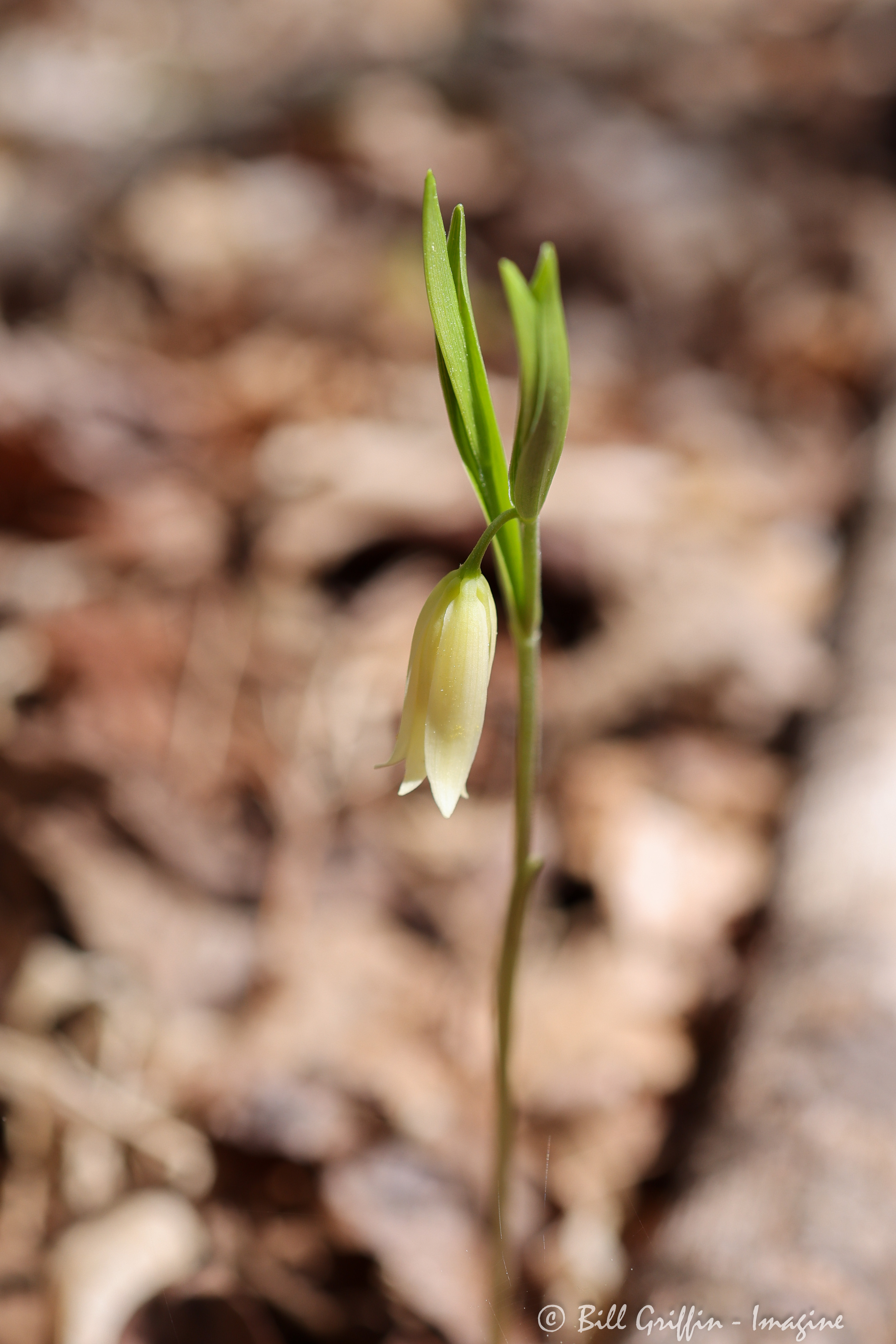
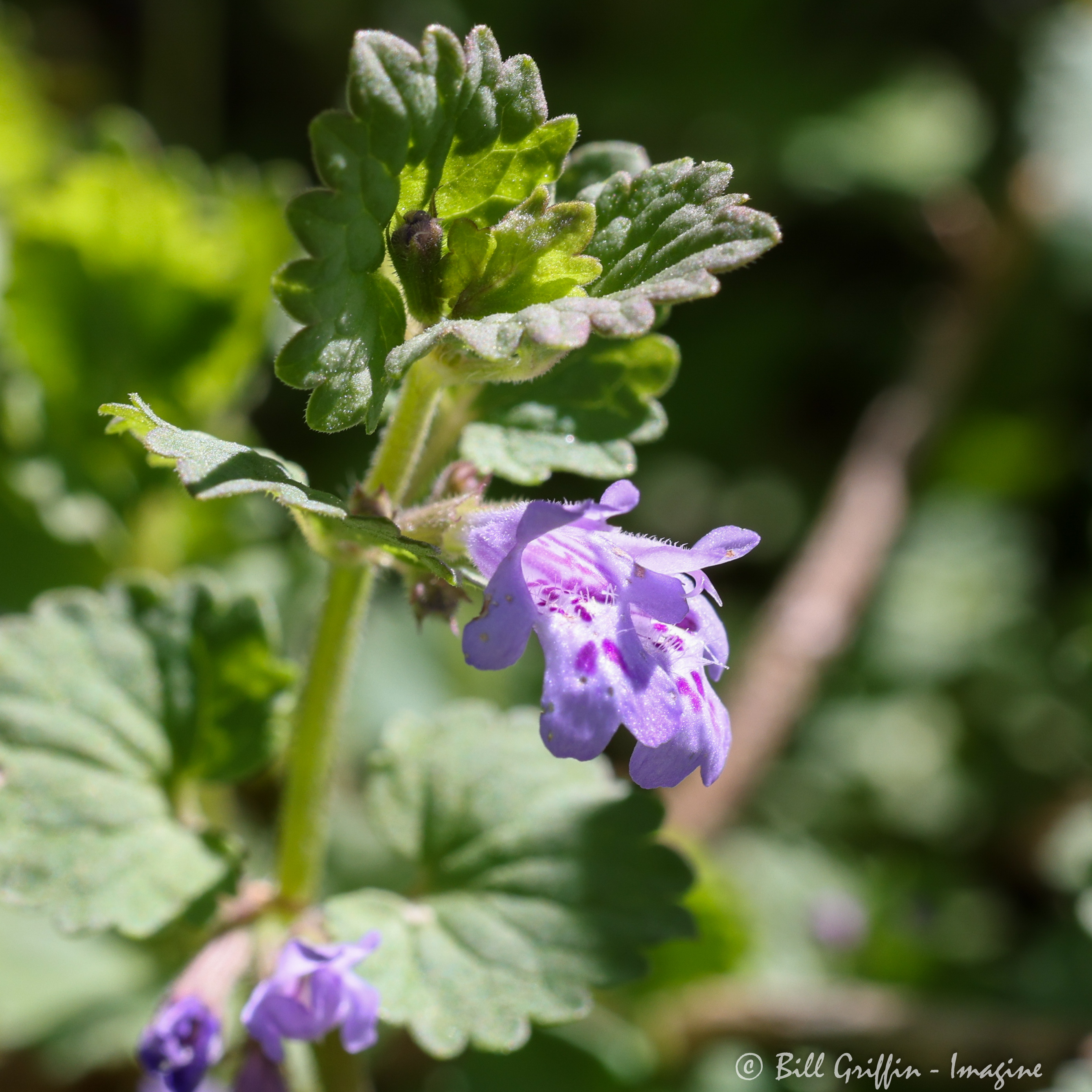
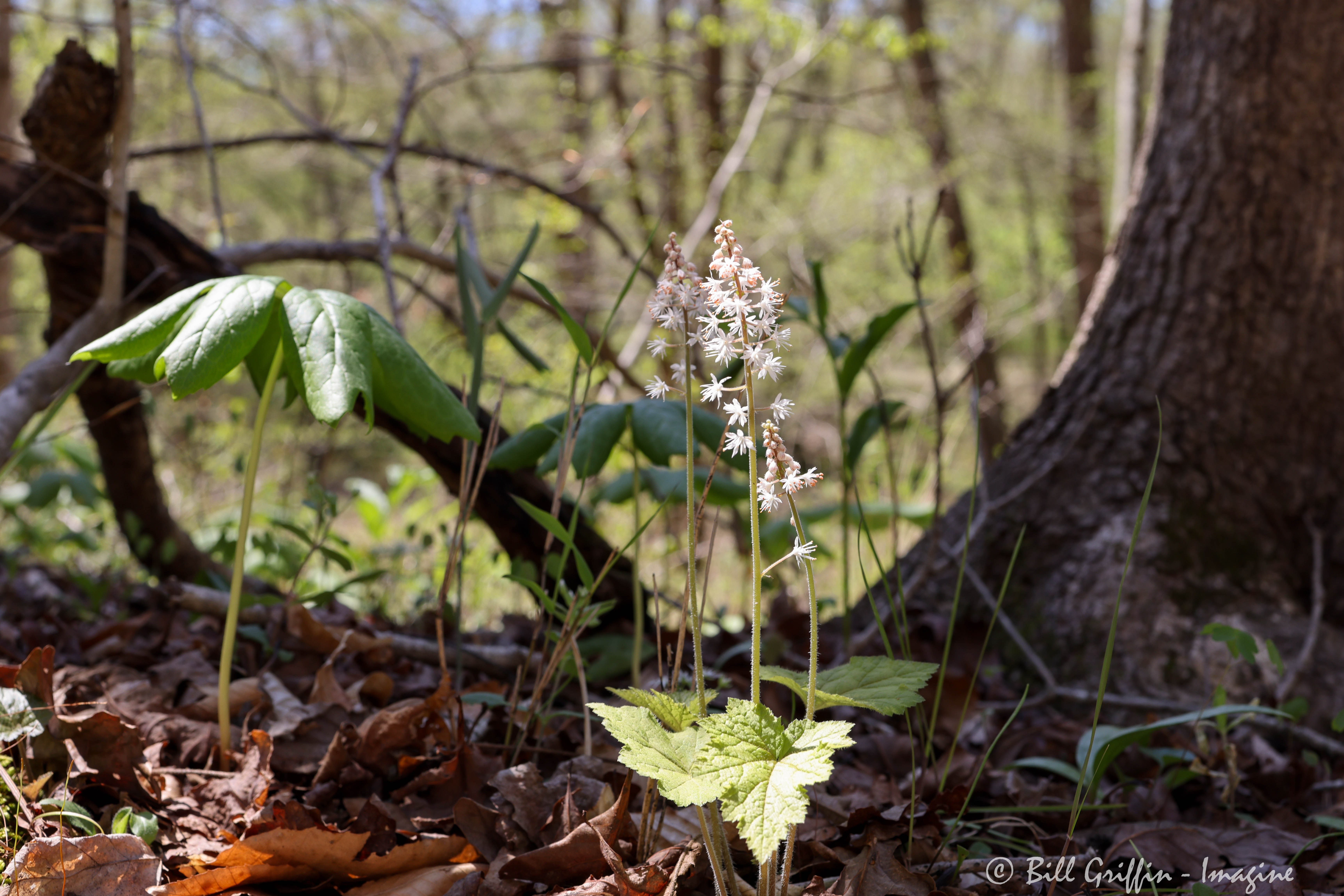
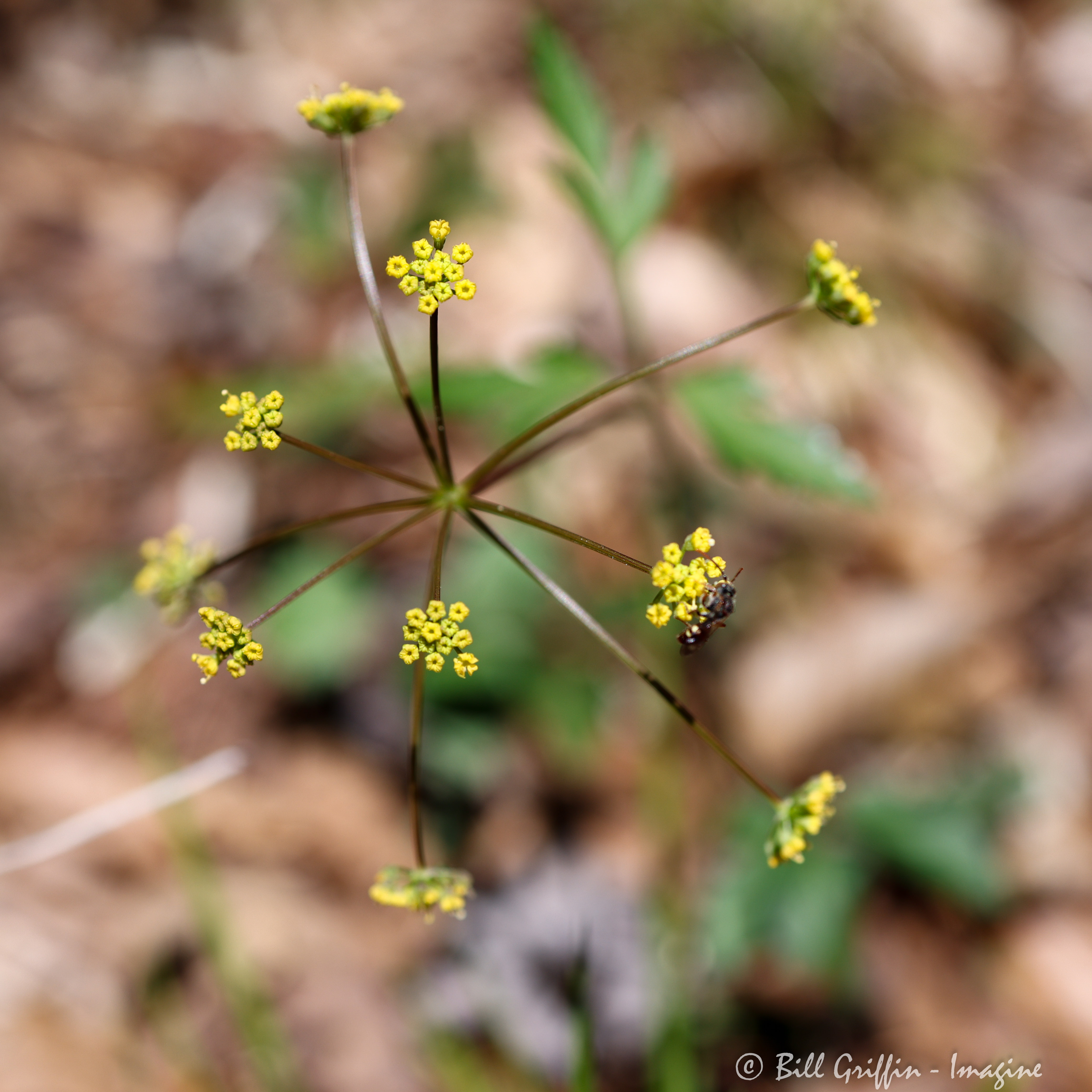
All photographs were taken April 11-17, 2023,
along the Elkin & Allegheny Nature Trail,
part of the Mountains-to-Sea Trail in North Carolina, USA.

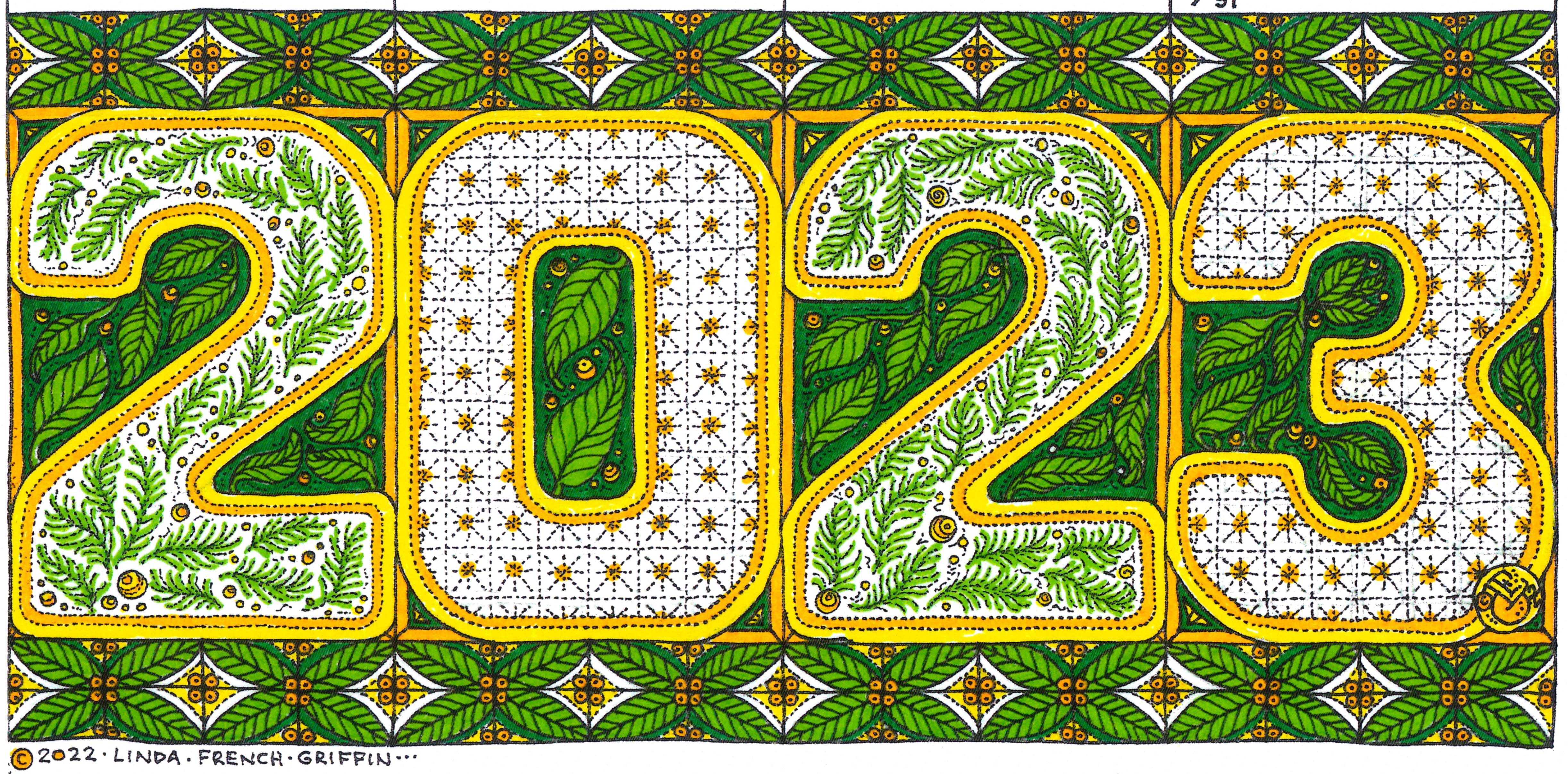
Earth Day 2023 art by Linda French Griffin.

❦ ❦ ❦

Origin of Planets

In this version, the valley
lime green after rain
rolls its tides before us.

A coyote bush shivers with seed.

We hold out our palms as if catching snow—
our villages of circular tracts
overcast with stars.

We have been moving together in sequence
for thousands of years, paralyzed
only by the question of time.

But now it is autumn under bishop pines—
the young blown down by wind feed
their lichens to the understory.

We follow the deer-path
past the ferns, to the flooded
upper reaches of the estuary.

The channel snakes through horsetails
and hemlock as the forest deepens, rises
behind us and the blue heron,
frozen in the shallows.

The shadow of her long neck ripples.

Somewhere in the rustling tulle reeds
spider is casting her threads to the light

and we spot a crimson-hooded fly agaric,
her toadstool’s gills white
as teeth as the sun
++++++++ bleeds into the Pacific.

We will walk the trail
until it turns to sand
and wait at the spit’s edge, listening
to the breakers, the seagulls
as they chatter their twilight preparations.

What we won’t understand
about the sound of the sea is no different
than the origin of planets

or the wind’s crystalline structures
irreversibly changing.

The albatross drags her parachute
over the earth’s gaping mouth.

We turn back only for the instant
the four dimensions fold
into a sandcastle—before its towers
are collapsed by waves.

The face that turns
toward the end of its world
dissolves into space—

despite us, the continuum
remains.

Jennifer Elise Foerster
Selected by Bill Griffin; Originally published in Poem-a-Day on December 20, 2022, by the Academy of American Poets. Copyright © 2022 by Jennifer Elise Foerster.

Jennifer Elise Foerster comments: “This poem emerged from one particular version of a day when I had the gift of walking with a friend on the Point Reyes National Seashore. I say ‘version’ because the path this poem follows is inevitably different from the path we walked, and distinct, too, from the many paths in my memory of that day. What all my versions share is that we walked toward the beach, toward twilight, at which point I wondered what it really meant to ‘turn back.’ At which point I watched the waves, the wind, the endless endings and beginnings, the turnings of gulls and seashells, planets peering through dusk. I love that wonderment doesn’t require understanding. How brief we are, and infinite in our versions of being here on earth.”

. . . wonderment doesn’t require understanding. I love understanding like I love the specifics of this poem, the creatures that occupy it, their occupations, but I also love the door it opens into reverence that requires no understanding. That, in fact, requires nothing of me at all except to take my place as part of the continuum.

– Bill Griffin / Elkin, North Carolina

❦ ❦ ❦

The Call of the Wild

Have you gazed on naked grandeur, where there’s nothing else to gaze on,
Set pieces and drop-curtain scenes galore,
Big mountains heaved to heaven, which the blinding sunsets blazon,
Black canyons where the rapids rip and roar?
Have you swept the visioned valley with the green stream streaking through it,
Searched the Vastness for a something you have lost?
Have you strung your soul to silence? Then for God’s sake go and do it;
Hear the challenge, learn the lesson, pay the cost.

Have you wandered in the wilderness, the sage-brush desolation,
The bunch-grass levels where the cattle graze?
Have you whistled bits of rag-time at the end of all creation,
And learned to know the desert’s little ways?
Have you camped upon the foothills, have you galloped o’er the ranges,
Have you roamed the arid sun-lands through and through?
Have you chummed up with the mesa? Do you know its moods and changes?
Then listen to the wild, — it’s calling you.

Have you known the Great White Silence, not a snow-gemmed twig a-quiver?
(Eternal truths that shame our soothing lies.)
Have you broken trail on snowshoes? Mushed your Huskies up the river,
Dared the unknown, led the way, and clutched the prize?
Have you marked the map’s void spaces, mingled with the mongrel races,
Felt the savage strength of brute in every thew?
And though grim as hell the worst is, can you round it off with curses?
Then harken to the wild, — it’s wanting you.

Have you suffered, starved, and triumphed, groveled down, yet grasped at glory,
Grown bigger in the bigness of the whole?
‘Done things’ just for the doing, letting babblers tell the story,
Seeing through the nice veneer the naked soul?
Have you seen God in His splendours, heard the text that nature renders
(You’ll never hear it in the family pew),
The simple things, the true things, the silent men who do things?
Then listen to the wild, — it’s calling you.

They have cradled you in custom, they have primed you with their preaching,
They have soaked you in convention through and through;
They have put you in a showcase; you’re a credit to their teaching –
But can’t you hear the wild? – It’s calling you.
Let us probe the silent places, let us seek what luck betide us:
Let us journey to a lonely land I know.
There’s a whisper on the night-wind, there’s a star agleam to guide us,
And the wild is calling, calling… let us go.

Robert Service
Selected by Mike Barnett; published in Robert Services’ first book of poetry, Songs of a Sourdough, in 1907.

Robert Service (1874-1958) was a British-Canadian poet, often called “the Bard of the Yukon.” This poem has always had a positive affect on me with its rugged description of wild places similar to the ones I have traveled while camping and backpacking. I have used the last two stanzas as quote material or ‘words of wisdom’ in camps I have directed, and I still use it often with my Family Nature Club.

– Mike Barnett / Eustis, Florida.

❦ ❦ ❦

Forest Bathing

My artificial cocoon
is really cozy as it
guards me from
nature’s wildness

My illuminated habitat
wards off the elements
and creates its own micro climate
oblivious to its carbon footprint.

And yet something is missing
as the artificial light challenges
the setting sun and the stale air
maintains a constant temperature.

In contrast a short distance away
nature beckons me to a forest
where natural bioenergy
can alter my mental state.

Strolling through this verdant space
I enjoy a heightened awareness
of life’s web and become open
to unspoiled wildness.

Feeling restored I thank the trees
and say goodbye to the
rustling leaves, trickling water,
melodic birds, dappling light,
and healing spirits.

Sam Love
Published in Earth Resonance: Poems for a Viable Future (Poetry Box, Portland Oregon)

The Japanese believe time in the forest can be healthy. They practice “forest bathing” or shinrin-yoku. Shinrin means “forest,” and yoku means “bath.” I find the noise in my head begins to quiet when I walk in an area untouched by so called civilization.

– Sam Love / New Bern, North Carolina

❦ ❦ ❦

Give Me This

I thought it was the neighbor’s cat back
to clean the clock of the fledgling robins low
in their nest stuck in the dense hedge by the house
but what came was much stranger, a liquidity
moving all muscle and bristle. A groundhog
slippery and waddle thieving my tomatoes still
green in the morning’s shade. I watched her
munch and stand on her haunches taking such
pleasure in the watery bites. Why am I not allowed
delight? A stranger writes to request my thoughts
on suffering. Barbed wire pulled out of the mouth,
as if demanding that I kneel to the trap of coiled
spikes used in warfare and fencing. Instead,
I watch the groundhog closer and a sound escapes
me, a small spasm of joy I did not imagine
when I woke. She is a funny creature and earnest,
and she is doing what she can to survive.

Ada Limón
Selected by Melinda Thomsen; originally published in Poem-a-Day on September 16, 2020, by the Academy of American Poets. Copyright © 2020 by Ada Limón.

I love this poem because the speaker at first mistakes the groundhog for a cat, something typically tame, but as she watches the animal enjoy its life, somehow this wild thing has sucked away all the speaker’s pain and replaced it with a jolt of unexpected joy. The wild draws us out of ourselves and into a healthier being.

– Melinda Thomsen / Greenville, NC

❦ ❦ ❦


Read Full Post »


[with poems by Jennifer Atkinson, David Radavich,
Barbara Bloom, Diane Seuss]

Today is Earth Day, April 22. Yesterday, today, and tomorrow we are publishing posts for Earth Day featuring poems submitted by our readers that touch the theme, Wild & Rewild.

Rewilding is a conservation effort aimed at restoring habitat, revitalizing ecosystems, and reintroducing animals and plants that historically occupied these wild spaces.
Rewilding may be as small as converting cow pasture to a bit of riparian Piedmont Prairie along the Mitchell River in Surry County, NC.
It may be as large as creating wildlife corridors down the chain of the Rockies for migrating pronghorns.
It may be as simple as replacing introduced invasives in your yard with native species; as complex as legislation to set aside vast tracts as wilderness.

How does the poet encounter and respond to wildness? A native wildflower struggling in an urban park? A remote mountaintop far from human presence? A wild voice speaking to the heart; wild urges propelling the soul into the unknown?

A wild call from the past, the present, into the future?
For Earth Day 2023, touch the wild. Rewild yourself.

Thank you to the readers of these pages
who have responded to my call for poems this Earth Day.
Watch for new posts on April 21, April 22, and April 23.

All photographs were taken April 11-17, 2023,
along the Elkin & Allegheny Nature Trail,
part of the Mountains-to-Sea Trail in North Carolina, USA.

Earth Day 2023 art by Linda French Griffin.

❦ ❦ ❦

Landscape with Jeffers and the Connecticut River

Oat stalks hang their oat-heavy heads.
Panic grass shakes in the wind
off a goldfinch’s wing. Cause,
++++ ++++ ++++ ++++ ++++ effect, and cause.

Drone, like the bee, of goldenrod and aster,
tool of the stick-tight and cockleburr,
I park and wade into high riverside grasses.

A dog gnaws on a box turtle, a spider rides
a floating log, straining the air of its midges and leafbits.
A fisherman lazy as late summer current,
++++ ++++ ++++ ++++ casts, reels, and casts.

It occurs to me I am alive, which is to say
I won’t be soon. Robinson Jeffers
from Carmel Point, in “an unbroken field of poppy and lupin”

ashamed of us all (of himself ), took solace in time,
in salt, water, and rock, in knowing
all things human “will ebb, and all/
++++ ++++ ++++ ++++ Their works dissolve.”

Me, too. And I’m not always so patient. I’ve caught myself
wishing our spoiler species gone, just swept away,
returned to rust and compost for more deserving earthly forms.

Meanwhile, flint arrowheads turn up among the plastic
picnic sporks, the glacial crags and bottom silt.
Hawks roost across the river on the now defunct
++++ ++++ ++++ ++++ ++++ nuclear power plant cooling tower,

flotsam left at the human high water mark.
Like mussel shells, like driftwood or seedpod,
like the current’s corrugations in the sand.

Here, on this side, a woodchuck sits up, lustrous,
fat on her chestnut haunches, (she thinks herself
queen of her narrow realm) and munches
++++ ++++ ++++ ++++ the fisherman’s crust.

Who wouldn’t smile? Who doesn’t pity—and love—
the woodchuck not only despite but for her like-human smugness?
How can I not through her intercession forgive
++++ ++++ ++++ ++++ ++++ for now a few things human.

Jennifer Atkinson
Selected by Bill Griffin; from the book THE THINKING EYE, Parlor Press
Appeared online at Poem-a-Day, Poems.com, on March 13, 2023

Jennifer Atkinson’s comments: “But how do we live with our knowledge and the emotional cloud of fear, guilt, anger, grief, and helplessness, a cloud that surrounds us, each of us alone, and all of us together? That cloud has become intrinsic to my ecopoetical work. Burdened with the beauty and loss and malicious awfulness ahead, weighted with the anxiety that hits whenever a winter day dawns without frost on the ground or another ‘unprecedented’ downpour rings in the gutter, how do I live?”

Who wouldn’t despair? Who wouldn’t smile? The daily slog through politics and pollution is too heavy to be borne. The daily green that lights my kitchen window while I make coffee is too beautiful to bear. This poem drives me into the inescapable reality of damaged Earth but also offers a leafy twig of hope.

– Bill Griffin / Elkin, North Carolina

[and I couldn’t resist that title after all the Robinson Jeffers I’ve been reading this past year.]

❦ ❦ ❦

Back Woods

Only in the hills behind
comes solace,

winter white against
the brown verticality of reaching

bare as need,
a few lingering green

hold-outs
crying for mercy,

leaves curled
atop themselves quiet

as abandoned
lovers.

I have already
sided with the deep creviced

ravine and its snow
cheeks incised

with cares in shadow

under a sun that
promises

open sky
open hearts.

David Radavich
first published in Blueline in 2008

This poem is marked by jagged line lengths and abrupt stanza breaks that emphasize the rawness and otherness of the natural world. The speaker feels attracted to the sharp contrasts in color and juxtaposition of “creviced ravine” with the softer “snow cheeks,” but s/he is nonetheless distant from it and can only admire the scene from afar with a kind of wishful, empathetic watching.

– David Radavich / Charlotte, North Carolina

❦ ❦ ❦

Night Swim: Phosphorescence

We’d run down the path to the dock,
our feet knowing the rocks, never stumbling,
never falling, and we’d jump right in,
the ocean calm under the summer stars,
and swim out a little ways,
lifting our hands out of the water
to watch the drops linger and fall from our fingers,
like pearls, like diamonds, and kick our legs hard
for the trail of bright silver we’d leave behind-
and finally climb out, trembling with the chill,
sorry to wipe those jewels from our bodies.

Barbara Bloom
originally published in Pulling Down the Heavens (Hummingbird Press, 2017).

I grew up on a remote coastal homestead in British Columbia, Canada. Living in such a wild and demanding place has shaped the way I see the world. The poem demonstrates how as children we were amazed by the natural world around us, but saw no separation: it was ours to be experienced. I now live in Bellingham, Washington, not too far from where I lived as a child, and surrounded by much of the same beauty and wildness. I count myself lucky for that!

– Barbara Bloom / Bellingham, Washington

❦ ❦ ❦

Young Hare

Oh my love, Albrecht Dürer, your hare
is not a spectacle, it is not an exploding hare,
it is not a projection of the young hare
within you, the gentleness in you, or a disassembled hare,
nor a subliminal or concealed hare,
nor is it the imagination as hare

nor the soul as a long-eared, soft-eared hare,
Dürer, you painted this hare,
some say you killed a field hare
and brought it into your studio, or bagged a live hare
and caged it so you could look hard at a wild hare
without it running off into thorn bushes as hares

will do, and you sketched the hare
and laid down a watercolor wash over the hare
and then meticulously painted in all the browns of hare,
toast brown, tawny, dim, pipe-tobacco brown of hare,
olive, fawn, topaz, bone brown until the hare
became dimensional under your hand, the thick hare

fur, the mottled shag, the nobility of the nose, the hare
toenails, black and sharp and curved, and the dense hare
ears, pod-shaped, articulated, substantial, erect, hare
whiskers and eyebrows, their wiry grace, the ruff of hare
neck fur, the multi-directional fur over the thick hare
haunches, and did I say the dark inside the hare

ears, how I want to follow the darkness of the hare
and stroke the dark within its ears, to feel the hare
ears with my fingers, and the white tuft, the hare
anomaly you painted on its side, and the fleshy hare
cheeks, how I want to squeeze them, and the hare
reticence, how I want to explore it, and the downturned hare

eye, it will not acknowledge or appease, the black-brown hare
eye in which you painted the reflection of a window in the hare
pupil, maybe your studio window, in the hare’s
eye, why does that window feel so intimate in the hare’s
unreadable eye, why do I press my face to the window to see the hare
as you see it, raising your chin to look and then back to the hare

on the page, the thin hair of your brush and your own hair
waving gold down your back, hair I see as you see the hare.
In the hare’s eye you see me there, my swaying black hair.

Diane Seuss
Selected by Joan Barasovska; appears in Still Life with Two Dead Peacocks and a Girl (Graywolf Press, 2018). Albrecht Dürer’s painting is titled “Young Hare.”

I’ve selected this ekphrastic poem because it reflects the artist’s fascination with capturing an exact likeness of nature, his extravagant love of the animal so clearly displayed, and the paradox of killing or caging the hare in order to worship it. Diane Seuss’s masterful craft—see the line endings—and genius for description are on display here.

– Joan Barasovska / Chapel Hill, North Carolina

❦ ❦ ❦

Read Full Post »

Older Posts »