Feeds:
Posts
Comments

Posts Tagged ‘SANCP’

Warpaint Shiner – Luxilus coccogenis

[with poems by Robert Wrigley and Kenneth Rexroth]

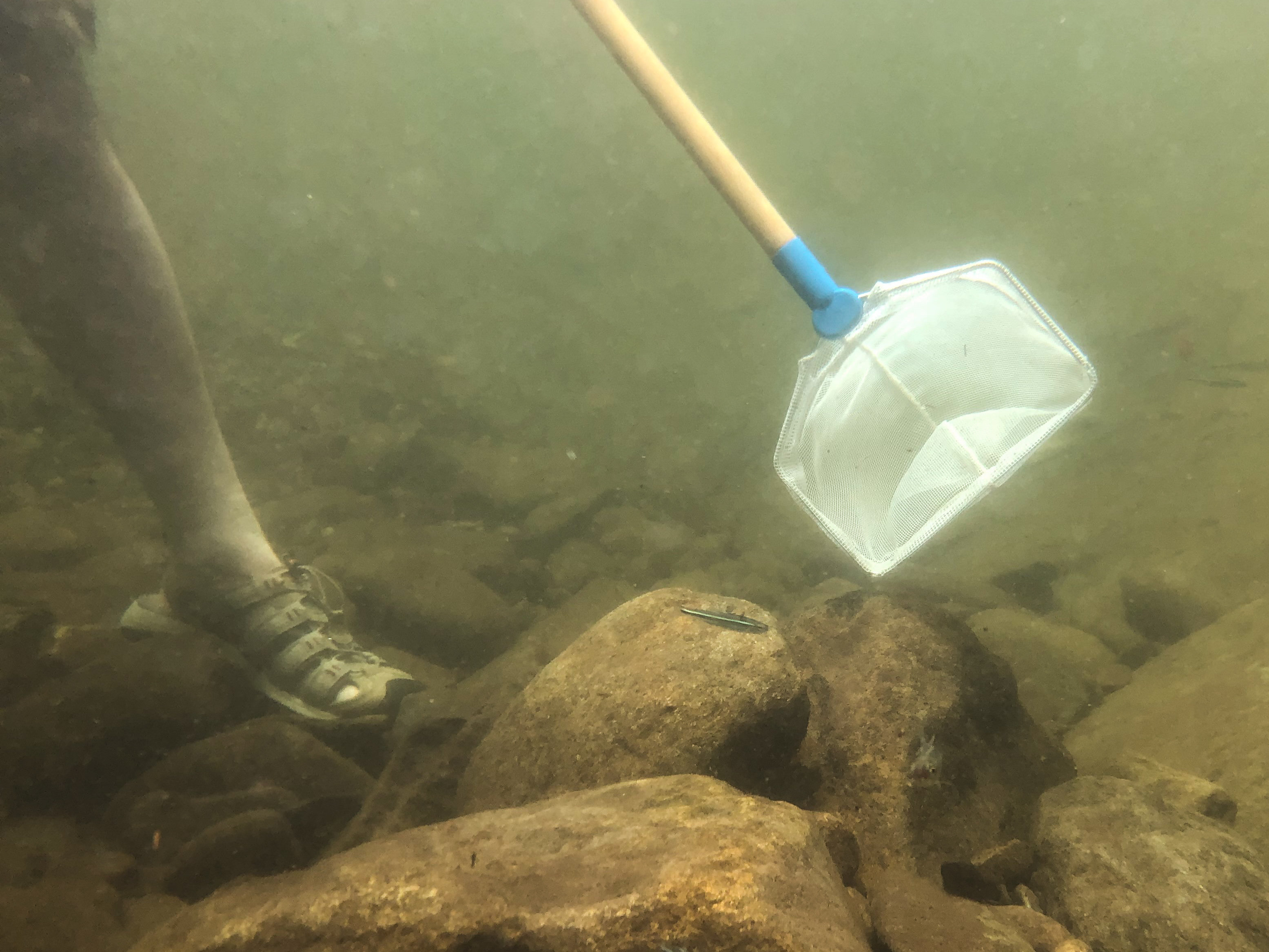
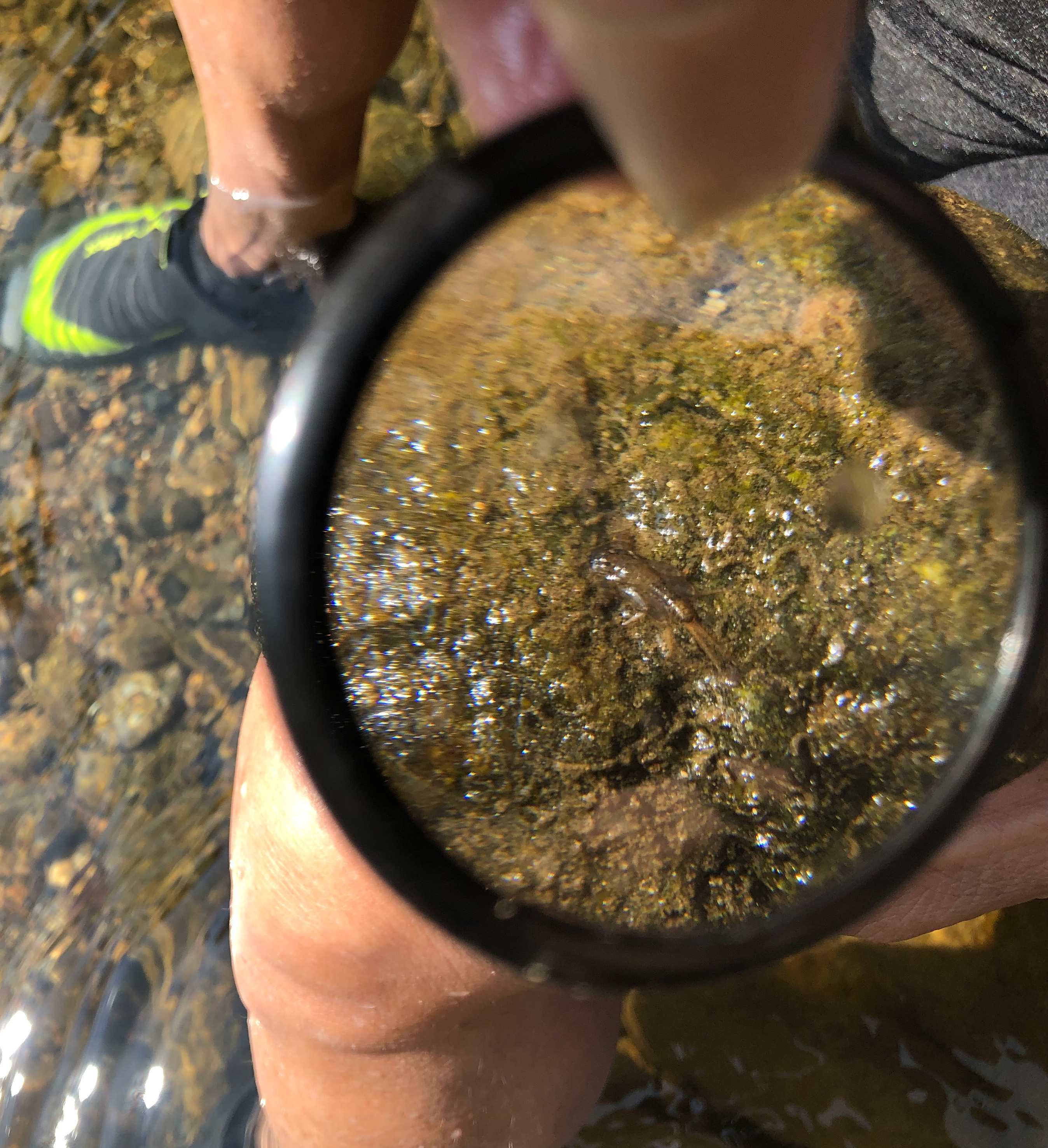
Rheophilic. Current loving. The shiners and darters face upstream while the swift clear river fetches them good things to eat. Nymphs of dragonfly, stonefly, alderfly have hooks on their feet to creep after prey across the slick stones. Salamander larvae protected in the cobbles breathe oxygen washed over their gills by the flow.

And the most unexpected, the strangest, the most fully adapted to current: the water penny – one with the rock, clinger and creeper, beetle larva, flexible carapace completely shielding it from the torrent. One among multitudes in the punch and spray, swirl and eddy, immersed in the flash and grasp of water from which all make their living.

All things flow. The first ancestors of all mayflies clung or crept or climbed or burrowed and now there are 600 species of mayfly. Symbols and images spin an unbroken thread which if I think about it I call thinking. Words whirl into new meanings. Today we dunk our faces in the Middle Prong to share its life. Tonight the current will fetch us good things to dream. Tomorrow will be a whole new river.

[* 600 species of Mayfly in the United States, 3,000 species worldwide.]

.     .     .     .     .     .     .

Anything the River Gives
++++Robert Wrigley

Basalt, granite, tourmaline, the male wash
of off-white seed from an elderberry,
the fly’s-eye, pincushion nubbins yellow
balsamroot extrudes from hot spring soil,
confetti of eggshell on a shelf of stone.
Here’s a flotilla of beaver-peeled branches,
a cottonwood mile the shade of your skin.
Every day I bring some small offering
from my morning walk along the river:
something steel, blackened amber with rust,
an odd pin or bushing shed by the train
or torqued loose from the track, a mashed penny,
the muddy bulge of snowmelt current.
I lie headlong on a bed of rocks,
dip my cheek in the shallows,
and see the water mid-channel three feet
above my eyes. Overhead the swallows
loop for hornets, stinkbugs, black flies and bees,
gone grass shows a snakeskin shed last summer.
The year’s first flowers are always yellow,
dogtooth violet dangling downcast and small.
Here is fennel, witches’ broom, and bunchgrass,
an ancient horseshoe nailed to a cottonwood
and halfway swallowed in its punky flesh.
Here is an agate polished over years,
a few bones picked clean and gnawed by mice.
Here is every beautiful rock I’ve seen
in my life, here is my breath still singing
from a reedy flute, here the river
telling my blood your name without end.
Take the sky and wear it, take the moon’s skid
over waves, that monthly jewel.
If there are wounds in this world no love heals,
then the tings I haul up – feather and bone,
tonnage of stone and pale green trumpets
of stump lichens – are ounce by ounce
a weight to counterbalance your doubts.
In another month there won’t be room left
on the windowsills and cluttered shelves,
and still you’ll see me, standing before you,
presenting some husk or rusty souvenir,
anything the river gives, and I believe
you will love.

from Earthly Meditations: New and Selected Poems by Robert Wrigley, © 2006, Penguin. Reprinted in The Ecopoetry Anthology, edited by Ann Fisher-Wirth and Laura-Gray Street, © 2013, Trinity University Press, San Antonio, Texas.

.     .     .     .     .     .     .

Common Snapping Turtle – Chelydra serpentina

.     .     .     .     .     .     .

Lyell’s Hypothesis Again
++++ Kenneth Rexroth (1905-1982)

An Attempt to Explain the Former
Changes of the Earth’s Surface by
Causes Now in Operation — subtitle of Lyell: Principles of Geology

The mountain road ends here,
Broken away in the chasm where
The bridge washed out years ago.
The first scarlet larkspur glitters
In the first patch of April
Morning sunlight. The engorged creek
Roars and rustles like a military
Ball. Here by the waterfall,
Insuperable life, flushed
With the equinox, sentient
And sentimental, falls away
To the sea and death. The tissue
Of sympathy and agony
That binds the flesh in its Nessus’ shirt;
The clotted cobweb of unself
And self; sheds itself and flecks
The sun’s bed with darts of blossom
Like flagellant blood above
The water bursting in the vibrant
Air. This ego, bound by personal
Tragedy and the vast
Impersonal vindictiveness
Of the ruined and ruining world,
Pauses in this immortality,
As passionate, as apathetic,
As the lava flow that burned here once;
And stopped here; and said, ‘This far
And no further.’ And spoke thereafter
In the simple diction of stone.

Naked in the warm April air,
We lie under the redwoods,
In the sunny lee of a cliff.
As you kneel above me I see
Tiny red marks on your flanks
Like bites, where the redwood cones
Have pressed into your flesh.
You can find just the same marks
In the lignite in the cliff
Over our heads. Sequoia
Langsdorfii before the ice,
And sempervirens afterwards,
There is little difference,
Except for all those years.

Here in the sweet, moribund
Fetor of spring flowers, washed,
Flotsam and jetsam together,
Cool and naked together,
Under this tree for a moment,
We have escaped the bitterness
Of love, and love lost, and love
Betrayed. And what might have been,
And what might be, fall equally
Away with what is, and leave
Only these ideograms
Printed on the immortal
Hydrocarbons of flesh and stone.

from The Collected Shorter Poems. Copyright © 1966 by Kenneth Rexroth. New Directions Publishing Corporation, http://www.wwnorton.com/nd/welcome.htm. Reprinted in The Ecopoetry Anthology, edited by Ann Fisher-Wirth and Laura-Gray Street, © 2013, Trinity University Press, San Antonio, Texas.

.     .     .     .     .     .     .
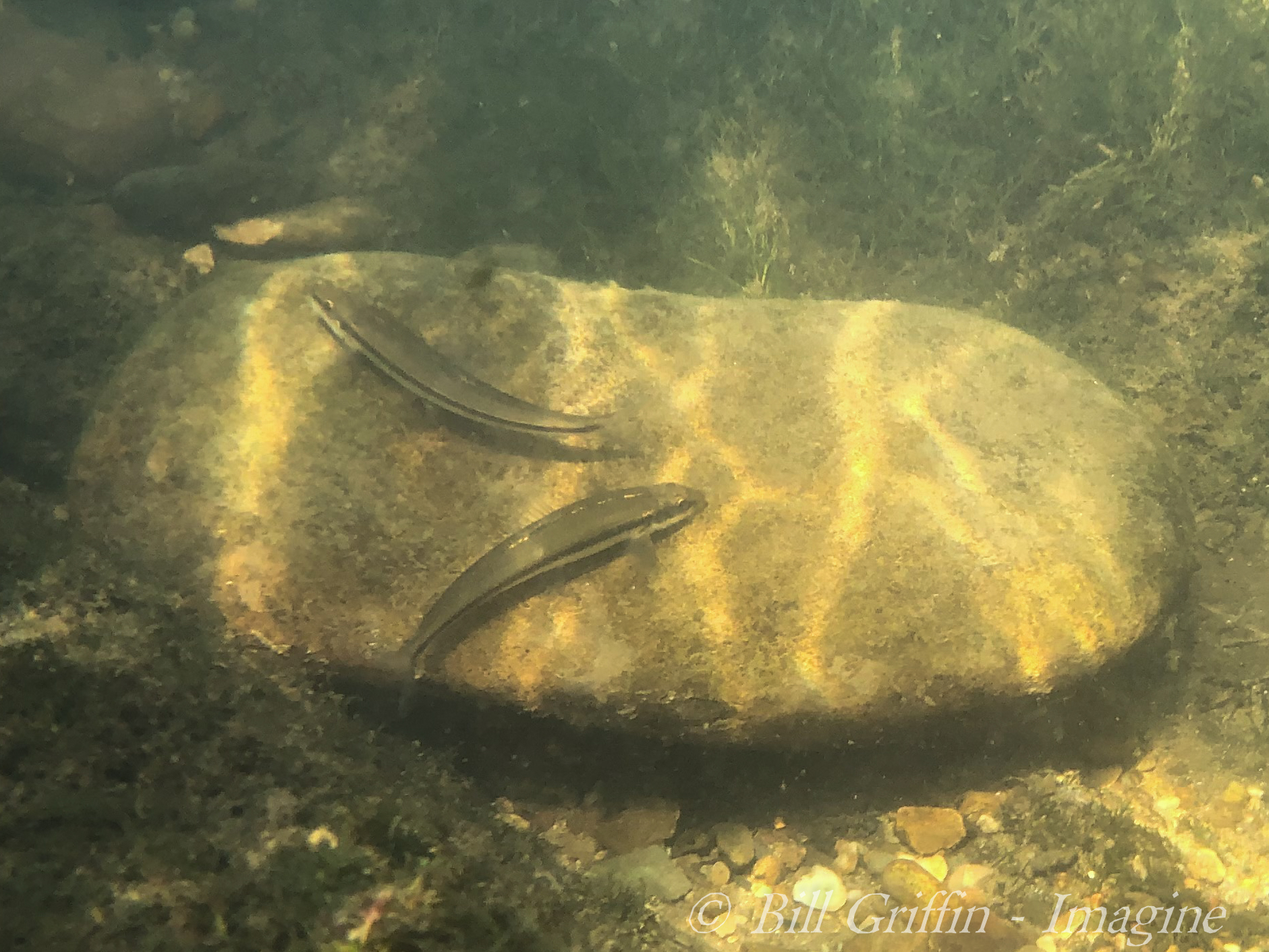
Stargazing Minnows grazing — Phenacobius uranops

Greenside Darter – Etheostoma blennioides

.     .     .     .     .     .     .
.     .     .     .     .     .     .

The Southern Appalachian Naturalist Certification Program is an adult education opportunity created and administered by Great Smoky Mountains Institute at Tremont and the University of Tennessee, Knoxville. Their mission – connecting people with nature. SANCP certification requires completing eight weekend-long courses; I took my first course, Birds of the Smokies, in May, 2017, and finished my final course, Aquatic Ecology, on July 25, 2021.

Many thanks to the ecology superpowers of Erin Canter, Manager of Science Literacy and Research and master of making connections; to John DiDiego, GSMIT Education Director; to Jeremy Lloyd, Manager of Field and College Programs; and to all the educators and staff at Tremont.

Psephenidae field sketch by Bill Griffin. All photographs by Bill Griffin.

.     .     .     .     .     .     .
Mayfly nymph – Order Ephemeroptera

Water Penny – family Psephenidae


.     .     .     .     .     .     .

2020-11-03a Doughton Park Tree

Read Full Post »

[with poems by Wendy Battin and A.R.Ammons]

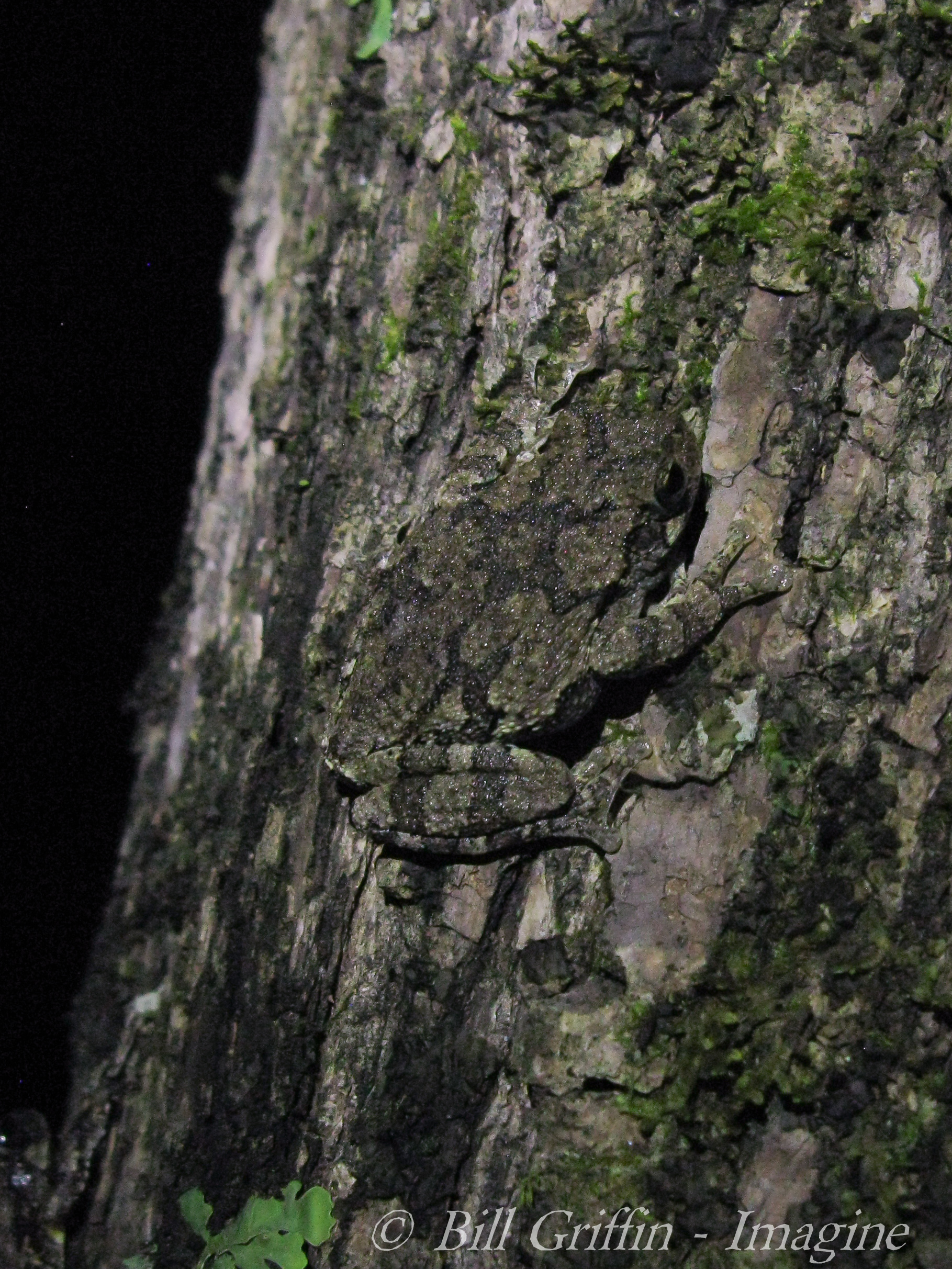
We can hear them from the trailhead. By the time we reach the little pond they are so loud our ears are pounding. A slough, a seep, scarcely more water than you could spit across, but it holds maybe a hundred Cope’s Gray Treefrogs in full raw raucousness, along with the occasional plunk of a Green Frog or wheep of a peeper.

We can spot them in the beams of our headlamps – all males. They cling to reed and vine and branch, air sacs bulging and throbbing, true masters of circular breathing (that incredible noise erupts as the sac inflates, not deflates). Calling all lady gray treefrogs – this is a great pond, great guys here, come on in and we’ll make a great number of tadpoles. Did I mention LOUD!?

And then they stop. All at once every one of them just quits singing. All of our headlighting and capturing and inspecting over the past hour didn’t phase them. Why stop now? We turn back up the trail but within a few minutes one frog starts, then two more, and within seconds they’re all revved up and back in chorus.

.     .     .     .     .     .     .

Frog. Little Eden.
Wendy Battin (1953-2015)

Amphibious, at home
on the surface

tension, in
over my head, not
out of my depth, not deep
deep deep,

not in far. Not
high and dry, not
even in treetops,
where I sing water
into the root-hairs.

It seeks me, will not
forsake me.
Hand over hand it climbs.
It breaks
the first law of water,

all for my song.
Into the trunk and up, it greens
the leaves that the leaves may be
-emerald me.
The leaves breathe it out and I drink,

then sing

lest the water forget to rise
and the world be kindling.

Wendy Battin, “Frog. Little Eden.” from Wendy Battin: On the Life & Work of an American Master. © 2020 by Wendy Battin.

.     .     .     .     .     .     .

Cope’s Gray Treefrog, Hyla chrysoscelis

.     .     .     .     .     .     .

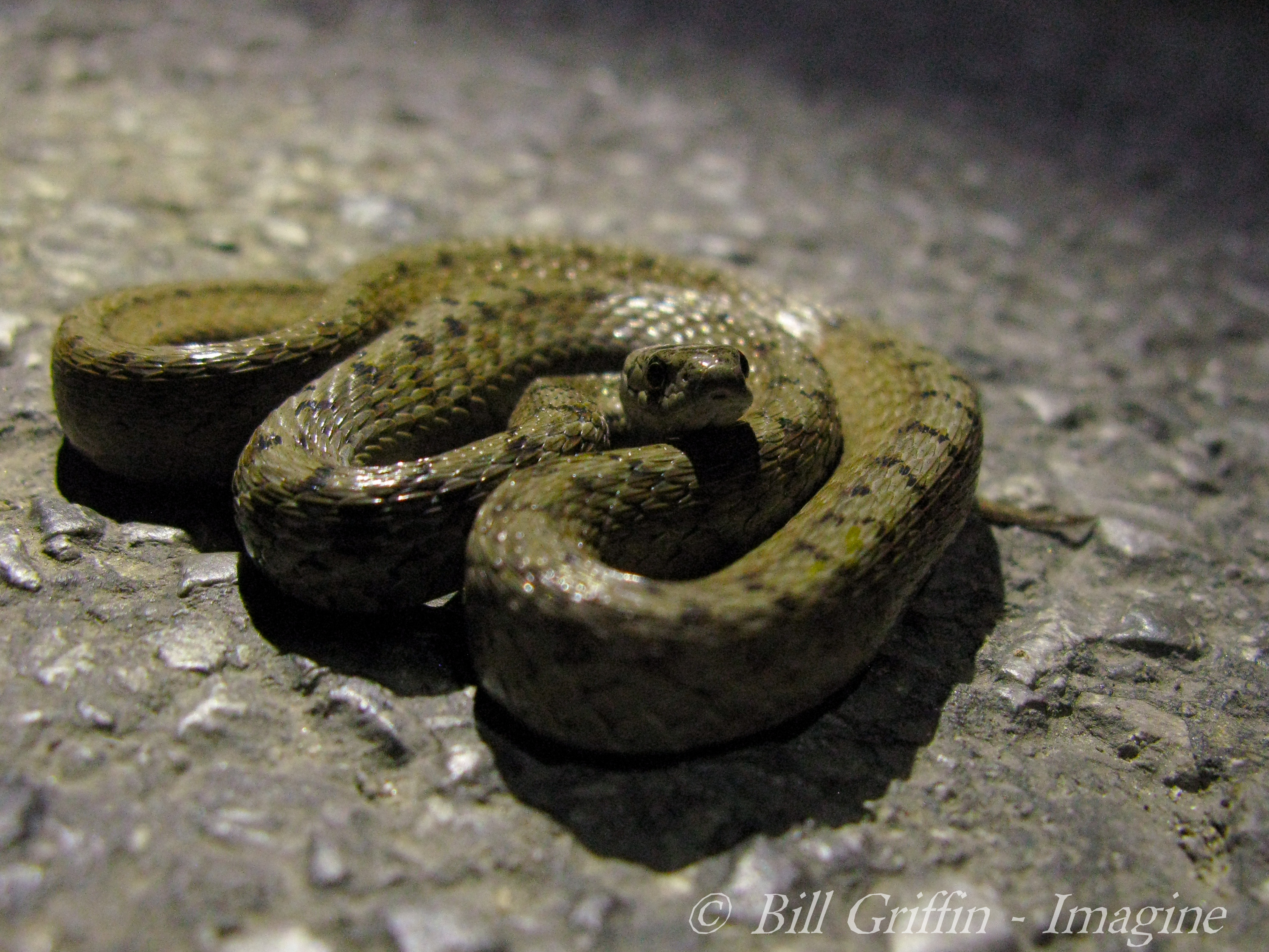
Midnight in Cades Cove, Great Smoky Mountains National Park – what could be more mysterious & magical? Just sixteen humans in all those pitch dark square miles in the company of charismatic megafauna (bears, y’all) and the millions of smaller creatures we’ve come here to notice. Get right down in the face of that American Toad: what a pout of grumpy sagacity. Grab that little Brownsnake, but gently: in its mind it’s three feet long. And while you’re noticing, don’t forget all the eyes in the shadows noticing you.

The lesson of Cades Cove is set it aside and let it be. Other than backcountry hikers, most of the Park’s 12 million annual visitors never venture more than a few yards from their cars. And none of them except us are in Cades Cove tonight. The little frog pond near the old church, or Gum Swamp, or the many other unique and remote habitats, they are all full of creatures free to be themselves, to slither by day or sing by night. We might glimpse a little of what gives their lives meaning. We might learn a little of our own.

.     .     .     .     .     .     .

Gravelly Run
A. R. Ammons (1926-2001)

I don’t know somehow it seems sufficient
to see and hear whatever coming and going is,
losing the self to the victory
+++of stones and trees,
of bending sandpit lakes, crescent
round groves of dwarf pine:

for it is not so much to know the self
as to know it as it is known
+++by galaxy and cedar cone,
as if birth had never found it
and death could never end it:

the swamp’s slow water comes
down Gravelly Run fanning the long
+++stone-held algal
hair and narrowing roils between
the shoulders of the highway bridge:

holly grows on the banks in the woods there,
and the cedars’ gothic-clustered
+++spires could make
green religion in winter bones:

so I look and reflect, but the air’s glass
jail seals each thing in its entity:

no use to make any philosophies here:
+++I see no
god in the holly, hear no song from
the snowbroken weeds: Hegel is not the winter
yellow in the pines: the sunlight has never
heard of trees: surrendered self among
+++unwelcoming forms: stranger,
hoist your burdens, get on down the road.

A. R. Ammons, “Gravelly Run” from The Selected Poems, Expanded Edition. Copyright © 1988 by A. R. Ammons. W. W. Norton & Company, Inc.

Reprinted in The Ecopoetry Anthology, edited by Ann Fisher-Wirth and Laura-Gray Street, © 2013, Trinity University Press, San Antonio, Texas.

.     .     .     .     .     .     .

American Toad, Anaxyrus americanus

.     .     .     .     .     .     .

The Southern Appalachian Naturalist Certification Program is an adult education endeavor of Great Smoky Mountains Institute at Tremont and the University of Tennessee, Knoxville. Their mission of connecting people with nature continues even during pandemics! The science-based instructional programs have evolved with science-based precautions and modifications to allow small communities to form for a weekend at a time.

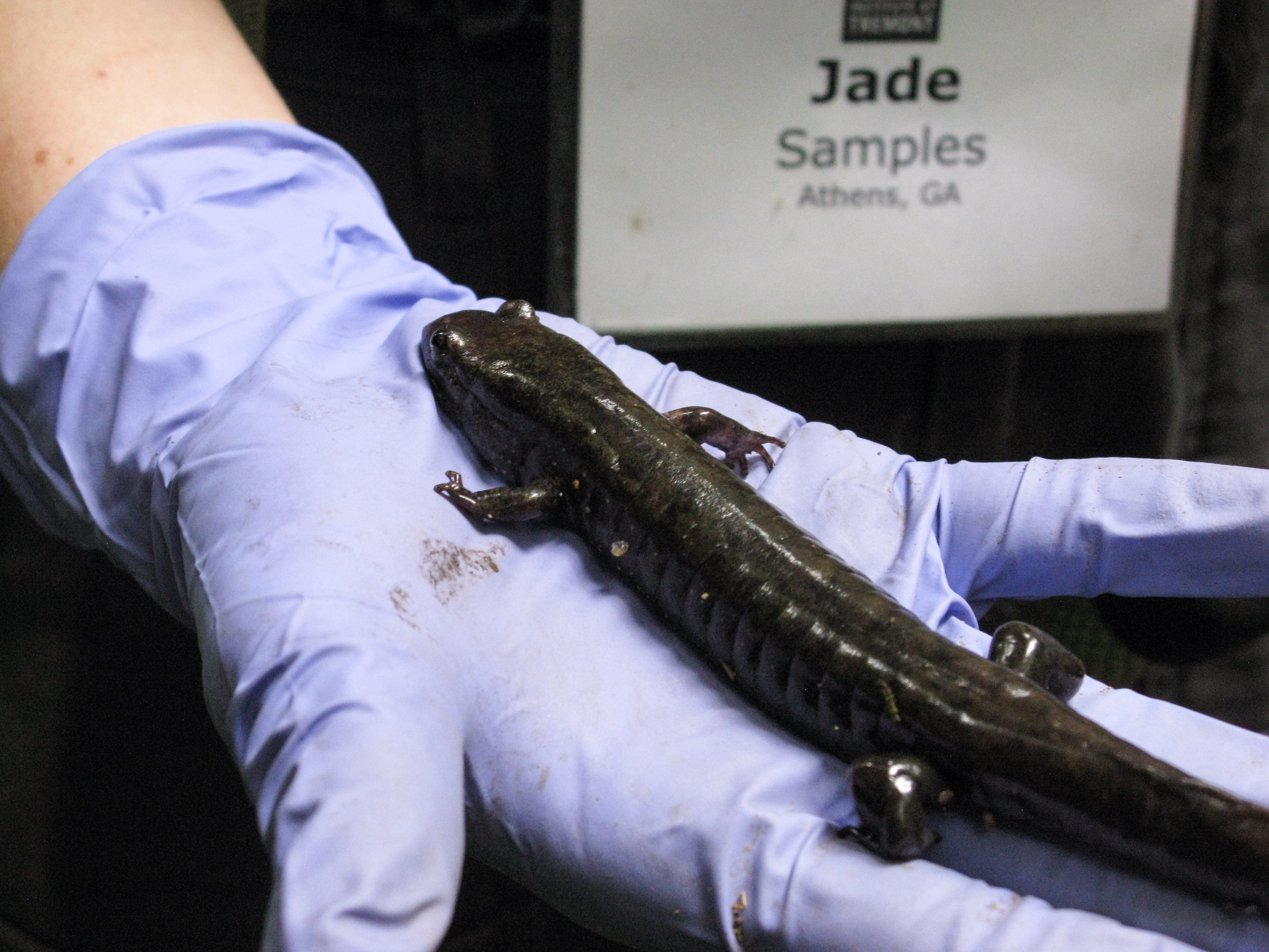
Many thanks to John DiDiego, GSMIT Education Director, and to the awe-inspiring instructors for the July, 2021 SANCP Reptiles and Amphibians course, Dr. John Charles Maerz from University of Georgia, and his intrepid research assistant, Jade Samples. We crammed a semester’s worth of herpetology into 36 hours out of doors in the Smokies. (Did I sleep? Maybe a little.)

All photographs by Bill Griffin. Header art by Linda Griffin.

Dekay’s Brownsnake, Storeria dekayi

.     .     .     .     .     .     .

2016-10-17a Doughton Park Tree

Read Full Post »

[including poems by Mary Oliver and Bill Griffin]

Because they are themselves and we have begun to see that they are,
++++because we are not humble but have been humbled,
++++because we can’t begin to love ourselves until we love them,
++++because we can’t love them unless we know them,
++++because in a world that scoffs at the word “sacred” we have
++++++++ accepted a sacred calling,
for all these reasons and more we protect them from us.

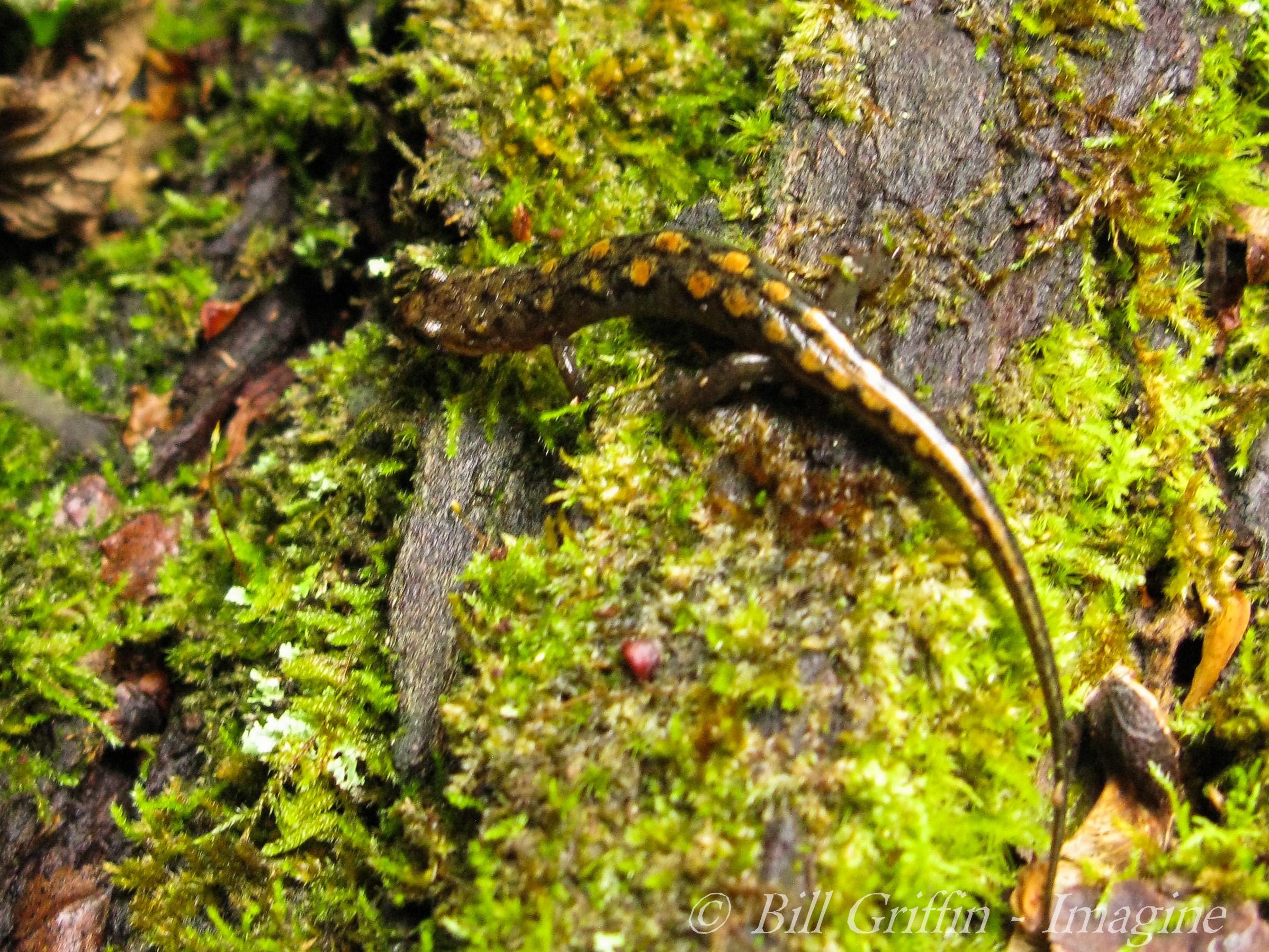
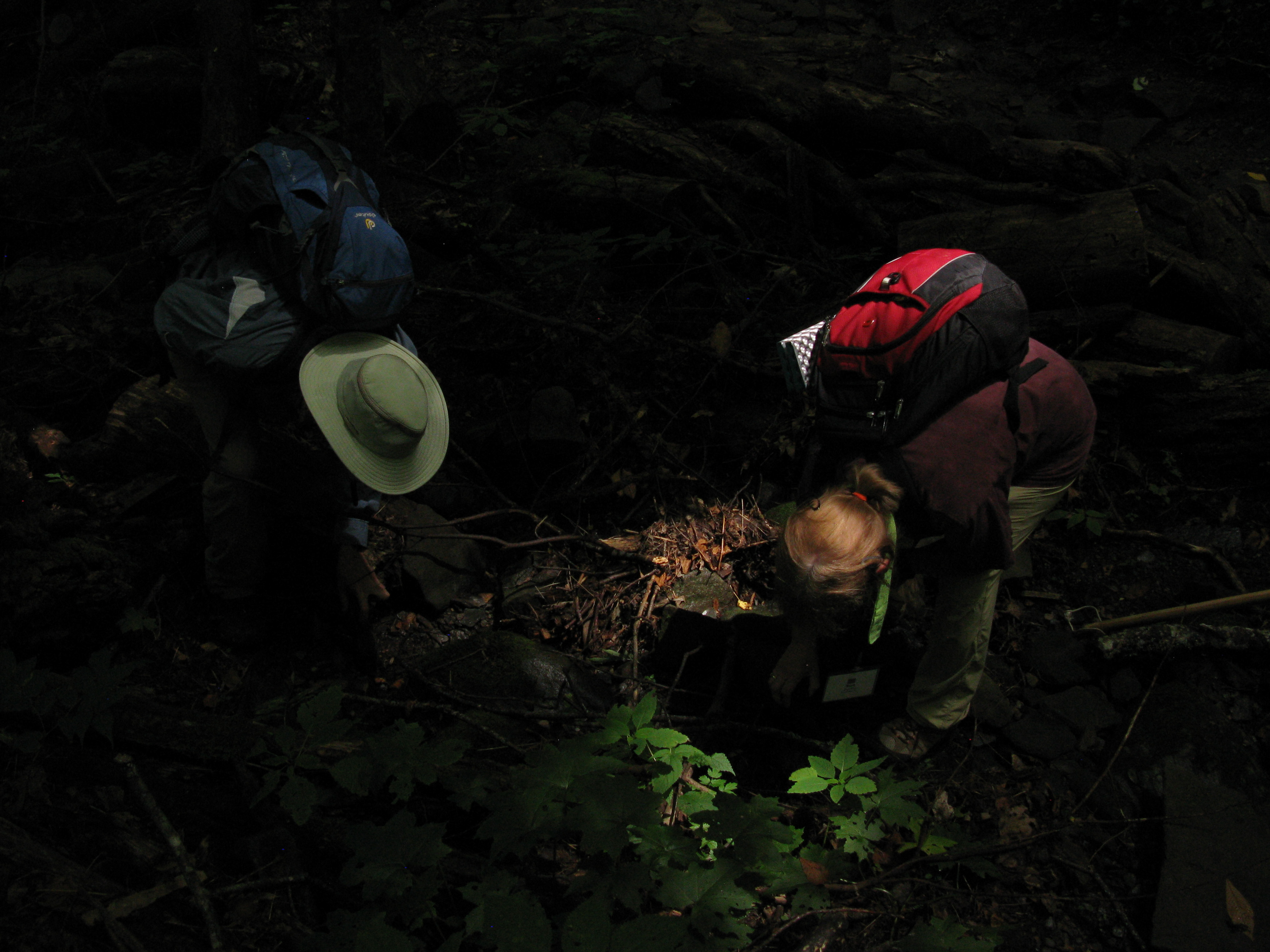
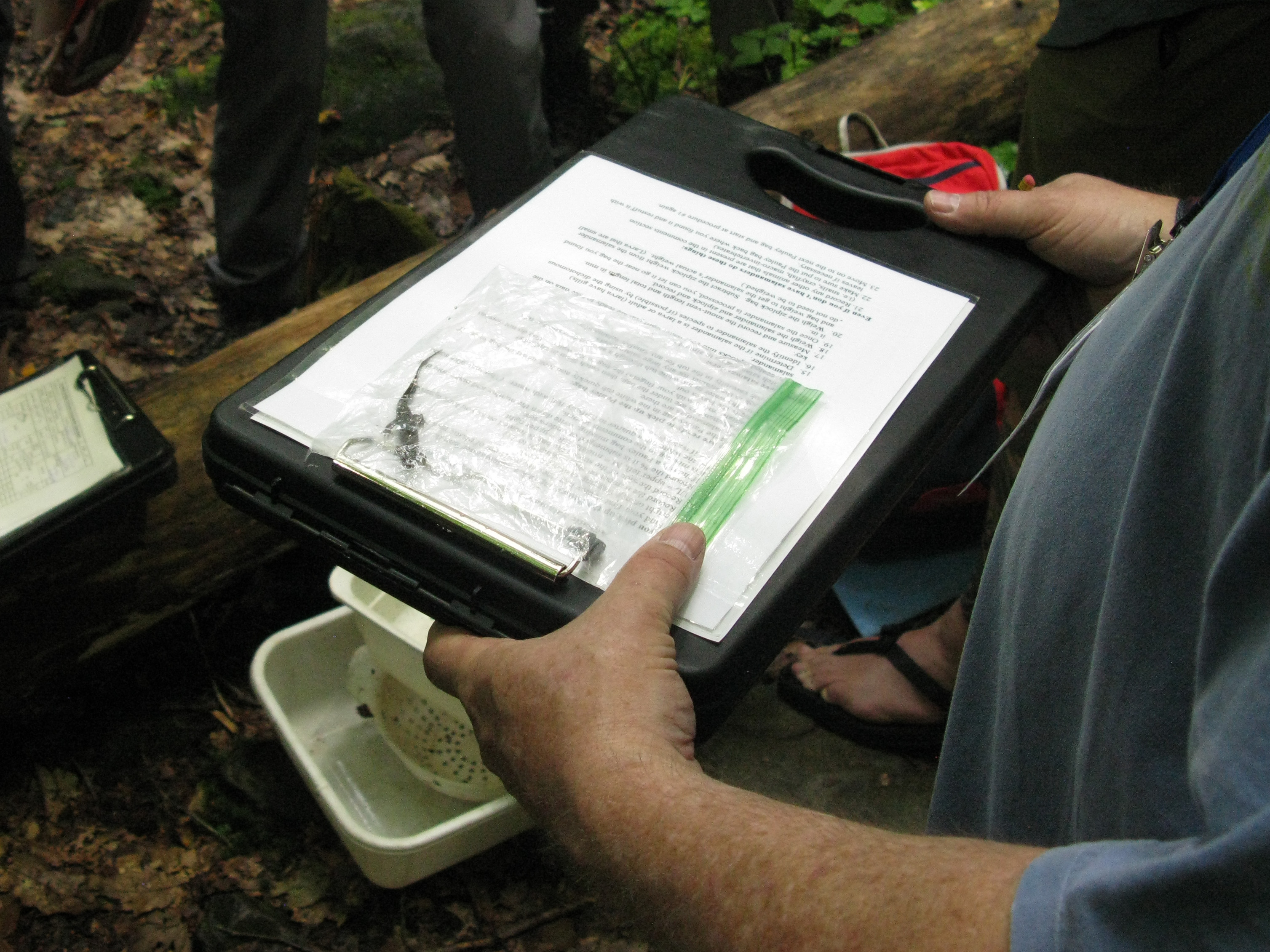
We are going to count the salamanders in Dorsey Creek. Before we leave Tremont and hike to their watershed we spray our boots with weak bleach (to kill the Ranavirus). We wear gloves so that we don’t smear them with our own flora (they have a rich commensal surface bacterial that keeps them healthy). We touch them only briefly and hold them in water in bags, not in our hands (a scant few grams of flesh, thin and magical skin, even the heat of our palms would stress them). Just a few minutes to check for gills if they’re still larvae, to count their spots and markings, look for cheek chevrons, flip and inspect the tint of their bellies, then we take them back to the leaf litter or flashing stream where we found them. Perhaps each one may be counted again, perhaps dozens of times over a ripe salamander lifespan of 20 years.

And perhaps, rising from our knees with new names in our mouths (Desmognathus monticola, quadramaculatus, conanti) and something sacred in our hearts, perhaps we will see the world as if for the second time, the way it really is.

.     .     .     .     .     .     .

.     .     .     .     .     .     .

Alligator Poem
++++ Mary Oliver (1935-2019)

I knelt down
at the edge of the water,
and if the white birds standing
in the tops of the trees whistled any warning
I didn’t understand,
I drank up to the very moment it came
crashing toward me,
its tail flailing
like a bundle of swords,
slashing the grass,
and the inside of its cradle-shaped mouth
gaping,
and rimmed with teeth –
and that’s how I almost died
of foolishness
in beautiful Florida.
But I didn’t.
I leaped aside, and fell,
and it streamed past me, crushing everything in its path
as it swept down to the water
and threw itself in,
and, in the end,
this isn’t a poem about foolishness
but about how I rose from the ground
and saw the world as if for the second time,
the way it really is.
The water, that circle of shattered glass,
healed itself with a slow whisper
and lay back
with the back-lit light of polished steel,
and the birds, in the endless waterfalls of the trees,
shook open the snowy pleats of their wings, and drifted away,
while, for a keepsake, and to steady myself,
I reached out,
I picked the wild flowers from the grass around me –
blue stars
and blood-red trumpets
on long green stems –
for hours in my trembling hands they glittered
like fire.

from New and Selected Poems, © 1992 by Mary Oliver, Beacon Press, Boston. Reprinted in The Ecopoetry Anthology, edited by Ann Fisher-Wirth and Laura-Gray Street, © 2013, Trinity University Press, San Antonio, Texas.

.     .     .     .     .     .     .


.     .     .     .     .     .     .

Sorceress’ lizard, bellows breath, fire worm, winged dog – O, little salamander, how you inspire us with your magic! Pliny the Elder recognized that you are not a lizard but ancient Greeks still rumored that you quench fire with the chill of your body. The Talmud explains you are a product of fire and immune to its harm. Perhaps during the long winters of the Middle Ages you emerged miraculously from the log thrown onto the hearth to substantiate your reputation. Marco Polo believed your true nature to be an “incombustible substance found in the earth.” And let’s not forget the fearful excretions of your skin, poisonous enough to kill the entire village if you fall into the well, fundamental ingredient of witches’ brews, irresistible aphrodisiac.

Little wriggling Caudata, the reality of your nature is more wondrous than myth. You eat small things that would starve larger creatures and yet you thrive; your biomass exceeds that of all the mammals in Great Smoky Mountains National Park. Your skin breathes – most of you don’t even have lungs! – and brews up a constellation of compounds that confound the biochemist. Some of you live 4 years with gills in the swift chill stream before becoming adults, others metamorphose within your eggs beneath forest duff and emerge fully formed, but all of you with your efficient ectothermic life plan grow and grow, make eggs, survive perhaps for decades. And Great Smokies holds more of your diversity than any other place in the world.

We are amazed! We students of SANCP Reptiles and Amphibians Course of 2021 are just astonished and awestruck. You are the coolest of the cool (ectotherms, that is)! We thank your Chief Sorcerer of Knowledge, Professor John Maerz, and Acolyte of Hands-On, Graduate Research Assistant Jade Samples, for sharing their lore, showing us how to find you, leading us to love you.

Salamanders – you rule!

.     .     .     .     .     .     .

Salamander
++++ Bill Griffin

This is my gift –
++++++++ to change.
From Inadu Creek I leave behind
my frilly gills and climb
the spire of blue-eyed grass.
Having become a creature of air bathing
myself in dew, am I not still
a creature of water?

I invite you to discover
in each of my family our variations,
discern that every runnel, every spring,
every palm-sized cup of moisture
holds its lithe expectation, for this
is my gift to you –
++++++++ to notice changes.

I will let you lightly touch
the welcome of my smoothness
while I drink a little warmth
from your hand. Now count
the dapples down my length,
measure the blush of my cheek,

then find when you descend
the eastern face of Snake Den Ridge
those subtle alterations my cousins
are accumulating until finally
they acquire a new name.

And when you have returned me
to my bed of blue-bead lily, then touch
a smooth place within yourself
and carry with you into the world
++++++++ your own changes.


from Snake Den Ridge: a bestiary, © 2008 by Bill Griffin, March Street Press, Greensboro, NC. Illustrations and historical preface by Linda French Griffin.

.     .     .     .     .     .     .


.     .     .     .     .     .     .

The Southern Appalachian Naturalist Certification Program is an adult education endeavor of Great Smoky Mountains Institute at Tremont and the University of Tennessee, Knoxville. Their mission of connecting people with nature continues even during pandemics! The science-based educational programs have evolved with science-based precautions and modifications to allow small communities to form for a weekend at a time.

Many thanks to John DiDiego, GSMIT Education Director, and to the awe-inspiring instructors for the July, 2021 SANCP Reptiles and Amphibians course, Dr. John Charles Maerz from University of Georgia, and his intrepid research assistant, Jade Samples. We crammed a semester’s worth of herpetology into 36 hours out of doors in the Smokies. (Did I sleep? Maybe a little.)

All photographs by Bill Griffin. Plethodon jordani on blue-eyed grass by Linda French Griffin. Header art also by Linda Griffin.

.     .     .     .     .     .     .

2014-06-30a Doughton Park Tree

Read Full Post »

Older Posts »