Feeds:
Posts
Comments

Posts Tagged ‘Press 53’

[This is a re-posting of one of my personal favorites, from July 27, 2020. May we each discover what is most perfectly suited to our individual nature; may we discover the perfect curvature and gravity of the universe. And may we continue to re-discover the poetry of the late David Treadway Manning, one of my favorite human beings.

I am re-posting rather than creating an original offering for this date because our neighborhood is still digging out from a tornado that struck us on April 28, 2023. No people injured, many hundreds of trees down, brighter wider horizons absent their green banners, a few nights of darker skies and brighter stars and the company of the waxing moon.    —-   Bill ]

Young Isaac is strolling through the orchard, another undifferentiated non-linear autumn afternoon of this perplexing equation we call life. Some of the fruit has detached itself and translocated several meters closer to the center of the earth. It has begun, with the help of fermenting microorganisms, to succumb to entropy. Isaac steps in it. He slips.

Isaac’s 70 kilograms, density of water, accelerate at 9.8 meters per second per second. Suddenly prone, the gravity of the situation strikes him. There, 10 centimeters from the tip of his nose, lies a perfect red spheroid. Glossy. Fragrant. The tiny lenticels on its taut unblemished skin are arranged with the symmetry of stars distributed across the heavenly sphere. “What an apple!” young Isaac exclaims, “Artios!” (his years of Greek instruction now finally relevant): That which is perfectly suited to its nature. The essence of appleness.

And how will Isaac’s own essence be transformed by this epiphany? How will yours and mine? No longer undifferentiated, will he discover his many gifts and their ideal trajectory? Will we ours? For are we not each of us an essence, our process of formation either distracted and garbled by the noisy physics of our history and our surroundings or alternatively able to grasp that trajectory perfectly suited to our unique nature? Besides mass and density and the ability to struggle upright against gravity, don’t we human animals also possess the agency of choice and change and discovery?

Isaac sits up and regards the apple. You know where this is headed. It will be 218 years before young Albert slips and falls and realizes that what Isaac experienced is actually the curvature of space. Meanwhile why don’t we all, each of us, sit up and regard our nature. Artios! To become that which is the perfect expression of our nature. It’s about time.

.     .     .     .     .     .     .

I have been a DAVID MANNING fan since I first sat up and discovered poetry. Whether he does it with a compassion that draws me deeper into the circle of human family or with a wry and pointed barb that makes me snort, he regards human nature and tells its truths. I will be the first person in line when his NEW AND SELECTED is released from PRESS 53 later this year.

And I have been favored to preview the manuscript. Wandering these wonderful poems spanning decades I enter an inner landscape and pass from reader to personal companion. There is a deep imagination at work; there is joy and no lack of laughter and sometimes a little weirdness; there are bright moments of insight and connection.

Most of all there is WONDER. No aspect of our human situation or our confounding universe goes unnoticed. David’s artistry gathers a desert landscape, a snatch of opera, a funky conversation and weaves from them with perfect sense and sensitivity an affirmation. When I reach the final page I say, “YES, that is the way it is.”

.     .     .     .     .     .     .

Sailing with Anne

Santa Monica, California, 1950

After her sailing class we cast off
into the ruffled Pacific blue, tide
incoming, echoes of great breakers
lapping the dock. She-the sailor,
the tiller, mine.

As we headed west, tacking
into a strong breeze I remember
marveling at who she was
to do these things. I imagined her
at the helm become Anne Bonny,
running a four-master down,
the setting sun turning red lights
in her hair.

I hope we left something there-
if only a boat paint-scrape
or salt spray from her hair.
Maybe something from that day
was never lost, but joined
the Pacific’s history, some trace
still riding the blue circuit
between the poles, with the sea-grape
and tiny life that make the coral.

.     .     .     .     .     .     .

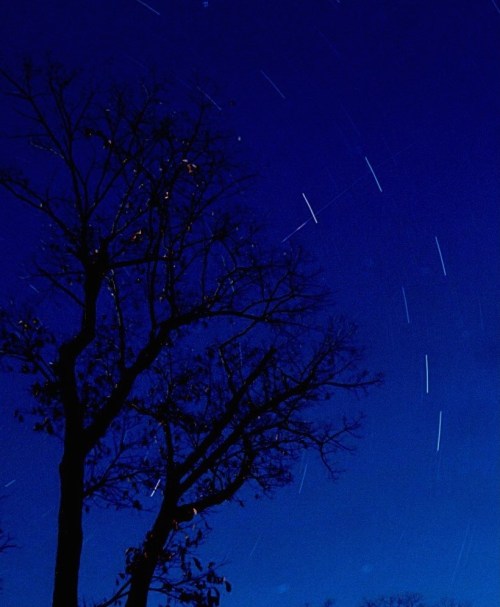
Star Journey

Sometimes at night I return

to the Griffith Park planetarium

where stars from the surrounding hills

come out to music.

North of Los Feliz

I step from city lights into the night

sky of Patagonia with its wind-swept shores

under the warm lights of Fornax,

Fomalhaut, Alpha Crucis, a bright canopy

of southern stars, to music-Gymnopedie,

Satie’s barefoot dance.

Then, under the soft night sky,

I take off my shoes

and find my way into the stars.
.     .     .     .     .     .     .

David Manning’s NEW AND SELECTED POEMS is anticipated later this year from Press 53.

Star Journey first appeared in KaKalaK 2017 – Anthology of Carolina Poets
Sailing with Anne first appeared in Pinesong: The North Carolina Poetry Society

.     .     .     .     .     .     .
.     .     .     .     .     .     .
IMG_0880

Read Full Post »


[with 3 poems by Miles A. Coon]

to become the very brink you live on . . . Miles Coon

The other day I was trying to fix my Dad’s Life Alert system while the rest of the family ate lunch fifteen feet away. I couldn’t figure out why the damn lights kept flashing. While I was cussing the instruction booklet – there’s such a thing as being written too simply – I overheard Dad tell my daughter, “Bill sure does a lot for us.”

Haven’t I always been the good boy? May I confess that all my life I’ve chosen to do things that would confirm my good boy status? Around 20 years ago I wrote a sonnet titled, Good Boy Turns 50; the closing couplet reads, So let’s give him what he needs in the next fifty / if he ever discovers what that might be. Was I trying to slip in a bit of tension there, as if maybe I don’t always like myself for striving always to be the person everyone likes?

Someday I’ll write a poem about being twenty and driving the interstate back to college from Pittsburgh with my friend John in the big bashed up Mercury I’d inherited from Granddaddy. One of the near-bald tires blew, and as we rolled to a stop on the shoulder we looked at each other and started to sweat. In the trunk, on top of the spare, was a big trash bag of illegal vegetation John had plucked up, roots and all, from where he’d been growing it out back of his parents’ estate while they were in Paris or Tokyo or some such. We tried to look purposeful, puttering around the trunk until the traffic thinned, then threw the bag up into the weeds (no pun, please), jacked up the car, wrenched on the spare, and retrieved John’s harvest. No lights & sirens. Back at school in central Ohio after dark, I unloaded John behind his dorm. End of story. Good boy escapes to be good another day.

Someday I’ll write a poem about that.

Not today.

❦ ❦ ❦

The Beginning

Before I had a self, I grew
in the half-dark, half-light world
I knew belonged to me.

Two disappointing gods
shaped me. Before I had
a self, I was a topiary.

Birds were everywhere
in me, singing, while I
stood mute.

One day, the gods split
this world in two.
Before I had a self,

I was taken by each of them
to the great sea of disillusionment,
thrown in from separate shores.

My first-self emerged from the sea,
my body soaked in brine.
I could taste my own salts.

To be washed clean,
to be naked and alone,
to become the very brink you live on

is to bury your gods,
as your heirs will bury you.
This is genesis, where we begin.

Miles A. Coon
from The Quotient of My Self Divided by Myself, © 2022, Press 53, Winston-Salem NC.

❦ ❦ ❦

As I reached the close of each poem in The Quotient of My Self Divided by Myself, I paused, loosed held breath, then returned to the beginning to read it again. Not because the poems are difficult to understand. The poems are so full of understanding I couldn’t hold it all in a single reading. The language is as beautiful and fresh as the stories are piercing and full of hurt, yet the speaker heals in the telling and heals us. Observer, actor, perpetrator – innocent, confused, divine – Miles Coon enters himself through doors he opens as if for the first time and enters us as if we are knowing another person for the first time.

I am still learning about myself from this book. Perhaps that is its theme, that we may explore our selves all our lives and never reach the end of our journey. How heartbreaking and how full of joy the final line of the final poem: How little of this world I know.

[Note: Miles died on May 21, 2022, just days before the publication by Press 53 of his first book-length collection of poems.]

❦ ❦ ❦

Where I Was Going

I.
Where was I going under the weight
of my bookbag, case law, and statutes? Not to the
Harvard Café for Salisbury steak and mashed potatoes.
Not to the cinderblock dorms, their dimly lit corridors
of thought. Not home. Where was I going so full of
argument and words?

II.
I joined the cynical and jaded. My father hired me.

Not to work next to illegal aliens in the plastics factory.
Not to load forty-two-foot trailer trucks with
one hundred forty thousand garment hangers, stacked
in cases, side-by-side, front-to-back, floor-to-
ceiling, every cubic inch packed tight.

Not to the boss’s office where the Harvard Law degree
vanished into uh-oh, here comes the boss’s son.
Not to the trade shows at the Hotel New Yorker
where I licked the soles of jobbers, plied them
with booze.

III.
Where was I going? To the fertility expert with my semen
in a jar? Never to Little League with my son. Never
to go ice-skating with my daughter. Where was I going?

Not three times a week to Dr. Bernie, self-indulgent,
taking a magnifying glass to my problems. He said
I had it wrong. We were removing the magnifying glass.

IV.
Where was I going, going to
my father’s funeral, my mother’s grave. I was going
to the closing when I sold the business. I was going
to my daughter’s wedding, to the firehouse where my son
showed me his gear and the enormous truck
he drove to Ground Zero.

Where was I going? Not to grow fables of my own
making: I was just going to my wife’s studio
to help support her art, I was going to write a poem for her,
always my best reader.

Miles A. Coon
from The Quotient of My Self Divided by Myself, © 2022, Press 53, Winston-Salem NC.

❦ ❦ ❦

Against a Wall

Sometimes, when the moon
is courted by wolves,
and the bats shake themselves out,

I’ll move through the mouth
of the cave like a breath,
press against the windowpane,

and there inside the house
a frail young boy stands stiff
against a wall. His father measures him.

His mother, tanned, hair bleach-blonde,
shines the sterling silver tray,
then serves a fifth of Haig & Haig

in the cut crystal drinking glass.
The boy’s dismissed
the minute his father takes a sip.

I’ve pressed my ear
to the landscaped ground
and heard the panic in his retreat

on tiptoe, in stocking feet.
His only trace, his father’s mark,
indelible on the measuring wall.

Though I cannot leave
the dark until it’s dark,
I do survive.

Here, inside the cave,
bats hang
harmless as handkerchiefs.

I can hear my tardy rebel stir
from years of sleep,
rising up, stretching his limbs,

hungering for light.
Soon, I will follow him out,
marking the walls as I go.

Miles A. Coon
from The Quotient of My Self Divided by Myself, © 2022, Press 53, Winston-Salem NC.

❦ ❦ ❦

It takes the lake to make a line of moonlight . . . Miles A. Coon, from Shadow Life


Read Full Post »

[with 3 poems by Joseph Mills]

Nothing makes sense. Even so we tell stories hoping to make sense, to create a little sense.

My brother just called from the beach to tell me my mother has had some sort of spell this morning. Maybe a seizure. Wee, pellucid, bone china and silver lace, she is smiling now and saying, “I feel just fine.” The doctor in me asks questions. The son I am worries but then pauses to touch myself on the shoulder and remind: “Her family surrounds her. She is 94 and smiling. She is fine.”

How can we make sense of all this? What should we do?

The evening before they left I sat beside Mom while everyone else made supper and packed. She’d been standing in the middle of the living room for several minutes – feeling that she should be contributing to the activity in the kitchen? – when I convinced her to join me on the couch. For a week she hadn’t been feeling well but a fruitless ER stay, a visit with her beloved family doctor, lab tests, an ECG, none had put a finger on the malady.

I asked Mom if she really felt well enough to ride five hours in the car. I didn’t have to guess how much she wanted to spend two weeks with my brother’s family, their once a year trip east from Montana. She smiled, said she was fine, then started to list all the spots they’d go out to eat during their visit. At least one restaurant there is older than me and the host recalls my name from when I was four. She couldn’t remember the names of several of the places but she could tell me just how to find them and what she’d most likely order.

Mom watched my niece bring glasses to the table and pour the wine. She leaned against me, my arm around her shoulder, and said, “I’m fine. I can’t wait!”

Nothing makes sense and for a moment it doesn’t at all need to.

the answers may be
in the trees, but the questions
are not what you think
+++++++++++from Wind Dancing by Joseph Mills

Joseph Mills tells stories. Wonderful wide-ranging stories, in each of which one of the characters is dance. The poems of Bodies in Motion (Press 53, 2022) take me to cities I’ve never visited; to foreign countries; to high school gyms, wild parties, intimate moments. Even more so they take me into relationships and conflicts and epiphanies I’ve never experienced but which I recognize, instantly familiar. The poems, the stories – do they hold the answers, do they make sense of life? Perhaps, probably not, but they do invite me into communion with the family of all humans – in joy and celebration we shall share our questions.

❦ ❦ ❦

At the Arts Conservatory

Music comes from practice rooms
a piano sonata, a cello being bowed,
scales on a clarinet.

Dancers slide out of studios
bend at the drinking fountain,
go to the bathrooms, check phones.

The hall smells of sweat,
detergent, the latex paint
institutions use on cinder block.

I’m here to talk about poetry,
but for now, I fold against a wall
in a way that eases my back,
and thumb through messages.

In a hospice room in Brittany,
my father-in-law is dying of cancer.
The doctor says when the pain comes
that will be a signal. The signal.

Through a doorway
I can see bandaged ankles,
knee braces, thigh wraps.
Dancers balance and jump
on calloused, scarred feet.

They are young and beautiful
and already know a great deal
about pain. The musicians do too,
talking with familiarity
about repetitive stress injuries.

And they too may know
someone who is dying
at this very moment,
perhaps nearby,
perhaps far away.

I turn off my phone,
and step into a studio,
crossing the threshold
that clears away concerns
at least temporarily.
This is what art making is,

a momentary amnesia,
a pausing, and perhaps
that’s all it is because
the signal will come
for those we love,
and nothing we do,
will stop it or change it.

The students regard me,
curious as to why I am there
and what I will ask of them.
A moment ago, I thought I knew.
but suddenly I consider telling them
how I used to bring my daughter
to the school to watch dances
and afterwards she would play
choreographer, each time ending
stretched out on the floor
with her eyes closed, and I consider
telling them how my father-in-law
lives in Finisterre, which means
the end of the earth, a name
and phrase I’ve always loved.
From his window, he can see

the sea, the edge of everything.
And I consider telling them
in the hallway I remembered
when my grandfather built a seawall.
A man, more comfortable with tools
than children, he kept grumbling
for us to get out of the way, then,
once he had shaped the cement
he lined us up to write our names in it.

The students watch and wait,
and I find myself saying something
neither in my notes or my memory.
I’m going to start by reading some poems,
and I want you to see if you can tell
which ones are by people still alive
and which by those long since dead.

Some students look worried,
some lean forward.

Joseph Mills
+++ from Bodies in Motion, Press 53, Winston-Salem NC, © 2022; first appeared in Sky Island Journal

❦ ❦ ❦

Physics

We may not have understood the laws of motion,
but we exemplified them. Inertia kept us from moving
onto the dance floor, but once we started we wanted
to keep going and grumbled when the band stopped.
We spent each night colliding with and recoiling from
one another. Forget the falling apple. Isaac Newton
would have looked at our rumpled sweat-stained shirts,
wayward hair, our staggering orbits, and said, Eureka!
Or perhaps he simply would have shook his head
as he drank and jotted formulas and vectors on napkins,
notes he would crumple after closing time as we all stood
on the sidewalk in the dark, a cluster of wandering bodies.

Joseph Mills
+++ from Bodies in Motion, Press 53, Winston-Salem NC, © 2022; first appeared in Change Seven Magazine


❦ ❦ ❦

Gratitude

After a dance,
thank your partner

no matter how good
either of you are.

Thank them to acknowledge
how unnecessary it is
such dancing

and so how much more
a gift

Thank them
for giving you
a part of their life.

Thank them
for allowing you
to give a part of yours.

Joseph Mills
+++ from Bodies in Motion, Press 53, Winston-Salem NC, © 2022; first appeared in The Power of Goodness

❦ ❦ ❦

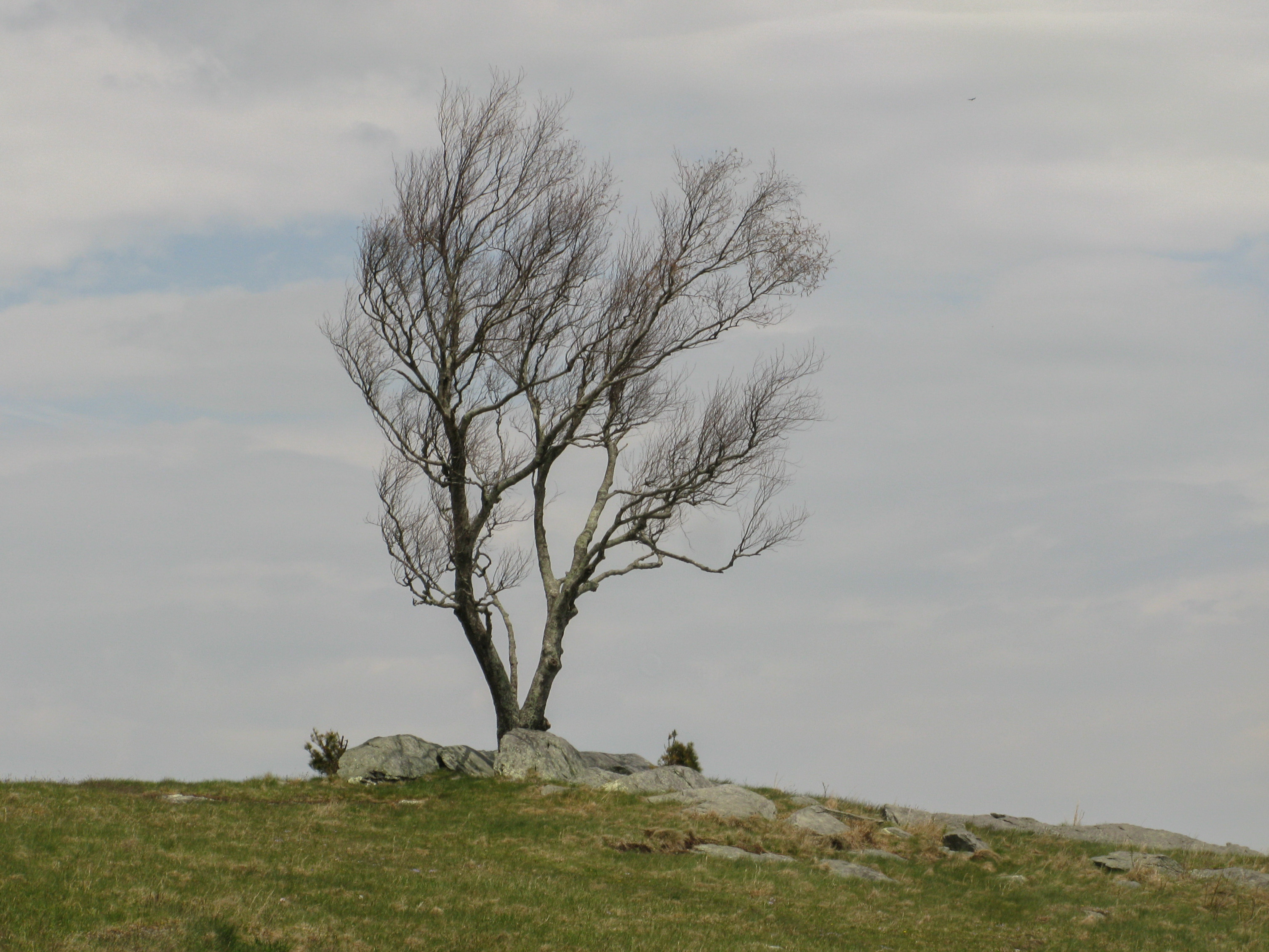
Doughton Park Tree 4/30/2022

Read Full Post »

« Newer Posts - Older Posts »