Feeds:
Posts
Comments

Posts Tagged ‘poetry’

[with 3 poems by Michael Beadle]

4 AM. Reason says you need to sleep; everything but reason says forget about it. Sweating, restless – how long? – I finally force into the background those pricks of regret past & future and focus on the faces of my friends. In silence I speak each name and visualize each person. Then their son. Their granddaughter. I wish for them enfolding arms of peace.

And as I see their smiles I also see their pain. Can I imagine a single one who has not been visited by grief? Who isn’t struggling, right now, 4 AM, with worries for the ones they love, with heartsickness, with loneliness? All of them suffer behind the smiles.

And all of them go on living. Remarkable, isn’t it? Unbelievable. All of us suffer and all of us go on living for those few moments of hope, of joyfulness, of connection with another, moments that waft through our days like some longed-for fragrance – we can’t tell where it’s come from, we can’t catch it and keep it, we simply trust it will return.

Moments that waft through our nights. 4 AM. I breathe out a word of love for each friend. Call it prayer. May we be one.

.     .     .     .     .     .     .
.     .     .     .     .     .     .

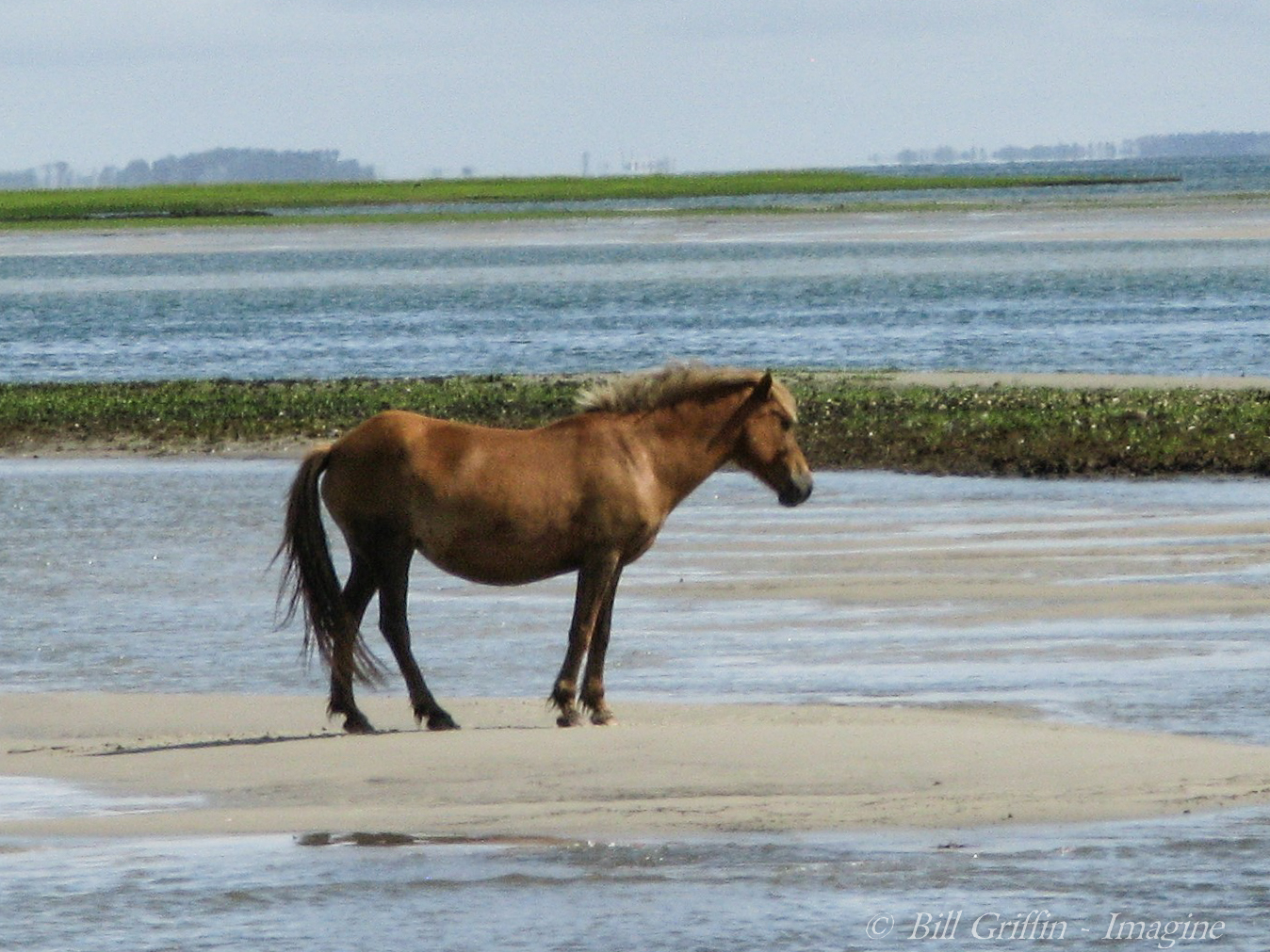
Wild Horses

They know they’ll never stand again –
the bay colt missing a hind leg,
the palomino whose front hoof

came unglued, the cream-coated filly
with ebony ears and a clipped tail.
Porcelain stallions paraded for decades

on living room doilies, unbridled mares
guarding crystal jars of peppermints.
Silent companions of cocktail parties,

Christmas dinners, afternoon tea.
If Oma gave them names, I never knew.
After she died, they spent months

wrapped in newspaper,
boxed on basement shelves.
Perhaps they grew restless,

kicked each other in a barn-fire panic,
hoping to free themselves for the rainy day
when strangers came to haggle over

the china I’d never use. Let them
take the pewter goblets, the steins that smelled
like old pencils, tubs of tools

that bore the scars of hard seasons.
The tray of horses was all I hoped to keep.
I came to love them –

not for what they once were,
but, being broken,
how they went on living.

+++++ Michael Beadle

.     .     .     .     .     .     .

Poets play with words. They select them as carefully as the chocolate from the sampler that must be raspberry truffle. They wiggle words around until uncomfortable becomes comfortable and we exclaim, Oh! I see! They tickle them until the words gasp out a new meaning they’d never revealed before.

Michael Beadle plays and frolics and romps with words. He flips over rocks and pulls out wrigglers that haven’t been seen on a page in a coon’s age, if ever. If he can’t find the words he wants he makes up some new ones right then and there. He cavorts, he rolls around on the floor with words until they all collapse laughing. He snuffs them up, he savors, he rolls words around in his mouth until he’s sure he’s found just the right flavor.

And Michael sits down on the sofa with words, arms around each other’s shoulder, while they speak to each other oh so softly. I understand. We’ll get through this together. What are friends for?

.     .     .     .     .     .     .

The Naming

“What about this one?” I asked.
“Mylax,” he replied.
“And this one?”
“Plumdrum.”

We were at the lakeshore again
among the cool bed of rocks,
our words echoing
across the water.

Ghozlak +++++ Aya +++++ Zephanos

Lifting each rock,
we felt its weight in our palms,
closed our eyes
until a name arose.

Millanthium +++++ Whillet +++++ Lippery

We hurled the rocks
as far as we could
into the lake,
giving them
a new depth to find.

There we sat for hours,
the only ones left in this world
who could conjure
its litany of names.

Perio +++++ Shezai +++++ Calex

As darkness crept into the cove,
we chose new rocks,
hardened by time, tempered by water,
and steadied our minds
for the Naming.

+++++ Michael Beadle


.     .     .     .     .     .     .

These three poems are from Michael Beadle’s The Beasts of Eden (©2018, Press 53, Winston-Salem NC). Its three sections include deep memories and deeply poignant moments; raucous celebrations of Western North Carolina roots and language; pointed retelling of myths, local legends, and Bible stories. Michael, you’ve made me laugh and you’ve made me cry. You’ve brought a sweet fragrance into this moment. I am restored and refreshed by joining you as friend.

.     .     .     .     .     .     .
Yay-long

It is most certainly not a member of the metric system,
perhaps a distant relation to the foot or yard.

Snubbed by the methodical and meticulous
who pride themselves with empirical accuracy,

it endures as a standard among Southerners
when a tape measure won’t do.

How big was that possum? the man at the gas station asks.
‘Bout yay-long, his friend replies, hands spread wide, like so.

Yay-long or yay-high declares without stretching
the truth to eleventy feet. Used sparingly,

yay-long approximates for those who didn’t see
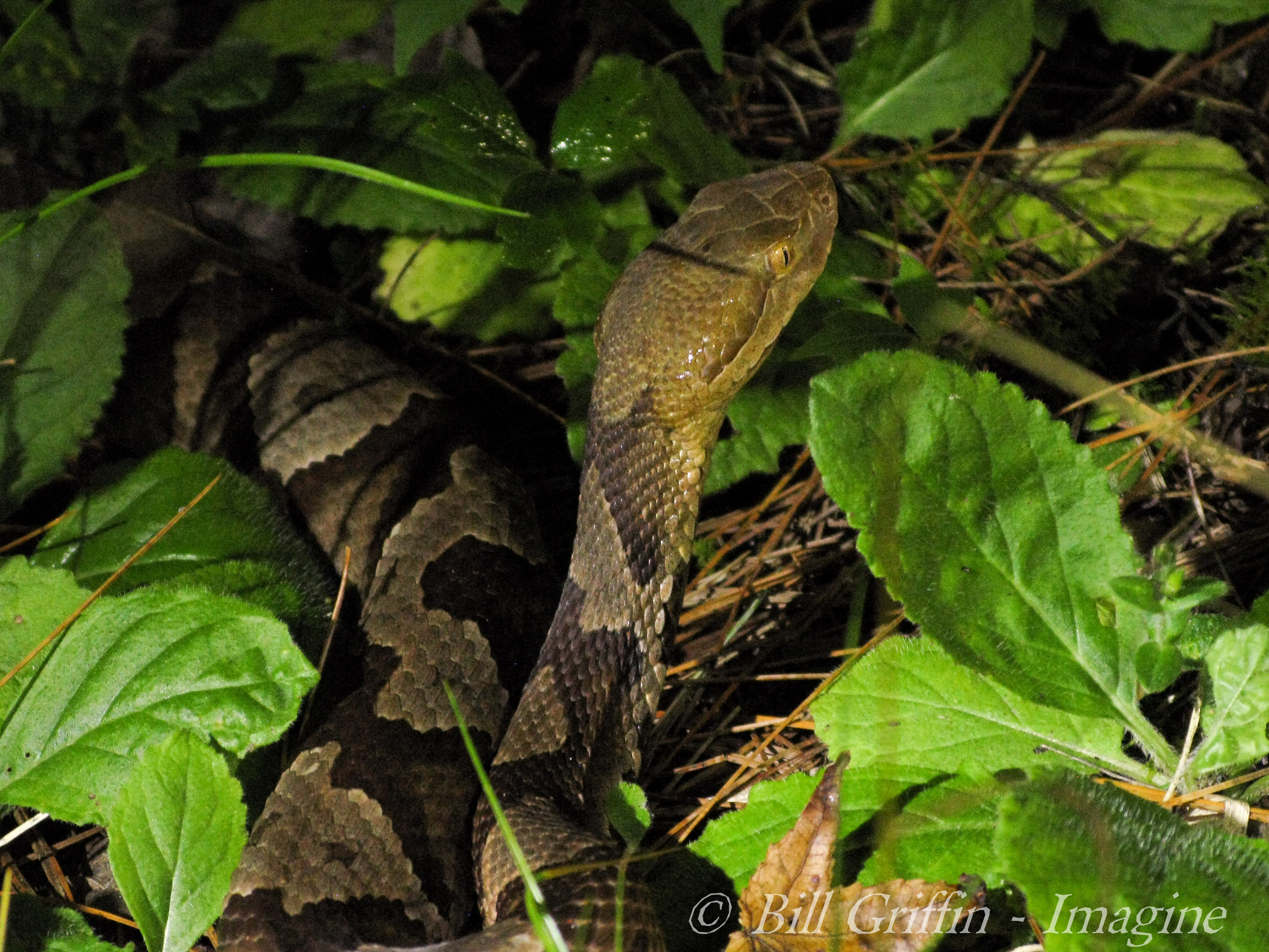
the neighbor’s copperhead startled in the wood pile.

A breath of anticipation between those hands,
experience borne from the invisible.

Yay-long serves memory as memory serves the teller,
and so we nod, eager for the rest of the story.

+++++ Michael Beadle


.     .     .     .     .     .     .

.     .     .     .     .     .     .
2016-10-17a Doughton Park Tree

Read Full Post »


[poems by Marty Silverthorne]

I have a good friend with a titanium leg named Mike.
Oh yes? And what’s the name of his other leg?
Ugh. You should be ashamed of yourself. Although Mike would certainly declare there is nothing like a good joke.
And that was nothing like a good joke.
Who’s in charge of this story anyway? I was trying to tell you about Mike, the king of story tellers.

The story about losing his leg is pretty harrowing, the lightning storm, the catastrophic collapse of the radio mast. Also the one about how long it took the doctors (years) to finally decide to amputate and order the titanium. But Mike has more stories than a rose garden has June bugs. And if he’s known you for one day, you’re part of the story, too. Like his neighbor Marcel who saw Mike fall into the bushes and came running out of the house half dressed to help. Or the other neighbor who saw Mike and Marcel shoveling dirt off Mike’s driveway and came out exclaiming, “Y’all need a young man to do that!”

Add in all the stories that are taking root right now from this afternoon when our whole church gathered COVID-safe in Mike’s driveway to share the ribs and chicken he’d been smoking for 3 days (and smoked portobellos for the solitary vegetarian, me). How for days all the neighbors’ mouths were watering. How Marcel, Jeremiah, and Jonathan accepted the invitation to lunch and joined right in with us. How we sang Happy Birthday to Hal’s mom Charlotte who would be 103 today (and died less than a year ago) and loosed balloons to soar in her memory. And shouted Happy Anniversary to Marcel who got married a year ago. How we drove away from Mike and Linda’s home having been fed in body and spirit.

That’s what our stories are for: to draw us together, feed us, and send us out. Friend, next time we meet I want to hear your story. And I’ve got a few to share with you as well . . .

[Today’s jokes were unabashedly stolen from Disney’s Mary Poppins, 1964]

.     .     .     .     .     .     .

.     .     .     .     .     .     .
I knew Marty Silverthorne from a dozen or so poetry event in as many years. Sometime after his motorcycle accident in 1976, he began to write. When he died in 2019, Marty had spent over forty years in a motorized chair but his poems and stories not only had wheels but wings. He published a number of books and had a long career counseling persons suffering with addiction. He inspired innumerable struggling people to find their own strength and their own voice.

These two poems are from one of Marty Silverthorne’s last books, Naming the Scars. Truth has hard edges, rough and sharp; Marty doesn’t grind those edges down or polish them up, but neither did the truth grind Marty down or polish him off. In the midst of the grueling hardship of quadriplegia, Marty Silverthorne celebrates families, legacy, caregivers, fellow sojourners; Naming the Scars is dedicated For my family and for the hands of angels.

.     .     .     .     .     .     .

Inside of Me

Inside of me you expected to find
a motorcycle wrapped around a tree,
whiskey bottles beside the road.
You did not expect to find daffodils
blooming in a pine thicket,
crepe myrtles close enough
to threaten their beauty.

Inside of me you expected to find
the soiled pages of Penthouse.
You did not expect Yeats and Keats
on a linen table cloth,
one large candle with a wavering flame,
a bottle of chardonnay.

Inside of me there are bracelets of old lovers,
stuffed animals martyred by time,
tangled dreams of childhood.
You did not expect to find forgiveness here,
the flag of my soul waving in surrender,
a truce between our hardened scars.
Here in this temple I have created
among azaleas and gardenias, I live with a woman I love,
whom grandmother called beautiful.

Marty Silverthorne (1957-2019)

.     .     .     .     .     .     .

Naming the Scars

My right eye is underlined
by a thick-fisted scar
I won in a fight
brawling over a girl
who belonged to no one.

Under my beard line, a scar
shines like a crescent moon,
burned by a girl with a razor
engraving her pain in unfaithful flesh.

Half moon between thumb
and finger on my contracted left hand
I carved with a Barlow,
deceitful blood dripping
moon-drops on the countertop.

Suicide slashes cross my wrist
form a constellation of scars;
the jagged edge of a pop bottle
sliced flesh in rhythms,
painted my portrait in blood.

Crossing my body like a sickle
is a handlebar scar.
One August night, drunk on wind,
I tried to quiet the voices
when the one I loved
said she could go on without me.
I straddled the metal-flake frame,
carved out curves,
filled emptiness with speed.

Black necrotic spot marks the toe
I lost to a surgical show.
In Winston-Salem one snowy Christmas
Missed love so bad I checked into
a private room in a public hospital.
Too long ago to remember, so scar-proud
I can’t forget, I branded this body
with wounds no thread can bind.

Marty Silverthorne (1957-2019

Both selections from Naming the Scars, Longleaf Press, Methodist University, Fayetteville, NC; © 2017

.     .     .     .     .     .     .

Books by Marty Silverthorne

Naming the Scars – Longleaf Press, 2017

Holy Ghosts of Whiskey – Sable Books, 2016

Marty Silverthorne – Ten Poems – St. Andrews University Press, 2016

Rewinding at 40 – Pudding House, 2009

No Welfare, No Pension Plan – Rank Stranger Press, 2006

.     .     .     .     .     .     .


2020-11-03b Doughton Park Tree

Read Full Post »

[poems from VISIONS INTERNATIONAL by Jack Coulehan and Stan Absher]

Mysterious hominid group left a big legacy in the Philippines . . .
+++++++++++++++++ SCIENCE NEWS, Vol. 200 No. 5, September 11, 2021

The black bear in last night’s dream was only mildly interested in the sunflower seeds I offered. It ate one mouthful to be polite. Dang that bear smelled funky, exactly like Pip, my ancient Cairn Terrier, times ten. And the bear was obviously itchy – I reached gingerly to scratch near the bare patch on its back. Telling myself, “This is a bear. Wild. Be gentle.”

The bear wandered away to sun itself in the hay. I’ll bet my cousins were happy whenever the sun came out. That cave in the Altai Mountains in Siberia looks pretty dank and funky. The locals named it Denisova after the old hermit who lived there, Dyonisiy, and when they found a girl’s finger bone fossil way back in the shadows in 2008 they named her Denisova, too. My cousin.

Well, not a close cousin. Completely different side of the family, actually, those funky Denisovans, though we have some grins at reunions. Lately it turns out some closer relatives used to hang out in that cave at times. Real close – Neanderthals. Kissing cousins. I’ll bet we all dream of scratching bears.

.     .     .     .     .     .     .

Neanderthal

My three percent that came from you
is chopped and sprinkled like confetti
among my twenty thousand genes.
Just junk, os so the experts tell me.
A legacy as mute as the hundred

millennia that passed before we met,
though I sense echoes of your voice,
your lyric bird-like tongue, and glimpse
the clan, the tools, the hunt. I feel
your hunger, fear, and satisfaction.

Ancient cousin, what can you teach me
about becoming human? Brutality?
My species doesn’t need your help for that.
Reverence for the earth? We understand
but choose ambition and destruction.

When I visualize beyond the fog of time
your presence, receding ice appears,
a camp of ten or twelve around the fire.
You are sitting beside a peculiar
stranger, so different from the others.
You reach for her hand. She offers it.

Jack Coulehan, from Visions International #104, © 2021 Visions International Arts Synergy

.     .     .     .     .     .     .

These poems by Jack Coulehan and Stan Absher are from the most recent edition of Visions International, a small but tenacious journal published continuously for over 40 years by Visions International Arts Synergy, reprinted by permission. I asked the founding editor, Bradley R. Strahan, for a little history:

“As to me and the journal, we’re inseparable. I started it in 1979 in D.C. at the Writers Center. I have done just about everything on it except printing and art work. For the first couple of dozen issues I had someone do the layout but after that I’ve done it myself on an old fashioned light table. It’s a 501(c)3 non-profit and it definitely is.

“As for just me, after retiring early, 1990, from the Feds I taught for 12 years at Georgetown University, then 2+ years in the Balkans as a Fulbrighter. After that I moved to Austin where I taught part time at U.T. for several years. During my travels I’ve kept the magazine going with 2 issues published in Macedonia and then 2 in Ireland and then one by the University of Liege in Belgium. [We have] a subscriber base that includes several major libraries like Yale, U. Cal., U. NY, U. Penn, etc.” ####### — Bradley Strahan

The journal is illustrated by Malaika Favorite. The poetry takes you around the world and deep into your own psyche. Contact and subscribe at:

http://www.visionsi.com/
Black Buzzard Press / 7742 Fairway Rd / Woodway, TX 76712 USA

.     .     .     .     .     .     .

Every time I read a poem by Stan Absher I feel a pinch of my soul rolled between the fingers of God. Softened and warmed, ready to be restored and molded that much closer to the shape it was meant for.

.     .     .     .     .     .     .

We Lay Our Burdens on Time

Head bent to earth it carries them off.
We hear it shuffle its leaden feet
and wheeze and cough.

Poor thing, we think, the swelling
ankles, the rheumy eyes
that look at us without seeing,

at each trembling step
it drops something we gave it –
a grief, a pang of regret,

a vow we thought would outlive it.
It even forgets its own cruelty,
what it filched from us, a bit

of stature or memory or cheer,
what it plentifully gave
of sickness and despair,

it forgets, and doesn’t care,
stands mumbling in the street,
staggers to the corner bar.

Stan Absher, from Visions International #104, © 2021 Visions International Arts Synergy

.     .     .     .     .     .     .

.     .     .     .     .     .     .

IMG_1827

Read Full Post »

« Newer Posts - Older Posts »