Feeds:
Posts
Comments

Posts Tagged ‘poetry’

[with poems from The Ecopoetry Anthology]

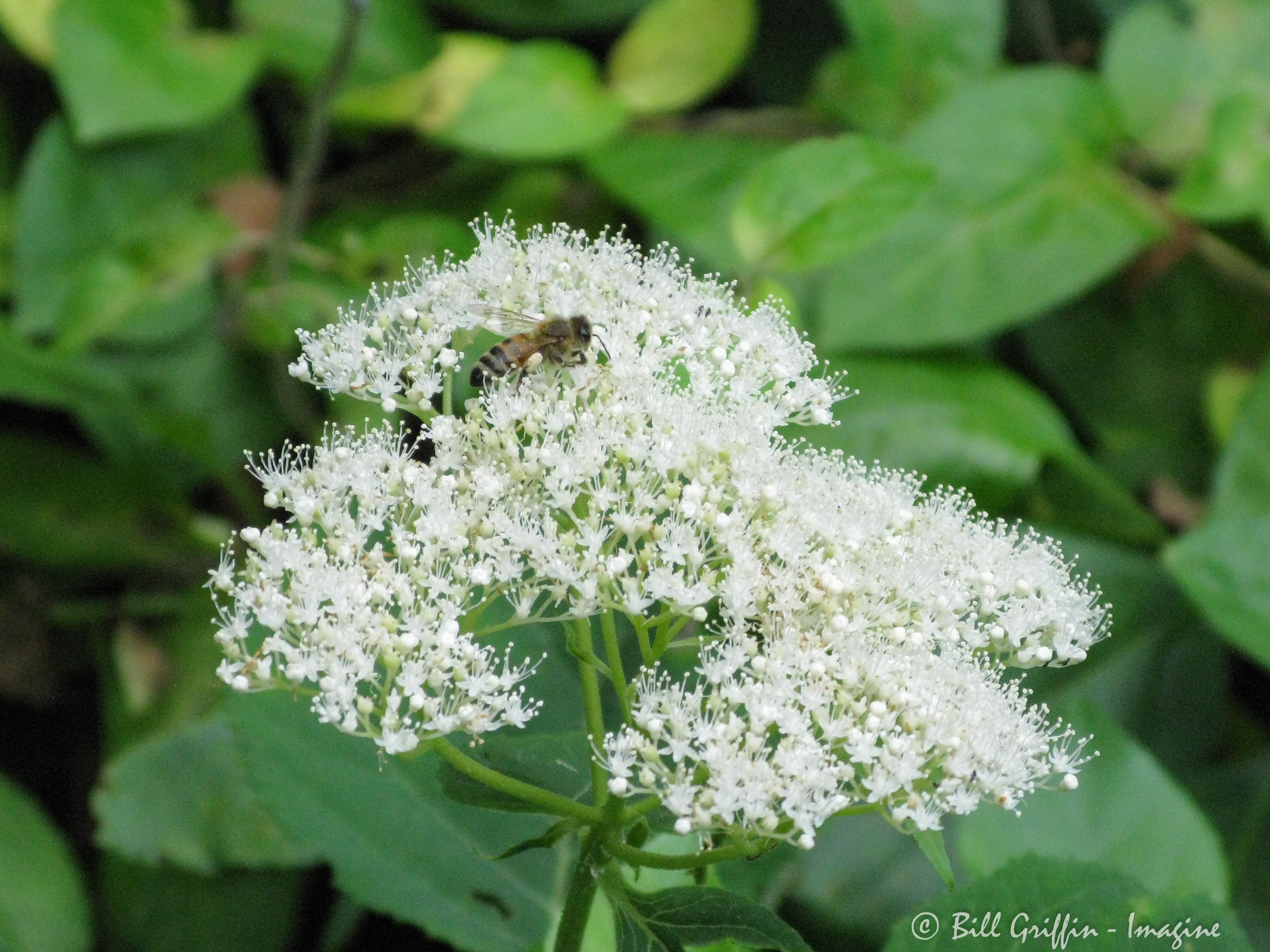
Ethnobotanists recognize that the difference between a poison, a medicine, and a narcotic is often just a matter of dosage. This pungent observation is found in my favorite wildflower guide under the entry for Golden Alexanders (Zizia aurea), which is in the wild carrot or parsley family, Apiaceae. Members of the family include vegetables – carrot, celery, parsnip – and ubiquitous seasonings – cumin, coriander, fennel, dill, and many more. They also include the most toxic plant in North America, Water Hemlock; a small nibble of the root will be fatal. Deliciousness and poison, nurture and death, they surround us.

My father was recently released from inpatient rehab after suffering a series of strokes at age 96. My sister and I took turns living at their home for two weeks, first to watch over Mom and drive her to visit Dad, then to get him resettled. Now it’s down to me to carry him to his various appointments, field questions from home health, pay the bills. All that stuff. Meanwhile, Dad’s neighbors call him the bionic man. His speech has fully returned, his appetite’s robust, he can creep around the block upheld by his Lexus of all walkers. He is surrounded by a glow of resilience.

Dad’s glow is enhanced by one apparent deficit left by the stroke – any awareness of his mortality. Perhaps it’s simply the great good fortune of being upright and breathing, but he seems to have discarded many of his former worries, including not even seeming to worry that he’ll have another stroke. Be happy, Dad – I’ll take over the worrying. It’s my job to worry, and to remind you that it’s not safe to stand up without your walker. I’ll be the one who checks your pill cartons and makes sure you’re taking everything correctly. I’m keeping the refrigerator full; you just decide what to tell the caregiver to fix for your supper. Simply let this moment surround you and Mom. Enjoy.

Last year I gave my backpacking buddy Mike a t-shirt I see him wearing often: What Doesn’t Kill You Makes You Stronger . . . Except Bears, Bears Will Kill You. What really cracks us up is that on all those hikes we took, we wanted to see a bear! From a responsible distance, of course, not licking our face in the middle of the night. I can honestly say that this stroke which didn’t kill Dad has not made him physically stronger (until you compare him to the median 96-year old). Or mentally stronger – he’s pretty fuzzy some days and wouldn’t be able to put into words this transformation. He can’t express verbally just where he resides on the plane of mindful acceptance, but he is looking forward to the next good dinner.

May there yet be dinners aplenty. Within the flickering shadows of destruction, my Father, may you be surrounded by joy.

❦ ❦ ❦

Eagle Poem

To pray you open your whole self
To sky, to earth, to sun, to moon
To one whole voice that is you.
And know there is more
That you can’t see, can’t hear;
Can’t know except in moments
Steadily growing, and in languages
That aren’t always sound but other
Circles of motion.
Like eagle that Sunday morning
Over Salt River. Circled in blue sky
In wind, swept our hearts clean
With sacred wings.
We see you, see ourselves and know
That we must take the utmost care
And kindness in all things.
Breathe in, knowing we are made of
All this, and Breathe, knowing
We are truly blessed because we
Were born, and die soon within a
True circle of motion,
Like eagle rounding out the morning
Inside us.
We pray that it will be done
In beauty.
In beauty.

Joy Harjo
from The Ecopoetry Anthology (Trinity University Press, San Antonio, Texas, © 2020)

❦ ❦ ❦

Leading us into Earth Day on April 22, these poems are from The Ecopoetry Anthology, edited by Ann Fisher-Wirth and Laura-Gray Street, with an excellent introduction by Robert Hass (Trinity University Press, San Antonio, Texas, © 2020).
Joy Harjo is an internationally renowned performer and writer of the Muscogee (Creek) Nation. She served three terms as the 23rd Poet Laureate of the United States from 2019-2022 and is winner of Yale’s 2023 Bollingen Prize for American Poetry.
Donald Hall has served as Poet Laureate of the United States and Poet Laureate of New Hampshire. His many honors include the Robert Frost Silver medal and the Ruth Lilly Poetry Prize.
Lola Haskins serves on the Board of Florida Defenders of the Environment and has won the Florida Book Awards Silver Medal for Poetry.

❦ ❦ ❦

Digging

One midnight, after a day when lilies
lift themselves out of the ground while you watch them,
and you come into the house at dark
your fingers grubby with digging, your eyes
vague with the pleasure of digging,

let a wind raised from the South
climb through your bedroom window, lift you in its arms
– you have become as small as a seed –
and carry you out of the house, over the black garden,
spinning and fluttering,

and drop you in cracked ground.
The dirt will be cool, rough to your clasped skin
like a man you have never known.
You will die into the ground
in a dead sleep, surrendered to water.

You will wake suffering
a widening pain in your side, a breach
gapped in your tight ribs
where a green shoot struggles to lift itself upwards
through the tomb of your dead flesh

to the sun, to the air of your garden
where you will blossom
in the shape of your own self, thoughtless
with flowers, speaking
to bees, in the language of green and yellow, white and red.

Donald Hall
from The Ecopoetry Anthology (Trinity University Press, San Antonio, Texas, © 2020)

❦ ❦ ❦

Prayer for the Everglades

A gumbo-limbo swoons in the arms of an oak.
A royal palm, smooth as sunless skin, rises
against blue. In this whole untouched world
there seems only wind, the grass, and us.
Now silent lines of wood storks appear,
their white wings edged black. Here is
a mathematical question for your evening.
How many moments like this make a life?

But if it were not true? What if the glades
were a dream, ancient, written on the walls
of caves, so anthropologists peering into
the darkness could say only, it must have
been lovely then, when grass flowed under
the sun like a young woman’s falling hair.
What if none of it were true? What if
you and I walked all our afternoons under
smoke, and never saw beyond? What if
the tiny lichens that velvet the water, the
gators that pile like lizard on the banks,
the ibis with her sweet curved bill? What
if the turtles that plop off their logs like little
jokes? What if the sheltering mangroves?
O what if? Look up, friend, and take my
hand. What if the wood storks were gone?

Lola Haskins
from The Ecopoetry Anthology (Trinity University Press, San Antonio, Texas, © 2020)

❦ ❦ ❦

Wildflowers of Tennessee, the Ohio Valley and the Southern Appalachians – August 1, 2018; by Dennis Horn, Tavia Cathcart. Sponsored by the Tennessee Native Plant Society

This book focuses on Tennessee, but the Ohio Valley and Southern Appalachians are covered, encompassing all or parts of Alabama, Arkansas, Georgia, Illinois, Indiana, Kentucky, Maryland, Mississippi, Missouri, North and South Carolina, Ohio, Pennsylvania, Virginia, and West Virginia. Within these pages I’ve discovered just about every wild flower I encounter here in the North Carolina foothills, or at least a close relative. The book overall is arranged by plant family with taxonomic commentary; it includes a quick thumbnail guide by color in the front; every entry has rich commentary about history and ethnobotany; my favorite section is the excellent illustrated glossary – everything the wild plant nerd could possibly want!

❦ ❦ ❦

Doughton Park Tree -- 5/1/2021

Read Full Post »

[with poems from ecotone]

“Oh, look at the Redbuds, how pretty!” Riding in the back seat, I couldn’t figure out what my parents were gushing about. Where was this tree with red (not lilac or magenta or purple) buds (not jillions of little peaflowers jutting from every twig)? Maybe, I thought, they meant “maple.”

I did know what they meant when they said, “Oh, Dogwoods!” In a cross, four white petals (actually bracts, modified leaves), small trees lining the roadway and scattering themselves down into the woods – I certainly understood that white flowers in spring equals Dogwood.

Except when it doesn’t. One April after we had moved to Elkin and bought a house perched on a steep incline above Dutchman Creek, I decided to pick my way down amongst the briars and poison ivy and explore. I just assumed those flowering trees punctuating the woods were Dogwood, such a firm assumption that I didn’t even give them a look. Then I noticed, watching ever so carefully where I was placing my feet, dozens of little white cup-shaped blooms that had fallen from overhead. I looked up and learned.

Carolina Silverbell is a small tree native to the Eastern US, in the Snowbell or “Storax” family, Styracaceae. Genus Halesia is named for Stephen Hales, an early 18th century Englishman who made a number of contributions to plant and animal science (he’s credited as the first person to measure blood pressure!). Around the time Dogwoods are blooming, and before leaves appear, Silverbell opens its small four-lobed flowers that hang from their stems indeed like little bells. It thrives in shade and partial sun; many of those white-flowered trees I’d been seeing in the woods through the years were probably Silverbell rather than Dogwood.

In the fall, Carolina Silverbell reveals the source of its species name. I remember the first time I plucked a few of its brown seed pods (a dry drupe), which it retains all winter. Each has four longitudinal wings – Tetraptera.

❦ ❦ ❦

The River in Pieces

The river in pieces – pool, riffle, run –
holds thousands inside itself, still undone,
motion captured. Strange critters swirl within
The churn-water breaks, a misted engine.

A bitten hot wish, remade, swallowed deep,
flows into shadowed shape coherent, weeps
into a waterfall, crashes sideways,
surfaces spinning, darts into bright day.

Lines mend: boundaries cut to maps and saws,
and gravity, a dark fish, dives and draws
swift-cold streams into rolling channeled force
inevitable. Widening, the course

opens warmer, swells in yellow ambling.
Lakes interrupt – boats buzz – but the bending
resumes eventually; hairy swamps emerge,
remoteness expands to eternal surge

where brackish waters wander, sweep full wide,
fan estuarine, pull life along the tide
more gently. Sharpness turns to silence
meandering, builds, and then relents

into mouth: sound fixed fast to a squall.
Seagulls soar; the wet wind drives, enthralls
the highest sky – at last the river sails,
presses vastness: a watershed exhales.

Shana Campbell Jones
from ecotone #33, fall/winter 2022

❦ ❦ ❦

ecotone: a transition zone between two communities, containing the characteristic species of each; a place of danger or opportunity; a testing ground

ecotone is published twice yearly by the Department of Creative Writing and The Publishing Laboratory at the University of North Carolina Wilmington, editor Anna Lena Phillips Bell, editor-in-chief David Gessner. #33 is “The Ocean Issue.” Shana Campbell Jones is an environmental lawyer at the University of Georgia. Sophie Klahr is the author of Two Open Doors in a Field from Backwaters Press, March 2023. Gretchen Steele Pratt is the author of One Island, Anhinga Press, and teaches at UNC Charlotte.

❦ ❦ ❦

Downstream
after Enric Sala

Water is a symbol of God’s MERCY on the earth. My lecture notes are full of capitalized words: Acidification is melting the BONES of the ocean; GRAIN is the currency by which we trade water; conservation is not a LUXURY; we once THOUGHT the ocean was too BIG to FAIL. The marine ecologist at the lectern holds himself like a tired Janus – “We have killed and/or eaten ninety percent of the large animals in the ocean,” he says; he says, “This is a population that will not recover.” murmur murmur goes the listening choir. A massive screen hovering onstage shows a shot of some large school. The ecologist tells another of his dozen jokes about fish – he has learned to weave these into the truth. EVERYTHING GOES DOWNSTREAM AT SOME POINT, say my notes. THE OCEAN IS DOWNSTREAM OF EVERYTHING.

Sophie Klahr
from ecotone #33, fall/winter 2022

❦ ❦ ❦

Silence in the Garden, Silence in the Halls

At the lowest of tides
++ we go walking
through the low tide
++ mansions, surfaced,
stairways roughed with
++ salt, barnacles,

the banisters salt-cured
++ white. We roam
barefoot in muslin dresses
++ and do not
speak, relieved a few hours
++ from our names,

from children waking, from
++ closets bowed
with color, from the drone
++ of machines
that do our bidding. Our eyes
++ close beneath

the sun-drenched pergola,
++ twisted thick
with petrified vines of wisteria.
++ We turn in slow
circles through the grand ballroom,
++ baked clean

of gold and varnish, a wreck
++ of rusted
cello stands washed in
++ the corner.
Crystal chandeliers, clouded
++ to sea glass

become stone. Wallpaper dissolved,
++ walls encrusted
with the raw white lace
++ of the sea.
Dry opal fish scales eddy
++ in our wake.

We always reconvene
++ on the widow’s walk,
littered with lost anchors.
++ From there,
we witness the low tide
++ deepening,

another mansion appearing,
++ alive, like
white coral, farther down
++ the long drift
of strand. We will make
++ our way there,

across the burning noon sand,
++ to each mansion,
where we own nothing, and
++ love no one,
cloistered by the tides
++ in these convents

of the desert
++ and of the deep.

Gretchen Steele Pratt
from ecotone #33, fall/winter 2022

❦ ❦ ❦

❦ ❦ ❦

Carolina Silverbell may be a multi-stem shrub or smallish tree in the NC Piedmont, up to 10 meters tall, but in the Great Smoky Mountains there are individuals over a hundred years old reaching heights of 39 meters or greater. Some taxonomists consider these to represent two distinct species, Halesia carolina and Halesia monticola (Mountain Silverbell). Even more confusing, the Asian Halesia species may not be monophyletic (not all from a common ancestor, not in the same clade). Some taxonomists propose a separate genus, Perkinsiodendron.


2016-05-08a Doughton Park Tree

Read Full Post »


[with poems by Stan Absher, Kathleen Wakefield, Bill Griffin]

How does science work? What does it mean for me to think scientifically? I notice something (empirical observation); I draw a conclusion (hypothesis via inductive reasoning); I check it out (experimentation, testing the hypothesis); it doesn’t all hang together so I try again, maybe noticing a little more closely (refining the hypothesis).

That final bit is the kicker. Even scientists can be seduced by their theories. Scientific knowledge, however, is never fixed and final. The most beautiful deduction can be proven false by the more precise observation. A posteriori trumps a priori. Anyone can be wrong.

The Naturalist Method is a subset of the Scientific Method. When I lead a nature hike, I advise folks, “Pay attention . . . ask questions . . . make connections . . . share.” And I am not the least bit shy about announcing that I myself don’t know everything. Not knowing (but wanting to!) is my defining characteristic. Semper Plus Discere – Always More to Learn. Bring books!

Which bit me on the butt a few weeks ago. For years I’ve walked a little section of trail where trout lilies carpet the banks every March. The first time I saw them – mottled fish-scale leaves, bright yellow recurved tepals, pendulant maroon anthers – I opened my trusty old field guide and confidently proclaimed, “Yellow Trout Lily, Erythronium americanum.” Firm, final, and correct. Never even gave it a second thought until this spring, when I decided to photograph some prime specimens in my SEEK app to add to my iNaturalist log. Click. Searching. Erythronium umbilicatum flashes up on my screen. No, no, that’s not right. Just shot ‘em from the wrong angle, try again. Every flower, every time the same – Dimpled Trout Lily.

When I got home I tore open my newer guides and references and discovered this: some thirty years ago taxonomists split the one species into two. And this: of the two, Dimpled is by far the most common in the foothills where I live. So how do you tell them apart? After a couple of hours on the NC State plant science websites, and after tracking down online photos (which I ultimately determined were mislabeled as americanum 52.3% of the time) I had my armamentarium. Back to the woods, this time with a hiking group I enlisted to find all the Trout Lily they could, especially ones gone to seed.

And what we observed was this — if still in bloom, no auricle (“ear”) at the base of the inner tepals; if gone to seed, a distinct dimple at the end of the ovary, and often lying prone on the ground. Every dang plant we found was Erythronium umbilicatum. I stand humbled and corrected.

But here is another observation to add to the guide books. Yellow Trout Lily is described as holding onto its style, still attached to the ovary after forming seeds. Many, even most, of the Dimpled we found also retained their style. Maybe we’ll come back in a week and observe again. Maybe notice a little closer.

❦ ❦ ❦

Heifer

Destined for slaughter
she wades into the water
to the belly and drinks deep.

Does she see her own sad eyes
wide and innocent in the pool
looking up out of the sky?

Soon fear will make her bellow,
but now her muzzle is cool
and wet. Her skin twitches,

scattering flies; her switch
brushes them off. Across the water
she sees a pasture

she will never graze
a clump of trees
that will never give her shade.

J. S. Absher
from Visions International #107, Black Buzzard Press, © 2023 Visions International Arts Synergy

Erythronium umbilicatum

Erythronium americanum

❦ ❦ ❦

Thirty or so poems in a modest package; writers from Europe, Asia, the Americas; no page numbers but a few hand-drawn illustrations – all this and a remarkable meditative companionability create the magic of each issue of Visions International. I ask myself how editor Bradley R. Strahan manages to pull me into these pages so warmly. Some insistent human voice calls us, the readers, to encounter distant circumstances and experiences and realize they have become close, familiar, our own. How has Brad, through the decades, made this so?

My friend Stan Absher suggests: Because he often publishes poets over a long period of years, Bradley’s readers can get to know some poets rather well. I’ll mention only the late Michael Mott (he died in 2019) and Nikolaï Kantchev, a Bulgarian poet who died in 2007 and whom Brad continues to publish in translation, but there are several others.

And Kathleen Wakefield, after reading Issue #107, commented this to Bradley: I love the cadence of these poems, their subjects and very particular visions, language that skewers you or lures you in. Some are simply magical to me, others have the strangeness and dark absurdity, fused with love, that points me back to Simic, one of my favorite poets. So glad you honored him and are always including poets from other parts of the world who write of something vital at stake. All of these poems jar me out of my usual forms of speech. That is a very good thing. It’s not just mental; the heart is altered.

I am honored to appear in these particular pages with two friends I’ve come to know through shared poetry, Stan Absher and Kathleen Wakefield. As I continue to read each issue of Visions, my circle of companions expands.

Subscribe to Visions International. For four issues, mail $25 to:
Visions International / Black Buzzard Press / 309 Lakeside Drive / Garner, NC 27529

❦ ❦ ❦

Summons

1.
I am practicing my lying down
beside the stripped spines of jay feathers,
the azures unwinged, seed heads gone to must
and rot, bones of mice cradled in mycelia
tangled and ghostlike.

I am asking the names of wildflowers to ease me into sleep,
saying them over and over, Bloodroot, Evening Lychnis,
Celandine, Enchanter’s Nightshade, Coltsfoot,
Wood Groundsel dissolving
on my tongue.

The faces of those gone before me rise up,
and those I will leave behind, my children
far flung as seeds carried by wind
and pelt and rain.

2.
Go ahead, let the dankness of earth
seep into your thighs, let dust
silt your lungs, your spine
crack like river ice

but the mind pulls you back up through snake skin and mist,
through dry creek and river bed to the trees’
green asylum, rain smacked leaves
waking you to the body’s arterial hum.

Get up while you can, full of your hunger and regret.
Get up from your knees. Taste
what you are, cloudburst, mud, burnt grass,
words buried in iron, bone, lips, and breath,
in this sorrow and honey,
this skin and ash.

Kathleen Wakefield
from Visions International #107, Black Buzzard Press, © 2023 Visions International Arts Synergy

❦ ❦ ❦

Albedo

Rare to discover you
+++++ aloft in the afternoon
your eye so blue
I can see right through
+++++ the curving edge of sight
and your face so bright
+++++ I believe the fire
of your glow must burn
within – but no,
+++++ reflected whole
where you hang on the arm
of your golden man.

Bill Griffin
from Visions International #107, Black Buzzard Press, © 2023 Visions International Arts Synergy


❦ ❦ ❦

EARTH SCIENCE: Albedo is a measure of how much light is reflected by the surface of a planet or moon; an albedo of 1 means all light is reflected; an albedo of 0 means no light is reflected – all light is absorbed by the surface and it will appear dark. The albedo of the moon is 0.12, pretty dark as celestial bodies go. Saturn’s moon Encedalus has an albedo of 0.99 due to its covering of snow and ice.

The albedo of Arctic ice is much higher than the albedo of open ocean. As more of the Arctic becomes ice-free in summer, more light (heat energy) is absorbed by the darker water. This has produced a positive feedback loop so that the Arctic is warming much faster then the remainder of the planet.

PLANT SCIENCE: The female reproductive part of a flower is the pistil, composed of the ovary (containing the ovules), the style, a slender column projecting up from the ovary, which is tipped by the stigma. Pollen lands on the stigma and sprouts tubules down through the style to fertilize the ovules and produce seeds. Of the 450+ families of flowering plants containing more than 260,000 species, each contributes its own variation to the configurations and shapes of flower, pistil, and stamen, and the strategies for insuring that pollen and ovule meet.

When the outer whorl of structures on a flower can’t be sussed out as sepals or petals, the blades are often called tepalsSepals are the outer whorl that cover and protect the bud and petals are the inner whorl, usually colored to attract pollinators. Especially in many members of the Lily family, Liliaceae, the two layers merge or fuse; the term tepal was compounded to describe them.

❦ ❦ ❦

2020-09-08b Doughton Park Tree

Read Full Post »

« Newer Posts - Older Posts »