Feeds:
Posts
Comments

Posts Tagged ‘nature’

I’m going to bet your family is a lot like mine.  Sometimes my parents come to stay a few days over a holiday, with Margaret and her Josh in from Raleigh, Mary Ellen down from Sylva (and all with dogs-squared), and finally Josh, Allison, and Saul all squeezed in.  Then it starts.  First hugs, then catching up and gossip, meanwhile eating, momentary pause in eating, start eating again.  Finally, if we’re all under the same roof for long enough, the stories begin.

Haven’t you heard them?  Stories that start out with, “Oh, I remember when you were six and you . . . .”  “Right, and remember that time we thought no one was looking and we . . . .”  “Sure, and can you remember what Nana would say when we . . . ?”  We’ve heard them all a thousand time, but we can’t help ourselves.  We have to re-tell them.  It’s the stories that bind us together and remind us we’re a family.  Those stories make us a family.
IMG_3312_edit01

.

IMG_3438

I was at the Zoo about a year ago when Batir was smaller (though not by any means small).  She still kept pretty close to her mother, Tonga, and they would frequently caress each other with their trunks or even interlace, touching . . . touching.  Today they still spend much of the day near each other; is Batir leaning against her mother’s side?  They’re that close.

Yesterday at the aviary, besides watching the Yellow-rumped Cacique add fronds to a large unruly nest in the very top of a sapodilla, I saw a pair of White-headed Mousebirds that evidently also had nesting on their minds.  They nibbled at each other’s beaks, and then one would preen the neck feathers of the other . . . and they were perched pretty darn close together on that branch.

One morning this week I entered the Park early while the alligators were still bellowing at each other (there are two separate ‘gator enclosures so the males can’t get physical with each other).  As I passed one pool, a larger ‘gator was rubbing his jaw up and down the neck of the smaller, and then she (?) would return the gesture.  I’d have a hard time calling it “nuzzling” when your skin is smooth as an old shagbark hickory, but I can only assume they were making friends.

With such a large extended family of baboons, you can’t pass them by without noticing that there is always some grooming going on.  Sometimes it’s a female picking through the thick mane of a large male; sometimes two females; frequently a mother and child, and then they reciprocate.  The younger members of the troop sometimes stop chasing and wrestling to comb each other out with their claws.

Somehow each species communicates that they are a family.  It may be the complex subsonic telegraphy of elephants or the ritual stereotypic breeding displays of birds, but the message is received.  The bond is forged.  The family prevails.

We humans prevail through the stories we tell.  When that gets old, we tell stories about telling stories. As Zoo ambassador, here’s my challenge to you:  tell me a new story.

I am leaving the Zoo after this week-long residency with a headful of stories.  You’ve got some, too.  Discover them.   Tell them.  You don’t have to visit a zoo, or an aquarium, or a botanical garden, or a national park.  You have a backyard, a neighborhood, a schoolyard.  There is something about any one of those places that can remind you what family you belong to.  Do I have to come right out and say it?  It’s the Family of All Life on Earth.
IMG_3354

.

IMG_3295_crop01

Maybe you’ll encounter a creature you’ve never paid much attention to before.  You might learn to recognize a bird’s call or look up the name of that big butterfly hanging around your bushes.  Perhaps you’ll gain some new understanding about how creature A depends on creature B, and vice versa.  Could be you’ll discover that something you’re used to doing every day actually harms creature C.  You know you’re going to feel invigorated after you get a big dose of Vitamin N (“Nature”).

And you’re going to have some stories. I can hear you now, each time you get together with your Family and spend some quality time under nature’s vast open roof – “Hey, do you remember when we . . . ?!”

.     .     .     .     .

A Prayer for the Mountains

Let these peaks have happened

The hawk-haunted knobs and hollers,
The blind coves dense as meditation,
The white rock-face, the laurel hells,
The terraced pasture ridge
With its broom sedge combed back by wind:
Let these have taken place, let them be place.

And where Harmon Fork piles unrushing
Against its tabled stones, let the gray trout
Idle below, its dim plectrum a shadow
That marks the stone’s clear shadow.

In the slow glade where sunlight comes through
In circlets and moves from leaf to fallen leaf
Like a tribe of shining bees,
Let the milk-flecked fawn lie unseen, unseeing.

Let me lie there too
And share the sleep
Of the cool ground’s mildest children.

Fred Chappell
from Spring Garden, 8 1995 by Fred Chappell, Lousiana State University Press.

.     .     .     .     .
IMG_3319

.     .     .     .     .

You don’t have to visit the Zoo, but it couldn’t hurt.  It’s done me a world of good.  Next time you’re there, see if they’ve started displaying poetry around the Park.  (It won’t happen until after all three of us Poets-in-Residence have submitted our suggestions, but if you don’t see any yet it’ll just be the perfect reason to make another trip before too long.)

Meanwhile, I thank profoundly Ellen Greer, Sue Farlow, and Dr. David Jones as well as all those on the steering committee that developed the vision for this Poetry of Conservation project.  And to all the rest of you folks – design staff, animal handlers, Zoo Com, volunteers, interpreters, Sodexo, Schindler House folks – you welcomed me into your NC Zoological Park family, and I am humbled and grateful.  In sheer awesomeness you are equal to any of the other animals in the Park!

Love, BILL
IMG_3424.

IMG_3480

.     .     .     .     .

IMG_3490

.     .     .     .     .

Read Full Post »

 . . . We’ve seen
how our breath on a bitter night
fades like a ghost from the window glass.
Kathryn Stripling Byer

 The polar bears aren’t here.  On sabbatical, or “off exhibit” in Park lingo.  We’re assured they will return in time.  In time . . . .

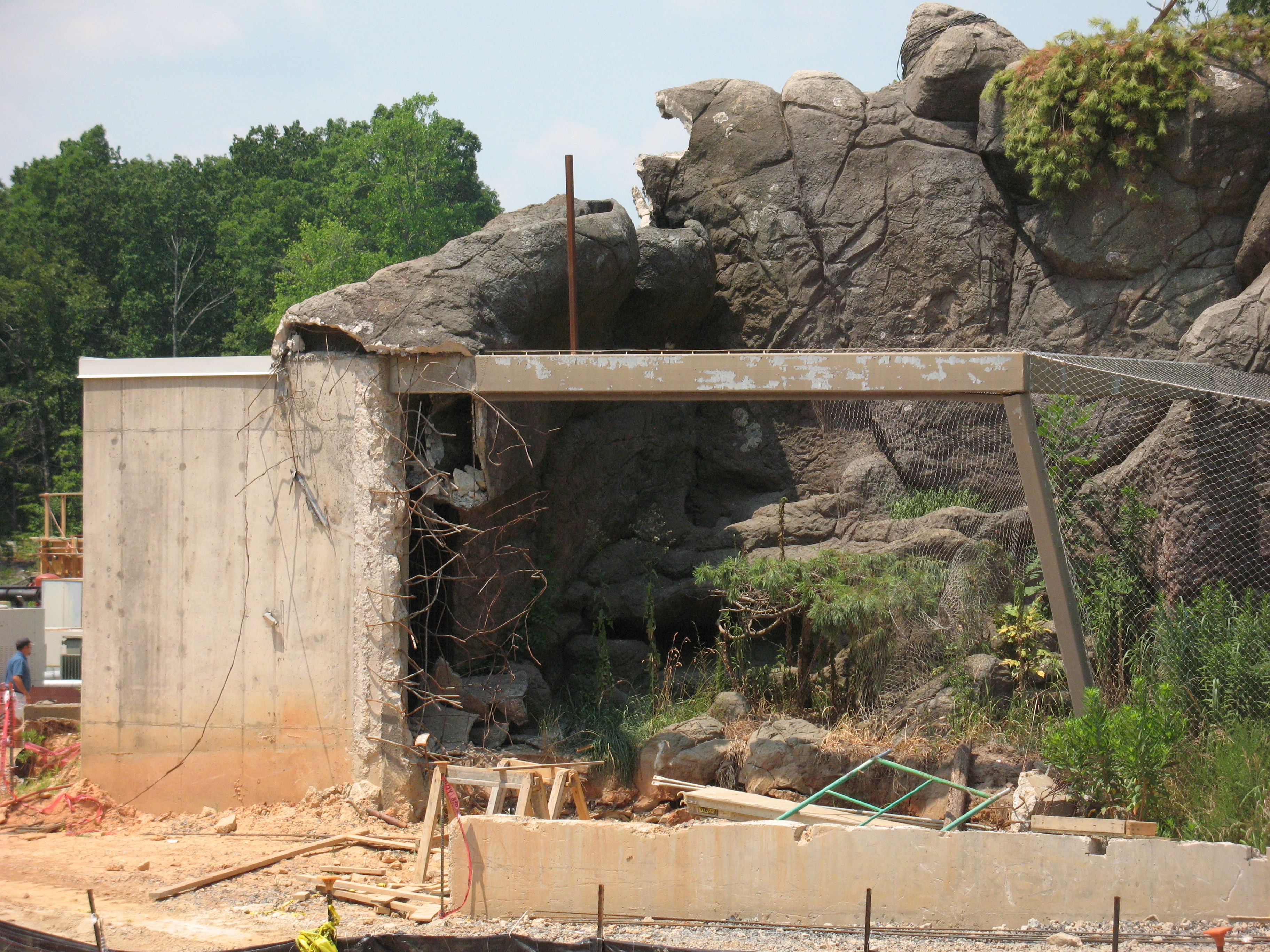
Aquila, born in 1992 at the Louisville, KY Zoo, arrived in NC in 2009 and currently resides at the Detroit Zoo.  Wilhelm, rescued from a Mexican circus, had been here since 2002 and since this winter has really been cooling his heels in Milwaukee.  The Zoo is deep (literally!) into a huge construction project that will expand polar bear habitat and renovate all of Rocky Coast.  When the bears return in 2014 their living space will conform to Canadian standards which will allow for obtaining additional bears from Alberta – as many as six bears on site in all, with facilities for breeding.  The NC Zoo will become a world-class site for preserving the species.

IMG_2912

.

IMG_2910

.

IMG_3026.

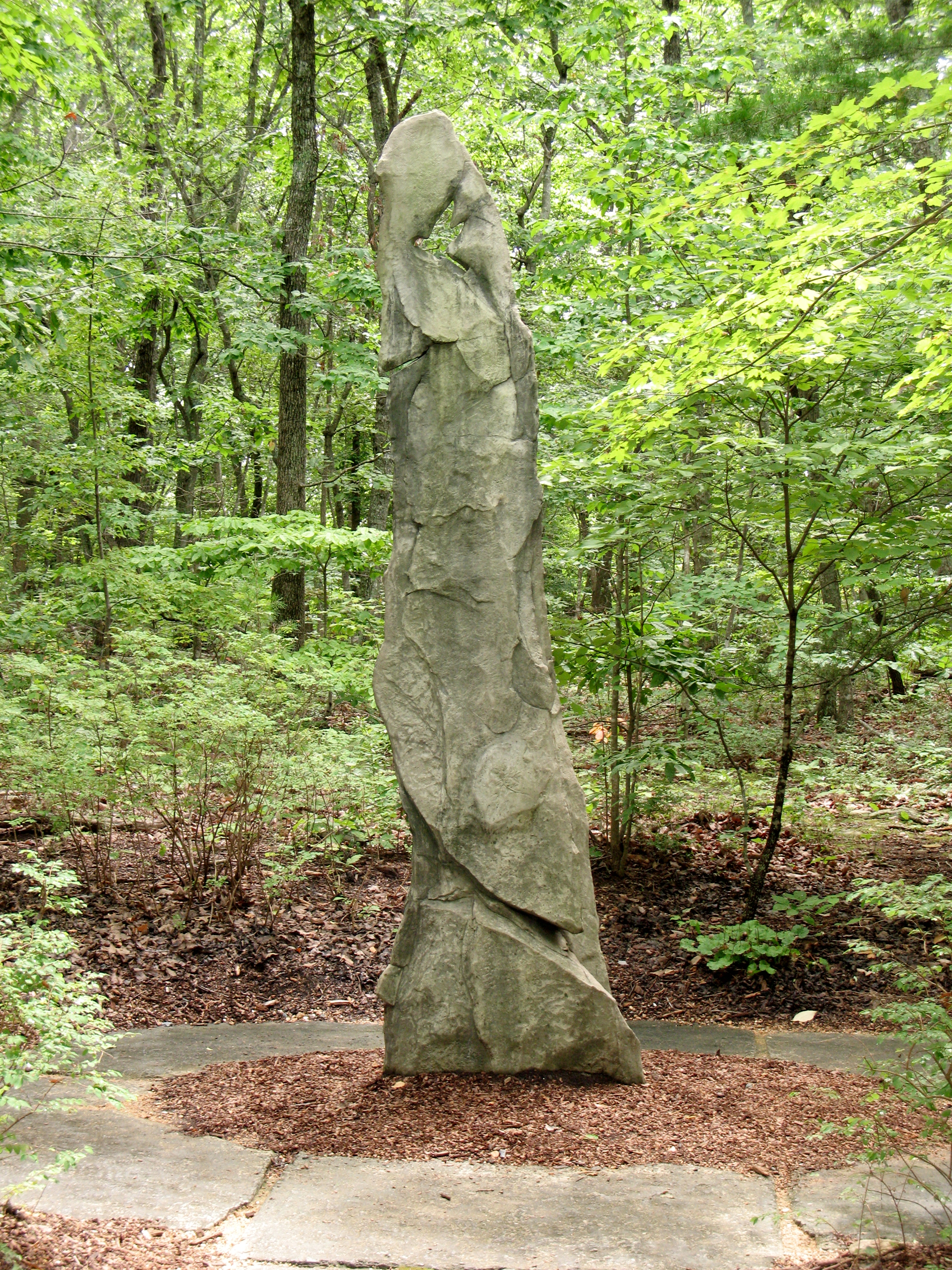
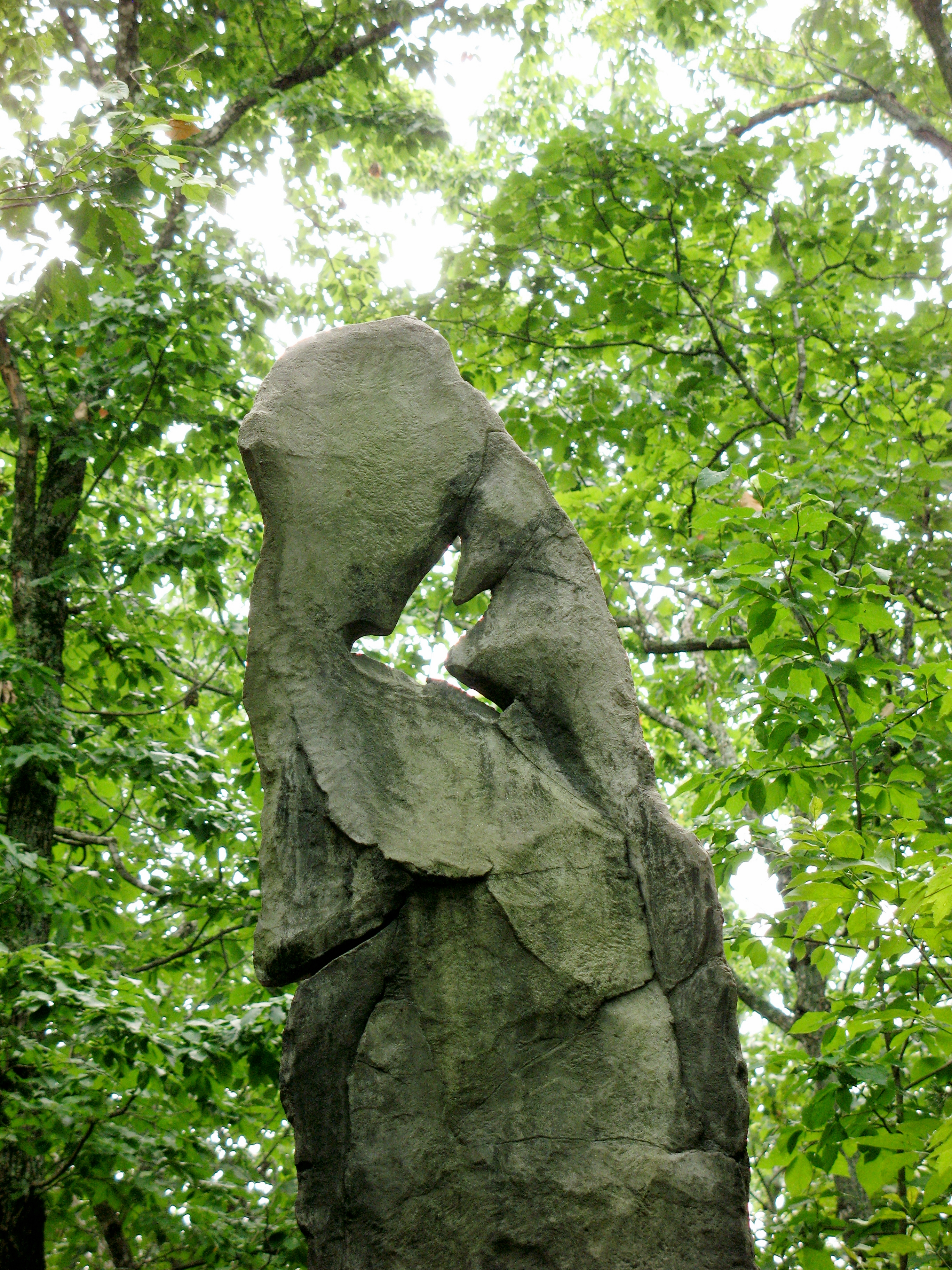
Conservation and preservation – along with education, these are the Zoo’s mission.  I’m struck as I visit each exhibit how often I see the red-lettered admonition “Endangered” beneath the species name.  The science fiction future is rapidly becoming reality when zoos are the only place on earth to see certain animals.  For me, one of the most wrenching exhibits is a seemingly unobtrusive outdoor sculpture by Roger Halligan titled, “The Stone That Stands in an Empty Sky.”  Just off the trail near the red wolves (how appropriate), a monolith rises twenty feet into the forest.  At its apex is a sculpted opening.  Stand at the proper angle and you see leaves and branches through the empty space, and then you recognize it: the full profile of the Carolina Parakeet.

Negative space.  To see, really see, when you first realize what you’re not seeing.  Almost eight million dollars for six bears.  Worth it?  It has my vote.

. . . whatever
won’t stop taking shape even though the whole
crazy quilt’s falling to pieces.

IMG_3297

.

IMG_3303

.     .     .     .     .

Mountain Time

News travels slowly up here
in the mountains, our narrow
roads twisting for days, maybe years,
till we get where we’re going,
if we ever do. Even if some lonesome message
should make it through Deep Gap
or the fastness of Thunderhead, we’re not obliged
to believe it’s true, are we? Consider
the famous poet, minding her post
at the Library of Congress, who
shrugged off the question of what we’d be
reading at century’s end: By the year 2000
nobody will be reading poems. Thus she
prophesied. End of that
interview! End of the world
as we know it. Yet, how can I fault
her despair, doing time as she was
in a crumbling Capitol, sirens
and gunfire the nights long, the Pentagon’s
stockpile of weapons stacked higher
and higher? No wonder the books
stacked around her began to seem relics.
No wonder she dreamed her own bones
dug up years later, tagged in a museum somewhere
in the Midwest: American Poet — Extinct Species.

Up here in the mountains
we know what extinct means. We’ve seen
how our breath on a bitter night
fades like a ghost from the window glass.
We know the wolf’s gone.
The panther. We’ve heard the old stories
run down, stutter out
into silence. Who knows where we’re heading?
All roads seem to lead
to Millennium, dark roads with drop-offs
we can’t plumb. It’s time to be brought up short
now with the tale-tellers’ Listen: There once lived
a woman named Delphia
who walked through these hills teaching children
to read. She was known as a quilter
whose hand never wearied, a mother
who raised up two daughters to pass on
her words like a strong chain of stitches.
Imagine her sitting among us,
her quick thimble moving along these lines
as if to hear every word striking true
as the stab of her needle through calico.
While prophets discourse about endings,
don’t you think she’d tell us the world as we know it
keeps calling us back to beginnings?
This labor to make our words matter
is what any good quilter teaches.
A stitch in time, let’s say.
A blind stitch
that clings to the edges
of what’s left, the ripped
scraps and remnants, whatever
won’t stop taking shape even though the whole
crazy quilt’s falling to pieces.

Kathryn Stripling Byer
North Carolina Poet Laureate 2005-2009

.     .     .     .     .

IMG_3223

.     .     .     .     .

Read Full Post »

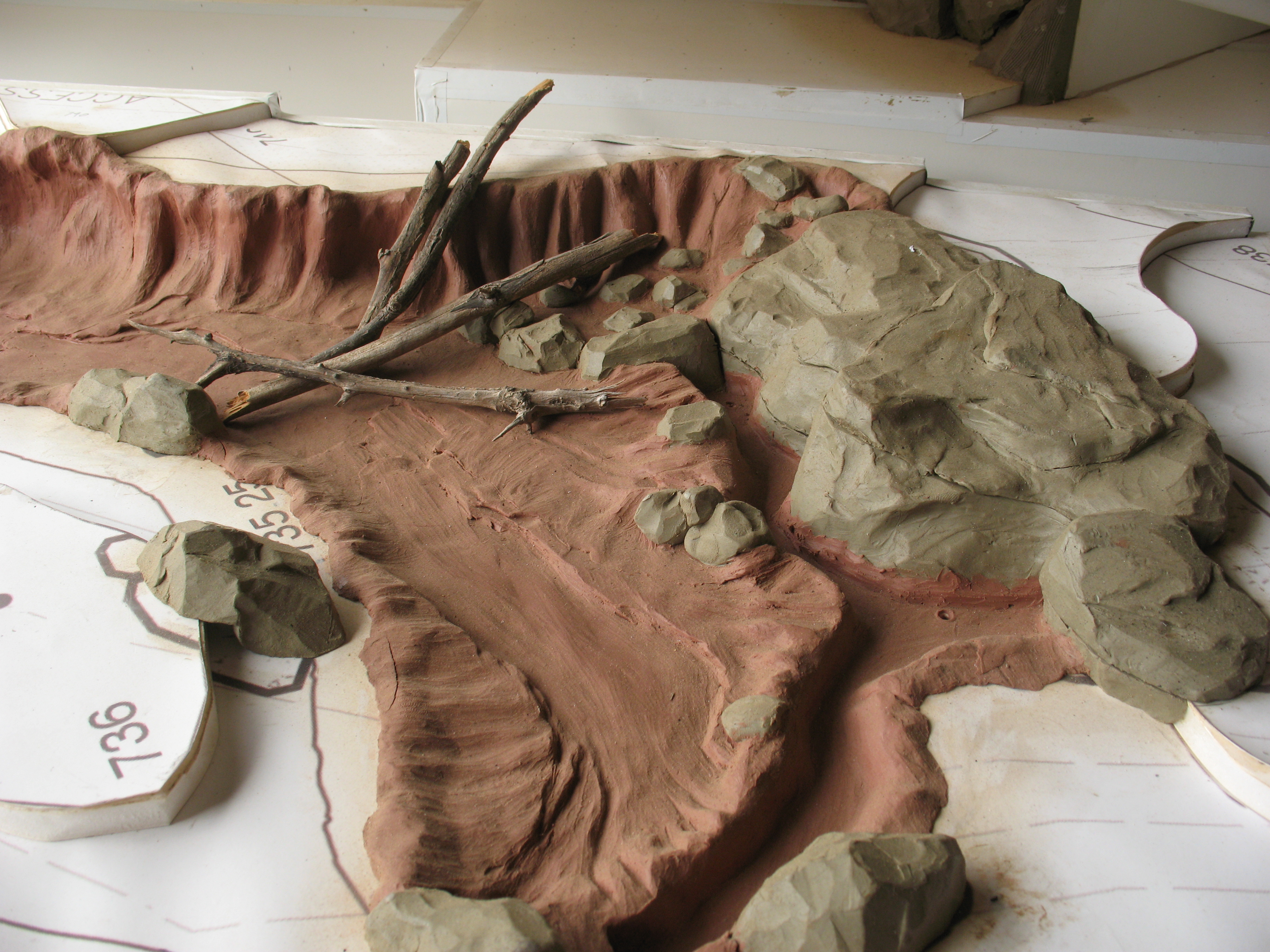
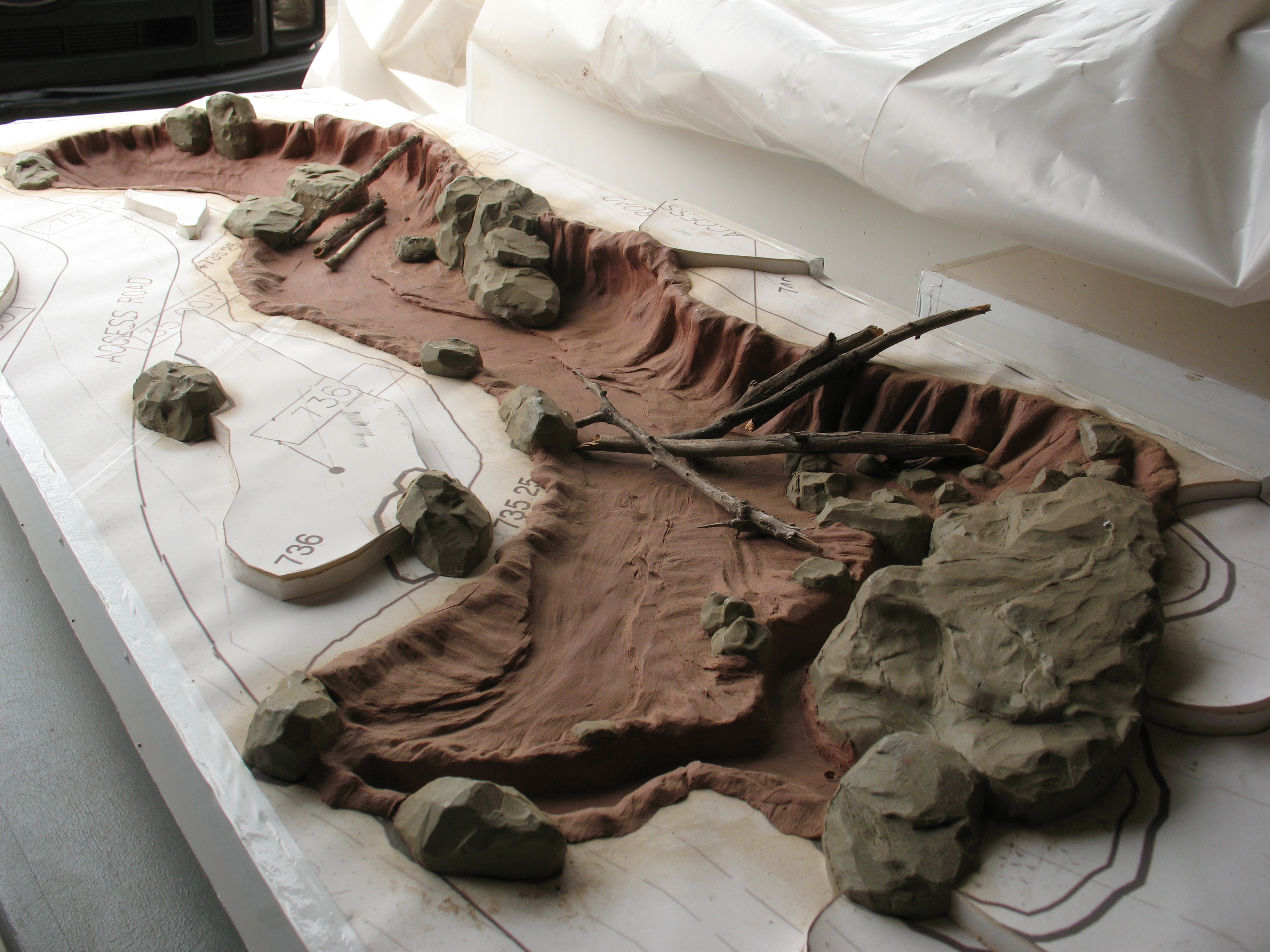
This afternoon Ellen and Christa showed me a secret or two about how the magic is done.  Master welder, painter, and fabricator, Christa is one of seven sculptors who work in the design section at the NC Zoo.  We had just been looking at models of the new polar bear exhibit that will open in stages over the next two years.  I noticed a lichen-encrusted slab on the work table.  I picked it up.  It was a light sheet of some composite material painted in layers – I’ll still swear it was lichen.

Christa said, “When the visitors don’t even notice that the stones are hand-made, then we’ve done our job.”

IMG_3025

.

IMG_3040

Does that mean that the Zoo’s mission is to create illusion?  No, the mission is to transcend and transport:  to transcend illusion and transport the visitor into a larger reality.  It is no accident that the sections have titles like “forest edge,” “African plains,” “rocky coast.”  In one day’s stroll you can enter all these  habitats and, for however briefly, become part of that which makes each place unique and notable.  And you get to see wild animals.

It’s called education.  The mission of the Zoo is to teach.  In five hundred acres or five hundred thousand acres the Zoo can’t conserve the world, but if we who come here to share the lives of these creatures gain even a glimmer of understanding and compassion, then we may become engaged in conserving the world for all creatures.  And for ourselves.

So why poetry at the Zoo?  The displays and installations are already various and superb.  They employ photographs, diagrams, puns (“just lion around” indeed).  You can walk right into a bush-copter hanger, a chimpanzee research station, a jungle, a desert.  Why do you need poetry?

Poetry can teach in a way that exposition and rhetoric cannot.  You are shaken by an unexpected metaphor.  You are halted in your tracks by an arresting image.  Poetry has slipped through the bars of your logical, calculating mind and has begun to teach directly to your heart.  Maybe, just maybe, you are transported into a larger reality.

You don’t even notice you’re being taught.  Poetry has done its job.

IMG_3030

.     .     .     .     .

Advice for Long Life

Keep simple, as simple as you can.
Like the heron who stands one leg on the sand.
Like the maple who stands one leg on the land.
Like the robin who, thirsty, gargles the worm.

The spider is simple if the web is not.
The tern is simple in a watery spot.
To be flexible, fluid, adored as a druid,
cryptic, mystic, blessed, lurid,
love simple as you can.

Plural by purpose, design, and make,
the effort to give is the urge to take.
Keep a hambone of joy at your right side.
Live broad, long, deep, wide,
but ride simple as you can.

Imitate wind and creep of dark –
as much as you can, the natural stark,
sun-driven crops and gradual shoat,
a frog spilling basso from a plum-blue throat
at river’s edge.  Be simple if you can.

 Anna Wooten-Hawkins

.     .     .     .     .

IMG_2952

Anna Wooten-Hawkins grew up in Kinston, North Carolina and received her MFA in creative writing from The University of North Carolina at Greensboro. She was a poet and professor of English at Gardner-Webb University, and later at Campbell University, St. Mary’s College, North Carolina State University, Peace College, and Meredith College. Her accomplishments include being the faculty editor of The Lyricist at Campbell University and coordinating the annual Muse Literary Festival at St. Mary’s College. Before her untimely death in 2000, Anna won many honors for her poetry. Her collection “Satan Speaks of Eve in 7 Voices After the Fall” won the 1986 North Carolina Writers’ Network Chapbook competition in 1986. In 1985 she received the City of Raleigh Arts Commission Award for her excellence in writing and service to the arts. Some of her works have appeared in The Green River Anthology, The Lowlands Review, The Lyricist, The Greensboro Review, and Pembroke Magazine.

(from http://www.uncg.edu/aas/ccwa/AnnaWHawkins.html)

.     .     .     .     .

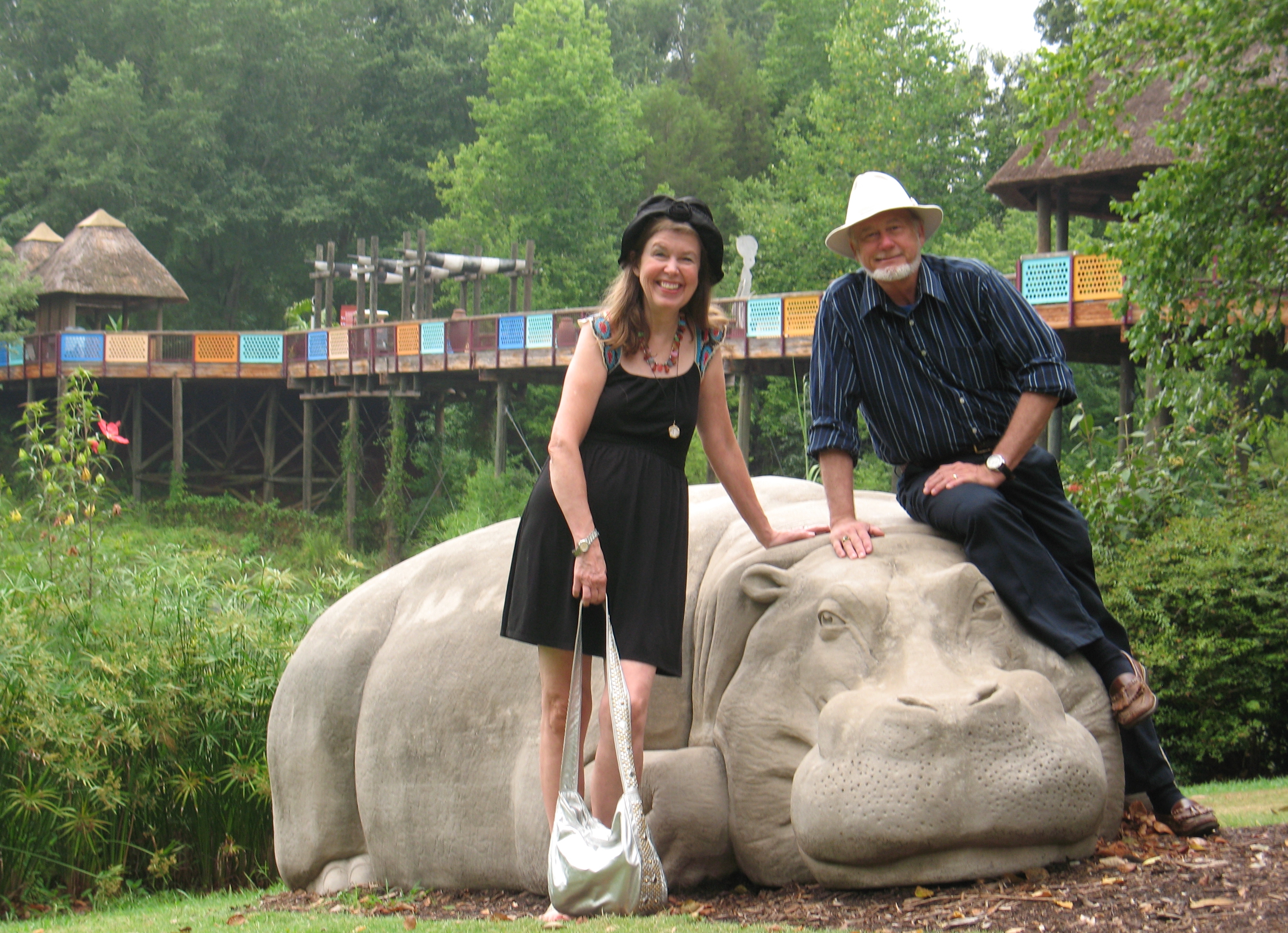
Today my friends and fellow poets Guy and Carolyn York stopped by to see me at the Zoo.  If you’re intrigued by the Hippo Beach sculptures, that’s where we’re holding our adult workshop on Saturday, 7/14, at 10 a.m.  As Robert Frost would say, “You come too!”

IMG_3014

.     .     .     .     .

One more postscript:  on July 6 the Zoo was blessed with a new arrival.  Juma (means born on Friday) weighs 150 pounds and is 72 inches long.

JumaGiraffe01

.     .     .     .     .

IMG_1783

Read Full Post »

« Newer Posts - Older Posts »